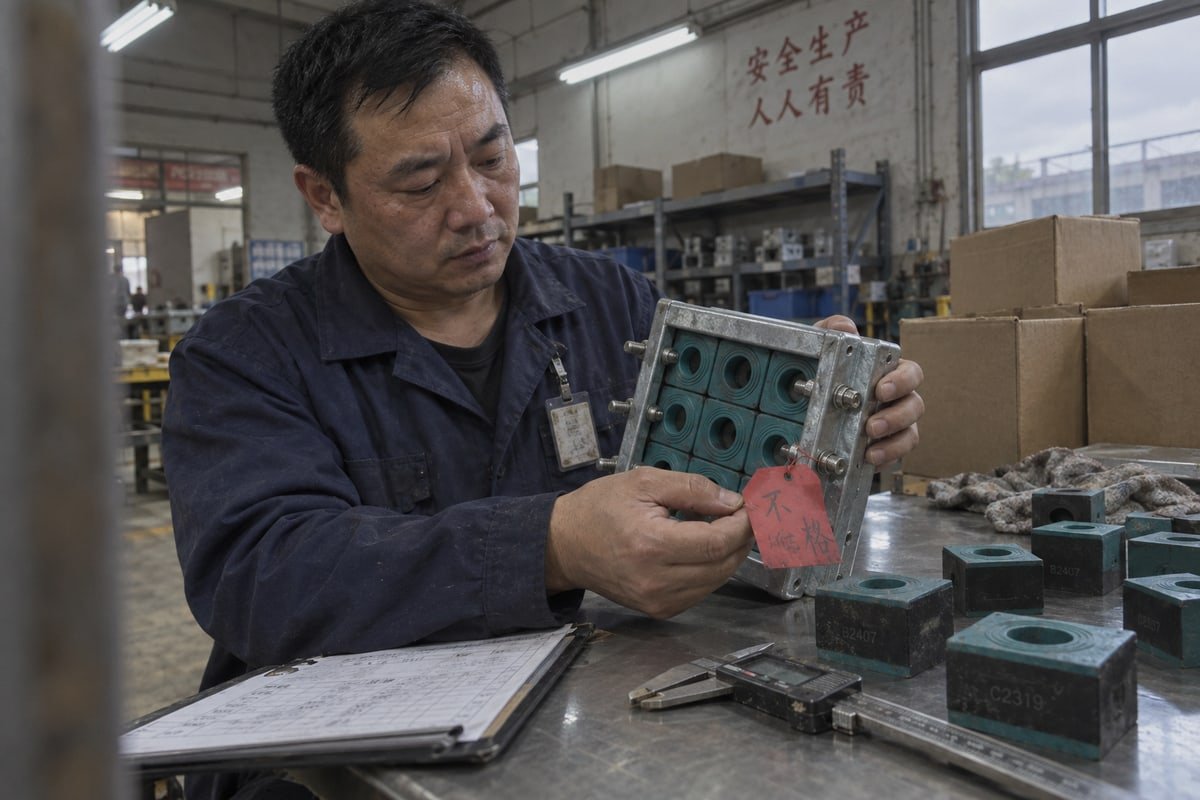
A non-conforming Multi Cable Transit can stall BESS sign-off; our QC line sees the fallout weekly IATF 16949 system 1. Requesting supplier rework or replacement for non-conforming Multi Cable Transit products demands a formal process.
To request supplier rework or replacement for non-conforming Multi Cable Transit products, issue a Non-Conformance Report citing the purchase order, drawing revision, and violated specification. Attach photos, batch numbers, and inspection data. State the exact remedy, deadline, and containment action, then obtain a Return Material Authorization before shipping anything back.
Below, I walk through each step from the factory side. I cover the evidence, the request itself, the response you should expect, and how [validation samples](https://dewinmct.com/?p=617) protect you before you accept a replacement batch.
What documentation do I need to prove a Multi Cable Transit product is non-conforming?
Last quarter, our incoming inspection rejected a batch of EPDM blocks for a step-core dimension outside tolerance. The paperwork we generated that day is what every buyer needs.
You need the purchase order, approved drawing revision, datasheet or certificate clause that was violated, batch or heat numbers from frames and blocks, dated photos and video of the defect, dimensional or test measurements, an incoming inspection report, and the storage or installation history since delivery.
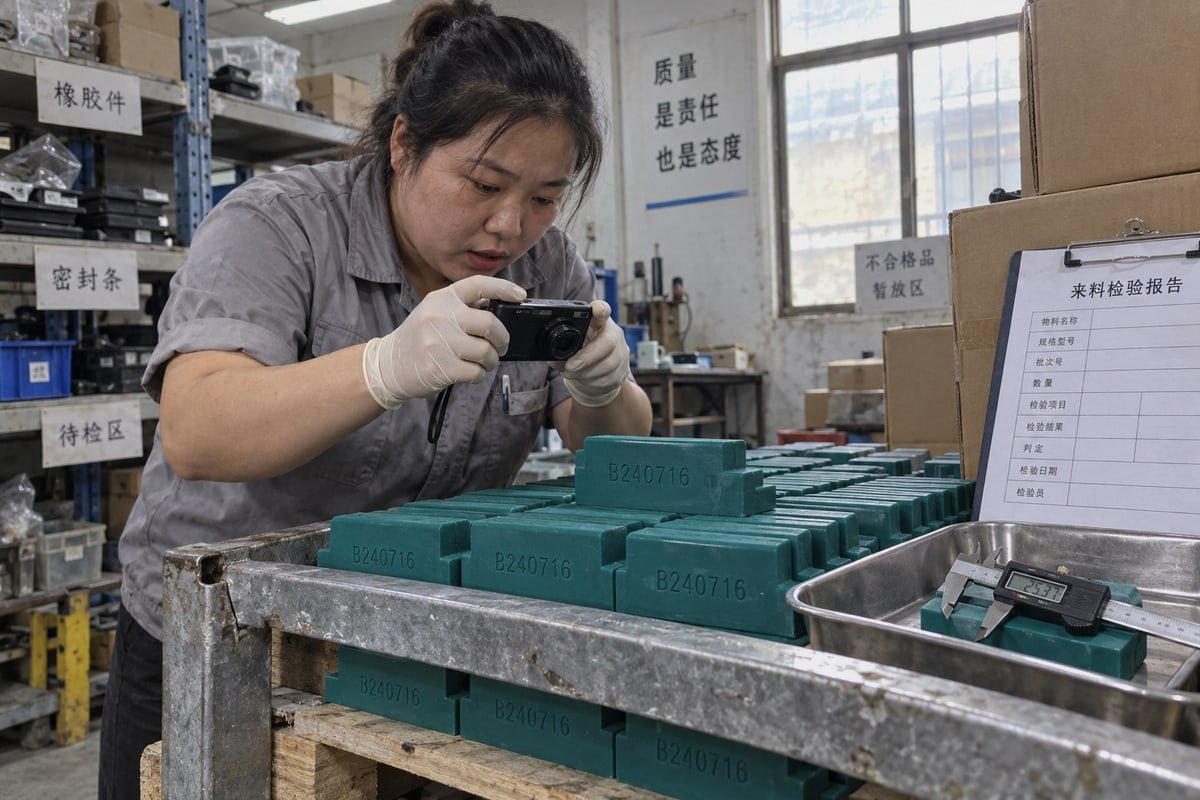
A modular sealing system fails in small ways. A block is one step size off. A frame flange is bent. A nameplate lists a certificate number that does not match the project standard. None of these look dramatic on a pallet. All of them break sealing, fire integrity 2, or compliance once installed. So the first job is to prove the deviation exists and to prove who owns it.
Separate the cause before you write anything
Suppliers push back for one reason. They suspect the damage happened after delivery. From our side of the table, that suspicion is fair. We have received "defective" modules that were over-compressed on site, or that were cut for a cable outer diameter outside the step-core range. So I tell buyers to classify the issue first. Evidence gathered before installation is almost impossible to dispute.
| Issue type | Typical sign | Who owns it | Key proof |
|---|---|---|---|
| Product defect | Wrong core size, voids in EPDM, weak weld seam | Supplier | Incoming inspection report, photos on the pallet |
| Specification mismatch | Frame size or certificate differs from approved drawing | Supplier, if drawing was approved | PO, drawing revision, datasheet clause |
| Shipping damage | Crushed carton, scratched or deformed frame | Carrier or supplier packaging | Delivery note remarks, dated unboxing photos |
| Installation error | Over-compression, wrong cable OD, field cutting | Installer | Installation record, torque log |
Build the evidence package
Here is the checklist we ask our own customers to send. It mirrors what our quality team needs to open an internal Non-Conformance Report (NCR) and trace the lot.
- Purchase order number and line item.
- Approved drawing number and revision.
- The exact requirement violated: dimension, IP68 rating, A-0/A-60 fire class, or a certificate clause.
- Batch or heat numbers stamped on frames and molded into blocks. This is how we trace a lot back to a mold, a rubber compound, and a shift.
- The material test report (MTR) for steel frames, if one was supplied and the material is in question.
- Dated photos and short video showing the defect and the surrounding condition.
- Measurements with the instrument used. For dimensional disputes on installed frames, some EPC teams now overlay 3D laser scan data on the BIM model. This removes arguments about hand measurement.
- Quantity affected and quantity inspected.
Tie the defect to the standard that matters
A generic IP claim is not enough. Transit products are marketed under IP66, IP67, IP68, and IP69K, and may carry NEMA, UL, ATEX, IECEx, or marine approvals. Your project specifies one set. Quote that set. If a marine job 3 requires type approval from Lloyd's Register, DNV, or ABS, or fire testing aligned to IMO FTP requirements under SOLAS, a missing or mismatched certificate is a technical specification deviation just as real as a bent frame. The same logic applies to firestop certification compliance on a data center wall. Write the clause, not the feeling.
How do I formally submit a rework or replacement request to my MCT supplier?
A sourcing manager in Europe once sent us a three-word email: "Blocks wrong, replace." We replaced them, but the missing details cost both sides two weeks.
Submit a formal Non-Conformance Report to the supplier's quality contact, not just sales. Include a clear subject line, defect statement, violated requirement reference, requested remedy, response deadline, and your containment action. Request a Return Material Authorization and confirm inspection rights in writing before any product moves.

That three-word email failed because it left every decision to us. Which blocks? Which PO? Which drawing? Was the frame affected too? Did the site need the parts by a fixed date? A good request answers those questions before anyone asks. It reads like a quality document, because that is what it is.
The six parts of a request that gets action
- Subject line. Put the PO number, part model, and the word NCR in it. Example: "NCR – PO 4521 – TSC square sealing modules – core dimension out of tolerance."
- Defect statement. One or two sentences. What is wrong, how many, and how you found it.
- Requirement reference. Quote the drawing revision, datasheet line, or certificate clause. This turns an opinion into a technical specification deviation.
- Requested remedy. Name it. Replace, rework, credit, or concession. Do not ask for a vague fix.
- Deadline and impact. State your required response date and the downstream effect. If a delay blocks a fire or pressure integrity test on the schedule, say so.
- Containment action. Confirm you have quarantined the parts, preserved them for inspection, and not installed them. Most procurement contract warranty terms require written notice and a reasonable opportunity for inspection. If you remove or alter parts first, you may forfeit the claim.
Choose the remedy deliberately
Buyers often ask me whether rework is acceptable. My answer depends on the part. A scratched frame can be reworked. A sealing block with a molding void cannot. Hidden damage in EPDM changes compression behavior in ways you cannot see, so for safety-critical transits I favor replacement.
| Remedy | When it fits | Risk to watch |
|---|---|---|
| Rework | Cosmetic or minor dimensional issues, supplier-approved method | Must not void the rating or certificate |
| Repair | Replace a sub-component such as a stay plate or bolt set | Mixed lots complicate traceability |
| Replacement | Sealing blocks, compression units, anything affecting IP or fire class | Lead time; ask about spare module stock |
| Concession or waiver | Deviation has no functional effect, engineering signs off | Requires documented engineering approval |
| Credit | Parts cannot be used and schedule allows resourcing | Does not fix the open site requirement |
Use the tools that shorten the argument
Two practices are gaining ground. First, a live remote witnessing session, sometimes with AR headsets, lets a supplier engineer see the defect in real time and approve replacement without waiting for a return shipment. We have done this with a phone camera and a caliper, and it worked. Second, for heavy steel frames, a "green rework" kit shipped to site can be faster and cleaner than freighting the frame back. Both still require the Return Material Authorization (RMA) reference in writing, so the file stays complete.
What response time and resolution process should I expect from a qualified MCT manufacturer?
Every week I weigh the same trade-off on our production board: pull a replacement module run forward, or let a buyer's site wait. A fixed process decides it.
Expect written acknowledgment within a few working days, immediate containment advice, and a Corrective Action Request response that states root cause, the chosen remedy, and a committed ship date. A qualified MCT manufacturer also defines inspection rights, escalation contacts, and the retest evidence you will receive with replacement parts.

The speed of a response tells you a lot about a factory. A trading company forwards your email and waits. A real factory with an ISO 9001 4 and IATF 16949 system opens an internal NCR, pulls the lot record, and calls the shift leader. That difference shows up in the first reply. It should contain a reference number, a named quality owner, and a request for anything missing from your evidence package.
The resolution stages
| Stage | What the supplier does | What you should receive |
|---|---|---|
| Acknowledge | Logs the NCR, assigns owner | Reference number, contact name, date |
| Contain | Advises quarantine, checks other lots from the same batch | Written containment note |
| Investigate | Reviews lot records, mold history, compound batch, weld inspection | Root cause analysis (RCA) summary |
| Decide | Chooses rework, replacement, or concession | Corrective action request (CAR) response with justification |
| Deliver | Produces and ships corrected parts | Ship date, packing list, updated certificates |
| Verify | Supports your retest | Test reports, inspection records |
| Close | Confirms preventive action | Closed CAR with lessons learned |
Insist on root cause, not just a new box
A replacement without a root cause analysis solves this shipment and nothing else. I ask buyers to demand the RCA in writing. In our plant, a core dimension drift usually traces to mold wear or a compound batch. Knowing that lets us fix the mold in-house, since we make our own tooling, rather than shipping the same defect twice.
Verification after corrective action
Corrected parts are not accepted parts. Repeat the checks that found the problem. For sealing modules, that means dimensional inspection 5, compression fit in the actual frame, and a leak or pressure test to the project value. Our own watertight and gas-tight testing runs across the 0.01–0.4 MPa range, and we provide those documents on request. On marine work, disturbed or newly installed transits may need post-installation air or leakage testing anyway, so plan for it. If the replacement lot is large, a factory acceptance test (FAT) witnessed by you or a third party is reasonable.
When the supplier disputes the defect
Disagreement happens. The escalation path should be written into the procurement contract warranty. A joint inspection, a third-party surveyor, or a review under a quality assurance audit clause resolves most cases. Where faulty hardware forces re-hiring a class surveyor for recertification, some EPC teams now negotiate liquidated damages for safety recertification to cover that specific cost. Ask for it before the order, not after.
Can I request free validation samples before accepting a replacement batch?
One lesson stuck with me from our early export years: a buyer who tests a sample first rarely argues about the batch later. So we ship validation samples free.
Yes. Ask the supplier to send free validation samples from the corrected production run before accepting the full replacement batch. Check dimensions against the 120-frame cutout, compression fit, EPDM hardness, markings, and certificate references. Accept the batch only after the sample passes your written acceptance criteria.

A validation sample is cheap insurance for both parties. For us, a few blocks and one frame cost far less than a rejected container. For the buyer, it converts a promise into a measurement. We built our second-source business on this idea. Our TSR round assemblies and TSC square modules are dimensionally compatible with common 120-frame standards, and our cross-reference tables map an existing model to a DEWIN model. But a table is a claim. A sample in your frame is proof. The same logic applies after a non-conformance.
What to check on the sample
| Check | Method | Pass criterion |
|---|---|---|
| Outer dimensions | Caliper against approved drawing | Within stated tolerance |
| Fit in frame cutout | Insert into your actual 120-frame | Slides in, seats flush, no forcing |
| Step-core range | Peel steps to the target cable OD | Cable seats without gap or over-compression |
| Compression behavior | Torque to specified value with stay plates | Even bulge, no extrusion |
| Material marking | Visual | Batch number, halogen-free EPDM identification |
| Certificate match | Compare nameplate and paperwork | IP68, A-0/A-60, or class approval matches project spec |
| Leak test | Bench test at project pressure | Holds within the 0.01–0.4 MPa range specified |
Make the paperwork travel with the parts
Replacement components should not arrive with less documentation than the originals. Ask for the updated batch record, the test document for the corrected lot, and, on marine work, the current type approval certificate from Lloyd's Register 6, DNV, or ABS. If the frame steel changed, ask for the new material test report. This is also the moment to confirm CAD or STEP files match the shipped revision, so your own drawings stay aligned.
Turn the incident into a qualification asset
A buyer's objection here is real. "If I have to validate samples, I have lost the time I hoped to save." I understand that. But consider the alternative. Accepting a replacement batch blind, then discovering the same deviation at installation, costs far more. In our experience with BESS container and modular data center integrators, the sample step usually runs in parallel with the main production, so it adds little to the calendar. It also leaves you with a documented qualification record for the supplier. That record is worth having, especially when the supplier offers cost savings of 40–60% against the incumbent. Savings only count if the parts pass.
Conclusion
Vague complaints stall projects. A precise NCR, a named remedy, verified samples, and documented retest protect your schedule and compliance when Multi Cable Transit products arrive non-conforming.
Footnotes
1. Global quality standard for the automotive industry often applied to high-reliability industrial component manufacturing. ↩︎
2. International Maritime Organization standards governing the fire safety and integrity of shipboard cable penetrations. ↩︎
3. American Bureau of Shipping provides classification and technical standards for equipment used in marine and offshore projects. ↩︎
4. Official international standard for quality management systems used to certify manufacturing processes for transit products. ↩︎
5. Global assurance provider offering verification services for technical dimensions and safety standards in industrial manufacturing. ↩︎
6. Authoritative marine classification society that issues type approval certificates for cable transit sealing systems. ↩︎



 English
  Español de México
  Deutsch
  Français
  العربية
  Русский