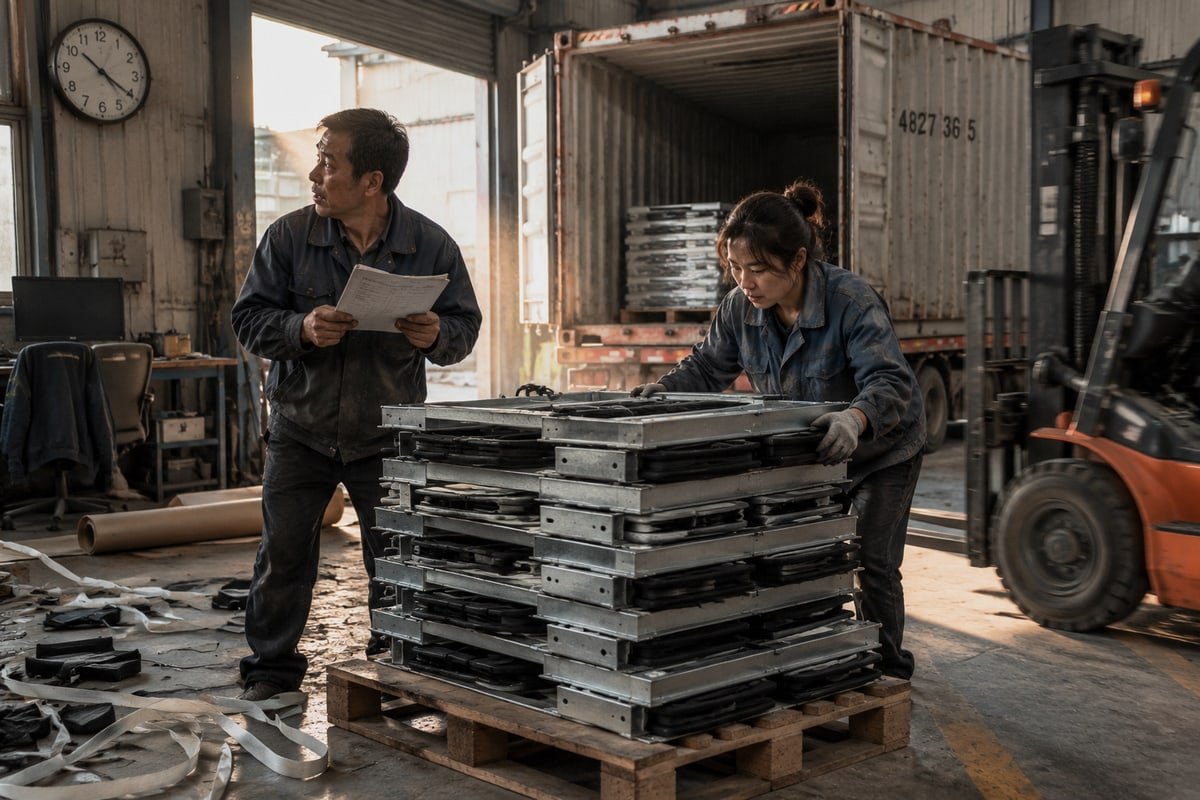
Every quarter, buyers ask our factory whether a backup supplier for multi cable transits 1 is worth the effort. One delayed frame can stall a BESS container ship-out for weeks.
Yes. You should develop a backup supplier for multi cable transits when the penetration is safety-critical, schedule-sensitive, or exposed to single-vendor lead times. The backup must be dimensionally compatible with your frame standard, hold equivalent fire and ingress certification, and pass validation samples before approval.
The frustrating part is that the risk stays invisible until it hits IP68 ingress test reports 2. Your primary vendor is reliable for years, then a regional shutdown or a capacity squeeze lands right before a milestone. Below, I walk through when a second source makes sense, how to verify drop-in fit, which documents to demand, and what the savings really look like once qualification costs are counted.
Should I Develop a Backup Supplier for Multi Cable Transits?
Last year our Shandong line ran an urgent batch of TSC modules for a European switchgear builder A-0/A-60 ratings 3. Their primary vendor had quoted a lead time past their ship date.
Develop a backup supplier for multi cable transits if your penetrations protect against fire, gas, or water, if your project schedule cannot absorb vendor delays, or if one supplier controls your pricing. For low-criticality openings, a prequalified alternate or safety stock may be enough.

Multi cable transits are not a commodity part. The system combines a steel frame, stacked rubber blocks or modules, and a compression unit that squeezes the stack until it seals. MCT Brattberg describes its own system in exactly those three parts. Roxtec calls itself a world-leading provider of the same category. Both market their cable sealing systems on protection against fire, gas, and water pressure, not on convenience. That is why substitution is not trivial, and why procurement risk management for these parts deserves its own thinking.
Why single-vendor exposure is real
One market estimate for 2025 puts the top five players at 48.3 percent of global revenue. That is moderate concentration. It is not a monopoly, but it means many buyers depend on a short list of vendors for fire-rated cable penetrations 4. The same research projects the market growing from USD 1.8 billion in 2025 to USD 2.91 billion by 2033, a 6.19 percent CAGR. Growing demand tightens capacity. In our experience exporting to Europe and the Middle East, tight capacity is when lead times stretch first.
The three objections I hear most
Buyers raise three counterarguments, and each deserves a straight answer.
First, some procurement teams say the best backup is a bigger inventory buffer with the primary vendor. That works for standard module sizes. It fails when a new project needs a frame size or cable range you did not stock, and it ties up cash.
Second, engineers say brands should never be mixed unless certification, installation method, and environmental ratings match and are documented. I agree. That is the requirement for a backup, not an argument against having one.
Third, some buyers prefer one global supplier because qualification cost outweighs redundancy for low-criticality uses. Also fair. So the answer is a tiered vendor diversification strategy, not blanket dual-sourcing.
A simple decision framework
| Situation | Recommended approach | Why |
|---|---|---|
| Non-critical openings, small volumes | Single source with modest safety stock | Qualification effort exceeds the risk |
| Recurring module sizes, moderate schedule pressure | Prequalified alternate on an approved list | Ready to activate without stocking two brands |
| Safety-critical barriers, fixed ship dates, high annual spend | Fully qualified dual source | Operational downtime prevention and pricing leverage |
| Marine and offshore safety applications with class approval | Dual source only with matching class certificates | Authority having jurisdiction must accept both |
We built our TSR and TSC modules to fit common 120-frame standards precisely so that the middle two rows of this table become practical. A qualified alternate that drops into the existing cutout costs far less to hold ready than a second brand of frames.
How can I verify a backup MCT supplier is a true drop-in fit for my existing 120-frame system?
One trade-off comes up in every qualification call we run: check drawings faster, or check them thoroughly. We push for thorough, because a small frame mismatch stops installation.
Verify drop-in fit by comparing the frame cutout dimensions, module heights, and compression unit travel against the 120-frame standard, requesting a model cross-reference table and CAD/STEP files, then installing free validation samples in an actual frame and confirming they compress and seal correctly.

The SERP pages on this topic talk about a proprietary lock-in paradox. The modules look modular, but blocks from different vendors are often not interchangeable. That paradox is the whole reason a drop-in check matters. I break it into a numbered process that our engineers follow with every new integrator.
The five-step verification process
- Confirm the frame standard. Ask your existing vendor's drawing for the internal frame width and depth. Common 120-frame systems share a nominal 120 mm packing space. Confirm your frames actually follow it before comparing anything else.
- Request a cross-reference table. A serious second source should map your existing model numbers to its own. We publish existing model to DEWIN model tables for exactly this step. If a supplier cannot produce one, stop.
- Overlay the CAD. Request STEP files and overlay them on your frame model. Check module height increments, stay plate slots, and compression unit travel. Small height mismatches accumulate over a stacked column.
- Test the cable range. Each module must cover the same cable diameter band. Our modules use a step-core design, so one module size adapts to a range of diameters. Compare the min and max per module, not just the nominal size.
- Install validation samples. Request free samples and fit them in a real frame. Compress to specification. Check that the compression unit still has travel left. That last point catches most incompatibilities.
Compatibility checkpoints at a glance
| Checkpoint | What to compare | Typical failure sign |
|---|---|---|
| Frame cutout | Internal width, depth, weld position | Modules rock or leave gaps |
| Module height steps | Block height increments across a column | Column ends short or over-height |
| Stay plates | Thickness and slot engagement | Plates do not seat in frame grooves |
| Compression unit | Stroke and bolt spacing | Bolts bottom out before seal |
| Cable diameter band | Min–max per module size | Cable too loose or core will not peel |
| Connectorized cables | Pass-through of pre-terminated ends | Connector wider than the block opening |
Do not forget connectorized cables
Data center and BESS builders often route pre-terminated cables. icotek, for example, states its systems handle pre-terminated cables up to 65 mm and non-connector cables up to 75 mm. If your primary vendor's split modules accept connectors, your backup must too. Sealing module compatibility includes how the block opens, not only how it seals.
The universal frame idea
One SERP theme suggests universal frame strategies that decouple the structural opening from vendor hardware. In practice, standardising on a 120-frame cutout is the closest thing most integrators have to that. If your openings already follow it, you have done the hard part. The backup qualification then reduces to modules, plates, and compression units.
What certifications and test documents should I request before qualifying a second-source MCT manufacturer?
A sourcing manager in Germany once replied to our quote with one line: send test reports first, price later. That order of priorities is exactly right.
Request the quality system certificates (ISO 9001, IATF 16949 where relevant), a classification society factory approval such as BV, fire test reports for A-0/A-60 ratings, IP68 ingress test reports, watertight and gas-tight pressure test data, halogen-free material declarations, and batch traceability records.

Certification is where "equivalent" and "interchangeable" part ways. A block can fit perfectly and still fail your project's regulatory compliance standards. So the document review must come before, not after, the commercial negotiation. I organise the request into a table our team sends to new buyers, so they know what we will provide and why it matters.
The document checklist
| Document | What it proves | Why it matters for a backup source |
|---|---|---|
| ISO 9001 5 certificate | Quality management system exists and is audited | Baseline for consistent module production |
| IATF 16949 6 certificate | Automotive-grade process control | Relevant for high-volume OEM integrators and traceability |
| Classification society factory approval (e.g., BV) | Production surveyed by a marine class body | Needed for marine and offshore safety projects |
| Fire test report, A-0/A-60 | Barrier survives standard fire test with insulation for A-60 | Fire-rated cable penetrations must match the primary vendor's rating |
| IP68 ingress test report | Dust-tight and protected against continuous immersion | Outdoor enclosures, containers, below-grade cable entry |
| Watertight and gas-tight pressure test data | Seal holds within stated pressure band | Our modules are tested from 0.01 to 0.4 MPa |
| Halogen-free material declaration | EPDM compound does not release halogens when burning | Low-smoke requirements in data centers and switchgear rooms |
| Batch traceability record | Compound lot and mold linked to each shipment | Root cause tracing if a field issue appears |
Match ratings, do not just collect them
Some competitors advertise IP66 or UL Type 4X. Those are valid ratings. But they are not the same rating as IP68, and your specification may call for one or the other. The SERP advice about harmonising multi-vendor certification portfolios is practical here. Write down the exact rating your primary vendor holds for each penetration type. Then require the backup to meet or exceed that rating with a test report, not a brochure claim.
Who approves the alternate
For offshore, marine, and hazardous-area projects, the authority having jurisdiction or the class surveyor decides whether a second brand is acceptable. A technical specification I have seen allows bidders to source from reputed vendors with prior supply history when no vendor list is given. That supports a qualified-alternate approach. It does not support an unrestricted swap. Bring the surveyor into the loop early and send the document pack before the modules ship.
Red flags during document review
- The supplier sends a certificate but not the underlying test report.
- The test report covers a different module size or frame type.
- The factory address on the certificate does not match the production site.
- Halogen-free is claimed without a material data sheet.
We keep our test documents available on request because a skeptical engineer should not have to chase them. Thirty-eight granted patents mean nothing to a class surveyor. Test reports do.
How much can I realistically save by adding a factory-direct backup supplier to my MCT sourcing strategy?
The lesson we learned early at DewinMCT: buyers do not switch for a small discount. They switch when the saving is large enough to justify requalification work.
A factory-direct backup supplier that is dimensionally compatible with 120-frame standards can cut sealing module and frame component cost by 40–60 percent versus premium brands. Realistic net savings are lower after qualification, freight, and duties, but they typically remain substantial on recurring module and spare-part volumes.
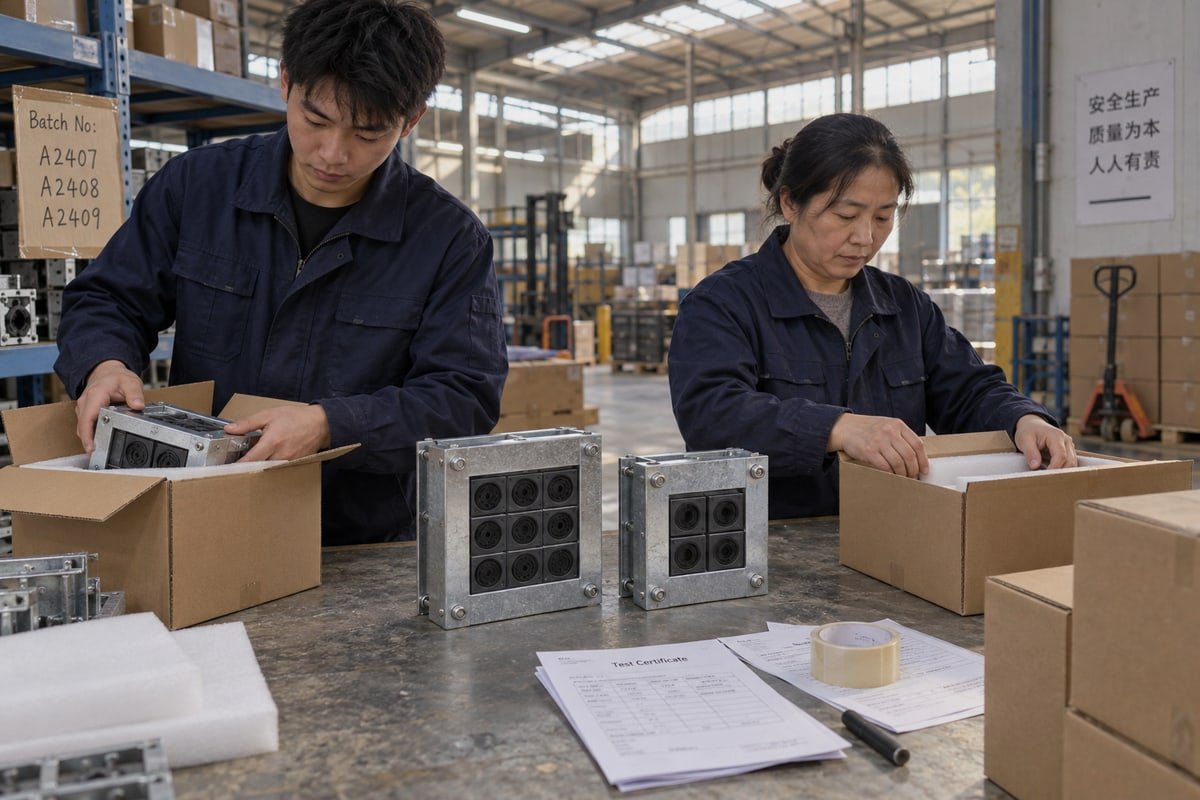
I want to be careful with numbers here, because a data-driven buyer will check them. The 40–60 percent figure is our component-level price difference on compatible modules, frames, compression units, and stay plates. It is not a total-cost promise. The total picture has more lines, and some of them work against you in year one.
Where the saving comes from
Factory-direct pricing removes the distributor margin and the brand premium. In-house mold making removes tooling markups for custom sizes. Production across Shaanxi, Shandong, and Hunan gives us capacity to run spare sealing modules quickly instead of quoting long lead times. None of this lowers the rubber quality. Halogen-free EPDM is priced on compound and process, not on the logo pressed into the block.
Where the saving leaks
| Cost line | Effect on net saving | How to limit it |
|---|---|---|
| Qualification engineering hours | One-time cost in year one | Use cross-reference tables and STEP files to shorten review |
| Validation samples | Often zero | We supply free validation samples |
| Freight and import duties | Recurring, varies by region | Consolidate shipments with other components |
| Document review with class or AHJ | One-time per project type | Reuse the approved document pack |
| Dual inventory of modules | Recurring cash tied up | Standardise on shared module sizes across both vendors |
A simple way to model it
Take your annual MCT spend and split it into the share you would realistically move to the backup. Apply the 40–60 percent component saving to that share only. Then subtract year-one qualification hours at your internal rate and add recurring freight. Most integrators find the second year is where the saving becomes clean, because the one-time costs are gone and the approved document pack is reused.
The savings you do not see on the invoice
Two indirect effects matter as much as the unit price. First, competitive procurement changes your primary vendor's behaviour. Once they know a qualified alternate exists, contract terms and price increases tend to soften. Second, lead time mitigation has a value that is hard to book but easy to feel. A BESS container that ships on schedule avoids penalties and keeps the next slot open. Supply chain resilience is not free, but its absence is far more expensive on the wrong day.
Where a backup saves most
Moves, adds, and changes work is the sweet spot. Spare sealing modules for a live installation are small orders that premium vendors do not prioritise. A factory-direct backup with fast spare delivery and private-label options fits that gap without touching the original frames.
Conclusion
Single-vendor dependence on multi cable transits is a quiet risk. Qualify a compatible, certified backup now, before a lead-time shock forces the decision for you.
Footnotes
1. Provides a technical overview of multi-cable transit systems used for sealing cable penetrations. ↩︎
2. Explains the international standard for ingress protection (IP) ratings in electrical equipment. ↩︎
3. Outlines international maritime fire safety standards for bulkheads and cable penetration barriers. ↩︎
4. The primary standard for electrical safety and fire protection requirements for cable installations. ↩︎
5. Official page for the international standard specifying requirements for a quality management system. ↩︎
6. The official site for the global automotive quality management standard for manufacturing processes. ↩︎



 English
  Español de México
  Deutsch
  Français
  العربية
  Русский