
Inventory risk from shipyard delays hurts multi cable transit buyers twice: idle stock, then shortages. Our order books show hull dates slipping, so we built a sourcing model around it.
Manage inventory risk from shipyard delays by qualifying a drop-in second source before the project starts, contracting milestone-based call-offs with hold-and-release terms, validating dimensional compatibility with free samples, and holding a small regional buffer of standard multi cable transit modules sized to real lead-time variability.
The real problem here is not price. It is schedule volatility. A slow, specification-heavy supply chain has to meet a shipyard timeline that moves without warning. Below, I walk through four questions our customers ask most often, and I give the answers we use on our own production line.
How can I qualify a second-source MCT supplier without risking my project timeline?
A sourcing manager in the Netherlands once told me he could not test a new supplier because his EPC schedule had no slack. So we split qualification from delivery.
Qualify a second-source MCT supplier off the critical path: run engineering approval on free validation samples and cross-reference tables while your primary supplier still delivers, then check certificates, test reports, and CAD files. Release delivery approval only after a small pilot order passes incoming inspection.
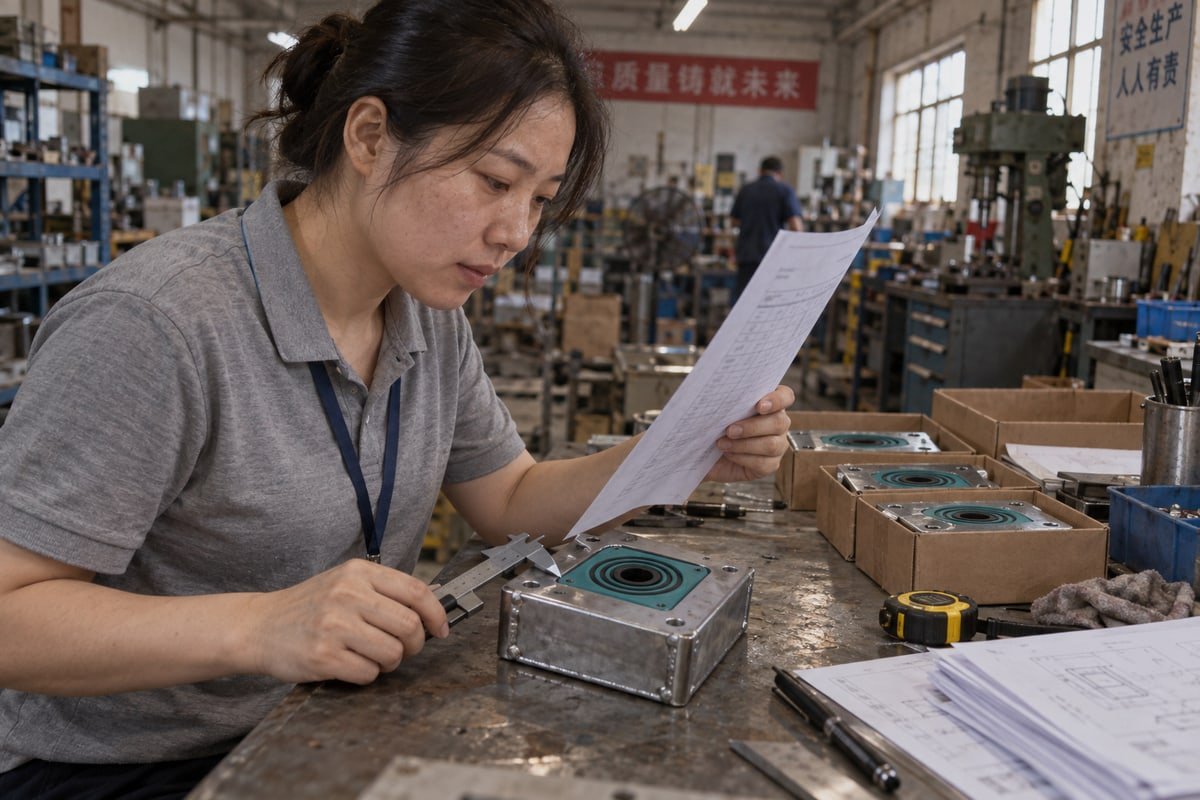
Separate engineering approval from delivery approval
The biggest reason buyers skip second sourcing is time. Qualification looks like a project of its own. It does not have to be. We split it into two gates. Engineering approval asks one question: does this module meet spec and fit the frame? Delivery approval asks another: can this factory ship on time, packed correctly, with documents in order? The first gate can run while your primary supplier 1 still delivers. Nothing on the critical path changes. This is supply chain risk mitigation that costs a few engineering hours, not a schedule.
| Stage | What you receive | Who reviews it | Timeline risk |
|---|---|---|---|
| 1. Cross-reference | Model mapping (existing model → DEWIN model), datasheets | Design engineer | None |
| 2. Sample check | Free validation samples, STEP files | Engineering and QC | None |
| 3. Document audit | ISO 9001 and IATF 16949 certificates, BV factory approval, A-0/A-60 and IP68 test reports | Quality and compliance | None |
| 4. Pilot order | Small lot through normal incoming inspection | Purchasing and QC | Low, use a non-critical block |
Answer the single-source objection honestly
Many teams say one approved supplier keeps QA simple. That is true when the vessel slot is stable and the supplier is reliable. It fails the moment that supplier hits a regional lockdown, a power restriction, or a port closure. Multi-sourcing across provinces limits that exposure. Our own production sits in Shaanxi, Shandong, and Hunan for this exact reason, so a second source can also carry internal redundancy. Ask any candidate supplier where their plants are and what happens if one stops.
Check the approvals that actually matter
A second source for firestop sealing modules on a classed vessel must show more than a price. Ask for the fire rating, IP68 test evidence, and the watertight and gas-tight test range. Ask whether the module carries DNV GL type approval 2, BV approval, or another class approval that matches your flag and class society. Ask for material traceability on the EPDM compound. If the supplier cannot send test documents on request, stop the qualification there. A drop-in part that fails class review is not a second source. It is a liability.
What lead-time guarantees should I request from Chinese MCT manufacturers before I place an order?
Every quotation forces a trade-off on our side: promise a short manufacturing lead time and risk missing it, or quote honestly and lose the bid. Honest wins long term.
Request written lead-time terms that cover confirmed production days after drawing approval, a milestone-based call-off schedule, hold-and-release clauses with defined storage limits, pre-shipment inspection timing, liquidated damages for late delivery, and a clear maritime force majeure definition that excludes normal port congestion.

One listed Chinese cable transit supplier publishes peak-season lead times of 6 to 12 months and off-season lead times of 3 to 6 months. That is the same part, with lead time doubled depending on the month you order. Now add a hull that slips two months. Your inventory risk from shipyard delays is no longer a small planning error. It is a structural mismatch. Written guarantees turn that unknown into something you can manage.
The clauses I would put in every MCT purchase order
| Clause | What to request | Why it protects you |
|---|---|---|
| Confirmed production time | Working days counted from approved drawings, not from PO date | Removes the drawing approval gap from any dispute |
| Milestone call-off | Blanket order with releases tied to hull or block milestones | Matches the shipyard master production schedule |
| Hold-and-release | Supplier holds finished goods for an agreed period at an agreed fee | A shipyard slip does not force early storage at the yard |
| Pre-shipment inspection window | Notice period before packing, with buyer or third-party access | Rework happens in China, not on the quay |
| Late delivery remedy | Liquidated damages or expedite freight at supplier cost | Aligns incentives on both sides |
| Force majeure definition | Named events only; port congestion and tariff changes excluded | Prevents every delay being called force majeure |
| Documents on dispatch | Test reports, traceability, packing list sent before goods leave | Customs clearance without holds |
Do not confuse a promise with a plan
A lead-time guarantee is only as good as the plan behind it. Ask how the factory schedules mold making, vulcanization, and frame welding. Ask whether they hold EPDM compound in stock or buy it per order. Ask what visibility you get after dispatch: booking confirmation, container number, bill of lading, and port milestones. Real-time tracking catches a vessel omission early, and early is when you still have options.
Tariffs and freight change the math
Tariff changes and geopolitical disruption 3 are adding cost and timing uncertainty across shipbuilding supply chains. Fix the Incoterm. Agree in writing who carries a tariff change after PO date. Consider split shipments: frames, stay plates, and compression units by sea early, sealing modules later against the final cable schedule. Procurement lead times then track the parts that actually change, not the whole kit.
How do I validate drop-in dimensional compatibility before switching cable transit suppliers?
On our inspection bench, each TSC module gets checked against a 120-frame cutout gauge before it is boxed. A small error in stack height decides whether compression seals.
Validate drop-in compatibility with a four-step check: match the existing module code to the new supplier's cross-reference table, verify frame opening, module width, and stack height on STEP files, fit validation samples into a spare frame with the compression unit, then confirm the sealed assembly on a pressure test.

The phrase "compatible with 120-frame standards" appears in many datasheets. It is a starting point, not a proof. Compatibility is a system property. The frame, the stay plates, the modules, and the compression unit all share the load. If one of them is off, the seal fails at the wrong moment, usually during the class witness test.
The checkpoints that decide fit
| Checkpoint | What to measure | Failure symptom if wrong |
|---|---|---|
| Frame inner opening | Width and depth of the existing cutout | Modules will not enter or leave a gap |
| Module width set | Widths must sum exactly to the frame width | Uneven pressure, leak path at the side |
| Stack height | Total module height plus stay plates versus compression travel | Compression unit bottoms out or cannot reach seal pressure |
| Stay plate thickness | Matches the existing system's plates | Row misalignment, cable strain |
| Compression unit bolt pattern | Hex bolt spacing and thread | Cannot install on existing frame |
| Rubber compressibility | Hardness and step-core behavior under torque | Under-compression or torn cores |
| Cable diameter range | Step-core range per module size | Wrong module count for the cable schedule |
Why step-core rubber reduces spec-change risk
Drawings change after purchase. That is the obsolescence risk in the research on this topic, and it is real. Our step-core, halogen-free EPDM modules adapt to a range of cable diameters within one module size. That means you can stock fewer module variants and finalize the cable schedule later. It is delayed differentiation in practice. The frame goes in early. The modules get selected when the cables are known.
Test the assembly, not the part
Unlike marine cable glands, where one gland seals one cable, an MCT seals as a complete assembly. So the validation must be an assembly test. Fit the sample modules into a spare frame with your existing compression unit. Torque to spec. Run a watertight and gas-tight check inside the rated range, which for our modules is 0.01 to 0.4 MPa. Confirm IP68 and the A-0 or A-60 rating on the test documents. And ask your class surveyor how mixed-brand assemblies are treated, because approval is often granted per system.
What safety stock strategy can protect my BESS or data center build from shipyard delays?
We learned this the hard way when a BESS container line paused for months and our customer's frames sat finished while modules ran short elsewhere. Stock the right layer.
Hold safety stock only for standardized, repeat-use parts: frames, stay plates, compression units, and step-core sealing modules that fit many cable diameters. Size buffer stock levels with a safety stock calculation based on lead-time variability, not average lead time, and reallocate stock across projects as schedules move.
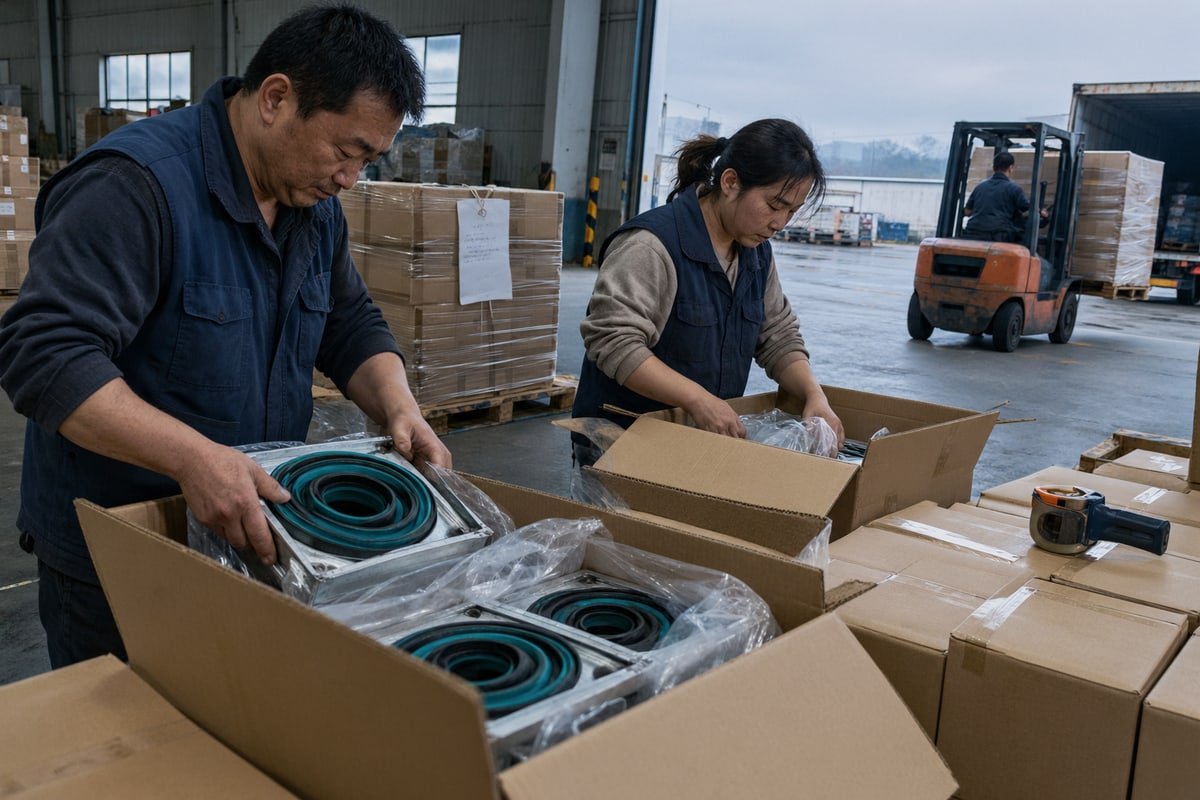
Lean versus buffered: resolve the objection with numbers
Lean buyers argue that stock ties up working capital 4 and adds inventory carrying costs. That is correct when schedules are stable and suppliers are highly reliable. Schedules in this market are not stable. Industry reporting on offshore cable projects 5 shows installation delays and lead-time extensions have nearly doubled since 2018 in some segments. Constrained cable-lay segments face 24 to 36 month schedule extensions. When slippage is common and substitution is limited, a modest buffer is cheaper than emergency airfreight.
| Strategy | Working capital | Protection against slip | Dead stock risk | Best when |
|---|---|---|---|---|
| Pure just-in-time | Lowest | Weak | Very low | Stable slots, reliable supplier, short lead times |
| Targeted buffer of standard parts | Moderate | Strong for common sizes | Low with step-core modules | Repeat frame sizes across projects |
| Regional hub with full range | Highest | Strongest | High if project mix changes | Many concurrent hulls or containers in one region |
A safety stock calculation you can defend
Keep it simple. Safety stock equals the service factor, times the standard deviation of lead time, times average daily usage. The key input is variability. Use your own history of China port to site transit, not the supplier's quoted average. Then make it dynamic. After every delayed project, update the standard deviation and recalculate. Our customers who do this end up with smaller buffers than they feared, because the buffer sits only on high-variability, high-consequence items.
What to stock and what to leave alone
Stock what repeats: standard frames, stay plates, compression units, and step-core modules in the common widths. Do not stock custom-molded sizes or project-specific frames. Order those on milestone call-offs. Because our factory runs in-house mold making, custom sizes can still be produced on demand without loading your warehouse.
Three tools that lower the cost of holding
Bonded warehousing near the yard defers import duties until installation, which helps cash flow during long delays. A cross-project sharing rule lets stock move between hulls or container builds as progress changes. And a quarterly check of classification society rule changes keeps long-held firestop stock compliant. Inventory risk from shipyard delays is not eliminated by any one of these. Together, they make it manageable.
Fazit
Shipyard dates move and Chinese manufacturing lead times stretch. Idle stock or stockouts follow. Qualify a drop-in second source early, contract for flexibility, and buffer only standard parts.
Fußnoten
1. ISO 9001 provides the international standard for qualifying and managing a primary supplier within a quality system. ↩︎
2. DNV is the leading international body for maritime type approval and safety certification for offshore components. ↩︎
3. The WTO monitors global trade impacts and policy changes resulting from geopolitical disruption and economic shifts. ↩︎
4. The World Bank offers analysis on financial risk management and working capital requirements in global markets. ↩︎
5. IRENA provides data on offshore energy infrastructure and the technological requirements for global energy transitions. ↩︎


 English
  Español de México
  Deutsch
  Français
  العربية
  Русский