
Every week our export desk in Shaanxi hears one question: own freight forwarder or supplier shipping for multi cable transit 1? Pick wrong, and a cheap quote becomes a late bulkhead.
Choose your own freight forwarder or supplier shipping for multi cable transit based on shipment profile. Use your own forwarder for repeat, high-value, or schedule-critical MCT orders to control landed cost and visibility. Accept supplier shipping for small, simple, or first-time orders where convenience outweighs control.
The rest of this article breaks that answer into four practical questions HS codes 2. I will cover landed cost, lead-time control, customs paperwork, and [Incoterms](https://dewinmct.com/?p=809). Each section ends with a clear rule you can apply to your next MCT order.
How do I compare total landed cost between my own freight forwarder and supplier-arranged shipping for MCT modules?
A sourcing manager in Rotterdam once sent me two quotes for the same pallet of TSC modules. The CIF number looked cheaper. The landed number was not.
Compare total landed cost by adding every charge from factory door to your site: product price, origin handling, main freight, cargo insurance, customs clearance, import duties, destination terminal fees, and last-mile delivery. Supplier CIF quotes often hide destination fees, so request itemised line-by-line breakdowns from both sides.

The mistake I see most often is simple. Buyers compare a supplier's freight line against a forwarder's freight line. Those two numbers do not measure the same thing. A supplier CIF or CFR price covers the cargo to the destination port. It does not cover what happens after the vessel docks. That is where hidden fees appear.
Why the headline freight rate misleads
When a seller bundles freight into the product price, the seller usually books through a nominated agent at origin. That agent earns part of its margin at destination. The destination agent then bills the consignee for terminal handling, delivery order release, documentation, and container cleaning. None of these appear on the CIF quote. Your own freight forwarder, by contrast, prices the whole chain on one sheet. The freight line may look higher, but the total is usually transparent.
A landed cost worksheet for MCT modules
| Cost line | Supplier CIF quote | Own forwarder on FOB | What to verify |
|---|---|---|---|
| Ex-works product price | Included | Separate | Same module count and frame spec |
| Export packing and crating | Usually included | Included by seller | Crate drawings, moisture protection |
| Origin handling and export clearance | Included | Seller pays under FOB | Who pays customs inspection if selected |
| Main ocean or air freight | Included, not itemised | Itemised by forwarder | Carrier name, routing, transit time |
| Cargo insurance | Included under CIF only | You arrange | Coverage value and claim process |
| Destination terminal handling | Often billed later | Itemised | Ask for the local agent tariff |
| Import customs clearance 3 and duties | Buyer pays | Buyer pays, forwarder files | HS code agreed in advance |
| Last-mile to site or yard | Not included | Itemised | Crane or tail-lift requirements |
Chargeable weight and mixed MCT cargo
MCT shipments are unusual cargo. A welded galvanized frame is dense. A carton of halogen-free EPDM sealing modules is light and bulky. Freight costs for this mix depend on whether the carrier charges by weight or by volume. A forwarder working for you will pack module cartons inside frame crates to reduce chargeable weight. Suppliers rarely optimise this unless asked. On our own packing line, we only do this when the buyer's forwarder requests it, because the packing plan has to match their consolidation.
Consolidation across vendors
If you buy frames, compression units, and stay plates from more than one vendor, your own forwarder can combine them into one container. Supplier shipping cannot do that. Per-unit freight drops sharply once several small LCL lots become one FCL move.
Which shipping method gives me better control over lead times and delivery reliability for cable transit frames?
Speed and control rarely come together. When we crate welded transit frames in Shandong, the buyer decides whether the container goes direct or waits for consolidation.
Your own freight forwarder gives better control over lead times and delivery reliability for cable transit frames. You choose the carrier, routing, and transit time, receive milestone tracking after departure, and can schedule just-in-time delivery to a shipyard berth or site. Supplier shipping leaves routing and priority to the seller.

Lead time for an MCT order has two halves. The first half is production. That part sits with the factory. The second half is transit time and delivery. That part sits with whoever booked the freight. Most delays that reach an installation crew come from the second half.
Where control actually changes hands
| Control point | Own freight forwarder | Supplier shipping |
|---|---|---|
| Carrier selection | Buyer chooses | Seller's agent chooses |
| Routing and transshipments | Buyer approves | Often unknown until Bill of Lading issued |
| Departure priority when space is tight | Buyer's forwarder negotiates | Seller's agent decides across many clients |
| Tracking after vessel departs | Milestone updates to buyer | Frequently a black hole until arrival notice |
| Delivery slot at site or yard | Buyer schedules just-in-time | Destination agent calls when ready |
| Exception handling | One accountable party in your time zone | Relayed through the seller |
The visibility black hole
Under supplier shipping, the seller often stops communicating once the cargo leaves the port. The seller has fulfilled its obligation. The destination agent has not yet contacted you. During that window, you cannot answer your site manager's question about arrival. A forwarder you appoint owns that window. It reports milestones, flags rollovers, and rebooks if needed.
Direct routing versus consolidation
A supplier's agent tends to consolidate cargo from several customers. That lowers the agent's cost but adds transshipments and days. Your own forwarder can book a direct service if the project needs it, or accept consolidation if the schedule allows. The point is that you make the trade-off, not a third party.
Just-in-time delivery to the bulkhead
Cable transit frames are often welded into bulkheads or container walls before the sealing modules arrive. If frames arrive late, welding stops. If modules arrive early, they sit in a yard and risk damage. A forwarder working for you can hold cargo at a destination warehouse and release it to match the installation sequence. That is logistics management, not just freight.
Weighing delay cost against freight savings
Before accepting a cheaper supplier route, estimate one day of installation delay in labour and crane cost. Compare that against the freight difference. For BESS container lines and data center builds, the delay usually costs more.
Does using my own freight forwarder affect customs clearance and export documentation for MCT systems from China?
Our documentation team stamps the same packing list twice: once for the factory gate, once for the forwarder. A mismatch between the two is where clearance delays start.
Yes. With your own freight forwarder, the forwarder handles import customs clearance and can pre-audit HS codes and certificates before departure. The exporter still prepares the commercial invoice, packing list, and origin documents. With supplier shipping, the seller controls export paperwork, and errors are harder to catch.
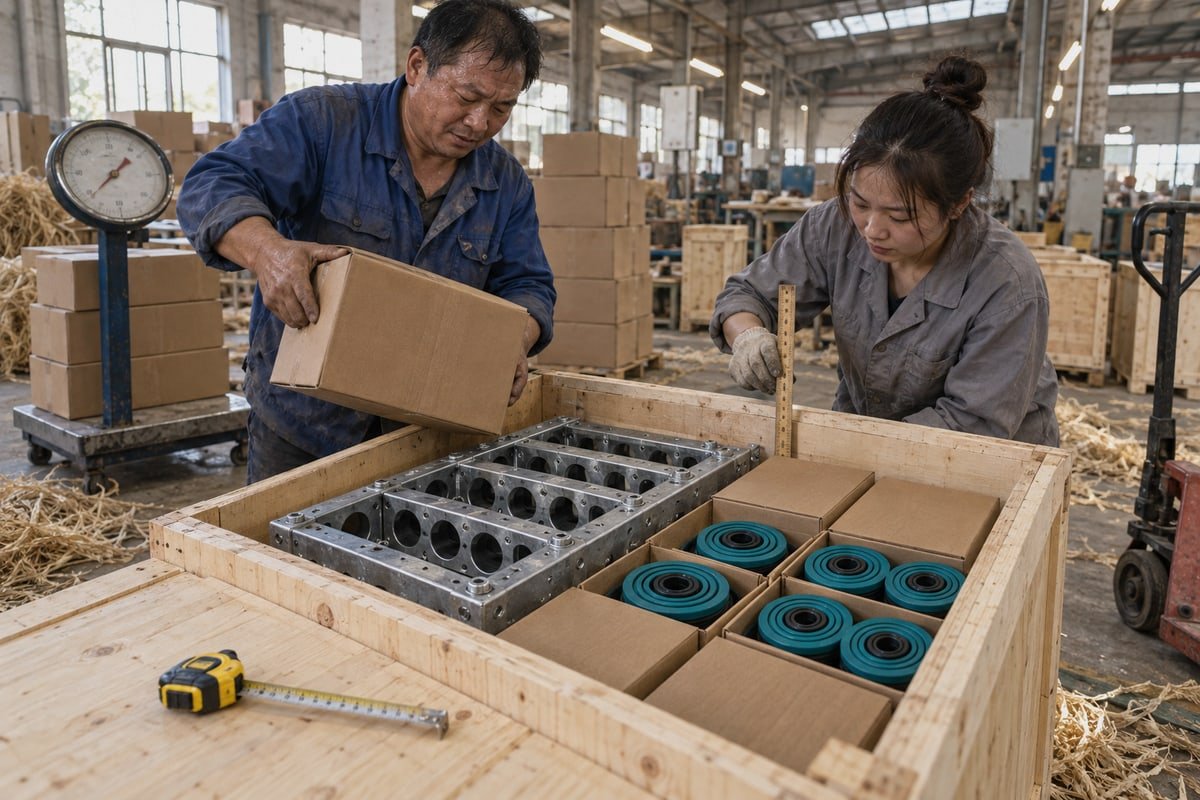
Customs clearance for MCT systems is not complicated in principle. In practice, it fails on small details. A module described as "rubber block" on one document and "cable sealing module" on another invites inspection. A frame weight that differs between packing list and Bill of Lading invites a query. The shipping model decides who catches these errors and when.
Who prepares what
| Document | Prepared by | Own forwarder model | Supplier shipping model |
|---|---|---|---|
| Commercial invoice | Exporter | Forwarder reviews before filing import entry | Seller's agent files, buyer sees it late |
| Packing list | Exporter | Cross-checked against crate labels at pickup | Rarely checked by an independent party |
| Bill of Lading | Carrier via forwarder | Issued to buyer as consignee, buyer controls release | Issued via seller's agent, release depends on payment status |
| Certificate of origin | Exporter via chamber | Forwarder confirms it matches import requirements | Provided on request after shipment |
| Test and approval documents | Exporter | Forwarder pre-audits for import authority needs | Attached only if buyer asks |
| Import declaration | Importer's broker | Your forwarder files | Destination agent files, often as add-on fee |
A pre-departure audit in five steps
- Agree the HS code with your forwarder before the goods are packed. MCT components sit between rubber articles, steel structures, and electrical installation parts. A misclassification of a safety-critical seal delays release.
- Match every description across invoice, packing list, and Bill of Lading. Use the same model names, such as TSC square modules or TSR round assemblies, on all three.
- Confirm which certificates the import authority or end client wants. Buyers in marine and offshore projects often ask forwarders to check class approvals and hazardous-area paperwork before departure.
- Check that declared weights match crate labels. Our QC team weighs every crate before release and prints the figure on the packing list.
- Decide who holds the original Bill of Lading and how it will be released.
Where our export desk fits
We handle export documentation on every order, whether the buyer nominates a forwarder or asks us to arrange freight. Our test documents for A-0/A-60 fire rating, IP68 ingress protection, and watertight sealing from 0.01 to 0.4 MPa are available on request, and our BV factory approval and ISO 9001 and IATF 16949 4 certificates can be attached to the shipping file. The difference is who audits the file. When you appoint a forwarder, a second party checks our paperwork against your import rules. That check is the main benefit.
How do I choose the right Incoterms when sourcing MCT modules to protect my budget and delivery schedule?
The lesson I keep repeating to new buyers: the Incoterm on our proforma invoice decides more about your delivery date than the freight quote ever will.
Choose FCA or FOB when you want your forwarder to control main carriage and destination costs. Choose EXW only if your forwarder has strong origin agents in China. Choose DAP or DDP when you want the supplier to carry delivery risk and you accept less visibility and higher freight costs.
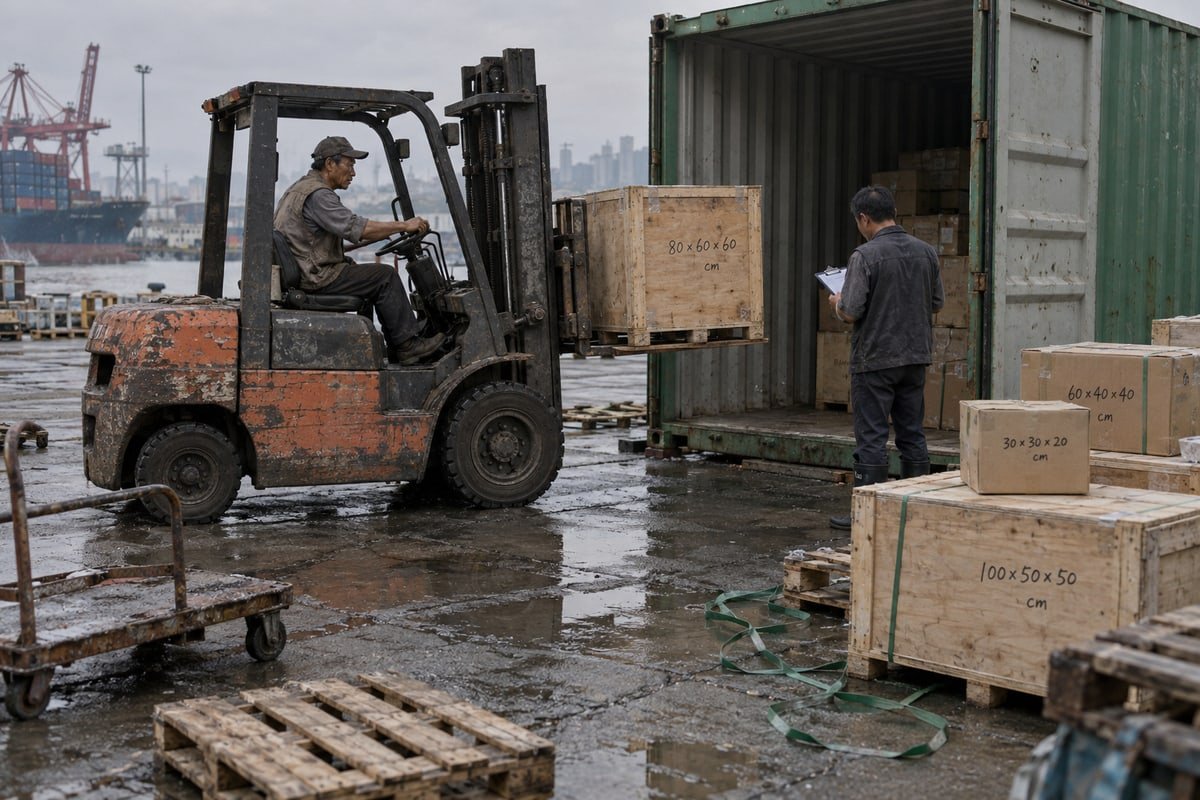
Incoterms are the rules that assign cost, risk, and tasks between seller and buyer. They quietly decide who wins or loses on shipping. "Supplier shipping" under CIF means something very different from "supplier shipping" under DDP. The table below shows how responsibility shifts.
What each Incoterm means for an MCT order
| Incoterm | Who books main freight | Who clears export | Who clears import and pays import duties | Buyer visibility | Best fit for MCT |
|---|---|---|---|---|---|
| EXW | Buyer | Buyer | Buyer | Full, but buyer handles origin | Buyers with strong China origin agents |
| FCA | Buyer | Seller | Buyer | Full from handover point | Air freight and multimodal moves |
| FOB | Buyer | Seller | Buyer | Full from vessel loading | Most repeat ocean shipments |
| CIF | Seller | Seller | Buyer | Low after departure | Simple one-off orders to a port |
| DAP | Seller | Seller | Buyer pays duties, seller delivers | Low, seller reports on request | First orders where buyer lacks logistics staff |
| DDP | Seller | Seller | Seller | Low | Small shipments where simplicity matters most |
Objections I hear, and how I answer them
Some buyers say supplier shipping is simpler and faster to book. That is true for a first sample order or a low-value spare parts lot. I do not argue with it. But the same buyer, once ordering monthly for a BESS container line, needs standard routing and one accountable forwarder across all Chinese vendors. At that point FOB or FCA with your own forwarder wins.
Other buyers say a capable supplier can outperform a weak buyer-side logistics desk. Also true. A factory that ships MCT products every week knows how to crate a frame and protect EPDM modules from moisture. So the answer is often a hybrid: the supplier handles packing and export coordination, and your forwarder controls main carriage and destination delivery.
A decision matrix by shipment profile
| Shipment profile | Recommended model | Suggested Incoterm |
|---|---|---|
| First validation samples | Supplier shipping | DAP or courier prepaid |
| Small spare module lots, no schedule pressure | Supplier shipping | CIF or DAP |
| Repeat orders to one market | Own forwarder | FOB |
| Multi-vendor project consolidation | Own forwarder | FCA or FOB 5 |
| Schedule-critical shipyard or EPC delivery | Own forwarder with JIT release | FOB |
| Buyer needs ESG carbon reporting on transport | Own forwarder | FCA or FOB |
Large infrastructure and offshore energy projects now ask for carbon footprint data on the transport phase. Only a forwarder working for you can provide that consistently across suppliers.
Fazit
Control versus convenience is the real choice. Match logistics ownership to shipment complexity, buyer capability, and delay cost. When you validate modules first, our free samples ship either way.
Fußnoten
1. Provides a technical overview of the multi-cable transit systems discussed in the article. ↩︎
2. The World Customs Organization is the global authority managing the Harmonized System (HS) codes. ↩︎
3. Authoritative government resource for international trade, import requirements, and customs documentation procedures. ↩︎
4. Official site for the International Organization for Standardization, covering quality management standards mentioned. ↩︎
5. The International Chamber of Commerce (ICC) is the official body that defines Incoterms like FCA and FOB. ↩︎



 English
  Español de México
  Deutsch
  Français
  العربية
  Русский