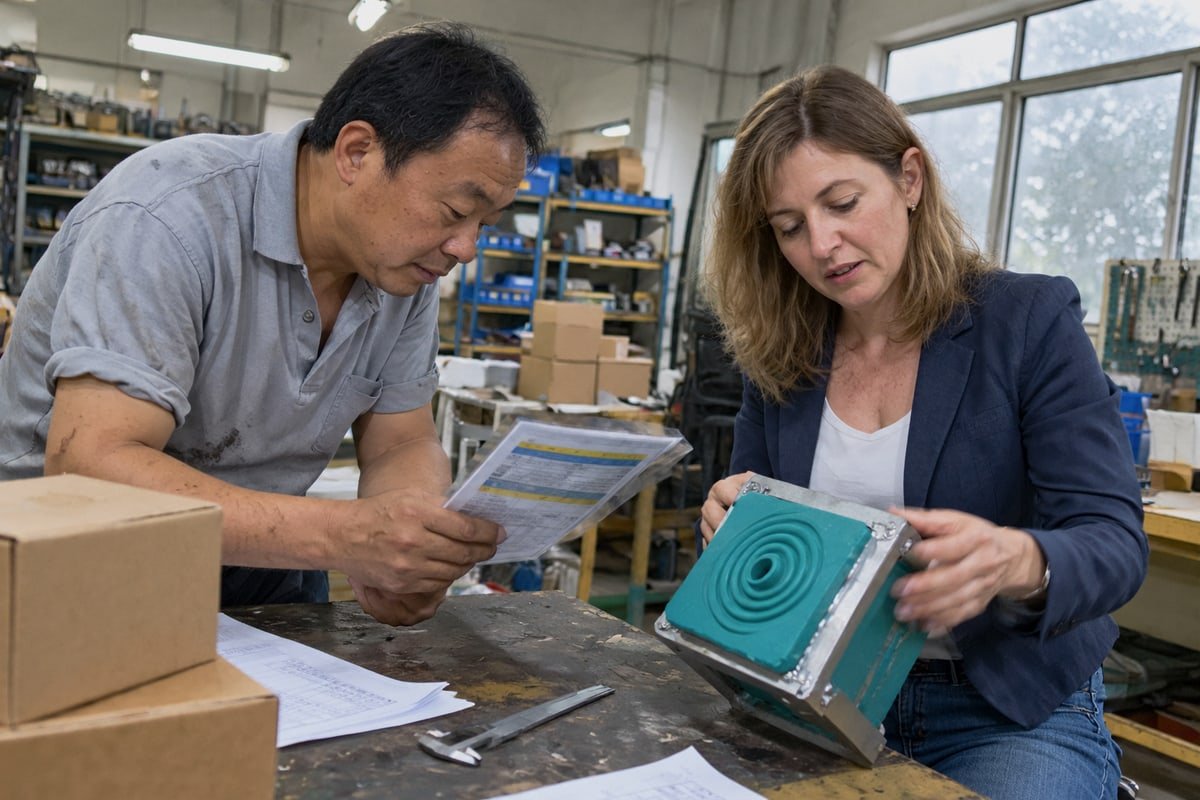
Sourcing replacement modules for multi cable transit systems from China looks simple until a mis-sized block leaks IATF 16949 certificates 1. On our line, we’ve seen exactly that failure cost a buyer weeks.
To evaluate suppliers for replacement modules in multi cable transit systems, verify factory status, dimensional compatibility with your frame standard, third-party fire and IP test reports, EPDM material certificates, ISO 9001 quality control, batch traceability, and free validation samples before comparing unit price.
That answer is the whole framework. The rest of this article breaks it into the four questions our European buyers actually ask classification society factory approval 2. Each section gives you the documents to request, the checks to run, and the numbers to compare.
How can I verify a Chinese MCT supplier's modules are truly dimensionally compatible with my existing 120-frame system?
A purchasing engineer in the Netherlands once sent us a photo of a caliper on his old module before he asked for a quote. I liked that.
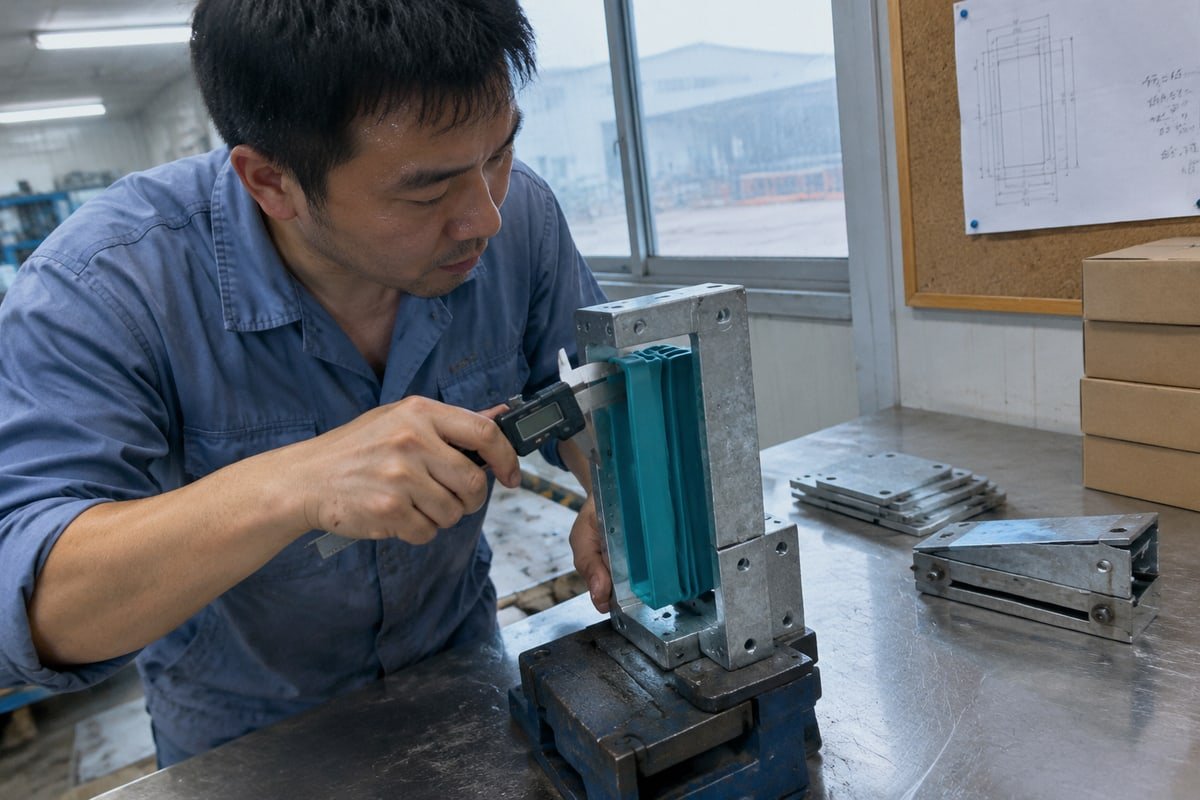
Verify compatibility by requesting the supplier's model cross-reference table, a dimensioned drawing of the exact module, its cable diameter range, and a free validation sample. Then measure the sample against your 120-frame cutout and confirm it compresses correctly with your existing wedge compression unit.
What "120-frame compatible" actually means
The 120-frame standard fixes the internal opening and the packing height of the transit. A compatible module must fit the width and depth of that opening. It must also compress to the right height when the wedge compression unit is tightened. If the block is slightly too tall, the wedge will not seat. If it is too short, the seal never reaches rated pressure. So compatibility has three parts: outer dimensions, compression behavior, and the cable diameter range each module accepts.
Our TSC square modules and TSR round assemblies are built to drop into these cutouts. We keep a cross-reference table that maps the original model number to the DEWIN model. That table is the first document I send to any new buyer. The second is the drawing for that exact model, not a generic catalog page.
Five checks before you approve a drop-in module
| Check | What to ask the supplier for | Pass criteria |
|---|---|---|
| Outer dimensions | Dimensioned drawing and STEP file | Matches your frame drawing within the stated tolerance |
| Layer count and packing height | Frame packing diagram | Same stay plate spacing and same total fill height |
| Cable diameter range | Datasheet for each module size | Covers your smallest and largest cable OD with margin |
| Compression behavior | Shore A hardness value plus a sample | Seals with your existing wedge at normal torque |
| Step-core structure | Photo of a cut sample | Peel layers separate cleanly, with no voids or tearing |
Why looks are not enough
Here is the objection I hear most. "These are simple consumables. If the dimensions match, the cheapest factory will do." I understand the logic, but it skips the physics. Two blocks with identical outer size can use different compounds. A harder compound will not flow around the cable at the same compression. A softer one may creep and lose contact pressure over years of thermal cycling. That is why we publish hardness with every module and ship a sample before any order. The step-core matters too. Each peel layer changes the cable diameter range within one module size. If the layer steps do not match your cable schedule, you will end up with gaps that no wedge can close.
What certifications and test documents should I request before qualifying a new cable transit sealing module supplier?
Early on, we learned that a certificate logo on a datasheet convinced nobody in Europe. Buyers wanted the full report, the scope, and the tested model number.
Request ISO 9001 and IATF 16949 certificates, a classification society factory approval such as BV, full third-party fire test reports to EN 1366-3 or UL 1479 with the tested model listed, IP68 ingress reports, material data sheets for halogen-free EPDM, and batch-level Material Test Reports.
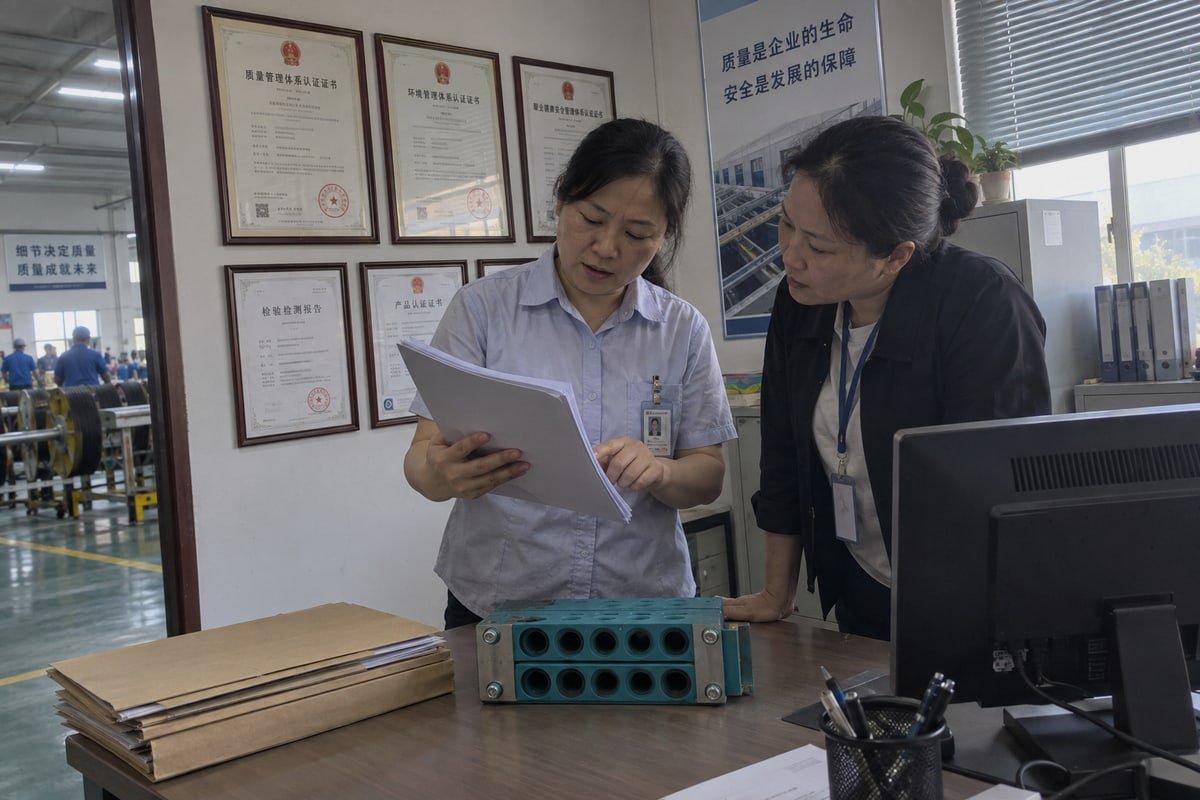
The document set that separates a factory from a listing
Suppliers now sell on certification. Fire ratings, watertight claims, and gas-tight claims appear on almost every product page. That creates a specification race, and it puts the burden on you to separate claims from proof. The table below is the set we hand to buyers who run a formal supplier qualification.
| Document | Why it matters | What to check |
|---|---|---|
| ISO 9001 certification 3 | Proves a working quality system | Certificate number, valid date, and the site address |
| IATF 16949 | Shows automotive-grade process control | Scope covers rubber molding, not only assembly |
| BV factory approval | Links the plant to marine and offshore standards | Approved product range matches the modules you buy |
| Fire test report | Confirms penetration seal integrity under fire | Tested model number, standard, rating, and lab name |
| IP ingress report | Proves watertight sealing | IP67 ingress protection as a minimum; IP68 for submersion |
| Pressure test data | Proves gas-tight sealing | Rated range stated in MPa, with test method |
| Material data sheet | Defines the EPDM rubber material 4 | Halogen-free status, hardness, and temperature range |
| Material Test Reports | Ties each batch to the specification | Lot number, test date, and pass values |
Fire rating certifications by sector
Different sectors read fire evidence differently. Building and data center projects usually reference EN 1366-3 or BS EN 13501-2. North American switchgear buyers ask for UL 1479 5. Marine and offshore projects want A-0 or A-60 division ratings backed by a classification society. Our own modules carry A-0/A-60 ratings, IP68 ingress protection, and watertight and gas-tight sealing from 0.01 to 0.4 MPa. We send those reports on request, and each report names the model that was tested. If a supplier cannot name the tested model, the report may not cover the part you are buying.
Material evidence beyond the datasheet
The word EPDM on a datasheet is not proof. Very low prices often point to recycled rubber or heavy filler loading. Two tests expose that quickly. FTIR testing gives the chemical fingerprint of the compound and reveals hidden plasticizers that cause early cracking. Shore A hardness testing confirms the block will give the right compression ratio in a third-party wedge system. For data center and green building projects, ask for low smoke zero halogen evidence as well. Halogen-free sealing blocks matter there because toxicity limits often go beyond the fire rating itself.
A short factory audit checklist
Some buyers tell me a known brand name matters more than paperwork. I would argue the opposite for replacement parts sourced across borders. A brand tells you who designed the original. Documentation tells you who makes your part today and how. So confirm the factory address, ask which plant molds the rubber, and request photos of the press line and test equipment. We are headquartered in Shaanxi with production in Shandong and Hunan, and we expect buyers to check that. A trading company cannot show you a press.
How do I calculate real cost savings when switching to a second-source MCT supplier without risking quality or delays?
Every quote we send balances two numbers: the unit price and the cost of a failed qualification. I tell buyers to model both, not just one.
Calculate real savings by comparing landed cost per module, not unit price: add freight, duties, qualification testing, and safety stock, then subtract from your current spend. A drop-in second source with verified compatibility and test documents can deliver 40–60% lower module cost without added risk.
A five-step landed cost method
Unit price is where most comparisons start and stop. That is a mistake in this category. Here is the process I walk buyers through.
- Fix the scope. List every module size you buy, the annual volume, and the current price per size. Include spare sealing parts and stay plates if you replace those too.
- Build the landed price. Add freight to your plant, import duties, and inbound handling. Ask the supplier whether export documentation is included. We handle it, but many listings do not.
- Add one-time qualification cost. Count engineering hours for drawing review, sample testing in your frame, and document review. This cost happens once and then spreads across every future order.
- Add risk buffers. Decide how much safety stock you need for emergency maintenance versus project builds. A supplier with stable lead times lets you hold less.
- Compare per module. Divide total annual cost by annual volume for both suppliers. That single number is your real saving.
Where cheap quotes hide their cost
| Cost line | Price-first sourcing | Landed-cost sourcing |
|---|---|---|
| Unit price | Lowest available | Competitive, tied to a drawing and a tested model |
| Rubber quality | Unknown; may be recycled or filled | EPDM rubber material with Material Test Reports |
| Qualification | Skipped or repeated after failure | Done once with free samples and CAD/STEP files |
| Lead time | Variable, no capacity data | Stated lead time from a factory with multiple plants |
| Rework and downtime | Carried by you | Reduced by verified compatibility |
| Spare-part continuity | No guarantee | In-house molds keep sizes available long-term |
Answering the cost-first objection honestly
The cost-first view says replacement modules are consumables, so the lowest bidder wins. I will grant one point: the rubber block itself is cheap to make. But it protects a BESS container, a switchgear room, or a data hall from water, gas, and fire. One failed seal can shut a site down. The saving we quote, in the 40–60% range against the original brand, only counts if the module passes your qualification the first time. That is why our price sits with documents attached. Buyers who chase a further ten percent below that usually pay it back in FTIR surprises, re-sampling, and delayed projects. The right question is not "who is cheapest" but "who is cheapest after I include the cost of being wrong."
What should I look for in free validation samples and CAD/STEP files when comparing MCT manufacturers?
Before any sample leaves our Shaanxi plant, a QC technician checks its compression in a test frame and logs the result against the drawing. That log ships with it.
Look for samples that match the quoted model number, show a clean step-core EPDM structure, list a cable diameter range and Shore A hardness, and seal in your own frame. CAD/STEP files should carry correct outer dimensions, tolerances, and layer counts that match the physical sample exactly.
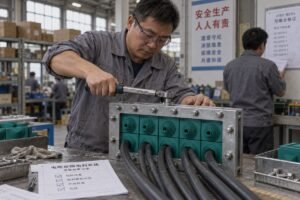
Inspect the sample like a QC engineer, not a buyer
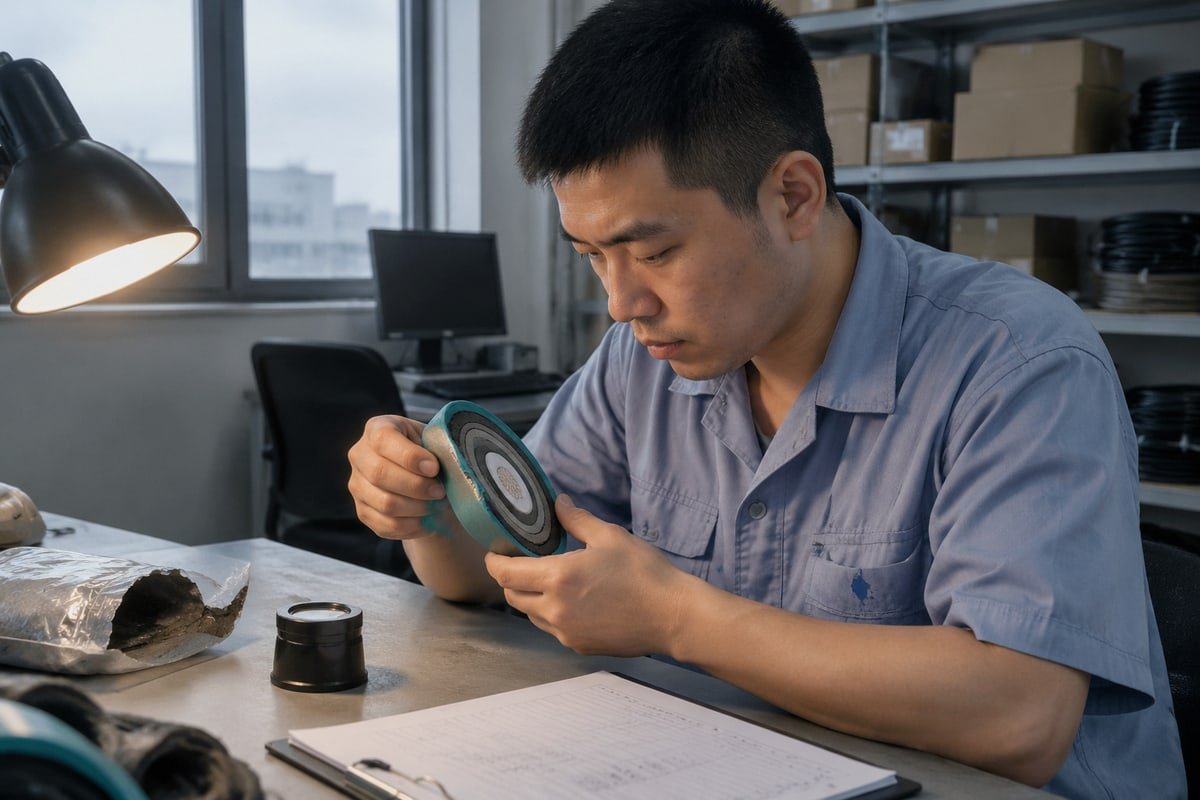
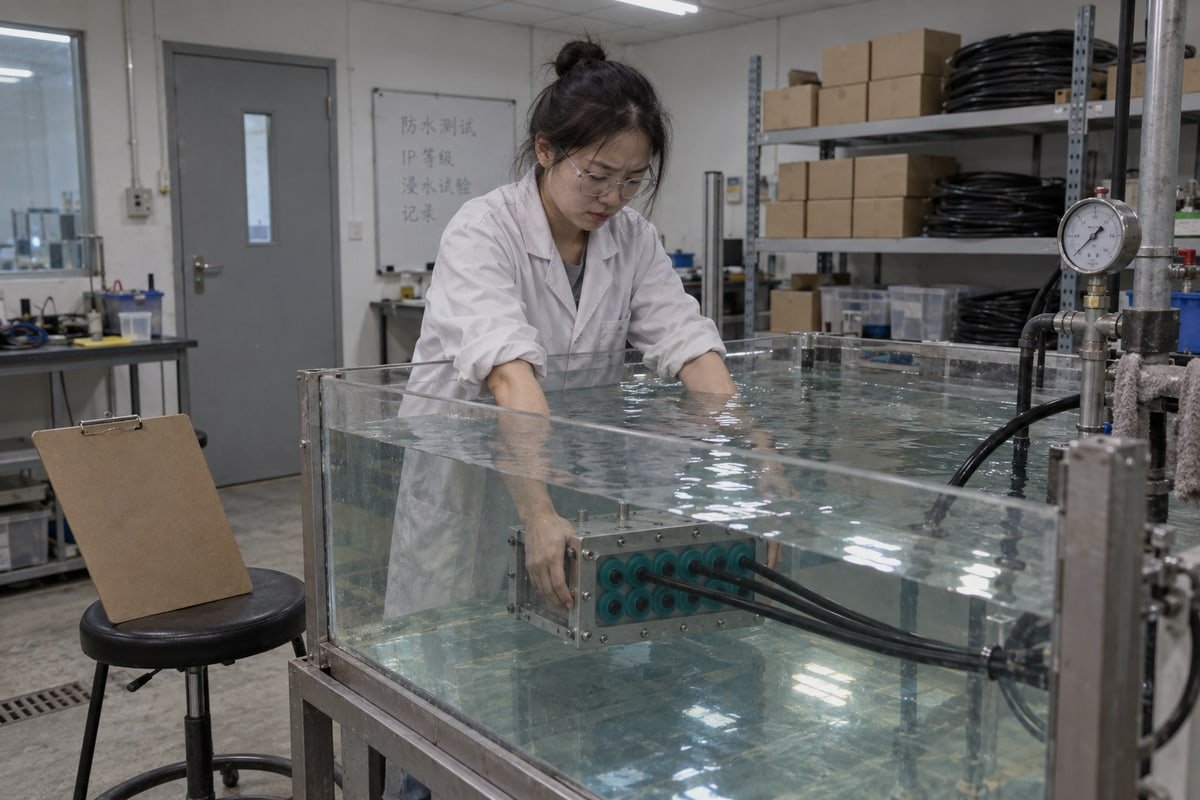
A sample is your one chance to test the part in your own system before money moves. Use it fully. Measure the outer dimensions with a caliper and compare them to the drawing. Peel two or three step-core layers and look at the cut surface. Good halogen-free sealing blocks show a uniform color with no streaks, bubbles, or dusty filler. Press a thumbnail into the surface; a recycled compound often feels dead and does not recover. Then install the sample in a spare frame with your real cables and your existing wedge compression unit. Tighten to normal torque and check for gaps around each cable. If you have a pressure rig, run it. If not, a simple water test on a bench frame still shows leaks quickly.
Match the files to the physical part
A CAD/STEP file is only useful if it describes the same object you are holding. I have seen files that came from a different generation of tooling than the sample in the box. So compare the two directly.
| Item to compare | In the STEP file | On the sample |
|---|---|---|
| Outer width, depth, and height | Model dimensions with tolerance | Caliper measurement |
| Layer count and peel thickness | Visible steps in the model | Physical peel layers |
| Cable diameter range | Noted in metadata or drawing | Marked on the block or the datasheet |
| Model number | File name and title block | Molded or printed on the block |
| Frame reference | 120-frame cutout drawing | Fit test in your spare frame |
One good sample does not equal a qualified supplier
Some buyers tell me a sample and a few factory photos are enough. A good sample proves the supplier can make one good part. It does not prove batch consistency, third-party performance, or that the same compound arrives next year. That is where ISO 9001 certification and IATF 16949 process control come back in. Ask how each lot is controlled, and ask for the Material Test Reports for the batch your sample came from. Then ask for the same reports on your first production order and compare the values. Suppliers with in-house mold making can also protect you on continuity, since custom sizes and private-label runs stay available when tooling is owned by the factory. Finally, consider serialized modules or QR-code marking. They cost little at the molding stage and make future maintenance tracking and digital twin asset records far simpler for your site team.
Conclusion
Cheap modules can fail where it hurts most. Demand drawings, test reports, and samples first, then price. Evaluate the supplier as an engineering partner, and the savings follow.
Footnotes
1. Official site for the automotive quality standard required for rubber molding process control. ↩︎
2. Authoritative marine classification society site relevant to offshore MCT system certifications. ↩︎
3. Official ISO page for the quality management standard mentioned in the supplier qualification section. ↩︎
4. Technical overview of the EPDM compound used for sealing modules in cable transit systems. ↩︎
5. Official UL page for fire resistance testing standards used in North American cable transit specifications. ↩︎


 English
  Español de México
  Deutsch
  Français
  العربية
  Русский