
Cable transits shipped without supplier support for on-site installation guidance can leak at the first pressure test IATF 16949 1. I have seen the rework bills. Our factory’s process exists to prevent that.
To get supplier support for on-site installation guidance when sourcing multi cable transits from China, write remote video guidance, drawings, training, and optional technician visits into the sales contract, request installation manuals and torque specifications before ordering, and confirm a named English-speaking engineer for your installation window.
A cable sealing system is only as good as its installation Lloyd’s Register 2. The four questions below are the ones our export customers ask most. I will answer each one with the documents, checks, and contract terms we actually use.
Can I get remote video-based installation guidance instead of flying in an on-site engineer?
A BESS container builder in Europe asked our engineers a question: could we guide his crew through a first TSC module install by video call? We could, and we did.
Yes. Most capable Chinese MCT suppliers now offer remote video guidance through live video calls, recorded tutorials, and photo review of each step, from frame fit-up to final compression. For standard 120-frame installations this replaces a flown-in engineer; site visits remain sensible for complex marine or hazardous-area projects.
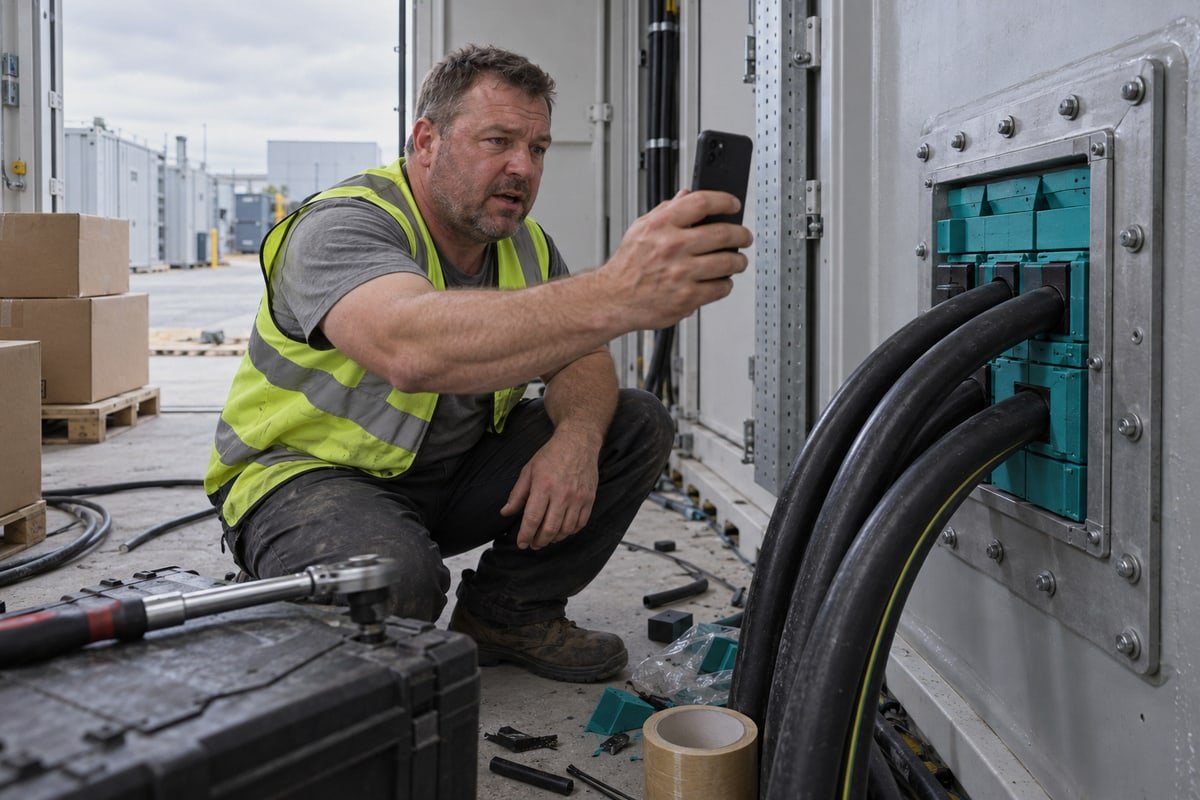
Remote support works because MCT installation is a sequence of visible steps. A camera can check most of them. Our engineers look for four things on a live call: the frame is square and fully welded or bolted, cables run straight through the frame at a 90-degree entry angle with enough slack behind, the packing blocks and stayplates are stacked without gaps, and the compression wedge unit is tightened to the torque value on the manual. If a step looks wrong on camera, we stop the crew and correct it before the next layer goes in.
What a remote support package should include
We structure remote support in three layers. First, a recorded library: short HD videos for each frame type and each TSR or TSC module size, with step-by-step manuals in English and other languages on request. Second, live video conferencing during the installation window, so the crew can show us the frame and we can show them a bench-top demonstration in the factory. Third, photo review after compression. The crew sends close-ups of the module faces and the wedge, and we confirm the seal looks even before they move to the next transit. Some buyers now ask about augmented-reality remote assistance, where our engineer overlays markers on the technician's phone view. We support it when the buyer's platform allows it, but a plain video call solves most problems.
Remote guidance versus a flown-in engineer
| Factor | Remote video guidance | On-site technician from China |
|---|---|---|
| Typical cost | Usually included or low fixed fee | Man-day rate plus flights, hotel, visa |
| Lead time to start | Same day or next day | Visa processing can take weeks |
| Best for | Standard 120-frame transits, cabinets, containers, repeat installs | First-ever installs in marine and offshore applications, class-surveyed jobs |
| Accountability | Photo and video record of each step | Signed technical supervision report |
| Limitation | Depends on site connectivity and camera access | Availability and travel restrictions |
Some buyers take the cost-first view: buy hardware only and let their own electricians install it. That can work if the team has installed MCTs before. But for a first install, a two-hour video session costs almost nothing and removes most sealing errors. If the site is a shipyard or offshore platform, we recommend negotiating man-day rates, visa time, and travel costs for a technician in the contract, or using a local partner installer we can brief in advance.
What documentation and CAD/STEP drawings does the supplier provide to prepare my team before installation?
During a factory acceptance test, our QC team found the customer's frame cutout drawing and our packing plan disagreed by a few millimetres. The drawing package caught it before shipment.
A capable supplier provides 2D installation drawings, 3D CAD/STEP models of frames and modules, a packing plan showing module positions, a hole-cutting template, an installation manual with torque values, a model cross-reference table, and test certificates for fire rating, IP68, and pressure tightness, all before shipment.
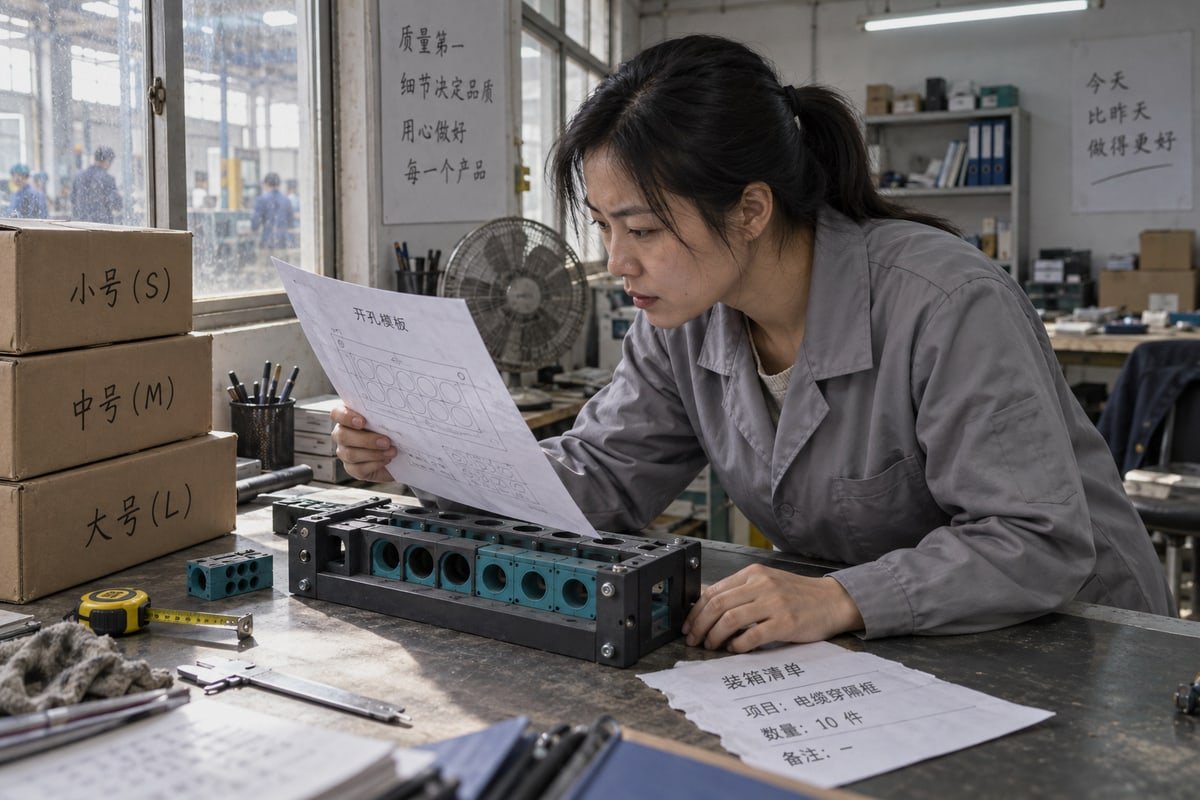
Documentation is where a factory shows whether it understands installation or only production. A price list tells you nothing about how the transit will be built on site. The package below is what we send to purchasing engineers at OEM integrators and EPC teams, usually in stages: sizing documents at quotation, drawings at order confirmation, and the full QA/QC set with the shipment.
The document set and when you should have it
| Document | Purpose | When to receive it |
|---|---|---|
| Cable schedule and module selection sheet | Matches each cable diameter to a step-core module size | Before the order |
| Model cross-reference table | Maps your existing module models to equivalent DEWIN models | Before the order |
| 2D frame drawing and hole-cutting template | Lets the fabricator cut the bulkhead or panel opening correctly | At order confirmation |
| 3D CAD/STEP files for frames and modules | For your assembly model, BIM clash checks, and installation sequencing | At order confirmation |
| Packing plan | Shows module positions, packing blocks and stayplates, and spare capacity | Before shipment |
| Installation manual with torque values | Step-by-step method, lubrication, gap checks, compression procedure | Before shipment |
| Test certificates | Fire rating A-0/A-60, IP68, watertight and gastight seals at 0.01–0.4 MPa | With shipment |
| Quality control inspection report | Dimensional and material checks per batch | With shipment |
Why STEP files matter before the hardware arrives
Data center and BESS builders often import our STEP models into their enclosure or BIM model. That lets them simulate the install sequence and find clashes, such as a cable tray that blocks the compression wedge unit, before the crates leave China. It also lets their engineers check the depth of the frame against the wall or panel thickness. We supply native models for TSR round assemblies, TSC square modules, frames, and spare sealing parts, so the integrator can model the whole cable sealing system, not just one part.
The manual should be specific, not generic
A good installation manual names the exact frame series and module size. It gives the lubrication step, the sequence for stacking modules and stayplates, the position of the wedge, and the torque value with the tool size. It also includes a final visual check: no gaps between blocks, no twisted cables, and even compression across the frame. We include an installation method statement on request, because many EPC contractors need it for their own permit-to-work system and for the client's handover file.
How do I confirm my MCT modules are dimensionally compatible with our 120-frame housings before installation begins?
We weigh one trade-off on every second-source enquiry: ship fast on a catalogue match, or hold the order for a validation sample. For 120-frame compatibility, the sample wins every time.
Confirm compatibility by sending the supplier your frame drawing and existing module part numbers, matching them against a model cross-reference table, and test-fitting free validation samples in an actual frame with stayplates and the compression wedge unit before the bulk order. Check module width, height, depth, and compression travel.

Drop-in second sourcing is the reason many of our European customers first contact us. They already run 120-frame fire-rated transit frames from an established brand, and they want a qualified alternative at 40–60% lower cost without changing frames. That only works if the module fits the existing cutout and compresses correctly. Our TSC modules are dimensionally compatible with common 120-frame standards, but I still ask every buyer to prove it on their own bench.
A four-step validation process
- Send us your frame drawing, or at least the frame model and the current module part numbers. We return a cross-reference table showing the existing model and the matching DEWIN model.
- Request free validation samples: a few module sizes, packing blocks, a stayplate, and a compression wedge unit if your frame uses one.
- Test-fit the samples in a real frame, not on a drawing. Stack modules and stayplates to full height, insert cables, and compress to the manual's torque.
- Record the result. Measure the compression travel and confirm the blocks show even bulge across the width. Then release the bulk order.
The dimensions that actually decide fit
| Check | Why it matters | Failure sign |
|---|---|---|
| Module width and height | Must fill the frame width and stack to the exact frame height | Gap at the top before compression |
| Module depth | Must match frame depth so the wedge compresses the whole face | Modules sit proud or recessed |
| Cable diameter range per module | Step-core EPDM must peel to the cable size with a snug fit | Loose fit or over-stretched core |
| Stayplate thickness | Sets the layer count and total stack height | Wrong count leaves a gap |
| Compression travel | The wedge must reach specified torque within its range | Bolts bottom out before seal forms |
Some buyers ask whether split-frame or pre-populated transit designs could remove the fit question entirely. They help. A frame delivered with modules already packed to a cable schedule cuts on-site assembly time and reduces the need for expert supervision. We offer this for repeat container and switchgear builds. For custom openings, our in-house mold making produces non-standard module sizes, which is faster than modifying the frame. Either way, the validation sample stays in the process, because our quality control inspection at the factory cannot see your frame.
Will English-speaking technical staff be available during my installation window to troubleshoot sealing or compression issues?
One lesson from years of exporting to Europe and the Middle East: a time-zone gap only hurts when nobody planned for it. So we schedule engineer cover before crates ship.
Yes, if you book it. Ask the supplier to name an English-speaking engineer, agree overlapping working hours for your installation window, and set a response-time commitment in the contract. Good suppliers add a chat group, photo review of compression results, and escalation to a senior engineer for sealing failures.
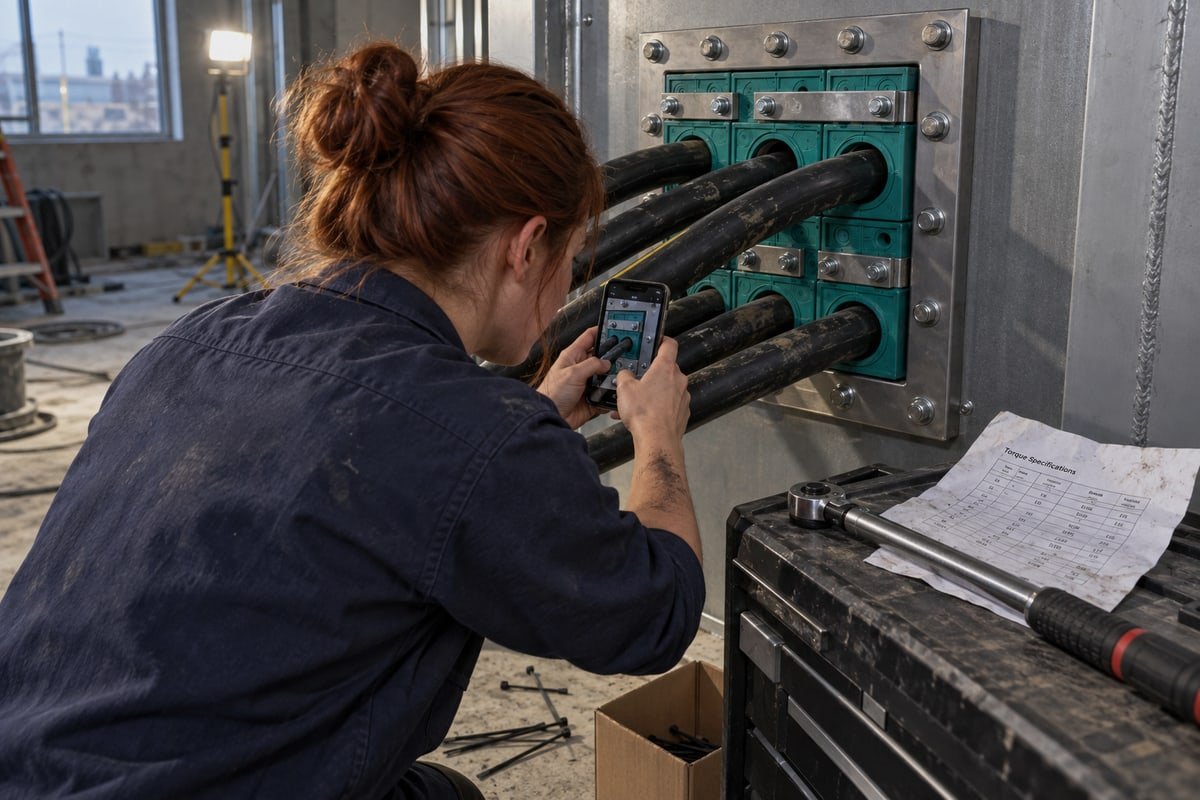
Language and time zones are real objections, and a vague promise of "24/7 support" does not answer them. What answers them is a name, a schedule, and a written obligation. Our export customers get a named technical contact, not only a sales representative, and we agree the installation window in advance. China is usually six to seven hours ahead of Central Europe and a few hours ahead of the Gulf, so a morning slot on your site lands in our afternoon. That overlap is enough for live troubleshooting on most days.
What to write into the contract
Put after-sales technical support in the sales contract or proforma invoice, not in an email. We recommend four clauses: a named engineer with a backup, a response-time commitment for technical questions during the installation window, the scope and price of remote support and any optional on-site technical supervision with man-day rates and travel terms, and a spare-module delivery commitment. If the project needs DNV GL certification 3, ABS, or Lloyd's Register survey, name the class society and confirm who arranges the local surveyor. Buyers with the local-support view often prefer a third-party inspector nearby. That is compatible with factory-direct support: the surveyor witnesses, and our engineer answers technical questions live.
Common sealing and compression problems we resolve remotely
| Symptom | Likely cause | Fix we guide on camera |
|---|---|---|
| Wedge reaches torque but modules feel loose | Wrong module size or missing packing block | Recheck the packing plan and add the correct block |
| Bolts bottom out before torque | Stack too low, missing stayplate layer | Add stayplate or spare module, recompress |
| Water passes at pressure test | Cable not straight, core peeled too far | Re-seat cable at 90 degrees, replace the module core |
| Uneven bulge across the frame | Compression applied from one side only | Tighten bolts alternately in stages to specified torque |
| Module cracks or tears | No lubricant, or over-torque | Lubricate, replace the module, follow the manual value |
We also run certification-style training webinars for local installers before the project starts. A two-hour session on halogen-free EPDM module 4 handling, stayplate stacking, and compression is enough for a crew to install watertight and gastight seals correctly on a standard frame. Our BV-approved factory and ISO 9001 5 and IATF 16949 systems cover what leaves the plant. The webinar, the chat group, and the named engineer cover what happens after.
Conclusion
A transit that arrives is not a transit that seals. Contract the support, get the drawings, test the samples, name the engineer. That is how we keep projects compliant.
Footnotes
1. Global automotive quality standard ensuring rigorous manufacturing controls for cable transit components. ↩︎
2. Authoritative maritime classification society that provides technical supervision and survey services for infrastructure. ↩︎
3. Leading maritime classification society providing certification for safety-critical offshore and marine equipment. ↩︎
4. Technical material used in cable sealing modules, known for its durability and fire resistance. ↩︎
5. Official standard for quality management systems used to verify factory production quality. ↩︎



 English
  Español de México
  Deutsch
  Français
  العربية
  Русский