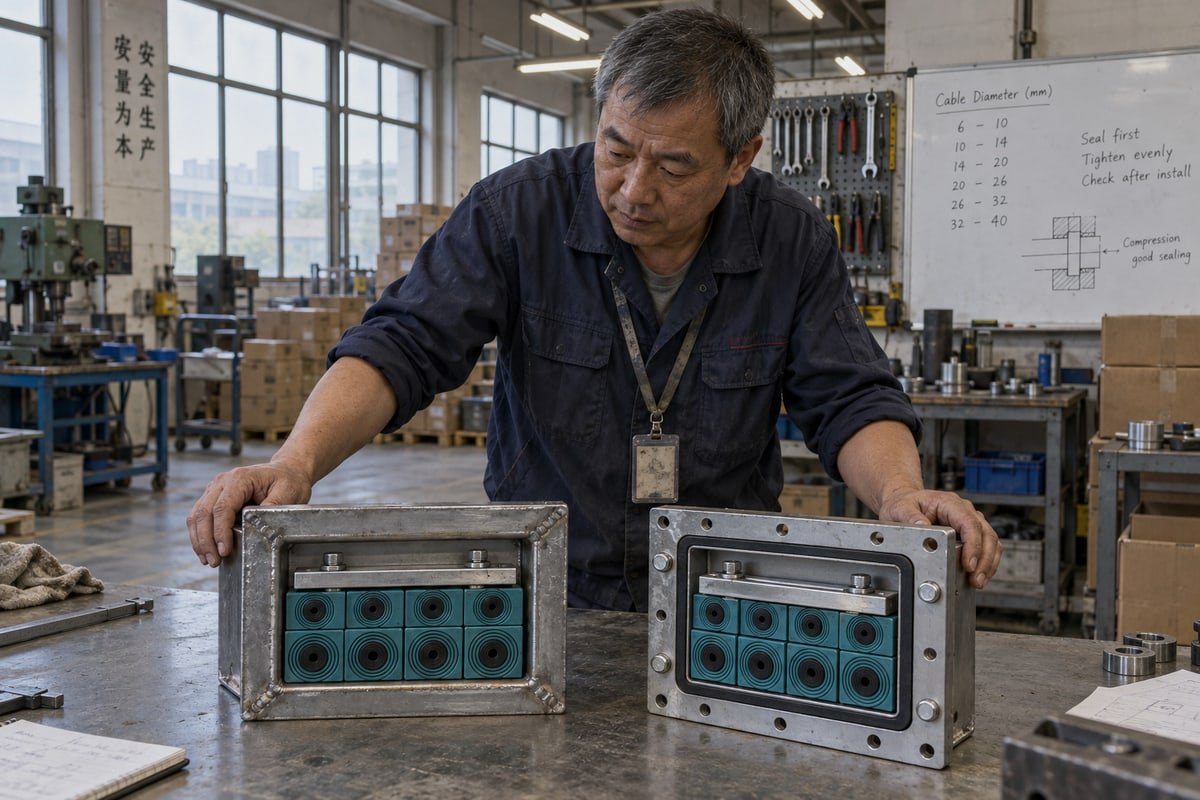
I have watched projects stall at the multi cable transit frame stage because nobody chose welded or bolted early. Our production line ships both, so I see the fallout.
Choose a welded multi cable transit when the frame is permanent, welding is allowed, and the structure sees high vibration or needs full 360-degree grounding. Choose a bolted multi cable transit for retrofit installation, hot-work-restricted zones, and any project where cable routes may change later.
That is the short answer. The longer answer depends on your site, your certificate, and your budget over the life of the asset. Below I walk through each of those in order.
How do welded and bolted MCT frames differ in sealing performance and long-term reliability?
Last month our QC team pressure-tested a bolted frame and a welded frame side by side at 0.4 MPa. Both held. The difference showed up somewhere else.
Welded and bolted MCT frames seal cables the same way, through compressed modular sealing blocks and a compression unit. The frame-to-structure joint differs: a welded seam is continuous and permanent, while a bolted frame depends on a gasket and correct bolt torque, which needs periodic checking under vibration.
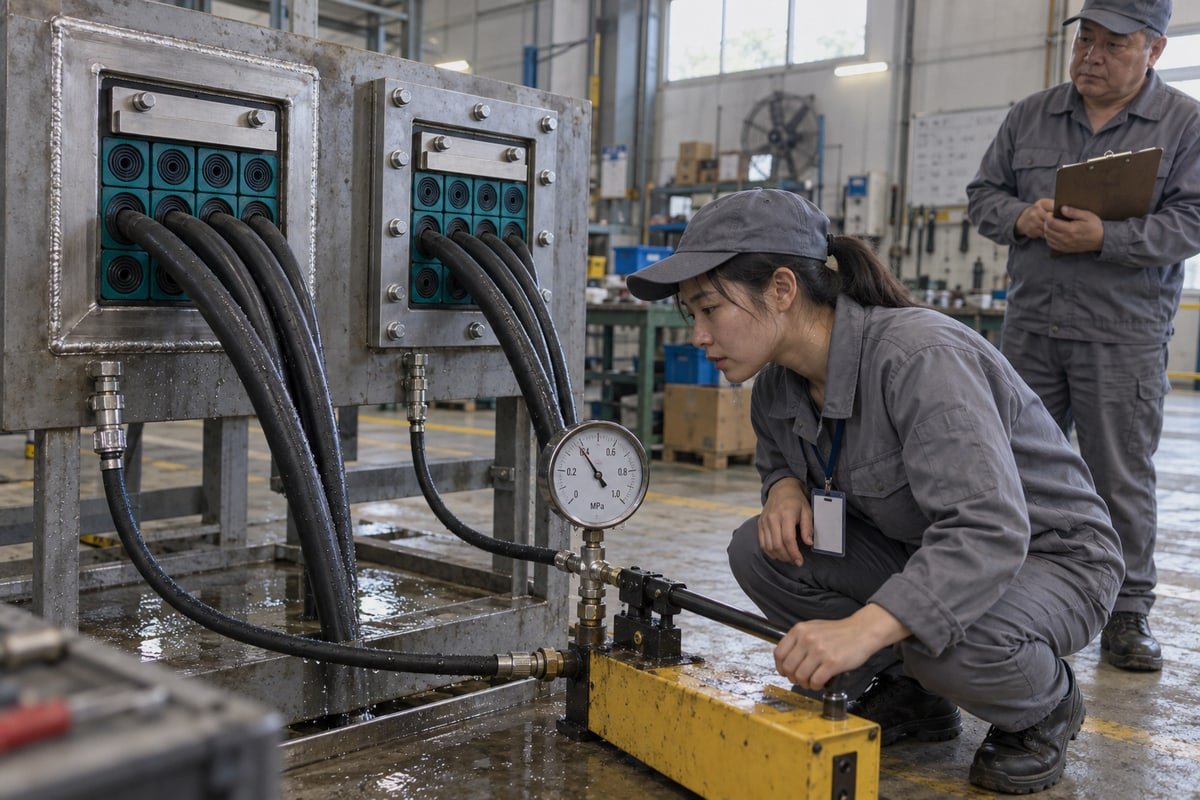
Here is the comparison I give buyers before we get into details.
| Criterion | Welded MCT frame | Bolted MCT frame |
|---|---|---|
| Cable seal (module side) | Same modules, same compression | Same modules, same compression |
| Frame-to-structure joint | Continuous weld seam | Gasket plus bolted flange |
| Watertight bulkhead penetration | Frame becomes part of the steel skin | Depends on gasket condition and torque |
| High-vibration behavior | No fasteners to loosen | Risk of bolt creep and fastener fatigue |
| Grounding and EMI shielding | 360-degree metallic contact | Localized contact at bolt points |
| Inspection | Visual plus NDT at install | Visual plus re-torque schedule |
| Removal | Cutting required | Unbolt and reuse |
The seal lives in the modules, not the frame
An MCT system has three parts: the frame, the rubber blocks, and the compression unit. The frame can be welded, cast, or bolted into the structure. The seal itself comes from the compression wedge unit pushing the modules against the cables and against each other. Our TSC and TSR modules use step-core, halogen-free EPDM 1, so one module size covers a range of cable diameters. That part of the system does not care how the frame is fixed. A buyer once told me he was worried a bolted frame "could not be gas-tight." That objection is fair, but it points at the wrong interface. The cable seal is identical. What changes is the frame-to-steel joint.
Vibration and bolt creep
In engine rooms, turbine halls, and some BESS containers, vibration is constant. A welded seam has nothing to loosen. A bolted flange has bolts that can creep and a gasket that can relax. Neither is a failure by itself. It just means a bolted frame needs a torque check in the maintenance plan. If your site cannot promise that, weld it.
Grounding and electromagnetic compatibility
Welded frames give 360-degree electrical contact with the structure. That matters for electromagnetic compatibility 2 in switchgear rooms and data center enclosures. A bolted frame grounds through the bolts and washers, which is a smaller contact area. It works, but you should specify the grounding path in the drawing.
Can I retrofit or expand a bolted MCT system without cutting into existing steel structures?
A BESS container builder in Germany asked us this exact question last year. Their first batch of containers was already welded up, and the cable count had grown.
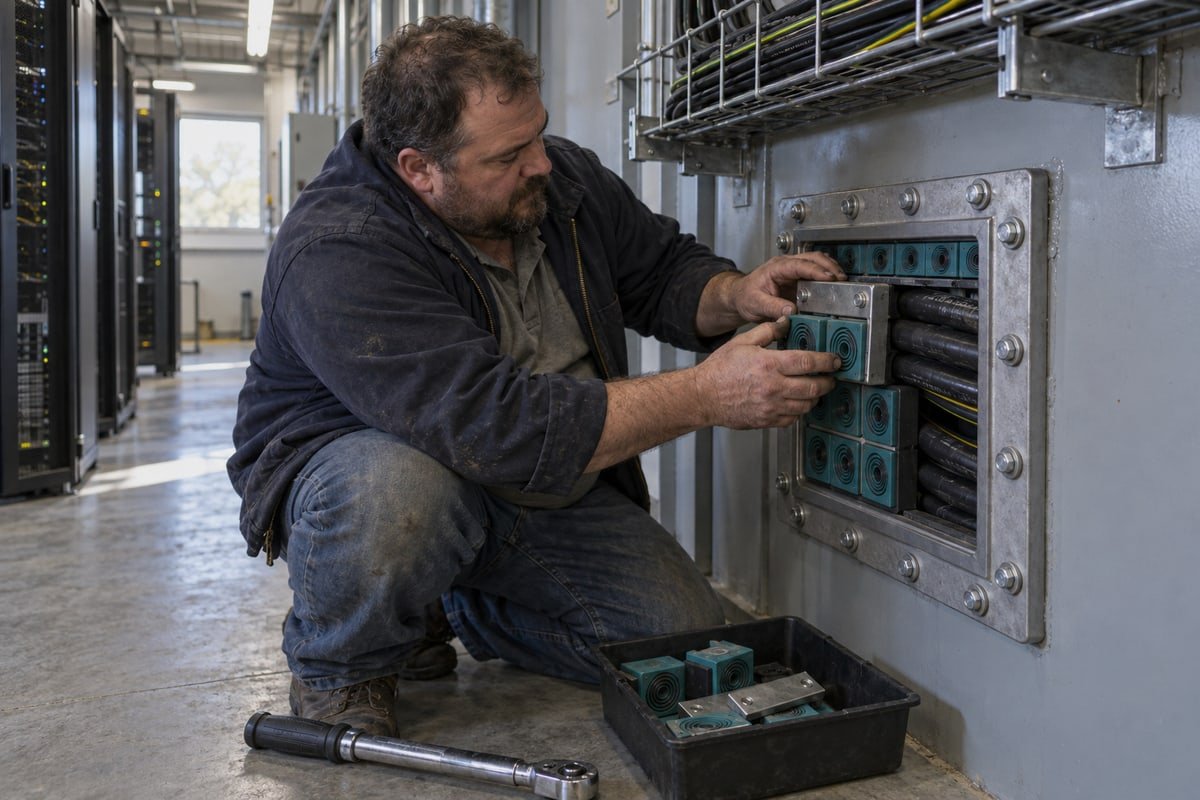
Yes. A bolted MCT frame mounts through drilled holes and a gasket, so you can add, remove, or relocate frames without cutting or hot work. Existing frames can also be expanded by swapping modular sealing blocks and stay plates inside the frame rather than touching the structure.
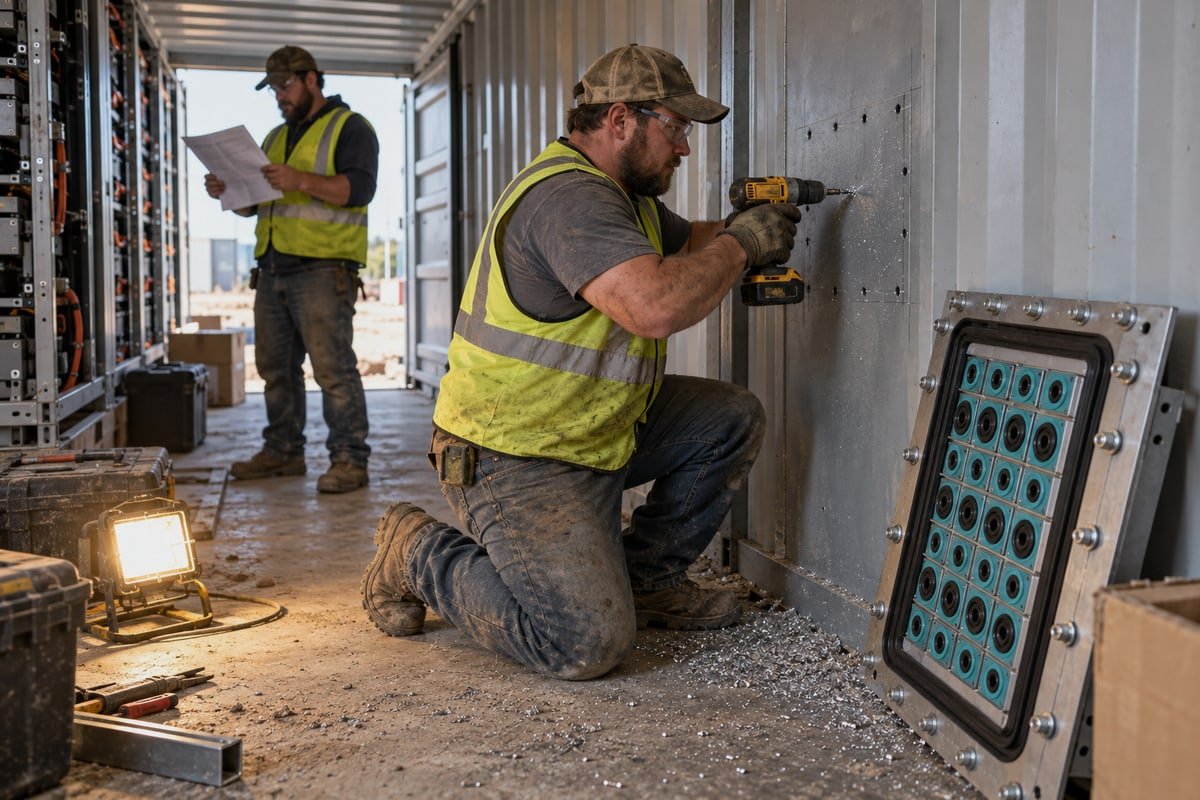
The key point is simple. Bolted transits are the accepted option in areas where welding is prohibited. That covers retrofit work, live plants, and zones with fire risk. Here is the sequence we recommend for a retrofit installation.
A five-step retrofit process
- Survey the existing cutout or mark the new opening. Confirm wall or bulkhead thickness and material.
- Drill the bolt pattern to match the frame flange. No cutting torch and no welder are needed if the opening already exists.
- Fit the gasket between the flange and the mounting surface. Keep the surface clean and flat.
- Tighten the bolts in a cross pattern to the specified torque. Record the values.
- Load the modules, insert the stay plates, and compress with the compression unit. Verify the compression indicator.
The container builder I mentioned went this route for their second batch. They kept the welded frames on batch one and used bolted frames on batch two. Both batches used the same modules.
Expanding an existing frame without touching steel
Many buyers do not realize how much capacity sits inside a frame they already own. Stayplates and frames hold a fixed module volume, but the modules themselves are interchangeable. Because our modules are dimensionally compatible with common 120-frame standards, they drop straight into existing frame cutouts. That means you can pull a solid spare block, insert a step-core module, and route a new cable. No welding, no drilling, no frame change. We back this with a model cross-reference table, existing model to DEWIN model, and free validation samples so your qualification step is short.
| Change needed | Welded frame | Bolted frame |
|---|---|---|
| Add one cable to a spare slot | Swap module only | Swap module only |
| Add capacity beyond the frame | Cut and weld a new frame | Unbolt, re-drill, fit larger frame |
| Move the penetration | Cut out, plate over, weld again | Unbolt, blank the holes, remount |
| Decommission | Frame scrapped with structure | Frame and modules salvaged |
That last row matters more each year. Bolted frames support non-destructive decommissioning and component reuse, which lines up with circular economy targets that several of our European customers now report against.
Which frame type gives me faster installation and lower total project cost on site?
The trade-off I weigh most often is labor on site versus labor in our shop. Where the welding happens decides most of the cost, not the frame price.
Bolted MCT frames install faster on site because they need no certified welder, hot work permit, or NDT. Welded frames cost more up front but can lower life cycle cost by removing gasket replacement and bolt retightening. Total cost depends on where fabrication happens and how long the asset runs.
The frame itself is a small part of the bill. Labor, permits, and inspection are the big lines. I break them out below.
| Cost driver | Welded frame | Bolted frame |
|---|---|---|
| Skilled labor | Certified welder required | Fitter with torque wrench |
| Permits | Hot work permit, fire watch | None beyond normal access |
| Inspection at install | Non-destructive testing of the seam | Visual check and torque record |
| Site setup | Welding set, gas, screens, ventilation | Drill and gasket kit |
| Schedule risk | Welder availability, permit timing | Low |
| Ongoing maintenance | Almost none | Periodic re-torque, gasket review |
| Material at purchase | Lower (no gasket, fewer bolts) | Slightly higher |
Shop-welded, site-bolted
Structural steel guidance makes a point that maps well onto MCTs. Connections made in the shop are often more economical when welded. Connections made on site are often more efficient when bolted, because site welding needs more setup and more testing. So the hybrid approach is common. If a container builder welds frames into panels on their own production line, welding is cheap and controlled. If an EPC contractor fits frames on a live plant, bolting wins. We ship frames both ways, and our lead times do not change with the choice.
The life cycle cost objection
Some engineers push back on bolted frames with a life cycle argument. Welded frames often show a lower life cycle cost because there is no gasket to replace and no bolts to retighten. That is true for a thirty-year vessel or a fixed substation. It is less true for a data center module that gets reconfigured every few years, where the cost of cutting a welded frame out is far higher than a torque check. Run the numbers over the real life of the asset, not the build phase. Where the numbers are close, the ability to change cables later usually tips it toward bolted.
Where the savings really come from
For most of our OEM and EPC buyers, the biggest cost line is not weld versus bolt. It is the module and frame price against the incumbent brand. Our drop-in second sourcing sits 40 to 60 percent below typical incumbent pricing while keeping the same frame dimensions. That saving applies to both fixing methods.
Does choosing welded or bolted MCT affect certification, fire rating, or IP68 compliance?
One lesson cost us a shipment delay in 2019: a buyer assumed our A-60 fire test report covered any mounting method. The surveyor did not agree.
Yes, indirectly. The fire rating, IP68, and gas-tight seal are tested on the complete cable sealing system, including how the frame is fixed. A welded frame becomes part of the tested bulkhead. A bolted frame must match the tested gasket, bolt pattern, and torque to keep the certificate valid.
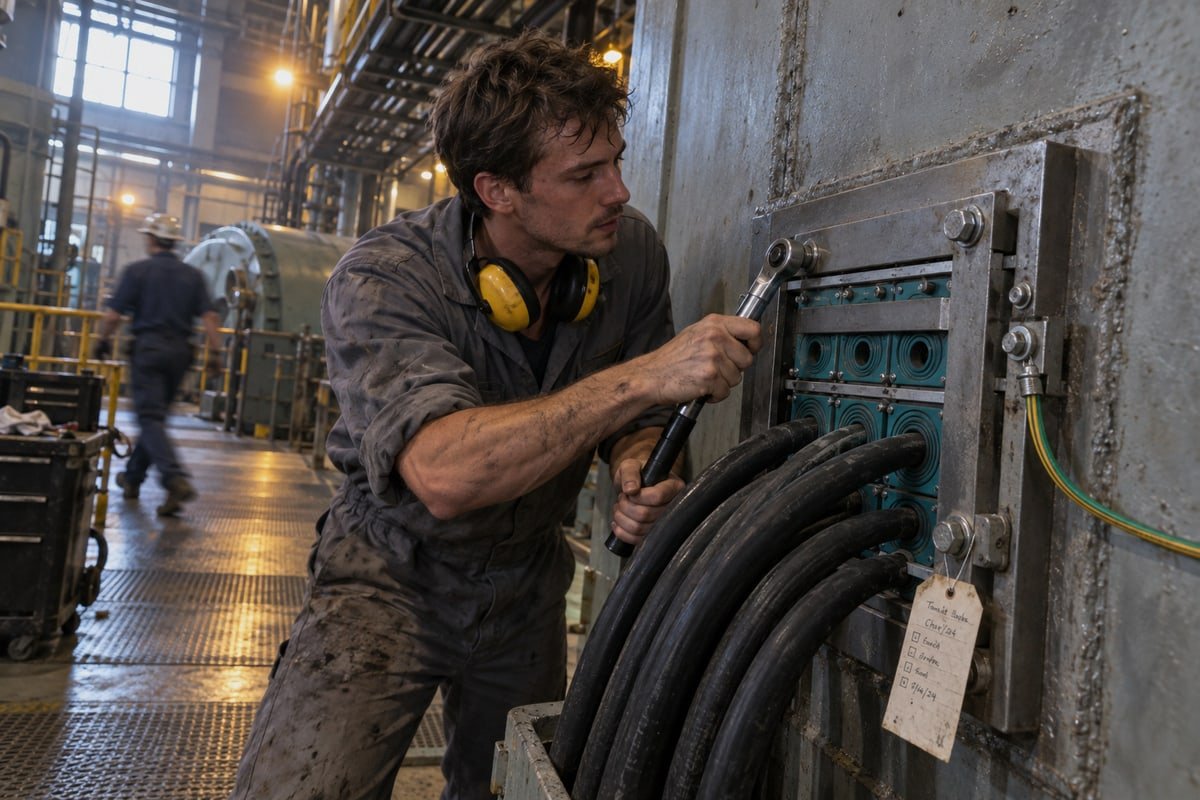
Certificates are issued for a configuration, not for a product name. That is the whole issue. Let me break down what each rating actually tests.
What each rating covers
| Rating | What is tested | Welded frame note | Bolted frame note |
|---|---|---|---|
| A-0 / A-60 fire rating | Fire integrity and insulation of the whole penetration | Frame is welded into the test bulkhead | Gasket and bolts must survive the furnace test |
| IP68 | Ingress under immersion | Seam is the only leak path besides modules | Gasket is a second leak path |
| Watertight / gas-tight seal, 0.01 to 0.4 MPa | Pressure across the sealed frame | Same modules, same compression | Same modules, same compression, plus gasket |
| ATEX certification (zone requirements) | Equipment and work practice in explosive atmospheres | Hot work may be prohibited on site | Often the only permitted method |
A60 fire rating and marine class
In marine and offshore engineering, the classification surveyor 4 looks at the installation against the type approval drawing. Our factory is BV-approved and our systems carry A-0 and A-60 fire ratings. When a buyer welds the frame, the frame is treated as part of the division. Structural integrity of the bulkhead is preserved because the weld seam closes the cutout. When a buyer bolts the frame, the surveyor checks that the gasket material, bolt size, and spacing match what was in the test. If they do not, the certificate does not transfer. That was the mistake in 2019. The frame was fine. The gasket was not the tested type.
IP68 and the gas-tight seal
IP68 is tested by immersion. The modules and the compression unit handle the cable side. A welded seam is a single continuous joint. A bolted frame adds a gasket joint, so the gasket must be part of the tested system. Our watertight and gas-tight rating from 0.01 to 0.4 MPa is achieved with either fixing method, but only within the documented configuration. Test documents are available on request, and we send the drawing that shows the tested bolt pattern with them.
Hazardous areas and hot work
Where ATEX certification governs the zone, the question often answers itself. Hot work permits in a live process area are slow to obtain and sometimes refused. Bolted frames are the accepted way to install a cable transit in those zones. Certification of the transit is unchanged. What changes is whether you are allowed to strike an arc at all.
What to request from any supplier
Ask for the type approval certificate 5, the test report, and the installation drawing for your chosen fixing method. Ask for CAD or STEP files of the frame so your own drawing office can check the bolt pattern. We provide all three as standard, along with the cross-reference table, because our buyers read the spec sheet before they reply to an email.
Conclusion
Undecided frames stall projects. Weld when the structure is permanent and vibrates; bolt when hot work is restricted or cables will change. Ask us for cross-reference tables and samples.
Footnotes
1. Authoritative international body for standards regarding material specifications and manufacturing quality control. ↩︎
2. Global organization responsible for international standards concerning electromagnetic compatibility and electrical systems. ↩︎
3. International technical body defining ingress protection ratings for electrical and mechanical equipment enclosures. ↩︎
4. Leading classification society providing technical expertise and certification for marine and offshore safety. ↩︎
5. Primary international agency for maritime safety, governing fire protection and equipment type approval standards. ↩︎


 English
  Español de México
  Deutsch
  Français
  العربية
  Русский