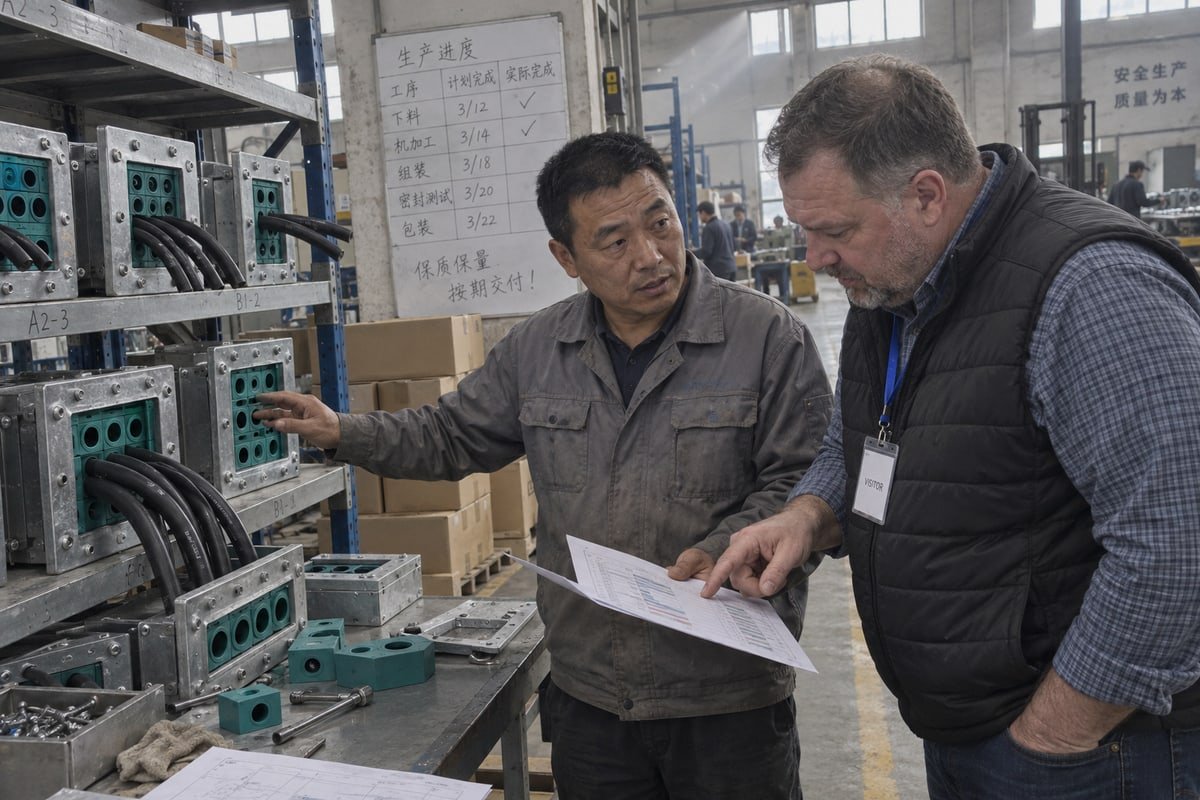
Verifying a supplier’s delivery time for multi cable transit systems once kept a BESS client’s line running. Vague promises had burned them. Our factory now proves dates with documents.
To verify a supplier’s delivery time for multi cable transit systems, demand a written, order-specific lead time split into engineering, production, testing, packing, and shipping. Then check it against 12 months of on-time delivery data, current factory capacity and backlog, and a free validation sample that tests real responsiveness.
The rest of this guide walks through four checks. Each one turns a verbal promise into a document you can audit later. I will use our own modular sealing systems as the working example, but the method applies to any MCT supplier you are qualifying.
What Lead-Time Claims Should I Ask Suppliers to Prove in Writing?
Every quote we send for TSC square modules forces a choice: quote the fast ex-works date, or the slower delivered date. We quote both, and label each.
Ask suppliers to prove in writing the total lead time from PO to site-ready shipment, split by stage; the Incoterms and shipment lane assumed; part numbers with revision level; the drawing-freeze date; which components are stock versus made-to-order; and the certification or witness-test time included.
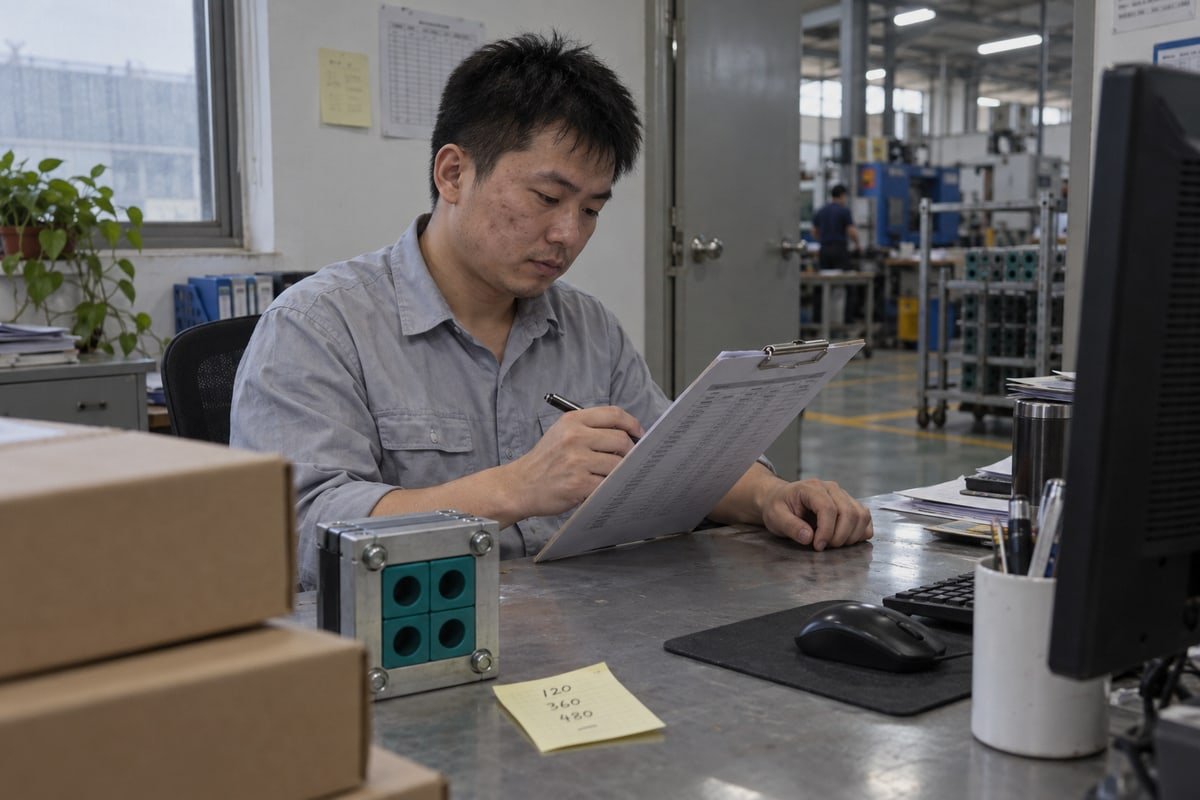
A single number hides too much. When a purchasing engineer asks us for the delivery time on a set of 120-frame compatible modules, we return a staged schedule instead. Each stage has an owner and a duration. Some stages belong to the buyer, such as drawing approval. That is the format I recommend you demand from every bidder. It makes lead time reliability something you can check, not something you have to trust.
Break the quoted lead time into stages
| Stage | What happens | Who controls it | Common source of delay |
|---|---|---|---|
| Engineering review | Drawing check, model cross-reference, revision freeze | Buyer and supplier | Late drawing approval or mid-stream scope change |
| Material procurement | Halogen-free EPDM compound, stainless or galvanized steel | Supplier | Tier 2 material shortage |
| Fabrication | Frames, compression units, stay plates, molded sealing blocks | Supplier | Mold or fabrication slot bottleneck |
| QA/QC and testing | Pressure test, fit check, factory acceptance test | Supplier or third party | Witness-test scheduling |
| Documentation | Test reports, certificates, packing list | Supplier | Missing or expired certificate |
| Packing and freight | Ex-works, port, transit, customs | Forwarder and buyer | Logistics lead times and customs holds |
Production only, or production plus shipping?
This is the most common hidden gap. A supplier says "six weeks." You hear "six weeks to my site." They meant "six weeks to our loading dock." Ask the supplier to state the Incoterms on the quote 1 itself. Ask which shipment mode the date assumes. Sea freight from our plants in Shaanxi, Shandong, or Hunan to a European port takes far longer than air, and customs clearance adds more. Geography matters, so account for it before you compare two suppliers side by side.
Certification time is lead time too
For offshore and regulated projects, a certificate that is missing on shipment day is a delay, even when the frame is finished. DNV GL certification, UL, or Lloyd's Register witness testing 2 each add scheduling time. Ask whether that time sits inside the quoted lead time or outside it. Also check that the certificate is current, issued by an IAF-accredited body 3, and within scope for your fire-rated cable seals. On our side, the ISO 9001 and IATF 16949 systems 4, BV factory approval, and A-0/A-60 and IP68 test documents are held on file. That means documentation does not gate shipment, and I recommend you confirm the same before signing the PO.
Your side of the schedule
One point buyers sometimes miss: the written commitment depends on your inputs. If drawing freeze slips two weeks, the delivery date is no longer valid. Get a written RFQ schedule covering drawing freeze, material, finish, tooling, inspection, and shipping assumptions. Then reconfirm it just before PO release.
How Can I Confirm a Factory Can Actually Meet Its Stated Production Capacity?
Last spring our Shandong plant hit a mold bottleneck on a custom TSR round assembly. Standard blocks kept flowing. That week taught me capacity is never one number.
Confirm production capacity by requesting current backlog and open fabrication slots, checking stock of sealing blocks and stay plates versus custom frames, mapping in-house versus outsourced steps such as mold making, auditing Tier 2 supply of EPDM and stainless steel, and reviewing factory audit reports or visiting the line.
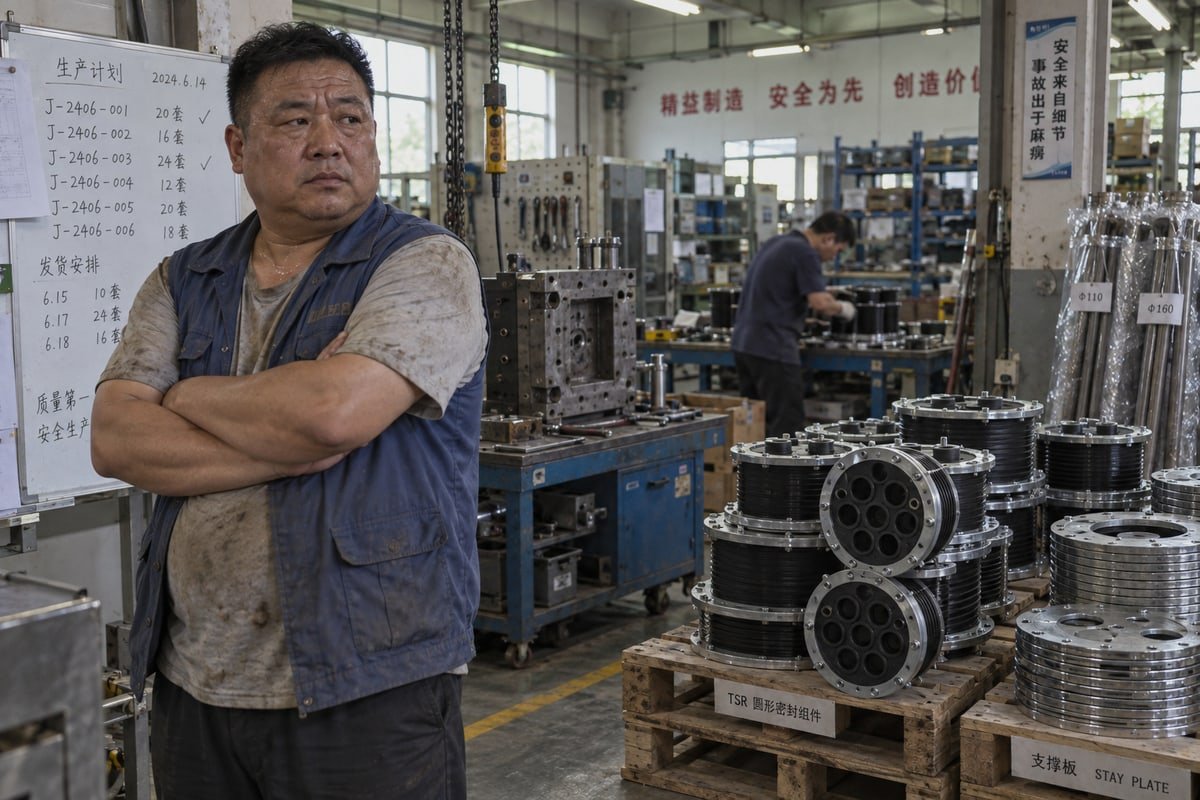
Some procurement teams argue that supplier history matters less than current project capacity. I understand the point. A strong record from last year does not guarantee an open slot this quarter. But the answer is not to drop history. The answer is to check both. History shows discipline. Capacity shows whether that discipline has room to work on your order. A supplier can have a good average lead time and still fail you during a peak, because your order gets deprioritized behind a bigger customer.
Stock modules versus custom frames
Manufacturing capacity splits cleanly into two streams for modular sealing systems. Ask about each one separately.
| Component | Usual status at a real factory | What to ask |
|---|---|---|
| Step-core EPDM sealing blocks | Stocked in common module sizes | Current stock quantity and restock cycle |
| Stay plates and compression units | Stocked | Same, plus finish variants held |
| Standard 120-compatible frames | Short-run fabrication | Open fabrication slots this month |
| Custom frame sizes | Made to order | Is mold making in-house or outsourced? Tooling lead time? |
| Spare sealing parts | Stocked | Can you hold a regional buffer stock for us? |
Our step-core EPDM blocks accept a range of cable diameters within one module size. That reduces the number of SKUs a supplier must stock, which is one reason we can keep standard blocks on the shelf while custom frames run through in-house mold making.
Look at Tier 2 before you look at the line
Supply chain transparency starts upstream. The two materials that stall MCT production are the halogen-free EPDM compound and specialized stainless steel. Ask for the approved vendor list, or at least material certificates from recent lots. Ask how many compound suppliers are qualified. A single-source compound is a real bottleneck risk.
Audit the workflow, not the brochure
Treat this as an audit, not a conversation. Work through these points on site or through an independent body such as SGS, Bureau Veritas, or TÜV:
- Compare current backlog with monthly output for similar products.
- Observe process flow from raw EPDM to finished module.
- Check traceability from lot number to test record.
- Confirm equipment capability, especially molds and presses.
- Identify quality hold points that extend the schedule.
- Review corrective-action history for past delays.
- Ask whether a second site can absorb overflow. Our Shaanxi, Shandong, and Hunan plants give us that option, and you should ask any supplier the same question.
What Documentation Proves On-Time Delivery Performance for Past MCT Orders?
A sourcing engineer in Germany once emailed me: send your OTIF, not your brochure. Fair. We sent anonymized shipment records instead of adjectives.
Proof of on-time delivery performance for past MCT orders includes 12 months of OTIF data split by standard and custom orders and by region, order confirmations matched to bills of lading, third-party pre-shipment inspection reports, factory acceptance test records, and reference contacts from comparable industrial or maritime projects.

Marketing language cannot be audited. Documents can. The set below is what I would ask any MCT supplier to produce, and it is what we prepare for buyers who ask. The benchmark from procurement guidance is an on-time delivery rate of 95% or higher. Below that, you need a strong reason to proceed.
The document set that reveals delivery truth
| Document | What it proves | What to check |
|---|---|---|
| 12-month OTIF or OTD summary | Supplier performance metrics over time | Split by standard vs. custom, by region; 95% or higher |
| Order confirmation paired with bill of lading | Promised date vs. actual ship date | Dates match; Incoterms match the quote |
| Pre-shipment inspection report | Goods were complete and ready on the stated date | Issued by an independent body |
| Factory acceptance test record | Product was tested, not just assembled | Pressure test in the 0.01–0.4 MPa range, IP68 result, fire rating reference |
| Reference contacts | Field confirmation of the above | Comparable large-scale industrial or maritime MCT projects |
When a supplier says the data is confidential
Some suppliers resist sharing detailed delivery data. Confidentiality is a real concern, but it is not a full excuse. Ask for an anonymized OTIF summary with customer names removed. Ask for milestone schedules from past orders with dates only. Ask for third-party audit confirmation of the delivery record. If all three are refused, that refusal is itself a warning sign.
Milestones matter more for custom systems
Here is a second objection I hear often. For engineered MCT assemblies, a strict end-date promise may mean less than milestone reliability. I agree, and that shifts what you should ask for. Request past project schedules that show whether the supplier hit its drawing cutoff, material arrival, and test dates. Ask whether staged or partial shipments were delivered as planned. Then require the same for your order: production schedule tracking with weekly updates, and digital status visibility for individual components where the supplier can provide it. Milestone data is harder to dress up than a single delivery date.
Call the references
Do not skip this. Ask each reference three plain questions. Did the actual delivery date match the initial quote? Were test reports and certificates complete at shipment? How fast did the supplier respond when a drawing changed? Short answers here tell you more than a long presentation.
How Do I Use Free Validation Samples to Test a Supplier's Responsiveness Before Placing a Bulk Order?
I learned early that a sample request is a stress test in disguise. How fast the STEP file, test sheet, and module arrive predicts how the bulk order will run.
Use a free validation sample as a timed dry run: log the hours to quote, the days to ship, and the completeness of CAD files and test documents. Then fit-check the module in your existing 120-frame cutout and compare every promised date against the actual date.

We offer free validation samples because they make second-source qualification easy for the buyer. But I always tell purchasing engineers to treat the sample as more than a fit check. It is a small order with all the same steps as a large one. It has a quote, an engineering exchange, a shipment, and a document pack. Measure each step. The pattern you see is the pattern you will get.
Run the sample like a timed drill
- Send a real part number from your current supplier and ask for the cross-referenced equivalent. Note how long the model cross-reference table takes to arrive.
- Request CAD or STEP files with the quote. Record the response time and whether the files match the stated revision.
- Ask for the test documents you will need on the bulk order: fire rating A-0/A-60, IP68, watertight and gas-tight results. See whether they come without chasing.
- Log the promised ship date for the sample. Then log the actual date.
- Fit the module in your existing frame cutout. Confirm dimensional compatibility and cable range on the step-core block.
- Ask one technical question after receipt. Time the English-language answer.
Score what you observe
| Signal | Good sign | Warning sign |
|---|---|---|
| Time to quote with CAD/STEP files | Same week, files match revision | Files arrive late or in the wrong revision |
| Sample ship date | Actual date equals promised date | Silent slip with no notice |
| Documentation pack | Test reports and certificates included unprompted | Documents promised "later" |
| Cross-reference accuracy | Module drops into the existing 120-frame cutout | Requires rework or shimming |
| Follow-up technical question | Clear, engineering-level reply | Sales reply that dodges the question |
| Change handling | Revision handled with a new dated confirmation | Verbal acknowledgement only |
From sample to buffer stock
A good sample result opens one more conversation. Ask the supplier to hold a regional buffer stock of spare sealing modules and stay plates. Installation errors and design adjustments happen on site. A buffer stock agreement means replacement parts ship in days, not the full production lead time. We build fast delivery of spare sealing modules into our offer for exactly this reason, and it is a reasonable thing to request from any serious second source.
Conclusion
Late MCT deliveries stall lines and burn budgets. Never accept a date without staged lead times, 12 months of OTIF data 5, verified capacity, and one timed sample.
Footnotes
1. Official ICC rules for international commercial terms defining buyer and seller responsibilities. ↩︎
2. Authoritative maritime and industrial certification body providing independent witness testing for cable transit systems. ↩︎
3. Official global association for accreditation bodies verifying the validity of management system certificates. ↩︎
4. Official global standard for quality management in the automotive and manufacturing supply chain. ↩︎
5. Industry standard logistics metric for measuring the reliability of supplier delivery performance. ↩︎



 English
  Español de México
  Deutsch
  Français
  العربية
  Русский