
Certificate of Origin processing for multi cable transit systems can stall a container. We have watched it happen at our factory. So we built a document routine that prevents it.
Certificate of Origin processing for multi cable transit systems usually takes 1–3 business days. Complete electronic applications can be issued the same day or within 24 hours. Complex, first-time, or mixed-origin submissions may take up to a week, and consular legalization can add 10–15 business days.
That range is wide. The reason is simple. The certificate itself is fast. The evidence behind it is not always fast. Below I break down the timeline by issuer, by document, by urgency, and by destination, so you can plan a realistic export schedule for your TSR or TSC modules.
How long does customs typically take to process a Certificate of Origin for my MCT shipment?
A sourcing manager in the Netherlands once asked us why his certificate arrived two days after the goods left our Shaanxi plant. The answer taught us both something.
In most cases customs does not issue the certificate; a Chamber of Commerce or CCPIT does, usually in 1–3 business days. Electronic applications for a standard MCT shipment often clear in 2–24 hours, while manual paper submissions need 3–5 business days. Customs then reviews the certificate during clearance.

Who actually issues the certificate
The question mixes two steps. Step one is issuance. In China, a Certificate of Origin is issued by a Chamber of Commerce body 1 such as CCPIT, or in some cases by China Customs directly. Step two is acceptance. The import customs office at your port checks the certificate against the commercial invoice and the entry declaration. Issuance is measured in hours or days. Acceptance is part of normal customs clearance 2 and does not add a separate waiting period unless something does not match.
Processing time by submission route
| Submission route | Typical issuance time | Best fit for |
|---|---|---|
| Electronic (eCO), complete file | 2–24 hours, often same or next business day | Repeat shipments of TSR/TSC modules |
| Manual or chamber-printed paper | 3–5 business days | Buyers who need a wet-stamped original |
| First-time exporter or new product | Half an hour to one week (WCO guidance) | New supplier relationships |
| Preferential certificate under a trade agreement | 1–3 business days plus origin matching | Asia-Pacific shipments under RCEP or similar |
| Certificate plus consular legalization | 5–10 working days, sometimes 10–15 business days | Middle East projects |
Why MCT shipments get extra review
Some buyers tell us the process is quick now because portals are digital. That is true for complete files. But a multi cable transit system is not one item. A single order can hold frames, stay plates, compression units, and several block sizes. If the itemized packing list does not reconcile line by line with the certificate summary, the issuer may push the file into a manual audit. That single mismatch turns a two-hour job into a three-day job. On our side we run one internal reconciliation before submission. It costs us an hour. It saves the buyer days.
What documents do I need ready before requesting a Certificate of Origin from DewinMCT?
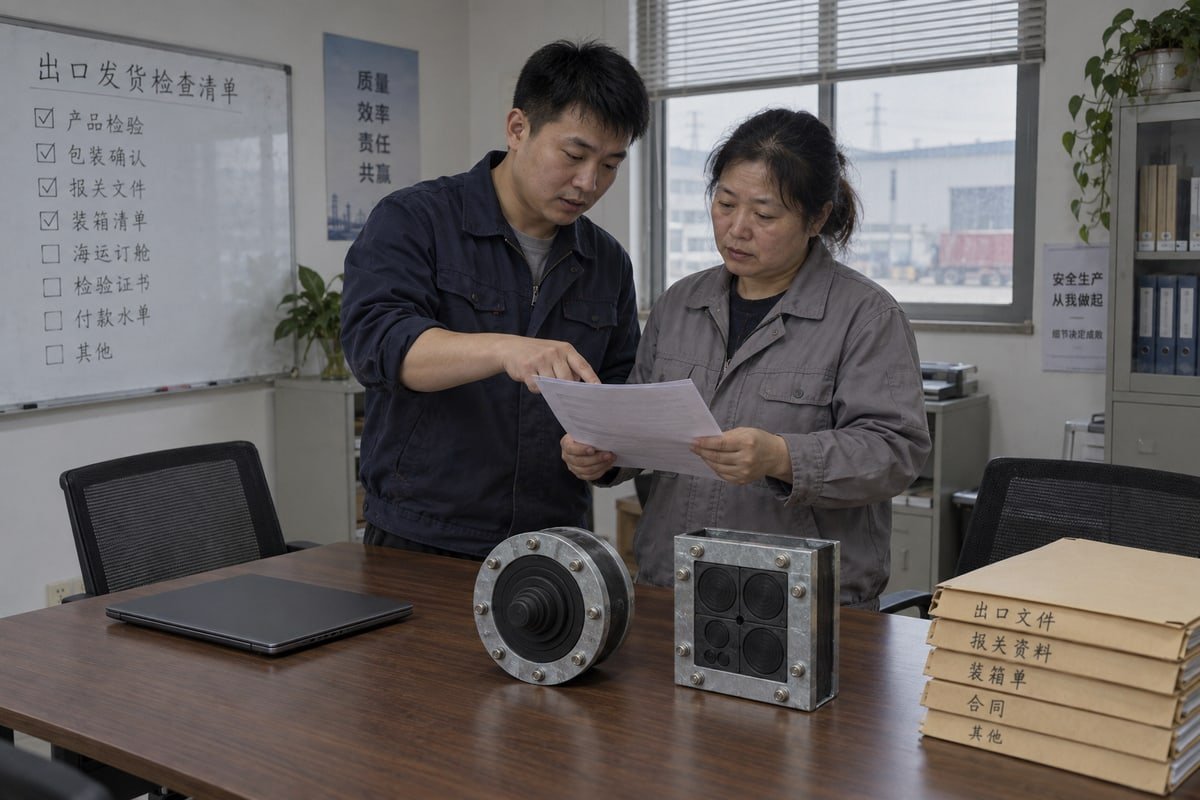
Every export order at our Shaanxi plant gets a document folder before the EPDM modules leave the press. That folder is what keeps the certificate moving.
Before requesting a Certificate of Origin from DewinMCT, have your final purchase order, consignee details, destination country, required certificate type (generic or preferential), and any trade agreement form ready. We prepare the commercial invoice, packing list, HS Code classification, and manufacturer declaration on our side.
The split of responsibility
Most delays we see are not caused by the issuer. They are caused by a missing or inconsistent input. So we split the checklist clearly.
| Document | Who supplies it | Why it matters for timing |
|---|---|---|
| Confirmed purchase order with model numbers | Buyer | Model numbers must match our cross-reference table and the invoice |
| Consignee and notify party details | Buyer | Any change after submission restarts the application |
| Destination country and port | Buyer | Determines generic vs preferential certificate and legalization needs |
| Preferred certificate format (eCO or original) | Buyer | Electronic saves up to 24 hours; paper adds courier time |
| Commercial invoice | ДевинMCT | The issuer checks every value and description against it |
| Itemized packing list | ДевинMCT | Frames, stay plates, and block sizes must reconcile with the summary |
| HS Code classification per line | ДевинMCT | Wrong codes are the main cause of rejection |
| Manufacturer declaration and origin evidence | ДевинMCT | Proves molding and assembly happen at our factory |
How we prepare the origin evidence
- We pull the bill of materials for each module size in the order.
- We record the origin of the halogen-free EPDM compound and the galvanized steel for the frame.
- We confirm the final molding and assembly location in Shaanxi, Shandong, or Hunan.
- We assign one HS code per line and check it against the invoice description.
- We submit the file electronically and keep the evidence on hand for any query.
Some buyers worry that compiling this evidence takes longer than the issuer's stated turnaround. For a custom-built system that is a fair concern. But for our standard TSR and TSC ranges, the bill of materials and origin proof already sit in the folder. We reuse them. So the two-hour window is realistic for repeat orders, and our export documentation team handles the submission without extra input from you.
Can I get expedited Certificate of Origin processing for urgent EPC project deadlines?
Speed versus scrutiny is the trade-off we weigh on every rush order. An express certificate helps nothing if the packing list behind it fails a manual audit.
Yes. Expedited Certificate of Origin processing for multi cable transit systems is available through express Chamber of Commerce windows, often with a 2–4 hour turnaround for an extra fee. Electronic issuance, pre-registered goods, and blanket certificates for recurring project shipments cut the timeline further.

Your three speed options
| Option | Turnaround | Cost impact | Limitation |
|---|---|---|---|
| Standard electronic application | 2–24 hours | Base fee | Depends on issuer workload and submission time |
| Express or priority window | 2–4 hours | Extra fee | Only accepted for complete, error-free files |
| Blanket certificate for a supply contract | Issued once, reused for recurring shipments | Base fee, then none | Only for identical system components under the same contract |
For EPC teams, the blanket certificate is the option I recommend most. A battery storage or switchgear project often ships the same frame and module mix over many months. One blanket certificate removes repeat processing for every call-off. We set this up when we sign a frame agreement with a project procurement team.
What express processing does not fix
Here I need to be direct. The chamber is rarely the bottleneck. Three things sit outside its control.
First, courier transit. If your project needs a wet-stamped original, international courier time adds 2–7 days depending on the region. An electronic certificate 3 avoids this entirely where the destination accepts it.
Second, consular legalization. For several Middle East destinations the certificate must go through embassy legalization or apostille. That step alone can add 10–15 business days. No express fee at the chamber shortens an embassy queue. We flag this on day one of any Middle East order.
Third, sector-specific checks. New environmental verification requirements for equipment used in offshore wind and renewable energy projects are emerging in some markets. Where they apply, they can add roughly 48 hours to the normal window. Some documentation platforms are also starting to link BIM data to export software so technical line items validate automatically. That is promising, but I would not build a schedule around it yet.
So the honest answer is this. Express processing works for the certificate. Plan the legalization and courier steps separately, and start them the moment the order is confirmed.
Does the Certificate of Origin affect import duties or customs clearance for my cable transit systems?
One lesson from over a decade of shipping modular cable seals to the Middle East: the certificate type matters more than the certificate speed.
Yes. A generic Certificate of Origin mainly supports customs clearance and legalization checks. A preferential certificate issued under a Free Trade Agreement can lower or remove import duties on cable transit systems, but only when the goods meet that agreement's Rules of Origin and the HS code matches.

Generic versus preferential
| Certificate type | Effect on duty | Effect on clearance | Where we use it |
|---|---|---|---|
| Generic (non-preferential) | None; standard tariff applies | Confirms origin for compliance, quotas, and legalization | Europe, most Middle East destinations |
| Preferential (trade agreement form) | Reduced or zero duty if Rules of Origin are met | Same as generic, plus origin criteria check | Asia-Pacific under RCEP and similar agreements |
For European buyers this point matters. There is no Free Trade Agreement 4 between China and the EU. So a certificate for a shipment to Germany or Poland is generic. It will not change the duty rate. Its job is to prove origin for customs clearance, and to satisfy any bank or project documentation requirement. The 40–60% cost saving our drop-in modules offer comes from the factory price, not from the certificate.
For Asia-Pacific buyers the picture changes. A preferential form can cut duty, but only if the product qualifies under the agreement's Rules of Origin. Our modules are molded from EPDM compound and assembled with steel frames in our own plants. Substantial transformation happens in China. That usually supports the origin claim, but we confirm the specific criterion for each agreement before we apply.
Where classification and clearance meet
HS Code classification affects both duty and clearance. A multi cable transit system contains rubber sealing blocks, a galvanized steel frame, and metal compression parts. Different customs offices may lean toward a rubber article heading or a metal article heading. We keep one consistent classification across the invoice, packing list, and certificate. When a buyer's broker prefers a different heading, we align before submission rather than after.
Passive fire protection ratings do not change the certificate, but they often appear in the same clearance file. Our A-0/A-60 fire test documents and IP68 reports sit alongside the certificate when a port or project inspector asks for them. Having both ready keeps clearance moving.
Conclusion
Late certificates stall projects. Most delays come from paperwork, not the issuer. Send us a complete order early, and Certificate of Origin processing for multi cable transit systems stays predictable.
Footnotes
1. CCPIT is the primary Chinese Chamber of Commerce body responsible for issuing international trade documents. ↩︎
2. The World Customs Organization provides the international standards for customs clearance procedures and origin verification. ↩︎
3. The International Chamber of Commerce sets global standards for electronic and paper Certificates of Origin. ↩︎
4. The World Trade Organization maintains the legal framework and rules for international Free Trade Agreements. ↩︎


 English
  Español de México
  Deutsch
  Français
  العربية
  Русский