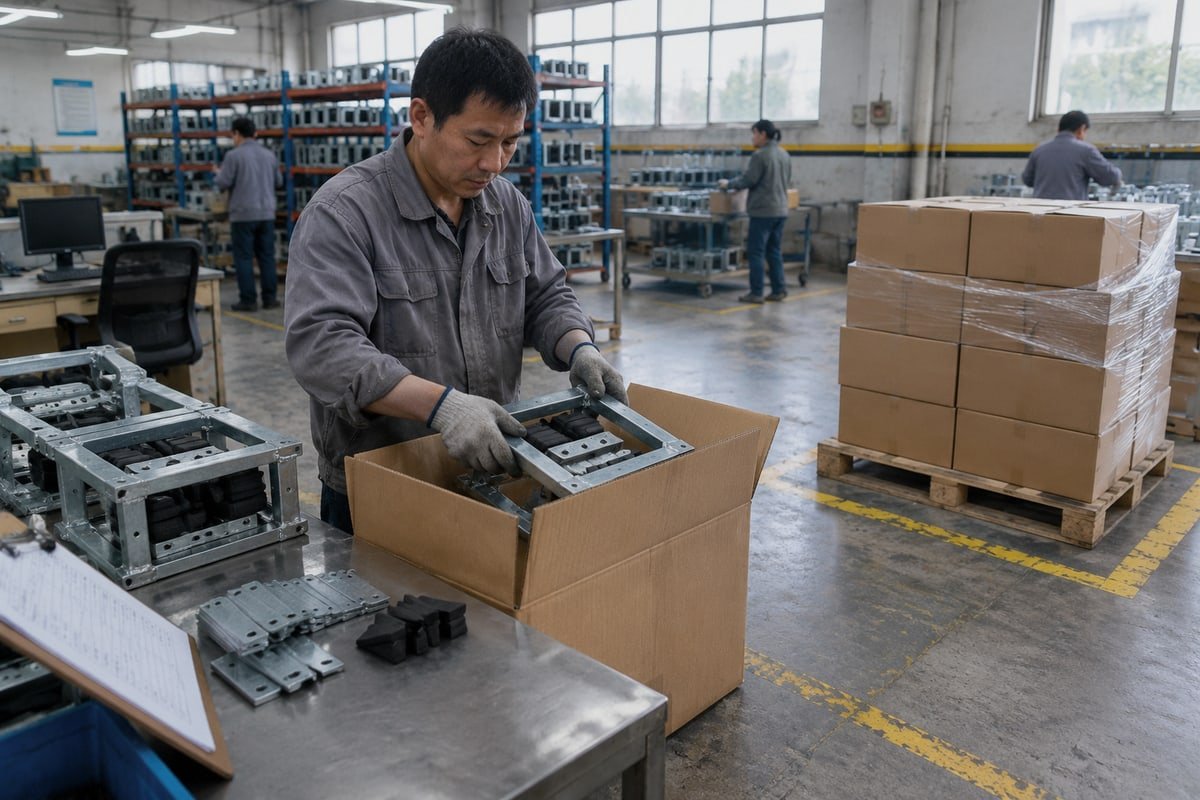
Poor packing for multi cable transit systems quietly wastes money IP68 seals 1. Early on, I watched our pallets leave Shaanxi half full of air. We fixed that at the packing bench.
To optimize packing for multi cable transit systems, kit modules by frame, nest small parts inside frame cavities, use right-sized cartons matched to pallet footprints, and consolidate orders into full pallets or containers. This cuts volumetric weight and handling fees while keeping fire-rated and IP68 seals protected.
Below, I walk through the four questions our export buyers ask most. Each section gives you a concrete method, a table you can copy, and the trade-offs we weigh on our own packing line.
How can I reduce freight volume when shipping modular MCT sealing systems overseas?
One of our QC leads once opened a finished export carton of TSC sealing modules and found the void fill took up more space than the rubber inside.
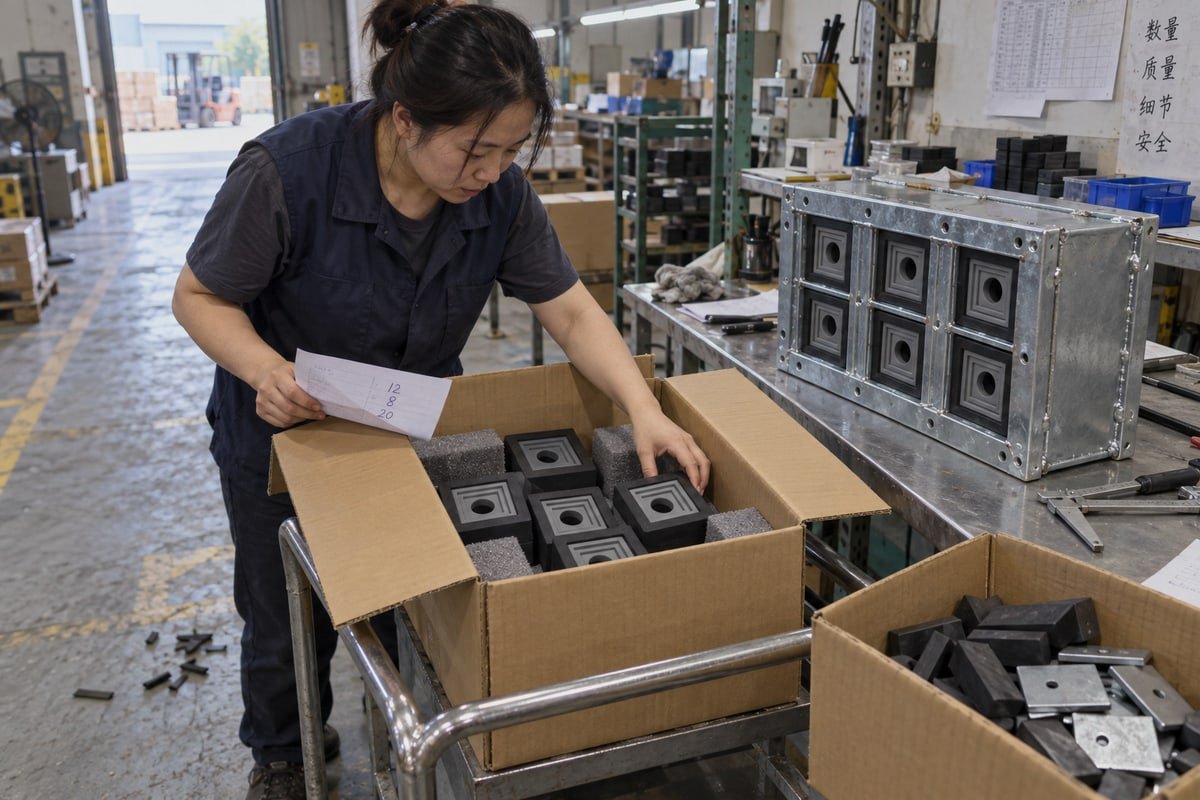
Reduce freight volume by ordering only the modules your design software calculates, choosing multi-window frames over several single frames, using step-core modules that cover a wide cable diameter range, and nesting compression units and stay plates inside frame openings before boxing.
Start with the bill of materials, not the box
Most wasted volume is decided before anyone touches tape. I see three common causes on incoming purchase orders.
First, over-ordering. Buyers add "a few extra" modules of every size because they are unsure which cable diameters will arrive on site. Manufacturer design software solves this. You feed it the cable list and the frame size. It returns the exact module count, the number of stay plates, and the compression unit. You ship what the frame needs, plus a planned spare capacity, and nothing more.
Second, filler blocks. When module sizes do not match the cable diameters, the gap gets filled with solid blocks. Our step-core EPDM modules 2 adapt to a range of cable diameters within one module size. So you need fewer sizes and fewer fillers. Fewer part numbers also means fewer half-empty inner boxes.
Third, frame count. A multi-window frame carries the same cable density as several single frames, but in one welded unit. It ships as one item with one set of hardware and one nameplate.
Nesting inside modular transit frames
A frame opening is a cavity. On our packing line we use it. Compression wedges, stay plates, hex bolts, and the document pouch go inside the frame window before the frame goes into the carton. The frame protects the hardware. The carton shrinks by the height of a separate hardware box.
| Volume driver | Effect on freight bill | Fix we apply |
|---|---|---|
| Over-ordered modules | More cartons, more dimensional weight | Calculate fill capacity from the cable list |
| Filler blocks | Extra rubber that seals nothing | Step-core modules with wide cable diameter range |
| Many single frames | Repeated hardware and packaging per unit | Multi-window frames where the cutout allows |
| Loose hardware cartons | Separate box per shipment | Nest hardware inside frame cavities |
| Oversized outer carton | Paid volumetric weight for air | Right-size carton to nested frame plus 10 mm clearance |
Some guides suggest aluminum or composite frames to cut gross weight for air freight. That advice is valid for non-fire-rated enclosures. But for A-0 or A-60 bulkhead penetrations 3, the frame material is part of the tested assembly, and steel is what the certificate covers. I would rather remove air from the carton than remove steel from the frame. For BESS containers 4 and switchgear, the frame is rarely the weight problem anyway. The problem is empty space.
What packing configurations let me consolidate cable transit frames and compression units into fewer containers?
Every export pallet forces a choice between a tall stack that fills the container and a low stack that forklifts handle safely. We pick a middle height and brace it.
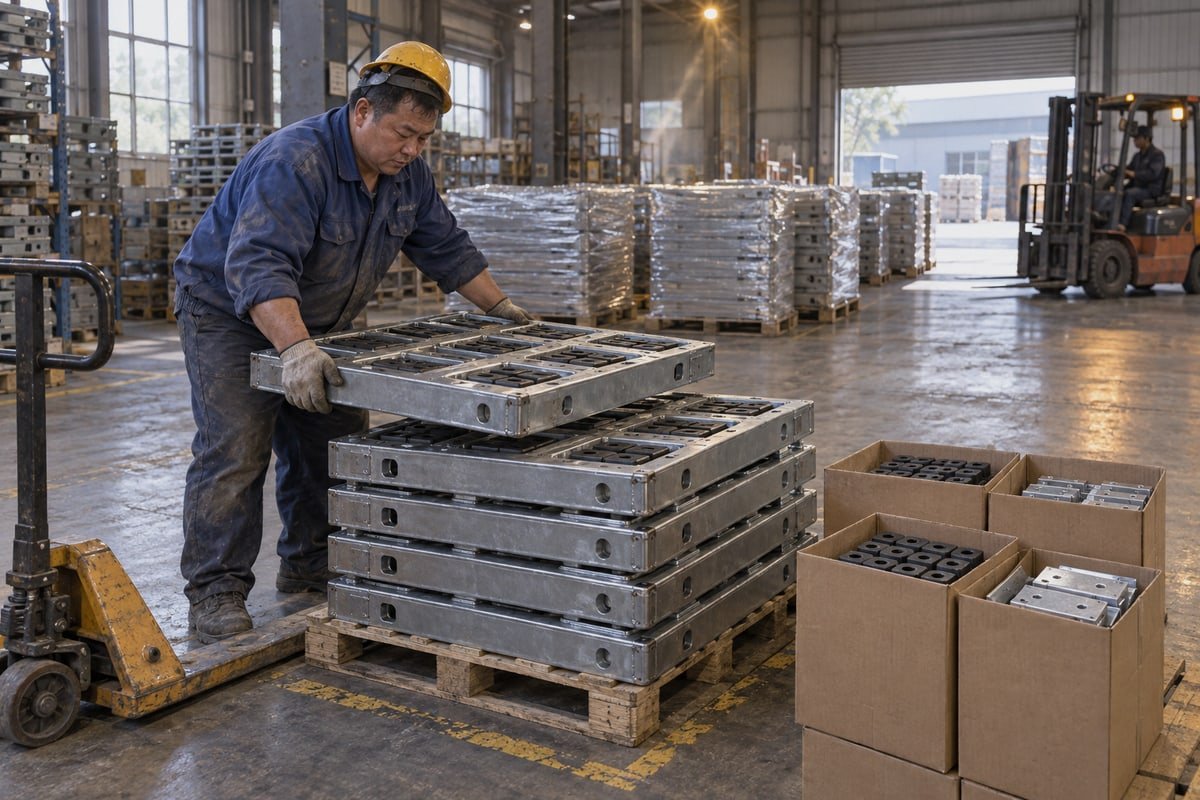
Consolidate by packing frames flat in layered trays, grouping compression units and stay plates in same-SKU inner boxes, building pallets to a standard footprint, and stacking those pallets to container height. Full-container or full-truckload batches cut per-unit freight far more than any single carton tweak.
Match the configuration to the channel
Different channels punish different mistakes. Parcel punishes oversized cartons. Sea freight punishes short pallets and poor stacking. Here is how I plan each one.
| Channel | Best configuration for MCT parts | Main cost driver | Typical use |
|---|---|---|---|
| Courier / parcel | One frame kit per right-sized carton, hardware nested | Dimensional weight | Urgent spare sealing modules |
| LTL road freight | Half-height pallet, cartons interlocked, corner boards | Pallet count and footprint | Regional top-up orders |
| FTL road freight | Full-height pallets in matched footprint | Truck utilization | European project deliveries |
| LCL sea freight | Export pallet, moisture barrier, ISPM 15 5 wood | Cubic meters billed | Mixed project kits to Middle East |
| FCL sea container | Pallets built to container inner height, weight balanced | Container utilization | Bulk frames for BESS or data center builds |
Three consolidation rules we apply
- Same SKU, same inner box. Compression units go together. Stay plates go together. Sealing modules of one size share one inner box with a printed count. This makes verification fast at both ends.
- Same frame, same kit. Each frame ships with its own modules, stay plates, and compression wedge in one kit. Installers unpack in installation order and never sort on the floor.
- Same footprint, same pallet. Our standard cartons are sized to the 1200 × 800 mm EUR pallet with no overhang. Two pallet layers then stack cleanly to container height.
What about mixed project kits?
Here is a fair objection. Standard kit sizes help logistics, but EPC projects often need mixed transit configurations. A switchgear line may take twenty identical frames. A substation retrofit may take fifteen different ones. My answer is to standardize the outside and customize the inside. The outer carton stays one of three sizes. The inserts and dividers change per frame. Logistics sees uniform boxes. Installers see a kit built for their frame.
For large rollouts, a closed-loop returnable crate can replace disposable packaging. We have quoted collapsible crates for repeat container builders. They pay off when frames flow back and forth on a fixed route, and they do not pay off for one-time projects. I also see integrators starting to simulate container loading digitally to balance center of gravity. That is a sensible step for heavy frame shipments, but a good pallet plan gets you most of the way.
Can I change packaging methods without risking damage to certified fire-rated and IP68 seals?
A sourcing engineer in Germany once asked me if thinner cartons could compromise our TSC modules' fire rating. My answer: rubber ignores cardboard, but it hates crushing and contamination.
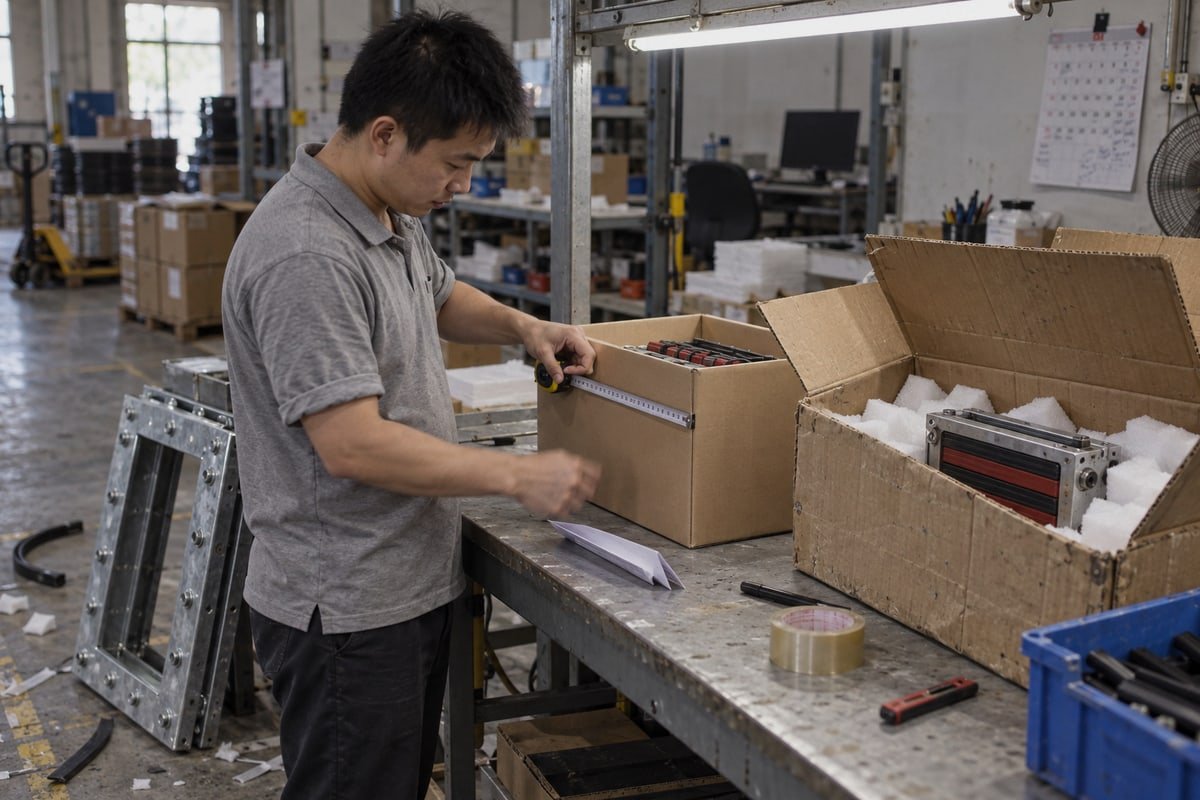
Yes. Certified fire-rated and IP68 seals keep their performance as long as packaging prevents permanent compression set, surface cuts, oil or dust contamination, and moisture ingress. Use rigid dividers, keep modules off the compression wedge, add a moisture barrier for sea freight, and never stack pallets on rubber.
What actually damages a sealing module
The rating on our test documents comes from geometry and material. A module seals because its step-core faces press evenly around the cable under compression. Anything that changes that geometry before installation is a risk. Anything else is not.
I have learned to separate real threats from imagined ones. Thin cardboard is not a threat. A heavy pallet resting on a stack of loose modules for a multi-week voyage is a threat. It can leave a permanent set in the EPDM. A weld burr on a galvanized frame edge rubbing against a module face is a threat. It can cut the sealing surface. Oil from a forklift or dust in the sealing faces is a threat. It can spoil watertight integrity at first compression.
| Component | Failure mode in transit | Packing control | Cost impact |
|---|---|---|---|
| EPDM sealing modules | Compression set from stacked load | Rigid tray, modules in a single layer, no load above | Low, trays are reusable |
| Sealing module faces | Cuts from frame edges or burrs | Cardboard or foam sleeve between rubber and steel | Very low |
| Compression wedge | Thread damage, dropped hardware | Bag hardware, nest inside frame window | Negligible |
| Galvanized or stainless frame | Scratches, white rust in humidity | Edge protection, VCI or moisture barrier for sea freight | Moderate |
| Stay plates | Bending from point loads | Bundle flat between frame and tray | Very low |
Where minimal packaging meets export rules
Another objection I hear is that less packaging saves cost. Sometimes it does. But export rules and the destination climate set a floor. Wooden pallets crossing borders need ISPM 15 heat treatment. Shipments to the Middle East and Asia-Pacific face humidity that can corrode frame hardware if no barrier is used. So we do not aim for minimal packaging. We aim for compact, rigid, dry packaging.
The cheapest way to confirm nothing changed is at receiving. Measure a sample module against the drawing. Check that the compression unit turns freely. Then match what you see with the test documents we supply on request: A-0/A-60 fire rating, IP68 ingress protection, and watertight and gas-tight sealing from 0.01 to 0.4 MPa. If the parts match the drawing and arrived clean and uncompressed, the certified performance is intact. Our BV-approved factory follows the same logic under ISO 9001 and IATF 16949: control the process, verify the output, and keep the evidence.
How do I balance lower shipping costs with reliable lead times when ordering drop-in MCT replacements?
We learned the hard way that one urgent air shipment of spare sealing modules can erase months of sea-freight savings. Now we plan spares and frames on separate rhythms.
Balance cost and lead time by splitting orders into two streams: bulk frames and planned modules by consolidated sea freight, and a small buffer of drop-in spare modules held locally or shipped by courier. Qualify a dimensionally compatible second source early so urgent replacements never depend on one factory.
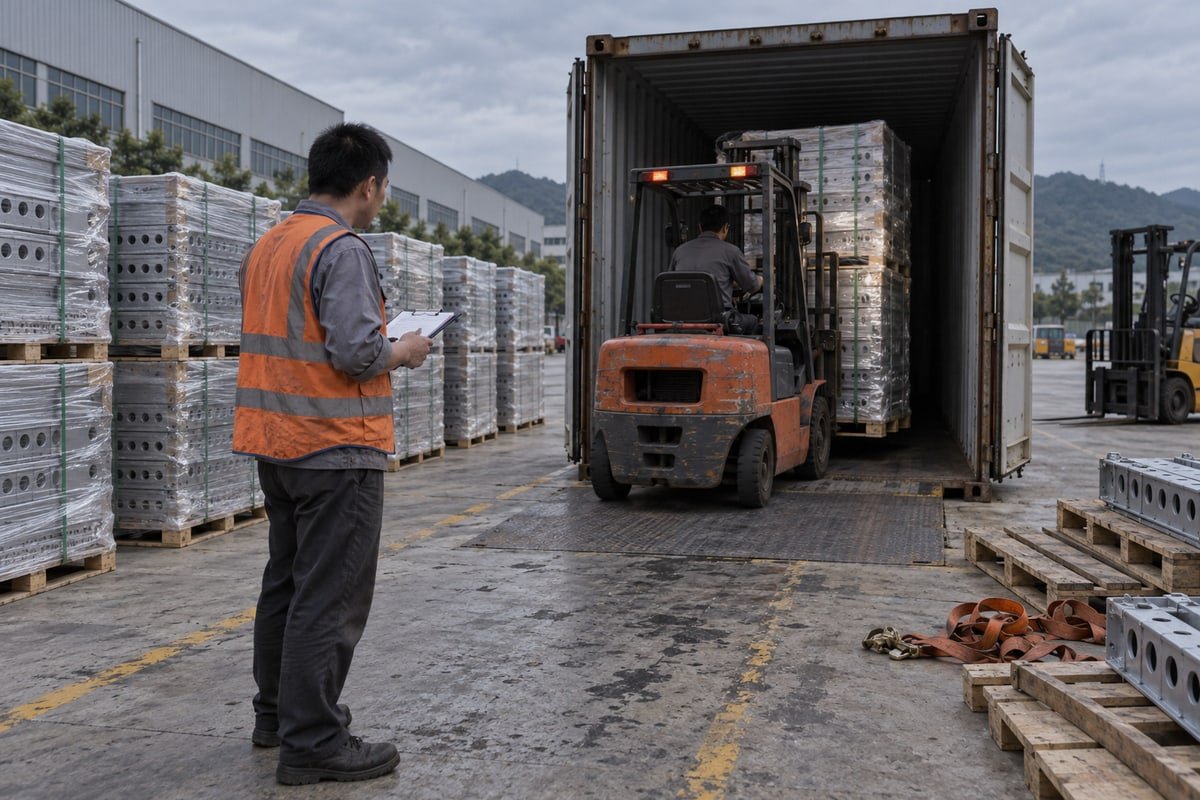
Two-stream ordering
Consolidation is the biggest lever on per-unit freight. But it also means waiting for a batch to fill. That tension is real. I do not pretend it away. Instead, I separate the parts that can wait from the parts that cannot.
Frames, stay plates, and the modules for a planned build can wait. They go into a consolidated sea shipment, timed to the production schedule. Spare sealing modules for a live BESS container or a running data center cannot wait. They are small, light, and cheap to courier when boxed correctly. So a small buffer stays close to the site.
| Shipping mode | Relative freight cost per unit | Effect on lead time | Best for |
|---|---|---|---|
| Full container sea freight | Lowest | Longest, plan with production schedule | Frames and planned modules |
| LCL sea freight | Low | Long, plus consolidation wait | Mixed project kits |
| Road FTL or LTL | Medium | Predictable within Europe | Regional top-up |
| Air freight | High | Short | Frames needed for a missed deadline |
| Courier | Highest per kilogram, low per small box | Shortest | Drop-in spare sealing modules |
Why drop-in compatibility protects the critical path
The second stream only works if the replacement fits without rework. Our TSC and TSR modules are dimensionally compatible with common 120-frame standards. A module drops straight into an existing frame cutout. Our cross-reference tables map the existing model number to the DEWIN model, and we send free validation samples so your team can check fit and compression before qualifying us. That qualification usually costs you far less than one emergency air shipment, and it opens a second source at 40 to 60 percent lower component cost.
Two more habits keep lead times honest. First, we pre-kit in our factory rather than asking your warehouse to sort. Yes, kitting adds labor on our side, but we have in-house mold making and dedicated packing staff across Shaanxi, Shandong, and Hunan, so it is cheaper for us than for you. Second, our export documentation matches the physical shipment exactly: quantity per carton, package marks, outer dimensions, and gross and net weight at carton and pallet level. A mismatch here causes customs holds, and a hold costs more days than any slow vessel.
Conclusion
Wasted carton space and rushed air freight quietly inflate MCT costs. Kit, nest, palletize, protect the rubber, and split spares from bulk. Ask us for a packing plan.
Footnotes
1. Wikipedia provides a standard definition for Ingress Protection (IP) ratings like IP68. ↩︎
2. Wikipedia provides technical details on EPDM rubber used in sealing modules. ↩︎
3. IMO standards define fire-rated bulkhead penetrations like A-60 for maritime safety. ↩︎
4. IRENA provides authoritative information on battery energy storage systems (BESS). ↩︎
5. IPPC provides the international standards for wood packaging like ISPM 15. ↩︎


 English
  Español de México
  Deutsch
  Français
  العربية
  Русский