
UFLPA traceability documentation for multi cable transit parts is the first request US-bound buyers send our [export desk](https://dewinmct.com/?p=827). One missing sub-supplier invoice can hold a container. Here is our method.
To prepare UFLPA traceability documentation for multi cable transit parts from China, build a transaction-specific file: a bill of materials, a supply chain map naming every tier, purchase orders and invoices from each sub-supplier, raw material provenance records, worker and wage evidence, and shipment records tied to each lot.
A sealing module looks simple from the outside. It is a rubber block, a steel frame, and two hex bolts. The paperwork behind it is not simple. The sections below walk through the documents, the raw material trails, the certificates, and a workflow that keeps your shipment moving.
What Documents Do I Need to Prove My MCT Parts Aren't Made with Forced Labor?
A sourcing manager at a BESS container builder once sent us a two-line question: which papers would satisfy CBP? Our answer ran to four pages. The short version follows.
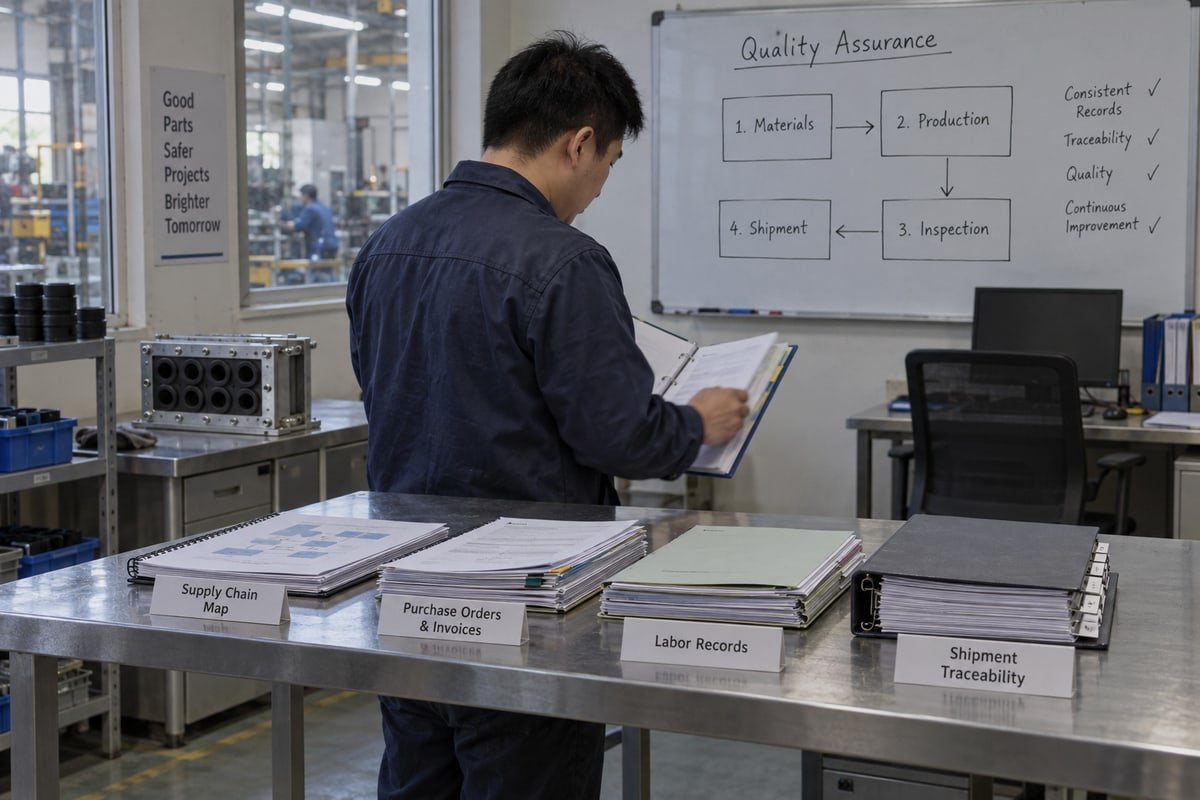
You need four document groups: a supply chain map with affidavits from every entity; transaction records such as purchase orders, invoices, packing lists, and payment proofs; factory and labor evidence including wage and recruitment records; and shipment traceability linking each lot to the bill of lading.
Why UFLPA traceability documentation differs from customs paperwork
The Uyghur Forced Labor Prevention Act 1 creates a rebuttable presumption. Any goods made wholly or in part in the Xinjiang Uyghur Autonomous Region, or by a party on the UFLPA Entity List 2, are presumed to be made with forced labor. CBP enforces that presumption. CBP decides whether to detain a shipment, reviews the importer's evidence, and grants or denies an exception. The key point for MCT buyers is this: "China origin" by itself is not the trigger. The trigger is any input, process, or party tied to Xinjiang or a listed entity. A standard Certificate of Origin says the module was made in China. It says nothing about where the EPDM polymer 3 came from or who galvanized the frame. That is why customs paperwork alone is weak as proof of admissibility.
The four document groups CBP expects
CBP Operational Guidance 4 for Importers asks for evidence covering "merchandise or any component thereof." For a sealing module with rubber blocks, a steel frame, a compression unit, and bolts, that means component-level records. We organize ours into four groups.
| Group | What goes in it | What it proves |
|---|---|---|
| Supply chain map | Every entity from raw material to export, with roles, addresses, and signed affidavits | Who touched the product and where |
| Transaction records | Purchase orders and invoices, packing lists, payment records, warehouse receipts, certificates of origin | That each input was bought from the named entity, in the stated quantity |
| Factory and labor evidence | Worker lists per entity, wage payment records, recruitment records, residency permits, internal controls, audit reports | That workers were recruited and are working voluntarily |
| Shipment traceability | Production logs, lot numbers, bills of lading, export declarations | That the detained container holds the lots described above |
The objection we hear most
Buyers often tell us a signed supplier declaration plus a Certificate of Origin should be enough. We understand the appeal. It is fast. But in a detention context CBP treats generic assurances as weak evidence in high-risk sectors. The agency wants records that tie inputs to the specific merchandise named on the customs detention notice. A form letter covering "all products" does not do that. A purchase order for one compound lot, matched to one molding batch, matched to one packing list, does. Everything also needs to be in English and indexed. A folder of untranslated Chinese invoices costs review time you do not have during a detention window. We translate ours before the container leaves Shaanxi, not after a hold.
How Do I Trace Raw Material Origins for EPDM Rubber and Metal Frame Components?
During an incoming-material check at our Shaanxi plant, a QC technician flagged an EPDM compound lot with no batch certificate. We held the molding run until the supplier sent it.
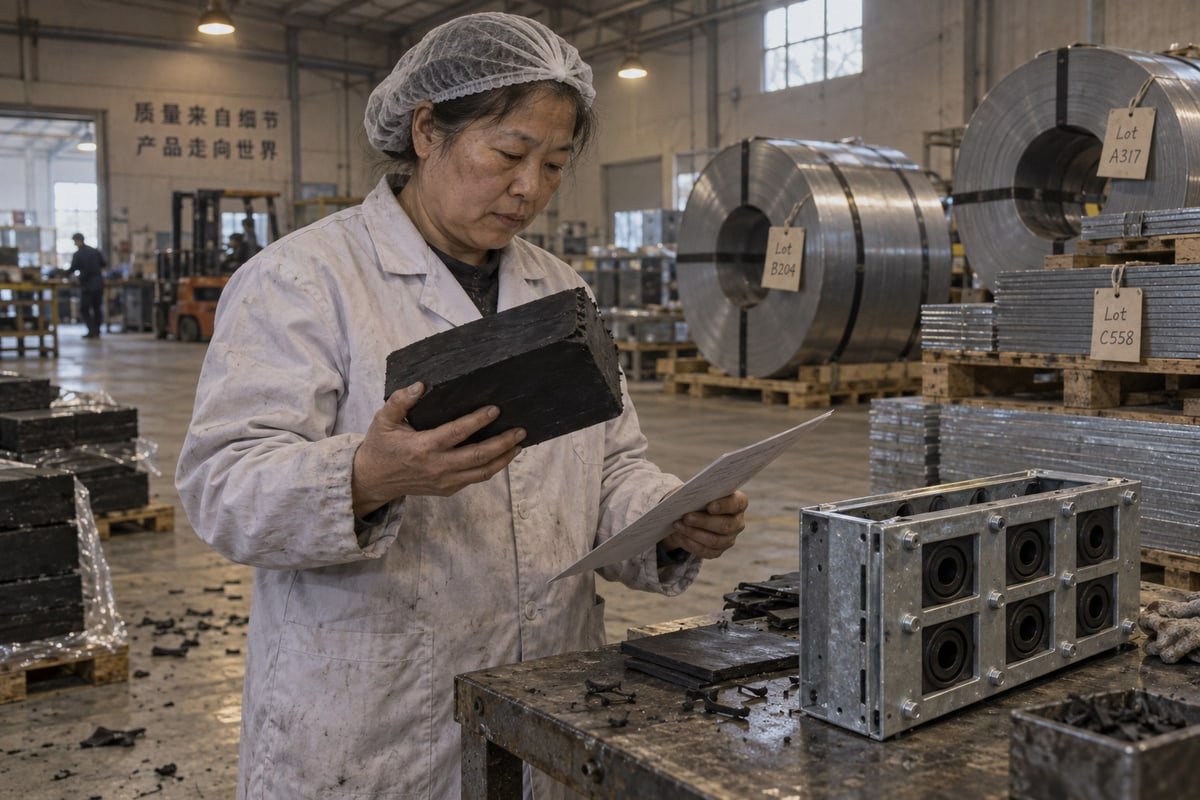
Trace EPDM and metal frame origins by working backward from each Bill of Materials line: identify the compounder, polymer producer, and additive suppliers for rubber, and the steel mill, coil distributor, and galvanizer for frames, then collect lot-matched invoices and certificates from each.
Start from the Bill of Materials, not from the supplier list
Supply chain mapping that starts with "our direct supplier" is already one tier too shallow. We start with the Bill of Materials (BOM) for the specific module. A TSC square module BOM is short: halogen-free EPDM compound, the step-core insert, release agent, and marking ink. A frame BOM adds galvanized steel sheet or plate, weld consumables, hex bolts, washers, stay plates, and a nameplate. Each line gets its own raw material provenance trail.
| Input | Chain behind it | Provenance evidence to collect |
|---|---|---|
| EPDM polymer | Petrochemical producer → compounder → our molding line | Producer invoice to compounder, compounder batch certificate, compound purchase order and invoice, incoming inspection record |
| Fillers and vulcanizing agents (carbon black, peroxide, zinc oxide, process oils) | Chemical processor → compounder | Compounder's supplier list, chemical processor invoices, safety data sheets with manufacturer address |
| Galvanized steel for frames | Steel mill → coil or plate distributor → cutting and welding → galvanizer | Mill test certificate, distributor invoice, galvanizing subcontractor invoice and address |
| Hex bolts, washers, stay plates | Fastener maker or machining subcontractor | Purchase orders and invoices, subcontractor affidavit |
The additive blind spot
Advice to audit the secondary chemical processors is correct and often ignored. Vulcanizing agents and process oils are a small share of module weight. But they are still inputs. If a compounder buys an additive from a listed entity, the presumption can attach to the whole module. We ask our compounders for their own tier-two invoices for these additives and keep them in the file. Those records also feed our due diligence audit of the compounder each year.
Is molecular testing worth it?
Isotopic and DNA-based testing has been used mainly for cotton and agricultural inputs. For synthetic EPDM and steel, isotopic origin testing is possible in some cases but not standard. We treat it as an optional supplement, not a replacement for lot-matched paperwork. Records that reconcile kilograms of compound received against modules produced carry more weight with CBP than a lab result with no chain of custody behind it.
Answering the "too burdensome" objection
Some buyers argue that tier-two and tier-three visibility is unreasonable for a commodity rubber block. The counterargument is simple. CBP guidance expects deep tracing where risk exists, and polymer and steel chains in China are flagged sectors. The burden is real. But it is a one-time mapping cost per input, refreshed only when a source changes. That is far cheaper than a detained container of modules waiting at a US port while a BESS project stalls.
Which Certifications Should I Request from My China-Based MCT Supplier for CBP Compliance?
Every certificate we hand over costs a buyer review time, so we weigh which ones carry real weight with CBP and which only look reassuring on a cover page.
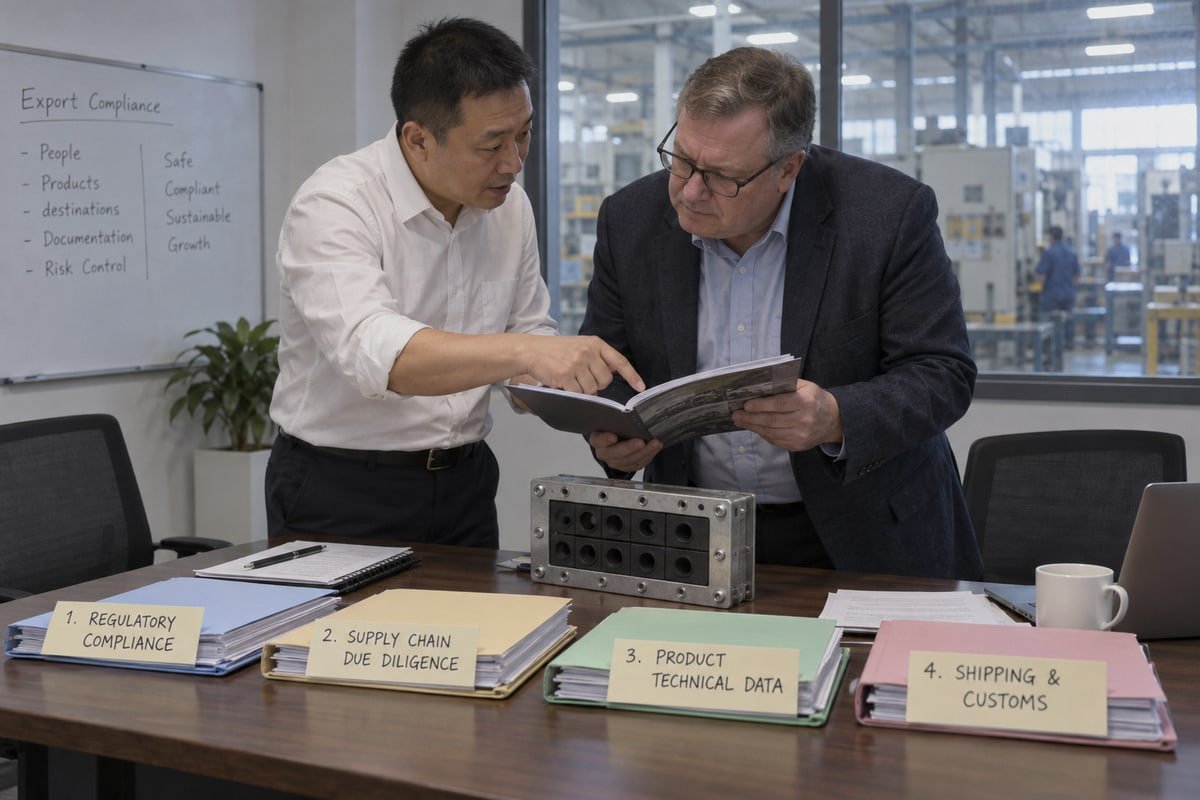
Request ISO 9001 and IATF 16949 certificates, third-party factory approvals, product test reports, Certificates of Origin, and a signed forced labor compliance affidavit, but treat them as supporting evidence only; CBP admissibility rests on transaction-specific records, not certificates alone.
What each certificate actually proves
| Certificate or report | What it demonstrates | What it does not demonstrate for UFLPA |
|---|---|---|
| ISO 9001 / IATF 16949 5 | A documented quality system with lot traceability and controlled suppliers | Where any raw material came from |
| BV factory approval | A third party inspected the production site | Labor conditions at sub-suppliers |
| Fire test report A-0 / A-60 | The module meets the fire rating | Nothing about labor or origin |
| IP68 and watertight/gas-tight test (0.01–0.4 MPa) | Sealing performance | Nothing about labor or origin |
| Certificate of Origin | Country of manufacture for tariff purposes | Absence of Xinjiang inputs or Entity List parties |
| Signed forced labor compliance affidavit | The supplier's own statement, per entity | Independent proof; needs supporting records |
| Social compliance audit (SMETA, SA8000, or similar) | Third-party review of labor practices at one site | Coverage of sub-suppliers unless separately audited |
Why we still send the quality certificates
If ISO 9001 does not prove origin, why ask for it? Because a quality system generates the records CBP wants. Our IATF 16949 procedures require lot traceability from incoming material to finished module. That is the same discipline that lets us match a compound batch to a shipment. A supplier with no traceability system will struggle to produce lot-matched invoices, even with honest intent. So the certificate is a signal of capacity, not proof of admissibility.
Screening beyond the certificate
Two checks belong in every request. First, ask the supplier to confirm in writing that each entity on the map has been screened against the current UFLPA Entity List, with the screening date. The list is updated, so the date matters. Second, pull Chinese-language corporate registry data on the supplier and key sub-suppliers. That reveals parent companies and shareholders that never appear on an English-language certificate. Hidden state-owned stakeholders or links to labor transfer programs surface there, not on a quality certificate. We share our own registry extract when asked. A factory with RMB 50M registered capital and 38 granted patents has nothing to hide in that record.
Beware the form letter
A one-page "UFLPA compliance statement" covering all products and all time is the weakest document in any file. CBP wants evidence tied to specific merchandise. Ask for per-entity affidavits that name the product code, the lot, and the period. That is more work for the supplier. It is also the only version that helps you when UFLPA traceability documentation is under review.
How Can I Build a Supply Chain Mapping File That Passes UFLPA Audits Without Delaying My Shipments?
One lesson stuck with us: paperwork assembled after a customs detention notice is always incomplete. Now we compile the mapping file while the modules are still in the mold.
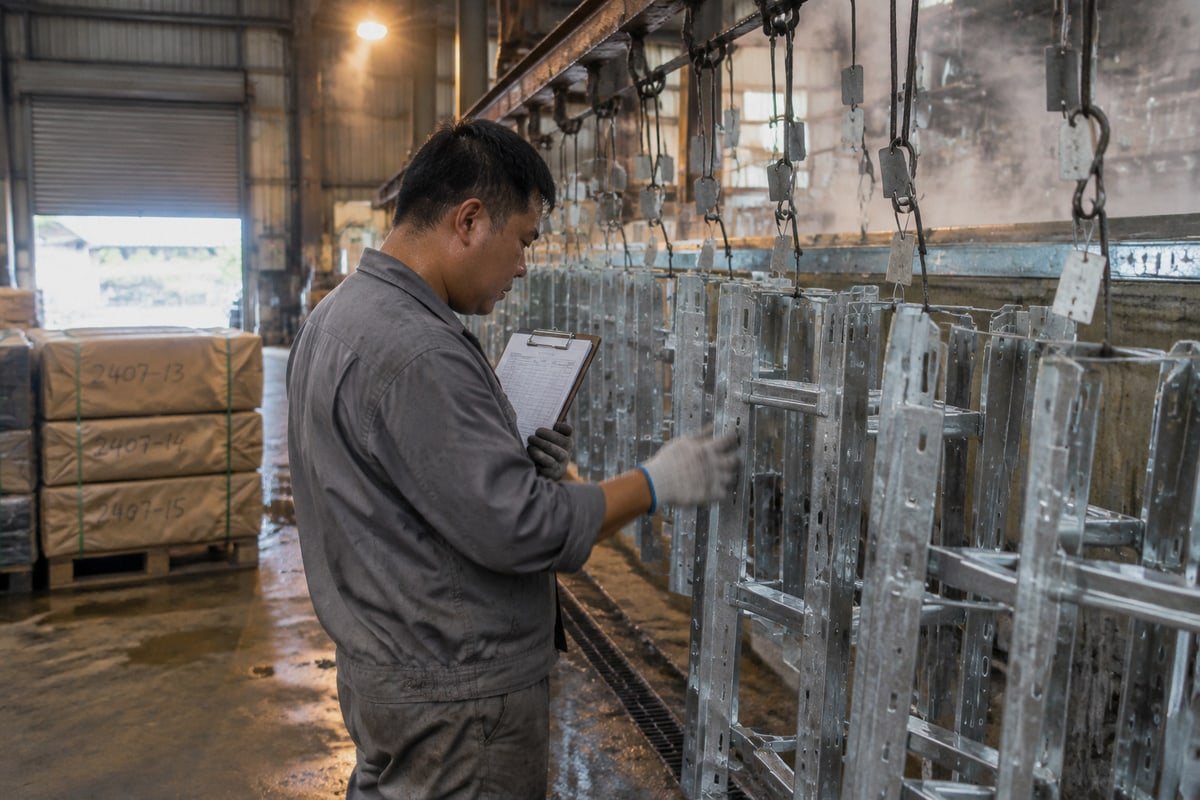
Build the file in parallel with production: freeze the BOM at order confirmation, collect tier-by-tier affidavits and invoices before molding starts, reconcile material-in versus modules-out logs, screen every entity against the UFLPA Entity List, and translate and index the package before the bill of lading issues.
A seven-step workflow that runs alongside production
- Freeze the BOM at order confirmation. Attach the cross-reference from the buyer's existing model to the DEWIN model, so the file matches the part number on the purchase order.
- Issue tier-one purchase orders and, at the same time, request tier-two invoices and affidavits from the compounder, steel distributor, and galvanizer.
- Screen every named entity against the UFLPA Entity List and run Xinjiang address checks. Record the date and the result.
- Log material in and modules out daily. The reconciliation shows the kilograms of compound received account for the modules shipped, with no unrecorded input entering the line.
- Draw production flowcharts per product family. Show each step and the entity that performs it, including subcontracted galvanizing or machining.
- Translate, index, and number the package. Follow the CBP Operational Guidance structure so a reviewer can find each item fast.
- Hand the buyer the package with the shipping documents, before the bill of lading issues.
Common gaps and how to close them
| Gap | Why it fails a review | Fix |
|---|---|---|
| Unknown subcontractor | An entity the importer cannot name cannot be screened | Contract clause requiring disclosure of all subcontractors before production |
| Mixed-origin components | Two steel sources in one frame lot break the match | Segregate lots by source; one source per shipment where possible |
| Trading company opacity | The exporter on the invoice is not the factory | Buy factory-direct, or require the trader to supply the factory's records |
| Missing wage records at lower tiers | Labor evidence stops at tier one | Add wage and recruitment evidence to the tier-two affidavit template |
| Mismatched batch numbers | Invoice says one lot, packing list says another | Single lot register shared across purchasing, production, and shipping |
Digital chain of custody
Some buyers ask for a blockchain-based ledger with immutable timestamps for every hand-off from foundry to port. That can help. It is not required. What CBP checks is whether the timestamps, quantities, and product codes agree across documents. A well-kept ERP lot register with exported PDFs achieves the same consistency. If your compliance team already runs a ledger platform, we can feed it from our records.
Why this does not delay shipments
The 2024 DHS strategy update highlighted supply chain maps and targeting tools tied to entities, facilities, products, and shipments. That means the risk is scored before your container lands. A file prepared during production adds no days to lead time. A file prepared after a customs detention notice adds weeks. That is the practical answer to the tension between a workable standard and evidentiary completeness. Front-load the work and the two stop competing. It is also why we send free validation samples with a sample documentation index, so your qualification team can review the UFLPA traceability documentation format before the first production order.
Fazit
A UFLPA file is a system, not a certificate. Map every tier, match every lot, and collect records before shipment. Ask our export desk for a sample documentation index.
Fußnoten
1. Official legislative text of the act establishing the rebuttable presumption for goods from Xinjiang. ↩︎
2. Official list of entities identified by the U.S. government as being involved in forced labor. ↩︎
3. Technical overview of EPDM rubber, the primary synthetic polymer used in MCT sealing modules. ↩︎
4. Official CBP resource providing specific instructions for importers to comply with UFLPA requirements. ↩︎
5. Official site for the automotive quality management standard focusing on traceability and defect prevention. ↩︎



 English
  Español de México
  Deutsch
  Français
  العربية
  Русский