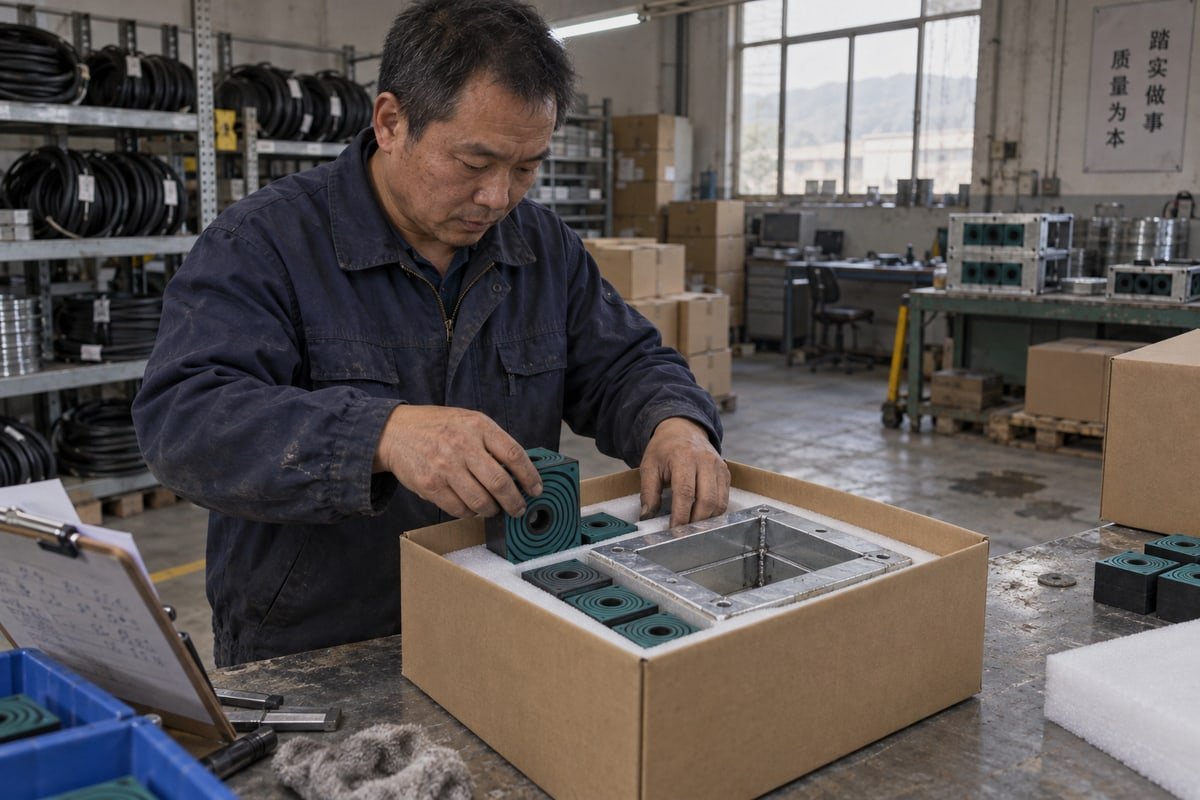
Every week our sample desk sees the same problem: buyers want multi cable transit samples fast, but send no cable data. The request stalls, the project slips, and savings wait.
To request samples for multi cable transit, send the supplier your frame standard, cable count, cable diameters, and target IP or fire rating, then ask whether validation samples are free, credited against a first order, or refundable. Serious engineering data usually turns fees into waivers.
Below, I walk through the four questions our purchasing contacts ask most often. I cover the data you need, the fee conditions to watch, the lead times to expect, and the checks to run on arrival.
What Information Do I Need to Provide Before Requesting MCT Samples?
A sourcing manager in Rotterdam once emailed us a single photo of a transit frame and asked for samples. We needed four more emails before anything could ship.
Before requesting MCT samples, provide the existing frame standard or competitor model number, cable count and outer diameters, penetration cut-out dimensions, required IP and fire ratings, application environment, and realistic annual volume. This data lets the supplier select the correct module size and ship on the first attempt.
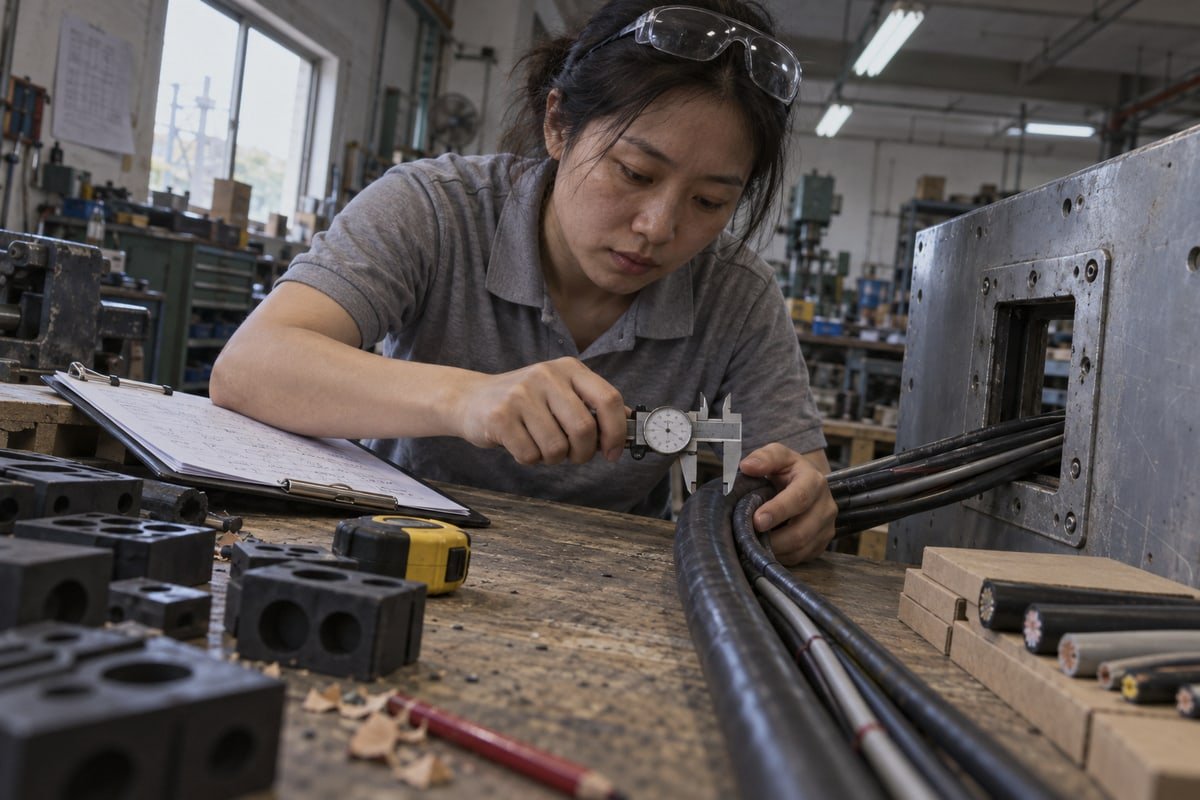
A multi cable transit is a cable sealing system. It routes several cables through one opening and keeps the IP rating 1 or fire rating intact. Fit depends on exact dimensions. So the vendor cannot guess. Some suppliers, such as M&J Silkroad, ask for a panel cut-out list, a sample part, or a cable diameter range, and then quote within 24 hours. Roxtec routes requests through a form that leads to a demonstration or test installation. icotek puts an "order your free sample" button directly on its KEL-ER product page. The pattern is clear. Standard parts ship fast. Engineered parts need data first.
The minimum data set we ask for
| Data item | Why it matters | Example |
|---|---|---|
| Existing frame standard or competitor part number | Confirms 120-frame compatibility and lets us pull the cross-reference table | "Currently using a 120-size square module, 40 mm wide" |
| Cable count and outer diameters | Selects the correct step-core module size | 6 cables at 14–18 mm, 2 at 24 mm |
| Cut-out dimensions and wall thickness | Confirms frame depth and stay plate position | 240 x 120 mm opening, 6 mm steel bulkhead |
| Required ratings | Decides EPDM grade and test documents | IP68, A-60, gas-tight to 0.4 MPa |
| Application and environment | Flags marine and offshore standards or UL certification requirements 2 | BESS container door, outdoor, Middle East |
| Estimated annual usage and timeline | Supports fee waiver and bulk order pricing later | 400 modules per year, pilot in Q3 |
Give a competitor part number when you can
A cross-reference sample is the fastest route. When a buyer tells us the incumbent model, our engineers map it to the matching TSC or TSR module from our cross-reference table. That removes guesswork on both sides. It also signals a real second-source project, which every supplier wants to win.
Use a corporate email and an application engineer
Many sample programs auto-reject generic email domains. Register with your company address. Then ask for an application engineer, not just a web form. Technical staff usually hold more discretion on sample scope. We also send STEP files and technical data sheets with the first reply, so your team can run a virtual fit check before the physical parts even leave Shaanxi.
Are Validation Samples Really Free, or Are There Hidden Conditions?
Every free sample kit we ship costs us rubber, machining time, and freight. So we weigh that cost against one question: does this request look like a real qualification?
Validation samples are often free, but suppliers attach conditions: corporate email registration, quantity limits per part number, freight paid by the buyer, or a demonstration instead of shipped hardware. Custom sizes usually carry a fee, which you can negotiate into a credit against your first purchase order.
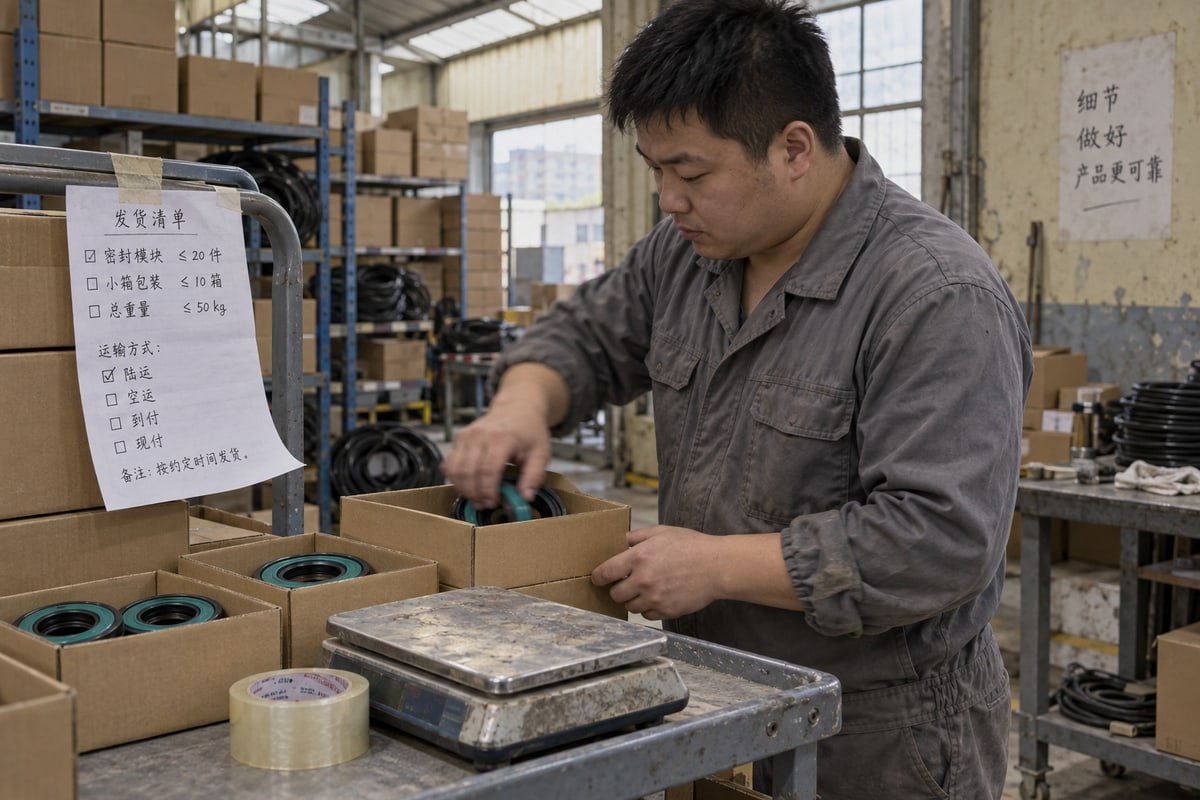
Buyers often raise a fair objection here. Some vendors advertise free sample kits, such as icotek and BOSS FyreBox for firestop transit products. Others wrap samples in guardrails. Molex, for example, requires registration, limits free quantities by cost and complexity, and does not accept purchase orders for sample orders. Is one approach more honest? I do not think so. The guardrails protect low-volume, engineered parts from retail-level abuse. The free kits work because standard parts are cheap to give away. Your job is to know which model you are dealing with.
Four sample models you will meet
| Model | Typical supplier behavior | What to ask |
|---|---|---|
| Free sample kit | Self-service button on product page | "Can the kit include two module sizes?" |
| Request form plus demo | Sales contacts you for test installation | "Can hardware ship to my site instead?" |
| Registered portal with limits | Quantity caps, no PO, corporate email only | "Which part numbers are sample-eligible?" |
| Custom or made-to-order | Drawing required before any quote | "Does the fee cover tooling, hardware, or freight?" |
The levers that move a fee
- Estimated annual usage. State your EAU and project timeline. Real volume potential often triggers an automatic waiver.
- Sample-to-PO credit. Propose that any sample or prototyping fee is fully deductible from the first invoice. This costs the supplier nothing if you buy, and it neutralizes the risk if you do not.
- Consignment demo kit. For frame assemblies, ask for a 30-day loan of a complete reusable frame rather than a giveaway of individual modular sealing blocks.
- DDP Incoterms. A free part with surprise brokerage fees is not free. Request Delivered Duty Paid for the sample shipment.
- Sustainability benchmarking. If your ESG procurement mandate calls for halogen-free or recycled-content cables, say so. Our step-core EPDM is halogen-free, and we welcome that test.
How we handle it at our factory
For standard TSC and TSR modules that drop into common 120-frame standards, our validation samples are free. The buyer covers courier freight, or we roll it into the first order. For custom sizes, our in-house mold shop quotes tooling separately, and we credit that tooling against production once the vendor qualification process passes. We prefer this over a hidden markup on bulk order pricing.
How Long Does Sample Delivery Take and Can I Track Lead Times?
Last quarter our QC team held a sample shipment for two days because one TSC module's compression check fell outside our tolerance. The buyer got the delay explained, not hidden.
Sample delivery for standard multi cable transit modules typically takes days to ship plus courier transit, while custom mold sizes need weeks for tooling. Ask the supplier for a written lead-time breakdown, a tracking number, and DDP terms so import duties never delay or surprise your evaluation.

Lead time has stages. Each stage can slip. So I recommend you ask for the stages, not one number. When our sales engineers confirm a sample order, they list every step with a date. That habit came from painful experience. A buyer in Europe once thought "ready in three days" meant "at my desk in three days". It did not. Customs took its share.
The stages of a sample order
- Technical confirmation. The supplier checks your cable data and frame standard. With complete data, this takes hours. With missing data, it takes days of email.
- Production or pick. Stock modules are picked from inventory. Custom sizes wait for mold making. Our factory does molds in-house, which cuts that step, but it is still the longest part.
- Quality release. We check dimensions, hardness, and compression on every sample batch under our ISO 9001 3 and IATF 16949 system. A hold here is rare, but it happens.
- Export documentation. We handle the paperwork. Ask your supplier if they do the same, or if you must.
- Courier and customs. This is where DDP terms 4 matter. Without them, your parts may sit in a broker's queue.
Track it like a production order
| What to request | Why |
|---|---|
| Written date per stage | Lets you see which stage slipped |
| Courier tracking number | Confirms hand-off and customs status |
| Named contact for updates | Avoids the generic inbox |
| Photo of packed samples | Verifies part numbers before shipment |
Shorten the loop with digital samples
Physical parts are only half the picture. Ask for STEP files and, for larger builds, LOD 400 BIM models. Our engineers send these on request. Your team can run clash detection against the cabinet or bulkhead before any rubber ships. One virtual check often removes a second physical round, and that saves more time than any courier upgrade.
What Should I Check When the Samples Arrive to Confirm Drop-In Compatibility?
We learned early that a module can measure perfectly and still fail on site. Since then, every sample we send comes with a checklist, not just a data sheet.
When multi cable transit samples arrive, measure module height, width, and depth against the 120-frame cutout, test the cable diameter range by peeling step-core layers, torque the compression wedge assembly, and run a water or air test. Then compare the results with the supplier's certified test documents.

A drop-in second source has one job. It must fit the existing frame without rework. So the first checks are dimensional. Then come the functional checks. Then the documents. I split them below because purchasing and engineering often own different parts.
The physical checklist
| Check | Method | Pass criterion |
|---|---|---|
| Module outer dimensions | Caliper against your existing module | Matches the 120-frame standard within your drawing tolerance |
| Cable diameter range | Peel step-core layers to the marked size | Cable fits with the specified rubber thickness remaining |
| Frame fill and stay plates | Assemble the full row in your frame | No gaps, stay plates seat flat |
| Compression unit | Torque the compression wedge assembly to spec | Even bulge on all modules, no overhang |
| Sealing test | Water immersion or air pressure per your procurement specifications | Holds the target pressure, 0.01–0.4 MPa in our rating |
| Material feel | Compare hardness and surface with the incumbent | No sticky or chalky surface, consistent color |
The document checklist
Physical fit proves compatibility. Documents prove certification. Ask for the technical data sheets, the ISO 9001 and IATF 16949 5 certificates, and the third-party test reports behind the A-0/A-60 fire rating and IP68 ingress protection. Our factory is BV-approved, which matters when your project falls under marine and offshore standards. If your specification lists UL certification requirements, confirm which listing the project actually calls for. Marine fire ratings and UL fire listings are separate regimes, and a supplier should say plainly which tests they hold and which they do not.
Close the vendor qualification process properly
Record every measurement. Photograph the assembled frame. Then send the results back to the supplier, including any deviation. When a buyer sends us a deviation report, our engineers respond with a drawing revision or a mold adjustment, not an excuse. That exchange, more than any brochure, tells you whether you have found a long-term partner or a one-time price.
Fazit
Unprepared sample requests waste weeks and stall cost savings. Send complete cable data, negotiate fees into credits, track lead times by stage, and verify fit and documents on arrival.
Fußnoten
1. Official IEC standard definition for ingress protection ratings used in cable transit specifications. ↩︎
2. Authoritative source for UL safety certifications required for cable transit systems in specific environments. ↩︎
3. Official ISO page for the quality management standard used to verify sample production consistency. ↩︎
4. Official ICC resource for Incoterms, explaining the Delivered Duty Paid shipping terms mentioned. ↩︎
5. Official site for the IATF 16949 quality standard, relevant to the manufacturer’s quality control process. ↩︎



 English
  Español de México
  Deutsch
  Français
  العربية
  Русский