
Most buyers sign a long-term [spare parts agreement](https://dewinmct.com/?p=971) for multi cable transit systems 1 after the frames have shipped. On our production line, we watch that delay turn into mismatched modules years later.
To sign a long-term spare parts agreement for multi cable transit systems, define mandatory and operational spares, fix module specifications and frame compatibility, require certification and batch test documents, validate drop-in fit with samples, and lock lead-time SLAs plus a 3–5 year pricing schedule with a capped escalation clause.
That is the short version. The rest of this article walks through each of those steps. I will explain what to write into the contract, what evidence to ask for, and where buyers usually lose money.
How do I structure a long-term spare parts agreement to guarantee consistent MCT module quality across every batch?
Every EPDM batch at our Shaanxi plant gets checked for hardness and dimensions before molding. That habit began after we saw how small compound changes shift a module's compression behavior.
Structure the agreement around a frozen technical specification: fixed EPDM compound, halogen-free declaration, step-core geometry, and 120-frame dimensions. Add batch traceability, a certificate of conformity per shipment, a change-notification clause, and a backward compatibility guarantee so every module matches the first approved sample.
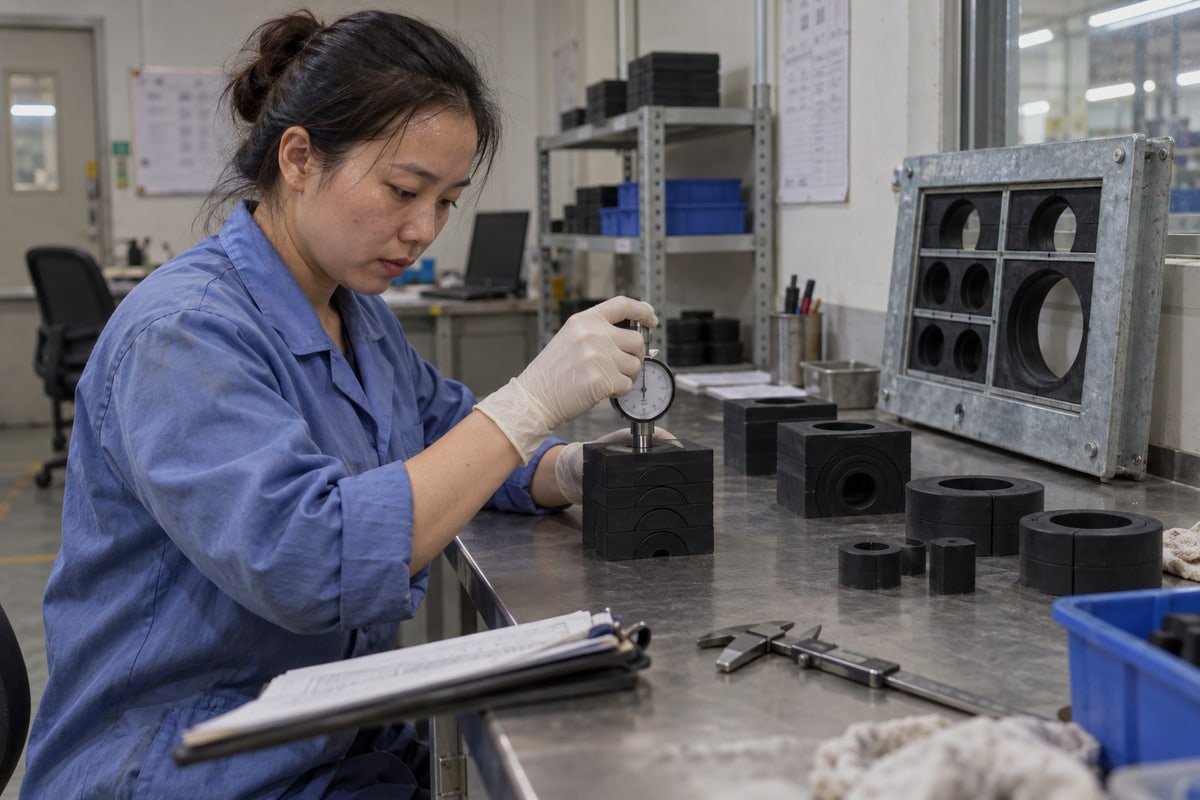
A spare parts agreement for modular sealing systems 2 fails for one reason more than any other. The parties never agree on what "the same part" means. So the first job is to write it down.
Separate the scope into named categories
Recent multi cable transit tenders already split spares into commissioning spares, mandatory spares, special tools, consumables, and 2-year operational spares. I recommend the same structure. It tells the supplier which items must be in stock at award and which are forecast items.
| Category | What it usually covers | Contract treatment |
|---|---|---|
| Commissioning spares | Extra sealing modules, stay plates, gaskets used during first install | Delivered with the main order |
| Mandatory spares | Compression units, critical module sizes, blank modules | Fixed price, guaranteed stock |
| Operational spares | Maintenance and repair kits, replacement modules for 2+ years | Call-off with agreed lead time |
| Special tools | Torque tools, lubricant, insertion aids | Priced once, listed by model |
| Excluded items | Frames, custom cutouts, new sizes | Quoted separately |
Freeze the specification, not just the part number
A part number can stay the same while the rubber compound changes underneath it. So the agreement should reference a technical file. That file should list the EPDM grade 3, the halogen-free declaration, the step-core diameter range per module size, and the frame family. Our TSC square modules and TSR round assemblies are dimensionally compatible with common 120-frame standards. We put that dimension set into the file so it becomes a contract term, not a brochure claim.
Add change control and backward compatibility
Buyers often ask whether OEM-only sourcing is the safer path. It protects compatibility, but it also removes leverage and creates single-source risk. The better answer is a qualified second source bound by the same specification. Write a change-notification clause so any material or design iteration must be announced in advance. Pair it with a backward compatibility guarantee. Future modules must still fit the cable transit frames you installed in year one. This is basic obsolescence management, and it costs nothing to add.
Standardize sizes and plan spare capacity
Fewer module sizes mean fewer SKUs in stock. I encourage integrators to standardize across a BESS container fleet 4 or a data center hall. Then add a spare capacity planning clause. Frames should be sized for 20% to 40% future expansion, so later cable additions do not require new structural hardware. That one clause keeps the spare parts list short for years.
What certifications and test documents should I request before locking in a multi-year MCT supply contract?
A sourcing engineer in Germany once replied to our quote with one line: send the test reports first. We did, and the price discussion came later.
Request ISO 9001 and IATF 16949 certificates, a classification society factory approval such as BV, fire test reports for A-0/A-60 ratings, IP68 ingress protection results, watertight and gas-tight pressure test data from 0.01 to 0.4 MPa, halogen-free material declarations, and per-batch certificates of conformity before signing.
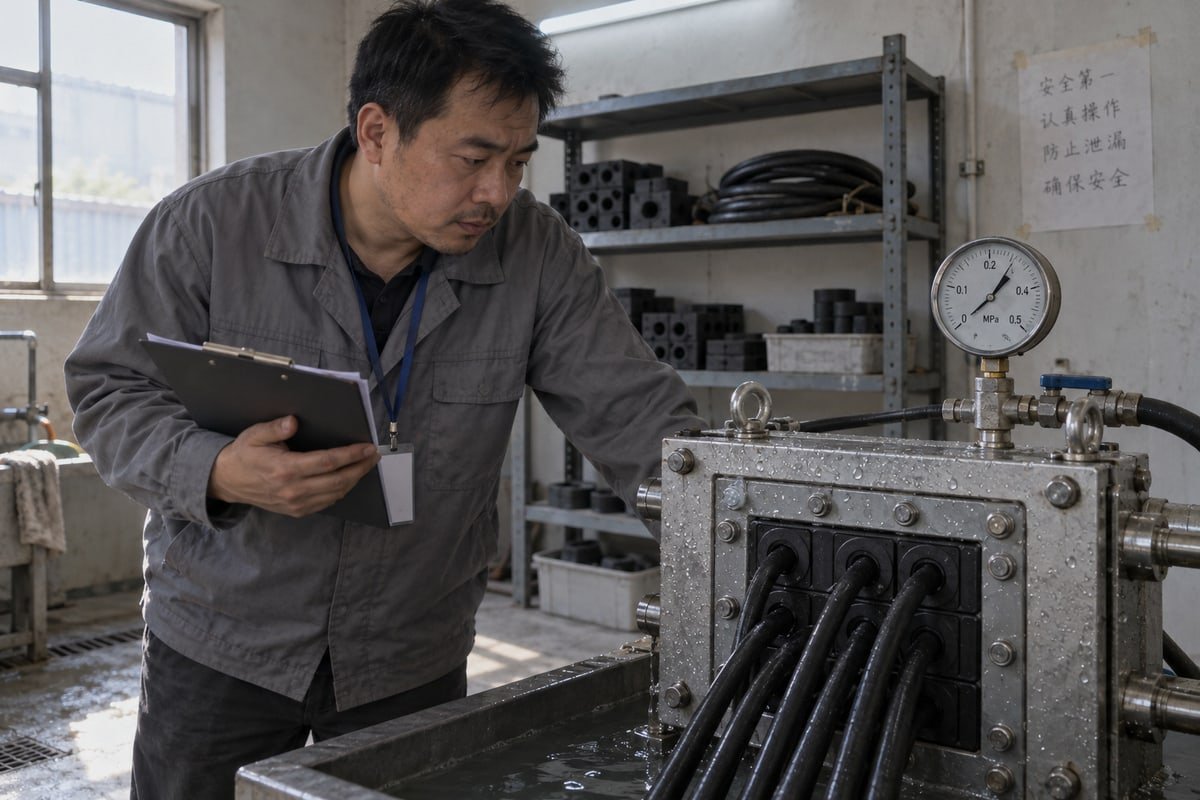
Documents do two jobs in a multi-year contract. They prove the supplier can perform today. They also give you a benchmark to hold every future batch against. I treat them as the backbone of the agreement, not an attachment.
Which documents matter and why
| Document | What it proves | When to request it |
|---|---|---|
| ISO 9001 and IATF 16949 certificates | Quality system exists and is audited | Pre-qualification |
| Classification society factory approval (e.g. BV) | Marine and offshore grade production control | Pre-qualification |
| Fire test report, A-0/A-60 | Fire and water tightness after fire exposure | Before first order |
| IP68 test report | Sustained submersion and dust protection | Before first order |
| Pressure test data, 0.01–0.4 MPa | Watertight and gas-tight sealing range | Before first order |
| Halogen-free material declaration | Safe smoke behavior in enclosed spaces | Before first order |
| Certificate of conformity | Each batch matches the approved sample | Every shipment |
| Batch records and traceability | Root cause is possible if a seal fails | Every shipment |
Match the certification to the site
A BESS container in Europe, a modular data center in the Middle East, and an offshore switchgear room 5 do not share one rule set. IMO rules apply to ships and offshore units. ATEX applies to explosive atmospheres. UL listing may be required for North American projects. Your contract should name the standard that governs your site. Then it should require that every replacement module keeps that same rating. A replacement that voids the original fire or watertight certification is not a spare part. It is a liability.
Ask for the report, not the badge
A logo on a datasheet is not evidence. I always send the underlying test report when a buyer asks. The report shows the test rig, the pressure steps, the duration, and the pass criteria. A skeptical purchasing engineer should read those pages. If a supplier cannot produce them within a few working days, that tells you something about the next five years.
Resolve the cost objection
Some buyers worry that heavy documentation raises the price. In our experience, it does the opposite over the asset life. A single failed seal in a live BESS container costs more than the entire test file. Documentation is the cheapest insurance in the contract.
How can I verify dimensional compatibility and drop-in fit before committing to a long-term spare parts supplier?
We learned early that a datasheet saying 120-frame compatible means little until a module sits inside the buyer's actual frame. That is why our validation samples are free.
Verify drop-in fit by requesting a model cross-reference table, CAD or STEP files, and free validation samples. Install the samples in your existing 120-frame cutout, check module width, height, and depth, tighten the compression unit to the original torque, and run a pressure or leak test before committing.

Compatibility is a physical question. So the verification should be physical too. Here is the process I recommend to sourcing teams before they sign anything long-term.
A five-step fit validation process
- Get the cross-reference table. The supplier should map each existing module model to its equivalent. We publish existing model to DEWIN model tables for this reason. If a supplier cannot produce one, the "compatible" claim is unproven.
- Compare the CAD or STEP files. Overlay the supplier's module against your frame drawing. Check the outer envelope, the stay plate slots, and the compression unit travel. This step catches most problems before any rubber ships.
- Install free validation samples. Ask for a small set of the sizes you use most. Put them into a real frame, not a test jig. Mixed rows of original and second-source modules should compress evenly.
- Torque and seal test. Tighten the compression unit to the original installation torque. Then run a leak or pressure test at your site's required level. The result should sit inside the certified 0.01–0.4 MPa range.
- Record the result as a contract exhibit. The approved sample becomes the reference for every future batch.
Why step-core geometry matters for fit
Our modules use step-core EPDM rubber. One module size adapts to a range of cable diameters. That reduces the number of SKUs you must stock. It also means the fit check should cover the cable diameter range, not just the block envelope. Peel the core steps for your smallest and largest cable and confirm both seal.
Plan for retrofit, not just first install
Split and modular systems are popular in retrofits because they assemble faster and avoid cutting connectorized cables. Your fit validation should include that scenario. Can a module be replaced while neighboring cables stay in place? If your facility team wants BIM models for a digital twin, ask for 3D files for every spare part in the list. It makes inventory mapping simpler later.
Resolve the substitute-part objection
Buyers hear that non-certified substitutes are risky in safety-critical installations. That is correct. But a second source that passes the same fit test, carries the same fire and IP reports, and is bound to a frozen specification is not a substitute. It is a qualified alternative at 40–60% lower cost.
What lead-time and pricing terms should I negotiate to protect my BESS or data center project from future supply disruptions?
Holding finished modules in our warehouse ties up our capital, yet shipping from raw stock adds weeks for the buyer. We weigh that trade-off in every long-term quote.
Negotiate a 3–5 year fixed pricing schedule with a capped price escalation clause tied to a raw-material index, lead-time SLAs for mandatory spares with penalties, minimum buffer stock or vendor-managed inventory, a 2-year operational spares package at award, and advance obsolescence notice with last-time-buy rights.
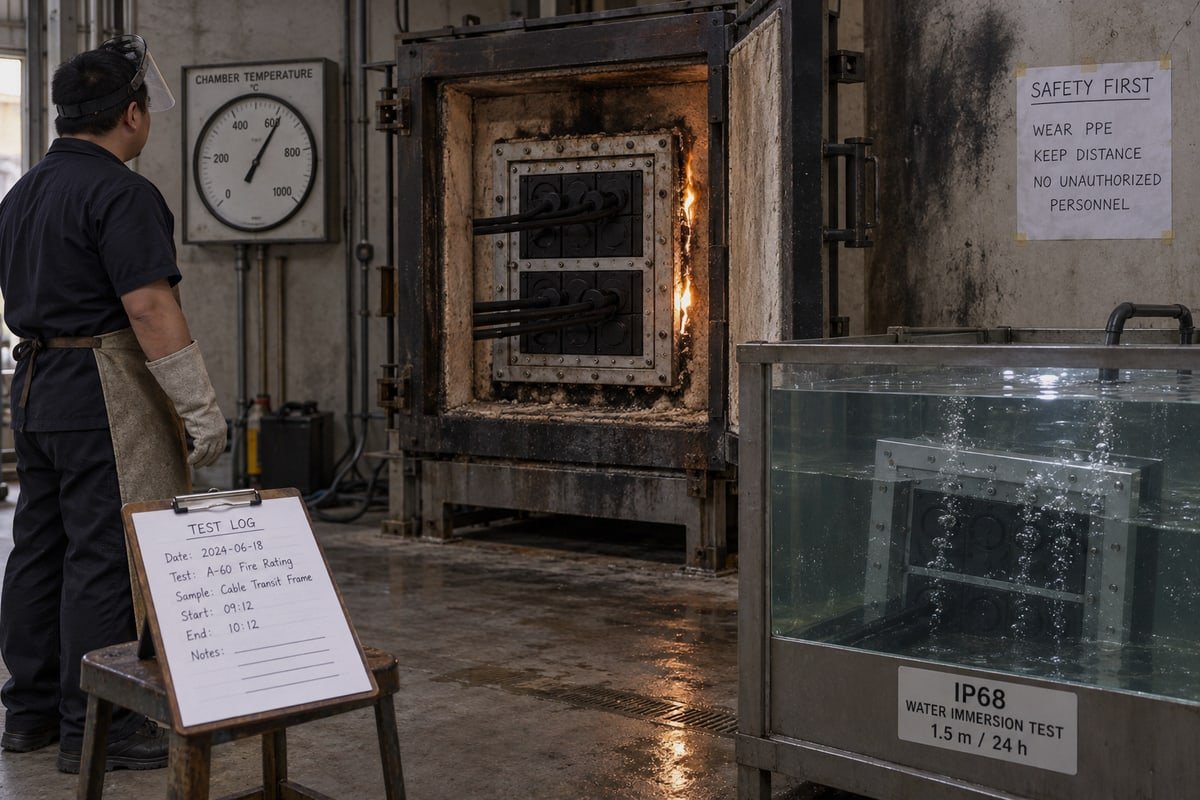
Commercial terms are where the agreement either protects uptime or just documents a wish. I will take the main terms one by one and address the objections buyers raise.
The core commercial terms
| Term | What to ask for | Why it protects you |
|---|---|---|
| Fixed pricing schedule | 3–5 years, listed by model | Shields maintenance budgets from inflation and material volatility |
| Price escalation clause | Indexed, capped, annual review only | Stops arbitrary increases while keeping the supplier viable |
| Lead time guarantees | Service Level Agreement per category, penalties on mandatory spares | Emergency seal failures do not become long shutdowns |
| Buffer stock | Minimum quantity held by supplier or on site | Covers the gap during transport disruptions |
| Vendor-managed inventory | Supplier tracks and replenishes your stock | Reduces your admin without losing control |
| Obsolescence management | Advance notice and last-time-buy right | You are never stranded by a discontinued size |
| Training | On-site installation training for maintenance staff | Fewer installation errors, fewer warranty disputes |
Resolve the carrying-cost objection
More stock improves uptime but costs money. I agree with both sides. The way out is to split the list. Mandatory spares are small, high-consequence items. Hold those on site. Operational spares can sit in a vendor-managed inventory pool or under a lead-time guarantee. A simple life cycle cost analysis usually shows that a modest on-site set plus a fast supplier beats a large warehouse.
Resolve the fixed-price objection
Fixed pricing can overpay if the environment is benign and usage stays low. So do not buy volume up front. Buy price certainty instead. A fixed schedule with call-off ordering means you pay only when you draw. Some sources suggest a 5–10 year replacement horizon for certain assemblies. A 3–5 year schedule with renewal covers the first cycle without locking capital.
Resolve the bundling objection
Bundled contracts simplify management but hide unit prices. Insist on line-item pricing inside the bundle. That keeps benchmarking possible while one party remains accountable.
Newer clauses worth considering
Two ideas are appearing in forward-looking tenders. A predictive procurement clause triggers delivery when sensor data shows accelerated degradation from UV or chemical exposure. A sustainability buy-back term returns unused halogen-free modules for recycling or credit. Neither is standard yet. Both fit a mature inventory management strategy, and both are easy to add to a factory-direct agreement.
Fazit
Late spare parts agreements create mismatched modules and long outages. Fixing specification, documents, fit, and commercial terms at award turns a purchase into a continuity tool.
Fußnoten
1. Provides a technical overview and definition of multi cable transit systems used for sealing cable penetrations. ↩︎
2. The International Organization for Standardization provides the framework for quality management systems in manufacturing. ↩︎
3. Detailed information on EPDM rubber, the primary material used for manufacturing modular sealing components. ↩︎
4. Authoritative source for battery energy storage systems, a key application for multi cable transit technology. ↩︎
5. The International Maritime Organization sets safety standards for offshore and marine environments where MCTs are critical. ↩︎


 English
  Español de México
  Deutsch
  Français
  العربية
  Русский