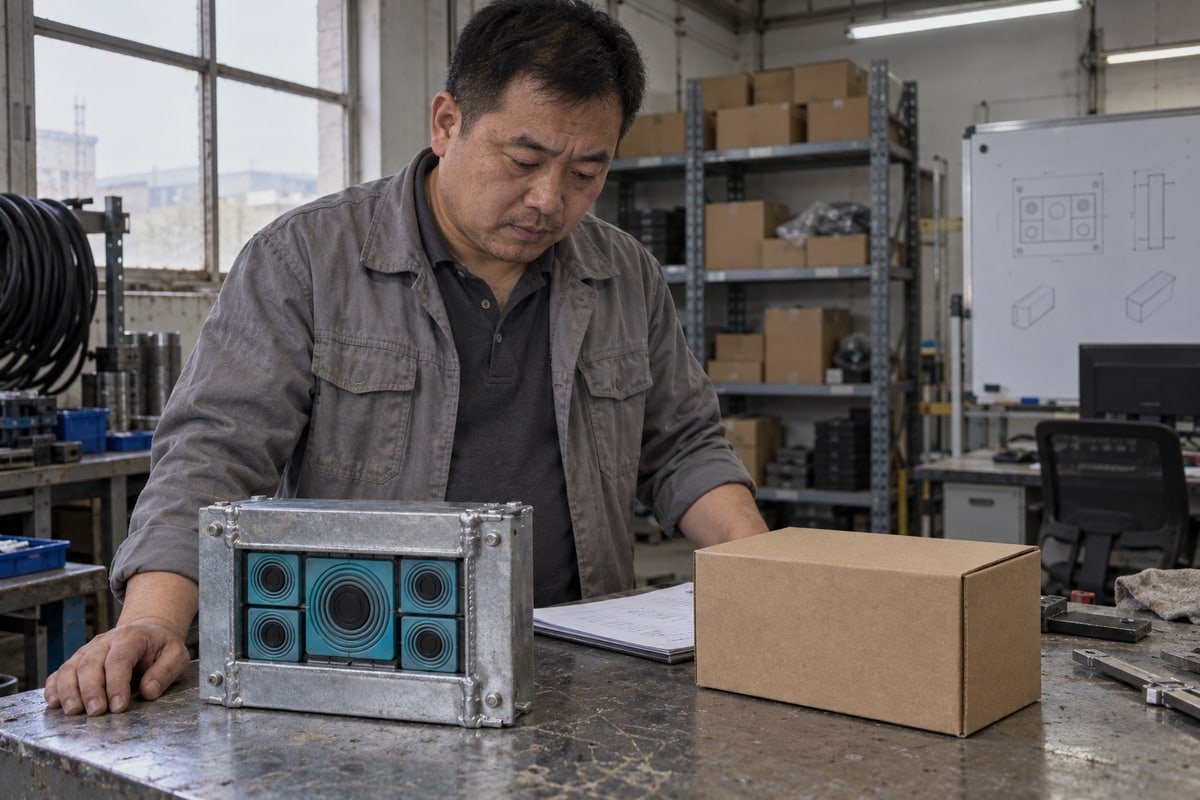
Every quarter, buyers ask our factory the same OEM private label vs marine class approvals 1. agent question about Chinese multi cable transit brands. Wrong answer, and your margin disappears in tooling and commissions.
OEM private label typically delivers 15–25% higher gross margin than agent distribution for Chinese multi cable transit brands, because it removes brand premiums and 3–10% agent commissions. However, agents win on speed and risk, so net contribution margin, not gross margin, should decide the model.
That headline number hides a lot. Below, I break the comparison into four questions international certification fees 2. I cover the real margin gain, the hidden costs, how to validate a factory first, and which model holds price over time. I use our own TSR and TSC module programs as the reference point.
How much margin can I actually gain by switching from agent distribution to OEM private label sourcing?
A European BESS integrator sent us their agent quote last year. I compared it line by line with our factory-direct TSC module price. The gap surprised even me.
Switching from agent distribution to OEM private label sourcing typically adds 15–25% gross margin on multi cable transit products. The gain comes from removing the 3–10% agent commission and the brand premium of European leaders. Real net gains are smaller after tooling, testing, and freight.

Let me start with the side-by-side view, because that is what most sourcing managers want first.
A sample margin stack, indexed to 100
The table below uses an index, not real prices. I set the ex-factory cost 3 of one cable sealing system module at 100. The numbers follow the ranges in current market research: a 3–10% agent commission, and a 15–25% gross margin gap between the two models.
| Cost or margin layer | Agent distribution (index) | OEM private label (index) | Comment |
|---|---|---|---|
| Ex-factory module cost | 100 | 100 | Same factory, same EPDM step-core module |
| Brand or agent premium | 15–25 | 0 | The premium paid for a name on the box |
| Agent commission | 3–10 | 0 | Often bundled into the quoted price |
| Custom packaging and printing | 0 | 2–5 | Your logo, your label, your manual |
| Testing and certification share | 0 | 3–8 | Amortized per unit, depends on volume |
| Inbound inspection and freight handling | 0 | 2–4 | You now own import duties and logistics |
| Landed cost before your markup | 118–135 | 107–117 | Gap narrows but stays real |
So the gross gap is large. The net gap is smaller but still meaningful. This matches what we see when integrators move to direct factory sourcing of drop-in modules. Our own positioning is 40–60% lower cost than the premium brands on dimensionally compatible 120-frame modules. Part of that saving goes into your margin. Part of it pays for the work the agent used to do.
Why MCT is not a commodity cable
A multi cable transit is passive fire protection. It is an engineered seal for many cables and pipes through one bulkhead or wall. Buyers pay for fire rating compliance, IP68 ingress protection 4, and documentation. So pricing power is higher than for plain cable. Sourcing guides show cable-adjacent products can reach 45% to 65% gross margin when sold factory-direct at first runs of 200 to 1,500 units. Engineered MCT modules sit at the upper end of that logic, because specs and test reports defend the price.
Year 1 versus year 3
In year one, the agent model often produces more net profit. You pay commission, but you skip tooling, inspection staffing, and certification fees. By year three, volume is stable and those fixed costs are spread thin. That is when OEM private label pulls ahead. I tell buyers to model both years, not just one.
Every custom mold we cut is a bet. In-house tooling lets us make odd frame sizes, but I still weigh that cost against the buyer's forecast volume.
The main hidden costs of OEM private label MCT manufacturing are international certification fees such as ATEX, IECEx, and marine class approvals, custom mold tooling, MOQ requirements of 1,000+ units, 6–10 week lead times, inbound inspection, rejected lots, and warranty liability that shifts from the agent to your brand.
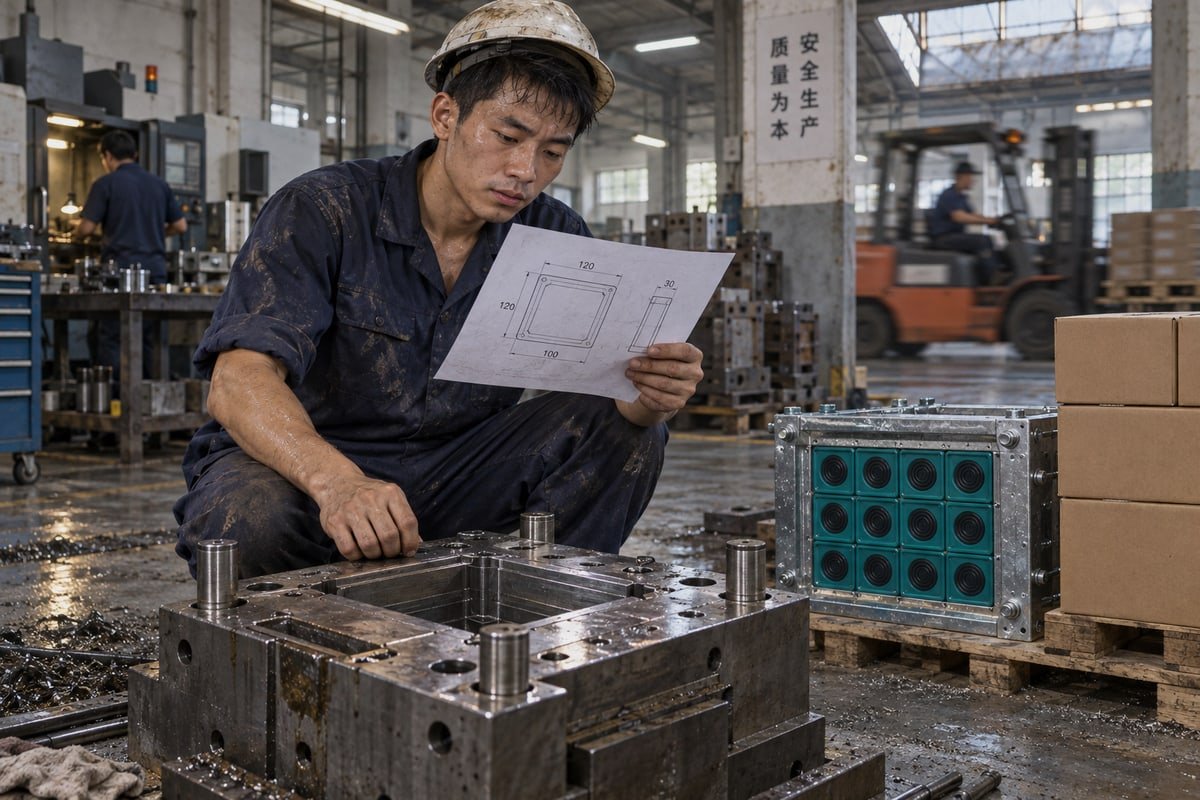
Buyers rarely miss the obvious costs. They miss the ones that show up in month four. Here are the seven I see most often.
- Product certification costs. ATEX, IECEx, and maritime class approvals are the single largest hidden cost in private labeling. They usually need a minimum annual volume before the ROI turns positive.
- Tooling. A private-label size outside the standard range needs a mold. We build molds in-house, which keeps the cost down, but it is never zero.
- MOQ requirements. White label manufacturing can start at roughly 100–500 units. True private label runs are more often 1,000+ units. That is cash tied up in stock.
- Lead time. Low-customization white label ships in about 2–4 weeks. Private label with custom marking and packaging runs 6–10 weeks. Longer lead time means more safety stock.
- Inspection and rejected lots. Without an agent, you inspect. Or you trust the factory's quality control standards and audit them.
- Import duties and logistics. You now own incoterms, customs classification, and freight claims.
- Liability. A failed seal in a switchgear room is your brand's problem, not the agent's.
White label, private label, and full OEM compared
| Model | Typical MOQ | Typical lead time | Customization depth | Who carries certification cost |
|---|---|---|---|---|
| White label | 100–500 units | 2–4 weeks | Logo and label only | Factory, existing approvals |
| Private label (ODM) | 1,000+ units | 6–10 weeks | Packaging, marking, manuals, minor sizes | Shared, often volume-linked |
| Full OEM | Project-based | 8+ weeks incl. tooling | New molds, proprietary design, IP ownership | Brand owner, unless negotiated |
Two ways the cost picture is changing
First, leading Chinese MCT factories now offer Certification-as-a-Service. The factory absorbs international approval costs in exchange for multi-year exclusivity in a region or segment. This lowers the entry barrier, but read the exclusivity terms carefully.
Second, ESG compliance is becoming a margin protector rather than a cost. Our modules use halogen-free EPDM. Halogen-free and low-carbon production helps a private label bypass emerging green tariffs 5 and qualify for European infrastructure tenders. That is a hidden cost avoided, not added.
My honest counterpoint to private-label enthusiasm is simple. If your volume sits below the MOQ, or your lots get rejected, the margin is illusory. Validate the factory first. That is the next question.
Can I validate a Chinese MCT manufacturer's quality and certifications before committing to a private label agreement?
Our QC team pressure-tests sample modules in a water tank before they ship. One buyer once asked to watch it over video call, so we set up the camera.
Yes. You can validate a Chinese MCT manufacturer before signing by requesting free validation samples, ISO 9001 and IATF 16949 certificates, BV factory approval, fire test reports for A-0/A-60 ratings, IP68 and pressure test documents, cross-reference tables, and CAD/STEP files, then running your own dimensional and sealing checks.
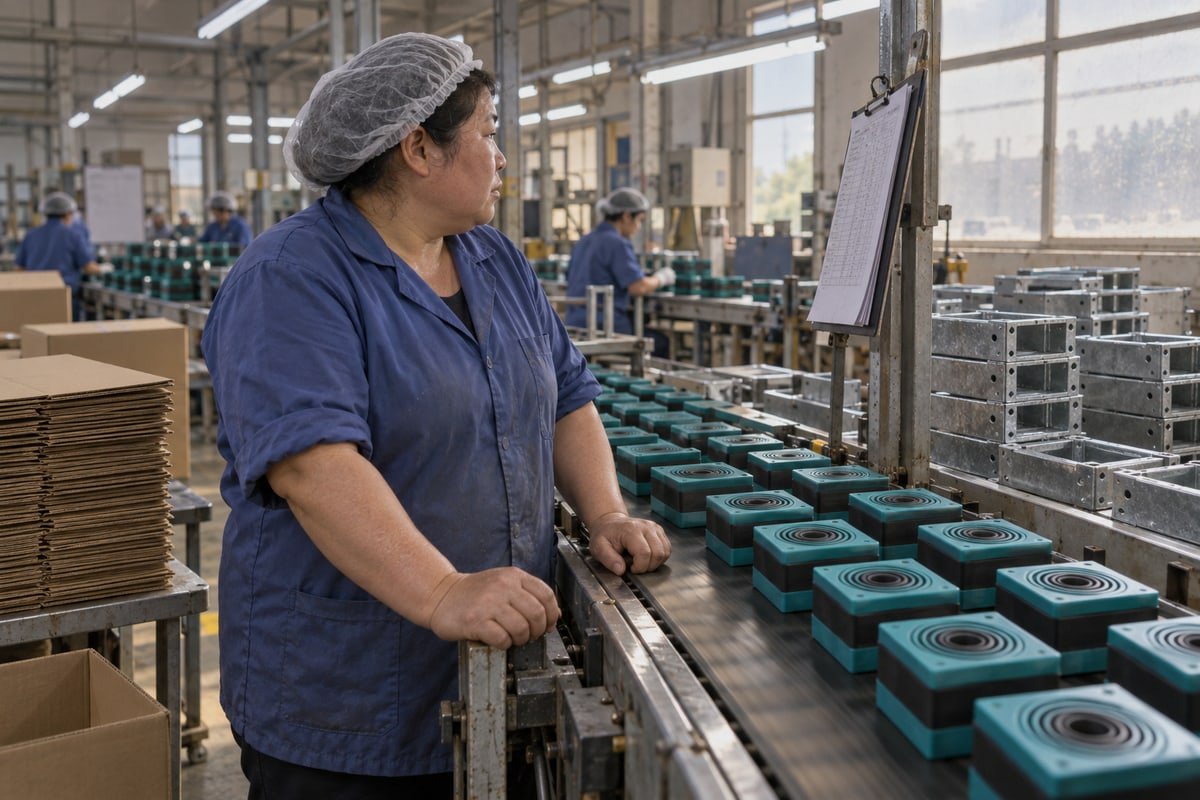
Skeptical buyers are our favorite buyers. They ask for documents, not adjectives. Here is the validation process I recommend, in the order that saves the most time.
A five-step validation sequence
- Ask for the certificate set first. ISO 9001 shows a quality system. IATF 16949 shows automotive-grade process discipline, which is rare in this niche. A BV-approved factory shows a third party has walked the floor.
- Request test reports, not just certificates. Fire rating compliance means A-0 and A-60 test documentation. Sealing means watertight and gas-tight results across 0.01–0.4 MPa. Ingress means IP68 reports. We provide these on request.
- Get free validation samples. Put a step-core EPDM module in your existing 120-frame cutout. Measure it. Compress it. Check it against the model cross-reference table from your current brand to the DEWIN equivalent.
- Check the engineering files. CAD and STEP files with fast English technical replies tell you whether the factory can support an OEM program, or only ship boxes.
- Confirm the factory is a factory. Registered capital, patents, and multiple production sites separate manufacturers from trading companies. We hold 38+ granted patents and produce in Shaanxi, Shandong, and Hunan.
Document checklist and red flags
| Document or item | What it proves | Red flag if missing |
|---|---|---|
| ISO 9001 and IATF 16949 | Quality control standards are audited | Only a scanned logo, no certificate number |
| BV factory approval | Third-party inspection of the plant | Approval belongs to a different legal entity |
| A-0/A-60 fire test report | Passive fire protection performance | Report covers a different module design |
| IP68 and 0.01–0.4 MPa pressure tests | Watertight and gas-tight sealing | Verbal claims, no test lab named |
| Cross-reference table | Drop-in compatibility with 120-frame standards | Factory refuses to state dimensions |
| Free validation samples | Real-world fit and compression behavior | Samples only against a paid order |
| CAD/STEP files | Engineering support for OEM work | PDF drawings only, slow replies |
One practical point. A distribution agreement or a private-label contract should reference the specific test reports by number. Then a later design change cannot quietly void the documentation you validated.
Which sourcing model gives me better long-term pricing stability, agent partnerships or direct OEM manufacturing?
One lesson from more than a decade of exporting: price stability comes from forecast visibility, not contract wording. Buyers who share annual volume get the steadiest pricing.
Direct OEM manufacturing gives better long-term pricing stability once annual volume stabilizes, because you lock ex-factory prices, own the specs, and avoid commission changes. Agent partnerships give better short-term stability and speed while demand is uncertain, since the agent absorbs inventory, logistics, and factory switching risk.

Pricing stability is really a question about who controls three things: the specification, the production slot, and the relationship with the factory. Let me take each model in turn.
Where agents still win
Agents hold their value in complex, specification-heavy industrial accounts. Offshore projects, shipyards, and large EPC tenders often need local presence, approved-vendor status, and someone to chase paperwork. An agent also lets you sell before you can forecast. For a new brand, that speed is worth the commission. The counterpoint is real too. Commission-heavy distribution caps your upside, and your pricing depends on a third party's relationship with the factory. If the agent switches suppliers, your spec may change without notice.
Where direct OEM pulls ahead
Once a SKU sells steadily, direct OEM manufacturing locks in more. You hold the drawings. You book forecasted production slots. You negotiate incoterms and payment terms directly. We see integrators in the BESS and modular data center segments do this well, because their module demand per container or hall is predictable.
Two premium levers only exist in the direct model. IoT-enabled smart modules can command a 10–15% price premium by giving end users cable management and predictive maintenance data. And halogen-free, low-carbon production positions a private label for high-value European tenders. Neither lever is available when an agent controls the spec.
A decision framework
| Your situation | Better fit | Reason |
|---|---|---|
| Annual volume below private label MOQ | Agent or white label | Fixed costs would not amortize |
| Stable volume above 1,000 units per SKU | Direct OEM private label | Locked ex-factory pricing, owned specs |
| High-spec offshore or marine projects | Dual-brand hedging | Premium brand for class approvals, private label for the rest |
| Price-sensitive commercial construction | Private label | Margin matters more than brand name |
| Product-market fit still unproven | Agent first, migrate later | Lower working-capital burden |
Large distributors already run the dual-brand approach. They keep a premium European brand for offshore projects and deploy high-margin private-label MCTs for commercial construction. The hybrid path is the one I recommend most often. Start with an agent to validate demand. Then move the winning SKUs into OEM private label with a factory that can prove drop-in compatibility and certified performance.
Fazit
Guessing your model costs margin. Validate demand through an agent, then move stable SKUs to OEM private label with a certified, drop-in factory partner like ours.
Fußnoten
1. DNV is a leading global classification society providing statutory certification and marine class approvals for industrial equipment. ↩︎
2. Official body for the IECEx System, providing international certification for equipment used in explosive atmospheres. ↩︎
3. The International Chamber of Commerce defines Incoterms, including EXW, which governs ex-factory cost responsibilities in trade. ↩︎
4. The International Electrotechnical Commission defines the IP Code standards for ingress protection against dust and water. ↩︎
5. The World Trade Organization provides information on environmental requirements and their impact on international trade and tariffs. ↩︎



 English
  Español de México
  Deutsch
  Français
  العربية
  Русский