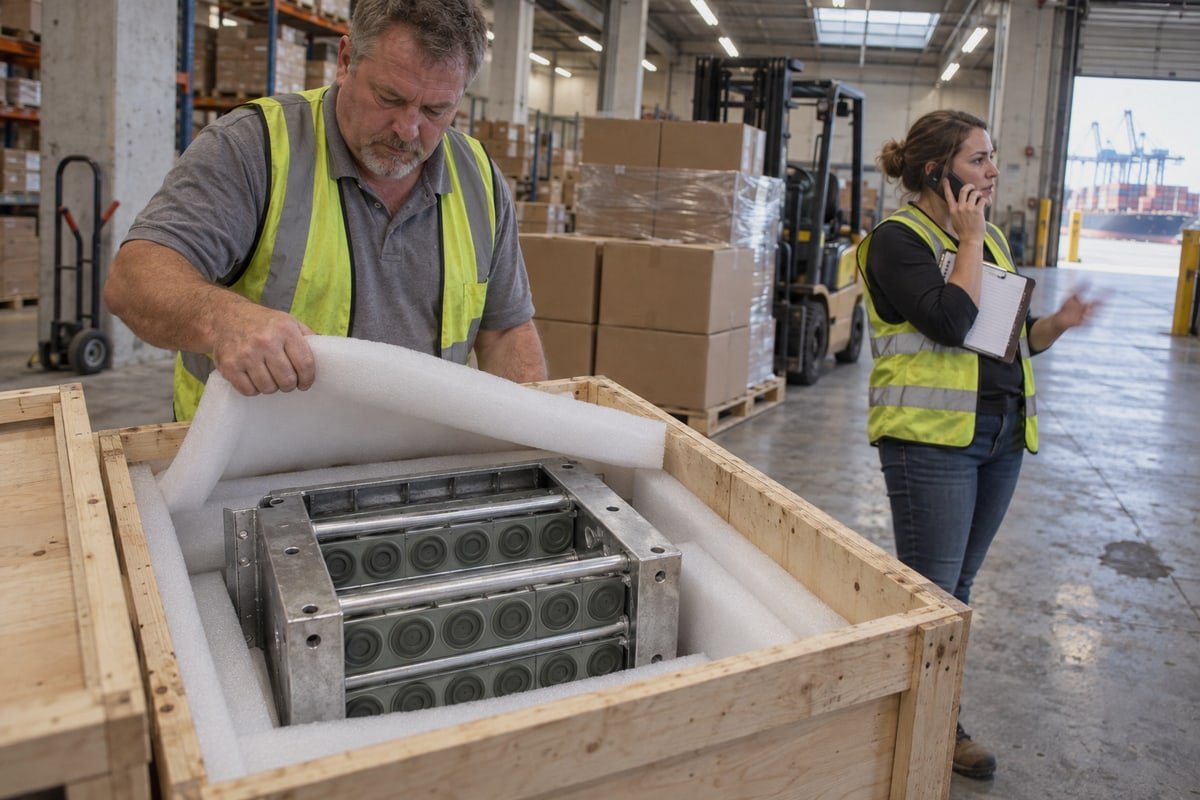
Every quarter, a buyer asks our export desk whether self-filing vs freight forwarder is cheaper for multi cable transit imports. Fees are visible. Errors are hidden.
Self-filing cuts direct compliance fees only when an importer has high shipment volume, stable HTS code classification, and in-house customs skills. For most multi cable transit importers, a licensed broker or broker-enabled freight forwarder lowers total cost by avoiding filing errors, cargo holds, and penalties.
The rest of this article breaks that answer into numbers, risks, documents, and lead times. I use the U.S. framework as the main example because its terms are the clearest, but the same split between filing party, risk owner, and hidden labor applies to European and Middle East importers too.
How do I calculate the real cost difference between self-filing customs and using a freight forwarder for MCT shipments?
A sourcing manager once sent me two quotes: a broker entry fee and a forwarder bundle. Neither quote showed his own staff hours.
Calculate the real cost difference by adding all cost lines per entry: customs brokerage fees or forwarder bundles, Importer Security Filing fees, customs bond, software access, staff hours, and expected correction and delay costs. Then multiply by annual shipment count. Self-filing wins only when volume spreads fixed costs thin.

The comparison is not "broker vs no broker." It is "who performs the filing, who owns the risk, and what internal costs are hidden." Here is the full cost stack, side by side.
| Cost line | Self-filing | Licensed customs broker 1 | Freight forwarder bundle |
|---|---|---|---|
| Entry filing fee | $0 external | About $100–$250 per entry; up to $400 for complex entries | Often $200–$800 per entry, mixed with logistics charges |
| Importer Security Filing 2 (ocean) | Your staff time plus platform fee | About $25–$75 per shipment | Usually bundled; sometimes hidden in the freight invoice |
| Forwarder service fee | Not applicable | Not applicable | About $75–$250 per shipment for coordination |
| Software / filing access | Automated Commercial Environment 3 setup, filing platform subscription | Included | Included |
| Staff time | Classification, data entry, exception handling | Data review only | Data review only |
| Customs bond | Required either way | Required either way | Required either way |
| Corrections and exams | Fully on you | Shared, but importer data errors remain yours | Shared, with an extra margin layer if a sub-broker is used |
| Penalty exposure | 100% importer of record | Importer of record still liable | Importer of record still liable |
Who is legally allowed to file
This point surprises many buyers. Only the importer of record or a licensed customs broker can file a customs entry. A freight forwarder cannot file unless it also holds broker authority. So a forwarder without brokerage licenses is paying a broker behind the scenes. That adds a margin layer to your bundle. Ask your forwarder directly whether the filing is done in-house or subcontracted.
The hidden lines that decide the answer
The visible fee is small. The hidden lines are larger. A worked structure looks like this:
- Take your annual entry count. Ten entries and two hundred entries produce very different answers.
- Add the fixed self-filing costs: software subscription, ACE onboarding, training, and a share of one person's salary.
- Divide by entry count. That is your true self-filing cost per entry.
- Add your expected error rate multiplied by the cost of one correction, exam, or demurrage day.
- Compare against the broker or forwarder quote plus your own review time.
Step four is the one buyers skip. In my experience shipping TSR round assemblies and TSC square modules to EPC teams, one held container costs more than a year of broker fees for a small importer. Administrative overhead does not appear on any invoice, but it is real money.
Where the buyer objection fails
The pro-self-filing argument is fair: cheapest direct fee, better control, and stable product data. It holds when your cable transit SKUs repeat and your classification is settled. It fails when SKU mix changes every project, because each new frame size or module combination reopens the classification question.
What compliance risks am I exposed to if I self-file HS codes for cable transit imports?
We learned early that a cable transit confuses tariff tables. It is rubber, steel, and safety hardware at once, and each part points to a different heading.
Self-filing HS codes for cable transit imports exposes the importer of record to full liability for misclassification, wrong origin, and valuation errors. Consequences include back duties, penalties, cargo exams, and audit findings. A generic "other" code is the most common mistake, and it can raise duty or trigger inspection.
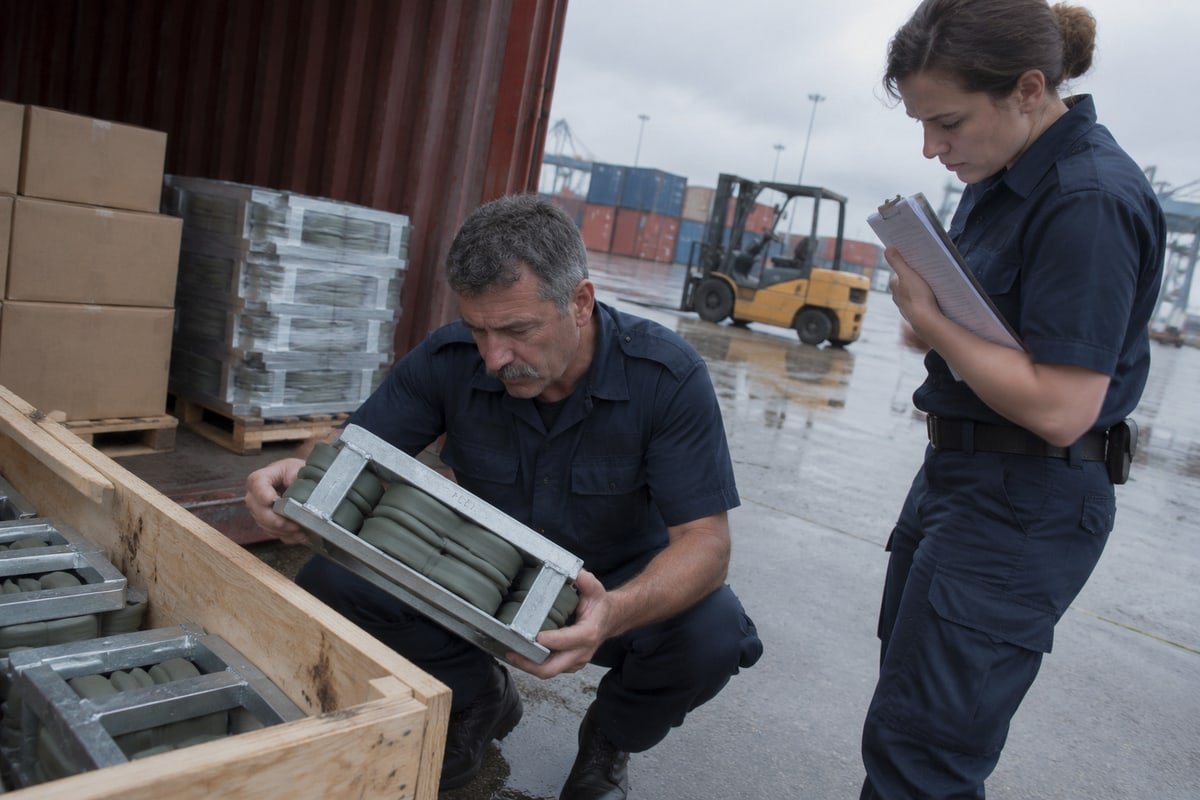
The importer of record owns the declaration. That is the legal rule, and it does not change when a broker files on your behalf. The difference is who catches the mistake before it reaches customs.
Why cable transits are hard to classify
A complete MCT system contains a welded steel frame, halogen-free EPDM sealing modules with step cores, a compression unit, stay plates, and hardware. Ship them together and you must decide whether the essential character is a rubber article, a base-metal fitting, or a part of electrical equipment. Ship spare sealing modules alone and the answer changes again. General brokers often park the whole line under a generic "other" subheading. That is safe for the broker and expensive for you. It can push you into a higher duty rate and it gives you nothing to argue with during an audit.
Duty and tax optimization for MCT products works the other way. A precise classification backed by technical evidence can support a lower rate for passive fire protection 4 hardware. But you must be able to defend it. This is where self-filing has a real advantage: your engineers hold the data. A forwarder rarely does.
The risk ladder
| Risk | Typical trigger | Consequence | How we help reduce it |
|---|---|---|---|
| Misclassification | Generic code, mixed kits, changing SKU mix | Back duties, penalties, rework | Material declaration 5s and spec sheets per model |
| Origin error | Transit country shown as origin | Wrong duty rate, audit finding | Factory origin statements from Shaanxi, Shandong, or Hunan sites |
| Certification gap | Fire-rated or gas-tight product without linked test data | Intensive exam, hold | A-0/A-60 fire rating, IP68, and 0.01–0.4 MPa sealing test documents on request |
| Document mismatch | Invoice, packing list 6, and ISF disagree | Hold, amendment, exam fee | Line-by-line QC match before shipment |
| Late Importer Security Filing | Ocean shipment filed after cutoff | Penalty commonly cited at $5,000 per violation, cargo hold | Early supplier data hand-off |
The certification trap
MCT products carry technical claims. Fire rating, gas-tightness, and ingress protection are safety attributes. If those claims appear on your invoice but no test document is linked to the entry, customs officers may ask for proof. Our factory is ISO 9001 and IATF 16949 certified and BV-approved, and we keep test reports ready so a buyer's compliance file is complete before the vessel sails. CBP regulatory compliance is easier when the technical file already exists.
The audit question
Ask yourself one thing: if customs challenges the classification in three years, who defends it? If the answer is "the forwarder," you have a problem, because they will point back to the data you gave them. If the answer is "our compliance engineer with the drawings," self-filing becomes defensible. Most European OEM integrators I speak with sit in between. They keep master data in-house and let a broker execute the filing. That hybrid protects both the duty rate and the audit trail.
Which import documents do I need to prepare myself versus rely on a freight forwarder for?
Before any pallet of TSC modules leaves Shaanxi, our QC team matches the packing list line by line against the commercial invoice. Mismatches stop the truck.
Prepare the commercial invoice, packing list, HTS code classification, material specifications, and test certificates yourself; they come from your engineering and purchase data. Rely on the freight forwarder for the bill of lading, container details, and Importer Security Filing transport fields, and on a licensed broker for entry submission.

Documents fail in the gaps between parties. The supplier writes one thing, the forwarder writes another, and the broker files a third. For a multi-SKU cable transit order with several frame sizes and module counts, the gaps multiply. The fix is a clear ownership map.
Document ownership map
| Document or data | Best owner | Source of truth | Common failure |
|---|---|---|---|
| Commercial invoice | Importer, from supplier draft | Purchase order and factory invoice | Unit prices or Incoterms differ from PO |
| Packing list | Supplier, verified by importer | Factory packing record | Carton count differs from container load |
| HTS code classification | Importer | Engineering data and material declaration | Left to forwarder, defaults to "other" |
| Material composition statement | Supplier | Factory material records | Missing for EPDM modules |
| Test certificates | Supplier | Third-party and factory test reports | Not linked to the entry |
| Certificate or statement of origin | Supplier | Production site records | Transit country entered as origin |
| Bill of lading | Forwarder or carrier | Booking system | Consignee name spelled differently |
| Importer Security Filing importer elements | Importer with supplier data | Supplier and buyer master data | Manufacturer address or stuffing location wrong |
| Importer Security Filing carrier elements | Carrier | Vessel stow plan and container status | Not your responsibility |
| Customs entry | Importer or licensed broker | All of the above | Filed with unmatched data |
What we supply from the factory side
Buyers who use us as a drop-in second source usually already have master data for their existing brand. Our cross-reference tables map the existing model to the DEWIN model, so the description on the invoice matches what the compliance team expects. We also supply CAD and STEP files, a material declaration for the halogen-free EPDM, and the fire, IP68, and pressure test documents. When we send free validation samples, we ship the same document set, so the buyer's team can build the compliance file during qualification instead of at the port. Export documentation is handled by our own desk, not a trading agent, which keeps the origin statement and the invoice consistent.
The ISF split
The Importer Security Filing has ten importer elements and two carrier elements. Several importer elements come from the supplier: manufacturer name and address, seller, country of origin, container stuffing location, and consolidator. If your forwarder files ISF for you, they still need this data from you, and you need it from the factory. Ask for it at order confirmation, not at booking. That one habit removes most late-filing risk.
A simple three-step routine
- Lock master data per SKU once: description, classification, origin, and material.
- Have the supplier issue invoice and packing list from that master data.
- Send the forwarder and broker the same file, and refuse changes that are not reflected in all three documents.
How do I decide whether self-filing or a freight forwarder better protects my lead times for multi cable transit orders?
Speed and control pull in opposite directions here. We can ship spare sealing modules fast, but a late Importer Security Filing at the port erases that gain.
Decide by scoring three factors: annual shipment count, in-house trade compliance maturity, and tolerance for customs delay. Self-filing protects lead times only when your team can file Importer Security Filing and entry data on schedule every time. Otherwise a broker-enabled freight forwarder with tracked filing deadlines protects delivery dates better.

Lead time is a supply chain risk management problem, not just a freight problem. A container of TSR assemblies can leave our dock on schedule and still miss a BESS container build slot because a filing was late. So the question is which model keeps the filing clock reliable.
Decision matrix
| Your situation | Shipments per year | Compliance team | Delay tolerance | Recommendation |
|---|---|---|---|---|
| Small integrator, first MCT orders | Under 12 | None | Low | Broker-enabled forwarder |
| Mid-size OEM, repeat SKUs | 12–50 | One part-time person | Medium | Hybrid: in-house master data, broker files |
| High-volume standardized importer | Over 50 | Dedicated team, ACE access | Medium | Self-filing with software support |
| Multi-leg transit, mixed SKUs | Any | Any | Low | Licensed broker with your engineering data |
| Large infrastructure project | Project-based | Project compliance lead | Low | Self-filing or broker using project bond or temporary admission options |
Where each model loses time
Self-filing loses time when one person is on leave and nobody else knows the Automated Commercial Environment login. It also loses time when a new SKU appears and classification has to be researched from scratch. A forwarder loses time when it subcontracts the filing and information passes through three inboxes. It also loses time when bundled pricing hides that the ISF was never actually confirmed.
The ISF deadline is the sharpest edge. Ocean cargo must be filed before vessel loading, and a late or wrong filing can bring a penalty commonly cited at $5,000 per violation plus a hold at arrival. No model protects you from that unless the supplier data arrives early. This is why we send manufacturer address, stuffing location, and origin data with the order confirmation, not with the shipping notice.
The hybrid model most buyers land on
In practice the best answer for most European OEM integrators is neither pure self-filing nor a pure forwarder bundle. It is a hybrid:
- Keep classification, material data, and origin in your own system.
- Let a licensed broker execute the entry and ISF using that data.
- Use the forwarder only for transport coordination, and demand itemized filing charges.
- Review predictive compliance tools that read a bill of materials and flag tariff shifts before procurement, so the classification decision is made at sourcing, not at the port.
Where the supplier helps
Lead time protection starts at supplier qualification. Because our modules are dimensionally compatible with common 120-frame standards, a buyer can qualify us as a second source with free samples and a cross-reference table, then keep the same customs master data across both suppliers. That stability is what makes self-filing viable at all. Our in-house mold shop handles custom sizes without changing the compliance file structure, and spare sealing modules ship on short notice with the same document set. Fewer document changes mean fewer filing amendments, which means fewer holds.
Fazit
Filing fees look cheap. Errors, holds, and penalties are not. Self-filing vs freight forwarder is decided by volume, expertise, and data discipline, not by the quoted fee.
Fußnoten
1. Official U.S. Customs and Border Protection page defining the legal role of customs brokers. ↩︎
2. Official CBP regulatory guidance on Importer Security Filing (ISF) requirements and elements. ↩︎
3. Official CBP portal for the Automated Commercial Environment (ACE) used for electronic filing. ↩︎
4. Authoritative international standards body for technical specifications and safety classifications. ↩︎
5. U.S. Environmental Protection Agency, relevant for material safety and chemical substance declarations. ↩︎
6. Official U.S. government resource for international trade documentation and shipping solutions. ↩︎



 English
  Español de México
  Deutsch
  Français
  العربية
  Русский