
Explosion-proof certification docs for multi cable transits on offshore platforms often reach our engineers as one PDF. That gap fails audits. We build the full chain instead.
Explosion-proof certification docs for multi cable transits on offshore platforms include an ATEX or IECEx Certificate of Conformity, a manufacturer’s Declaration of Conformity, classification society type approval (DNV, ABS, LR), A-0/A-60 fire test reports, gas-tight and watertight test reports, approved installation drawings, and post-installation inspection records.
That list looks long. It is long for a reason. An offshore platform does not buy “an explosion-proof transit”. It buys a certified system plus proof that the installed frame matches the approved configuration. The four sections below walk through each layer of that proof. I will also show how we handle the same questions when a buyer qualifies our TSC or TSR modules as a second source.
Which ATEX and IECEx certificates should I request to confirm my MCT modules are Ex-rated for offshore hazardous zones?
A sourcing engineer once sent us a competitor's ATEX certificate 1 and asked one question: does this cover Zone 1? The certificate itself did not say.
Request the IECEx Certificate of Conformity and the ATEX EU-type examination certificate for the exact module and frame family, plus the manufacturer's EU Declaration of Conformity under ATEX Directive 2014/34/EU. Check that equipment group, category, protection concept, and zone coverage match your hazardous area classification.

The confusion in that email is common. Buyers often receive one document and assume it settles the hazardous area question. It rarely does. ATEX and IECEx answer one specific question: is this product suitable for an explosive atmosphere? They do not answer fire, class, or installation questions. I will come back to those later.
Three documents, three different jobs
Here is how I explain the Ex paperwork to our export customers. Each document has a separate role. You should ask for all three.
| Document | Who issues it | What it proves | What to check |
|---|---|---|---|
| ATEX EU-type examination certificate | Notified Body | Product type meets the essential requirements of ATEX Directive 2014/34/EU | Certificate number, product codes, group, category, protection concept, special conditions |
| IECEx Certificate of Conformity 2 | IECEx Certification Body | Product complies with IEC 60079 series; accepted globally | Ex marking, EPL, zone coverage, listed components, current status on the IECEx online register |
| EU Declaration of Conformity | Manufacturer | Manufacturer declares the product matches the certified type and harmonised standards | Signed, dated, references the certificate above, matches the delivered product codes |
The IECEx Certificate of Conformity is the one I would check first. It can be verified online by certificate number. The ATEX certificate is needed for European legal placing on the market. The Declaration of Conformity ties the two to the exact goods in your crate.
Reading the marking against your zone
Vendors quote coverage for Zone 1 and Zone 2 gas, and Zone 21 and Zone 22 dust. Your hazardous area classification drawing defines which zones the transit actually sits in. Compare the two. If the certificate shows a protection concept such as Ex e increased safety or a flameproof entry arrangement, confirm that the concept fits your enclosure or bulkhead application. Special conditions of use, often marked with an "X" suffix, also matter. They may limit cable types, module fill, or ambient temperature.
Component certificate or system certificate?
Here is the objection I hear most. "The module is certified, so the penetration is certified." That is not always true. Some documents certify a component or a module family. Operators want proof that the complete assembly, frame plus modules plus compression unit, is accepted in the exact configuration. Ask the supplier which one you are holding. For our own TSC square modules, we tell buyers plainly what each test document covers and what it does not. A qualified second source has to be honest about scope, or the qualification fails at audit anyway.
How do I verify that fire rating (A-0/A-60) and gas-tight test reports meet my platform's explosion-proof requirements?
During our last A-60 test preparation, the furnace curve mattered less than a small detail: the cable fill ratio recorded on the specimen drawing.
Check that the fire test report names the standard (IMO FTP Code or ISO 834), the tested frame and module configuration, the cable fill, and the A-0 or A-60 rating achieved. Confirm the gas-tight report states test pressure, medium, duration, and pass criteria, matching your installed configuration.
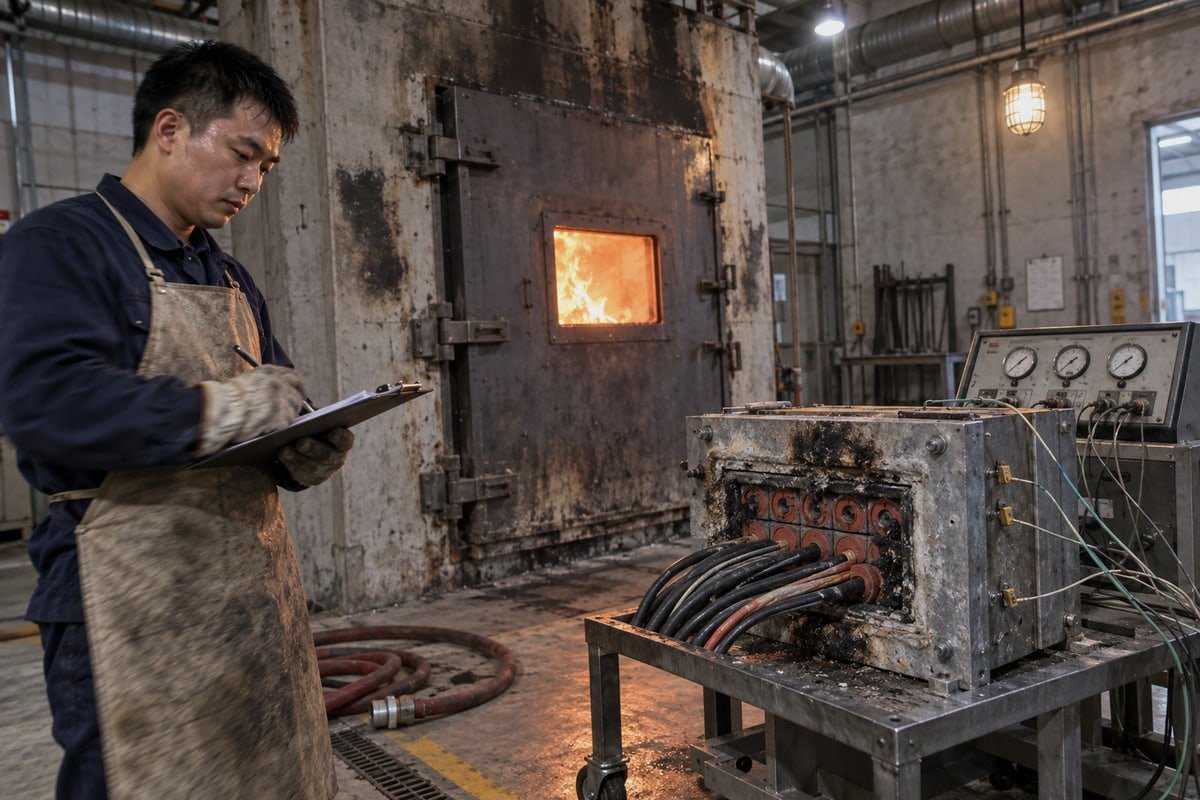
Fire and gas-tightness are not "explosion-proof" in the strict Ex sense. But on an offshore platform, they are part of the same risk case. A gas leak through a bulkhead penetration feeds the explosive atmosphere. A failed fire division lets a fire spread after ignition. So offshore QA teams treat these reports as equal partners to the Ex certificate. I agree with them.
A five-step check for the fire report
- Find the standard. Offshore fire divisions are tested to the IMO FTP Code 3, with ISO 834 used as the furnace curve reference. Some projects also ask for H-120 hydrocarbon ratings or jet-fire data. Make sure the report says which.
- Match the specimen. The report describes a tested frame size, module type, insulation, and cable fill. Your installed frame must sit within that tested scope. A different fill or a missing insulation panel breaks the link.
- Read the rating, not the headline. An A60 fire rating means the unexposed side stayed below the temperature limit for 60 minutes. A-0 has no insulation criterion. Know which one your fire plan actually calls for.
- Check the date and the laboratory. Older reports may reference superseded editions.
- Ask for the drawing. The tested configuration drawing is the piece most often missing from the pack.
Gas-tight and watertight numbers you should see
Our TSC and TSR modules are tested for watertight and gas-tight sealing in the range of 0.01 to 0.4 MPa, and our ingress protection is rated IP68. Some buyers still ask for IP66 ingress protection because their spec was written for an enclosure standard. That is fine, but it means the report must state the actual test method.
| Performance claim | What the report should state | Why it matters offshore |
|---|---|---|
| Gas tight cable seals | Test pressure (e.g. 0.01–0.4 MPa), medium, hold time, leak criterion | Prevents gas migration between hazardous and safe areas |
| Watertight seal | Pressure, duration, orientation of frame | Bulkhead integrity, flooding control |
| Ingress protection (IP68 or IP66) | Standard edition, dust and water test details | Weather deck and wash-down exposure |
| Blast overpressure | Tested peak pressure, often 0.3 to 1.5 bar | Transit must survive the explosion event itself |
| H2S material compatibility | Rubber compound, exposure concentration, ageing result | Sour gas platforms degrade unsuitable elastomers |
The last two rows are project-specific. Not every platform needs them. When an operator asks, the supplier should have material traceability reports for the rubber compound, not just a sales sheet. Our halogen-free EPDM step-core modules are documented by batch for exactly this reason.
The "one system fits all" claim
Vendors like to say one system covers everything. In practice, offshore projects require separate evidence for hazardous area, fire class, watertightness, and platform-specific rules. Treat each report as its own line item. Test documents from our factory are available on request for each claim, and I would expect the same from any incumbent supplier.
What classification society approvals, like DNV or ABS, do I need alongside the MCT's certification package?
We weigh one trade-off often in Shaanxi: hold factory approval from one class society, or chase product type approvals from every society each project names.
You need the type approval certificate from the classification society that classes your platform—DNV type approval, ABS product design assessment, Lloyd's Register or Bureau Veritas—plus a Cable Transit Seal Systems Register per IACS UR Z28, and evidence the transit supports SOLAS compliance for fire divisions.
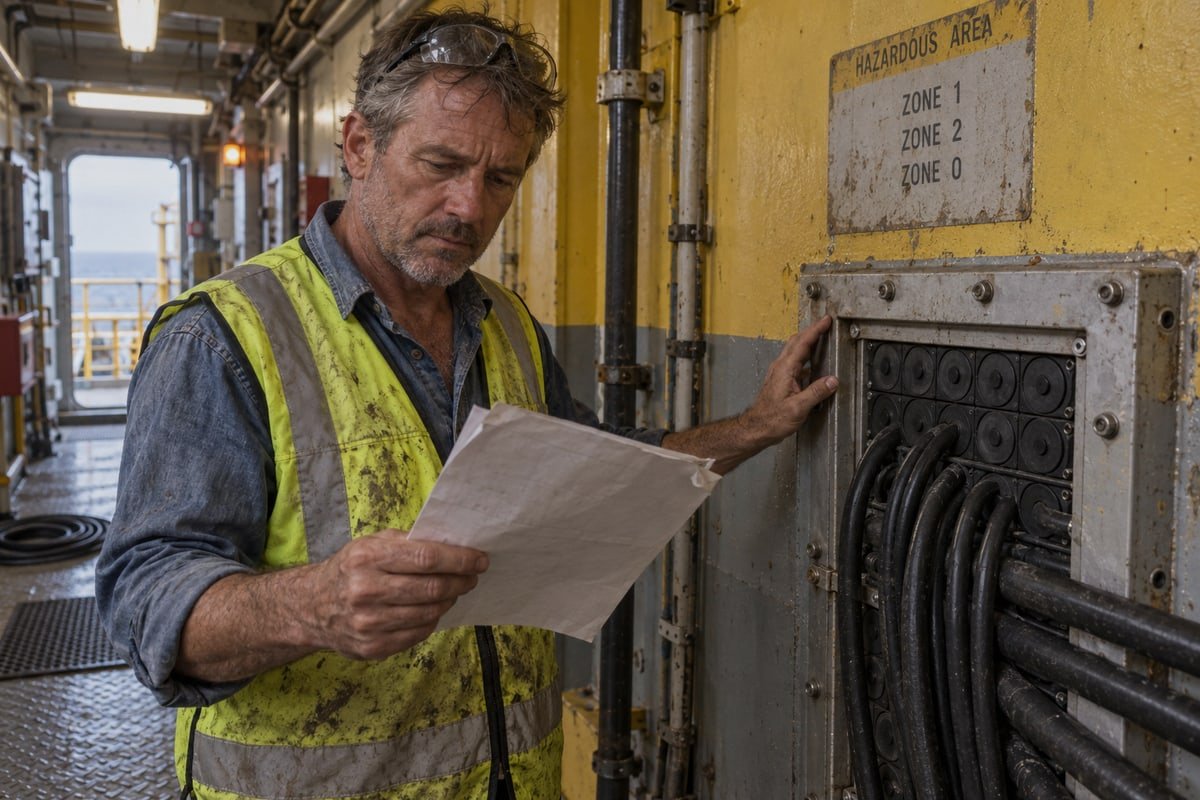
Class approval answers a different question from the Ex certificate. ATEX and IECEx ask if the product is safe in an explosive atmosphere. The class society asks if the product is acceptable under offshore and marine structural and safety rules. Both have to be true. Some engineers treat the Ex certificate as the main gatekeeper. Offshore QA teams disagree, and in my experience the QA team wins at commissioning.
What each class document actually says
| Approval type | Typical issuer | Scope | Common gap |
|---|---|---|---|
| Type approval certificate | DNV, LR, BV | Product range accepted for marine and offshore use under the society's rules | Custom frame sizes outside the listed range |
| Product design assessment | ABS | Design reviewed against ABS rules; often paired with a manufacturing assessment | PDA alone does not confirm the factory is surveyed |
| Factory or works approval | BV, DNV, others | The manufacturing system and QC are audited by the society | Does not replace product type approval for a specific project |
| Project-specific certificate | Any society | Acceptance for one platform and one configuration | Not transferable to the next project |
I will be direct about our own position. Our factory is BV-approved, and we run ISO 9001 4 and IATF 16949 quality systems. That tells a buyer our production and traceability are audited by a class society. It does not automatically mean every module variant carries a product type approval from every society. When a project names DNV or ABS 5, we say so and agree a review scope up front. A skeptical purchasing engineer should demand that same clarity from any supplier.
The register nobody remembers until survey
IACS Unified Requirement Z28 requires a Cable Transit Seal Systems Register. It tracks every penetration: location, frame type, module fill, installer, inspection status. Surveyors ask for it. Newer projects link each frame nameplate to the register with QR or RFID tags, so the digital compliance log can be audited on site. The small metal nameplate between the compression bolts on our frames exists for this reason. It carries the reference the register needs.
Brownfield and life extension
On older platforms, the class society may ask for a life extension integrity assessment of existing transits. That means opening frames, checking module condition, and re-recording the fill. A second-source module that fits the existing 120-frame cutout makes this much easier. You replace modules without cutting steel, and the register entry stays valid.
Can I get a certification cross-reference document to confirm equivalence when qualifying a second-source MCT supplier?
One lesson from a decade of second-sourcing: a model cross-reference table sells nothing on its own. Buyers only trust it when each row links to a document.
Yes. A certification cross-reference document maps each incumbent model to the second-source equivalent and lists, row by row, the matching certificate numbers, test reports, dimensions, and material data. It does not transfer certification; it shows where equivalent evidence exists and where a project-specific gap review is needed.

The word "equivalence" makes offshore QA teams nervous. It should. Certification does not travel from one brand to another because the dimensions match. So when we build a cross-reference document for a European integrator, we separate two things. First, dimensional compatibility. Second, documented performance. Each gets its own column.
What a useful cross-reference document contains
Our TSC and TSR modules are dimensionally compatible with common 120-frame standards. They drop into existing frame cutouts. That is the easy half. The harder half is showing the evidence behind each performance claim. A workable cross-reference document looks like this:
| Column | Example entry | Evidence attached |
|---|---|---|
| Incumbent model | Competitor square module, 60 mm | Buyer's existing spec |
| DEWIN model | TSC 60 step-core | Datasheet, CAD/STEP file |
| Frame compatibility | 120-frame standard cutout | Dimensional drawing with tolerances |
| Cable range | Step-core EPDM, multiple diameters per module | Module cutting guide |
| Fire rating | A-0 / A-60 | Fire test report and tested configuration drawing |
| Ingress protection | IP68 | Test report |
| Gas tight and watertight | 0.01–0.4 MPa | Pressure test report |
| Material | Halogen-free EPDM | Material traceability reports by batch |
| Ex certification | Project-specific | Marked as open item if not yet held for that configuration |
Notice the last row. If a certificate is not held, the document says so. A cross-reference table that hides gaps will be found out at FAT, and then you lose the supplier and the schedule together.
How the qualification usually runs
- We send the cross-reference document and free validation samples.
- Your engineers test fit in a real frame and confirm the compression torque from our installation maintenance manual.
- QA reviews the attached reports against the platform spec.
- Open items, such as a class type approval for a custom size, get a defined review path. We make custom molds in-house, so odd sizes are not a blocker.
- The approved rows go into the project's Cable Transit Seal Systems Register with our model numbers.
The cost side matters too. Our modules typically land 40 to 60 percent below incumbent pricing. But I would rather a buyer qualify us for the document pack and the lead time on spare sealing modules. The price saving is only real if the certification chain survives commissioning.
Fazit
Missing one document can stall an offshore commissioning. Do not buy a single certificate; buy a traceable chain, then verify the installed frame matches it. We help build that chain.
Fußnoten
1. Official European Commission resource for the ATEX directive governing equipment in potentially explosive environments. ↩︎
2. Official global portal for the IEC system for certification of equipment used in explosive atmospheres. ↩︎
3. International Maritime Organization standards for fire test procedures on offshore platforms and ships. ↩︎
4. Official standard page for the world’s most recognized quality management system requirement. ↩︎
5. Leading classification society providing technical standards and type approval for offshore and maritime safety. ↩︎



 English
  Español de México
  Deutsch
  Français
  العربية
  Русский