
Custom-branded multi cable transits often stall at the quotation stage. I have watched buyers lose weeks over unclear tooling terms. Our production line taught us which details matter first.
For custom-branded multi cable transits, clarify five things with the supplier: mold and tooling ownership and cost, dimensional compatibility with your 120-frame cutouts, fire rating certifications and test reports, branding method and its effect on approvals, plus lead times, MOQ, and export documentation.
Each of those five areas hides a few specific questions. I will walk through them in the order a purchasing engineer normally meets them. First tooling, then fit, then paperwork, then delivery. You can copy the tables straight into your RFQ.
What questions should I ask about mold making and tooling costs for custom-branded MCT sizes?
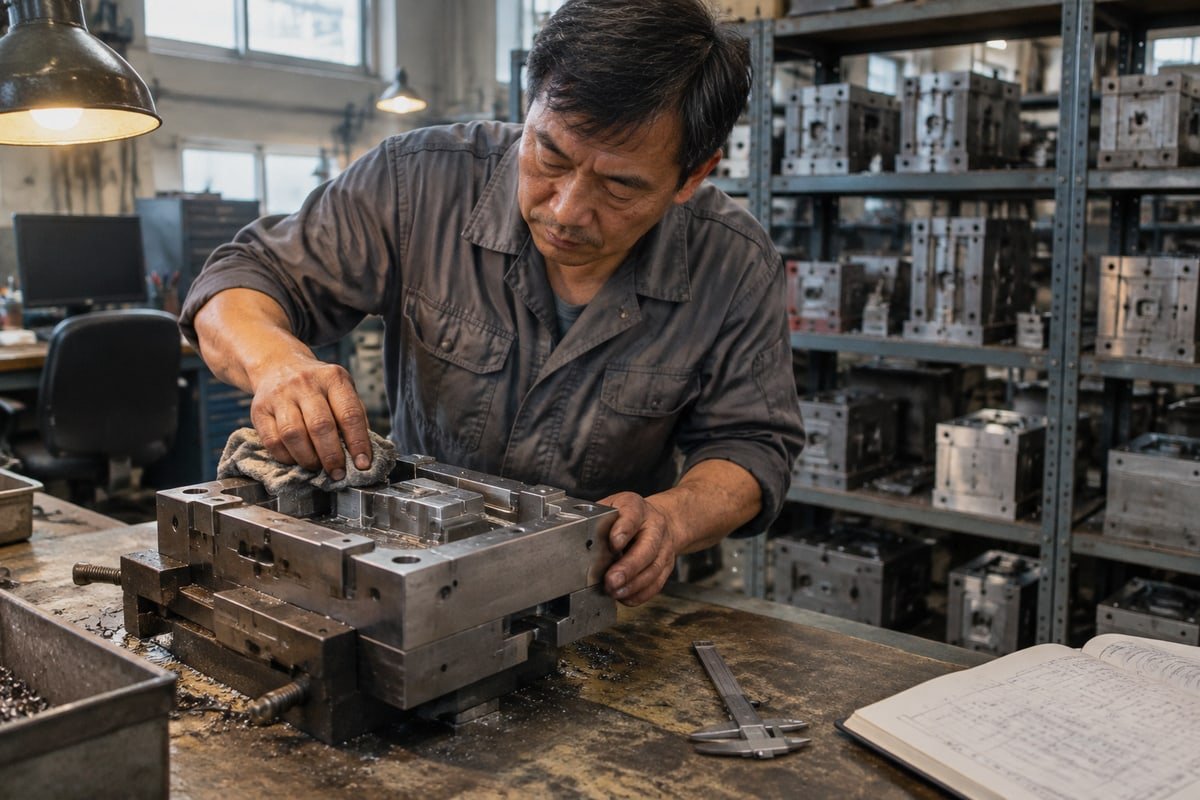
Last year our mold shop cut a new step-core insert for a BESS container builder. The first question they asked was not price. It was who owns the tool.
Ask who owns the mold, whether tooling cost is a one-time fee or amortized into unit price, what the mold's expected shot life is, how long mold making takes, whether the supplier machines molds in-house, and what minimum order quantity requirements apply to custom-branded MCT sizes.
Who owns the mold and who pays for it
Tooling terms decide whether a custom size becomes your asset or your trap. In our quotations we separate the tool cost from the unit price. A buyer can then choose between two routes. The first is a one-time tooling fee with the mold registered in the buyer's name. The second is amortizing the fee over an agreed volume. Both routes work. The trouble starts when the terms only exist in an email thread. Ask for the answer in the written quotation.
Is the mold made in-house or outsourced?
This question matters more than most buyers expect. When we machine step-core molds in our own tool room, a design revision goes back to the same engineer who cut the first version. An outsourced mold adds a third party, extra transit time, and less control over cavity tolerance. Ask the supplier directly. Then ask for photos of the tool room and a mold register. A real factory can send both within a day.
The standard-versus-custom objection
Many engineers push back at this point. Standard transits are cheaper and faster to procure. That is true. Custom sizes add tooling cost, time, and approval steps. So my advice is to check the catalog first. Our TSC and TSR halogen-free sealing modules use a step-core design. One module size already adapts to a range of cable diameters. In many projects no new mold is needed at all. Tool only for the outlier sizes that the catalog cannot cover.
Where the brand goes and why it affects tooling
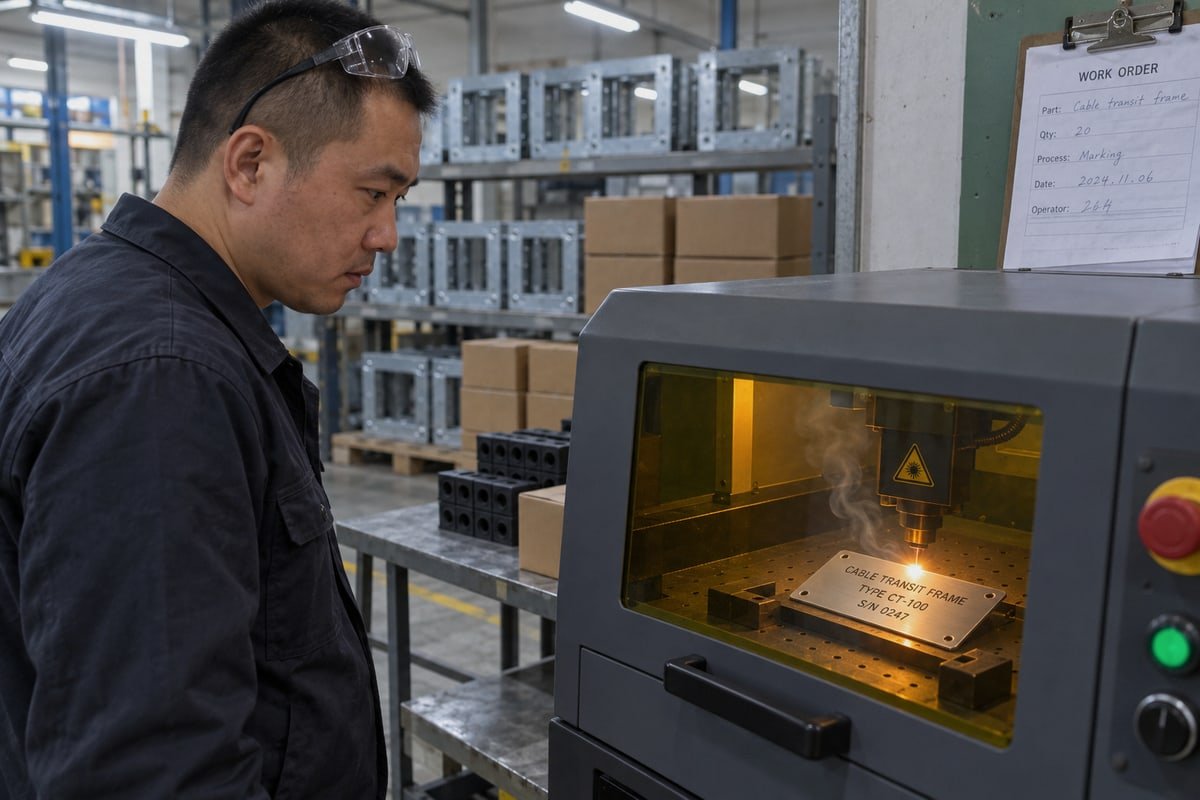
OEM private labeling can be done three ways. Embossed molding puts your logo inside the tool. Laser engraving puts it on the frame or nameplate. Ink-jet printing puts it on labels and cartons. An embossed logo on a sealing face can create a stress-concentration point. So we keep marks on the nameplate, the frame, or the packaging. Ask which option the supplier recommends and why.
| Tooling question | Why it matters | What a good answer looks like |
|---|---|---|
| Who owns the mold after payment? | Protects your second-source position | Mold registered to buyer, stored at supplier |
| Is tooling in-house or subcontracted? | Controls revision speed and tolerance | In-house tool room with photos on request |
| What is the expected shot life? | Predicts when re-tooling cost returns | Stated number of shots with wear inspection |
| Which branding method is proposed? | Embossing changes the tool; engraving does not | Nameplate or frame engraving for seal parts |
| What MOQ triggers the custom price? | Ties tooling amortization to real volume | MOQ stated per size, not per order |
How can I confirm dimensional compatibility before committing to a private-label production run?
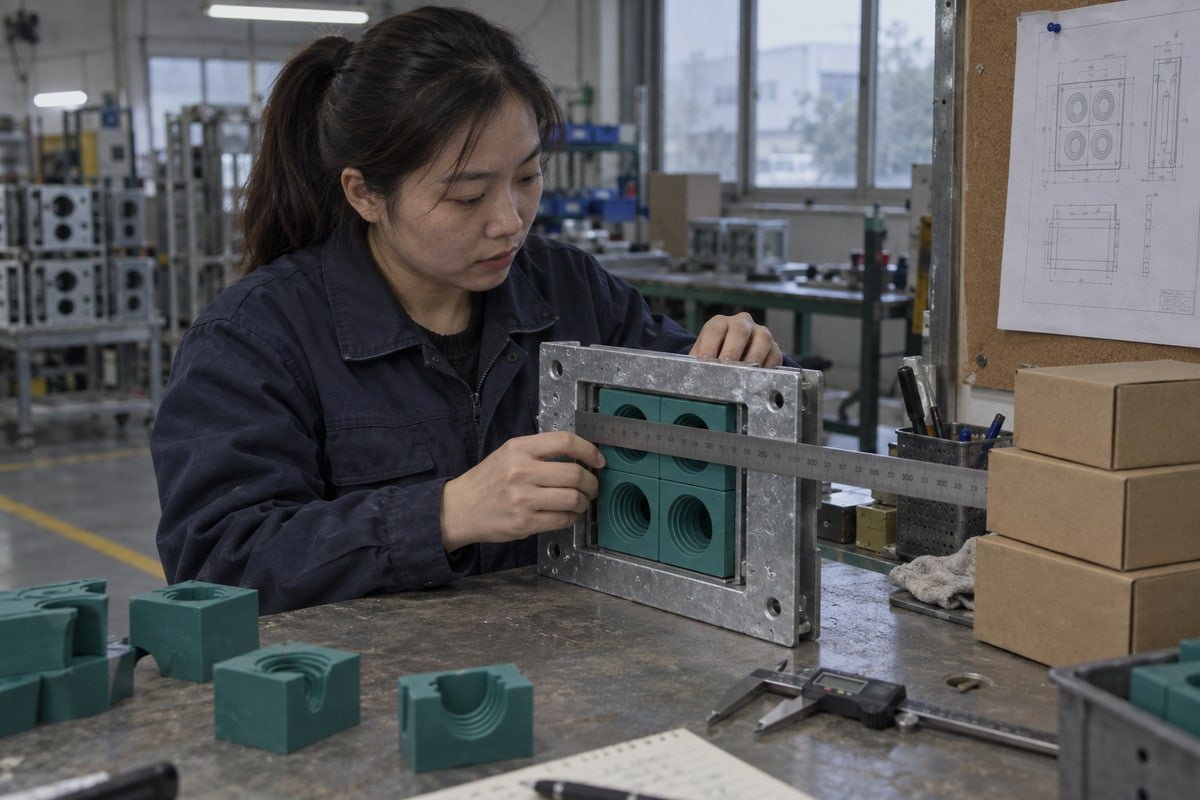
A sourcing manager in Germany once sent me a photo of a frame cutout with a ruler across it. That photo answered more than three emails had.
Confirm dimensional compatibility by requesting the supplier's cross-reference table, STEP or CAD files, and free validation samples. Fit the samples into your existing 120-frame cutout, check module width, height, depth, and cable diameter range, then run a compression test before releasing the private-label production order.
A four-step validation sequence
I recommend the same sequence to every new integrator. It takes days, not weeks, and it removes most of the risk from a private-label run.
- Request the cross-reference table. Send your current module list. A qualified second source should return an existing-model-to-DEWIN-model table with the matching dimensions side by side.
- Load the STEP files into your cabinet model. Check the frame opening, the module stack height, and the space needed for the compression unit and stay plates. Do this before any sample ships.
- Fit free validation samples in a real frame. Drawings show nominal size. Samples show tolerance. Stack the modules, insert your actual cables, and tighten the compression unit to the stated torque.
- Run a bench pressure or water test. If your application needs watertight or gas-tight sealing, verify it on the sample assembly, not on the drawing.
What to measure and why depth is the usual surprise
Width and height get checked first. Depth gets missed. One published product sheet lists a standard device length of 254 mm for a fire-tested transit. Your wall or deck may only allow a shorter frame. So confirm frame depth and wall thickness together. Also confirm the frame material. Galvanized steel suits most enclosures. Stainless steel 316L frames suit marine and coastal sites. The two have different weld and edge tolerances.
| Dimension to confirm | Where problems appear | How to verify |
|---|---|---|
| Frame cutout width and height | Panel already punched to an old standard | Cross-reference table plus STEP file |
| Module stack height per row | Compression wedge kits leave no reserve | Physical stack in a sample frame |
| Frame depth versus wall thickness | Frame protrudes into cable bend radius | Section view in your cabinet CAD |
| Cable diameter range per module | Mixed cable sizes in one row | Insert real cables into step-core samples |
| Spare capacity percentage | No room for future cables | Agree a blank-module ratio in the order |
Ask the supplier to state the accepted diameter range per module size in writing. Then compare it with your cable schedule. Mixed sizes in one row are normal. Mixed suppliers in one row are not. Keep the whole frame from one qualified source once the samples pass.
What certification and test documentation should I request for custom-branded cable transit modules?
The hardest lesson from our BV factory approval was simple. A certificate without the matching test report is only half a document, and auditors know it.
Request fire rating certifications with full test reports (A-0/A-60, BS EN 1366-3 where applicable), IP68 ingress protection results, watertight and gas-tight pressure data, ISO 9001 and IATF 16949 certificates, material traceability reports for the EPDM, and written confirmation that private branding does not void any approval.
Match the documents to the application, not to the brochure
Buyers increasingly ask for evidence of tested fire and sealing performance 1 instead of generic industrial-grade claims. I think that is the right instinct. The document set changes by sector. A switchgear builder needs different proof than an offshore yard. Below is the set I ask our sales engineers to prepare for each buyer type.
| Application | Core documents to request | Extra items to ask about |
|---|---|---|
| BESS container | Fire rating certifications, IP68 ingress protection ratings, gas-tight pressure test | Halogen-free and low-smoke material declaration |
| Modular data center | Fire and smoke test report, EMC configuration evidence | Electromagnetic compatibility shielding data |
| Switchgear and control panels | IP test report, ISO 9001 and IATF 16949 certificates | CAD files with tolerance sheet |
| Marine and offshore | Class approval, A-0/A-60 fire test, watertight pressure data | Stainless steel 316L frames and salt spray results |
| Hazardous area | ATEX and IECEx compliance for the installed configuration | Gas-tight test at the project pressure |
Pressure and ingress numbers you should see in writing
Our modules are tested watertight and gas-tight from 0.01 to 0.4 MPa. Ask the supplier which pressure was tested, in which direction, and for how long. Ingress protection ratings such as IP68 cover dust and water. They do not cover fire. Fire needs its own test method, such as BS EN 1366-3 for building penetrations or A-0/A-60 for marine divisions. Ask for both reports, with photos of the test assembly.
Does branding change the certification status?
Some engineers see custom branding as a distraction from technical qualification. I understand the concern. The answer depends on where the mark sits. A nameplate, a laser-engraved frame edge 2, or a printed carton does not change the tested assembly. An embossed logo cut into the sealing surface might. So ask one direct question. Does the proposed branding method fall within the tested product definition? Get the answer in writing on the supplier's letterhead.
Traceability, sustainability, and digital records
Material traceability reports link each batch of halogen-free EPDM 3 to a compound lot. Ask for them with the first production run. If your project follows a sustainability policy, ask whether an Environmental Product Declaration exists or is planned. Also ask whether the nameplate can carry a QR code that links to installation and maintenance records. Not every supplier offers this yet. The question still tells you how the factory manages data.
How do I clarify lead times and export documentation requirements for private-label orders?
Every quotation forces a trade-off between promising a short lead time and protecting it. We would rather quote a date we can hold across three factories.
Ask the supplier to split lead time into mold making, first-article approval, production, and shipping, and to state which stage the MOQ triggers. Then list the export documents required — commercial invoice, packing list, certificate of origin, test certificates, and CE or REACH declarations — before placing the private-label order.

Break the lead time into stages
A single lead-time number hides where the risk sits. When we plan a private-label order across our Shaanxi, Shandong, and Hunan sites, we schedule four stages separately. I suggest you ask every supplier to do the same. Then the quotations become comparable.
| Stage | What to ask | What delays it |
|---|---|---|
| Mold making | Tool room capacity and revision loop | Late drawing approval from the buyer |
| First-article approval | Who signs off, and against which drawing | Missing tolerance sheet |
| Production | Batch size, curing time, inspection plan | Compound lot not yet released |
| Packing and shipping | Branded carton lead time, Incoterm, port | Export inspection or certificate delays |
Minimum order quantity requirements usually attach to the custom size, not to the whole order. Ask which line items carry an MOQ. Standard TSC and TSR modules and spare sealing parts can often ship from stock while the custom size is still in tooling. That split protects your project date.
Reorder consistency and revision control
Branded products expose any drift between batches. Ask how the supplier controls revisions. We keep a drawing number and revision letter on every private-label nameplate. The same number appears on the packing list. If you reorder two years later, the module matches the first batch. Ask whether the supplier can also keep matching spare sealing modules available for the life of the project. For phased EPC work this matters more than the unit price.
Export documents to agree before the order
Export documentation is not a detail for later. Different destinations need different papers. Europe usually needs a commercial invoice, packing list, certificate of origin 4, and material declarations such as RoHS or REACH where your market requires them. Some Middle East destinations add a pre-shipment conformity certificate. Class projects need the test certificates shipped with the goods. So agree the full list at order confirmation. Then the goods and the paperwork arrive on the same day.
The objection here is real. Custom-branded transits add time and approval complexity compared with standard parts. My answer is that most of that time sits in the mold and first-article stages. Once the tool exists and the first article is approved, a reorder runs on a standard schedule. Ask the supplier to quote both numbers. The first-order lead time and the reorder lead time.
Conclusion
Unclear details cost weeks and margin. Pin down tooling, fit, documentation, and lead time before you sign. Then custom-branded multi cable transits become a controlled second source, not a gamble.
Footnotes
1. The IMO is the global authority for fire and sealing standards in marine and offshore environments. ↩︎
2. Explains the laser engraving process used for permanent branding on metal cable transit frames. ↩︎
3. Provides technical background on EPDM rubber, the core material used in cable transit sealing modules. ↩︎
4. The International Chamber of Commerce is the primary institutional authority for global certificates of origin. ↩︎
5. ECHA manages the REACH and RoHS regulations governing material declarations for products entering the European market. ↩︎



 English
  Español de México
  Deutsch
  Français
  العربية
  Русский