
A multi cable transit leaks, and every party points elsewhere IP68 ingress protection 1. Our test bay has seen returned modules that were not defective. Responsibility for sealing failure must be defined before purchase.
Responsibility for sealing failure in multi cable transit systems is assigned by phase: the manufacturer warrants certified module performance, the installer warrants compression, fill and cable fit, and the owner controls post-handover changes. Purchase agreements should name standards, acceptance tests, and evidence requirements before ordering.
That sounds simple on paper. In practice, the lines blur fast once water is on the floor. Below I break the problem into four questions a purchasing engineer can act on: how to find the root cause, what documents to demand, how to write the clauses, and what warranty and sample data to require.
How do I determine whether a sealing failure stems from the MCT module or the installation process?
A batch of TSC modules came back to our Shandong plant marked as leaking. We pressure-tested each one. Every module held. The cable outer diameters on site were undersized.
Separate module defects from installation defects by testing the returned module alone against its certified rating, then comparing site records: cable outer diameters, module size selection, compression bolt torque, and fill ratio. A module that passes the bench test points to installation compliance, not product design.

I want to be fair here. Some buyers hold the supplier-centric view: the product is certified, so any leak is a product problem. Others hold the installation-centric view: modules rarely fail, so the contractor must be at fault. Both views can be true on the same project. The only way to know is to follow the evidence in order.
Start with the module, not the argument
The first step is to isolate the physical part. A multi cable transit module 2 is an engineered assembly. It is not a generic hole filler. Our step-core, halogen-free EPDM modules 3 adapt to a range of cable diameters within one module size. But that range has a floor and a ceiling. If the cable sits below the smallest core step, no amount of compression will close the gap. If the cable sits above the largest step, the rubber cannot deform enough to seal without over-stressing the frame.
So we do three things with a returned module. We measure the bore against the drawing. We check the rubber hardness and look for cuts or set. Then we mount it in a test frame with a reference cable of the correct diameter and apply the rated pressure. If it holds, the module did its job.
Then read the site records
Next, compare what was specified with what was installed. The table below is the checklist our engineers use when a customer in Europe or the Middle East asks us to help with a failure review.
| Symptom on site | Most likely origin | Evidence to request |
|---|---|---|
| Leak along one cable only | Cable outer diameter mismatch or wrong module size | Cable datasheet, module label, as-built fill list |
| Leak at frame edge or weld | Frame installation, distorted cutout, poor welding | Frame drawing, weld inspection, site photos |
| Leak across whole face | Sealing module compression too low, stay plates missing | Bolt torque record, compression unit travel |
| Leak after months of service | Unauthorized cable addition, module reuse, thermal cycling | Change log, maintenance records, revalidation report |
| Leak at multiple frames from one delivery | Possible manufacturing lot defect | Batch test report, lot number, factory pressure log |
One point matters more than any other in this table. A single poorly sealed cable can compromise the whole entry. Fire-rated cable transits and IP68 barriers do not average their performance. They are only as good as the worst opening. That is why cable outer diameter accuracy is an installation input, not a product feature.
Who owns each finding
If the module fails the bench test, the manufacturer owns it. If the module passes and the site records show low torque, undersized cable, or blank modules missing from unused slots, the installer owns it. If the site records show a cable that was never on the approved fill list, the owner or operator owns it. Engineering design liability sits with whoever selected a module outside its certified range.
Which test documents and certifications should I request upfront to establish liability before procurement?
A sourcing manager in Germany once asked me for our fire test report before he asked our price. That order of questions is the right one.
Request type approval certificates from a recognized body, fire test reports to the named standard (A-0/A-60, UL 1479 or EN 45545-3), IP68 test reports under IEC 60529, hydrostatic and gas-tight pressure test data, ISO 9001 or IATF 16949 certificates, and the supplier's product liability insurance before ordering.

Documents do two jobs. First, they confirm that the product can do what the brochure says. Second, they fix the reference point for any later dispute. If the contract names a standard and the supplier has a report to that standard, the liability question becomes a comparison, not an opinion.
The documents that carry weight
Here is the document set I recommend a purchasing engineer request at bid stage. The right-hand column shows who should issue it. A document issued by the supplier alone is useful. A document issued by a third party is defensible.
| Document | What it proves | Who should issue it |
|---|---|---|
| Type approval certificate | The transit type meets fire, water and gas ratings for a defined scope | Classification society or notified body (for example BV, or EC/MED for marine) |
| Fire test report | Integrity and insulation time under the named fire curve | Accredited fire test laboratory |
| Ingress protection report | IP rating achieved under IEC 60529 test conditions | Accredited laboratory or supplier lab with witness |
| Pressure test report | Watertight and gas-tight limits, hydrostatic pressure resistance | Supplier factory, ideally witnessed |
| Quality system certificate | Process control behind every batch | ISO 9001 4, IATF 16949 registrar |
| Product liability insurance | Financial backing for a genuine product defect claim | Insurer, via supplier |
| Dimensional drawings and STEP files | Compatibility with the frame cutout and existing modules | Supplier engineering |
Match the standard to the project
The standard you name should match the environment. Marine projects will point to SOLAS and the IMO FTP Code 5, with EC/MED type approval. Rail projects often call EN 45545-3. North American projects may call UL 1479 6. Some tenders list IS 12458 as an alternative. Building projects usually accept one of several recognized fire test standards, so the tender should name which one.
Ingress protection numbers also vary by application. I have seen specifications that require IP55 for retention and protection assemblies and IP67 for certain cable sealing applications. Some vendor literature quotes IP66 or UL Type 4X. Our TSR and TSC modules are tested to IP68 and to watertight and gas-tight sealing between 0.01 and 0.4 MPa. Some marine products in the market are certified gastight up to 2.5 bar. The point is not that one number wins. The point is that the tender must state the number, and the supplier must show a report at or above it.
Why the factory matters
Our factory is BV-approved and runs ISO 9001 and IATF 16949 systems across our plants in Shaanxi, Shandong and Hunan. I mention this because a certificate belongs to a product from a specific factory. If a buyer accepts a second source, they should confirm the certificate scope covers the plant that will ship the goods. We supply model cross-reference tables so a buyer can map an incumbent module to our equivalent and check the document trail line by line.
How can I write purchase agreements that clearly assign responsibility for fire rating and IP68 sealing failures?
Every clause we accept as a second-source supplier trades price against risk. We would rather take a tightly written clause than an open-ended one, because clarity protects both sides.
Write purchase agreements that name the performance standard for each rating, assign the manufacturer responsibility for certified module performance, assign the installer responsibility for cable sizing, sealing module compression and fill ratio, and require a signed installation completion report and post-installation inspection before liability transfers to the owner.

The owner-centric view holds that ambiguous procurement language creates the failure risk upstream. I agree with that more than most suppliers would admit. When a tender says "watertight" without a pressure value, or "fire rated" without a class, nobody can be held to anything. Owners are also advised to standardize the sealing method early and carry it through design and construction, rather than allowing late substitution by local preference. The clauses below turn that advice into contract text.
Eight clauses that assign responsibility
- Performance standard clause. Name the fire class (for example A-0 or A-60), the fire test standard (UL 1479, EN 45545-3, or the project equivalent), the IP rating under IEC 60529, and the pressure range in MPa or bar. Attach the supplier's test reports as contract documents.
- Manufacturer scope clause. The manufacturer is responsible for module performance within the certified range when installed per the published instructions. This is the contractual performance guarantee, and it should reference lot traceability.
- Installer scope clause. The installer is responsible for cable outer diameter measurement, module size selection from the supplier's chart, fill ratio within the manufacturer's maximum, compression unit torque, stay plate placement, and blank modules in unused space. Installation compliance is verified against the supplier's instructions, not against site habit.
- Systemic integration clause. Mixing modules, compression units or frames from different brands in one transit is prohibited unless the lead engineer signs a written deviation. Failures from mixed-brand components then sit with the lead engineer, not the module supplier.
- Acceptance test clause. Post-installation inspection is mandatory. Some specifications use random acceptance testing in groups of up to 100 transits, with escalation to group-wide rectification if repeated failures occur. Name the test method: pressure test, water spray, or leak detection.
- Completion report clause. Risk transfers from installer to owner only when a certified inspector signs an installation completion report with as-built fill lists and photos.
- Chemical compatibility clause. The buyer discloses cable jacket materials. The supplier confirms EPDM compatibility. Degradation from undisclosed jacket chemistry sits with the buyer.
- Lifecycle clause. Vibration, thermal cycling and any environmental fatigue beyond the test conditions must be stated in the tender. Post-handover cable changes require revalidation, and the owner logs every change in the maintenance system.
A note on hazardous and regulated sites
In marine, rail and hazardous areas, the legal burden increasingly sits with the specifier, owner or main contractor to demonstrate competency and compliance. That means the owner cannot outsource the whole risk to a module supplier. The contract should reflect that reality. Our role as a factory is to hold up our part of the chain with test evidence, drawings, and a fill chart that leaves no room for guesswork.
What warranty terms and validation sample data should I require from my MCT supplier to limit my liability exposure?
One lesson from a decade of exporting sealing modules: a warranty without sample data is only a promise. Validation samples turn that promise into evidence a buyer can file.
Require a written product warranty covering fire rating, IP68 ingress protection and pressure sealing within stated limits, a defect-liability process that separates product from installation defects, free validation samples with batch test reports, dimensional drawings or STEP files, and a spare-module supply commitment for the warranty period.
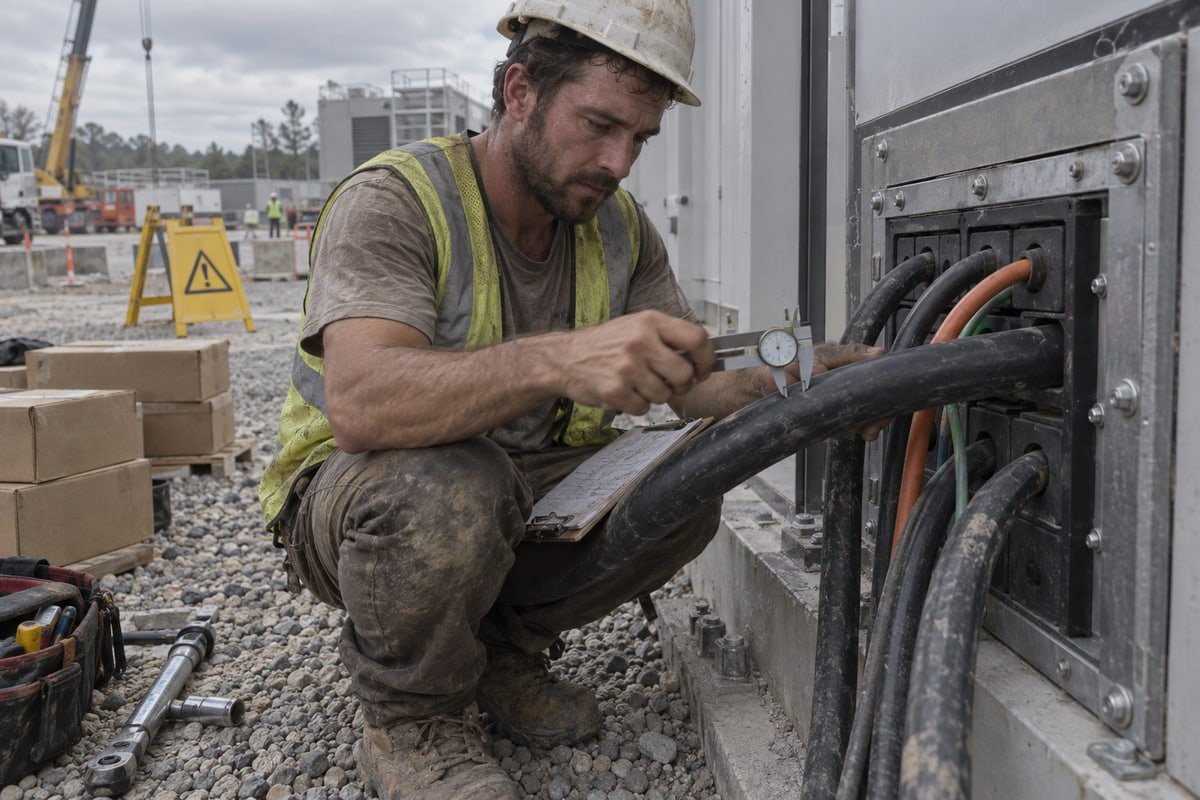
Warranty language is where the shared-responsibility model either holds or collapses. A vague warranty invites a vague dispute. A specific warranty tells both parties what will be measured, by whom, and what happens next.
What a defensible warranty looks like
The table below sets out the terms I recommend, and the reason each one limits the buyer's exposure. We accept these terms in our own supply agreements, so I am not describing an ideal that no factory will sign.
| Warranty term | What it should say | Why it protects the buyer |
|---|---|---|
| Covered performance | Fire class, IP68, pressure range in MPa, stated cable range | Fixes the benchmark for any later test |
| Exclusions | Use outside certified range, mixed-brand parts, module reuse, undisclosed jacket chemistry | Makes the boundary explicit rather than argued later |
| Defect process | Buyer returns module, supplier bench tests at rated pressure, joint review of site records | Separates product defect from installation defect by evidence |
| Remedy | Replacement modules and, where the module is at fault, agreed costs | Avoids an open-ended negotiation |
| Spare supply | Fast delivery of spare sealing modules for the warranty period | Prevents a substitute brand from voiding the system |
| Documentation | Batch test reports, lot numbers, drawings, STEP files | Gives the buyer the paper trail an inspector will ask for |
What to ask for in a validation sample
Free validation samples are the fastest way to qualify a second source without taking a project risk. When we send samples for an incumbent-to-DEWIN cross-reference, we expect the buyer to check the following before any order is placed.
- Dimensional fit in the existing 120-frame cutout, measured against the drawing, not against the eye.
- Module bore and core steps compared with the cable outer diameters on the buyer's fill list.
- Compression behaviour with the buyer's own compression unit and stay plates.
- A pressure test in the buyer's lab, or a witnessed test at our factory, at the contract value.
- A halogen-free material declaration for the EPDM.
- A batch test report tied to the sample lot number.
Cable outer diameter accuracy deserves one more comment. Our step-core design adapts within a range, but the buyer should still verify their own cables against the chart. A validation sample that seals a reference cable does not prove it will seal a cable nobody measured.
Custom sizes and private label
For OEM integrators building BESS containers, modular data centers or switchgear panels, custom sizes are common. Because we do in-house mold making, we can produce a non-standard module and supply the same test data as a catalogue part. Private-label production does not change the warranty. The certificate scope, the batch traceability and the defect process stay the same, whatever name is on the nameplate.
Conclusion
Sealing failures trigger blame. Blame costs more than modules. Assign responsibility by phase in the contract, prove it with test evidence, and validate samples before you commit.
Footnotes
1. Official IEC explanation of ingress protection ratings, specifically the IP68 standard for dust and water resistance. ↩︎
2. General technical overview of multi cable transit systems used for sealing cable penetrations in industrial environments. ↩︎
3. Technical properties of EPDM rubber, the primary material used for high-performance sealing modules in cable transits. ↩︎
4. Official international standard for quality management systems used to ensure manufacturing process control and consistency. ↩︎
5. International Maritime Organization code governing fire test procedures for materials used in marine environments. ↩︎
6. Standard for fire tests of through-penetration firestops, essential for certifying cable transit safety in North America. ↩︎



 English
  Español de México
  Deutsch
  Français
  العربية
  Русский