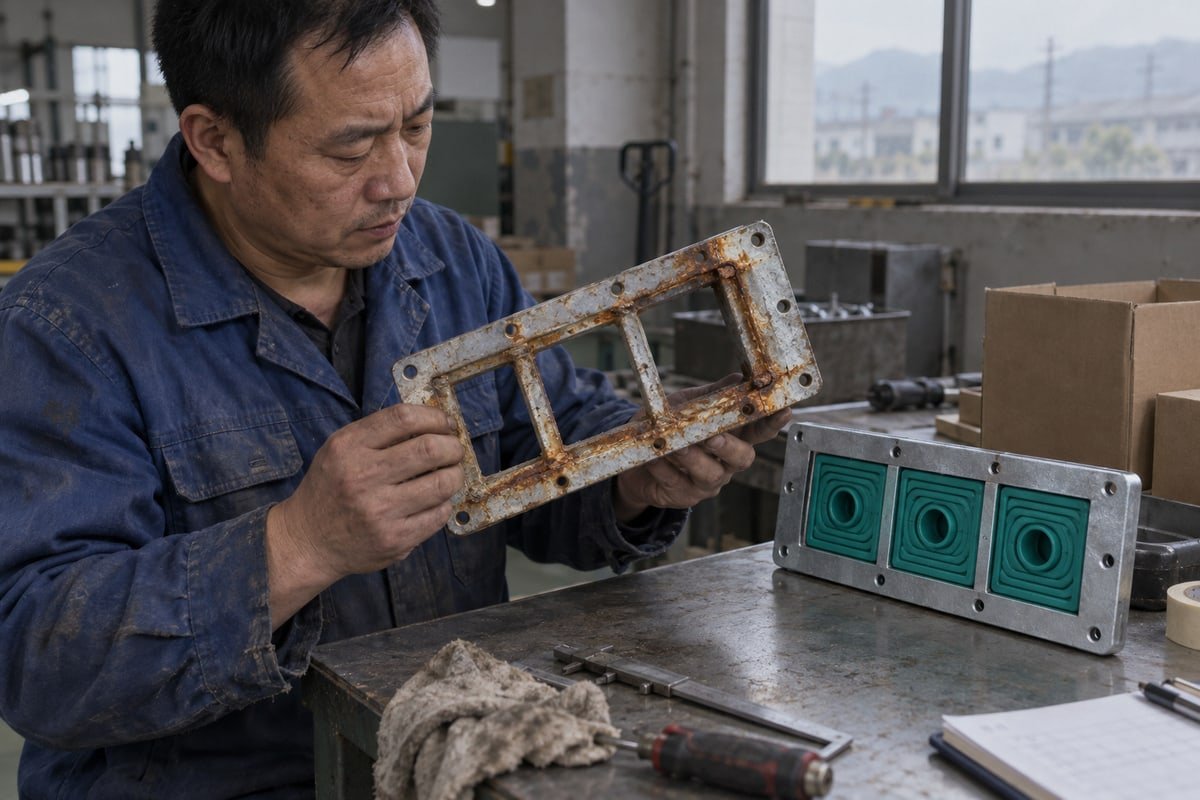
Every year our factory receives multi cable transit frames pulled from humid BESS compartments, rusted at the weld line. The seal looked fine on day one. Humidity finished it quietly.
Frame material sets multi cable transit service life in humid compartments because corrosion, not rubber fatigue, is the usual failure mode. 316L stainless steel resists pitting for decades; coated or galvanized steel lasts only as long as its coating; composite frames avoid rust but rarely meet fire ratings.
The frame is the part nobody inspects. The EPDM modules get the attention. Yet the frame holds the clamp load, defines the seal face, and decides whether a cable penetration seal is still tight in year ten. Below I walk through material choice, sealing verification, drop-in compatibility, and the documents that prove durability.
Which frame material—stainless steel, coated steel, or composite—gives me the best corrosion resistance in humid environments?
During a salt spray test on our line last spring, a galvanized sample showed white rust at the weld heat-affected zone before the 316L sample changed color at all.
316L stainless steel gives the best corrosion resistance in humid compartments. Its molybdenum content resists pitting and crevice corrosion where condensation sits. Coated steel works for occasional humidity only while the coating stays intact. Composite frames never rust but usually cannot carry A-60 fire ratings.
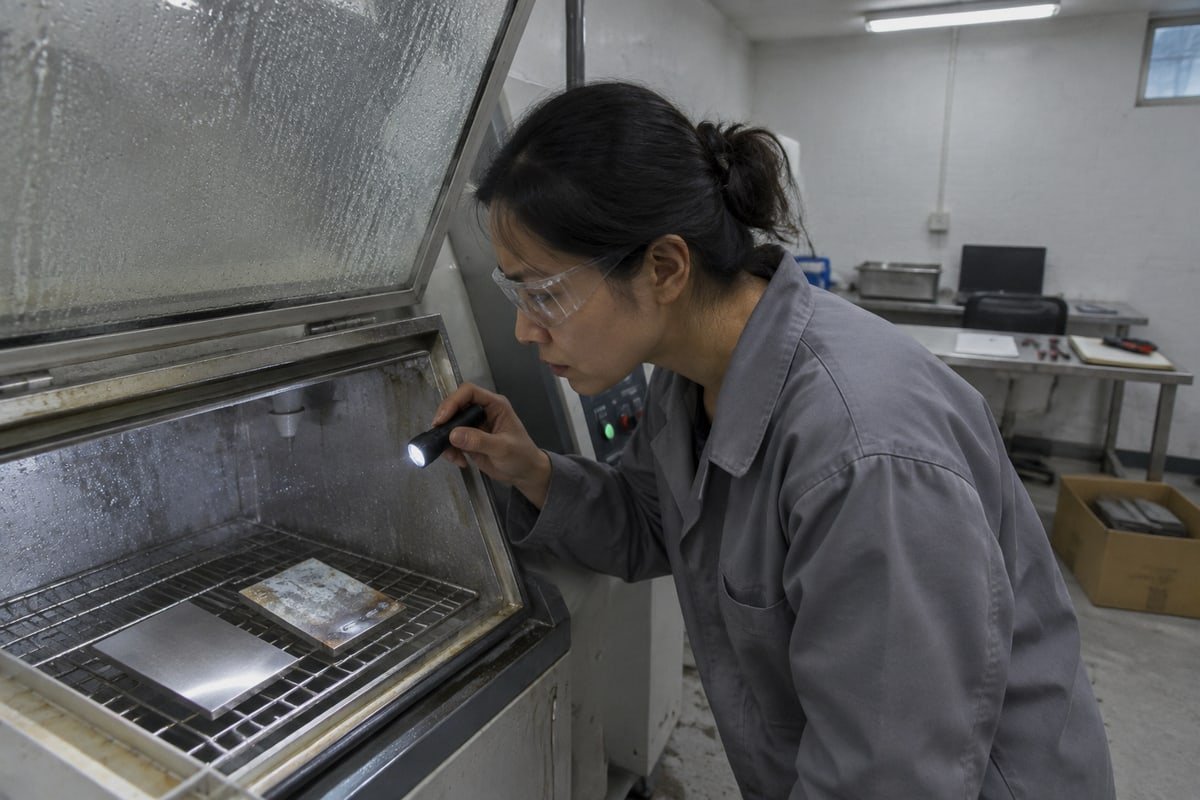
Here is how the four common frame materials compare when the compartment stays damp. I built this table from what we see on returned frames and from our own material selection guidance.
| Frame material | Corrosion behavior in humidity | Fire rating capability | Typical use case | Cost position |
|---|---|---|---|---|
| 316L stainless steel | Resists pitting and crevice corrosion; molybdenum protects under condensation | A-0 / A-60 achievable | BESS containers, offshore, washdown zones, salt-laden air | Highest upfront |
| Coated or galvanized steel | Depends on coating integrity; white rust and zinc depletion appear once damaged | A-0 / A-60 achievable | Indoor switchgear rooms, controlled HVAC, intermittent condensation | Lowest upfront |
| Aluminum (marine grade) | Natural oxide layer protects; wrong alloy risks exfoliation in stagnant humid air | Limited | Weight-sensitive enclosures, modular data center skids | Medium |
| Composite / thermoplastic | No electrochemical corrosion at all | Usually none | Non-load-bearing, non-fire-rated humid zones | Medium |
Not all humidity is equal
I ask buyers one question first: does the compartment ever dry out? Intermittent condensation in a ventilated switchgear cabinet is a mild case. Coated steel handles it if the coating survives installation. Permanent dampness, salt-laden coastal air, and enclosed containers with poor airflow are a different problem. There the electrolyte film never leaves the steel surface. 316L stainless steel is the safe default there, and we now treat it as our standard recommendation for BESS containers and any Ex-rated compartment.
The hidden failure mode is corrosion at interfaces
Most frames do not fail across their face. They fail at edges and joints. A galvanized frame welded into a stainless bulkhead sets up galvanic corrosion at the weld. Mixed hardware does the same thing. If you specify a stainless frame, use stainless bolts, washers, and stay plates. Otherwise the small part corrodes first, and electrolytic degradation spreads from there.
Two other mechanisms matter in sealed compartments. Biofilms can form on damp metal and cause microbial induced corrosion, which is slow but real in poorly ventilated spaces. And thermal cycling between a metal frame and rubber modules creates small breathing movements that can pull moisture into the packing space by capillary action. A rough, corroded seal face makes both problems worse.
Are composite frames a real substitute?
Some buyers push back on stainless cost and ask about composite frames. My honest answer: they are excellent where no passive fire protection rating 1 is required. In a fire-rated bulkhead or blast wall, they are not yet an option we would sign off on. Advanced hydrophobic coatings on carbon steel are a middle path, but they still depend on coating integrity like any galvanized part.
How do I verify a frame's IP68 and watertight sealing performance before specifying it for a humid compartment?
The trade-off we weigh most often is test cost versus test relevance: a dry-lab IP68 pass says little about a frame after two humid winters.
Verify IP68 and watertight sealing by requesting the third-party test report, checking the tested pressure range against your compartment, and confirming the tested frame matches your material and cutout. Then run a validation sample under your own condensation cycle before approving the drawing.
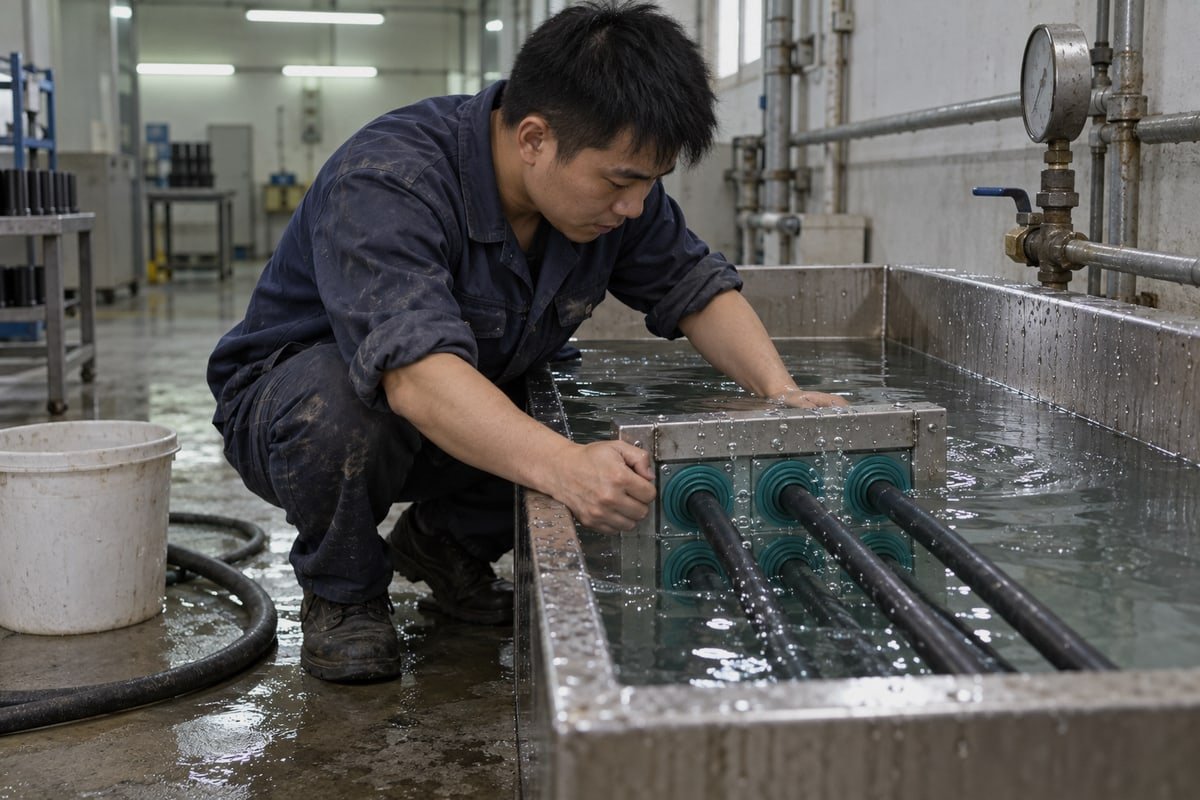
An ingress protection rating 2 is a snapshot. It tells you the frame and modules held water out under a defined test. It does not tell you the frame material, the compression method, or what happens after corrosion roughens the seal face. So I treat IP68 as the entry ticket, not the proof.
A five-step verification process
- Ask for the full report, not a certificate summary. The report should list the frame model, frame material, module type, compression unit, and the test pressure. Our own watertight and gas-tight testing covers 0.01 to 0.4 MPa, and the report states which point was held.
- Match the pressure to your compartment. A flooded bilge and a condensing switchgear cabinet are different loads. Pick the tested pressure that covers your worst case, not the average.
- Check the tested frame material. A report on a galvanized frame does not transfer to a stainless variant unless the geometry and weld flange are identical. Ask for that confirmation in writing.
- Run a validation sample. We ship free samples for exactly this reason. Install one in a spare cutout, expose it to your own humidity cycle, and re-check torque on the compression unit after a few weeks.
- Inspect the seal face after the sample test. Look for discoloration at the weld and under the stay plates. That is where watertight integrity is lost first.
What the report should show
| Report item | Why it matters in a humid compartment |
|---|---|
| Frame model and material named | Ties the result to the exact part you will receive |
| Test pressure and duration | Confirms the margin over your compartment's real water load |
| Module type (step-core EPDM, halogen-free) | Rubber compound affects long-term compression set |
| Compression unit torque | Correct clamp load is what keeps the modular sealing system tight |
| Third-party witness or BV approval | Independent verification of the factory's claim |
I will be direct about one point. IP68 and watertight performance depend on the frame staying flat and smooth. Corrosion pits under the modules create micro-channels. The frame can be structurally sound and still leak. That is why the material question and the sealing question are the same question in a humid compartment.
Can I drop in a corrosion-resistant frame as a second source without changing my existing 120-frame cutout dimensions?
A sourcing manager at a German switchgear builder once asked us whether a stainless frame meant a new cutout drawing. It did not, and here is why.
Yes. A 120-frame compatible stainless or coated frame uses the same outer cutout, weld flange, and module packing space as the original, so the existing bulkhead opening stays unchanged. You only need a cross-reference table, a dimension check on a free sample, and matching stainless hardware.
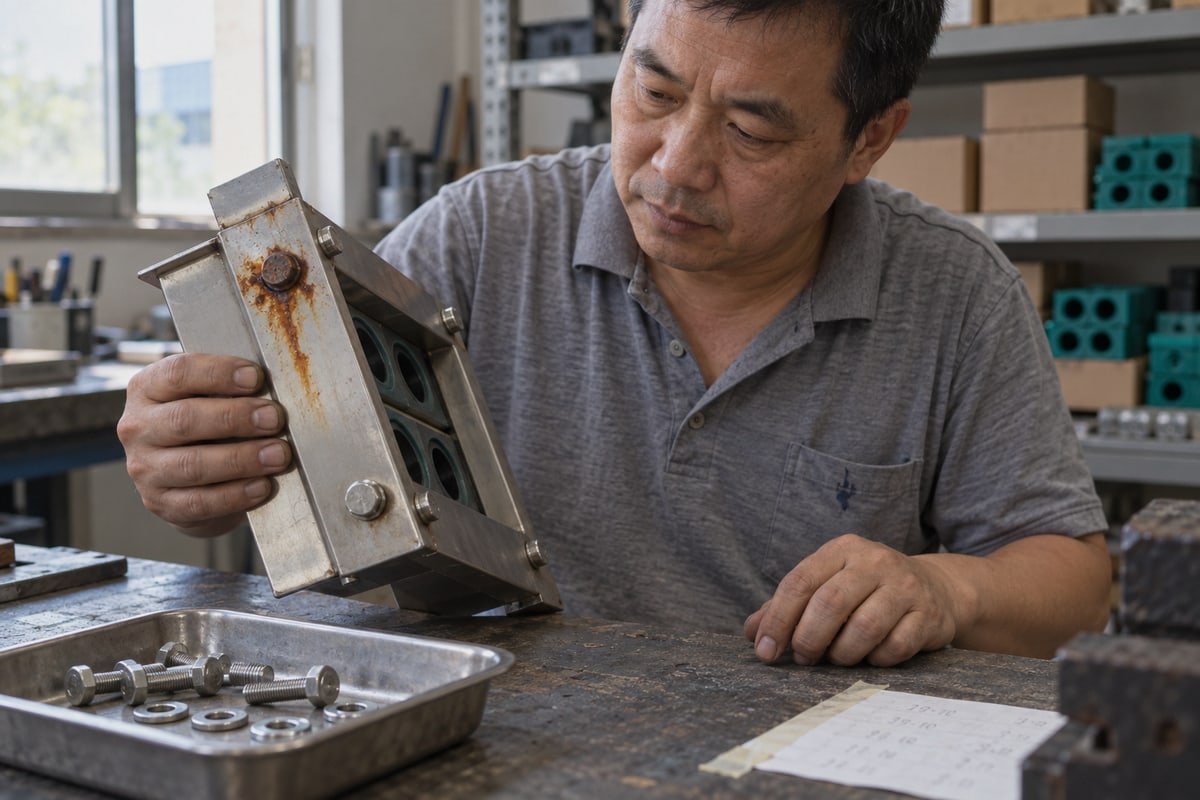
The 120-frame standard is a geometry, not a material. The internal opening height, the packing space, and the flange profile are fixed. What changes between suppliers is the alloy, the weld quality, and the surface finish. Our TSC square modules and TSR round assemblies are built to that geometry, so a corrosion-resistant frame slots into the same cutout. The upgrade lives in the material, not in the drawing.
What must match, and what can change
| Item | Must match original | Can change for humid service |
|---|---|---|
| Outer cutout dimensions | Yes | No |
| Weld flange width | Yes | No |
| Internal packing space | Yes | No |
| Frame material | No | Upgrade galvanized to 316L |
| Hardware (bolts, stay plates) | No | Match to frame material |
| Sealing modules | Compatible size | Step-core EPDM, halogen-free |
How we make qualification easy
We hand over three things before any purchase order. First, a cross-reference table that maps your existing model number to the DEWIN model. Second, CAD and STEP files so your engineer can overlay the new frame on the old cutout. Third, a free validation sample. Most buyers measure the sample, weld it into a test plate, and pack it with their existing modules before they change anything on the BOM. The cost saving of 40 to 60 percent only matters if the part fits, so we front-load the fit check.
Two details that decide long-term life
Welded installation is preferable to bolted frames in a humid compartment. Bolt holes trap moisture and create hidden corrosion pockets around each fastener. A continuous weld removes that leak path. Second, match the frame material to the wall material where you can. A 316L frame welded into a mild steel bulkhead still works, but the weld zone 3 becomes the galvanic corrosion site. If the bulkhead is stainless, keep the frame stainless. If the bulkhead is coated steel and the humidity is mild, a coated frame with consistent hardware may be the better fit. The goal is a fit-for-environment choice, not one universal answer.
What test documents should I request to confirm long-term frame durability in high-humidity or condensing conditions?
One lesson stuck with us: a buyer's auditor rejected a generic certificate because it did not name the frame material tested. Now every document we send does.
Request the material certificate for the frame alloy, a salt spray test report, the IP68 and watertight pressure test report, the fire test certificate for A-0 or A-60, and the factory's ISO 9001 or IATF 16949 certificate. Each document should name the exact frame model and material.
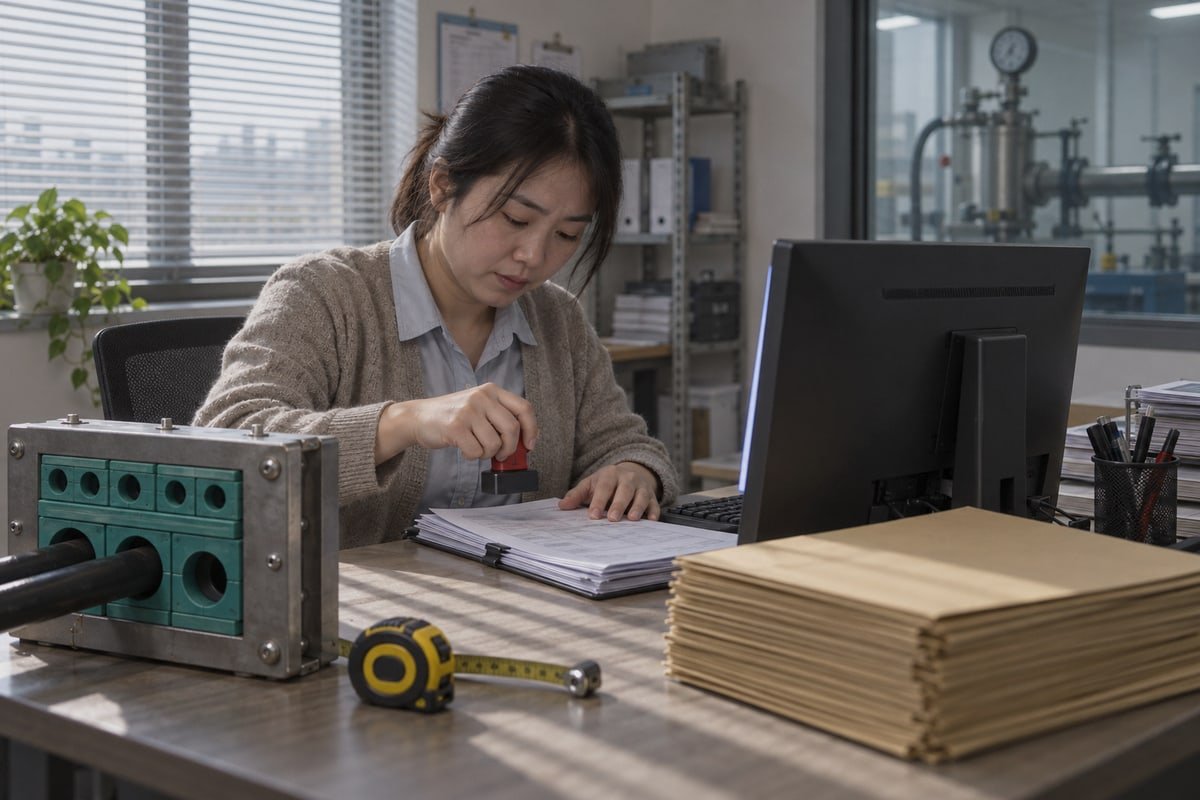
A certificate is only useful if it describes the part in front of you. That sounds obvious, but many documents in this industry are generic. They cover a product family, not a frame material. In a humid compartment that gap matters, because durability is exactly what changes between a galvanized and a stainless variant.
The document set, and what each one proves
- Mill or material certificate. Confirms the frame is actually 316L, not 304 or an unlabeled grade. Molybdenum content should be listed.
- Salt spray testing report. Shows how the frame surface and welds behave under an accelerated corrosive atmosphere. Look for the exposure hours and where the first corrosion appeared.
- IP68 and watertight pressure report. Ties the sealing result to the frame model. Ours reference the 0.01 to 0.4 MPa range.
- Fire test certificate. A-0 or A-60 for bulkhead penetrations. A stainless frame must be tested in that configuration, not assumed from a coated version.
- Quality system certificates. ISO 9001 4 and IATF 16949 show process control. BV factory approval adds an independent audit of the site.
- Halogen-free module declaration. Relevant when cables share a compartment with sensitive electronics.
Reading the documents critically
I encourage buyers to be skeptical of two things. First, service life claims. Some market literature quotes five to twenty years for a multi cable transit, with replacement every five to ten years. Those are general claims, not a standard. Frame material, humidity, and maintenance decide where you land in that range. Second, quality system certificates. ISO 9001 proves the factory follows a process. It does not prove the frame resists corrosion. Only the material certificate and the salt spray report do that.
Maintenance and inspection you can plan
A durable frame still needs a look every so often. In a humid compartment I suggest a simple routine. Check compression unit torque once a year. Inspect the weld line and stay plates for discoloration. Look for white deposits on galvanized parts, which signal zinc loss. Replace modules if compression set is visible. When you use marine grade materials for the frame and matching hardware, this routine becomes short and predictable. That is where multi cable transit service life is really won.
Conclusion
Humidity attacks the frame first. Choose 316L for persistent damp, verify the sealing report, drop it into your existing 120-frame cutout, and demand documents that name the material.
Footnotes
1. Provides international maritime safety standards regarding passive fire protection and bulkhead penetration requirements. ↩︎
2. Official definition and technical overview of ingress protection (IP) ratings from the standards body. ↩︎
3. Technical resource explaining the electrochemical process of galvanic corrosion between different metallic materials. ↩︎
4. The primary international standard for quality management systems, ensuring consistent product quality and durability. ↩︎


 English
  Español de México
  Deutsch
  Français
  العربية
  Русский