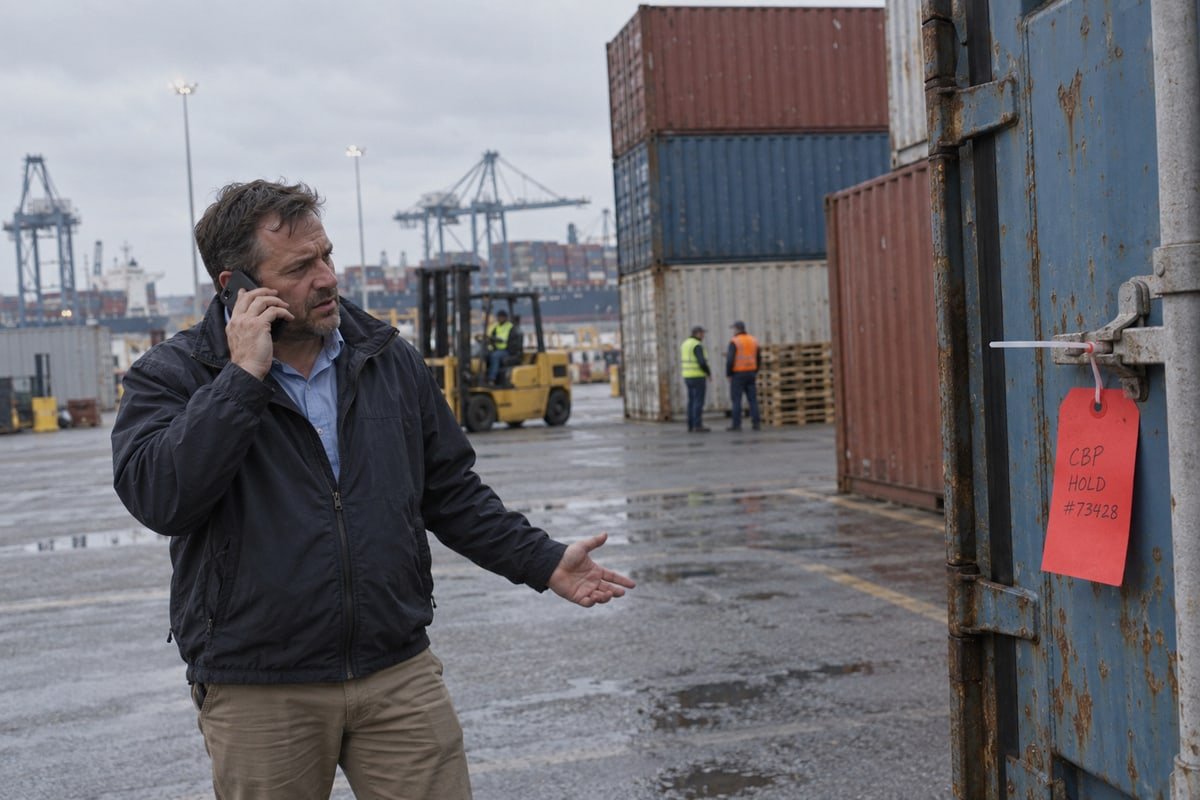
Your multi cable transit goods are held at port, demurrage is ticking, and the supplier is silent. I have seen this cost buyers weeks before our export desk got involved.
To get suppliers to cooperate on documents when multi cable transit goods are held at port, send one written list naming each missing document, its format, and a deadline; contact the supplier’s compliance desk directly; escalate to management within 24 hours; and tie the final payment to customs release.
That is the short version. The rest of this article explains what to ask for, who to ask, and how to stop the same hold from happening on the next order.
What documents do I need from my MCT supplier to release goods held at customs?
A broker once rejected a packing list 1 of ours because the TSC module codes did not match the invoice line by line. Our export desk never forgot it.
To release MCT goods held at customs you need a commercial invoice, packing list, bill of lading, certificate of origin, HS code declaration, type approval certificates, fire test reports, and technical data sheets, with descriptions and part numbers matching exactly across every document.
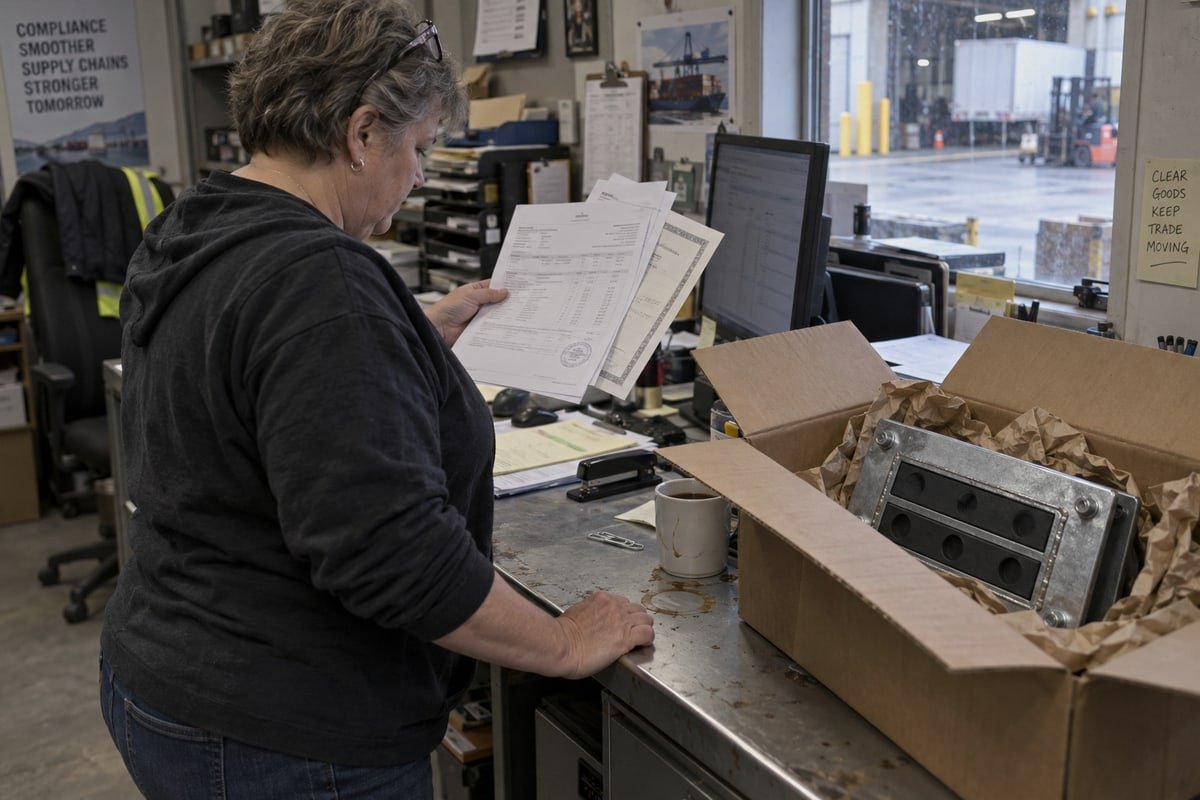
Customs clearance documentation for cable transit systems is heavier than for ordinary cargo. The reason is simple. A customs officer sees steel frames, rubber blocks, and bolts. He cannot tell from the box whether this is general hardware, a rubber article, or a certified fire-rated sealing system. The paperwork has to tell him.
The commercial pack customs reads first
| Document | What customs checks | Who should supply it |
|---|---|---|
| Commercial invoice | Value, buyer, seller, Incoterm, HS code, product description | Supplier |
| Packing list | Carton count, gross and net weights, module quantity and part number per carton | Supplier |
| Bill of lading 2 | Shipper, consignee, notify party, cargo description matching the invoice | Carrier, arranged through supplier or forwarder |
| Certificate of origin | Country of manufacture, sometimes needed for preferential duty | Supplier, via local chamber |
| Import declaration and broker authorization | Declared classification and value | Importer and customs broker |
Most holds I have dealt with start in this table, not in the technical files. A missing consignee address or a bill of lading that says "sealing parts" while the invoice says "cable transit modules" is enough to stop the container.
Technical documents that settle classification questions
HS code classification 3 is the second trap. MCT products sit between rubber articles, fabricated steel, and electrical installation accessories. Brokers often file them under general hardware. Customs then asks for technical data sheets to confirm what the goods are and how they are used. Import duty assessment depends on this answer, so the officer will not guess. We keep data sheets for every TSR and TSC size ready in English for exactly this reason, and we send the fire test reports and type approval certificates with the same pack.
Why the wording must match
Commercial invoice discrepancies cause more holds than missing pages. If the invoice says "cable seal", the packing list says "TSC block", and the certificate says "multi cable transit sealing module", an inspector sees three products, not one. Our rule is to copy the exact wording from the certificate onto the invoice and the packing list, then add the DEWIN model code. One description, three documents, no gap.
How can I get a factory-direct supplier to respond quickly when my shipment is stuck at port?
One purchasing engineer in Europe told me his urgent request had sat in a sales inbox for two days. That conversation changed how we route document requests.
To get a factory-direct supplier to respond quickly when your shipment is stuck at port, bypass sales and email the compliance or QA contact directly, state the exact document, format, and deadline in the subject line, copy management, and reference the payment or contract clause that depends on release.

Speed at this stage is a routing problem. Sales staff sell. They do not hold the stamped test reports, the chamber-issued origin certificate, or the signed packing list. The person who holds those files sits in export documentation or quality assurance. Ask for that person by name during supplier onboarding, before you ever need them. At our factory, buyers get a documentation contact and a QA contact on the first order, so a port hold never goes through a sales queue.
The escalation ladder that works
| Timing | Action | Who is copied |
|---|---|---|
| Hour 0 | Broker sends you the exact list of gaps | Your logistics team |
| Hour 0 to 4 | One email to the supplier's documentation contact, one row per missing item, format and deadline stated | Supplier QA and your broker |
| Hour 24 | Phone or messaging follow-up, plus copy to the supplier's factory manager | Supplier management |
| Hour 48 | Written reminder that quotes the PO clause or payment milestone tied to clearance | Both commercial leads |
| Hour 72 | Authorize your broker to contact the supplier directly with a shared document pack | Broker, supplier, consignee |
Demurrage and detention charges run daily, so every rung on the ladder has a cost attached. The ladder keeps the pressure rising without turning the exchange into an argument.
Write a request that can be answered in one reply
A vague "please send all documents" produces a slow, partial answer. A precise request produces a fast, complete one. Name the document, the format you need, and the deadline in the supplier's local time. For a packing list, ask for a stamped PDF plus an editable spreadsheet so the broker can key in weights without retyping. For a certificate, ask for the scanned original with the certificate number visible.
Time zones matter more than people think. A factory in China is six to seven hours ahead of Central Europe. A request sent before mid-morning in Europe is read the same working day. A request sent after 16:00 loses a full day.
When the supplier says paperwork is not their job
Some suppliers will tell you they manufacture and dispatch, and customs is the buyer's problem. I understand the position, but it fails a simple test. The supplier is the only party who knows the true carton weights, the material composition, the country of manufacture, and the tested configuration. Nobody else can produce those records accurately. Supplier compliance management is about making that point clear in the contract, not in a crisis.
What certification and test reports should I request in advance to avoid customs holds on cable transit systems?
We weigh one trade-off on every export order: sending the full certificate pack with the pro-forma adds admin hours, but skipping it risks a hold worth far more.
Request in advance the type approval certificates from bodies such as DNV, ABS, Lloyd's Register or Bureau Veritas, fire test reports for the A-0 or A-60 rating, IP68 and pressure test reports, a certificate of conformity, the factory's ISO 9001 certificate, and technical data sheets for each module.

The certificate pack does two jobs. It proves compliance to your end customer, and it explains the goods to customs. Officers who question HS code classification or declared value usually ask for the same files an offshore project engineer would ask for. So it pays to collect them at order stage and store them next to the commercial documents.
The certificates that answer customs questions
| Certificate or report | Issued by | What it proves | What to check before shipping |
|---|---|---|---|
| Type approval certificate | Classification society such as DNV, ABS, Lloyd's Register, or Bureau Veritas | The specific model is accepted under marine and offshore regulations | Model name, validity date, and scope match the invoice |
| Fire test reports | Accredited test laboratory | A-0 or A-60 fire rating of the tested assembly | The tested frame and module configuration matches what is shipped |
| IP68 and pressure test reports | Laboratory or factory test lab | Ingress protection and watertight or gas-tight sealing across 0.01 to 0.4 MPa | Test pressure range covers the project spec |
| Certificate of conformity | Supplier | The shipped lot conforms to the order and named standards | PO number, lot number, and quantities listed |
| ISO 9001 and IATF 16949 certificates | Certification body | The factory runs an audited quality system | Certificate number and expiry date |
| Technical data sheets | Supplier | Module sizes, cable diameter ranges, halogen-free EPDM material | Part numbers match the packing list |
Our factory is BV-approved, and our test documents for A-0/A-60, IP68, and pressure sealing are available on request. I still tell buyers to confirm which classification body their project or port of entry expects. A certificate from the wrong body is a real document for the wrong question.
Match the certificate scope to the shipped model
The most common failure I see is a valid certificate that does not cover the shipped item. The certificate names one frame size and one material batch. The container holds a different size or a custom mold run. Customs, or the end client's surveyor, spots the gap. So before dispatch, lay the invoice next to the certificate and confirm the model codes agree. For custom sizes made in our own mold shop, we issue a certificate of conformity that references the base tested design and the order.
Land projects versus marine projects
BESS container builders and data center integrators rarely need classification society type approval. They need fire test reports, IP68, and technical data sheets. EPC teams on offshore work need the type approval as well. Ask your broker which set the destination expects, then request only that set. Over-sending files is not harmful, but under-sending is expensive.
One trend worth noting: some buyers now ask for QR codes on the compression unit nameplate that link to the data sheet and fire test reports. It lets an inspector verify the module from a phone instead of waiting for an email. We treat that as a reasonable request for project orders.
How do I set up a documentation checklist with my supplier to prevent future port delays?
The lesson we learned the hard way is that a checklist agreed at PO stage beats any rush effort at the port, so we now attach one to every order.
Set up the checklist at purchase order stage: list every document with owner, format, and deadline, require draft copies 72 hours before loading, store approved versions in one shared folder, have your customs broker sign off before vessel arrival, and review misses after each shipment.

A checklist only works if it has three columns the supplier cannot argue with: who owns the document, what format it must be in, and when it is due. Everything else is decoration. Here is the version we attach to our order confirmations, simplified.
The one-page checklist
| Document | Owner | Format | Due |
|---|---|---|---|
| Draft commercial invoice | Supplier documentation desk | PDF and editable file | 72 hours before loading |
| Draft packing list with part numbers and weights | Supplier documentation desk | PDF plus spreadsheet | 72 hours before loading |
| Certificate of origin | Supplier via chamber | Stamped scan, original by courier | Before vessel departure |
| Type approval and fire test reports | Supplier QA | Scanned originals | With order confirmation |
| Certificate of conformity for the lot | Supplier QA | Signed PDF | With final invoice |
| Bill of lading draft | Forwarder | 24 hours before departure | |
| Broker completeness sign-off | Importer's broker | Email confirmation | Before vessel arrival |
Put ownership in the contract, not in an email
Incoterms decide a lot here. Under DAP or DDP, the supplier carries the delivery obligation 4 to the named place and, under DDP, import clearance too. That makes document delivery a contractual duty rather than a favor. If you buy FOB or EXW, add a clause instead. A documentation retention clause, which holds a percentage of the contract value until the port authority releases the goods, aligns the supplier's cash flow with your clearance. We accept these clauses on project orders because our documents are ready anyway.
Add a verification step at origin
Two extra checks catch most remaining gaps. First, a third-party pre-shipment inspection 5 at the origin port can audit the document pack against the physical cargo, so a missing certificate is found before the vessel sails. Second, cross-referencing tools, even a simple spreadsheet, can flag when the invoice description, the packing list, and the test report use different wording. Ports increasingly rely on pre-arrival data, so a correction after departure is much harder to absorb than one before it.
Two objections I hear from buyers
Some procurement teams say the importer owns compliance risk, so the importer should own the documents. That is true for the legal risk. It is not true for the data. Only the supplier knows the actual carton weights, the material batch, and the tested configuration. Sharing ownership does not shift your liability; it protects it.
Other logistics teams prefer to fix problems after arrival rather than add process upfront. I understand the wish to keep things light. But a port hold costs demurrage, detention, storage, re-booking, and production downtime, while a checklist costs one hour at order stage. Track which suppliers miss deadlines and review them quarterly. Build the checklist into vendor onboarding so a new second source starts on the same footing as your incumbent.
Conclusion
Multi cable transit goods held at port are a document problem. Fix it with named contacts, one checklist, firm deadlines, and contract clauses, not last-minute favors.
Footnotes
1. Official U.S. government trade resource explaining the requirements for packing lists in international shipping. ↩︎
2. U.S. Customs and Border Protection guidance on essential shipping and import documentation requirements. ↩︎
3. World Customs Organization’s official explanation of the Harmonized System for global product classification. ↩︎
4. Official International Chamber of Commerce page defining the delivery obligations of buyers and sellers under Incoterms rules. ↩︎
5. Authoritative WTO page explaining international pre-shipment inspection standards and agreements. ↩︎



 English
  Español de México
  Deutsch
  Français
  العربية
  Русский