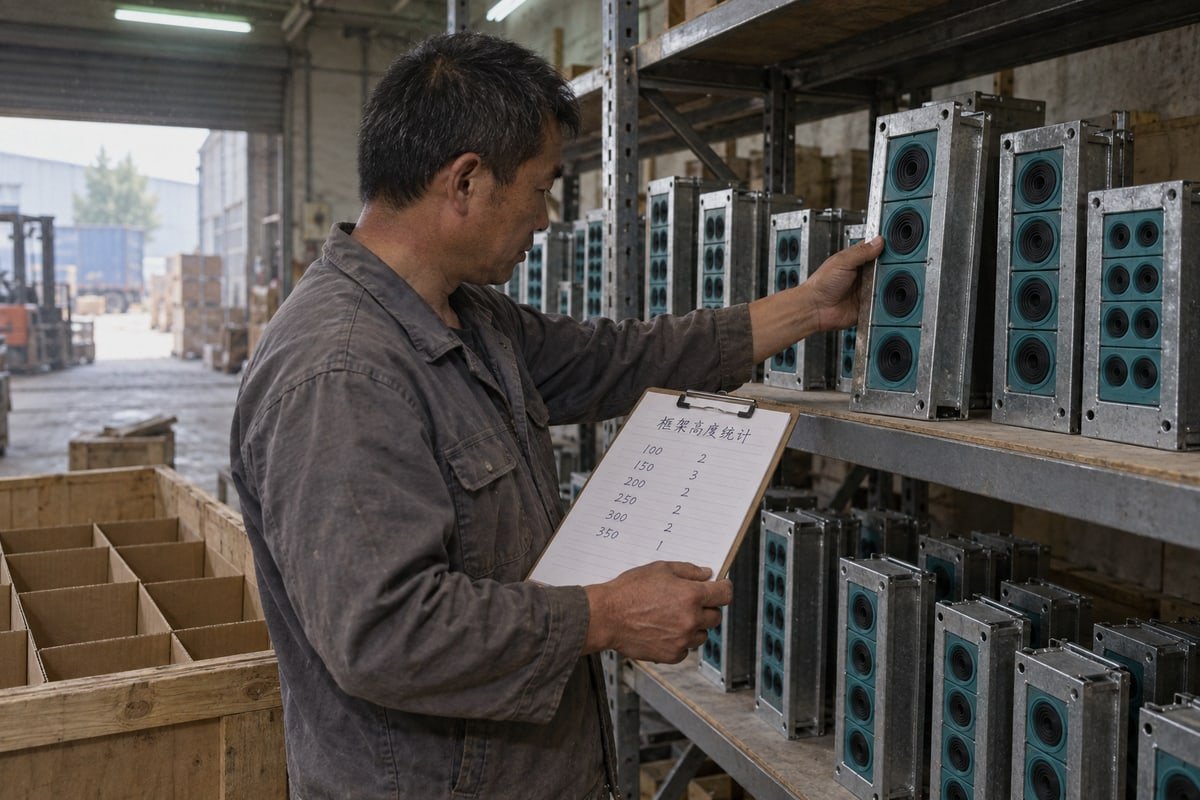
Every quarter sourcing managers send our factory spreadsheets with forty frame part numbers, each tying up cash. Standardizing multi cable transit frame specs is how we shrink that list.
To standardize multi cable transit frame specs, fix one frame platform based on the common 120-frame standard, limit heights to an approved set, let step-core cable sealing modules absorb cable diameter variation, tier materials by environment, and control exceptions through a formal special-order list.
That answer is short. The work behind it is not. Below I walk through the four questions buyers ask us most, in the order they usually ask them: fit, data, cost, and proof.
How do I know if a new MCT frame is dimensionally compatible with my existing 120-frame inventory?
On our Shaanxi line, every TSC module batch is checked against a 120-frame master gauge before it leaves the press. That gauge exists because buyers ask about compatibility first.
A new MCT frame is compatible with a 120-frame inventory when its internal packing width is 120 mm, height matches a band between 60 and 240 mm, stayplate slots align, and the compression unit reaches the same packed height; confirm this with drawings, a cross-reference table, and a sample.

Compatibility is not one number. It is a chain of five or six dimensions that all have to hold at once. If one link fails, the "drop-in" claim fails with it.
Modular frame design: the parts that must line up
A multi cable transit system has four working parts. The frame is the steel or composite window that gets welded or bolted into the wall. The cable sealing modules 1 are the rubber blocks that grip each cable. Stayplates sit between module rows and keep the stack square. The compression unit, often sold as compression wedge kits, presses the whole stack until it seals. Standardizing the frame only works if the other three parts still fit inside it.
| Checkpoint | What to measure | Why it decides fit |
|---|---|---|
| Internal packing width | Nominal 120 mm between frame walls | Modules are sized to fill this width in fixed combinations |
| Internal packing height | Bands from 60 mm up to 240 mm | Sets how many module rows and stayplates fit |
| Stayplate slot position | Slot spacing and depth in the frame wall | A misaligned slot leaves a row unsupported |
| Compression unit stroke | Free height reserved for the wedge | Too little space and the seal never reaches rated pressure |
| Frame depth | Depth versus wall or bulkhead thickness | Bulkhead cable transits need extra depth for welding |
| Mounting method | Welded, bolted, or flange type | Bolted frames can be stocked; welded frames are project-specific |
Where a drop-in claim usually breaks
In my experience the width almost always matches, because 120 mm is the de facto standard. The problems hide in the stayplate slots and in the compression stroke. A frame that is 5 mm shorter in packing height may still accept the modules but leave no room for the wedge. That is why our cross-reference work starts with the frame drawing, not the module list.
The good news is that the modules carry most of the variety. One step-core module covers a cable diameter range 2 by peeling layers, so six sizes can span cable outside diameters from 3 mm to 99 mm. Some systems do it with seven. That means the frame can stay fixed while the cable mix changes.
My practical advice is simple. Ask for CAD or STEP files, overlay them on your existing frame drawing, and then fit a free sample into a real cutout. Drawings catch most issues. The sample catches the rest.
What model cross-reference data do I need before consolidating multiple cable transit suppliers into one standard?
A European switchgear buyer once sent us three suppliers' catalogs and asked which of their 60 part numbers were actually the same thing. Our answer became our cross-reference template.
Before consolidating suppliers, collect a cross-reference table that maps each existing model to its frame family, internal width and height, cable diameter range per module, material grade, fire and IP ratings, compression unit type, and the equivalent replacement model, with each row backed by a drawing.

Consolidation fails when the cross-reference is built on part numbers alone. Two suppliers can use the same number style and mean different things. The table has to be built on physical properties.
The minimum fields in a usable cross-reference
| Field | Example entry | Why you need it |
|---|---|---|
| Existing model | Supplier A frame, size 6 window | Anchors the row to what is on your shelf |
| Frame family and mounting | Bolted, 120 mm width, 180 mm height | Decides whether the frame is stockable |
| Module coverage | Six module sizes, 3–99 mm cable range | Shows which spares the new system replaces |
| Material grade | Galvanized, mild steel, aluminum, 316L stainless 3, composite | Sets the environment tier |
| Fire and ingress rating | A-0/A-60, IP68 | Protects compliance during the switch |
| Sealing pressure | Watertight and gas-tight from 0.01 to 0.4 MPa | Confirms performance, not just fit |
| Replacement model | DEWIN TSC or TSR equivalent | The actual second-source part number |
| Evidence | Drawing number and test report reference | Lets engineering sign off without a meeting |
Map cable diameter ranges, not catalog numbers
Vendors slice the same cable range differently. One system covers 3 mm to 33 mm with four modules. Another covers 3 mm to 99 mm with six, and a third does it with seven. If you cross-reference by part number you will end up with gaps. If you cross-reference by range envelope you will see that most of the middle sizes overlap and can be collapsed.
Connector-driven products need their own row. Split-frame units built around 10-, 16-, and 24-pin industrial connector cut-outs are a separate family, and I would not try to merge them into the standard window.
Tier the materials before you tier the frames
Engineering teams often push back on consolidation because they fear a one-size-fits-all frame. That objection is fair, and the fix is a three-tier structure rather than a single spec. Tier one is general industrial, usually galvanized or mild steel. Tier two is corrosive or harsh duty, where 316L stainless covers both marine and industrial demand from one stock line. Tier three is firestop penetration seals 4 and other special compliance cases, where the A-0/A-60 rated build is mandatory. One or two materials per tier keeps the SKU list short without forcing a compromise on any single project.
How much can standardizing frame specs actually reduce my spare parts and warehousing costs?
The trade-off our sales engineers weigh most often is unit price against carrying cost. A cheaper frame that adds a new SKU can cost more than one that reuses stock.
Standardizing frame specs cuts cost in three layers: fewer frame SKUs lower safety stock and warehouse lines, shared cable sealing modules replace dozens of size-specific spares, and a qualified drop-in second source can lower unit prices by 40–60% while keeping the same certifications.
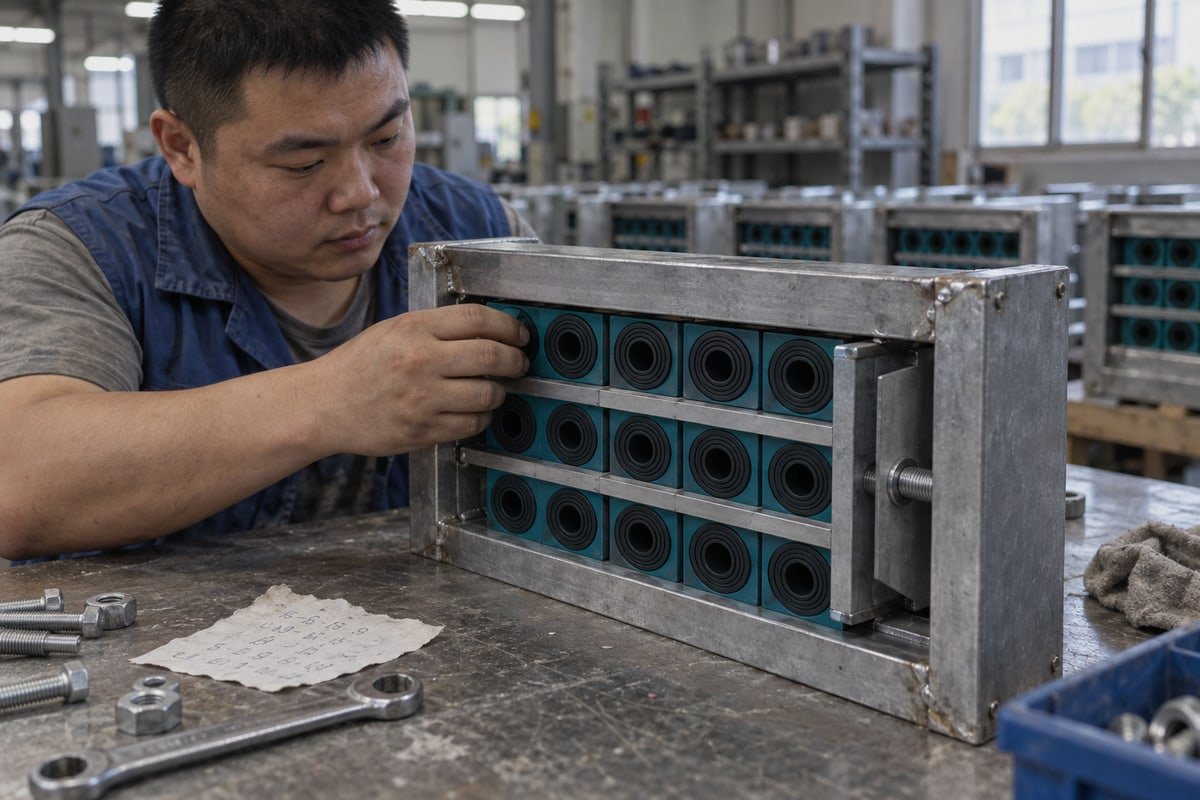
I will not quote a single savings percentage for warehousing, because it depends on how bloated your list is today. What I can give you is the method we use with buyers to estimate it honestly.
Four steps to size the saving yourself
- Count active frame SKUs, module SKUs, and hardware SKUs across all sites. Include the ones that have not moved in two years.
- Collapse the frame list into the tiered platform: one 120-frame family, an approved set of heights from 60 mm to 240 mm, one or two materials per tier.
- Replace size-specific modules with step-core cable sealing modules. Six sizes covering 3 mm to 99 mm usually absorb the whole cable diameter range on a BESS container or a modular data center row.
- Apply your finance team's carrying-cost rate to the SKU lines you removed, then add the unit price difference from a second source.
Where the money actually sits
| Cost driver | Before standardization | After SKU rationalization | Mechanism |
|---|---|---|---|
| Frame safety stock | One line per project-specific welded frame | A few bolted, off-the-shelf sizes | Stockable platform replaces custom orders |
| Spare modules | Many diameter-specific blocks | Shared step-core sizes across sites | One module covers a range |
| Filler and blind blocks | Many small fillers | Fewer, larger blocks trimmed on site | Multi-purpose filler stock |
| Ordering errors | Frequent, hard to catch | Rare, cross-reference driven | Fewer look-alike part numbers |
| Unit price | Single-source pricing | Qualified second source at 40–60% lower | Competition with matched certification |
| Site-to-site transfers | Not possible, different specs | Common parts library | Internal stock moves replace new POs |
The objection I hear from offshore and washdown sites
Some buyers tell me material specialization matters more than SKU count. On a corrosive platform they are right, and I say so. Standardization should never remove the 316L tier or the A-60 rated build. It should remove the third galvanized variant that exists only because a past project ordered it from a different catalog.
Two more levers are worth noting. Pre-configured module kits, built from your historical cable schedules, shift procurement from single parts to sets and cut picking time. And bolted or flange-mounted frames can be held as stock, while welded frames stay project-specific. Both moves reduce lead time as much as they reduce cost, and lead time is often the saving that matters most to an EPC schedule.
What validation samples and test documents should I request before qualifying a single MCT frame standard across all my projects?
We learned early that a sample without its test file just creates a second round of questions. Now we offer the document pack with every free validation sample.
Request a free validation sample of the frame, cable sealing modules, stayplates, and compression unit in your standard size, plus fire test reports for A-0/A-60, IP68 results, watertight and gas-tight pressure data from 0.01 to 0.4 MPa, halogen-free material declarations, ISO 9001 and IATF 16949 certificates, and CAD/STEP files.
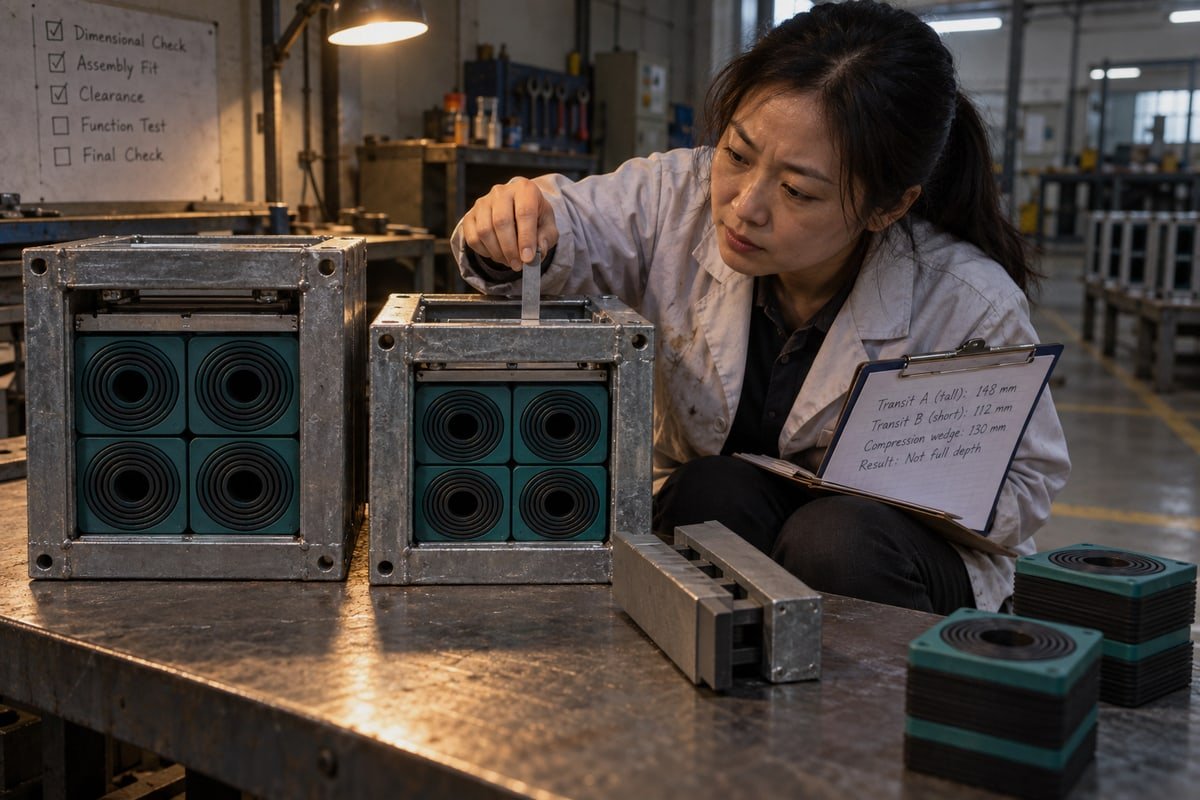
Qualifying one frame standard for every project is a bigger decision than approving one part. The evidence has to cover fit, performance, and the factory behind both. I split it into three groups.
Group one: the physical sample
Ask for a complete assembly, not loose parts. That means the frame in your approved height, a full set of cable sealing modules covering your real cable diameter range, the stayplates, and the compression wedge kits. Install it in an actual cutout, load it with production cables, and torque it to the supplier's stated value. If the supplier will not send a full set free of charge, treat that as a data point about how they view second sourcing.
Group two: the test document pack
| Document | What it proves | Who should review it |
|---|---|---|
| Fire test report, A-0 and A-60 fire rating | The assembly holds as a firestop penetration seal | Fire safety engineer |
| IP68 ingress report | Sealing under immersion | Enclosure design lead |
| Pressure test, 0.01–0.4 MPa | Watertight and gas-tight performance across the range | Mechanical engineer |
| Halogen-free EPDM declaration | Material meets low-smoke, low-toxicity requirements | Compliance officer |
| ISO 9001 and IATF 16949 certificates | Quality system maturity, automotive-grade process control | Supplier quality |
| BV factory approval | Third-party surveyed production, useful for marine scope | Class or project authority |
| CAD/STEP files and drawings | Dimensional compatibility with the 120-frame platform | Design engineer |
Group three: the exception list
No single standard covers everything, and a good qualification file says so. If a project needs ATEX certification 5 for a hazardous zone, or an unusual connector geometry, that requirement belongs on a controlled special-order list with its own document set. Ask the supplier which items on that list they can cover from in-house mold making and which they cannot. An honest "no" here is worth more than a vague "yes".
A final point about the long term. Frames built to a standard dimension are easier to extract, re-certify, and reuse during retrofits or decommissioning. That circularity benefit only exists if the dimensions stay fixed for years, which is one more reason to qualify the platform carefully now rather than patch it later.
Conclusion
Frame variety is a cost you chose by accident. Move that variety into modules, keep one frame platform, and let a qualified second source prove compatibility with samples.
Footnotes
1. Technical overview of multi cable transit systems and their modular sealing components. ↩︎
2. The IEC sets international standards for cable dimensions and electrical installation requirements. ↩︎
3. Authoritative technical description of 316L stainless steel properties and its use in marine environments. ↩︎
4. The IMO provides the international regulatory framework for fire-rated penetration seals in maritime applications. ↩︎
5. Official European Commission page for the ATEX directive regarding equipment in explosive atmospheres. ↩︎


 English
  Español de México
  Deutsch
  Français
  العربية
  Русский