
Multi cable transit certificates reach my desk weekly from EPC teams assuming any Ex mark covers their site. It does not. Our factory’s document checks reveal where gaps hide.
To verify multi cable transit certificates, match the exact certificate number and variant to the site’s hazardous area classification. Confirm the gas group covers the gases present, the temperature class stays below their ignition temperature, and the ambient range and X conditions fit the installation.
That is the short answer. The rest of this article shows you how to do each step in practice. I will decode a sample marking, list the documents worth asking for, explain what our own test reports can and cannot prove, and give you a validation sequence for qualifying a second-source module.
How do I check that an MCT certificate's temperature class actually covers my process conditions?
One lesson from our export documentation work: buyers often read T6 as a quality grade. It is a surface temperature limit, and the wrong one fails an audit.
Check the temperature class by comparing the certificate's stated T-rating, such as T6 at 85°C maximum surface temperature, against the lowest auto-ignition temperature of any gas on site. Then confirm the certified ambient range covers your real minimum and maximum, because ambient limits can change the usable T-class.
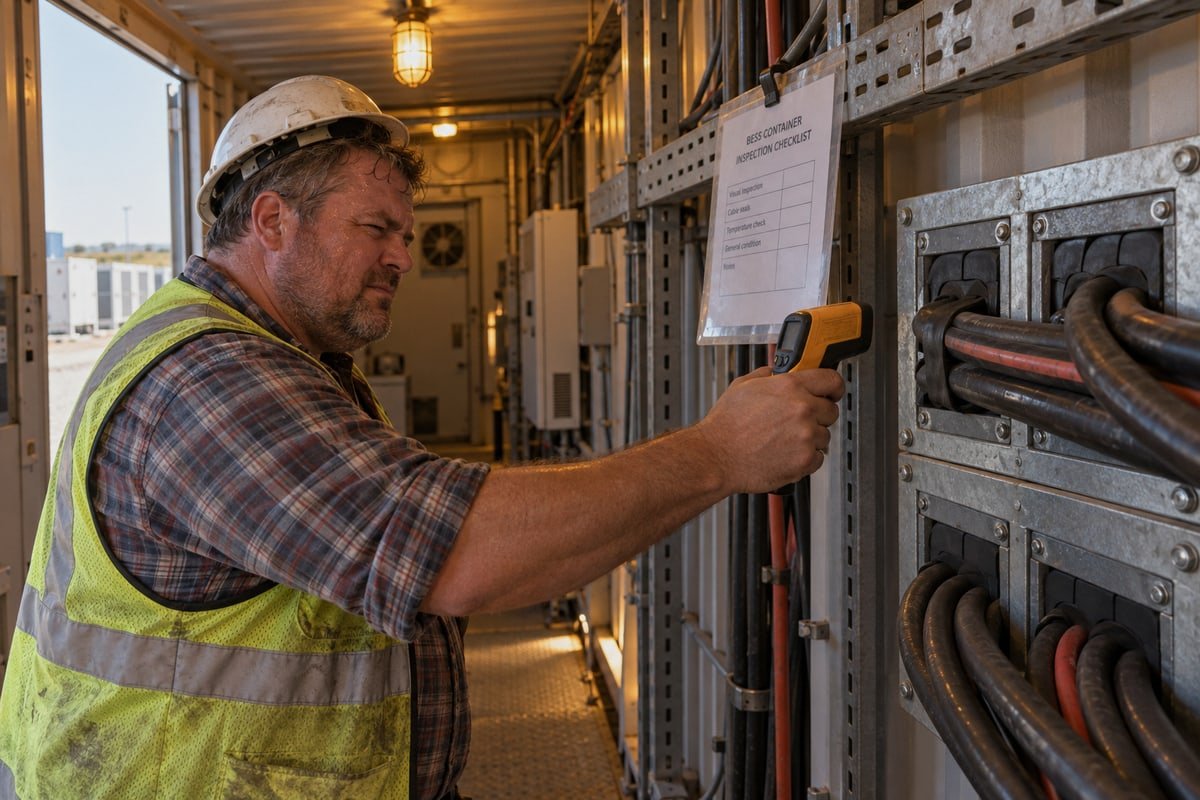
The temperature class tells you one thing only. It tells you the hottest surface the certified assembly may reach in normal operation. It does not tell you how hot the room can be, and it does not tell you anything about the gas group. Those are separate checks. I treat them separately when we prepare a document pack for a hazardous-area project.
What the T-class numbers actually mean
The scale runs from T1 to T6. T1 is the hottest allowed surface. T6 is the coolest. A device marked T6 also satisfies T1 through T5, because a cooler surface is always safer. The table below is the reference I keep next to my desk.
| Temperature class | Maximum surface temperature 1 | Example gas with auto-ignition temperature in that range |
|---|---|---|
| T1 | 450°C | Hydrogen (about 560°C), methane, propane |
| T2 | 300°C | Ethylene (about 425°C), butane |
| T3 | 200°C | Petrol and many hydrocarbon vapours |
| T4 | 135°C | Acetaldehyde, some ethers |
| T5 | 100°C | Rarely required on its own |
| T6 | 85°C | Carbon disulfide (about 90°C to 100°C) |
The rule is simple. Find the gas on your site with the lowest auto-ignition temperature. The maximum surface temperature on the certificate must sit below it. Most sites also apply a safety margin on top of that. Your hazardous area classification report should state which margin applies.
Why ambient temperature can quietly downgrade the T-class
Here is where many verification efforts break. Certificates state the T-class for a specific ambient range, often written as Ta -40°C to +60°C or similar. Some certificates give two lines. They might state T6 for ambients up to 40°C and T5 for ambients up to 60°C. If your BESS container or switchgear room runs at 55°C in summer, the T6 line no longer applies to you. You must read the second line. Ambient range controls where the product can live. Temperature class controls how hot its surface may get. Confusing the two is the most common error we see in supplier qualification forms.
Cable density adds heat you must account for
A bulkhead penetration seal packed with high-wattage power cables gets warmer than the same seal filled with signal cables. The elastomer modules insulate the conductors and trap heat. Before approving a dense power transit 2 in Zone 1 or Zone 2, I recommend a cable density thermal analysis. Compare the expected conductor temperature at full load against the certified T-class. Our sealing module sizing tables help here, because they show the fill ratio for each module size and cable diameter range. A transit that is over-packed can drift past its certified surface limit even when the certificate looks perfect on paper.
Which test documents should I request to confirm gas group compatibility before I approve a supplier?
A sourcing engineer in the Netherlands once asked us for "the ATEX paper." We sent four documents instead, because gas group compatibility never lives in a single page.
Request the full type approval certificate with all supplements, the declaration of conformity, the manufacturer's test report listing the gas group tested, and the schedule of limitations. Confirm the certificate's Equipment section states IIA, IIB, or IIC explicitly and that your site gas group sits within that range.
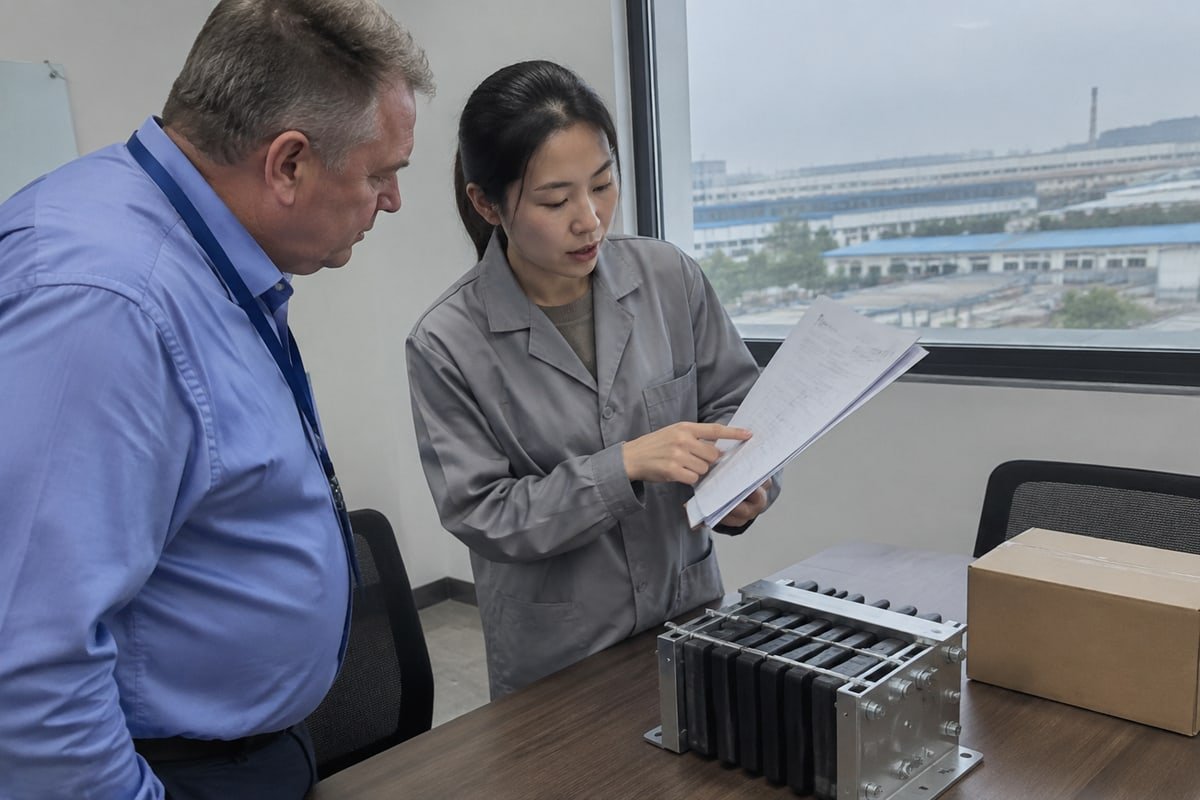
Gas group is about how easily a gas ignites and how violently it burns. It is not about temperature. A product can be rated for gas group IIC and still be the wrong choice if its T-class is too warm for your process. Both checks stand on their own. I raise this because several buyers have told me that IIC "covers everything." It covers every gas group. It does not cover every temperature class.
The gas group hierarchy
| Gas group | Representative gases | Relative ignition risk | Covered by IIC equipment? |
|---|---|---|---|
| IIA | Propane, methane, butane, petrol vapour | Lowest within Group II | Yes |
| IIB | Ethylene, town gas, some ethers | Medium | Yes |
| IIC | Hydrogen, acetylene, carbon disulfide | Highest | Yes, by definition |
IIC is the most demanding group. Equipment certified for IIC is backward compatible with IIB and IIA sites. Equipment certified only for IIB is not acceptable where hydrogen may be present. This matters a great deal for battery energy storage builders 3 in our customer base. Thermal runaway can release hydrogen, so many BESS specifications now call for IIC-rated penetrations even where the base classification is milder.
The documents that actually prove it
Here is the checklist I send back when a buyer asks for evidence.
| Document | What it proves | What to look for |
|---|---|---|
| Type approval certificate, ATEX or IECEx | The certified scope | Certificate number, revision, Equipment section, gas group, T-class, EPL such as Gb or Gc |
| All certificate supplements | Later variants added or removed | Whether your exact module and frame model appear |
| Declaration of conformity 4 | The manufacturer's legal statement | Same standards and certificate number as the certificate itself |
| Schedule of limitations or specific conditions of use | Installation restrictions | Anything triggered by an X suffix on the certificate number |
| Test report from the notified body or ExCB | The physical evidence | Gas group tested, ambient range tested, cable fill used during testing |
ATEX certification and IECEx standards both structure the certificate the same way. The Equipment section is where the marking is defined. Cross-reference the marking on the frame nameplate, for example Ex eb IIC T6 Gb, directly against that section. If the nameplate says IIC and the certificate says IIB, stop. Someone has fitted the wrong plate or the wrong module set.
Two checks that the certificate will not do for you
First, validate the module part numbers. The elastomer sealing modules 5 in the frame must be the exact brands and part numbers listed in the certification documentation. A frame with an Ex mark and a bag of unlisted modules is not a certified assembly. Second, consider chemical compatibility. Explosion protection testing focuses on ignition. It does not test long-term material degradation from the gases or solvents present. Our halogen-free EPDM modules have good resistance to many process atmospheres, but I always ask buyers to share their chemical exposure list so we can advise honestly rather than assume.
Can I cross-reference DEWIN's fire and IP68 ratings against my existing frame's certification without retesting?
Every second-source decision weighs retest cost against document reuse. Our fire and IP68 reports help with that trade-off, but only for the parameters they actually cover.
Partially. You can compare DEWIN's A-0/A-60 fire integrity rating, IP68 ingress protection, and 0.01–0.4 MPa gas-tight test reports against your frame's existing reports parameter by parameter. You cannot transfer explosion protection approval this way, because Ex certification applies to the specific frame-and-module assembly listed on the certificate.
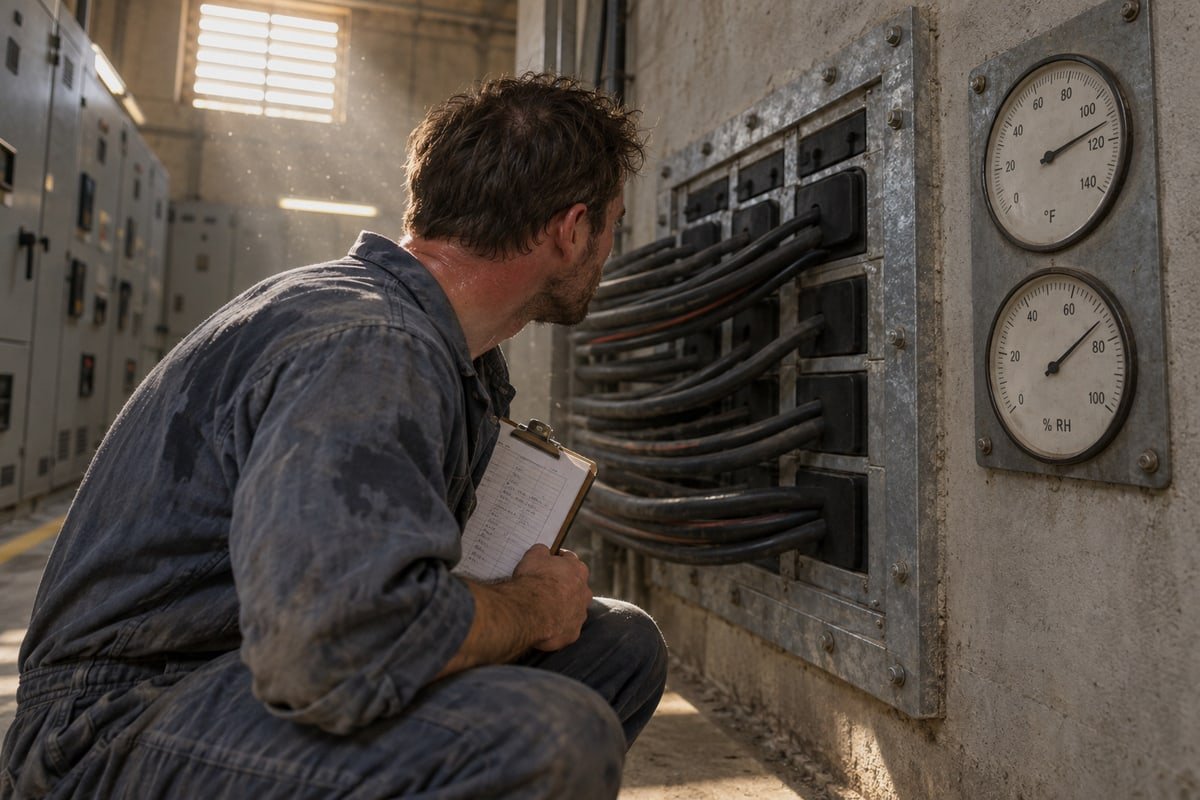
I want to be direct here, because this is the question where honest suppliers and marketing-led suppliers part ways. Fire rating, ingress protection rating 6, and explosion protection are three different test regimes. A vendor document set often prints all three on one page. That is convenient. It also tempts buyers to treat them as one approval. They are not.
What each rating proves and what it does not
| Rating on our documents | Test regime | What it proves | Transferable to another frame by comparison? |
|---|---|---|---|
| Fire integrity rating A-0 / A-60 | Fire division test, 60-minute exposure | The penetration holds fire and, for A-60, limits heat rise on the cold side | Comparable if frame steel grade, thickness, and module fill match the tested configuration |
| Ingress protection rating IP68 | Dust and continuous immersion | Watertight seal under defined immersion depth and duration | Comparable if compression and module sizing match; our dimensional compatibility with 120-frame standards makes this practical |
| Gas-tight sealing 0.01–0.4 MPa | Pressure-differential leak test | The seal holds against the stated pressure range | Comparable if the frame geometry and stay plate arrangement match the tested setup |
| Explosion protection levels, Ex marking | ATEX / IECEx type approval | Ignition safety of the complete assembly in the stated gas group, T-class, and EPL | No. Only the assembly named on the certificate carries the approval |
How we support the comparison
Our TSC square modules and TSR round assemblies are dimensionally compatible with common 120-frame standards. They drop into existing frame cutouts. Our cross-reference tables map the incumbent model number to the DEWIN model number. We provide CAD and STEP files so your engineer can overlay the geometry before a sample arrives. For fire and IP68, that dimensional match plus our test documents give you a solid engineering basis to argue that the sealing performance is equivalent. Our factory runs ISO 9001 and IATF 16949 systems and is BV-approved, so the reports come with a traceable quality trail.
Where the line sits for Ex zones
For explosion protection, dimensional equivalence is a starting point, not an approval. If your project sits in Zone 1 or Zone 2, the module set you install must be listed on a certificate that names your frame type, or the frame-and-module combination must be certified together. When a buyer sends us an Ex requirement, we ask for the zone, gas group, and T-class up front. Then we tell them plainly which document set exists for the requested variant and which does not. That saves both sides from an audit finding six months later. A second source at 40–60% lower cost is only a saving if the certificate survives inspection.
What validation steps let me trust a second-source MCT module matches my site's Ex zone requirements?
During incoming inspection on our Shaanxi line, each EPDM batch gets a hardness and dimension check before molding. Site Ex validation deserves the same discipline, step by step.
Validate a second-source MCT module by confirming its part number appears on a certificate covering your zone, then matching gas group, temperature class, and ambient range to your site. Follow with a free validation sample fit test in your frame, a cable density thermal review, and post-installation leak testing.

Supplier qualification for hazardous areas works best as a fixed sequence. Skipping a step to save a week usually costs a month later. Here is the sequence I recommend to purchasing engineers who are evaluating us or any other second source for multi cable transit certificates.
The seven-step validation sequence
- Pin down the site requirement. Take the zone, gas group, T-class, and ambient extremes from the hazardous area classification drawing. Write them on one line. Everything else gets checked against that line.
- Request the exact certificate and revision. Ask for the type approval certificate number, the current revision, and every supplement. Confirm the module part number and the frame model both appear. A catalog headline is not evidence.
- Read the Equipment section against your line. Gas group must equal or exceed yours. T-class must be cooler than your requirement. Ambient range must bracket your site extremes.
- Read the X conditions. If the certificate number ends in X, the specific conditions of use may restrict cable types, cable diameters, fill ratios, or sealing methods. Check each one against your cable schedule.
- Run a physical fit test. We ship free validation samples for this purpose. Fit the module in your existing frame, torque the compression unit to specification, and check that the stay plates seat correctly.
- Do the thermal review. Compare full-load conductor temperature in the packed transit against the certified T-class. Adjust sealing module sizing or fill ratio if the margin is thin.
- Verify after installation. Ultrasonic leak detection confirms gas-tight integrity against the pressure differential stated in the laboratory test report. Record the result with the certificate number and module batch.
Keep the evidence where auditors can find it
Certificates get superseded. Supplements get added. A field team working from a printed PDF from three years ago is a real risk. Many of our larger customers now link a QR code or RFID tag on the frame nameplate to their asset management system. Scanning the tag pulls up the current certificate revision, the installed module part numbers, and the last leak test. We support this by supplying module batch traceability with each shipment.
When to escalate instead of approve
If the gas group is IIC and the certificate says IIB, stop. If the T-class margin against your worst gas is smaller than your site standard demands, stop. If an X condition mentions a cable type you cannot confirm, stop. In each case, escalate to the manufacturer or your Ex authority before installation. Our English-speaking technical team answers these queries directly from the factory, with drawings attached, because a clear "not covered" answer is worth more to a long-term partner than a vague "should be fine."
Conclusion
Multi cable transit certificates protect people only when read completely. Match certificate number, gas group, T-class, ambient range, and X conditions to your site, then request our test documents.
Footnotes
1. Technical reference for auto-ignition points and their relation to equipment surface temperature limits. ↩︎
2. Official site of the International Electrotechnical Commission, which develops standards for explosive atmosphere equipment. ↩︎
3. International Energy Agency report on the growth and safety requirements of grid-scale battery storage. ↩︎
4. Official EU guidance on the declaration of conformity required for industrial products. ↩︎
5. International standard for the storage and maintenance of rubber and elastomer components. ↩︎
6. Standardized classification system for the sealing effectiveness of electrical enclosures against water and dust. ↩︎



 English
  Español de México
  Deutsch
  Français
  العربية
  Русский