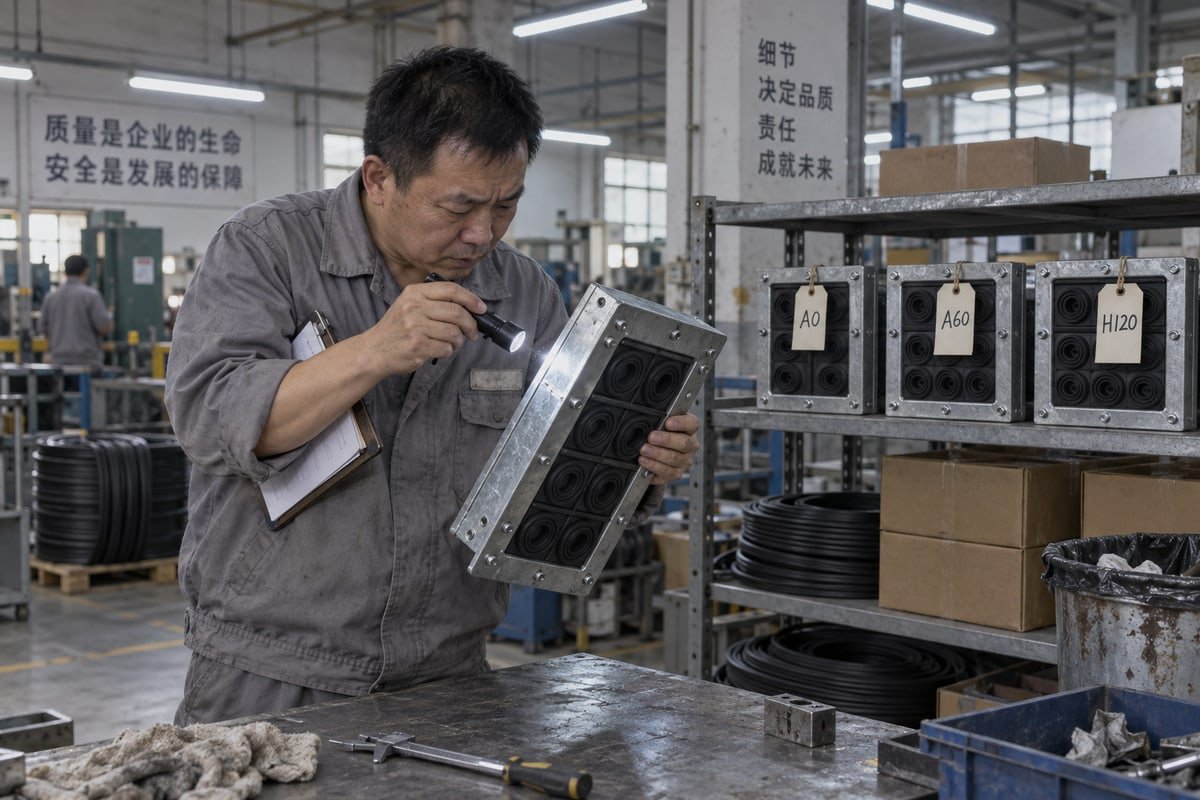
Fire ratings for multi cable transits confuse many buyers who send our factory frame drawings. One wrong letter on a spec, and the penetration fails inspection. Test evidence prevents that.
A0, A60, and H120 are fire-test classes for multi cable transits. A means a cellulosic fire test; H means a hydrocarbon fire test. The number is the insulation time in minutes. A0 gives integrity only, A60 gives 60 minutes of insulation, and H120 gives 120 minutes under hydrocarbon fire.
These labels are not product names. They are a specification language for safety-critical penetrations. Below, I explain what each class demands, how to verify it, and how it applies to your project.
How Do I Choose Between A-0, A-60, and H-120 Fire Ratings for My Project's Cable Transit Application?
Every week I weigh the same trade-off with our engineers: over-specify H-120 and pay for insulation nobody needs, or under-specify and fail the class surveyor.
Choose the rating from the fire division you are penetrating, not from the product. Match A-0 to A-0 divisions where only integrity is required, A-60 to divisions that must limit heat transfer for 60 minutes, and H-120 to hydrocarbon fire zones on offshore and process plants.

The fastest way to compare the three classes is side by side. The table below reflects how our test files and the marine fire test standards define each rating.
| Rating | Fire curve used in the test | Integrity requirement | Insulation requirement | Where it is normally specified |
|---|---|---|---|---|
| A-0 | Cellulosic fire curve, about 945°C at 60 minutes | 60 minutes, no flame or hot gas passage | None (0 minutes) | Steel divisions where heat transfer to the far side is not critical |
| A-60 | Cellulosic fire curve, about 945°C at 60 minutes | 60 minutes | 60 minutes, unexposed-side average rise limited to about 140°C | Machinery spaces, control rooms, accommodation boundaries, battery compartments |
| H-120 | Hydrocarbon fire curve, about 1100°C within minutes | 120 minutes | 120 minutes | Offshore oil and gas platforms, FPSOs, process areas with pressurised fuel |
A-class fires versus H-class fires
The letter tells you which fire the transit survived. A-class ratings use the cellulosic fire curve. This curve simulates a fire fed by wood, paper, and furnishings. It climbs steadily and reaches roughly 945°C after 60 minutes. H-class ratings use the hydrocarbon fire curve. This curve simulates burning oil or gas. It hits about 1100°C within the first few minutes and stays there. So an H-120 transit faces a hotter fire, a faster ramp, and twice the duration of an A-60 transit. That is why H-class ratings are the language of offshore oil and gas platforms, not ordinary ship accommodation or a data hall.
Integrity and insulation run on separate clocks
The number tells you only the insulation time. Integrity and insulation are tested as two separate criteria. Integrity means no flames and no hot gases 1 pass through cracks or gaps. Insulation means the unexposed face 2 stays below the temperature limit, normally a 140°C average rise. Every A-class transit, including A-0, must hold integrity for the full 60 minutes. A-0 simply has no insulation requirement. That is the point buyers most often miss. A-0 is not "no fire protection". It is a sealed, flame-tight penetration that may get hot on the far side.
Bulkhead and deck penetrations are not interchangeable
The same cable sealing system can be certified for A-60 in a bulkhead but need extra insulation to reach A-60 in a deck. Bulkheads are vertical divisions. Decks are horizontal. Heat behaves differently against each. In our own A-60 test arrangements, the insulation package around the frame is part of the classification. Change the package, and the rating changes with it. I say this plainly to every buyer: our TSC and TSR modules are tested and documented for A-0 and A-60. We do not stamp H-120 on a datasheet unless that exact assembly has been through a hydrocarbon fire test. If your division is H-class, ask for that specific certificate.
What Test Standards and Certification Documents Should I Request to Verify an MCT's Fire Rating Claims?
A sourcing engineer in Rotterdam once replied to our quotation with one line: send the certificate, not the brochure. That email changed how we prepare document packs.
Request the fire test report under the IMO FTP Code, the type approval certificate from a classification society such as DNV, ABS, Lloyd's Register or Bureau Veritas, the approved installation drawings showing bulkhead or deck orientation, insulation package and cable fill, and the factory quality certificates.

A headline rating on a brochure is a marketing claim. A test report is evidence. The gap between the two is where most sourcing mistakes happen. Here is the document set I recommend you ask for, in the order that makes verification fastest.
- The fire test report itself, referencing the IMO FTP Code 3 test method for penetrations.
- The type approval certification issued by a recognised classification society or a MED body.
- The approved installation drawing that lists the tested frame, modules, compression unit, insulation, and orientation.
- The cable fill and cable type used during the test.
- The factory quality system certificates.
- Any additional tightness reports, such as watertight, gas-tight or IP68 test records.
| Document | What to check | Red flag |
|---|---|---|
| Fire test report | Test standard, fire curve, duration, integrity and insulation results, tested assembly | Report references a different product size or frame than the one quoted |
| Type approval certificate | Issuing body, validity date, scope of ratings, bulkhead and/or deck | Certificate lists only bulkhead when your penetration is a deck |
| Installation drawing | Insulation thickness and side, stay plates, compression torque, spare space | No drawing, or the drawing is a generic sales sketch |
| Cable fill data | Fill percentage and jacket material used in the test | Test at 0% fill quoted for a fully loaded frame |
| Quality certificates | ISO 9001 4 and IATF 16949 scope, factory audit status | Trading company certificates with no production site |
Why the standards matter for your approval
SOLAS requirements set out which divisions on a vessel must be A-class or H-class. The IMO FTP Code defines how a penetration sealing system 5 is fire tested to prove it meets those divisions. Type approval certification from DNV, ABS, Lloyd's Register or Bureau Veritas 6 confirms that a specific tested assembly matches the standard. When I send a document pack, I include our A-0 and A-60 fire test documents, our IP68 ingress protection report, and the watertight and gas-tight sealing records covering 0.01 to 0.4 MPa. Our factory operates under ISO 9001 and IATF 16949 systems and is BV-approved as a production site. Those are separate facts, and I keep them separate in the pack, because a skeptical engineer will check each one.
Cable fill changes the fire behaviour
A transit tested at 0% or 40% cable fill can behave differently at 100% fill. Cable jackets add thermal mass and combustible material. Melting insulation can open leak paths. So ask what fill and what jacket type were in the test furnace. If the report only covers an empty frame, treat the rating as incomplete for a fully loaded penetration.
Emerging jet fire ratings
Near high-pressure gas lines, some offshore projects now ask for a J-rating in addition to H-class. A jet fire test adds the erosive force of a pressurised flame. This is outside the scope of our A-class tested range, and I say so when the question comes up. Honesty about scope is part of being a qualified second source.
Can I Get a Drop-In Replacement That Matches My Existing Frame's Fire Rating Without Redesigning the Penetration?
On our Shaanxi line, every TSC module batch is gauge-checked against the 120-frame cutout before shipping. Fit is the easy part; the rating is the hard part.
Yes, for A-0 and A-60 divisions. A drop-in module must match the frame's 120-standard dimensions, carry its own fire test certificate for that orientation and fill, and use compatible compression parts. Cross-reference tables and validation samples confirm both fit and rating before you commit.
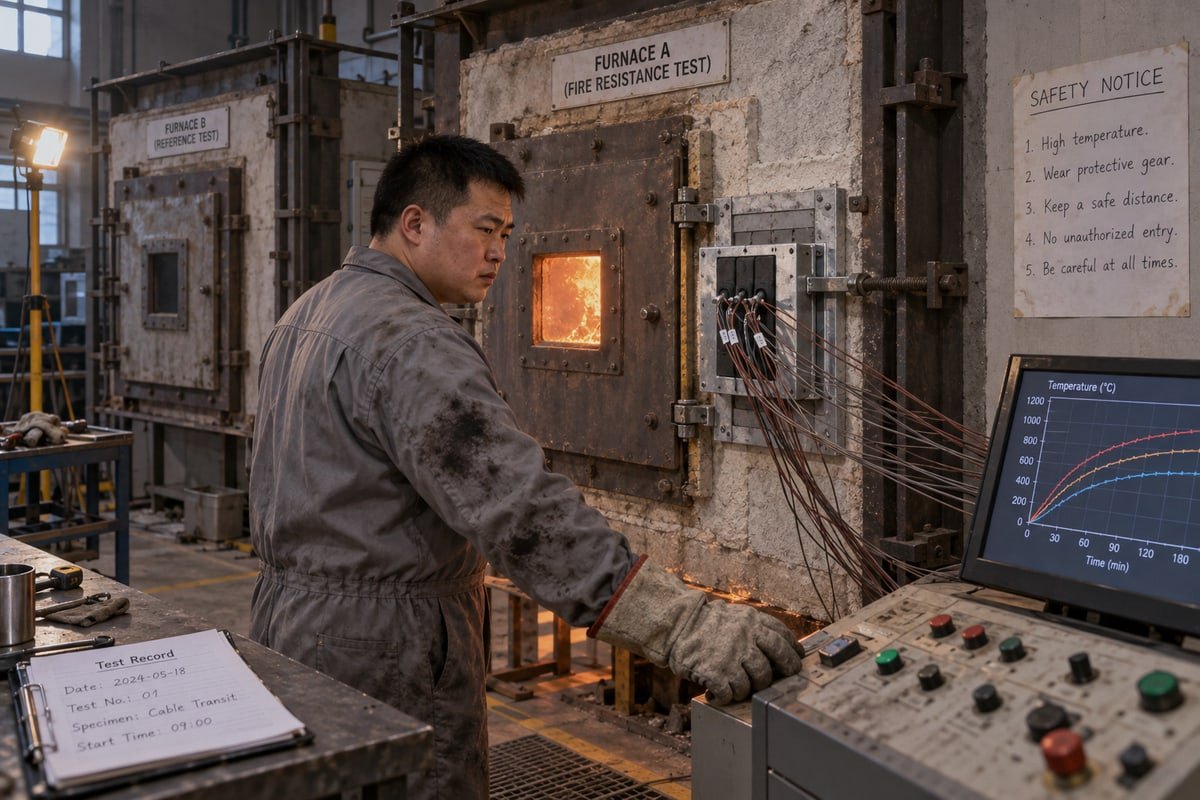
Buyers often ask me whether a second-source module "inherits" the rating of the original frame. It does not. The fire rating belongs to the tested assembly, which means frame, modules, stay plates, compression unit, and insulation together. So a drop-in replacement has to prove two things at once. It must fit the existing cutout, and it must bring its own test evidence for the same class. Here is the process we walk through with an integrator switching to DEWIN modules as a qualified second source.
The five-step qualification process we use
- You send the existing frame drawing and a list of current module part numbers.
- We return a model cross-reference table mapping each existing model to the DEWIN TSC or TSR equivalent, with CAD and STEP files.
- We ship free validation samples so your team can check the fit in the actual frame cutout and run compression to the specified torque.
- We supply the fire test documents for the A-0 or A-60 arrangement that matches your bulkhead or deck orientation.
- Your engineering team signs off the penetration detail, and we move into private-label or standard production.
| Item | What stays the same | What changes | How we verify it |
|---|---|---|---|
| Frame cutout | Existing welded 120-standard frame | Nothing | Sample fit check on your frame |
| Sealing modules | Module outer dimensions | Halogen-free EPDM step-core rubber from our own molds | Dimensional report and sample |
| Compression unit and stay plates | Position and function | Optional switch to DEWIN parts | Included in cross-reference table |
| Fire rating | A-0 or A-60 division class | Certificate holder | DEWIN test documents on request |
| Cost | Delivery schedule | 40–60% lower component cost | Quotation against your current price |
Why the rubber material matters for long-term ratings
A fire rating is only as durable as the sealing material. Some older halogenated compounds can lose their properties over 20 or more years. If the rubber hardens or the intumescent behaviour fades, the seal may not expand properly in a real fire. Our modules use halogen-free EPDM with a step-core design. The step-core lets one module size adapt to a range of cable diameters, which reduces the number of part numbers you stock. It also means fewer half-empty modules and fewer spare-space gaps that can create chimney effects when LSZH or XLPE jackets soften. I do not claim a specific service life in years. I do supply the material data sheet and the fire test file, and I let your engineers judge.
When a drop-in is not the right answer
If your existing penetration is certified H-120, I will tell you that our tested range covers A-0 and A-60 and does not extend to hydrocarbon fire testing. Redesigning a penetration to fit a product is the wrong direction. The rating requirement comes first. Then we check whether our module fits the requirement, not the other way round.
Why Does Fire Rating Matter for My BESS, Data Center, or Switchgear Project's Compliance and Safety Requirements?
The lesson we learned exporting to Europe: a BESS container is a steel box full of energy, and its cable penetrations behave like bulkhead and deck penetrations on a ship.
Fire rating matters because cable penetrations are the weak point of any fire division. A certified A-0 or A-60 transit stops flame, smoke and heat from spreading between BESS battery compartments, data hall rooms and switchgear sections, which insurers, fire codes and end customers increasingly require in writing.
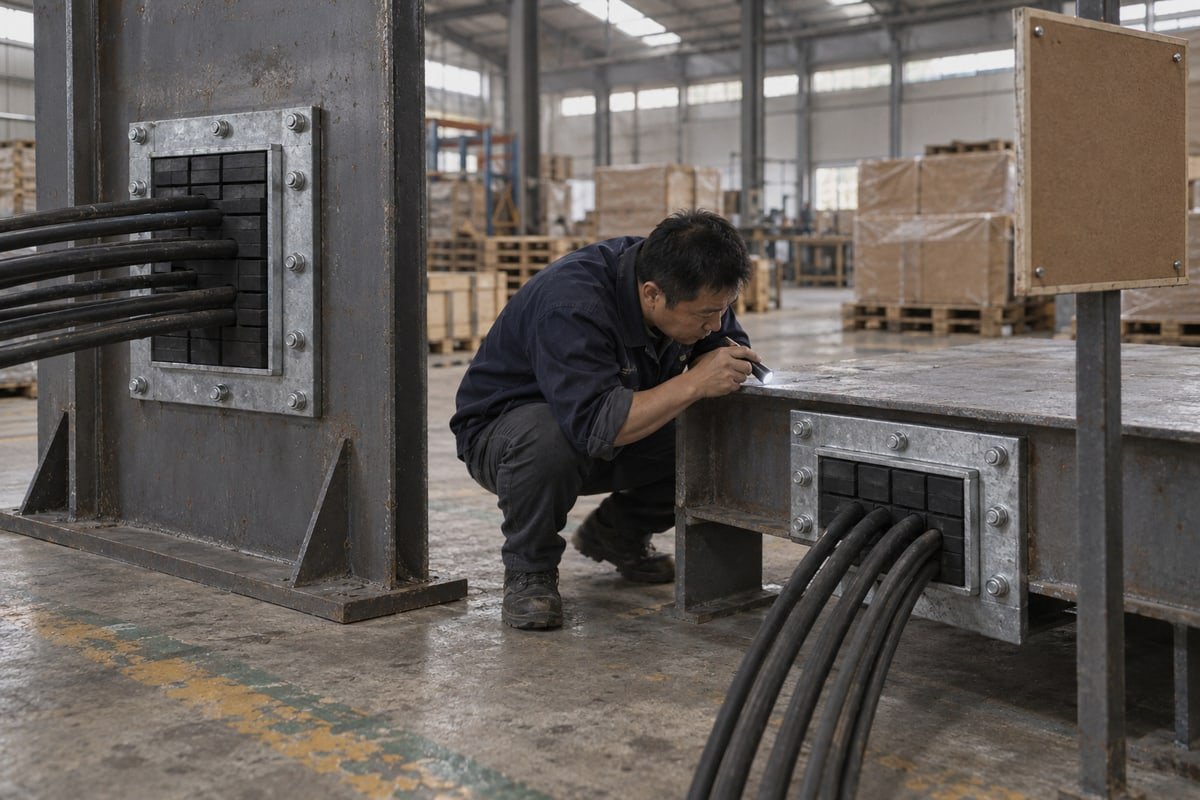
Passive fire protection works only if every opening in a fire division is closed to the same standard as the wall itself. A steel wall rated for one hour is worthless if a hundred cables pass through an unsealed hole beside it. Multi cable transits exist to close that hole. In the energy and infrastructure projects we supply, the fire scenarios differ, but the logic of fire ratings for multi cable transits is identical to the marine case.
| Application | Main fire scenario | Rating we usually see in the spec | Companion requirements on the same transit |
|---|---|---|---|
| BESS container | Thermal runaway in one battery rack spreading to adjacent racks or the control cabinet | A-60 between battery and electrical compartments; A-0 where only smoke and flame separation is needed | IP68, gas-tight sealing for off-gas containment, EMC bonding |
| Modular data center | Electrical fire in a power room reaching the data hall | A-60 or A-0 depending on the fire strategy | IP68 against water ingress, room pressurisation tightness |
| Switchgear and control panels | Arc fault inside the panel | A-0 or A-60 at panel-to-room boundaries | Dust and moisture sealing, vibration resistance |
| Offshore platform (reference case) | Hydrocarbon pool or jet fire | H-120, sometimes J-rated | Blast resistance, gas-tight to 0.4 MPa |
The chimney effect inside a container
In a BESS thermal runaway event, the first thing that moves through a poorly sealed penetration is hot gas, not flame. Melting cable jackets create a path along the cable. That path acts like a chimney. A properly compressed EPDM module closes around each cable and blocks that path. That is why the integrity criterion in the fire test matters as much for a battery container as it does for an engine room. Insulation then keeps the far side cool enough that the neighbouring compartment does not ignite from heat alone. When our engineers review a BESS layout, we ask which side the battery is on, because the insulation package sits on the fire side and the drawing must show it.
Compliance is a document trail, not a label
Land-based codes do not always reference SOLAS, but end customers, insurers and EPC contractors often borrow the A-0 and A-60 language because it is precise and internationally understood. A type approval certificate from a classification society gives a fire engineer something concrete to file. It also survives a change of supplier. If your original transit vendor is qualified with an A-60 certificate and you add DEWIN as a second source, your compliance file needs our A-60 test documents alongside theirs. That is exactly why we keep the test documents ready and hand over export documentation with each shipment. An unsupported fire claim is not a cost saving. It is a liability waiting for an incident report.
Conclusion
Guessing a fire rating risks a failed inspection. Read A, H and the number as test evidence, ask for the certificate, and we will send drawings and samples.
Footnotes
1. General overview of fire testing criteria, including integrity against flames and hot gases. ↩︎
2. SOLAS defines the insulation and integrity requirements for fire-rated divisions in maritime safety. ↩︎
3. Authoritative IMO source defining the fire test procedure standard referenced for certification. ↩︎
4. Official ISO page for the international standard for quality management systems in manufacturing. ↩︎
5. Official IMO resource for fire protection standards and the FTP Code for penetration systems. ↩︎
6. Authoritative classification society providing type approval and certification for marine and offshore equipment. ↩︎


 English
  Español de México
  Deutsch
  Français
  العربية
  Русский