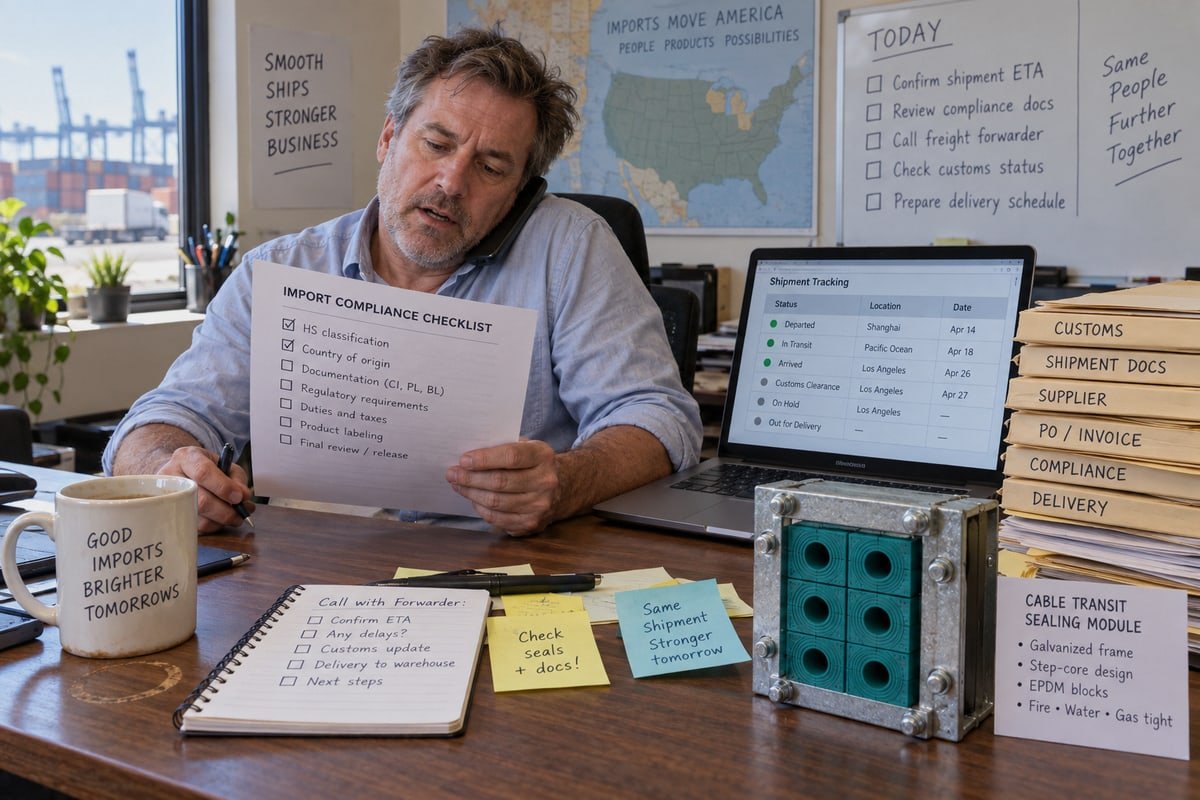
Our Shaanxi export desk ships TSC modules weekly, yet buyers ask who files ISF 10+2 for Multi Cable Transit 1 imports from China. Late filings cost money; clarity prevents that.
The ISF Importer—usually the U.S. Importer of Record buying the Multi Cable Transit modules—is legally responsible for filing ISF 10+2 for imports from China. A Customs Broker or Freight Forwarder transmits the 10 data elements, the ocean carrier supplies the 2, but liability never leaves the importer.
That short answer hides a few traps. The party that presses submit is rarely the party CBP will fine. The filing type also changes if the cargo only transits the U.S. Below, I walk through the data you need from us, the timing, the penalties, and the broker question.
What information do I need from my Chinese MCT supplier to complete an ISF 10+2 filing?
A purchasing engineer in Germany once asked us for an ISF pack before his first U.S. project. That request shaped the checklist our export team now sends with TSC orders.
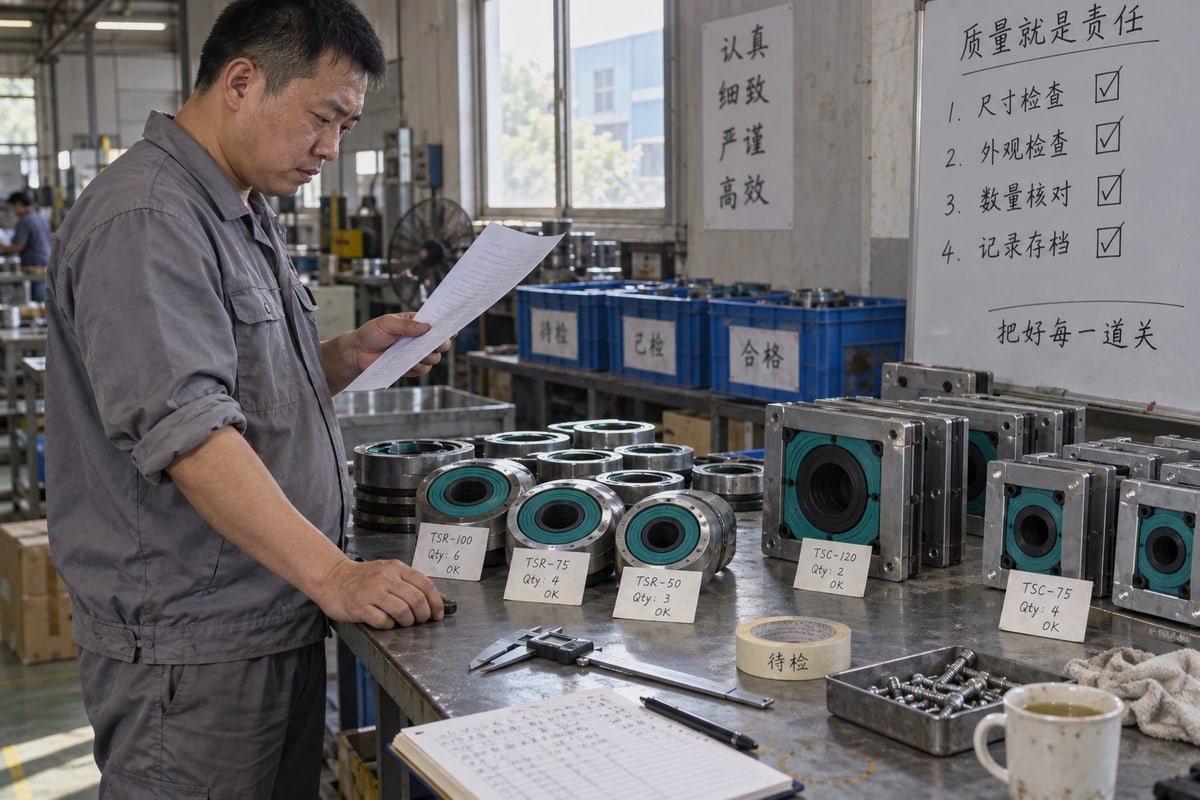
From your Chinese MCT supplier you need the manufacturer name and address, seller name and address, country of origin, HTS Code Classification for each frame and module line, container stuffing location, and consolidator details. Your own records supply buyer, ship-to party, Importer of Record number, and consignee number.

The ISF is built from ten importer data elements. Roughly half come from the factory side. The other half come from your own company records. If you separate the two lists early, the filing goes quickly. If you wait for the Ocean Bill of Lading to arrive before asking, you will be racing the clock.
The 10 importer data elements, mapped to who holds them
| # | Data element | Usually provided by | Note for MCT shipments |
|---|---|---|---|
| 1 | Manufacturer (or supplier) name and address | Supplier | Use the plant that actually produced the lot. We name the Shaanxi, Shandong, or Hunan site, not a sales office. |
| 2 | Seller name and address | Supplier | Must match the commercial invoice. |
| 3 | Buyer name and address | Importer | Matches the purchase order. |
| 4 | Ship-to party | Importer | For offshore wind or naval work, use the staging yard or shipyard, not head office. |
| 5 | Container stuffing location | Supplier / Freight Forwarder | Factory dock or the CFS in the port. |
| 6 | Consolidator (stuffer) name and address | Supplier / Freight Forwarder | The party that physically loaded the box. |
| 7 | Importer of Record number 2 | Importer | EIN or CBP-assigned number. |
| 8 | Consignee number | Importer | Often identical to the IOR number. |
| 9 | Country of origin | Supplier | China, stated per line item. |
| 10 | HTS number | Supplier proposes, importer's broker confirms | Six digits are accepted at ISF stage; entry uses ten. |
Why HTS Code Classification is the weak point for MCT cargo
A Multi Cable Transit order is not one product. A typical TSC order from us includes galvanized or stainless frames, step-core EPDM sealing modules, compression units, stay plates, and spare blocks. Each line can carry a different tariff heading. The common filing error is to assign one HTS number to the whole set. CBP compares the ISF against the entry. If the entry later breaks the shipment into several headings, the mismatch can trigger a manual review. So we list HTS Code Classification 3 per line on the packing list, and we ask the buyer's broker to confirm before we release the invoice.
The document pack to request from the factory
Ask for these before the container is stuffed:
- Commercial invoice with seller, manufacturer, and origin per line.
- Packing list with HTS proposals per line item.
- Booking confirmation and, later, the Ocean Bill of Lading number.
- Written confirmation of the stuffing location and consolidator.
- A short cross-reference note if the modules replace another brand, so your broker's product description stays consistent with your existing entries.
One more point. If your frames are only transiting the U.S. to a third country, the filing becomes ISF-5. It needs five elements, not ten, and the list above shrinks accordingly.
When do I need to submit my ISF 10+2 filing before my cable transit shipment departs China?
Last spring our Shandong plant finished a rush batch of TSR round seals two days before cutoff. The forwarder held the container because the ISF was not yet on file.
You must submit ISF 10+2 no later than 24 hours before your cable transit cargo is loaded onto the vessel in China, not 24 hours before the Vessel Departure Date. In practice, file once you hold the booking confirmation and Ocean Bill of Lading number, ideally 48–72 hours before loading.
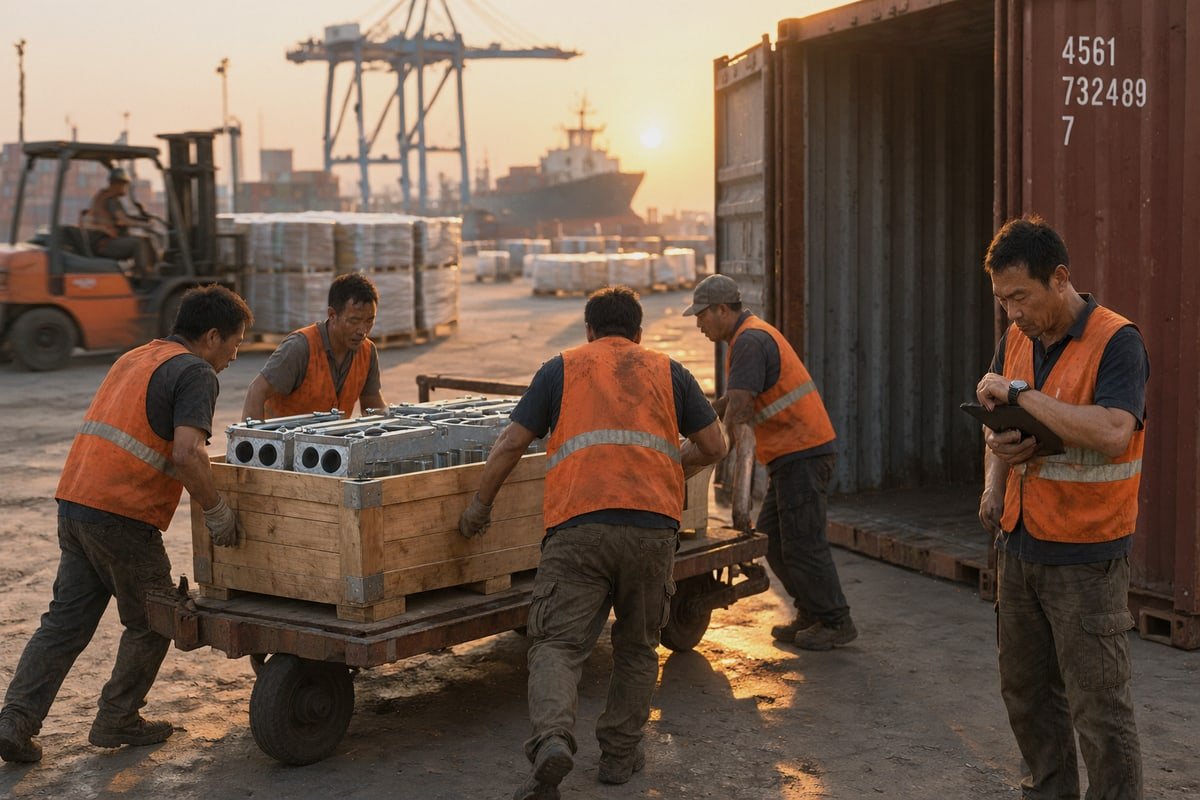
The deadline sounds simple. It is not, because two dates get confused all the time. The clock runs against loading, which happens at the container yard before the ship even berths. Departure comes later. If you count backward from the sailing date, you can miss the real deadline by a day or more.
A realistic timeline from our factory floor to the vessel
| Milestone | Relative timing | Who acts | What we send you |
|---|---|---|---|
| Booking confirmed | Earliest point, roughly a week before loading | Freight Forwarder | Booking number and vessel name |
| Container stuffed | Several days before CY cutoff | Factory / consolidator | Stuffing location, container and seal numbers |
| ISF transmitted | Target 48–72 hours before loading | Customs Broker 4 via Automated Broker Interface | Final invoice and packing list |
| Legal ISF deadline | 24 hours before loading | Importer's responsibility | Nothing new; data must already be complete |
| CY cutoff and loading | Clock stops here | Terminal and carrier | Ocean Bill of Lading draft |
| Vessel Departure Date | Not the deadline | Carrier | Final bill of lading |
| Arrival in the U.S. | ISF matched to entry | Broker | Entry summary |
Loading versus departure: the day you cannot get back
Chinese ports often load containers a day or two before sailing. Some transshipment routes load even earlier. So if your broker files the evening before the ship leaves, the container may already be on board. CBP counts that as late. The carrier may also issue a Do Not Load instruction before loading if no ISF exists in the system. Then your frames sit on the quay and wait for the next sailing.
What happens when data changes late
Cargo details do change. A stay plate line gets added. A ship-to address moves from head office to a staging yard. The good news is that an ISF can be amended after the initial transmission. The bad news is that the initial filing must still be on time. Our practice is to send the buyer's broker a preliminary data set at booking, then a final set when the container is sealed. That way the broker can file early and amend only if something moves.
For ISF-5 transit cargo, the same logic applies. The filing must be in place before the cargo is laden. Do not assume transit shipments enjoy looser timing.
What penalties do I risk if my ISF 10+2 filing for MCT imports is late or inaccurate?
One lesson our export team learned the hard way: a mismatched HTS code on the packing list can turn a module shipment into a customs hold on the U.S. side.
A late, missing, or inaccurate ISF for MCT imports exposes the Importer of Record to Liquidated Damages of $5,000 per violation, plus Do Not Load holds at the Chinese port, CBP cargo exams on arrival, demurrage, and delayed release of the frames and sealing modules at the U.S. terminal.
The money penalty gets the headlines. In our experience, the hidden costs are worse. A BESS container builder waiting for firestop sealing systems cannot close the enclosure walls. A shipyard cannot pass the bulkhead penetration inspection. Each day of delay ripples through the project schedule. So I treat ISF accuracy as part of order fulfillment, not as a back-office customs step.
Consequences ranked by how they hit an MCT project
| Consequence | Trigger | Typical impact on a Multi Cable Transit order |
|---|---|---|
| Liquidated Damages, $5,000 per violation | Late filing, inaccurate element, failure to update | Direct cost, claimed against the bond |
| Do Not Load at origin | No ISF on file before loading | Missed sailing, extra storage in China |
| CBP exam on arrival | ISF-to-entry mismatch | Container opened, seals cut, days of delay |
| Demurrage and detention | Exam or hold at U.S. terminal | Daily charges that add up fast |
| Compliance score damage | Repeated errors | More frequent exams on future shipments |
The bond question: Continuous Customs Bond versus single entry
ISF must be secured by a bond. Buyers who import only once sometimes use a single transaction bond. Repeat buyers of frames and spare modules should hold a Continuous Customs Bond instead. It covers every ISF and every entry for a year. It removes the per-shipment paperwork, and it stops the situation where a spare-parts order gets stuck because someone forgot to arrange a single bond in time. Almost every integrator we supply on a recurring basis uses the continuous option.
Two MCT-specific errors that trigger reviews
First, the set-versus-component problem. If the ISF lists one HTS number for a complete transit kit but the entry lists three, CBP sees a discrepancy. We break out frames, EPDM modules, compression units, and stay plates on every packing list so the broker can mirror that structure.
Second, the ship-to party. For offshore wind, naval, or BESS site work, the goods go to a staging yard or shipyard. If the ISF shows the corporate headquarters and the entry shows the yard, that is another mismatch. Give your broker the physical delivery address from the start.
One last point on responsibility. Even when your Customs Broker made the error, CBP claims the damages from you. Your recourse against the broker is a separate commercial matter.
Can my customs broker file ISF 10+2 on my behalf for Multi Cable Transit shipments?
We weigh one trade-off on every U.S. order: the buyer's Customs Broker files the ISF, or our Freight Forwarder transmits it. Either works; only one party carries liability.
Yes. A licensed Customs Broker can file ISF 10+2 for your Multi Cable Transit shipments through the Automated Broker Interface, and most importers use one. However, CBP still holds you, the ISF Importer, legally responsible for accuracy and timeliness, so delegation does not transfer the penalty risk.

The first objection I hear from sourcing managers is simple. "My broker files it, so my broker is responsible." That view is operationally true and legally incomplete. The broker transmits. The ISF Importer owns the result. CBP defines the ISF Importer as the party causing the goods to arrive in the U.S. by vessel. For a purchase of TSC modules by a U.S. integrator, that is the buyer. For a DDP contract 5, the responsibility can shift toward the seller's side, so check your Incoterms before you assume anything.
Who can transmit, and who is liable
| Party | Can transmit ISF? | Legally responsible? | Typical role on an MCT order |
|---|---|---|---|
| Importer (self-filing) | Yes, with ABI software | Yes | Rare for small integrators |
| Licensed Customs Broker | Yes, under power of attorney | No, only contractually | Most common choice |
| Freight Forwarder | Yes, if licensed or acting as agent | No | Often bundles ISF with booking |
| Chinese supplier | No, unless it is the ISF Importer under DDP | Only under DDP-type terms | Provides data, not the filing |
| Ocean carrier | Only the "+2" elements | For its own two elements | Stow plan and status messages |
A five-step decision flow
- Is the cargo arriving by vessel? If not, ISF does not apply.
- Is it entering U.S. commerce? If yes, it is a standard ISF-10 filing. If it only transits as FROB, IE, or TE cargo, it is ISF-5.
- Who is the ISF Importer? Read the purchase contract and Incoterms.
- Who transmits? Sign a power of attorney with a broker or forwarder.
- How does the data reach them? Agree on a handoff before the booking is made.
Making delegation safe
Delegation works well when the data flow is disciplined. Several of our larger buyers pull AMS and booking data from the Chinese forwarder straight into their ERP. That lets them validate the consolidator and stuffing location before the 24-hour deadline. Smaller buyers simply ask us for the preliminary data set at booking. Either way, the importer should review the transmitted ISF, not just trust that it went out.
Conclusion
Who files ISF 10+2 for Multi Cable Transit imports from China? Legally, you do, whoever transmits. Get supplier data early, file 24 hours before loading, and avoid $5,000 damages.
Footnotes
1. Provides a technical overview of the cable sealing systems discussed in the article. ↩︎
2. Official government resource detailing the 10+2 Importer Security Filing requirements and responsible parties. ↩︎
3. Official USITC search tool for determining correct Harmonized Tariff Schedule codes for customs entry. ↩︎
4. Official CBP page explaining the role and licensing requirements for customs brokers in the United States. ↩︎
5. Authoritative source for Incoterms rules which define buyer and seller responsibilities in international trade. ↩︎


 English
  Español de México
  Deutsch
  Français
  العربية
  Русский