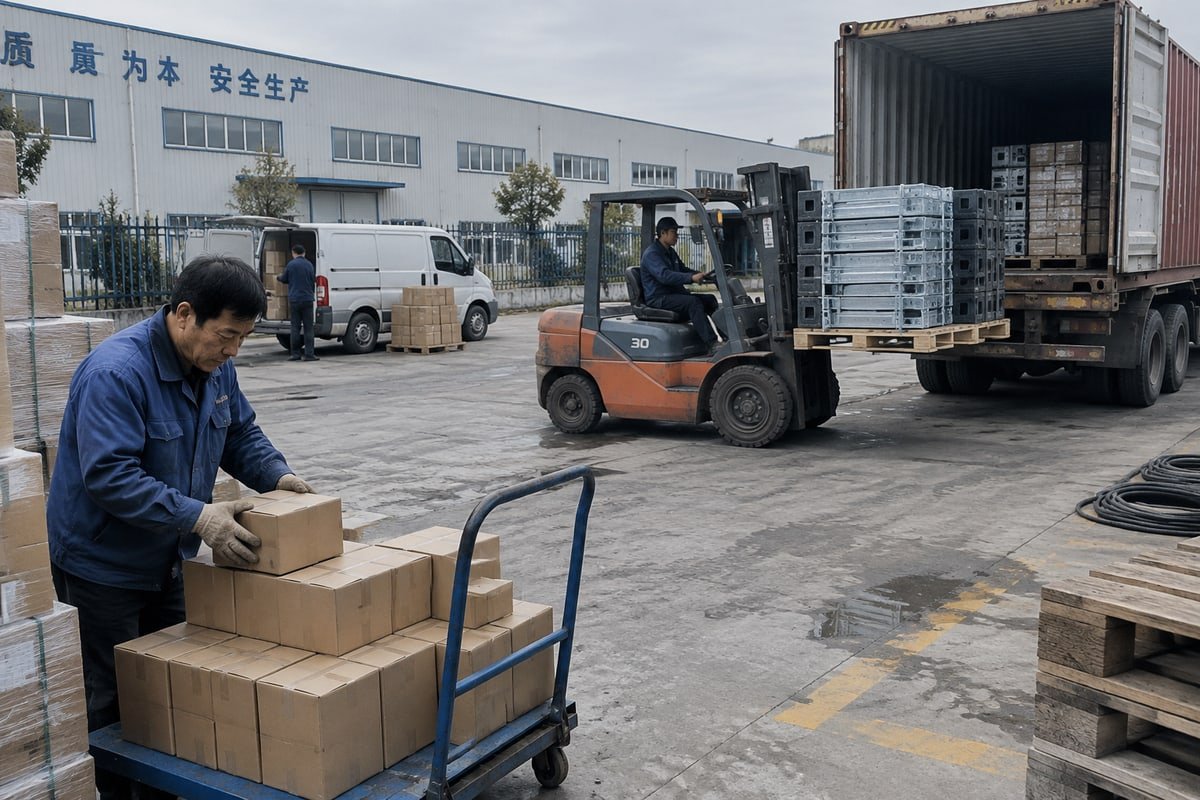
Freight for multi cable transits from China looks easy until a compression unit misses a shutdown window Incoterms such as FOB or DDP 1. Our export desk has seen buyers overpay for air, then wait at customs.
Choose sea freight for multi cable transits from China when the order exceeds roughly 200 kg or 2 cubic meters and the schedule can absorb 30–45 days. Choose air when a fixed installation date outweighs the freight premium. Choose express for samples, spare modules, and lots under 45 kg.
That rule covers most cases. The details matter, though. Below, I walk through order size, lead times, [landed cost](https://dewinmct.com/?p=552), and customs. Each section ends with a clear decision point.
How do I decide which freight method fits my MCT order size and budget?
One 20-foot container of TSC modules and one 40 kg carton of spare seals leave our Shaanxi plant on the same day. They should never travel the same way.
Match the mode to weight and volume first. Shipments over 200 kg or 2 cubic meters favor sea freight, FCL or LCL. Lots under 45 kg suit express courier. Between those bands, compare air freight's chargeable weight against the project's cost of delay before deciding.
Start with weight and volume, not the rate card
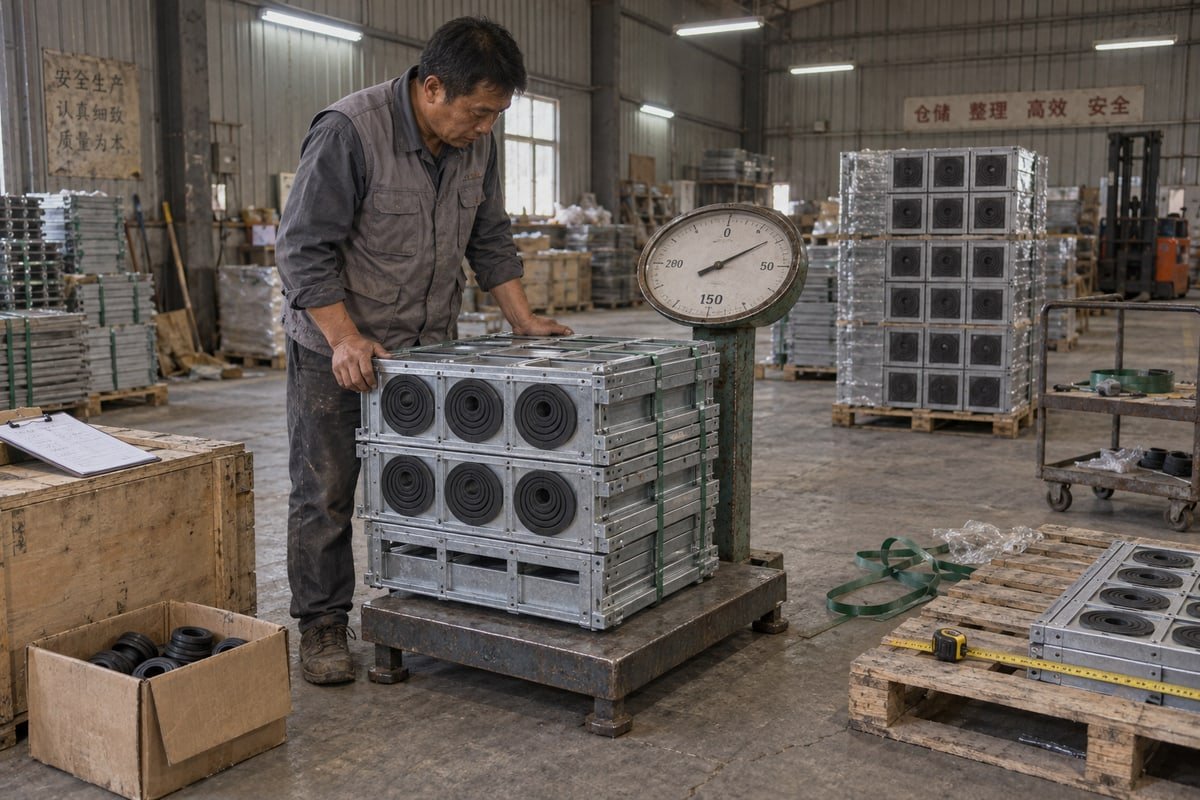
Every freight quote we prepare for a modular cable sealing system begins with two numbers: gross weight and cubic meters. The rate card comes second. Sea freight 2 wins once a shipment passes roughly 200 kg or 2 cubic meters. Below 45 kg, express courier usually wins. The middle band is where most purchasing engineers get stuck. This table is how I frame it.
| Shipment profile | Typical MCT example | Recommended mode | Why it fits |
|---|---|---|---|
| Under 45 kg | Free validation samples, a handful of spare TSR round seals | Express courier | All-in door-to-door pricing, fastest clearance, cheap at low weight |
| 45–200 kg or under 2 m³ | Partial project lot, missing compression units and stay plates | Air freight, or express if the deadline is fixed | Weight is still manageable; delay cost usually exceeds the premium |
| Over 200 kg or 2 m³ | Full TSC frame sets for one BESS container build | Sea LCL | Unit freight cost drops sharply; shared container keeps it flexible |
| Several pallets, near container load | EPC project with many fire-rated transit frames | Sea FCL | Flat container rate, one handling point, lowest cost per frame |
Volumetric weight punishes MCT cargo in the air
Air carriers bill on chargeable weight. That is the higher of actual weight and volumetric weight. TSR seals and TSC modules are dense EPDM rubber 3 and steel. They pay by actual weight, and that weight is high per unit. Open frames and stay plates pack with empty cavities. They often pay by volumetric weight instead. Either way, air pricing scales poorly for this product family. A sea container has a flat rate. It does not care whether the frames are stacked or nested.
FCL or LCL for sea
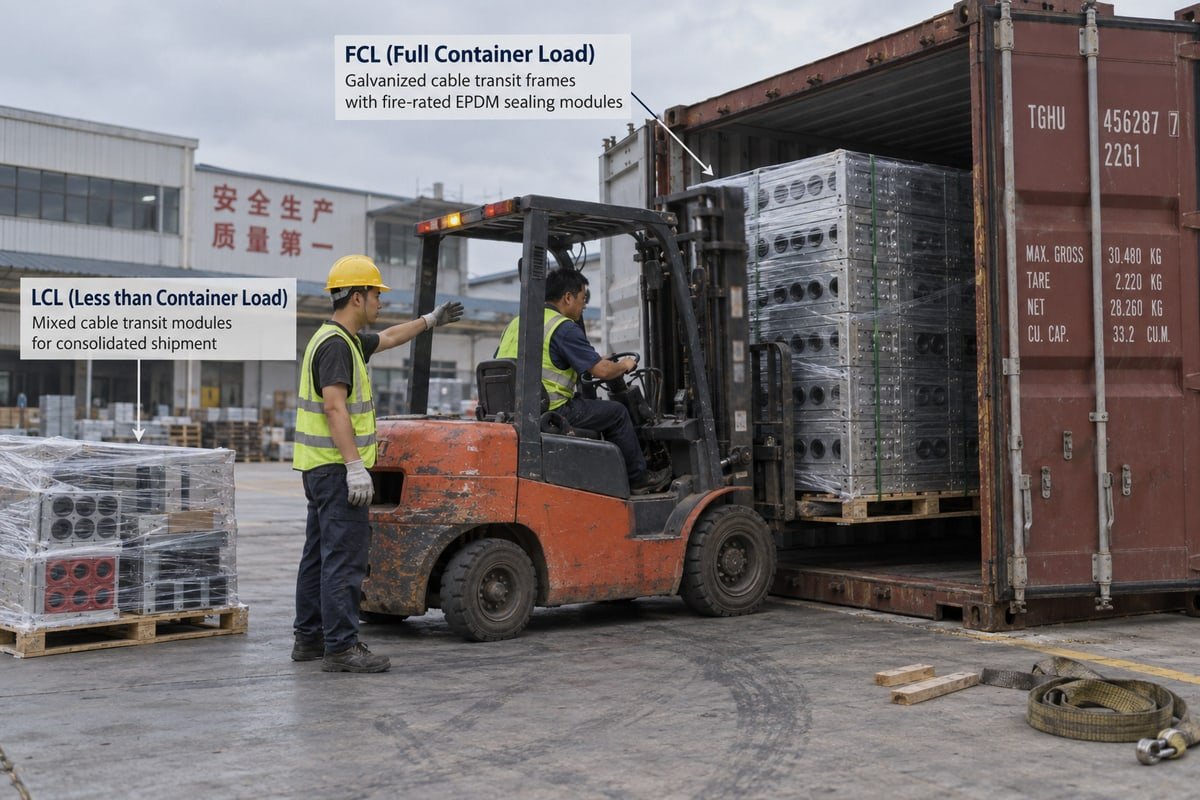
FCL means your own container, loaded and sealed at our plant. There is less handling and faster release at destination. LCL means a shared container, consolidated near the port and split again at the other end. It costs less for partial loads but adds a few days and more touches. For a single data center module or BESS container, LCL is common. For multi-frame EPC orders, FCL usually makes more sense.
The budget objection, and how I resolve it
Cost-first buyers tell me sea is always the rational choice. That is true for planned inventory. Schedule-first buyers tell me air pays for itself. That is also true when a shutdown window is fixed. The answer is often a split shipment. Send the first frames and compression units by air. Send the balance by sea. Because our drop-in modules typically land at 40–60% below incumbent brands, the unit saving often covers the air premium on the urgent portion.
What lead times can I expect from China for sea, air, and express shipping of cable transit modules?
A Rotterdam sourcing manager once asked our export team why quoted transit time and real door-to-door dates differed by two weeks. The gap was customs and trucking, not the vessel.
Expect sea freight from China to take 15–45 days port-to-port, roughly 3–6 weeks on long-haul lanes, plus customs and inland delivery. Air freight typically lands door-to-door in 5–10 days, with premium services in 3–5. Express courier delivers cable transit modules in about 2–5 days.

Transit time by destination region
Published lane data varies, so I give buyers bands rather than promises. These are the bands we work with when planning shipments of multi cable transits from China.
| Destination | Sea, port-to-port | Air, door-to-door | Express courier |
|---|---|---|---|
| Southeast Asia | About 7–12 days | 5–10 days, often faster on direct lanes | 2–5 days |
| Middle East | Inside the 15–45 day band, shorter than Europe on the same service | 5–10 days | 2–5 days |
| Europe | Upper end of the band, commonly 3–6 weeks | 5–10 days | 2–5 days |
| Africa | About 25–45 days depending on port | 5–10 days | 2–5 days |
| Americas | 3–6 weeks depending on coast and routing | 5–10 days | 2–5 days |
Port-to-port is not door-to-door delivery
Port-to-port covers vessel time only. Door-to-door delivery adds pickup from our plants in Shaanxi, Shandong, or Hunan, export declaration, origin handling, destination customs clearance, and inland trucking. On sea freight, that adds one to two weeks in practice. On air freight, it adds one to three days. Express quotes already include the full chain. When you compare modes, compare door-to-door on all three.
Departure frequency changes the risk profile
Air and express move on daily schedules. Sea freight moves on weekly sailings. Miss a cutoff and you lose a week. Add vessel rollovers and port congestion, and the variance grows. Risk-averse project teams prefer air for critical-path items for this reason. Conservative procurement teams accept the sea variance because they buffer it with planned stock. Both positions are sound. Pick the one that matches how your project absorbs slippage.
Sea-air hybrid as a middle path
Sea-air services route cargo by vessel to a hub such as Dubai or Singapore, then fly it onward. Published examples show costs 30–50% below pure air with lead times well under standard ocean. For mid-urgency lots to Europe or the Middle East, I raise this option before defaulting to air.
Add production lead time to the clock
Freight starts when goods are ready. Standard TSR and TSC modules ship from stock quickly. Custom sizes need in-house mold time first. Always ask for the ex-works date before choosing a mode.
How does freight choice affect total landed cost for TSR and TSC series shipments?
During final packing of a TSC frame order, our QC team weighed each crate twice. The forwarder's chargeable weight still beat the scale, because empty frame cavities count as volume.
Freight choice changes landed cost through more than the base rate. Sea freight adds port fees, local handling, and storage but lowers cost per unit on bulk TSR and TSC orders. Air and express raise shipping cost per kilogram yet remove delay penalties, so compare all-in door-to-door totals.
A five-step landed cost check
I ask buyers to run this before they approve a mode.
- Take the ex-works price of the TSR or TSC order.
- Add the freight quote on a door-to-door basis, not port-to-port.
- Add destination charges: port fees, terminal handling, deconsolidation, broker fees, and any storage.
- Add import duty and VAT, which follow the declared value and HS code, not the freight mode.
- Add the cost of delay for each day the goods arrive after the installation date.
Step five is where the headline rate stops mattering.
Where each mode hides its costs
| Cost component | Sea freight | Air freight | Express courier |
|---|---|---|---|
| Base rate | Lowest per unit on bulk; poor on small lots | Shipping cost per kilogram is high; scales with chargeable weight | Highest per kilogram; flat and predictable at low weight |
| Destination handling | Multiple local charges: port, terminal, LCL split, trucking | Airport handling and broker fees | Usually included in the all-in price |
| Storage and demurrage | Real risk if clearance stalls | Low | Very low |
| Delay exposure | Highest: rollovers, congestion, weekly sailings | Low | Lowest |
| Carbon footprint 4 | Lowest per tonne | Highest per tonne | High per tonne |
The cost of delay on critical-path items
Fire-rated transit frames are rarely optional. An A-0 or A-60 rated penetration often has to be installed and inspected before a switchgear room, offshore module, or BESS container passes safety sign-off. If the frames sit in a container, the whole certification step waits. Daily liquidated damages on an EPC contract frequently exceed the air premium on a few hundred kilograms of modules. One documented case for urgent electrical components used air to hit a 5-day door-to-door window. The decision was framed around avoiding installation delay, not around freight price.
Incoterms decide who carries these costs
Under FOB, we hand over at the Chinese port and you control the freight forwarder, the mode, and the destination charges. Under DDP, we manage the chain to your door and price it in. Neither is cheaper by nature. FOB suits buyers with a strong forwarder and a duty-optimised import setup. DDP suits buyers who want one invoice and no surprises at the port.
The ESG line item
Sea freight carries the lowest carbon per tonne. Flying heavy steel frames and rubber modules is the opposite. For European integrators with Scope 3 reporting, that alone tilts planned orders toward sea and keeps air for true emergencies.
What customs and packaging factors should I consider when shipping MCT systems internationally?
We learned that EPDM sealing modules and galvanized frames dislike the same voyage for different reasons. Rubber fears heat cycling; steel fears condensation. Our crating changed after one monsoon-season shipment.
Confirm the HS Code for cable seals with your broker, agree Incoterms such as FOB or DDP, and check the Bill of Lading against the packing list. For sea transit, specify humidity-controlled crating with desiccant to protect galvanized steel frames and EPDM sealing modules through tropical climates.
The document set that clears cleanly
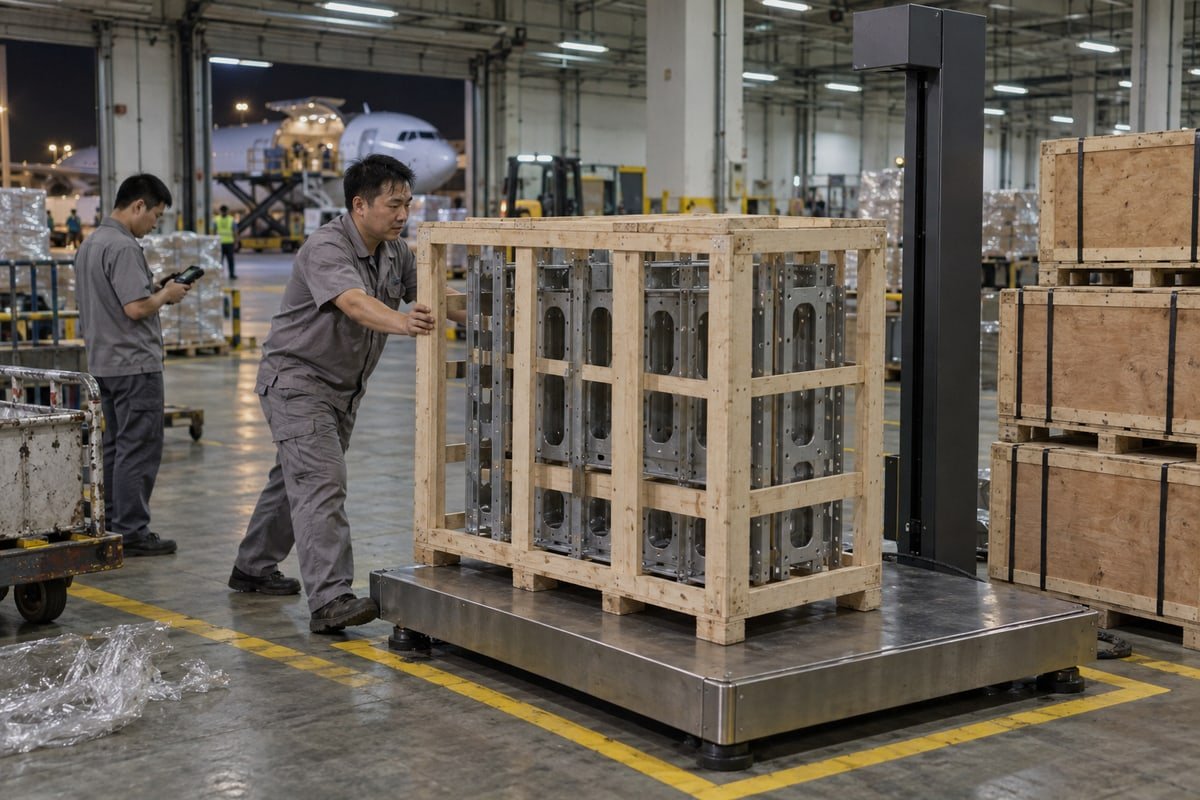
Our export team prepares the same core pack on every order. It has to be consistent across documents, or clearance stalls.
- Commercial invoice with declared value, currency, and Incoterms stated
- Packing list with gross weight, net weight, dimensions, and carton or crate count per line
- Bill of Lading for sea, or air waybill for air and express
- Certificate of origin when the destination duty rate depends on it
- HS code declaration, agreed in advance with your import broker
- Test documents on request: fire rating A-0/A-60, IP68 ingress, and watertight or gas-tight results at 0.01–0.4 MPa, so the goods and the claims arrive together
The HS Code for cable seals 5 is a frequent source of dispute. Rubber modules, steel frames, and compression hardware can each be classified differently. We ask the buyer's broker to confirm before the goods leave. That single step has saved more clearance days than any freight upgrade.
Customs clearance differs by mode
Express carriers act as broker and last-mile carrier in one. Clearance is fast and the price is all-in. Air freight uses an airport broker and adds a handling step. Sea freight involves the most parties: the freight forwarder in China, the destination agent, the port, the broker, and the trucker. Each adds a charge and a possible delay. If your consignee cannot process documents quickly, sea LCL is the mode most likely to accrue storage fees.
Smart crating for a long voyage
| Component | Transit risk | Packaging measure we apply |
|---|---|---|
| Galvanized steel frames and stay plates | White rust and oxidation from condensation in humid holds | Sealed liner, desiccant, and ventilation control inside the crate |
| EPDM step-core sealing modules | Compression set and surface degradation from heat cycling and UV | Opaque inner cartons, no direct load on module faces, temperature-stable stacking |
| Compression units and hex bolts | Thread damage and loss | Individually bagged, fixed in foam inserts, counted on the packing list |
| Nameplates and certificates | Separation from the frame during deconsolidation | Attached to the frame and duplicated in the document pack |
For air and express, the voyage is short and the risk drops. We still bag and box modules, but the heavy moisture control is a sea freight measure. Ask your supplier to state the crating spec in writing before the container is booked.
Conclusion
Pick the mode that protects your schedule at the lowest landed cost. Sea for planned bulk, air for fixed deadlines, express for samples. We handle the export paperwork either way.
Footnotes
1. Official ICC rules for international trade terms like FOB and DDP. ↩︎
2. Authoritative Wikipedia entry providing a comprehensive overview of global maritime transport and the sea freight industry. ↩︎
3. Technical information regarding the properties and uses of EPDM rubber. ↩︎
4. Government resource explaining greenhouse gas emissions and transport environmental impact. ↩︎
5. The WCO manages the global Harmonized System for customs classification. ↩︎



 English
  Español de México
  Deutsch
  Français
  العربية
  Русский