
Contract terms for returns and re-supply on multi cable transit systems get written last IATF 16949 1. That shortcut has cost our factory’s customers weeks of downtime. Here is how we fix it.
Define contract terms for returns and re-supply on multi cable transit systems by separating standard modules from engineered kits, fixing acceptance windows and RMA rules, tying replacements to matching certification and frame compatibility, and locking lead times, buffer stock, and warranty boundaries for any second-source supplier.
An MCT is not a catalog cable. It is a configured sealing system. Frames, cable sealing modules, compression units, and stay plates are matched to cable diameters and to a certification condition. So return and re-supply rules need their own clauses. The four sections below cover the clauses I ask buyers to write before they place a first order with us.
What contract clauses should I include to protect against dimensional non-compliance on drop-in MCT replacements?
A go/no-go gauge on our TSC line once flagged a module that passed its drawing check but would have sat proud in a customer's frame cutout. Drawings lie; frames don't.
Include a frame-standard compatibility clause naming the 120-frame reference, a module tolerance datum with fit-verification on free validation samples, a written backward-compatibility confirmation for each re-supply lot, a cross-reference table as a contract exhibit, and a remedy schedule that gives replacement or credit for any dimensional non-compliance.
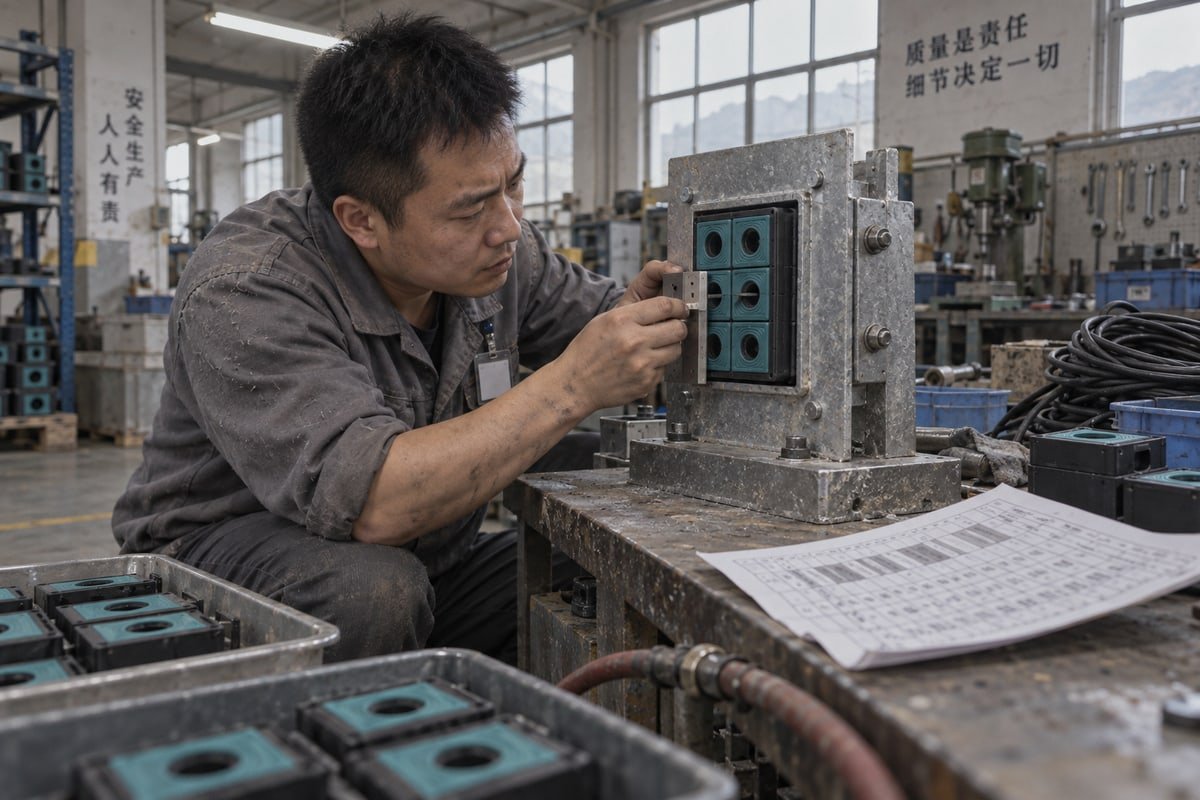
Dimensional non-compliance is the most common reason a drop-in replacement fails on site. It is also the easiest one to prevent with contract language. I break it into four clauses.
Name the frame standard, not the incumbent brand
Most procurement specifications I receive still say "equal to brand X." That wording gives you nothing to measure. Instead, the clause should state the frame family and cutout geometry. Our TSC square modules and TSR round assemblies are dimensionally compatible with common 120-frame standards. So the clause can say "modules shall fit frames built to the 120-frame reference without modification to the frame, compression unit, or stay plates." That sentence is testable. "Equal to" is not.
Attach a model cross-reference table as a contract exhibit. We supply one that maps existing model → DEWIN model for every size we make. Once it is an exhibit, a wrong mapping is a supplier breach, not a buyer mistake.
Make fit verification a condition precedent
Do not accept dimensional compliance on paper alone. Write a clause that requires free validation samples before the first production order. Your engineers test-fit them in an actual frame with the real compression unit. They sign a fit-verification record. That record becomes the acceptance baseline for every later shipment. We also send STEP files so your team can check the module grid in CAD before the physical sample arrives.
| Clause | What it fixes | Evidence attached |
|---|---|---|
| Frame-standard compatibility | Brand-neutral fit definition | Frame drawing, cutout dimensions |
| Tolerance datum | Which surface is measured, and how | Module drawing with datum callouts |
| Fit verification on samples | Real-world fit before volume order | Signed fit record, STEP files |
| Backward-compatibility confirmation | Frame revision changes over time | Written confirmation per re-supply lot |
| Remedy schedule | What happens when a part does not fit | Replacement or credit, freight allocation |
Require technical verification on every re-supply lot
Frames get revised. A module that fit in year one may meet a different frame revision in year six. So the clause should require the supplier to confirm in writing, per re-supply order, that the parts are backward-compatible with the frame version installed. This is a short letter, but it forces both sides to check the frame revision before shipping.
Answer the supplier objection honestly
Suppliers push back here. They say MCTs are configured products with limited resale value, so return rights must be narrow. I agree with that for cut or assembled kits. But dimensional non-compliance is a supplier fault. A step-core EPDM module that adapts to a range of cable diameters within one size should still meet its outer dimension. If it does not, the return is on us, and the clause should say so.
How do I define acceptance criteria and test documentation requirements for returned cable transit modules?
Every acceptance window we negotiate at our factory trades speed against certainty. A short inspection period keeps credits moving, but a long one lets installation faults masquerade as delivery defects.
Define acceptance as a documented inspection at delivery within a fixed window, require lot numbers, photos, and a defect description before RMA release, mandate supplier verification of compression set, contamination, or UV degradation, and attach material certification and A-60, IP68, and pressure test records to every returned or replacement module.
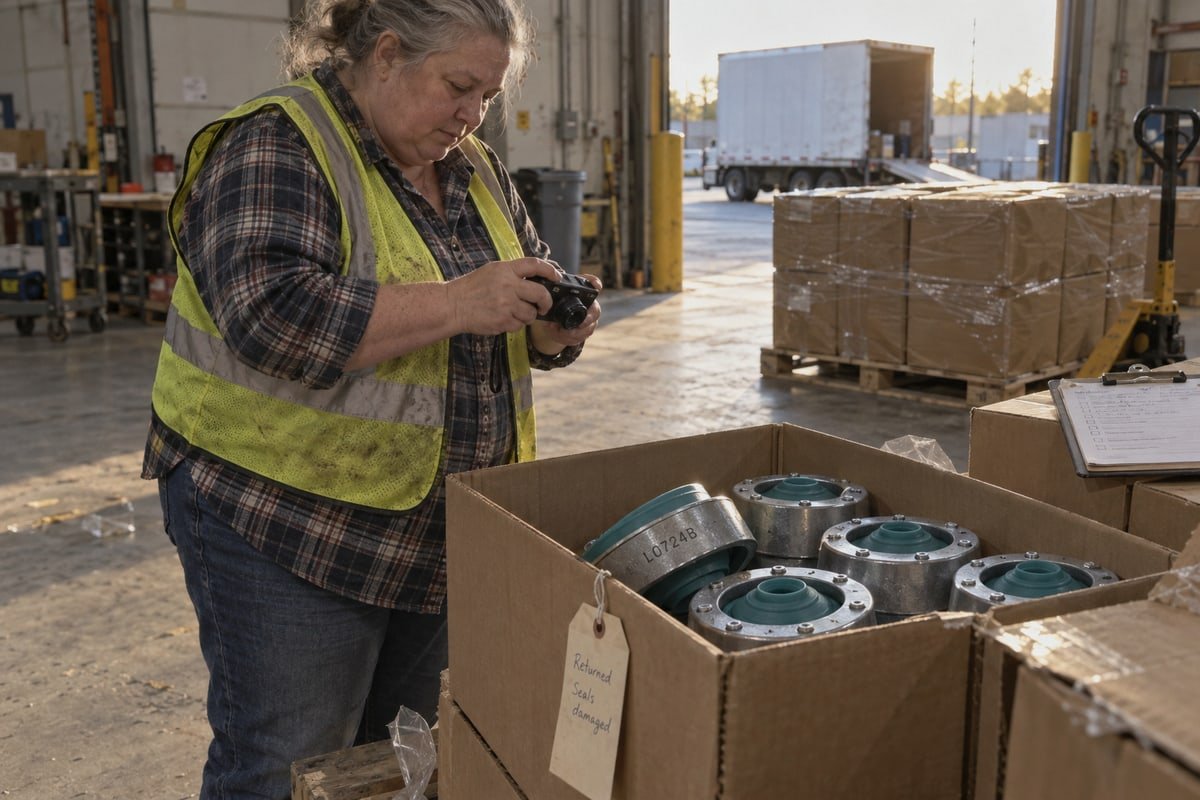
Acceptance is where most return disputes start. The buyer thinks acceptance happens at commissioning. The supplier thinks it happened at the dock. The contract has to pick one point and describe what gets checked there.
Set the acceptance point and the inspection window
I recommend acceptance at delivery, with a defined inspection window in calendar days. Within that window, the buyer records shortages, transit damage, and visible nonconformance. Latent defects, such as a module that fails a pressure test after installation, get a separate warranty route. That split keeps the two problems from mixing.
Quantity deserves its own line. Many cable suppliers reserve the right to ship plus or minus 10% of ordered quantity. That tolerance must not apply to MCT kits. A frame kit needs an exact module count. Write "exact quantity per kit, no shipment tolerance" into the clause.
Define the RMA process as numbered steps
- Buyer submits a claim with part number, lot number, photos, and a short defect description.
- Supplier issues or refuses a return merchandise authorization within a fixed response time.
- Buyer ships only authorized items, in original packaging where possible.
- Supplier performs a documented quality inspection on receipt.
- Credit or replacement is issued only after the nonconformance is verified.
Step 4 matters more for elastomer parts than for metal. Our inspection checks for compression set, chemical contamination, and UV degradation. Those three conditions come from site storage, not from our press. The report goes back to the buyer either way.
Separate defect from buyer error from carrier claim
| Category | Examples | Who pays | Return route |
|---|---|---|---|
| Supplier defect | Out-of-tolerance module, wrong cross-reference, failed seal test | Supplier, freight both ways | RMA, replacement or credit |
| Buyer error | Wrong size ordered, cut or assembled kits, improper storage, torque damage | Buyer, restocking fees may apply | Return only with written authorization |
| Carrier damage | Crushed cartons, water ingress in transit | Carrier claim | Not a supplier return |
Unused, standard-sized sealing blocks in unopened packaging are the one category where I accept returns without defect. Restocking fees and a strict time window should be stated for that case.
Tie documentation to the certification, not just the part
A returned or replacement module is only equivalent if its documents match the original. The clause should list what ships with every lot: material certification for the halogen-free EPDM, the fire rating record 2 (A-0 or A-60), the IP68 ingress result 3, and the watertight and gas-tight test at the specified pressure, which for our modules covers 0.01–0.4 MPa. If your marine specification calls for DNV type approval 4, name that body in the clause and require the certificate number on the packing list. Our factory is BV-approved and runs ISO 9001 5 and IATF 16949 systems, and we release test documents on request. Write "on request" into the contract as "with every shipment" if your auditor needs it.
What re-supply lead time and inventory buffer terms should I negotiate to avoid production line delays?
A BESS container builder in Europe once asked me bluntly: what happens to their line if one sealing module goes missing? That question shaped our stocking policy.
Negotiate tiered lead times by part class, a minimum buffer of critical cable sealing modules held under vendor-managed inventory near your plant, a written substitute-part approval route, defined MOQs for custom frames, and a 5–10 year spare parts availability commitment covering obsolescence and last-time-buy notice.
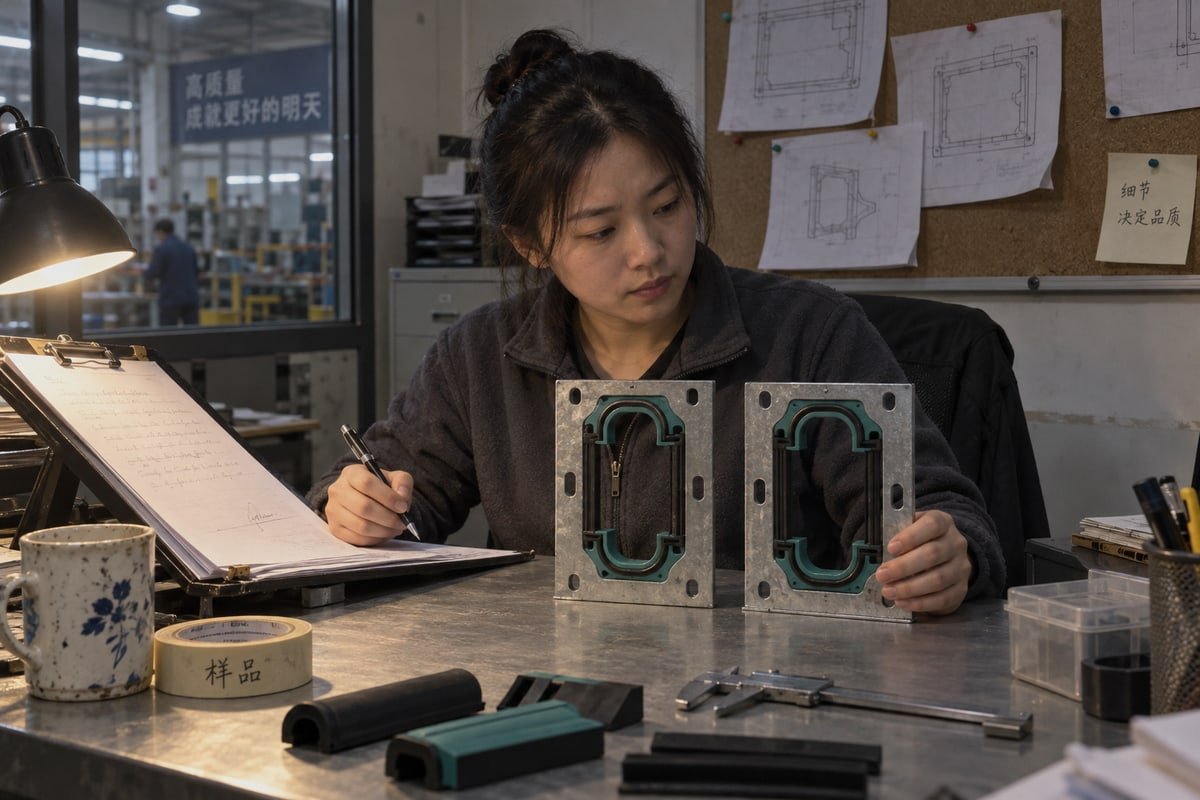
Re-supply means more than replacing a defective part. It covers missing modules, obsolete sizes, spare seals, frames, inserts, and accessories across the life of the installation. A container line or a modular data center build cannot wait for a mold to be cut. So lead time and buffer terms must be split by part class.
Tier the lead times
| Part class | What it is | Lead-time basis to negotiate |
|---|---|---|
| Standard modules | Catalog TSC and TSR sizes, compression units, stay plates | Ex-stock or short fixed days |
| Custom sizes | Non-standard module or frame from in-house mold | Fixed days from drawing approval |
| Engineered assemblies | Project-specific fire-rated transit frames with kitted modules | Milestone schedule tied to your build plan |
Our in-house mold making shortens the custom tier because the tooling never leaves the factory. Still, write the number in days, not "prompt delivery." A lead time that is not a number is not a term.
Put a buffer under vendor-managed inventory
The strongest clause I have signed is a VMI arrangement. The supplier holds a defined minimum stock of critical spare sealing modules at a location near the buyer's plant or forwarder. The buyer draws against it and the supplier replenishes. Ownership passes at draw. This protects the line from global logistics disruption, and it costs the buyer only a stock-level commitment. Because we run production in Shaanxi, Shandong, and Hunan, we can feed a buffer from more than one site, which is a point worth asking any supplier to demonstrate.
Set MOQs and substitute approval in advance
Small repairs on custom-sized frames or non-standard inserts can hit a minimum order quantity. State the MOQ in the contract so a two-piece repair does not become a surprise invoice. Also define a substitute-part approval route. If a size is discontinued, the supplier proposes a replacement with a cross-reference and test record, and the buyer approves in writing within a fixed time.
Commit to long-term availability
For energy and infrastructure work, a 5–10 year spare parts availability commitment after final acceptance is the benchmark I use. Pair it with an obsolescence clause: the supplier gives last-time-buy notice before withdrawing a size. Add project surplus management as well. A buy-back credit for unused standard modules, and for decommissioned components where material recovery is possible, keeps your spare parts inventory lean without scrapping good EPDM. If your facility runs a digital as-built record, require updated BIM or model data with each re-supply order so the record stays current.
How do I structure liability and warranty terms when qualifying a second-source MCT supplier?
The hardest lesson from our first second-source qualifications was simple. If the warranty boundary is vague, every field failure becomes a three-way argument between installer, incumbent, and us.
Structure second-source warranty by component, not system: the new supplier warrants its modules against material and dimensional defects for a fixed term, liability caps at replacement plus documented removal cost, installer error and storage damage are excluded, and mixed-frame installations stay covered only when the supplier confirms compatibility in writing.
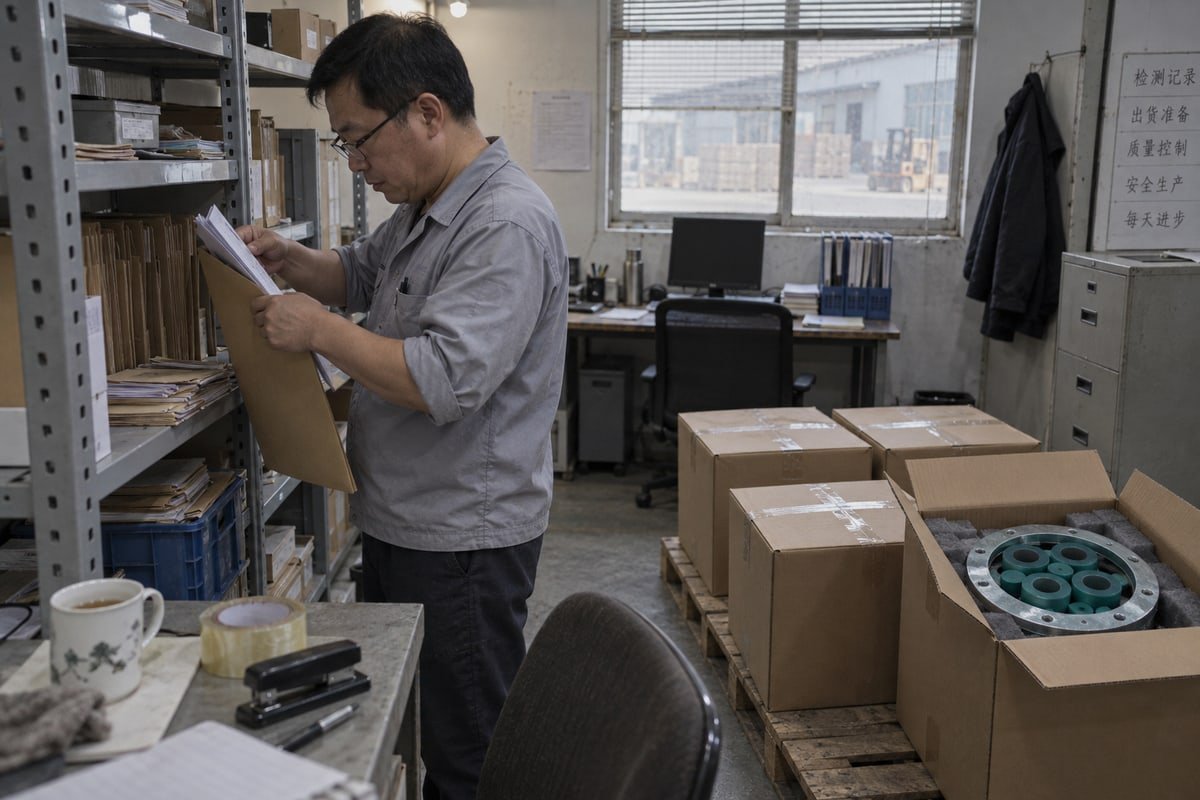
A second-source qualification changes the warranty picture because two suppliers now sit in one seal. The incumbent made the frame. We made the modules. The installer compressed both. Clear liability terms keep that arrangement workable.
Draw the component boundary
The warranty clause should list exactly what the second source warrants. For us that is the cable sealing modules, spare sealing parts, and any compression unit or stay plate we supply. Each item carries material certification and the fire, IP68, and pressure test records described earlier. The incumbent's frame warranty stays with the incumbent. The clause should say that fitting a qualified second-source module into a compatible frame does not, by itself, change the frame warranty. If the incumbent argues otherwise, the compatibility confirmation letter from the first section is your evidence.
Define the buyer's obligations
Warranty coverage depends on conditions the buyer controls. Write them down:
- Storage: modules kept sealed, shaded from UV, within the stated temperature range, and used within shelf life.
- Installation: assembly to the approved instructions, correct torque on the compression bolts, correct cable outer diameter within the module range.
- Verification: a post-installation check of watertight integrity where the specification requires it.
Failures traced to these conditions are excluded. This is not the supplier being difficult. It is how the seal's certification works. An over-torqued compression unit or a module stored in sunlight for a season does not perform as tested.
Cap liability and price the reverse logistics
Set a liability cap. A common structure is replacement of the defective part plus documented removal and reinstallation cost, up to a stated multiple of the part value. Consequential loss is excluded unless negotiated separately. Then decide who pays reverse logistics. For verified defects, the supplier covers freight both ways. For buyer error, the buyer pays freight and any restocking fees.
Resolve the two-sided objection
Buyers tell me they need broader rights because defects can surface at commissioning, months after delivery. Suppliers tell me unauthorized returns create traceability and certification risk. Both are right. The contract answer is a latent-defect warranty with a fixed term, triggered by a documented test failure, plus a strict RMA route. One useful sweetener is a warranty extension on the whole transit seal when re-supply parts are installed by manufacturer-certified technicians. It rewards correct installation instead of arguing about it later.
Conclusion
Vague return and re-supply terms turn a cheap sealing module into an expensive outage. Write the clauses above, test them on a free sample, and downtime stops being your problem.
Footnotes
1. Official site for the automotive quality management standard used in the manufacturer’s production systems. ↩︎
2. International Maritime Organization page covering fire protection standards like the A-60 rating mentioned. ↩︎
3. Official IEC explanation of IP ratings, specifically IP68 mentioned for ingress protection testing. ↩︎
4. Official DNV service page for type approval, a critical certification for marine cable transit systems. ↩︎
5. Official ISO page for the quality management standard mentioned in the article’s factory certifications. ↩︎



 English
  Español de México
  Deutsch
  Français
  العربية
  Русский