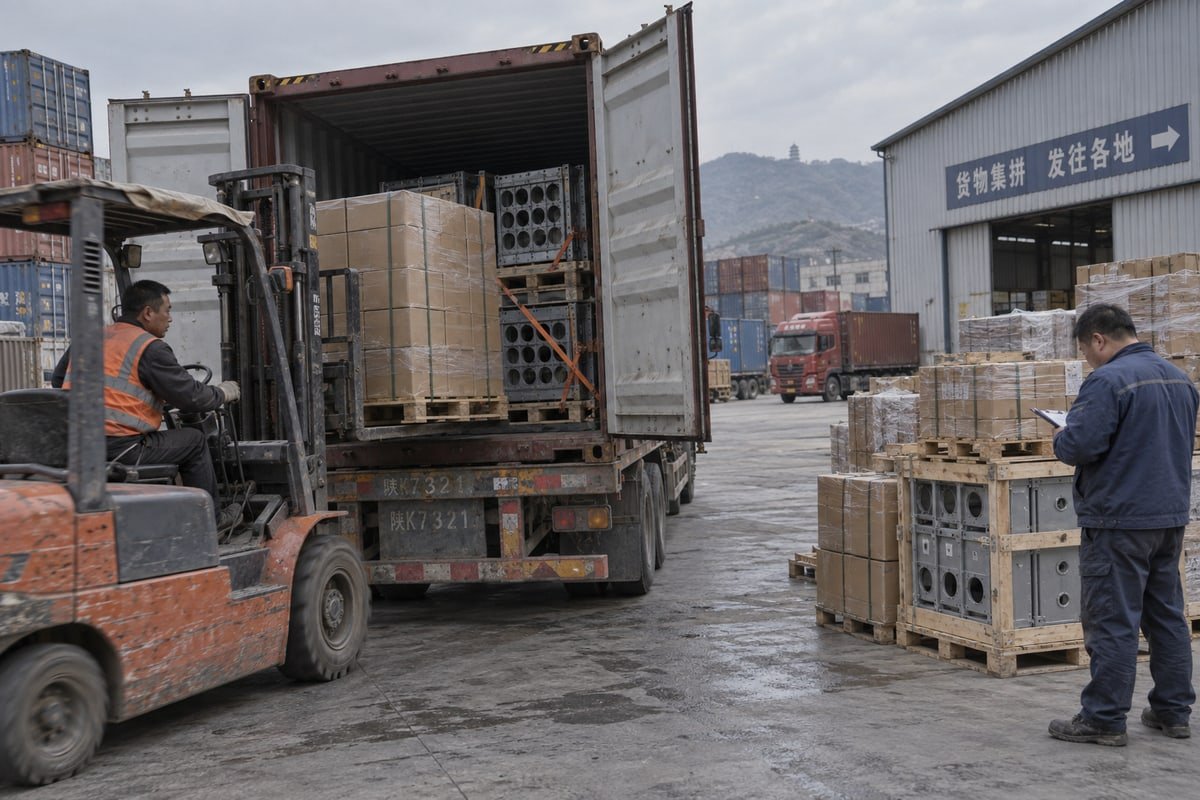
Our export desk in Shaanxi hears one question from European buyers: FCL and LCL shipping for multi cable transit from China—which wins? Choose wrong, and freight eats your savings.
FCL and LCL shipping differ mainly in cost per cubic meter, transit time, and handling risk. For multi cable transit from China, LCL suits small trial orders under 14 CBM, while FCL wins above 14–18 CBM with lower unit cost, 3–7 days faster transit, and sealed-container protection for EPDM modules.
That is the short answer. The rest of this article walks through the numbers behind it. I will cover the real cost gap, the lead time gap from our Shaanxi and Shandong plants, the damage question for EPDM sealing modules 1, and the exact volume where switching makes sense.
How much can I actually save by choosing FCL over LCL for a full container of MCT modules?
A BESS container builder in Germany once sent me two freight quotes side by side. LCL looked cheaper on paper. After destination fees, it wasn't.
For a full 20ft container of MCT modules, FCL cuts freight cost per cubic meter by half or more, because LCL can run 2–3 times higher per CBM at volume once CFS fees, W/M pricing, and heavy-cargo surcharges are added. 20ft FCL runs about $1,800–$2,800; LCL about $80–$140 per CBM.
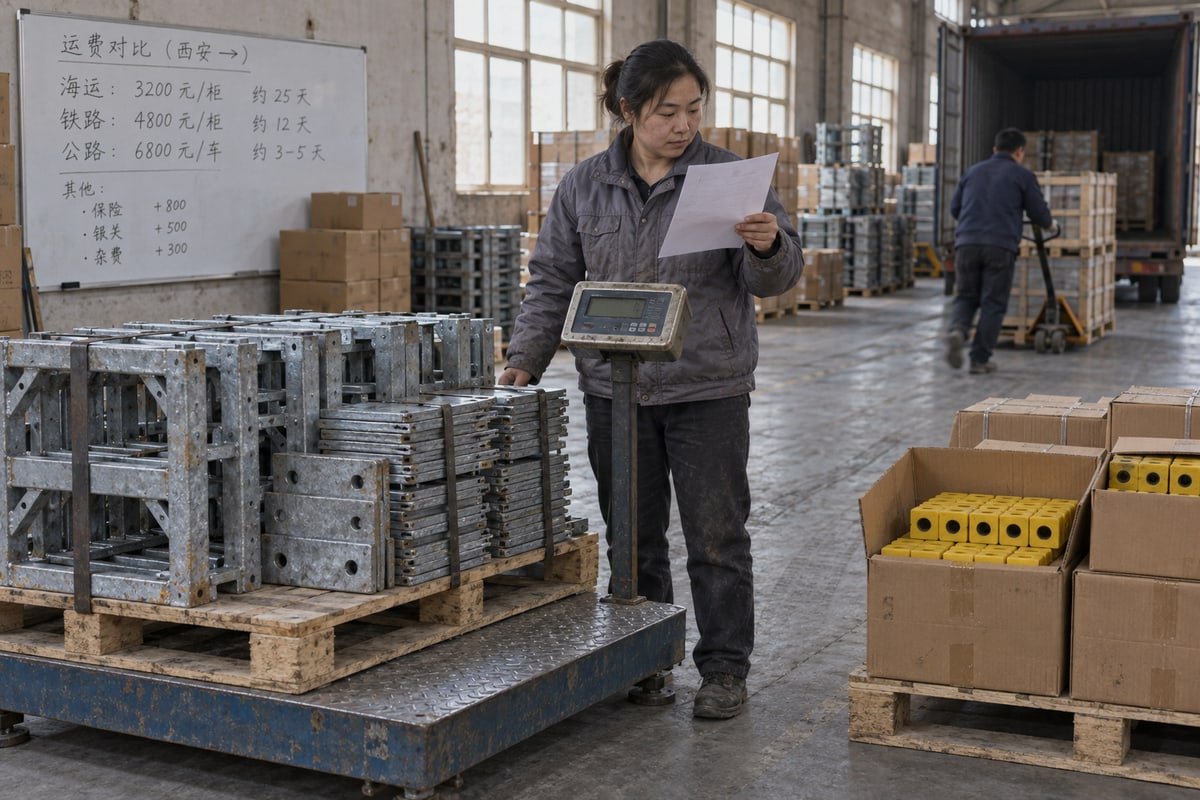
The saving is real, but it does not come from the ocean rate alone. It comes from what LCL adds on top. Here is how the two cost structures actually stack up when we ship cable transit frames, stay plates, and TSC sealing modules from China.
Where the two cost models differ
| Cost item | FCL (full container) | LCL (shared container) |
|---|---|---|
| Ocean freight | Flat rate per container, roughly $1,800–$2,800 for a 20ft on many lanes | Per cubic meter CBM, roughly $80–$140, priced by the W/M rule |
| Origin handling | Trucking to port, port charges, customs export filing | Trucking to CFS, consolidation fee, CFS handling, documentation |
| Destination handling | Terminal charges, customs clearance, delivery | Deconsolidation, CFS handling, destination documentation, delivery |
| Heavy cargo surcharge | Not applicable up to container weight limit | Often triggered early by dense steel frames and stay plates |
| Minimum charges | None beyond the container rate | Minimum CBM or weight usually applies |
The W/M rule matters a lot for our product. LCL is charged on whichever is greater: volume or weight. A cable sealing system is a mix of light rubber modules 2 and heavy galvanized steel frames. The frames and stay plates push the chargeable weight up. So a pallet of frames often costs more than its CBM suggests.
A worked example at 28 CBM
Take an order that fills a 20ft container at about 28 CBM. Using the mid-range figures above, LCL freight alone 3 lands near $3,000, before CFS fees at both ends. FCL sits around $2,300 all-in for the box, plus standard port charges. Add the LCL destination fees and the gap widens further. That is why one freight forwarder we work with tells clients to compare all-in landed cost, not just the ocean quote.
Incoterms change who pays which line, not whether the line exists. Under FOB, you carry the destination side. Under CIF or DAP, we do. Either way, the LCL surcharges are still in the chain and someone pays them.
One more point. Our modules already cost 40–60% less than the incumbent 120-frame brands. Losing part of that margin to LCL handling fees on a large order makes no sense. On full container volumes, FCL protects the saving you came for.
What lead time difference should I expect between FCL and LCL shipments from Shaanxi or Shandong factories?
Speed or cost—that is the trade-off I weigh every time we book from Xi'an. Our Shandong plant is closer to Qingdao port; Shaanxi cargo trucks inland first.
Expect LCL from Shaanxi or Shandong factories to arrive 3–7 days later than FCL on most routes, and up to 6–14 days later when container consolidation, CFS cut-offs, and deconsolidation stack up. FCL bypasses these steps, so a sealed container from the factory reaches Europe with a predictable transit time.
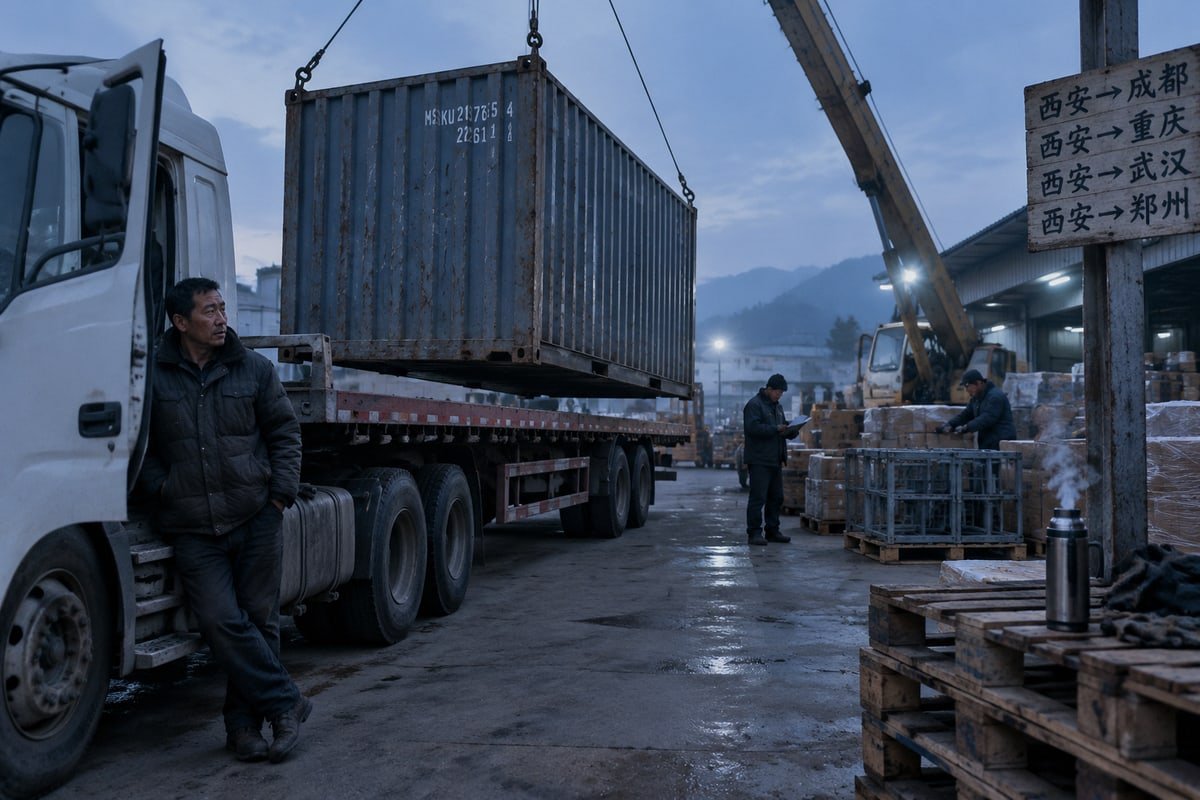
The ocean leg is the same for both modes. The ship does not care whether your MCT frames share the box with someone else's cargo. The difference lives on land, at both ends. Here is the sequence as we see it from the factory gate.
Step by step from factory to site
- Production and packing. Identical for both modes. Frames are crated, modules are cartoned, and we palletize to the container floor plan.
- Inland trucking. From Shaanxi, cargo trucks to a coastal port. From Shandong, the run to Qingdao is shorter. FCL trucks a sealed container. LCL trucks loose pallets to a CFS.
- Origin handling. FCL goes straight to the terminal. LCL waits at the CFS until the consolidator fills a container, which depends on other shippers' cut-offs.
- Ocean transit. Same vessel schedules apply.
- Destination handling. FCL is released to your trucker after customs clearance. LCL must be devanned at the destination CFS first, then released piece by piece.
- Last-mile delivery. Same for both once cargo is released.
| Stage | FCL | LCL |
|---|---|---|
| Wait for consolidation at origin | None | Adds days depending on lane volume |
| Deconsolidation at destination | None | Adds days plus a second handling point |
| Customs exposure | Your cargo, your declaration | Shared container; other shippers' errors can hold the box |
| Typical total gap | Baseline | 3–7 days later, sometimes 6–14 |
Why the gap matters for project cargo
Most of our shipments feed a schedule. A modular data center builder has a wall-panel line waiting. An EPC contractor has a plant shutdown window. A late LCL delivery does not just delay a box; it delays an installation crew.
There is also the customs clearance point. In LCL, one bill of lading 4 covers the master container and a house bill of lading covers your share. If another shipper in that container has a documentation error, customs can hold the whole box. Your fire-rated A-0/A-60 modules sit at the port through no fault of yours. FCL removes that collateral risk. Your container, your bill of lading, your declaration.
I still recommend LCL for genuine test orders. The delay is acceptable when the cargo is not on the critical path. But when the schedule is tight, I advise buyers to pay the container rate and get the predictability.
Is LCL shipping safe for sensitive EPDM sealing modules, or does consolidation risk damage and delays?
During an incoming-inspection review, our QC team opened a returned LCL carton: crushed corners, damp kraft paper, and a solvent smell on the EPDM. That box changed our packing spec.
LCL is workable for EPDM sealing modules only with reinforced packing. Consolidated cargo is handled several times at CFS warehouses, shares space with unrelated goods, and can absorb chemical vapors that compromise halogen-free EPDM. FCL stays sealed from factory to site, so it is safer for full orders.
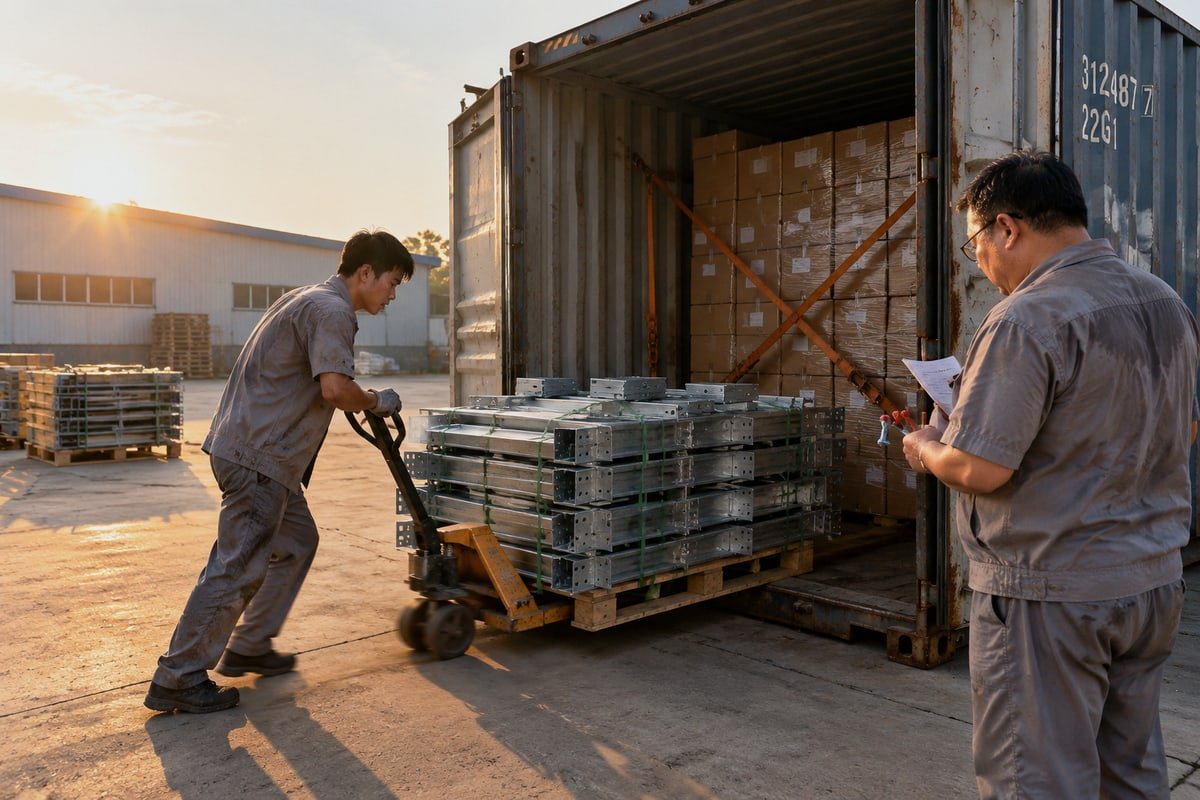
Our step-core EPDM modules are not fragile in the everyday sense. You can drop one and it will still seal. The risk is different. It is about compression sets, surface contamination, and the frames that hold the modules. Let me break the risk down by what actually goes wrong.
Four failure modes we watch for
Crushing. A cable transit frame is a welded steel rectangle. Stack a heavy pallet on top in a CFS and the frame can rack out of square. A racked frame no longer accepts the compression unit cleanly, and the IP68 seal depends on even pressure across the stack.
Moisture. Galvanized frames tolerate humidity. Cardboard does not. Wet cartons collapse, and collapsed cartons let modules shift and deform. LCL cargo sits in open CFS warehouses more than FCL cargo does.
Vapor and odor absorption. EPDM rubber is a polymer. Left next to drums of solvent, paint, or agricultural chemicals in a shared container, it can pick up vapors. This is not just a smell issue. Our fire-rating test documents describe a specific halogen-free compound. Contaminated modules may no longer match the material we certified.
Threaded parts. Compression unit bolts and stay plate hardware can be bent or lose their washers when a carton is dropped during repacking.
Counting the touchpoints
| Handling event | FCL | LCL |
|---|---|---|
| Loaded at factory | Once, into the sealed container | Onto a truck, loose |
| Origin warehouse | None | Unloaded, sorted, reloaded into shared container |
| Destination warehouse | None | Devanned, sorted, staged |
| Delivered to site | Container opened once | Reloaded onto delivery truck |
FCL is loaded once and opened once. LCL adds at least four extra handling events. Every event is a chance for a forklift blade or a stacked pallet to do damage.
What we do when a buyer still chooses LCL
We do not refuse LCL. Small validation orders often ship that way, and free validation samples go by courier, not by sea at all. When a buyer books LCL for a real order, our packing team switches to plywood crates for frames, adds desiccant packs, seals modules in polyethylene liners, and marks every crate for top-load limits. We also recommend cargo insurance 5 that names the goods correctly as industrial cable sealing components. That policy is cheap next to a delayed BESS commissioning.
At what order volume does it make sense to switch from LCL to FCL for my MCT drop-in replacement project?
The costliest lesson I learned early on: a customer ordered 12 CBM by LCL, then reordered 12 CBM three weeks later. One 20ft FCL would have carried both.
Switch from LCL to FCL for an MCT drop-in replacement project once cargo reaches about 14–18 CBM, or as low as 13–15 CBM for a 20ft container on many China–Europe routes. Because steel frames and stay plates are dense, heavy-cargo surcharges can make a 20ft FCL cheaper at 40% fill.
There is no single magic number. The break-even moves with the lane, the season, and the ratio of frames to modules in your order. But the range is narrow enough to plan around. Here is how I map order sizes to shipping mode for a typical drop-in replacement project.
Order size versus shipping mode
| Order profile | Approximate volume | Recommended mode | Why |
|---|---|---|---|
| Validation samples for supplier qualification | Under 1 CBM | Courier | Free samples, fastest feedback, no sea freight at all |
| First trial order, one or two frame sizes | 3–10 CBM | LCL | Volume too small; W/M surcharge still manageable |
| Repeat order with frames plus spare sealing modules | 13–18 CBM | Compare both, lean FCL | Break-even zone; heavy frames tip it toward FCL |
| Full project kit, multiple cutouts | 20–30 CBM | 20ft FCL | Container is 28–33 m³; near full, lowest unit cost |
| Multi-site rollout or annual stock | 50–65 CBM | 40ft FCL | Container is 58–68 m³; best cost per module |
The objection: what if I cannot fill the container?
I hear this a lot, and it is a fair concern. Paying for empty space on a one-off order is waste. Two things change the picture.
First, density. A pallet of galvanized cable transit frames is heavy. In LCL, that weight triggers the W/M rule early. Some lanes make a 20ft FCL cheaper than LCL at only 40% fill because the LCL weight-based charge runs past the flat container rate.
Second, consolidation on our side. A drop-in replacement project rarely needs one SKU. It needs frames, TSC square modules, TSR round assemblies, compression units, stay plates, and spares. Our model cross-reference tables let a sourcing manager map every existing part number to a DEWIN equivalent in one pass. That usually turns two small LCL orders into one FCL order. We hold the container until the full kit is ready, and export documentation ships with it.
Project-sequence loading
FCL offers one more advantage that LCL cannot. We can load the container in installation order. Frames for the first wall go in last, so they come out first. Modules for each cutout are labeled to the frame drawing. A consolidator cannot promise that order. Your site crew opens the doors and works from front to back.
My practical rule: run a break-even calculation with your freight forwarder before every order above 10 CBM. If the all-in LCL quote is within a few hundred dollars of FCL, take the container. The lower damage risk and the shorter transit time are worth more than the difference.
Conclusion
Small trial orders belong in LCL. Once your MCT volume passes 14–18 CBM, FCL delivers lower unit cost, faster transit, and sealed protection for certified EPDM modules.
Footnotes
1. Wikipedia provides technical background on the chemical properties and durability of EPDM rubber. ↩︎
2. ISO standards govern the manufacturing and quality testing of industrial sealing components. ↩︎
3. UNCTAD is the leading authority on global maritime transport and trade logistics. ↩︎
4. The European Commission provides official guidance on customs documentation and bill of lading requirements. ↩︎
5. The ICC sets international standards for trade terms and commercial risk management. ↩︎



 English
  Español de México
  Deutsch
  Français
  العربية
  Русский