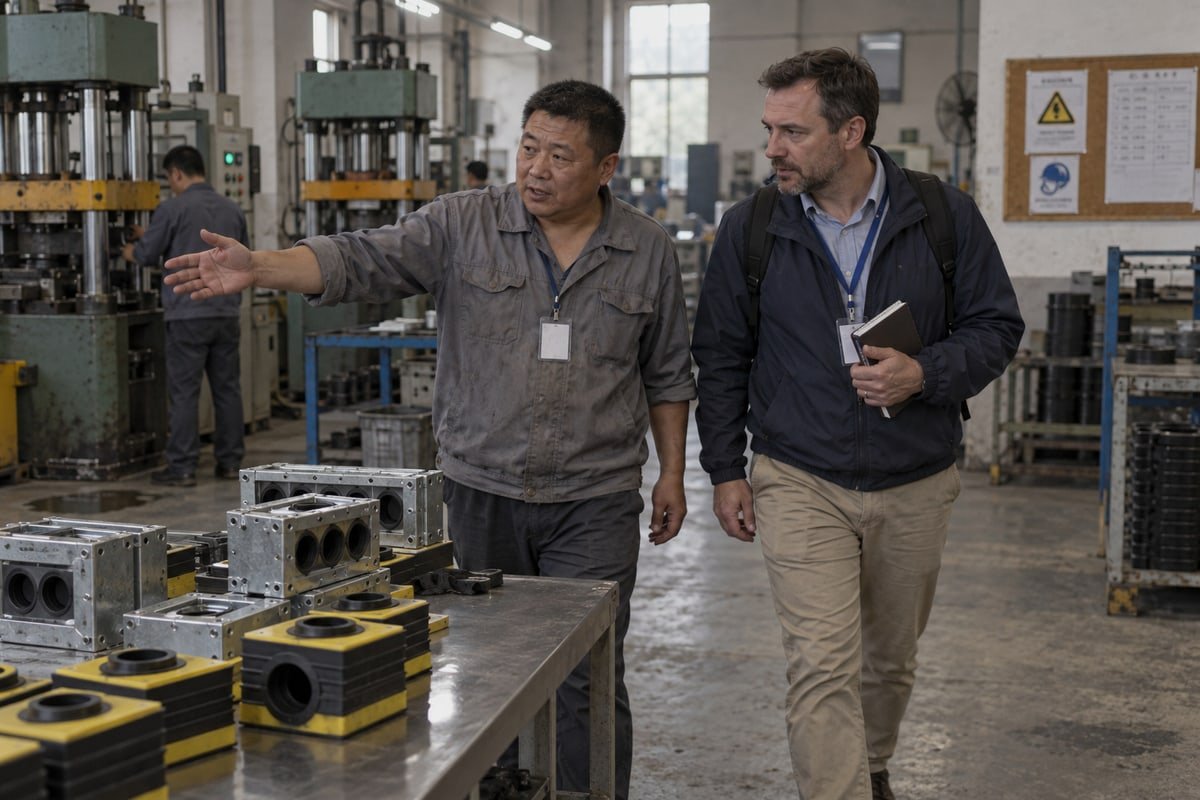
A buyer visiting our Shaanxi plant admitted his current multi cable transit supplier had never shown a production floor. That gap costs money and certification headaches.
A multi cable transit supplier is a real factory if it can show a registered manufacturing address, a business license scope covering production, ISO 9001 certification in its own name, product type approval certificates listing it as holder, and live video of molding, machining, and testing lines.
The rest of this article breaks that answer into four checks. Each one takes less than a day to run. I will show you what a real factory hands over without hesitation, and what a trader tends to avoid.
What documents can prove a supplier actually manufactures MCT systems in-house?
During one buyer's on-site inspection at our Shaanxi plant, the auditor spent longer in our document room than on the molding floor. Paperwork told him who really made the modules.
Documents that prove in-house MCT manufacturing include a business license whose scope lists production or processing, ISO 9001 and IATF 16949 certificates issued to the factory name, type approval certificates naming the same entity, granted patents, mold drawings, batch inspection records, and a third-party factory audit report.

The fastest document check is the one most buyers skip. Every company registered in China has a business license with a printed "scope of business." A factory's scope contains words like manufacturing, processing, or production. A trader's scope is built around wholesale, import and export, or sales of hardware. Read that line before you read the price list.
Match every certificate to one legal name
A certificate only proves something about the entity named on it. So line up the business license, the ISO 9001 certification 1, the IATF 16949 certificate, and any type approval certificate. The legal name and registered address should be identical on all of them. When a trader forwards certificates, the holder is often a different company. Sometimes the holder is the very brand the trader is quietly reselling.
| Документ | What a real factory shows | What a trading company usually shows |
|---|---|---|
| Business license | Scope includes production or processing | Scope limited to wholesale, import, export |
| ISO 9001 / IATF 16949 | Issued to the factory name and plant address | Issued to another entity, or missing |
| Сертификат типового одобрения | Product model and manufacturer match the quote | Model or holder does not match |
| Patents | Granted patents on frames, stay plates, or step-core modules | None, or patents held by a third party |
| Mold and tooling records | Mold numbers linked to specific TSR/TSC module sizes | No tooling records at all |
| Batch inspection records | Serial numbers tied to a production date and inspector | Only a packing list |
| Factory audit report | Recent third-party report on the same address | Not available |
Patents and tooling are hard to fake
Since 2013 we have accumulated more than 38 granted patents, and every one of them can be searched in public patent databases under our company name. A trader cannot produce that. The same applies to tooling. Each step-core EPDM block in our modules is molded with concentric rings that peel to fit a range of cable diameters. Those rings come from a specific mold with a specific number. Ask for the mold drawing behind the module you are quoting. A factory finds it in minutes.
Check catalog focus
Finally, look at the catalog itself. A factory that makes a modular cable transit system sells frames, compression units, stay plates, modules, and spares. A trader often lists MCT products beside unrelated valves, cable glands, and fasteners. That mix is not proof of trading, but it is a reason to ask harder questions.
How do I verify a manufacturer's factory address and production capacity before ordering?
One sourcing manager from the Netherlands asked me for our plant coordinates before asking for a price. That order of questions is right, and I recommend it to every buyer.
Verify a manufacturer by matching the registered address on its business license to the factory shown in a live video tour, checking satellite imagery of the site, requesting machinery lists and headcount, reviewing a recent factory audit report, and confirming capacity with dated production and shipping records.
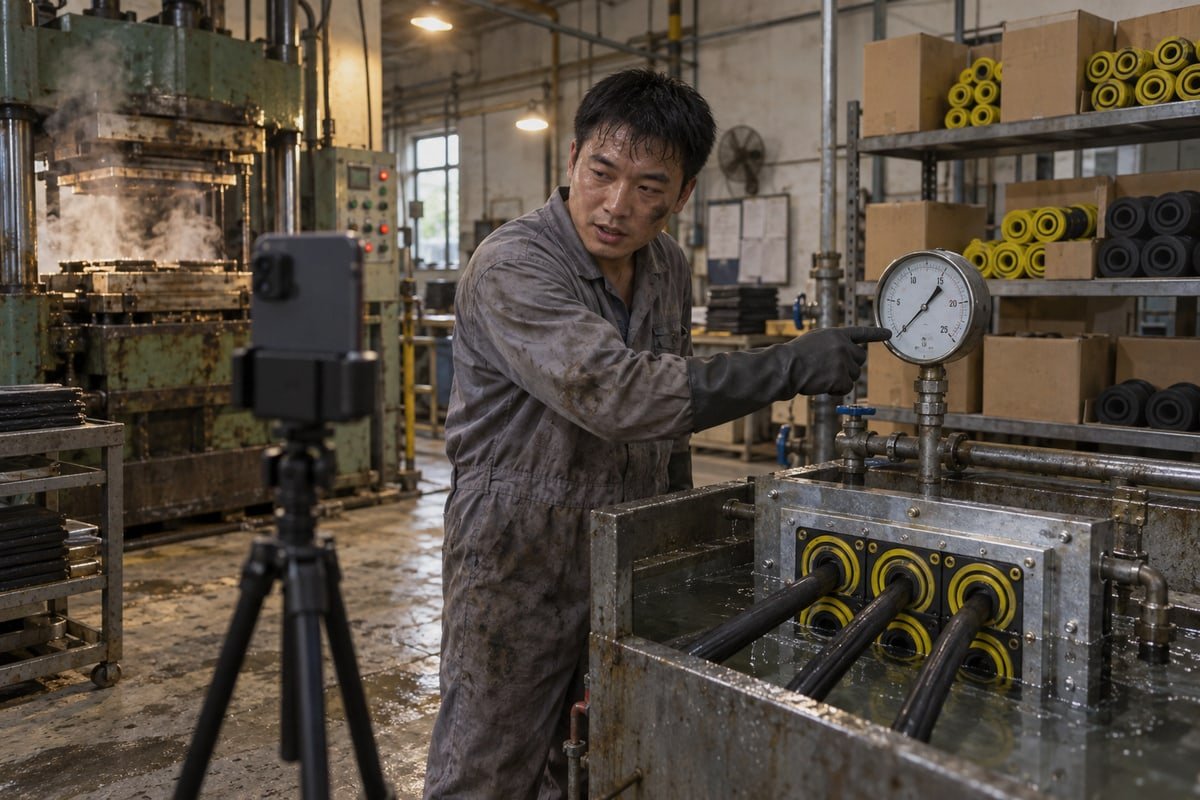
Address and capacity are two separate questions. A trader can rent a small workshop and call it a factory. A real manufacturer can show that its address, equipment, staff, and output all belong to one operation. Here is the process I suggest to buyers who cannot fly to China this quarter.
A five-step remote verification
- Pin the registered address. Take the address from the business license and open it in satellite view. Look for the footprint of production halls, not an office tower.
- Start the video call at the gate. Ask the supplier to begin the live walkthrough at the company sign outside. Then walk in without cutting the stream.
- Follow the material flow. For an MCT plant that means rubber mixing and compression molding for EPDM blocks, steel cutting and welding for frames, machining for compression units, assembly, and packing.
- Stop at the test area. Ask to see the hydrostatic pressure rig and the water immersion tank used for IP68 checks 2. Ask who records the results and where those records are kept.
- Request dated evidence. Machinery lists, headcount, recent production logs, and export records should all carry dates from the last few months.
What production capacity looks like on paper
| Capacity signal | How a factory answers | Почему это важно |
|---|---|---|
| Number of production sites | We operate three: Shaanxi headquarters, plus Shandong and Hunan | Spreads load and protects lead times |
| Уставный капитал | Printed on the license, RMB 50 million in our case | Shows the scale the company is registered to operate at |
| Machinery list | Press tonnage, number of molding lines, welding stations | Ties quoted lead times to real equipment |
| Test equipment | Pressure rig, immersion tank, quality control process documents | Proves testing happens on site, not only at a lab |
| Staff | Engineers, mold makers, QC inspectors, operators | A trader has sales staff and little else |
Ask questions only an engineer can answer
The last check costs nothing. Ask about compression ratios in the frame, how many cable diameters one step-core module accepts, and whether the halogen-free EPDM compound 3 tolerates oil or UV exposure. Ask for a CAD or STEP file of a custom stay plate. A factory routes these questions to the engineer who designed the part. A trader relays them to someone else and comes back days later with a vague answer.
Can I request test reports and certifications directly from the factory that produced them?
We learned early that a blurry certificate scan convinces nobody in Europe. Buyers want the test report, the sample serial number, and the lab name lined up in one file.
Yes. A genuine factory can release fire, ingress, and pressure test reports for the exact module family it produced, with the report holder, product model, test standard, and manufacturing site all matching. A trading company usually forwards certificates issued to another entity or provides none.
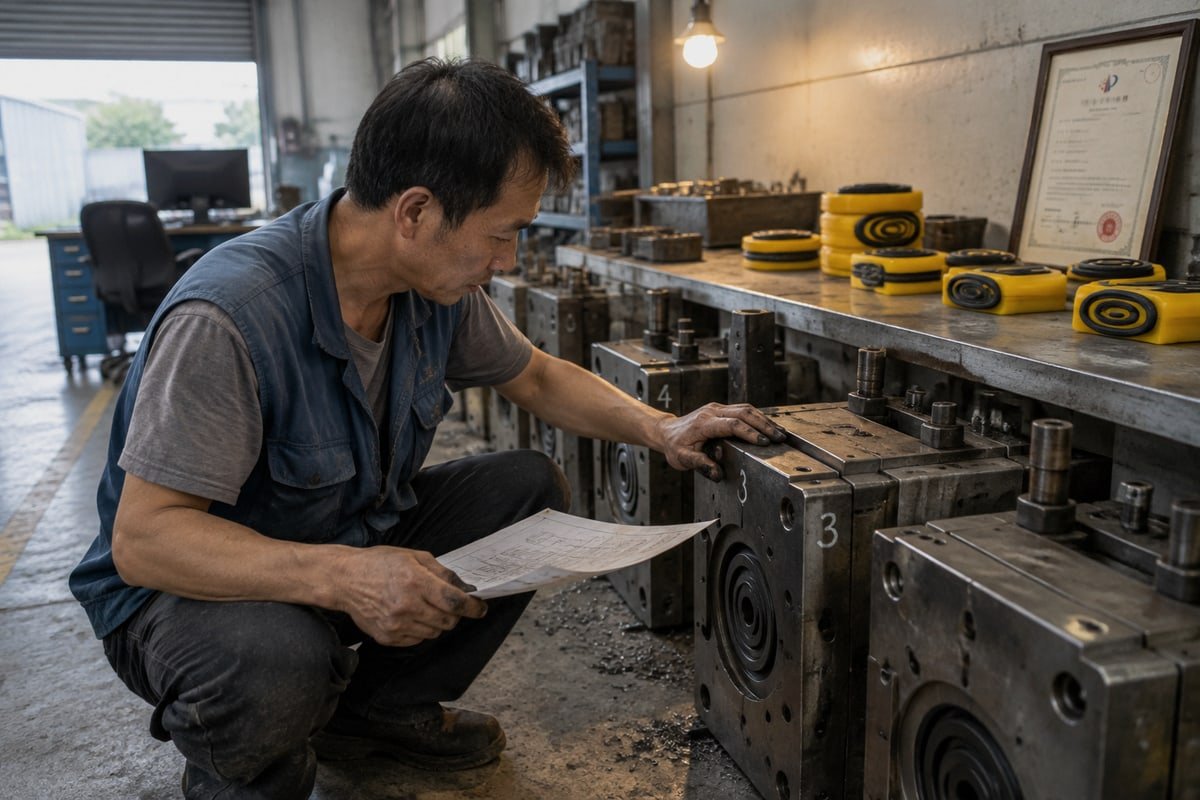
You should not only be allowed to request test reports directly. You should insist on it. Reports are where the factory-versus-trader question gets settled, because a report names a product, a standard, a date, and a responsible party. Let me walk through what to ask for and what to check on each page.
The report set a serious MCT factory keeps ready
| Документ | What it covers | What to verify |
|---|---|---|
| ISO 9001 certification | Quality management system | Holder name and plant address match the license |
| IATF 16949 certificate 4 | Automotive-grade process discipline | Same holder, current validity dates |
| Factory approval (Bureau Veritas in our case) | Independent review of the production site | Site listed is the site you were shown on video |
| Fire test report, A-0 / A-60 | Fire-rated cable seals for A60 bulkhead penetration | Module model, frame size, and test standard printed on the report |
| Отчет об испытаниях на проникновение IP68 | Dust and water immersion protection | Sample serial numbers, test duration, and depth |
| Watertight and gas-tight test | Sealing across 0.01 to 0.4 MPa | Pressure curve and pass criteria attached |
| Type approval certificate / MED certification | Marine and offshore acceptance where required | Certificate holder is the supplier, not a third brand |
Cross-reference the certificate holder
For marine and offshore buyers, this step is critical. Bodies such as UL, ABS, DNV, and Lloyd's Register 5 publish searchable registers. Type the supplier's legal name into those registers. If the сертификат типового одобрения you received lists a different holder, you are buying through a channel, not from the factory. That is not always a problem, but it must be disclosed.
Ask who ran the test and where
A good report states the laboratory or the witnessed facility. In-house pressure checks and immersion tests belong to the daily quality control process. Fire tests for A60 bulkhead penetration are run in a furnace under the relevant standard, and the report will name the furnace operator. When a supplier cannot tell you where the furnace was, treat the fire rating as unproven.
At our plants we supply these documents on request, and we attach the cross-reference table that maps the buyer's existing module model to our TSR or TSC equivalent. That way the engineer reviewing the file sees the dimensional match and the test evidence in the same folder.
Why does buying from a real MCT factory instead of a trading company affect my lead times and pricing?
Every quarter our planning team weighs how much halogen-free EPDM compound to hold in stock against cash tied up. That single decision sets the lead time a buyer sees.
Buying from a real MCT factory shortens lead times because production scheduling, mold making, and spare module runs happen in one place, and it lowers pricing by removing the trader's margin. Factory-direct modules compatible with 120-frame standards can cost 40–60% less than brand-name equivalents.
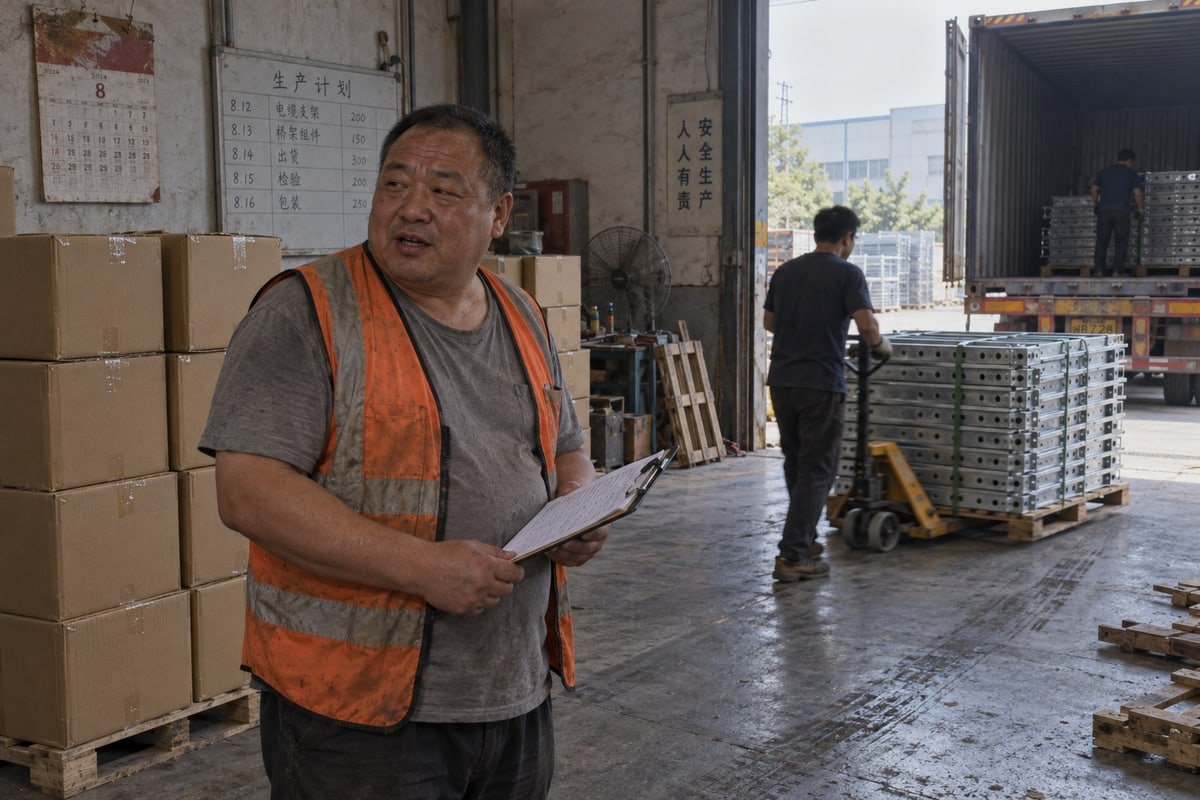
Price and lead time are downstream of control. Whoever controls the molding press, the steel stock, and the test rig controls when your order ships and what it costs. A trader controls neither. It waits on the same queue you would, then adds its margin.
Factory-direct versus trading company on the numbers that matter
| Factor | Real MCT factory | Trading company |
|---|---|---|
| Unit price | Lower; no middle margin | Higher; margin stacked on factory price |
| Minimum order quantity | Often higher for standard runs | More flexible on small mixed lots |
| Lead time control | Direct; can reprioritize a press | Indirect; depends on its own supplier |
| Custom sizes | Собственное производство пресс-форм | Must request tooling from a third party |
| Spare sealing modules | Fast runs from existing molds | Waits for factory stock |
| Root-cause analysis | Engineers inspect the returned part | Relays messages between you and the maker |
| Export documentation | Handled by the factory's export desk | Handled by the trader |
The objection: are traders sometimes the smarter choice?
Buyers raise this often, and it deserves a straight answer. A trader can add value when you need one shipment consolidated from many suppliers, when volumes are tiny, or when your own team cannot handle Chinese export paperwork. Those are real benefits. But for MCT modules going into a BESS container, a modular data center, or a switchgear panel, the trade-off flips. You need traceability to a batch, a signed test report, and a spare module that matches the original mold. A factory that also handles export documentation removes the trader's last advantage.
Why the market structure blurs the line
The MCT market is concentrated. One report puts the top five players at about 48.3% of global revenue in 2025, with names such as Roxtec, MCT Brattberg, Hawke, Hilti, icotek, Beele Engineering, Vector InfoTech, IDEALINK, and Satiate Solutions leading manufacturer lists. Those brands stress design and manufacture. Their regional partners and integrators sell through a commercial channel. So a "supplier" of a big brand may be a distributor with no press of its own. That is why a qualified second source matters. Our modules drop into existing 120-frame cutouts, we ship free validation samples for qualification, and the cost saving of 40–60% comes from the factory floor, not from a discount.
A practical path to a first order
Start with a trial order. Check labels, batch numbers, and packaging against the quote. Compare the sample against the cross-reference table. Then scale once your incoming inspection passes.
Заключение
Guessing whether a multi cable transit supplier is a factory risks certification gaps and stalled projects. Check documents, addresses, test reports, and lead-time logic, then request our free validation samples.
Сноски
1. Official ISO page explaining the standard for quality management systems in manufacturing. ↩︎
2. Official IEC explanation of IP ratings for dust and water protection. ↩︎
3. Technical overview of the synthetic rubber material used in multi cable transit modules. ↩︎
4. Official site for the automotive quality management standard mentioned as a factory proof. ↩︎
5. Authoritative marine classification society that issues type approval certificates for MCT systems. ↩︎



 English
 Español de México
 Deutsch
 Français
 العربية
 Русский