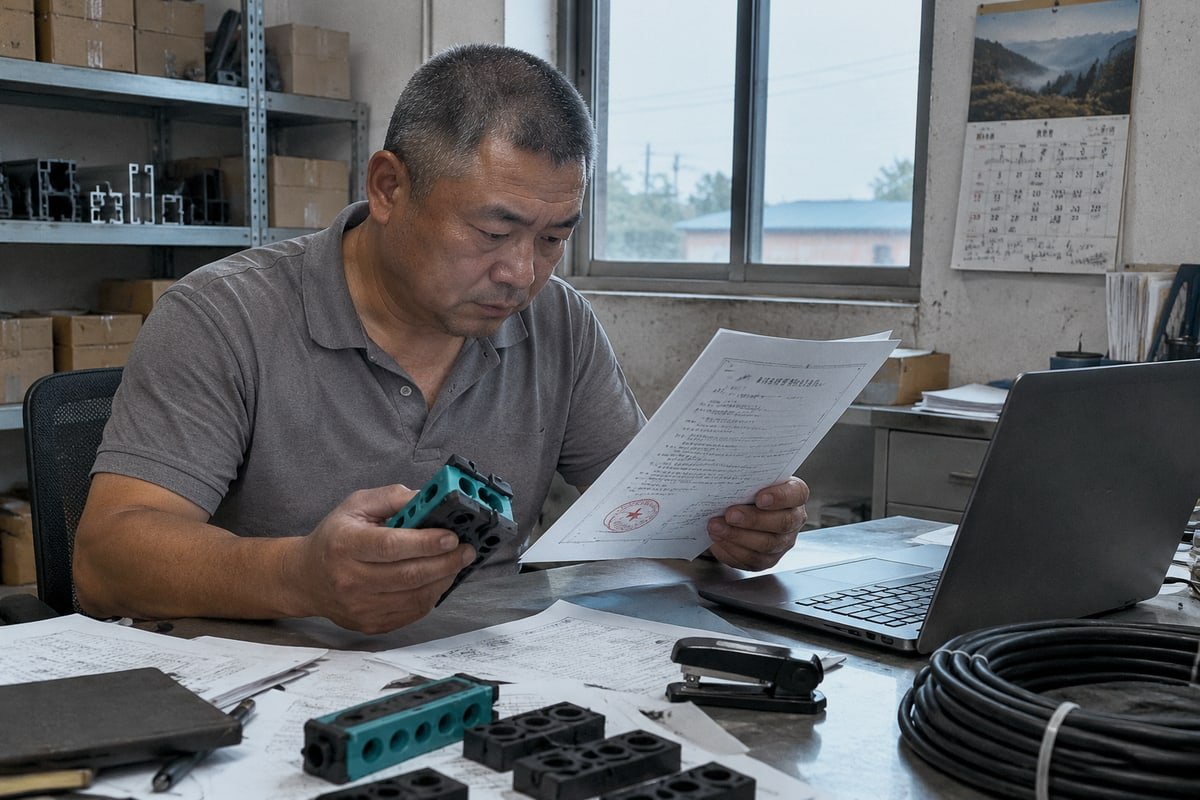
Procurement scams around multi cable transit systems cost more than money. One forged fire report can void a BESS container. Our factory sees the fallout when buyers switch to us.
The most common procurement scams when buying multi cable transit systems are forged type approval certificates, bait and switch substitution of uncertified sealing blocks, bid rigging between vendors, phantom suppliers invoicing for parts never shipped, and emailed bank-detail changes that divert payment. Verify certificates, samples, and bank details independently.
These scams are not new. They are ordinary fraud patterns wrapped in a technical product. Below, I walk through the four questions our buyers ask most, and how to answer each one with evidence instead of trust.
How Can I Verify a Supplier's ISO and IATF Certifications Before I Place an Order?
A German switchgear buyer once asked us for our IATF 16949 certificate number 1, then checked it on the IATF database before replying. That is exactly the right habit.
Verify ISO 9001 and IATF 16949 certificates by requesting the full certificate PDF, then checking the certificate number directly on the issuing body's online register and the IATF Global Oversight database. Confirm the scope, site address, and expiry date match the factory that will actually produce your MCT modules.

Certificates are the first thing a scammer forges, because they are the first thing a buyer asks for. A PDF is easy to edit. A logo is easy to copy. So the rule is simple. Never accept a certificate as a file. Accept it only as a record you looked up yourself.
Where each document can be checked
| Document | Where to verify | What must match |
|---|---|---|
| ISO 9001 certificate | Certification body's online register, or IAF CertSearch | Company name, site address, certificate number, expiry date |
| IATF 16949 certificate | IATF Global Oversight database | Certificate number, site, scope of production |
| BV factory approval | Bureau Veritas approval listing or direct inquiry | Factory site and approved product range |
| Type approval certificates (DNV, ABS, Lloyd's Register, UL) | Issuing body's online certificate search | Product model, rating, validity, holder name |
The scope trap
Here is the trick I see most often. The certificate is real, but it covers a trading office, not a production site. The scope says "sales of industrial components." Nothing about molding EPDM or welding frames. Third-party certification verification means reading the scope line, not just the header. Our own certificates name our Shaanxi headquarters and cover sealing module production, and we expect buyers to check that.
Why marine and offshore buyers face extra risk
Marine and offshore regulations lean on type approval certificates from classification societies. A forged DNV or ABS mark 2 can pass a desk review. It will not pass a surveyor at commissioning. By then the frames are installed and the ship is late. So ask for the certificate number and search it yourself. The classification societies publish searchable lists for this reason.
Questions that expose a shell vendor
A company incorporated last year rarely holds a mature IATF 16949 system. That standard takes time. Ask when the company was founded. Ask for the registered capital and the factory address. Then compare the address to the certificate. A vendor that shares an address with dozens of unrelated firms is a warning sign. A real factory has a footprint you can see on a map, a video call, or an audit.
What Red Flags Should I Watch for When a Quoted MCT Price Seems Too Low?
We quote 40–60% below the incumbent brands, so I understand the suspicion. The difference between a factory-direct price and a scam price is what's missing from the quote.
A too-low MCT quote is a red flag when it omits compression tools or lubricant, lists sealing blocks without a frame-and-module test as one system, comes from a recently incorporated vendor, uses round-dollar or under-threshold pricing, or clusters suspiciously close to competing bids. Compare line items, not totals.
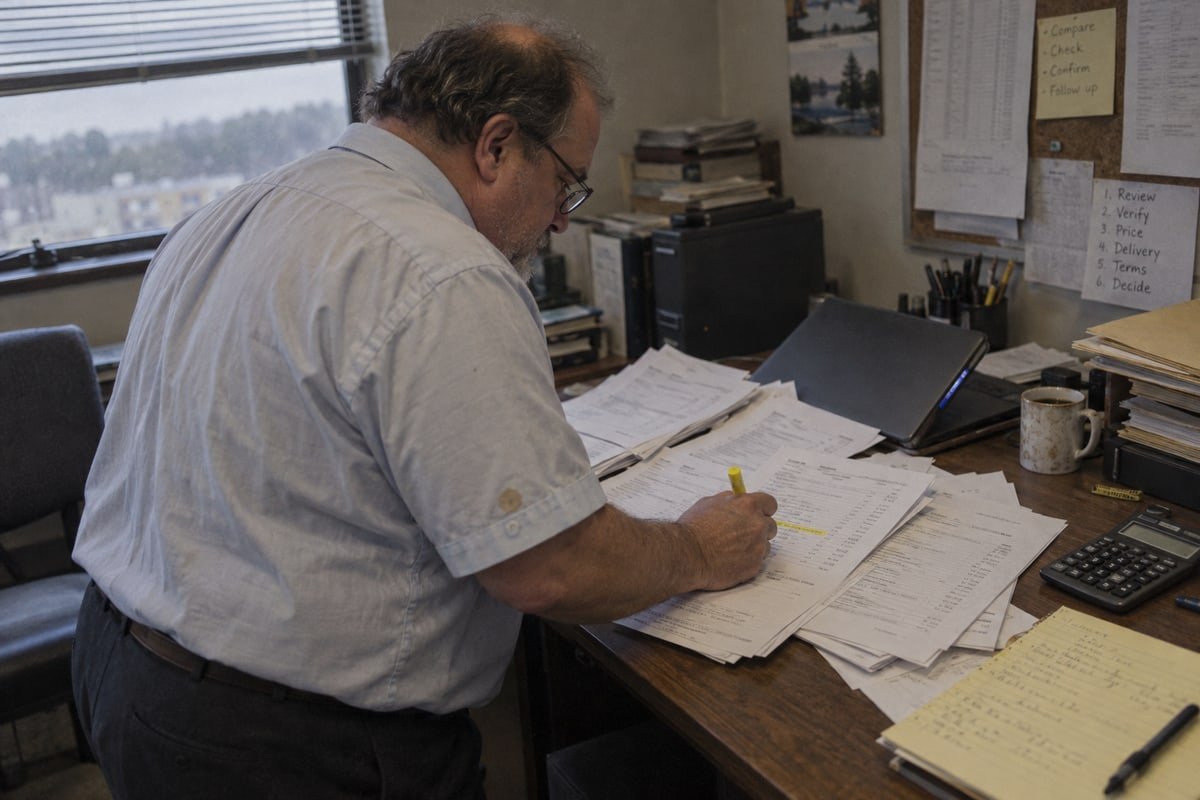
A buyer objection I hear often goes like this: "If I buy on lowest bid, I will get burned. So I should stay with the premium brand." I disagree with the conclusion, but not the worry. The answer is not to reject low prices. The answer is to buy on lowest total cost with verified compliance. A factory-direct supplier removes distributor margin and brand premium. That is a legitimate saving. A scammer removes rubber quality, testing, and parts. That is a hidden cost.
Legitimate savings versus hidden cuts
| What lowers the price | Legitimate or red flag | How to tell |
|---|---|---|
| No distributor markup, direct from factory | Legitimate | Factory address, own molds, production video, audit option |
| Lower labor and material cost base | Legitimate | Consistent pricing across the whole catalog |
| Recycled or filled EPDM instead of halogen-free virgin compound | Red flag | Request compound datasheet and halogen-free test |
| Sealing blocks sold without system testing in the frame | Red flag | Ask for the report covering frame plus modules together |
| Missing lubricant, stay plates, or compression tools | Red flag | Count every line item against a full installation kit |
| Quote just under your approval threshold | Red flag | Compare to internal estimate and other bids |
Bid patterns that point to collusion
Bid rigging shows up in the numbers. Watch for bids clustered within a narrow band. Watch for identical formatting or the same line-item wording from "competing" vendors. Watch for one company that keeps winning while others submit cover bids and never protest. Anti-fraud guidance from bodies like the World Bank 3 and the FBI flags all of these. They apply to cable transits just as they apply to concrete.
Substandard rubber compounds and counterfeit cable seals
Counterfeit cable seals often look right and fail early. Substandard rubber compounds take a compression set, harden, and lose their seal within a few thermal cycles. Our modules use step-core, halogen-free EPDM 4 for a reason. Ask any supplier for the compound datasheet and a halogen-free declaration. If they cannot name the compound, they did not make it.
Unauthorized distributor risks and bait and switch tactics
An unauthorized distributor can quote a premium brand, then ship a mixed system. Genuine frames arrive with unbranded blocks that were never tested together. Component mixing is a classic bait and switch tactic. It preserves the look and destroys the rating. Ask who the manufacturer of every component is. Then confirm it with the manufacturer.
Invoice and payment stage tricks
Round-dollar invoices, duplicate invoices, and split purchases under approval limits are old tricks. So is the email that says "our bank account changed." Call a known contact on a known number before you pay. No exceptions.
How Do I Confirm Dimensional Compatibility Before Committing to a Second-Source Supplier?
Early on, we learned that a module can match the 120-frame opening on paper and still bind during compression. Since then, every cross-reference entry gets a physical fit check.
Confirm dimensional compatibility by requesting the supplier's model cross-reference table, CAD or STEP files, and free validation samples, then fitting the samples into your existing 120-frame cutout with the original stay plates and compression unit. Measure module height, width, and depth, and check the core-to-cable diameter range before ordering.
Falsified legacy compatibility claims are a specific MCT scam. A vendor writes "compatible with all major brands" on a datasheet and hopes you never test it. Sometimes the width is right and the height is off by a millimeter. Sometimes the step-core diameter range is narrower than claimed, so your cables will not seal. The fix is a short, documented process. Here is the one we ask our own buyers to run.
A five-step fit qualification
- Request the cross-reference table. It should map each existing model number to the proposed replacement model, one line per size. Vague ranges are a warning.
- Request CAD or STEP files. Overlay them on your frame drawing. Check the module stack height against the frame opening, including the stay plates.
- Request free validation samples in the sizes you actually use. A supplier confident in modular sealing system quality will send them without a purchase order.
- Install the samples in a spare frame with your existing compression unit. Compress to the original torque. Watch for gaps, bulging, or binding.
- Record measurements and photos. Keep them in the supplier file as material traceability documentation.
What to measure and what passes
| Check | Tool | Pass criterion |
|---|---|---|
| Module width and height | Caliper | Matches original model within stated tolerance |
| Stack height in frame | Frame plus stay plates | Full stack seats with room for compression |
| Core-to-cable diameter range | Cable samples | Each cable diameter falls inside the module range |
| Compression behavior | Original compression unit | Even seal, no extrusion between stay plates |
| Halogen-free marking | Module stamp | Present and legible on each module |
Approved vendor list versus open competition
Some buyers object that opening the approved list invites fraud. Others say a closed list invites price abuse and spec steering. Both are right. The resolution is a qualified second source. Keep the list closed to unverified vendors. Open it to any supplier who passes the fit check, the certificate check, and a system test. Our TSC square modules and TSR round assemblies were designed to drop into common 120-frame cutouts for exactly this reason.
Watch for "or equal" language written around one brand
If your spec lists a brand name and a proprietary part number, then adds "or equal" with no test criteria, only one vendor can bid. That is spec steering. Rewrite the spec around measurable things: frame standard, fire rating, IP rating, pressure range, and halogen-free compound. Then any compliant second source can compete, and the incumbent cannot pad the price.
Can I Trust Test Reports and Validation Samples Without Third-Party Verification?
Our QC team keeps a shelf of returned competitor modules. Several arrived with polished test reports whose lab reference numbers led nowhere. Paper is cheap; pressure tests are not.
No. Treat test reports and validation samples as claims, not proof, until a third party confirms them. Check the report's lab reference with the testing body, match the tested product code to the quoted model, and send at least one sample for independent fire, IP68, or pressure testing.
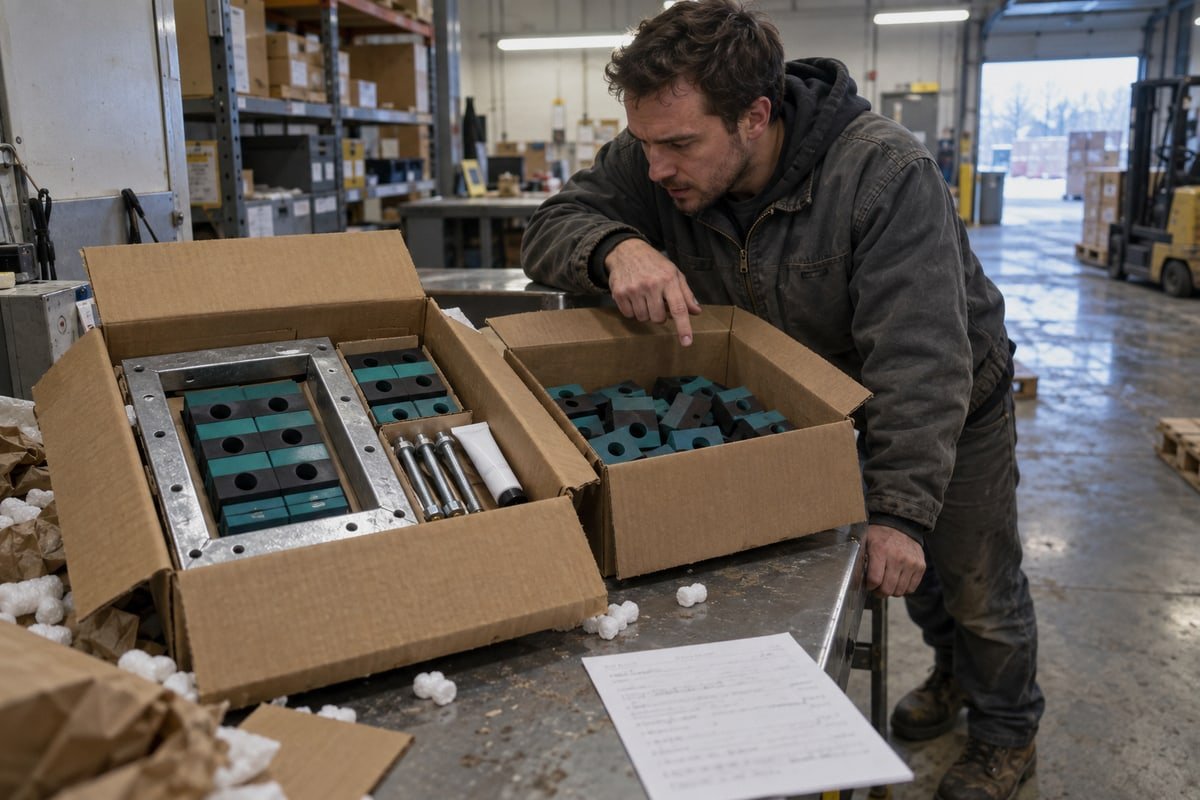
Forgery has become easier. AI tools can now produce a fire test report with realistic charts, lab letterheads, and plausible temperature curves. The document looks like it came from a premium manufacturer's file. It did not. So the question is not whether the report looks right. The question is whether the lab will confirm it.
How each document type gets faked, and how to check it
| Document | Common forgery sign | Verification path |
|---|---|---|
| A-0 / A-60 fire test report | Test standard cited but no test date, lab job number, or specimen drawing | Contact the lab with the job number; compare tested specimen to quoted model |
| IP68 ingress protection report | Depth and duration missing, or generic wording | Ask for the immersion parameters and the lab's confirmation |
| Watertight and gas-tight pressure test (0.01–0.4 MPa) | One pressure value, no hold time, no leak criterion | Request the full pressure curve and witness a repeat test |
| Halogen-free compound declaration | Declaration without a test method or batch reference | Ask for batch-linked material traceability documentation |
| Type approval certificate | Watermark present but number not searchable | Search the classification society's online register |
Match the tested product to the quoted product
This is where most bait and switch tactics succeed. The report is genuine. It just covers a different module. A common scam is to test one premium module, then attach that report to a cheaper block with a different compound. Compare the model code, the drawing number, and the module dimensions in the report to the quotation. Any mismatch means the report does not apply.
Fire safety compliance standards and non-compliant firestop materials
Fire safety compliance standards for A-class divisions come from marine and offshore regulations under the IMO FTP Code 5, and similar logic applies to BESS containers and modular data centers. Non-compliant firestop materials can pass a visual check and fail at temperature. Our A-0 and A-60 test documents name the lab and the specimen, and we hand them over on request together with the lab contact. Any factory that performed the test can do the same.
Validation samples are only as good as the test you run
A free sample proves dimensions. It does not prove ingress protection ratings. To trust IP68, someone has to submerge it. To trust 0.4 MPa, someone has to pressurize it. A short independent test on one sample costs far less than a warranty claim on a shipped container. We encourage buyers to do it, because it is the fastest way to separate a real factory from a reseller with a printer.
The distributor question
Some buyers prefer a local distributor for lead time and language. That is a fair trade-off. The risk is that the distributor sits between you and the test data. Insist that test reports name the actual manufacturer, and that the manufacturer will confirm them directly. A distributor who refuses that request is protecting something.
Conclusion
Procurement scams in multi cable transit systems hide behind paperwork. Verify certificates, price line items, fit, and tests independently, and a low-cost second source becomes a safe one.
Footnotes
1. Official database for verifying IATF 16949 certifications for automotive supply chains. ↩︎
2. Leading classification society providing type approval and certification for marine equipment. ↩︎
3. Institutional source for anti-fraud and procurement integrity guidelines. ↩︎
4. Technical information on EPDM rubber used in cable transit sealing modules. ↩︎
5. The International Maritime Organization’s standard for fire test procedures. ↩︎



 English
  Español de México
  Deutsch
  Français
  العربية
  Русский