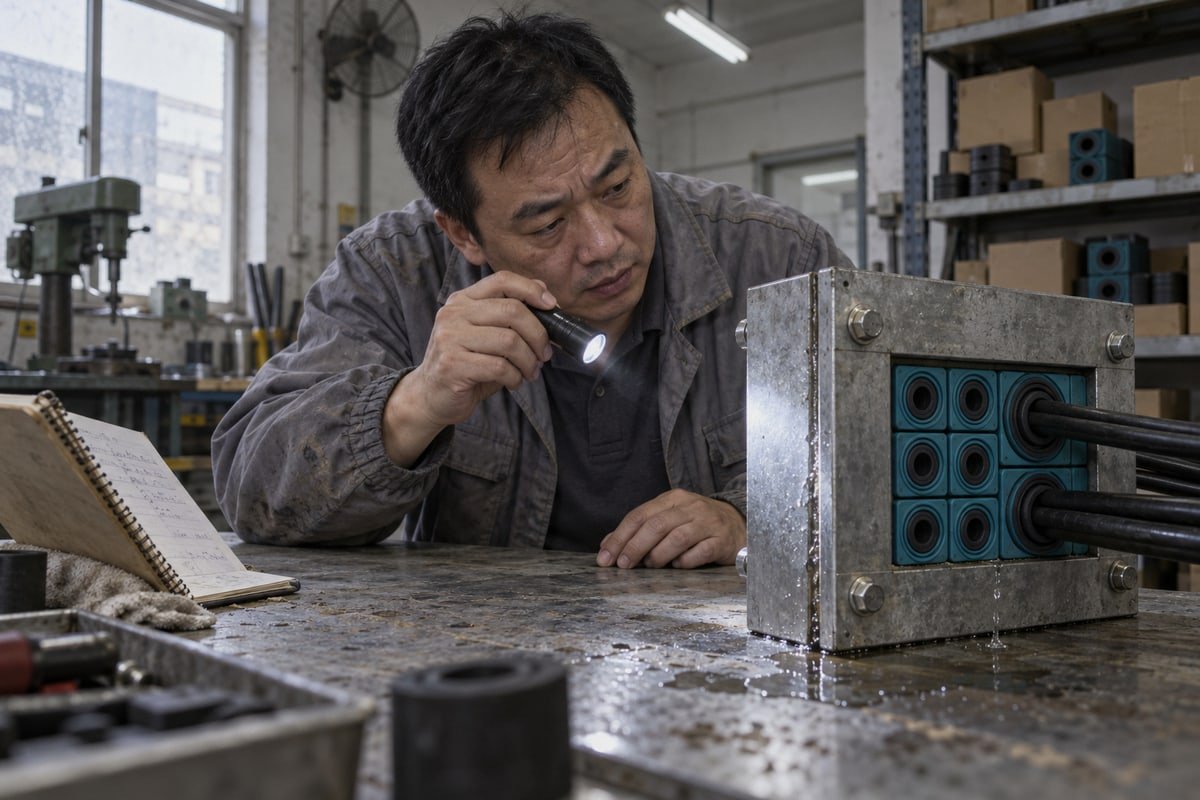
Sourcing engineers often forward our [factory rejected claims from other](https://dewinmct.com/?p=588) multi cable transit suppliers 1. Their warranty and after-sales terms looked fine on paper, then failed at the first real leak.
Warranty and after-sales terms for multi cable transit suppliers should cover fire rating and IP68 sealing performance, not only material defects, with a written defect liability period of 24 to 60 months, defined RMA lead times, spare module availability for 15 years, transferable coverage, and documented on-site technical support.
Those terms sound simple. In practice, each one hides a negotiation. I will walk through the four questions our customers ask most often, and I will show what to put in writing before you sign.
How can I verify a supplier's warranty covers fire rating and IP68 performance failures, not just material defects?
A purchasing engineer in the Netherlands asked me one question before reading our datasheet: if the module passes IP68 in your lab but leaks on his BESS container, who pays IATF 16949 2?
Verify performance coverage by reading the warranty's definition of defect: it must name fire rating (A-0/A-60) and IP68 or watertight and gastight integrity as warranted performance, reference the type approval certificates, and state remedies for failure of a correctly installed transit under rated conditions.
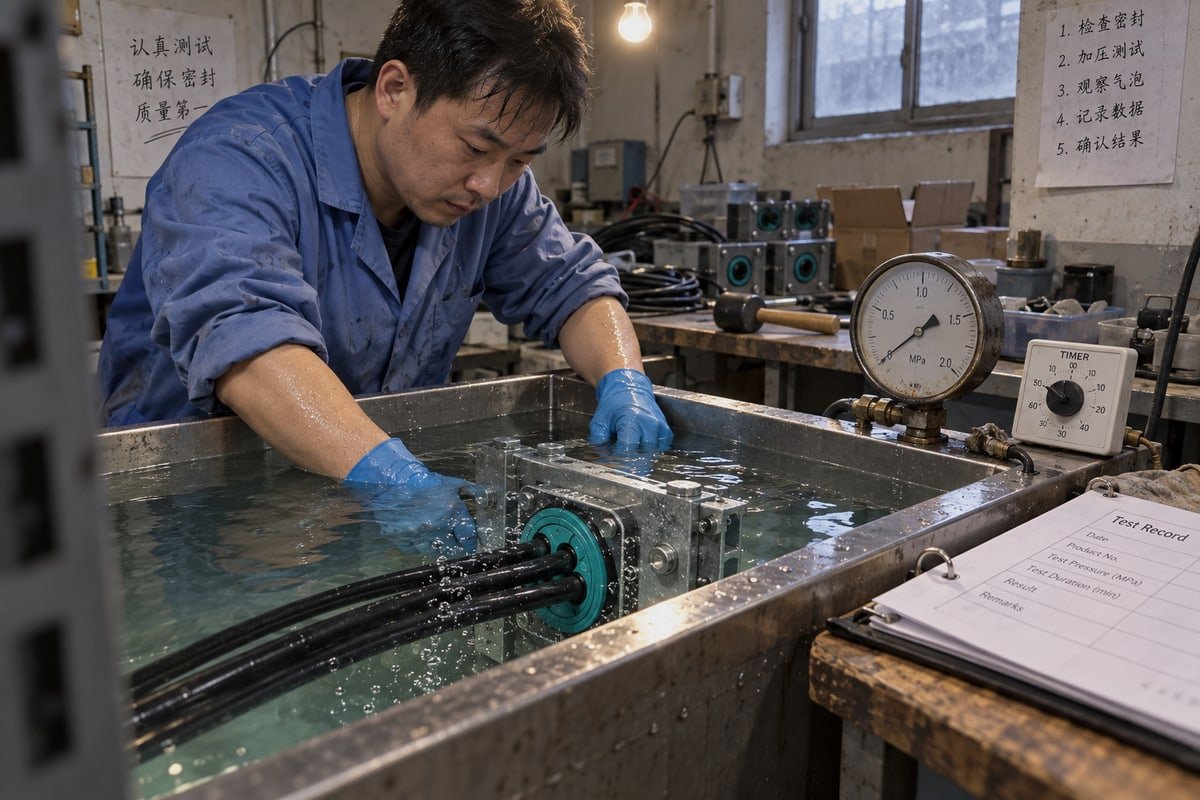
Most supplier warranties I have read cover "defects in material and workmanship." That phrase sounds protective. It is not. A module can be free of material defects and still fail to seal, because sealing is a system result. It depends on the module, the frame, the stayplate, the compression unit, the lubricant, and the torque applied on site. If the warranty only names material defects, the supplier can reject a leak claim by saying the rubber itself was fine.
Material defect versus performance defect
The table below shows how the two definitions play out on a real claim.
| Claim scenario | Material-only warranty | Performance-backed warranty |
|---|---|---|
| Module cracks in storage | Covered | Covered |
| Correctly installed transit leaks at 0.1 MPa | Usually rejected | Covered if within rated 0.01–0.4 MPa |
| Fire test on site fails the A-60 rating | Rejected | Covered if installed per certificate drawing |
| Frame weld porosity lets water through | Depends on whether frame is in scope | Covered as part of the system |
| Wrong compression wedge supplied | Often excluded | Covered as system component |
Three points to put in writing
First, ask the supplier to attach the fire rating certifications and type approval certificates 3 to the contract, not just to the marketing folder. On our side, the BV factory approval and the A-0/A-60 and IP68 test documents are available on request, and we prefer buyers reference them in the purchase order. That way the certificate defines the rated condition, and the warranty defines what happens when the product misses it.
Second, define "correctly installed." Here I have to be fair to suppliers. The supplier viewpoint is that a narrow warranty prevents claims for installer mistakes. That concern is valid. Torque and module selection matter. The solution is not a narrower warranty. It is an installation supervision clause: the supplier reviews the as-built photos or torque record, signs off, and then the performance coverage becomes active. Both sides know where the line sits.
Third, list every component in scope. Frames, stayplates, compression wedges, blank modules, and lubricant should all be named. Component-only loopholes are the most common reason a valid claim on our modular sealing systems, or anyone's, gets stuck.
What documentation should I require to support after-sales claims on drop-in replacement modules?
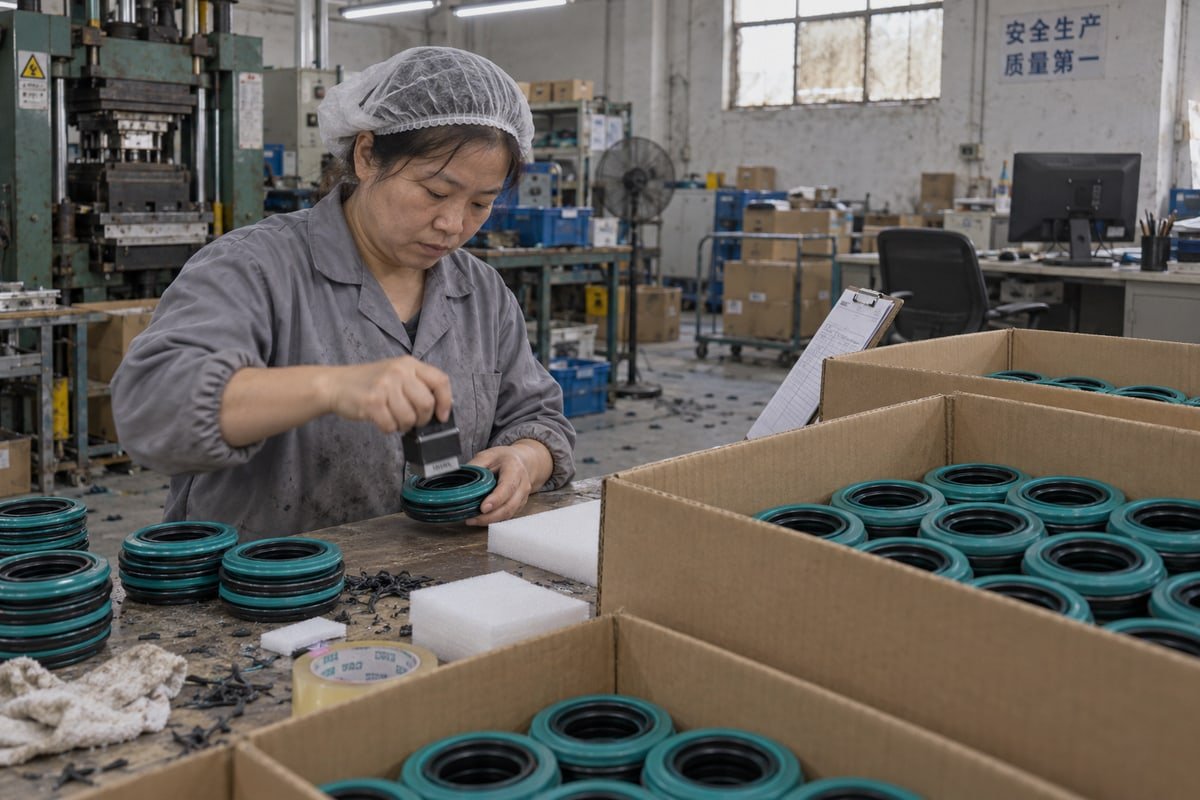
On our Shaanxi line, each EPDM module gets a batch code before it leaves the press. That code is the start of every claim file, not an afterthought.
Require a cross-reference table mapping the original model to the replacement module, dimensional drawings or STEP files, type approval and fire rating certificates, IP68 and pressure test reports, batch-level material traceability records, installation and torque instructions, and a signed installation record with photos before energizing.
Drop-in second sourcing changes the documentation question. When a buyer replaces an existing module with a dimensionally compatible one in a 120-frame standard cutout, two suppliers now share one frame. If a leak appears later, the first argument is about whose part failed. Good documentation settles that argument in minutes. Bad documentation turns it into months of email.
I think of the paperwork in four stages. Each stage produces a file that the next stage depends on.
Stage one: qualification
Before any order, get the cross-reference table that maps the existing model number to the replacement model, and get free validation samples. Our engineers issue the cross-reference table with tolerances, and we ship samples so the buyer's team can fit them into the actual frame. Keep the sample fit report. It is evidence that the replacement was dimensionally compatible on day one.
Stage two: delivery
At delivery, the pack should include the certificates, the test reports, and material traceability by batch. Under ISO 9001 4 and IATF 16949 systems, a batch code should trace back to the rubber compound lot and the pressing date. Halogen-free EPDM 5 has a defined shelf life and storage condition. If a claim is later rejected for "improper storage," the batch record and your warehouse log are the two documents that decide it.
Stage three: installation
This is where most claims are won or lost. The supplier should provide module selection charts for cable diameter, the torque value for the compression bolts, and the sequence for stayplates. The installer should record the transit ID, module positions, torque, and a photo. Several buyers now ask us for a digital as-built log of every transit at handover. I support that. It makes audits faster and makes a later claim traceable to one frame, not to a whole batch.
Stage four: claim
| Document | Who produces it | Why it matters at claim time |
|---|---|---|
| Cross-reference table | Supplier | Proves the replacement was specified as compatible |
| Batch traceability record | Supplier | Links the failed module to a compound lot and press date |
| Storage log | Buyer | Defends against "improper storage" exclusions |
| Installation record and photos | Installer | Proves correct torque and module selection |
| Written notice with date | Buyer | Meets the "timely notice" condition in most warranties |
| RMA number and inspection report | Supplier | Confirms factory inspection found a defect |
One more point. Most warranties require the supplier to inspect before the buyer removes the part. Negotiate a photo-and-video alternative. On an offshore platform or inside a sealed BESS container, waiting for a factory visit before removal is not realistic.
How long a warranty period is reasonable for MCT systems used in BESS or data center projects?
Longer warranties cost us money to reserve against, so I weigh two things: how long the rubber must hold compression, and how long the customer's asset actually runs.
A reasonable MCT warranty for BESS and data center projects is a 24–60 month defect liability period starting at delivery or commissioning, plus a separate sealing performance guarantee aligned with the asset design life, spare module availability for 15 years, and transferability from EPC to owner.
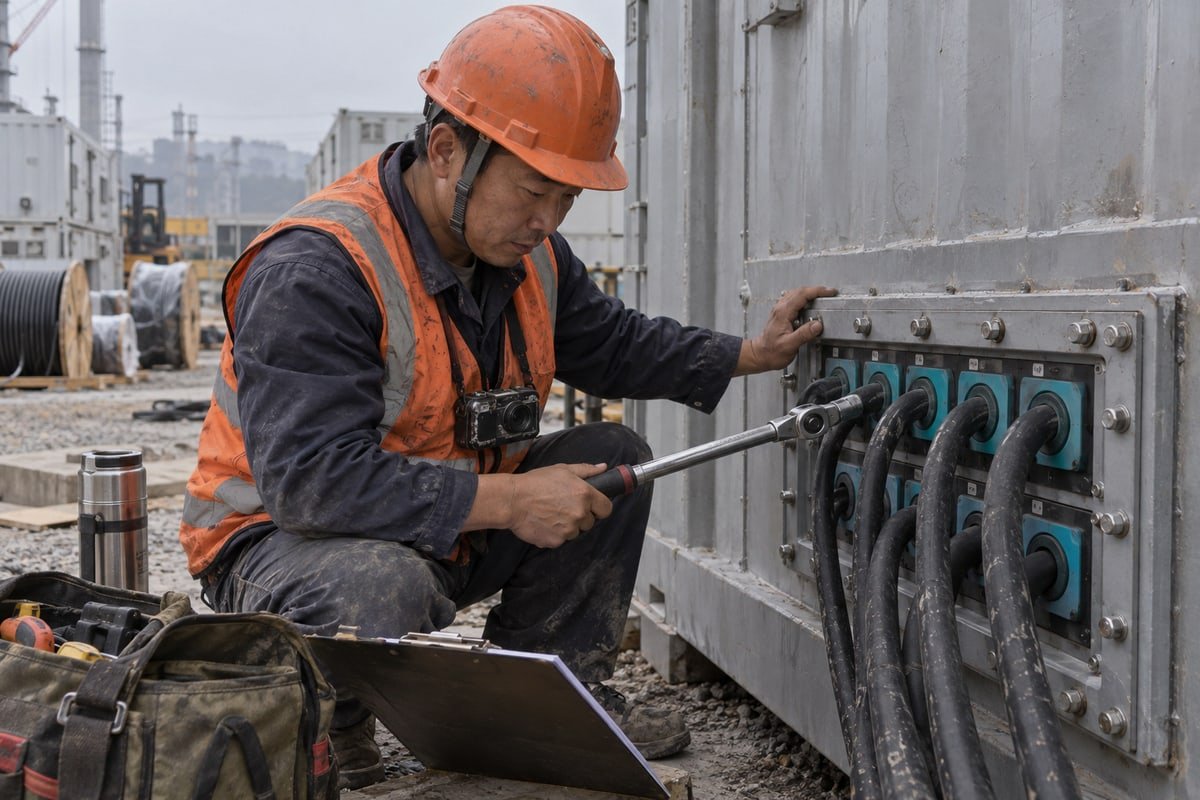
The common industry baseline is 12 months from shipment, with written notice, factory inspection, and an RMA required. For a BESS container, that baseline is weak. The container may ship from the integrator three months after our modules ship to them, sit at the site for another three months, and be energized in month nine. A 12-month warranty from shipment leaves the owner with three months of coverage after energizing. The start date matters as much as the length.
Comparing the three common structures
| Structure | Start date | Typical length | Who it protects |
|---|---|---|---|
| Standard supplier terms | Shipment | 12 months | Supplier, mainly |
| Negotiated defect liability period | Delivery or commissioning | 24–60 months | Integrator and EPC |
| Long performance guarantee | Registration or certified installation | 15–25+ years | Asset owner, if conditions are met |
The 25-year question
Some ranking articles recommend negotiating 25-year performance warranties. I understand why. A transit is safety infrastructure, and some adjacent cable products now market very long warranties. But I ask buyers to read those terms closely. Long warranties usually require registration, installation by approved parties, and compliance with specified standards. Miss one step and the coverage is gone. A 25-year clause with five conditions can protect you less than a clean 60-month clause with two.
My position is to split the promise. Use a defect liability period for the first years, when workmanship problems surface. Then use a separate sealing performance guarantee tied to the rated conditions, with a clear list of what voids it. That structure is honest about what a rubber module can promise over decades.
The liability cap objection
Procurement teams sometimes accept a remedy limited to repair or replacement, with liability capped at the purchase price, because it keeps the unit price low. That trade-off is real, and I will not pretend otherwise. But an operations manager sees it differently. A leaking transit in a data center module means downtime and rework far above the module cost. The middle ground I recommend is a cap set at a multiple of the order value, plus a supplier obligation to fund replacement labor when the factory inspection confirms a product defect.
Finally, make the warranty transferable. Integrators sell to EPCs, and EPCs hand over to owners. If the warranty dies at the first transfer, the owner holds an asset with no coverage.
What response time and spare parts availability should I negotiate for after-sales technical support?
We learned this the hard way: a customer's commissioning slipped by days because a single spare module sat in customs paperwork. Now export documents ship before the parts.
Negotiate a written SLA with a 24-hour first technical response, 48–72 hours for a remote diagnosis with drawings, emergency spare module dispatch within 5–10 working days, named escalation contacts, on-site technical support at agreed day rates, and guaranteed spare parts availability for 15 years.
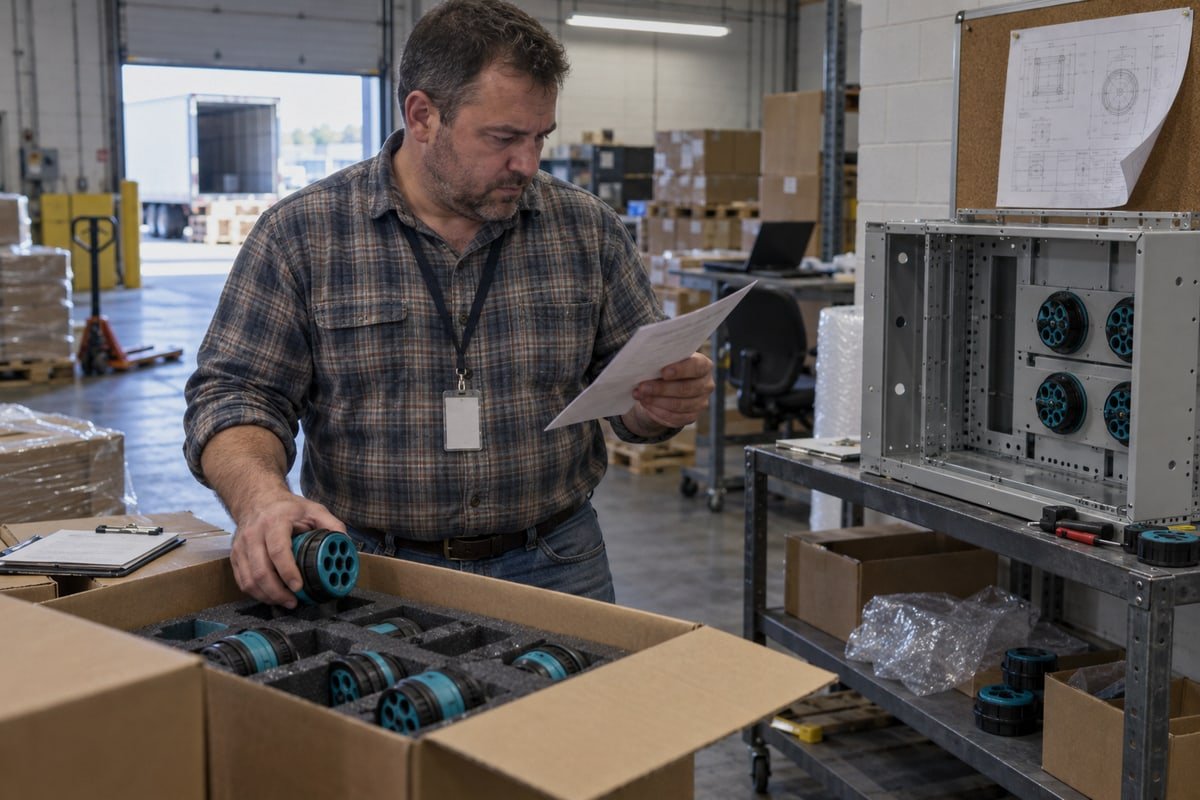
Many sellers advertise 24/7 technical support. That phrase means little until you define what arrives, and when. A phone answered at 3 a.m. is not the same as an engineer with your as-built drawing and a spare module on a pallet. I split after-sales support into tiers, and I ask buyers to negotiate each tier separately.
Support tiers worth defining
| Tier | Trigger | Target response | Deliverable |
|---|---|---|---|
| First response | Any written query | 24 hours | Named engineer acknowledges and requests photos |
| Remote diagnosis | Leak, torque, or fit issue | 48–72 hours | Written assessment with drawing references |
| Emergency spares | Confirmed damaged or missing module | 5–10 working days to dispatch | Compatible module from stock, export documents attached |
| On-site technical support | Complex frame or audit | Agreed lead time and day rate | Engineer on site, signed inspection record |
| Post-incident inspection | Fire, blast, or pressure event | Agreed lead time | Re-certification opinion on whether the transit remains serviceable |
Spare parts availability over the asset life
Cables get added. Frames rarely get replaced. So the question is whether compatible sealing modules will still exist in year ten when the owner adds a fiber run. I recommend a clause guaranteeing compatible modules for at least 15 years. Our step-core design helps here, because one module size covers a range of cable diameters, which shrinks the number of part numbers an owner must stock. In-house mold making also means a discontinued size can be re-tooled rather than declared obsolete.
Ask also for stock visibility. A supplier who keeps spare sealing modules in stock and handles export documentation in advance will beat one who starts production after your call. Regional coverage matters too. For the Middle East and Europe, agree who clears customs and who pays for air freight in an emergency.
Remote verification and end of life
Two newer terms deserve a mention. Remote verification by video or AR lets our engineers check torque sequence and module selection live, without flying to an offshore site. I encourage buyers to write it into the SLA as a low-cost audit step. And at the end of life, halogen-free rubber modules can be taken back or routed to certified recycling during a retrofit. It is a small clause, but owners with sustainability reporting now ask for it.
Conclusion
Cheap transits with thin warranties shift risk to you. Negotiate performance coverage, documents, a real defect liability period, and SLAs, and the second source becomes a genuine partner.
Footnotes
1. Provides a technical overview of the multi cable transit systems discussed in the article. ↩︎
2. Authoritative site for the automotive quality standard used for material traceability in production. ↩︎
3. DNV is a leading authority for the type approval certifications required for industrial sealing systems. ↩︎
4. Official source for the quality management standard governing the manufacturing processes mentioned. ↩︎
5. Technical details on EPDM rubber, the primary material used for the sealing modules. ↩︎



 English
  Español de México
  Deutsch
  Français
  العربية
  Русский