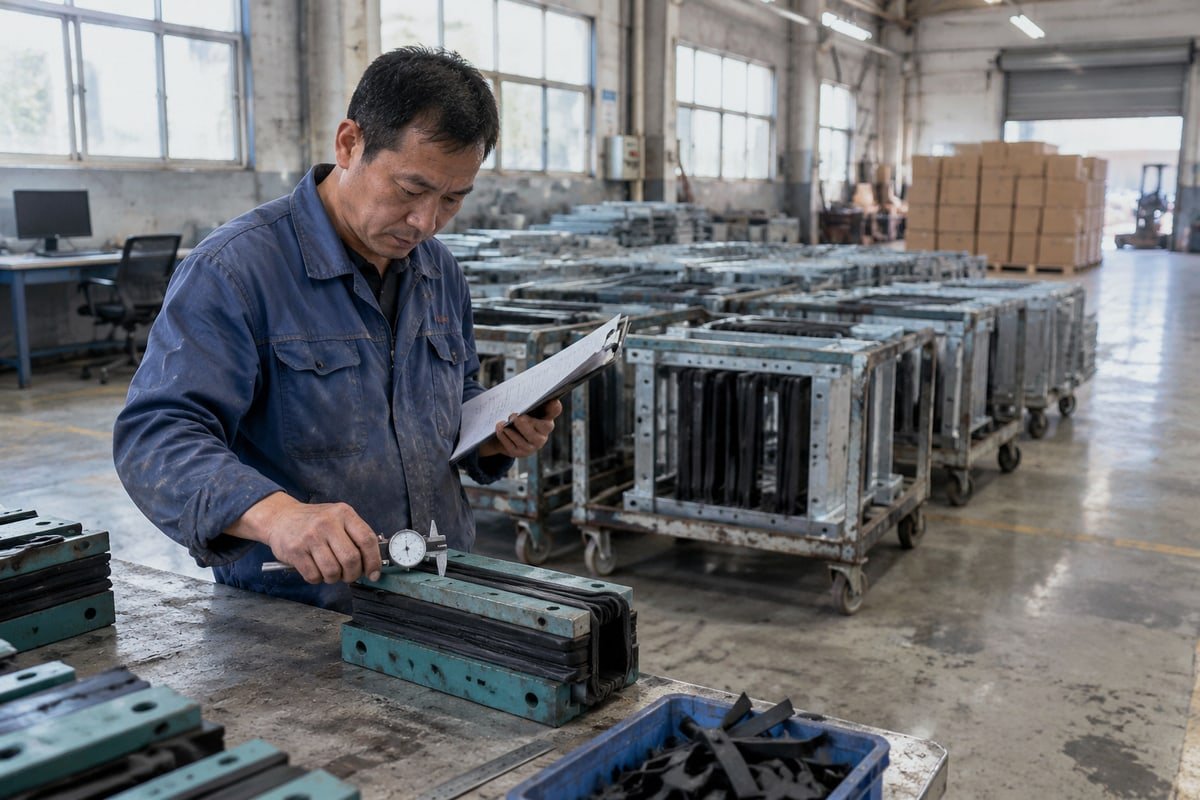
Mid-production vs pre-shipment inspection decides [how far a bad compression setup travels on our TSC line](https://dewinmct.com/?p=719). Left unchecked, it repeats across hundreds of modules. Early checks stop that.
Mid-production vs pre-shipment inspection changes rework cost mainly through timing. Mid-production checks at 20–40% completion stop systematic sealing, sizing, or labeling errors before they multiply, so rework stays small. Pre-shipment inspection finds the same defects after the full batch is built, which raises labor, scrap, retest, and delay costs.
The inspection fee is almost the same at both stages. The rework bill is not. Below, I break down where the money actually goes, when each inspection point makes sense, what paperwork keeps the shipment moving, and how a free sample removes most of the risk before we cut a single frame.
What Rework Costs Can I Avoid by Catching Sealing Defects During Mid-Production Inspection?
Two years ago our Shandong plant caught a mis-sized step-core on a TSC module batch at roughly 25% completion. We scrapped a few dozen modules instead of the whole run.
Catching sealing defects at mid-production avoids batch-wide scrap of EPDM modules, technician disassembly and reassembly labor, full re-inspection and retest, repacking, and schedule penalties. Late discovery at pre-shipment typically costs about 2.5× more, and field rework offshore can carry a 10× multiplier.
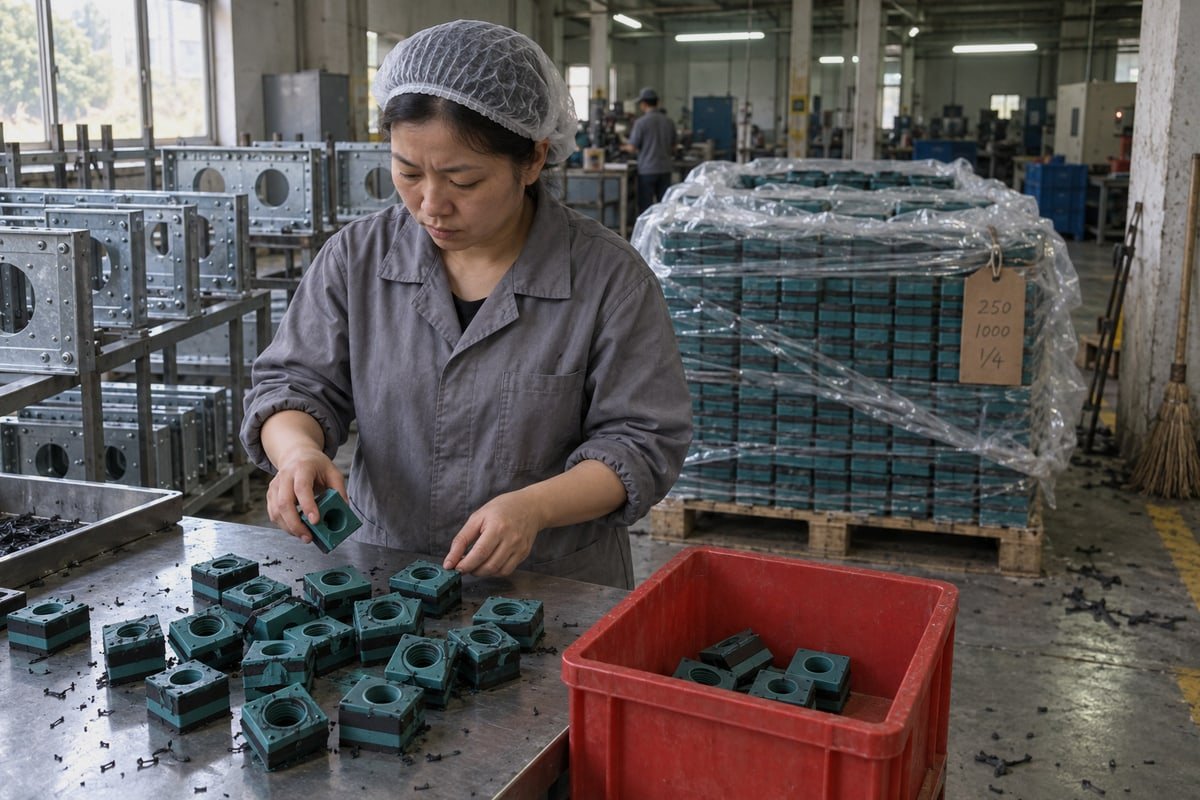
That batch taught me to think about rework as a stack, not a single line item. The visible repair labor is only the top layer. Under it sit the costs most buyers never see on the invoice.
The rework cost stack for cable sealing systems
| Cost layer | Found at mid-production (20–40% done) | Found at pre-shipment (100% done) |
|---|---|---|
| Inspection fee | Roughly $299–$350 per man-day | Roughly $300–$500 per man-day |
| Scrap of modular sealing blocks | Limited to the affected portion | Potentially the full order |
| Rework labor | Adjust the process, fix a small lot | Remove and re-size elastomer layers on every module |
| Re-inspection and retest | One small lot re-checked | Full final random inspection repeated |
| Repacking and relabeling | Usually none | Full unpack, sort, repack |
| Delay cost | Absorbed inside the lead time | Missed vessel or project window, possible liquidated damages |
Industry cost-of-quality work 1 suggests the hidden layers run about 3–5× the visible repair labor. A refused or reworked shipment can eat 15–30% of shipment value before knock-on effects are counted. For a multi cable transit order, those numbers feel conservative to me.
Why sealing defects multiply in MCT production
A cable transit module is not a single part. It is a frame, a set of step-core EPDM blocks 2, stay plates, and a compression unit. Each element has its own tolerance. If one cutting die drifts, every block from that die drifts. If a compression wedge is machined short, every wedge is short. The defect is systematic, so the count grows with the run.
Mid-production inspection is where we audit the things that cannot be seen later. Weld penetration on galvanized frames is one example. Fire-retardant purity of the halogen-free EPDM compound 3 is another. Neither shows up on a finished, painted, packed unit. Both matter for firestop seal integrity and for A-0/A-60 certification.
The tolerance stack-up problem at pre-shipment
Pre-shipment inspection often finds a different kind of failure. Each block measures inside spec. The frame measures inside spec. Yet the assembled transit will not reach the specified compression. That is tolerance stack-up. Fixing it late means pulling thousands of multi-diameter elastomer layers, re-sizing them, and reassembling. That is the 2.5× multiplier in practice.
We log every such finding as a non-conformance report 4 and attach a corrective action plan. Our engineers found that the report is short when the problem is caught early. It is long and expensive when it is caught at the dock.
How Do I Decide Between Mid-Production and Pre-Shipment Inspection for My MCT Order?
Every quotation I review forces the same trade-off: one extra inspection day against the risk that a systematic error runs through a whole 120-frame-compatible order.
Choose mid-production inspection when the MCT order is large, variant-heavy, tied to a fixed installation window, or placed with a new supplier. Choose pre-shipment inspection alone when the order is small, standard, and the supplier has proven in-process controls. Many buyers combine both for critical projects.
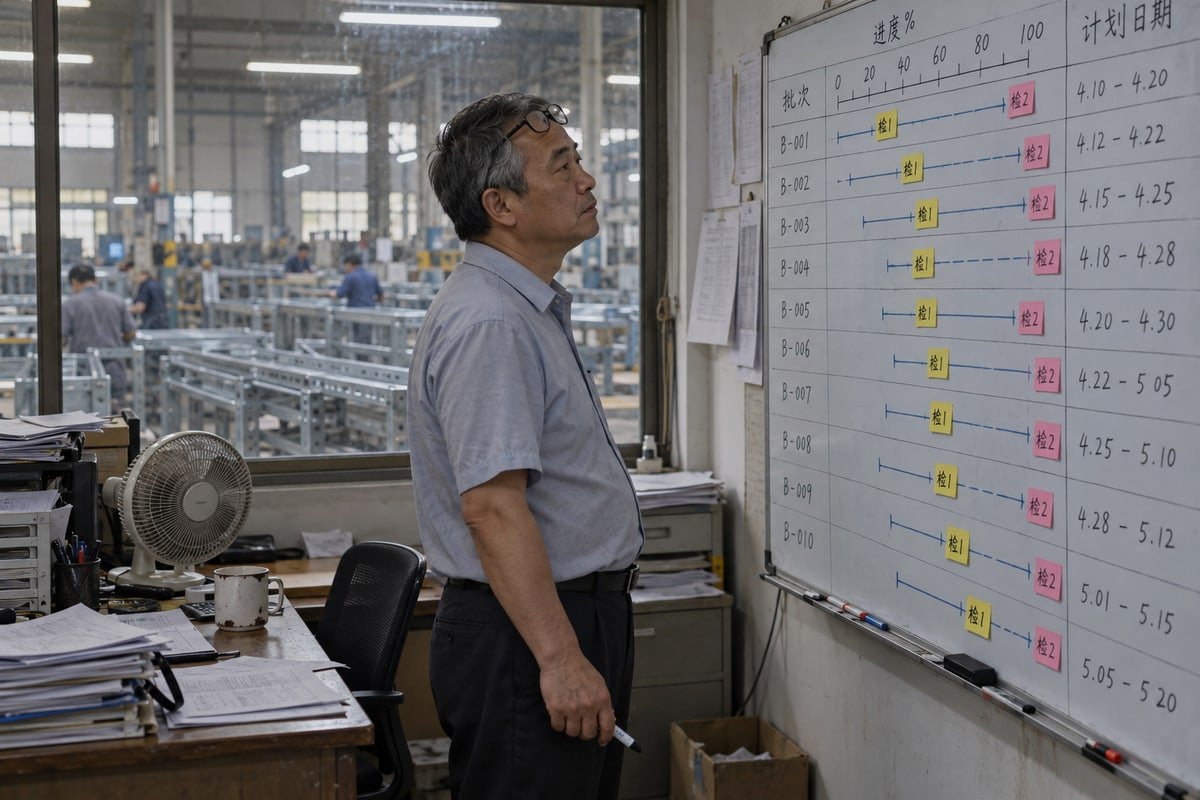
Here is the comparison I walk sourcing engineers through before they book an inspection slot with a third-party agency or with our own QC team.
Mid-production vs pre-shipment inspection at a glance
| Order profile | Mid-production inspection | Pre-shipment inspection | My recommendation |
|---|---|---|---|
| Small batch, standard TSR/TSC sizes | Low added value | Sufficient as acceptance gate | PSI only |
| Large batch, one or two sizes | Catches process drift early | Verifies packing and labels | Both |
| Variant-heavy kits (many diameters, plates, frames) | Catches kit mix-ups early | Finds errors after kitting | DUPRO first, PSI optional |
| New or second-source supplier | Builds process confidence | Confirms outcome only | Both, with first-article review |
| Order tied to vessel or BESS site window | Protects the schedule | Too late to recover | DUPRO mandatory |
| Stable supplier, low defect history | Often redundant | Adequate | PSI only |
Three buyer objections, and how I answer them
Objection one: pre-shipment inspection is cheaper and simpler. It is simpler. One visit, one report, one decision. The fee is also comparable. But the fee was never the expensive part. One published example puts a $430K order with a potential 20% defect rate at about $86K exposure against roughly $1K of inspection. That math only works if the inspection stops the defect before it spreads. A final check cannot do that.
Objection two: our supplier's process is mature, so a mid-production check is redundant. I accept this for repeat orders with a clean defect history. The cost of quality is already low. For a first order, or a new frame size that needs a fresh mold, the process is not yet proven. That is precisely when mid-production inspection earns its fee.
Objection three: DUPRO adds coordination overhead and can become a box-ticking exercise. This is true if the inspector only counts units. It is false if the inspector reviews the first-article, the compression test on a sample transit, and the traceability log. We give visiting inspectors a checklist tied to our ISO 9001 and IATF 16949 quality assurance protocols so the visit corrects the process instead of just measuring it.
A simple decision rule
Ask one question. If this defect appears, is it cheap to fix now and expensive to undo later? For sealing, sizing, and weld defects on cable sealing systems, the answer is almost always yes. That points to mid-production inspection. If the defect is cosmetic or packaging-related, pre-shipment is enough. Good supply chain risk management uses both, but for different reasons.
What Documentation Should I Request to Reduce Inspection-Related Delays on Cable Transit Shipments?
A sourcing engineer in Germany held our shipment for a week because the BV certificate copy and the packing list used different model numbers. Paperwork, not modules, caused the delay.
Request a signed inspection checklist, first-article approval record, non-conformance reports with a corrective action plan, material certificates for EPDM and galvanized frames, fire and IP68 test reports, a model cross-reference table, packing list with photos, and a final random inspection report before booking freight.
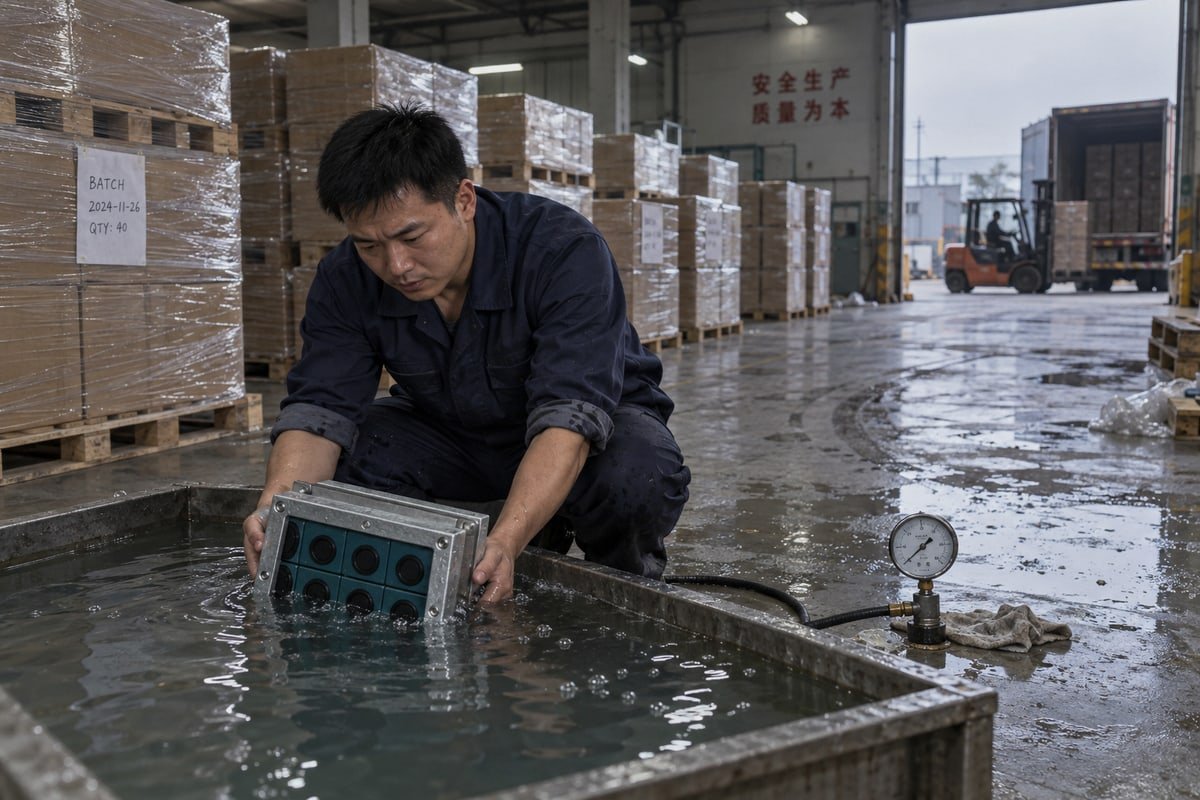
That week cost nothing in rework. It cost a full week of manufacturing lead time 5 that we had already promised. Since then, I ask buyers to agree on the document set at order confirmation, not at dispatch.
Documents by inspection stage
| Stage | Document | What it prevents |
|---|---|---|
| Before production | Approved drawing, CAD/STEP file, cross-reference table (existing model → DEWIN model) | Wrong size or wrong drop-in reference |
| First article | First-article inspection record with compression test result | Systematic tooling error repeated across the batch |
| Mid-production | DUPRO report, material certificates for EPDM and frame steel, weld audit note | Hidden material or structural defects reaching final assembly |
| Mid-production | Non-conformance reports and corrective action plan | Unclear ownership of a fix, repeated defects |
| Pre-shipment | Final random inspection report with AQL sampling and photos | Packing, labeling, and kit-completeness errors |
| Pre-shipment | Fire rating A-0/A-60 test report, IP68 and 0.01–0.4 MPa sealing test documents | Rejection during regulatory certification |
| Export | Packing list, commercial invoice, certificate of origin, nameplate data | Customs and receiving delays |
Why traceability matters more than volume of paper
A thick folder does not reduce delay. Consistent data does. Every module we ship carries a nameplate that links back to the batch record, the compound lot, and the compression test on the sample transit. When an inspector can trace a single block back to its lot, the defect detection rate goes up and the argument time goes down.
Some larger integrators now use Digital Transit Management Systems during production. The system builds a digital twin of each transit, so cable density and sealing capacity are validated on screen before physical assembly. AI-driven machine vision is also starting to verify module layer counts, which is a leading cause of on-site sizing rework in offshore installations. Neither tool replaces a document set. Both make the document set trustworthy.
One practical habit
Ask for the pre-shipment report and the packing photos in the same email, with matching model numbers. If they match the cross-reference table you approved at order stage, receiving inspection becomes a formality. If they do not, stop the freight booking and resolve it while the goods are still on our floor.
How Can Free Validation Samples Lower My Rework Risk Before Full-Scale MCT Production Begins?
The hardest lesson we learned after 2013 was simple: a drawing approval is not a fit approval. A free validation sample in the buyer's own frame settles what paper cannot.
Free validation samples let you test drop-in fit, compression behavior, cable-diameter range, and sealing performance in your own 120-frame cutout before production starts. Any dimensional or material issue gets fixed at the mold or specification stage, so it never multiplies across the batch or reaches inspection.
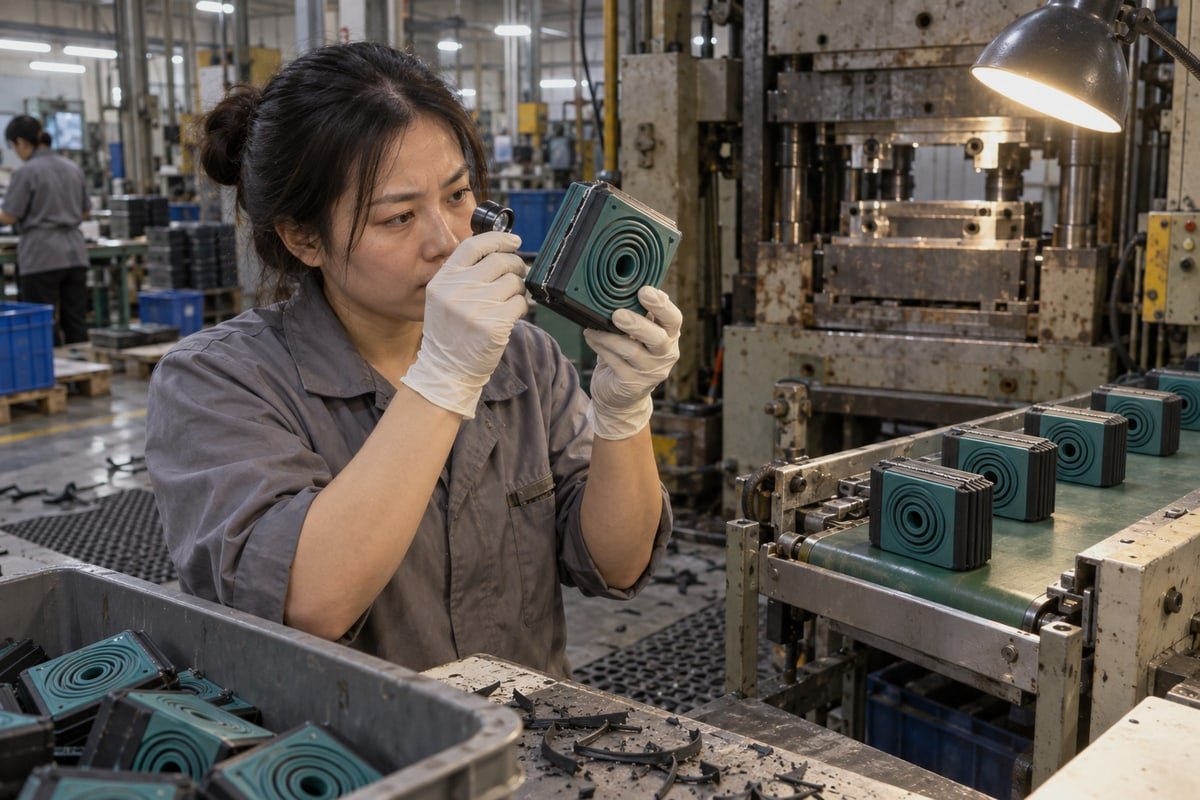
I think of the validation sample as inspection at zero percent completion. It is the cheapest point on the whole curve. Nothing has been mass-produced yet, so nothing has to be reworked.
A five-step sample validation process
- Cross-reference the model. Send us the existing module or frame designation. We return the matching TSR or TSC size from our cross-reference table, plus the CAD/STEP file.
- Receive the sample set. We ship a small set of modular sealing blocks, stay plates, and a compression unit for the target frame size. For custom sizes, our in-house mold shop cuts the sample from the production tool, not a prototype tool.
- Fit-check in your own cutout. Drop the sample into an existing 120-frame cutout. Confirm the stack height, the wedge travel, and the stay plate seating. This is where dimensional compatibility either holds or fails.
- Cable and compression test. Strip the step-core layers to your actual cable diameters. Compress to the specified torque. Check that the halogen-free EPDM seals across the diameter range of the module size.
- Sign off or request a change. If anything fails, we adjust the mold or the compound before production. A signed sample approval then becomes the first-article reference for mid-production inspection.
What the sample proves that inspection cannot
Inspection compares production against a specification. A sample tests whether the specification itself is right for your application. A BESS container builder in Europe may need a different cable mix than a switchgear panel maker. The same module size may need different layer counts. The sample exposes that early, so the corrective action plan is a one-line note instead of a batch re-sizing job.
The sample also gives you a physical reference for watertight and gas-tight performance in the 0.01–0.4 MPa range and for IP68 ingress protection. Our test documents describe the compound. Your sample proves the fit. Together they cut the field rework risk that carries a 10× multiplier once the transit is on a vessel or in a remote substation.
How this fits the second-sourcing case
A drop-in second source at 40–60% lower cost only helps if it qualifies quickly. The free sample removes the biggest qualification risk before any inspection fee is spent. Mid-production inspection then guards the process. Pre-shipment inspection closes the order. Each step covers a different failure mode.
Fazit
Late defects multiply across MCT batches and eat schedules. Mid-production vs pre-shipment inspection is really prevention vs detection. Use samples, early checks, and clean documents to keep rework small.
Fußnoten
1. ASQ is the global authority on quality management standards and the economic impact of quality costs. ↩︎
2. Provides a technical overview of multi-cable transit systems used for sealing cable penetrations in high-risk environments. ↩︎
3. Explains the safety standards and chemical properties of halogen-free materials used in fire-rated cable seals. ↩︎
4. ISO 9001 is the international standard for quality management systems, including non-conformance and corrective action requirements. ↩︎
5. Authoritative Wikipedia definition of manufacturing lead time, replacing the broken NIST glossary link. ↩︎

 English
  Español de México
  Deutsch
  Français
  العربية
  Русский