
Late MCT kits stall bulkhead work. I have seen it from our Shaanxi factory floor. Choosing [batch delivery vs warehouse consolidation for EPC MCT procurement](https://dewinmct.com/?p=1882) is where that risk starts.
Batch delivery cuts costs when EPC MCT procurement involves standardized packages, clear install sequencing, and limited on-site storage. Warehouse consolidation wins when fragmented BOMs from several suppliers need kitting and inspection. For most projects, a hybrid—consolidate upstream, batch-release by work package—delivers the lowest total landed cost.
That answer is short. The reasoning behind it is not. Below, I walk through how we help EPC teams decide, what the freight quote hides, how lead time and inventory risk move, and how to combine both models without paying for both.
How can I decide between batch delivery and warehouse consolidation for my MCT procurement?
A sourcing manager in the Netherlands asked me last year to quote one MCT package two ways: direct waves to site, or everything through his forwarder's hub IATF 16949 1. The gap surprised him.
Decide by four factors: supplier count feeding the MCT package, BOM fragmentation, on-site storage capacity, and install sequencing clarity. One supplier, standard modules, and a clear sequence favor batch delivery. Many suppliers, mixed accessories, and kitting needs favor warehouse consolidation. Score each factor before requesting freight quotes.

The two models look similar on a spreadsheet. On a project, they behave very differently. Here is how I explain the difference to buyers before we talk price.
| Factor | Batch delivery | Warehouse consolidation |
|---|---|---|
| What it is | Planned waves shipped direct to site or laydown yard, tied to installation packages | Several supplier shipments received at one hub, inspected, kitted, and dispatched in optimized loads |
| Freight profile | More LTL shipments, lower fill rates | Fewer full loads, better container utilization |
| Storage | Low on-site storage requirements, no hub rent | Hub rent plus warehouse labor |
| Handling | Material moves once | Material moves at least twice |
| Completeness control | Depends on each supplier's packing discipline | Hub acts as a quality and kitting gate |
| Best fit | Single source, standard modules, clear sequence | Multi-supplier, fragmented BOM, kitting needed |
Start with the procurement object, not the freight quote
In EPC, procurement is not just buying parts. It means aligning sourced, inspected, delivered, and closed-out material with the construction schedule and the technical spec. Cable sealing systems make this harder than most commodities. A multi cable transit preserves fire, gas, and watertight integrity through a bulkhead, deck, wall, or floor. So a wrong module size or a missing compression unit is not an inconvenience. It is a compliance gap on a penetration that cannot be signed off. Industry research puts logistics at 8–12% of total project cost 2 depending on complexity and supplier dispersion. For an MCT package, the delay cost hidden inside that figure matters more than the freight line.
The four questions I ask every EPC buyer
- How many suppliers feed this MCT package? One source tilts you toward batch delivery. Three or more tilts you toward a hub.
- How fragmented is the BOM? Frames, round modules, square modules, stay plates, compression units, spare blanks, lubricant. If they arrive from different places, someone has to marry them up.
- What are your on-site storage requirements and limits? Tight laydown areas and weather exposure punish early bulk arrivals.
- Is the install sequence fixed? A clear zone-by-zone sequence lets batches match work packages. A moving sequence needs a buffer.
How supplier count changes the answer
This is where our position as a drop-in second source changes the math. Our TSC square modules and TSR round assemblies are dimensionally compatible with common 120-frame standards, so frames, modules, compression units, and stay plates can leave one factory in one shipment. The step-core, halogen-free EPDM module covers a range of cable diameters within one module size, which shrinks the SKU list further. Fewer suppliers and fewer SKUs mean less to consolidate. Many buyers who qualified us through our cross-reference tables and free validation samples found that batch delivery became viable simply because their supplier count dropped from four to one.
Our QC team once inspected sealing modules returned from a laydown yard after a year in tropical humidity. The EPDM was fine. The paperwork and labels were not.
Beyond freight, evaluate double-handling labor, warehouse rent and inventory carrying costs, damage and loss during storage, customs and documentation friction, rework from incomplete kits, and delay cost from missed installation windows. Frequent LTL batches add gate-logistics overhead; consolidation adds warehousing overhead. Model both against total cost of ownership.
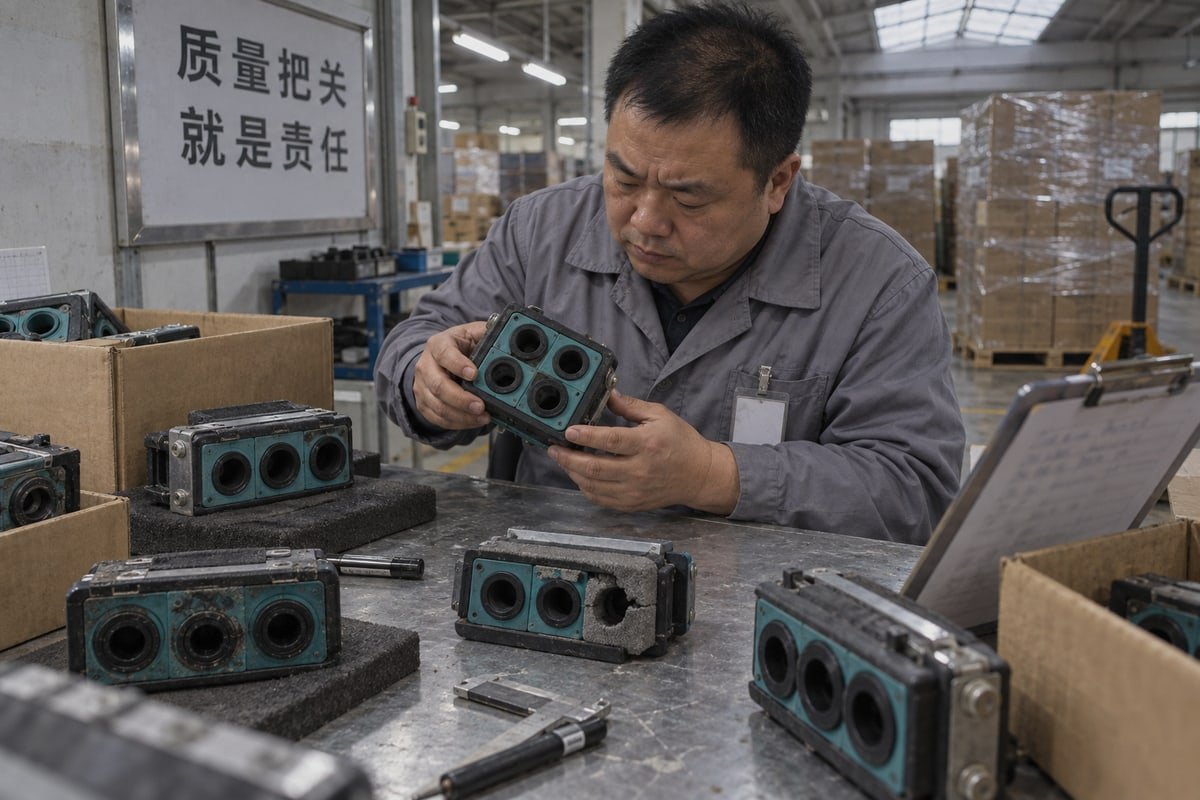
The freight quote is the only cost that arrives as an invoice with the word "logistics" on it. Everything else hides inside labor timesheets, storage contracts, and schedule slippage reports. I encourage buyers to build the comparison as a total cost of ownership table, not a freight table.
Where the money actually hides
| Cost bucket | Batch delivery exposure | Warehouse consolidation exposure | How to measure it |
|---|---|---|---|
| Transport | Higher cumulative cost from many LTL shipments | Lower per-unit cost from full loads | Cost per delivered module, not per shipment |
| Handling | Moved once, but unloaded piecemeal at the gate | Unloaded, sorted, repacked, reloaded | Labor hours per pallet across all touches |
| Storage | Minimal, unless waves arrive early | Hub rent plus inventory carrying costs | Monthly rent plus capital tied up |
| Damage and loss | Exposure at site laydown | Exposure at hub and in transit twice | Replacement orders plus expediting fees |
| Documentation | One customs entry per wave | Entries can be grouped | Broker fees and admin hours |
| Rework and rekitting | Missing items found at the workface | Missing items caught at the hub | Idle crew hours per incident |
| Delay | Each wave carries schedule risk | Buffer absorbs supplier slips | Critical-path days lost |
Why the warehouse line is bigger than people think
One energy-logistics industry report estimates warehousing and consolidation at 28.3% of project logistics market value. That is not a small support function. It is the second-largest bucket in the chain. When a buyer tells me consolidation is "basically free because the forwarder already has a warehouse," I ask to see the storage clause. The rent is there. So are the receiving and picking charges. Consolidation earns its keep only when it also delivers freight forwarding optimization and completeness control. As standalone storage, it is pure logistics overhead.
The rubber shelf-life question
EPDM ages well compared to many elastomers, and our modules are compounded for long service life in marine and offshore-adjacent conditions. But storage conditions still matter. Heat, direct UV, and ozone-rich environments near electrical equipment shorten the window. Batch delivery keeps modules moving and reduces long-term storage exposure. A consolidation hub, if it is climate-controlled, can protect modules better than an open laydown yard. The right question is not which model stores rubber longer. It is which one keeps rubber out of the wrong environment.
Documentation friction on the export side
For shipments into Europe and the Middle East, we prepare export documentation, test certificates for our A-0/A-60 fire rating, IP68 ingress protection 4, and 0.01–0.4 MPa watertight and gas-tight sealing, and packing lists that match the cable schedule. Frequent batches multiply this paperwork. Consolidation lets a hub group entries and reconcile documents once. That admin saving is real, but it only shows up if someone counts broker hours.
How do lead times and inventory risk change if I switch from batch orders to consolidated warehousing?
One lesson took us years to learn: the fastest way to shorten lead time is not faster shipping. It is having the right module already made when the PO lands.
Switching to consolidated warehousing shifts lead time risk from the supplier to the buffer: site-facing lead time drops because stock is nearby, but you carry inventory, shelf-life, and obsolescence exposure. Batch orders keep inventory low but expose every wave to manufacturing and freight variability. Consolidation hubs can shorten timelines 20–30%.
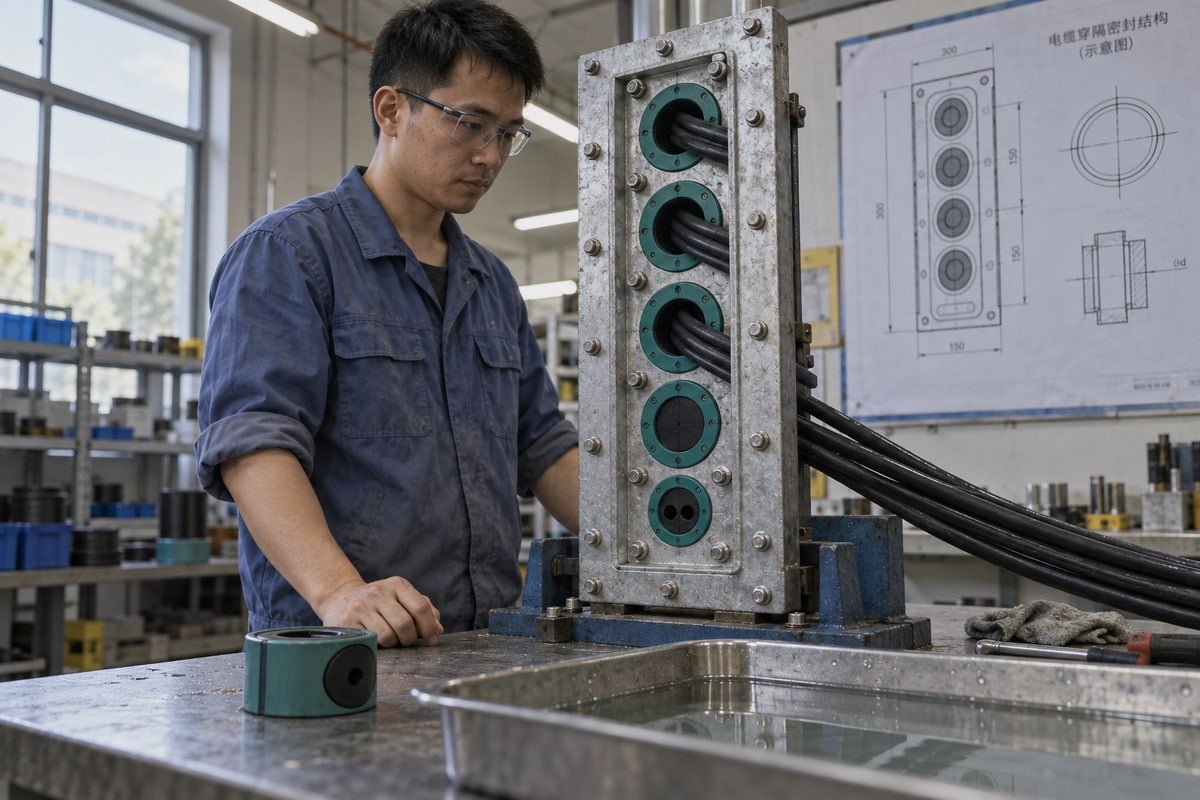
Lead time has two halves. There is the manufacturing lead time from PO to factory gate, and there is the site-facing lead time from material request to workface. Batch delivery couples them tightly. Consolidation decouples them. That decoupling is where both the benefit and the risk live.
What actually moves when you switch
| Dimension | Batch orders direct to site | Consolidated warehousing |
|---|---|---|
| Site-facing lead time | Equals factory lead time plus transit | Days, because stock sits at the hub |
| Manufacturing lead time exposure | Every wave is exposed | Absorbed by buffer stock |
| Inventory carrying costs | Low | Moderate to high |
| Obsolescence risk | Low, because orders follow drawings | Higher if cable schedules change after stocking |
| Supply chain visibility | Per shipment | Per SKU, across the whole project |
| Recovery from a supplier slip | Expediting or resequencing | Draw from buffer, reorder in background |
A practical process for managing the shift
- Fix delivery dates in the PO and tie them to real fabrication timelines. EPC procurement guidance is clear on this, especially when freight responsibility sits with the vendor. We quote against our actual production calendar across Shaanxi, Shandong, and Hunan, not a generic promise.
- Release the cable schedule and approved drawings before stocking. Module sizes follow cable diameters. Stocking before approval is how obsolescence risk enters a hub.
- Size the buffer by SKU velocity, not by total quantity. Our step-core modules reduce SKU count, so a smaller buffer covers more penetrations. That directly lowers inventory carrying costs.
- Use material management systems that show hub stock against the install sequence. This is where the 20–30% timeline reduction reported for consolidation hubs comes from. Supply chain visibility turns a warehouse into a scheduling tool.
- Keep a spare-module lane open with the factory. We run fast delivery on spare sealing modules for exactly this reason. A buffer covers planned demand. The factory covers surprises.
The forecasting and tracking layer
Two trends are changing this equation. First, AI-driven demand forecasting inside consolidated models is reported to cut MCT over-ordering by up to 15% by spotting surplus patterns across project phases. That is a real reduction in dead inventory. Second, real-time IoT tracking at the hub enables what some providers call dynamic sequential delivery. Components leave the hub in the exact order of the construction schedule, which removes site-level sorting. Both tools push consolidation closer to just-in-time logistics without giving up the buffer.
The zero-inventory objection
Some megaproject teams argue for direct dispatch from mill to site with zero inventory. Their case is sound when supply is reliable and demand is predictable. I take that objection seriously because it describes our best-run customers. But it assumes every supplier hits every date. For a qualified second source with in-house mold making and three production sites, we can support that model. For a package drawn from four suppliers on three continents, it is a bet on perfect execution.
Can I combine batch delivery and warehouse consolidation to optimize my EPC project's MCT supply chain?
Every quarter we weigh the same trade-off on our Shandong line: pack finished frames and modules into one full container, or split them into installation kits before export.
Yes. The strongest model consolidates upstream and batch-delivers downstream: gather frames, sealing modules, compression units, and stay plates at one hub for inspection and kitting, then release installation-ready packages by zone or work package. This captures freight efficiency and completeness control while keeping on-site storage and double-handling low.
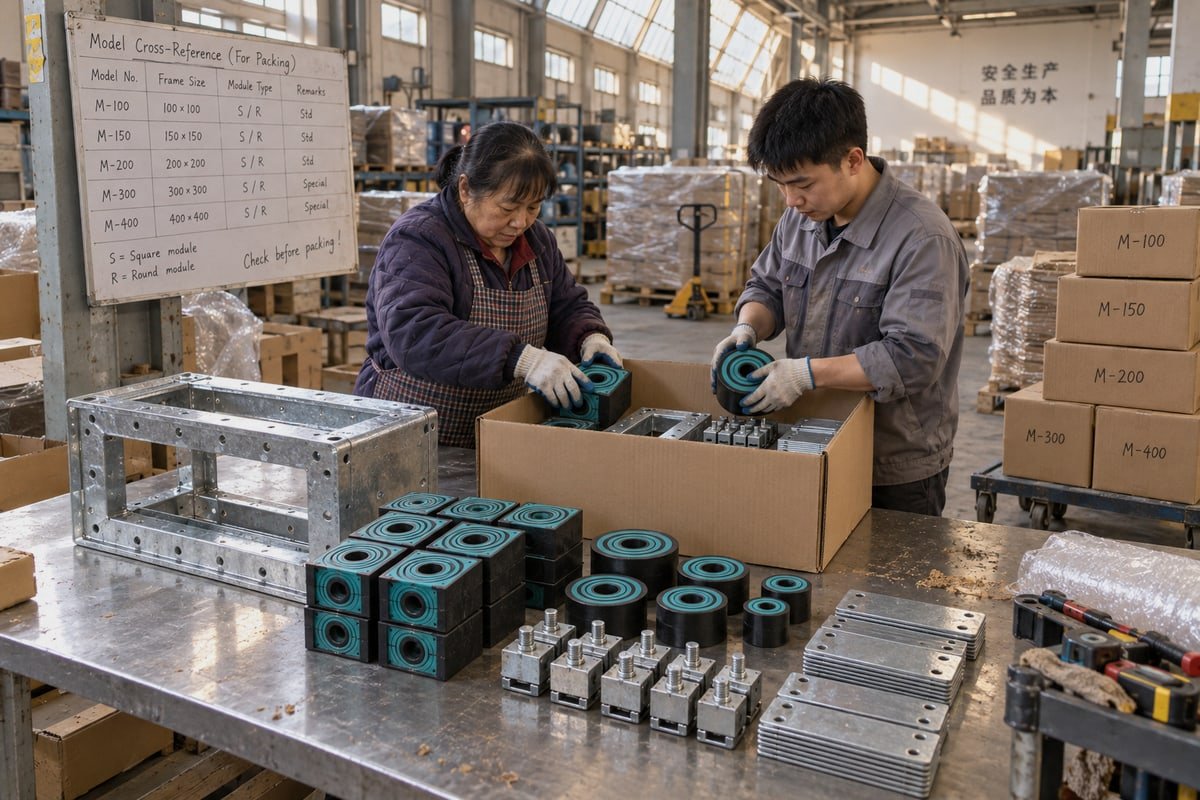
Pure plays are easy to explain and hard to run. The hybrid model is the reverse. Once set up, it removes most of the failure modes I described above. Here is how we structure it with EPC teams.
The five-step hybrid flow
- Qualify sources early in the project procurement cycle. Use cross-reference tables to map existing model numbers to compatible alternatives, and run free validation samples through your own frame cutouts. Qualification done in month two saves expediting in month fourteen.
- Consolidate at one point, not many. Whether that is a forwarder's hub or our own packing floor, every frame, module, stay plate, and compression unit for a package should pass through one gate for inspection and kitting.
- Kit to the install sequence. Integrating BIM data 5 at the hub allows precision kitting, where each set is packed room by room or penetration by penetration. Field labor falls because installers open one crate and find everything for one bulkhead.
- Batch-release by work package. Ship kits in waves matched to the construction schedule. This keeps on-site storage requirements low and protects rubber from long laydown exposure.
- Close the loop on packaging. Consolidation makes circular logistics practical. Crates, pallets, and protective film return to one hub for reuse or recycling, which more ESG-focused EPC contracts now require.
Which phase favors which lever
| Project phase | Dominant risk | Lever to pull |
|---|---|---|
| Early bulk installation, repeatable packages | Freight inefficiency | Consolidate to full loads, batch by zone |
| Mid-project, fragmented BOM, many suppliers | Missing components | Hub kitting and inspection before release |
| Late-stage, tight access or weather windows | Missed install slots | Staged batching with limited buffer inventory |
| Commissioning and closeout | Spare parts and rework | Direct spare-module lane from factory |
Where a factory partner fits the hybrid
Modular construction efficiency depends on kits arriving complete. We support this in three ways. First, we can pack private-label kits to a customer's BOM structure, so the hub receives installation sets rather than loose modules. Second, we supply CAD and STEP files and responsive English technical support, so kit contents can be checked against BIM models before anything ships. Third, our ISO 9001 6 and IATF 16949 systems and BV-approved factory status mean the inspection gate at the hub confirms rather than discovers. Test documents for fire rating, IP68, and pressure sealing travel with the kit. That reduces one more hidden cost: the hours a hub spends chasing certificates.
The objection I hear most
Buyers worry that a hybrid means paying for a warehouse and for multiple deliveries. In practice, the hub stage is short. Material arrives, is inspected, kitted, and dispatched within the same window that a pure consolidation model would have used for storage. You pay for handling once, not for months of rent. Compared against the 40–60% component cost reduction that a compatible second source delivers, the hybrid's logistics cost is a rounding error. The expediting bill from a missed bulkhead is not.
Conclusion
Late MCT parts cost more than freight ever will. Consolidate where the BOM is fragmented, batch-release by work package, and qualify a compatible second source before schedules tighten.
Footnotes
1. Official site for the international automotive task force quality standard used in manufacturing. ↩︎
2. Authoritative World Bank resource on procurement frameworks and project cost management. ↩︎
3. Detailed explanation of the financial components of carrying costs in logistics and warehousing. ↩︎
4. Official IEC guide to IP ratings, including the IP68 standard mentioned in the article. ↩︎
5. Professional resource explaining Building Information Modelling data used for construction kitting and logistics. ↩︎
6. Official ISO page for the international quality management standard mentioned for factory systems. ↩︎


 English
  Español de México
  Deutsch
  Français
  العربية
  Русский