
Distributors ask me weekly whether a China sourcing team or agent is cheaper for multi cable transit supply BV factory approval 1. Both add cost. Our factory-direct MCT line can remove that layer.
A China sourcing team or agent is cheaper depending on volume: agents charging 3–10% commission win below roughly $1 million in annual MCT spend, while a dedicated team costing $80,000–$150,000 per year wins above that. A direct factory relationship can undercut both for repeat, certified modules.
The fee percentage is only the visible part of the bill. Below, I break the question into four parts. First, I show how to build a landed-cost comparison. Then I explain how certified, drop-in modules can reach you without a middleman. After that, I list the hidden risks of agent dependency. Finally, I give a validation process you can run before changing your procurement strategy.
How do I compare total landed cost between a China sourcing team and a sourcing agent for MCT supply?
Every quotation we issue from our Shaanxi plant lists ex-works price, but buyers keep asking what the number becomes after agent fees, freight, and inspections.
Compare total landed cost by adding factory price, sourcing fee or team payroll, samples, quality control inspections, local freight, consolidation, export documents, and international shipping, then dividing by annual units. Agents cost 3–10% of order value; a team costs $80,000–$150,000 yearly, so break-even falls near $800,000–$3 million.
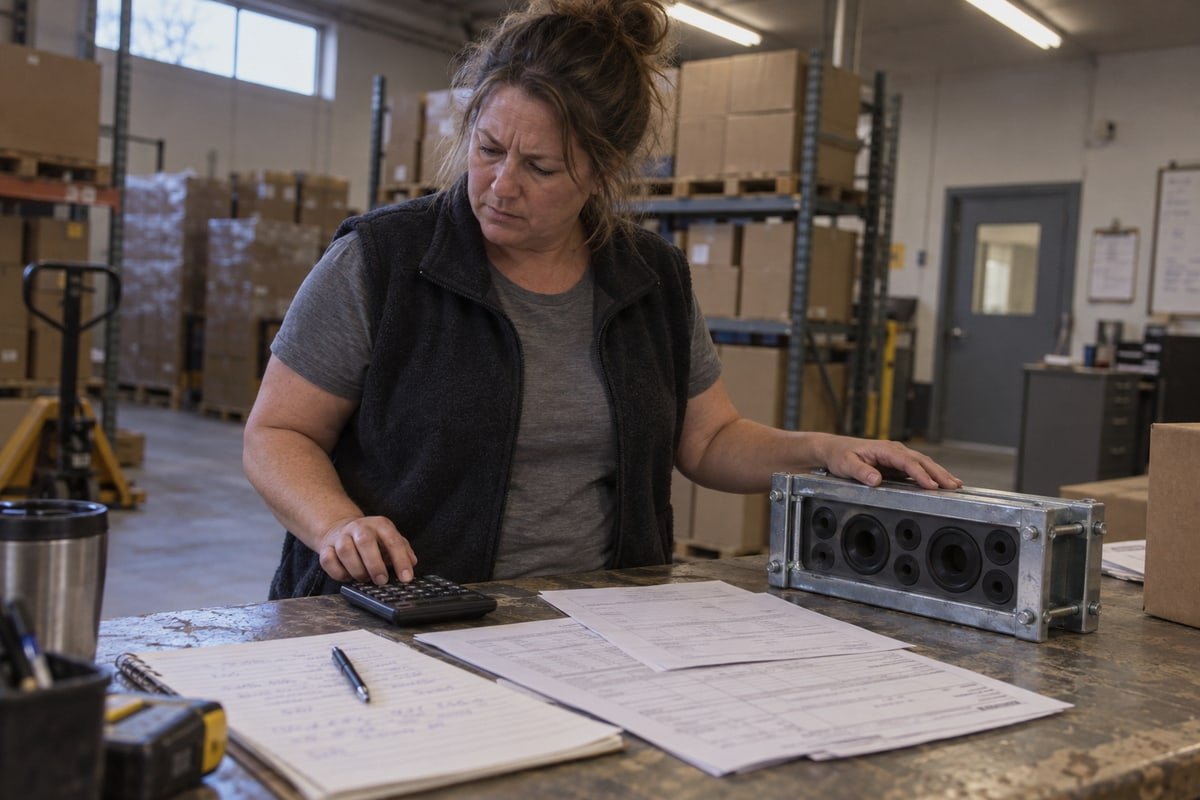
The fastest way to see the difference is to put every cost line side by side. The table below is the framework I hand to sourcing managers who want to model total cost of ownership for cable transit modules, not just a service fee.
| Cost component | Sourcing agent | In-house China team | Factory-direct (no intermediary) |
|---|---|---|---|
| Service fee | 3–10% of order value, or $300–$2,000 flat per project, or $500–$5,000 monthly retainer | $80,000–$150,000 per year payroll, plus WFOE setup, office rent, travel | None; you work with the factory sales engineer |
| Unit price | Factory price plus possible undisclosed markup | True factory price after repeated negotiation | True factory price with published volume tiers |
| Samples | Often billed to the buyer | Team collects on site | Free validation samples |
| Quality control inspections | Only if written into scope | Team performs or hires inspectors | In-line factory QC plus optional third party |
| Logistics and freight forwarding | Agent consolidates for a fee | Team manages the forwarder | Factory handles export documentation |
| Exit cost | Low | High, because of Chinese labor contracts | Low |
Run the break-even for your annual MCT spend
The math is simple. A team at $80,000 per year equals a 10% commission on $800,000 of purchases. A team at $150,000 equals a 5% commission on $3 million. Most ranking guides place the crossover near $1 million of annual spend, and that matches what I see. One twist: commissions compress as you grow. Very large accounts often pay 3–4%, mid-sized orders 4–6%. So the agent stays competitive longer than a flat 10% assumption suggests. Your break-even point moves up, not down, as volume rises.
Three objections I hear, and how I answer them
The agent-first buyer says: "An agent turns fixed payroll into variable cost and saves me from hiring in China." That is true below the crossover, and for test-market orders it is the right call. The team-first buyer says: "A team eliminates repeated commissions and cuts downstream quality losses." That is true above the crossover, especially for private-label SKUs. The hybrid buyer says: "Keep a small internal function and use an agent or a fractional Sourcing-as-a-Service manager for overflow." That is often the most practical answer for supply chain management 2 across several product lines.
My point is different. All three models sit on top of the factory price. If the factory price for a drop-in compatible module is already 40–60% below the incumbent brand, the fee base shrinks for every model. That is where a direct relationship changes the comparison.
Can I get certified, drop-in compatible MCT modules without a middleman agent's markup?
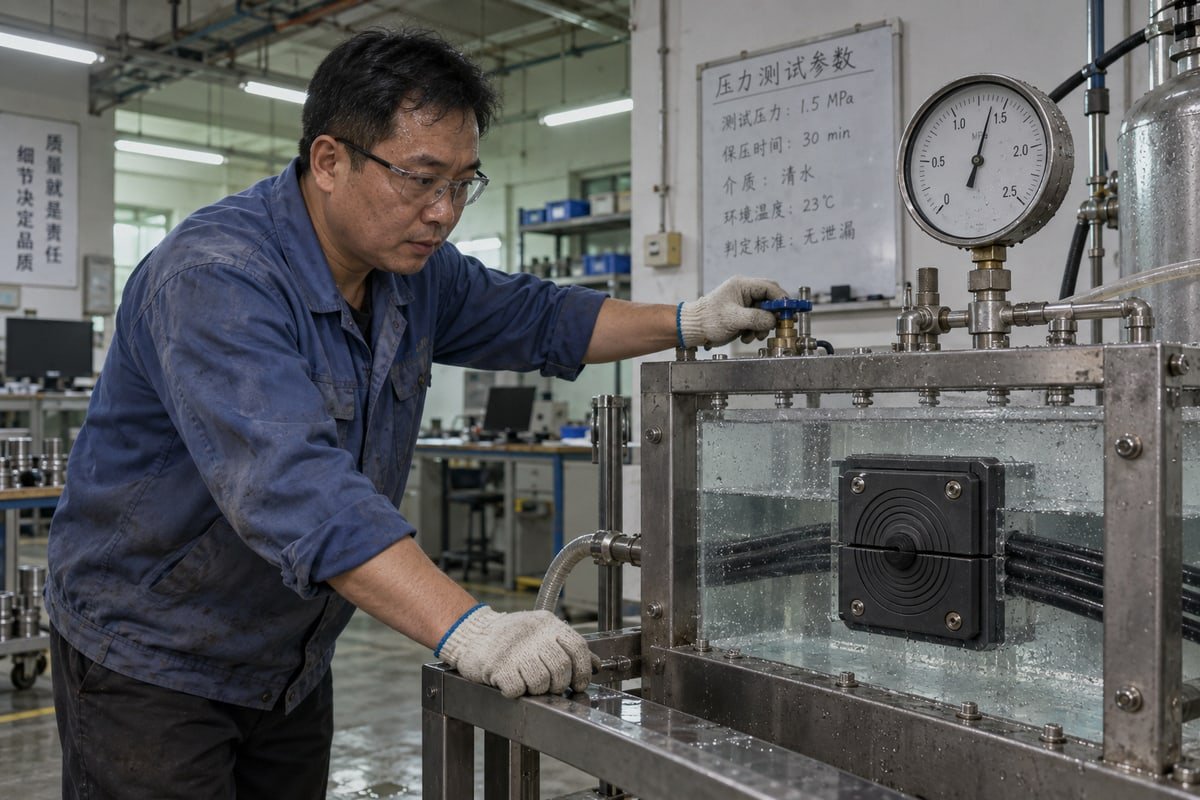
Our QC bench pressure-tests TSC module batches up to 0.4 MPa before release, and that report goes straight to the buyer, not through an agent.
Yes. Factory-direct suppliers such as DewinMCT ship MCT modules that are dimensionally compatible with common 120-frame standards, carry ISO 9001 and IATF 16949 systems, BV factory approval, A-0/A-60 fire ratings, and IP68 sealing, at 40–60% lower cost, with no agent commission added to the invoice.
The word "compatible" gets abused in this industry. So I want to define it in engineering terms before I talk about price.
What drop-in compatibility actually requires
A module is drop-in only if it fits the existing frame cutout, seats correctly under the compression unit, and reaches full sealing at the same stay plate spacing. Our TSR round assemblies and TSC square modules are built to the dimensions of common 120-frame standards. We publish model cross-reference tables that map an existing module code to a DEWIN code. We also send STEP files so your engineer can overlay our part on your frame drawing before any sample ships. The rubber is step-core, halogen-free EPDM 3. One module size covers a range of cable diameters because installers peel layers down to the cable. That reduces the SKU count you need to stock.
Certification without an agent filtering the paperwork
Firestop sealing systems in BESS containers, modular data centers, and switchgear cabinets need documented fire performance. Marine and offshore standards add watertight and gas-tight requirements. Here is what to ask for and what we hand over.
| Buyer requirement | Evidence to request | What DewinMCT provides |
|---|---|---|
| Fire rating for firestop sealing systems | Fire test report | A-0 / A-60 test documents on request |
| Ingress protection | IP test report | IP68 |
| Watertight and gas-tight sealing per marine and offshore standards | Pressure test report | 0.01–0.4 MPa test records |
| Quality management system | Certificates and factory audit reports | ISO 9001, IATF 16949, BV-approved factory |
| Dimensional compatibility | Drawings, CAD/STEP files | 120-frame compatible, cross-reference tables, STEP files |
| Material specification | Material data sheet | Step-core, halogen-free EPDM |
Where the markup disappears
Some ranking articles note that agents can add hidden markups or take supplier kickbacks worth 5–15% on unit cost. I cannot audit other people's agents. I can say that our price list is the same document whether a distributor in Rotterdam or a sourcing manager in Dubai asks for it. Price transparency is easy when there is one seller. Bulk procurement discounts appear as printed volume tiers, not as a number negotiated behind your back. And because we run in-house mold making across three plants, custom sizes and private-label marking do not require a second intermediary to coordinate. The 40–60% saving against incumbent brands is a factory-to-buyer figure, before any freight, and it holds because we are the maker, not a trading company reselling someone else's rubber.
One lesson from our decade of exporting sealing modules: the order that goes wrong is rarely the one with the highest fee, but the one nobody inspected.
Hidden agent risks include undisclosed markups or supplier kickbacks costing 5–15% on unit price, generalist agents missing fire and water-tightness certification requirements, weak audit trails for ESG and labor compliance, quote-only service scopes that skip inspection, and single-point dependency that leaves you without direct factory contact when problems arise.

I want to be fair to agents. Many are honest and useful. But the incentive structure and the product complexity create five specific risks for multi cable transit supply. I list them in the order I see them cause the most damage.
- The commission works against you. A percentage fee grows when the unit price grows. So the agent has little reason to push value engineering, such as a material substitution or a shared mold for two frame sizes. A commission-motivated middleman earns less when you save more.
- Generalists miss the technical spec. Cable transit is not a commodity. An agent who sources furniture on Monday and rubber modules on Tuesday may accept "equivalent" EPDM without a halogen-free data sheet or a valid A-60 fire test. The non-compliance surfaces at your customer's site inspection, not at your warehouse.
- The scope is thinner than the fee suggests. Quote-only service means no sampling, no factory verification, no pre-shipment quality control inspections, no consolidation, and no export paperwork. Each gap becomes a separate invoice or a separate failure.
- The audit trail is weak. ESG and labor compliance questions now arrive from European buyers on almost every tender. An agent's site visit is not the same as factory audit reports you can file. A direct relationship gives you the factory's own ISO and BV records and the legal entity behind them.
- You do not know the factory. If the agent changes jobs or drops the account, you restart supplier discovery from zero. Spare sealing module lead times stretch while you search.
A quick symptom-and-mitigation table
| Risk | Early symptom | Mitigation |
|---|---|---|
| Undisclosed markup | Price rises without a raw material story | Request the factory's own quotation |
| Certification gap | "Equivalent" wording on the data sheet | Demand the actual test report |
| Thin scope | No inspection line item | Write QC and documents into the contract |
| Weak audit trail | No factory name on documents | Ask for factory audit reports directly |
| Dependency | Single contact for everything | Establish a direct factory second source |
The China sourcing team or agent debate often ignores a sixth risk: the "factory" the agent presents may itself be a trading company. Ask for the business license, registered capital, and plant addresses. Ours show RMB 50M registered capital, production in Shaanxi, Shandong, and Hunan, and 38 or more granted patents. Any real factory can show the same class of documents within a day.
How do I validate a factory-direct MCT supplier's quality before switching from my current sourcing agent?
We weigh one trade-off constantly at our plants: sending free validation samples costs us money upfront, yet it is the fastest way a skeptical buyer can verify our claims.
Validate a factory-direct MCT supplier in five steps: request factory audit reports and ISO 9001, IATF 16949, and BV documents; check dimensional cross-reference tables against your 120-frame cutouts; test free samples for fit and sealing; review fire and IP68 test reports; then run a pilot order with third-party inspection.
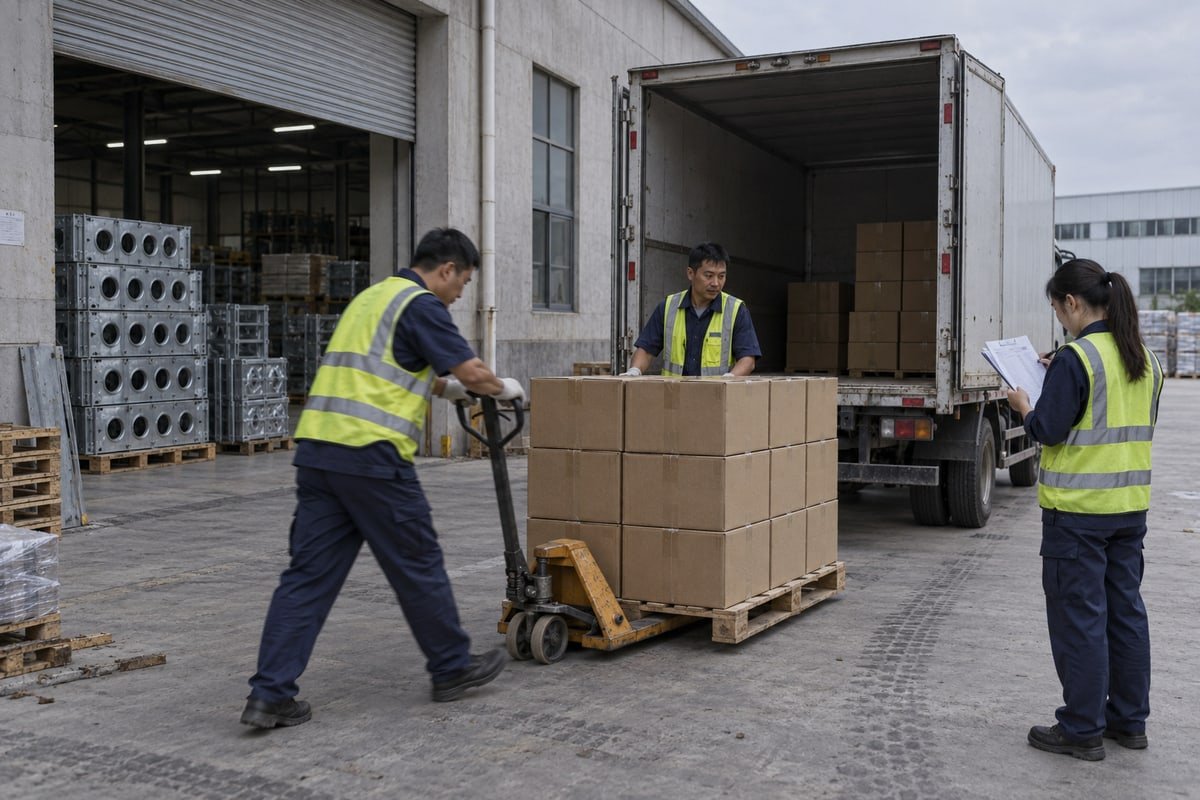
Do not fire your agent first. Run the new supplier in parallel and let the evidence decide. Here is the sequence I recommend to purchasing engineers who contact us for a second source. Each step has a clear exit condition, so your procurement strategy stays defensible to management.
Step 1: Paper check before anyone ships anything
Ask for the quality system certificates 4, BV factory approval, and any recent factory audit reports. Ask for the business license and plant addresses. Ask for the patent list. If the answers take more than a few working days or arrive through a third party, that tells you who you are really dealing with.
Step 2: Dimensional check on your own drawing
Request the model cross-reference table and STEP files. Have your engineer overlay the DEWIN module on your existing 120-frame cutout drawing. Check module outer dimensions, stay plate thickness, and compression unit stroke. This step costs nothing and eliminates most incompatible candidates.
Step 3: Free validation samples in your real frame
Fit the samples into an existing frame with the incumbent compression unit. Peel the step-core layers to a real cable diameter. Check that the halogen-free EPDM compresses evenly and that the frame closes at normal torque. A drop-in claim that survives this test is real.
Step 4: Test document review
Read the A-0/A-60 fire reports, the IP68 report, and the watertight and gas-tight records at 0.01–0.4 MPa. Note the test method and the date. Ask your technical contact to walk you through anything unclear in English; responsiveness here predicts responsiveness after the purchase order.
Step 5: Pilot order with independent quality control inspections
Place a small order for one recurring SKU or a batch of spare sealing modules. Hire a third-party inspector directly. Measure lead time against the quote. If the pilot passes, move the next replenishment cycle, then the private-label line.
| Validation step | Evidence to request | Pass criterion |
|---|---|---|
| Paper check | ISO 9001, IATF 16949, BV approval, license, factory audit reports | Documents in the factory's own name |
| Dimensional check | Cross-reference table, CAD/STEP files | Overlay fits the 120-frame cutout |
| Sample fit | Free validation samples | Seals in your frame at normal torque |
| Test review | Fire, IP68, pressure reports | Ratings match your project spec |
| Pilot order | Third-party inspection report, delivery record | Zero critical defects, lead time met |
This is also the point where supplier relationship management begins. The China sourcing team or agent question fades once you hold the factory's drawings, test data, and a delivered pilot lot. Some distributors keep a fractional agent for factory visits or overflow; that hybrid works well. What changes is that the agent no longer sits between you and the price.
Conclusion
Commissions or payroll both erode MCT margins. Agents suit small pilots; teams suit scale. Direct factory partners like us remove the layer entirely, with certification and drop-in compatibility intact.
Footnotes
1. Official site of Bureau Veritas, a global leader in testing, inspection, and certification for manufacturing. ↩︎
2. Authoritative industry data and overview of global supply chain management practices and logistics. ↩︎
3. Technical details on EPDM rubber properties, commonly used for high-performance sealing in industrial applications. ↩︎
4. Official ISO page for quality management standards required for manufacturing and supplier validation. ↩︎



 English
  Español de México
  Deutsch
  Français
  العربية
  Русский