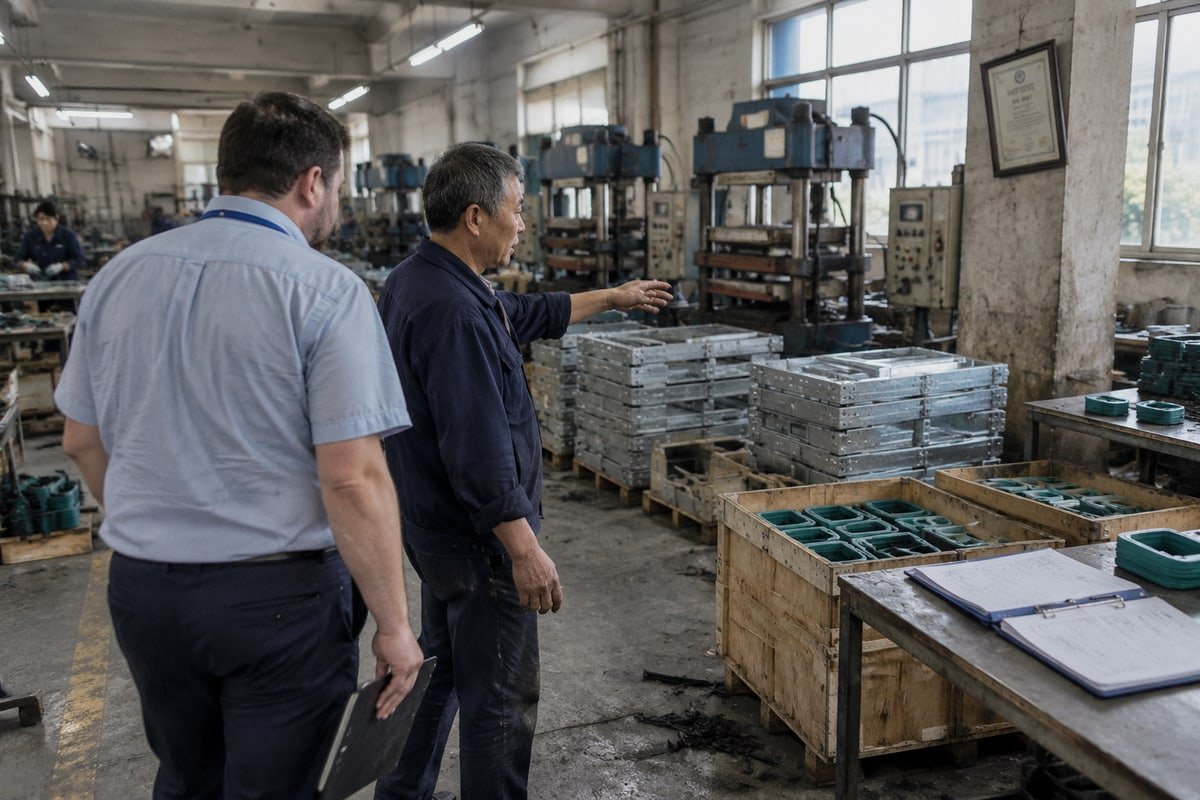
A Dutch sourcing manager once asked me, over our factory’s own frame drawings, whether a supplier’s multi cable transit processes 1 are in-house or outsourced. Most catalogs never tell you.
A supplier’s multi cable transit processes are in-house when it can name its factory address, show mold making and rubber molding on site, hold ISO 9001 certificates issued to that plant, produce its own test records, and allow a factory audit. Outsourced suppliers deflect these requests to partners.
That answer sounds simple. In practice, modular sealing systems pass through several hands before they reach your container or switchgear panel. The next four sections show you exactly what to ask, what to look at, which papers to request, and how to audit without wasting a trip.
What Questions Should I Ask to Verify a Supplier's In-House Manufacturing Capabilities?
One German switchgear buyer sent us a twelve-question sheet before ordering a single TSC module. His questions were sharper than most audits. I kept the list.
Ask for the factory's legal name and address, which process steps happen on site, who owns the molds, how batches are traced, where fire and IP68 tests were performed, typical manufacturing lead times, and whether you can visit. Vague answers or references to partners signal outsourcing.

The smartest question is not "Do you outsource?" Almost every supplier says no. The better question is "Which steps are under your direct control, and how do you prove it?" That wording forces a process answer instead of a yes-or-no answer.
Seven questions and what the answers reveal
| Question | Strong in-house answer | Weak or outsourced answer |
|---|---|---|
| Where exactly is the plant? | Street address, city, plus which site makes which product line | "Our production base in China" with no address |
| Which steps happen on site? | Compounding, vulcanization, trimming, frame welding, galvanizing partner named | "We handle everything" with no breakdown |
| Who owns the molds? | Tool register, mold numbers, in-house tool shop | "Our partner keeps the tooling" |
| How do you trace a batch? | EPDM lot, press number, operator, date on each module | "We can check with the factory" |
| Who ran the fire and IP68 tests? | Named lab, report number, sample source stated | Generic "certified" claim |
| What is your production capacity? | Units per month per press, current utilization | Refuses or gives a round number |
| Can we visit? | Yes, with a date | Delays or offers a showroom only |
Why the shape of the answer matters
Vertical integration shows up in how fast and how specifically a supplier replies. When our engineers are asked about step-core geometry, they answer in millimeters and durometer values, because they cut the cavity. A reseller has to forward the email. That delay is the tell. The same logic applies to quality control standards. A real plant can describe its incoming rubber inspection, its cure-time checks, and its final compression test in one paragraph.
Lead times and capacity as evidence
Manufacturing lead times are a hidden signal. Outsourced supply chains stack two schedules on top of each other, so quoted delivery windows swing widely and urgent changes are hard. A factory that runs its own presses can tell you which week your spare sealing modules leave the line, and it can pull a small rush lot forward. Ask for the lead time on a bespoke frame size or a non-standard insert block. If the answer is "not possible," the supplier probably does not own the tooling.
One objection I hear: hybrid models exist, and they are not automatically bad. That is true. We also send frames to an external hot-dip galvanizing line. The difference is that we can name that line, show its certificate, and explain how we inspect the coating on return. Honest suppliers tell you which parts are made inside and which are sourced. Evasive suppliers claim everything is inside and then cannot describe any of it.
How Can I Tell If a Factory Owns Its Own Mold-Making and Tooling Process?
Two years ago our Shaanxi tool shop cut a new step-core cavity for a non-standard module in days, not months. That job showed me what tooling ownership means.
A factory owns its mold-making process when it can show CNC machining and EDM equipment, a tool register listing each mold's number and location, engineers who can quote a bespoke frame or insert size in days, and patents on its own step-core designs rather than copies of generic molds.
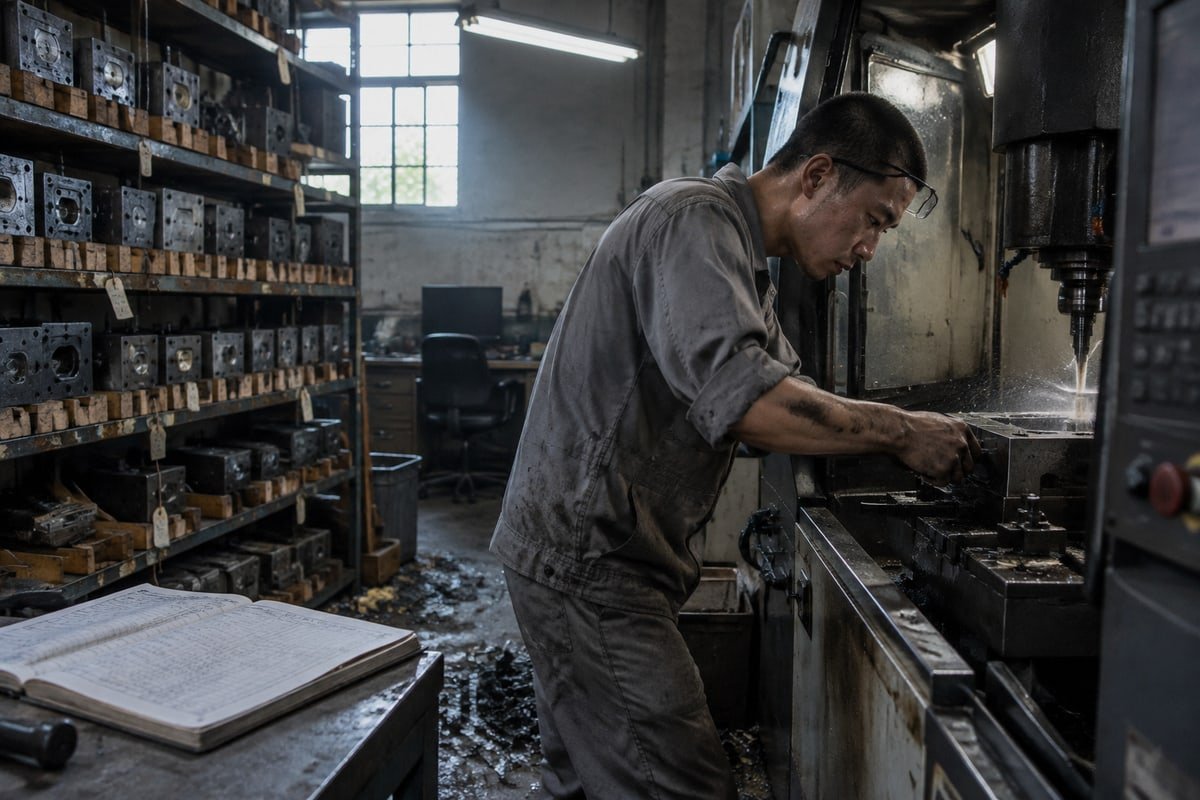
Tooling is the heart of any multi cable transit product. The rubber module 2 is only as good as the cavity it was cured in. If a supplier does not own the molds, it cannot control dimensional tolerance, it cannot make custom sizes, and it cannot fix a defect at the source. So this is the single best place to test a supplier's claims.
A five-step check you can run from your desk
- Ask for a photo or short video of the tool shop, not the assembly hall. Look for milling machines, EDM units, and mold storage racks with tags.
- Request the mold register for the exact TSR or TSC size you plan to buy. A real register shows mold number, cavity count, date of last maintenance, and shot count.
- Send a drawing for a non-standard module or frame cutout. Ask for a quotation and a tooling lead time. Ownership shows up as a fast, itemized answer.
- Ask which rubber vulcanization presses are used and how cure temperature and time are logged. Outsourced suppliers rarely know.
- Ask about patents. We hold 38+ granted patents, most of them on module geometry and compression hardware. A supplier that rebrands generic designs has none to show.
What physical parts tell you
Consistency of marking is a quiet clue. Modules from one press line carry the same batch code style, the same surface finish, and the same mold text position. When a box arrives with two slightly different fonts on the stamp, or two shades of the same color, the parts likely came from two different subcontractors. Our halogen-free EPDM modules leave the line with a uniform matte finish and a stamped lot code, because one tool shop made every cavity.
Why it matters for drop-in replacement
Dimensional compatibility with common 120-frame standards depends on tolerance control at the mold. A module that is half a millimeter oversize will not seat correctly in an existing frame cutout, and the compression unit will not reach its rated force. This is why we back our cross-reference tables with free validation samples. You can fit a DEWIN module into your current frame before you qualify us as a second source. A supplier without its own tooling cannot make that offer with confidence, because it cannot guarantee the next batch matches the sample.
What Documents or Certificates Prove a Cable Transit System Is Factory-Made, Not Outsourced?
Every quarter I weigh how much documentation to send unasked. Too little looks evasive; too much buries the one file that matters — the certificate carrying our plant address.
Request the ISO 9001 certificate showing the manufacturing site address, a production quality assurance or BV factory approval, fire seal certification for A-0/A-60 tied to the legal manufacturer, IP68 and pressure test reports with batch numbers, and a Declaration of Performance naming that same entity.
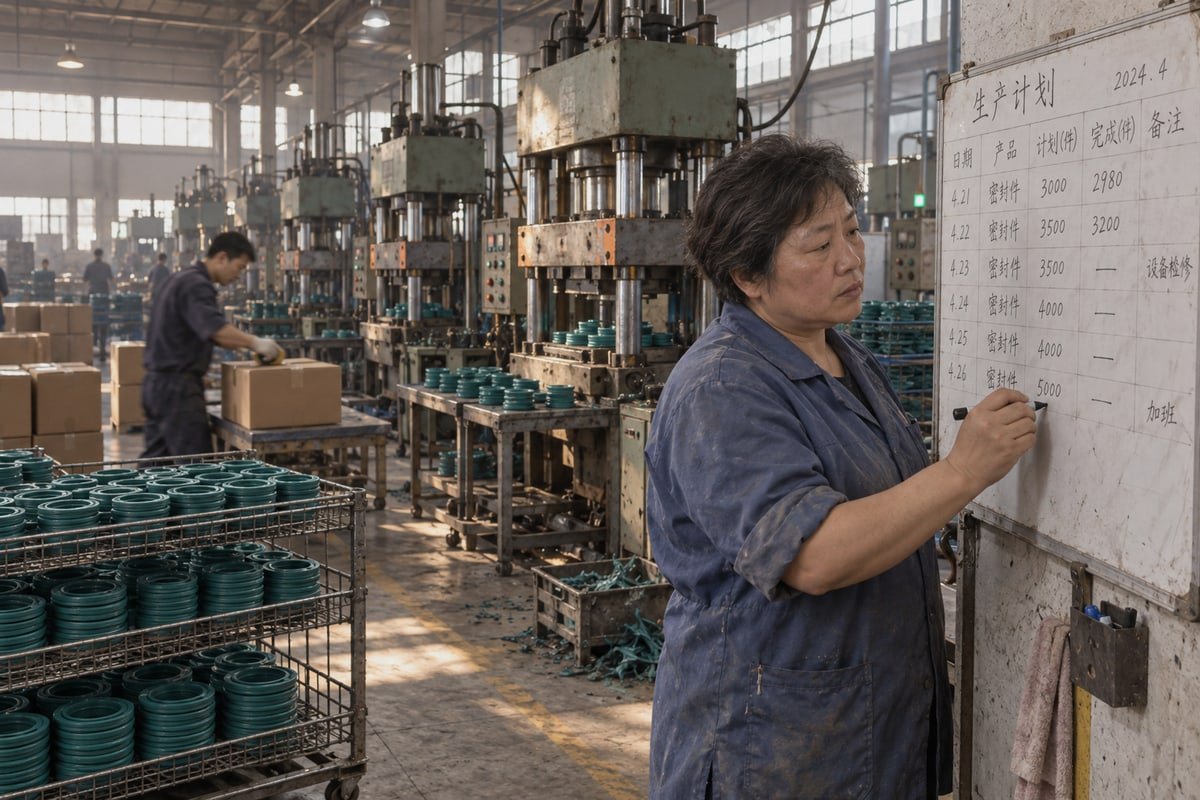
Certificates are the easiest evidence to get and the easiest to misread. A PDF that says "certified" proves very little. What proves in-house manufacturing is the match between three names: the brand on the box, the legal manufacturer on the certificate, and the plant address where the audit took place.
The document set and what each one proves
| Document | What to check | What it proves | What it does not prove |
|---|---|---|---|
| ISO 9001 certificate | Scope statement and site address | The quality system was audited at that plant | That every component is made there |
| IATF 16949 certificate | Same site address | Automotive-grade process control, PPAP-style discipline | Product performance |
| Class society factory approval (BV, DNV, Lloyd's Register) | Approval holder and plant | The production process itself is surveyed | Approval on every module size |
| Fire seal certification (A-0 / A-60) | Sample source, lab name, certificate holder | The tested design meets the bulkhead fire rating | That current batches match the tested sample unless batch records exist |
| IP68 and pressure test reports (0.01–0.4 MPa) | Report number, date, batch | Sealing performance of a specific lot | Long-term performance under different cable jackets |
| Declaration of Performance | Legal manufacturer name | Who takes legal responsibility | Where the module was molded |
| ATEX / IECEx documentation | Applies for hazardous-area installs | Design suitability | Factory ownership |
Match the entity, not the logo
Supply chain transparency starts with the legal name. If the brand belongs to a European sales company, the ISO 9001 compliance certificate 3 belongs to a Chinese plant, and the Declaration of Performance belongs to a third entity, you are looking at private-label sourcing. That is not always wrong, but you should know it. In our case, the certificate holder, the BV-approved plant, and the exporter on the commercial invoice 4 are the same company, with the Shaanxi headquarters and the Shandong and Hunan sites listed by address.
What certificates cannot tell you
Here is the objection I take seriously: many buyers assume a certificate proves ownership. It does not. A trading company can legally hold a Declaration of Performance for a product it never touched. And a fire test report 5 from an accredited lab is a third-party testing report by definition, so it says nothing about who molded the sample. The link you need is material traceability. Ask for the batch record that ties the tested sample to an EPDM lot, a press, and a date, and then ask for the same record on your delivered order.
Two newer documents also help. A Conflict Minerals 6 or Modern Slavery statement requires the supplier to map its rubber, steel, and hardware sources down to the mill. Only a company that runs the plant can fill that in accurately. Likewise, a carbon footprint report with primary Scope 1 and Scope 2 data comes only from someone who owns the meters. A reseller can offer only Scope 3 estimates.
Can I Request a Factory Audit or Site Visit to Confirm Where My MCT Modules Are Actually Produced?
Our first hosted customer audit ran long because the auditor asked for raw EPDM batch cards we had filed away. Since then we keep those cards at the press.
Yes. Any genuine factory will accept an announced site visit, a live video walkthrough, or a third-party audit. Ask to follow one order from EPDM compounding through vulcanization, trimming, marking, compression testing, and packing, and match what you see to the plant address on the certificates.
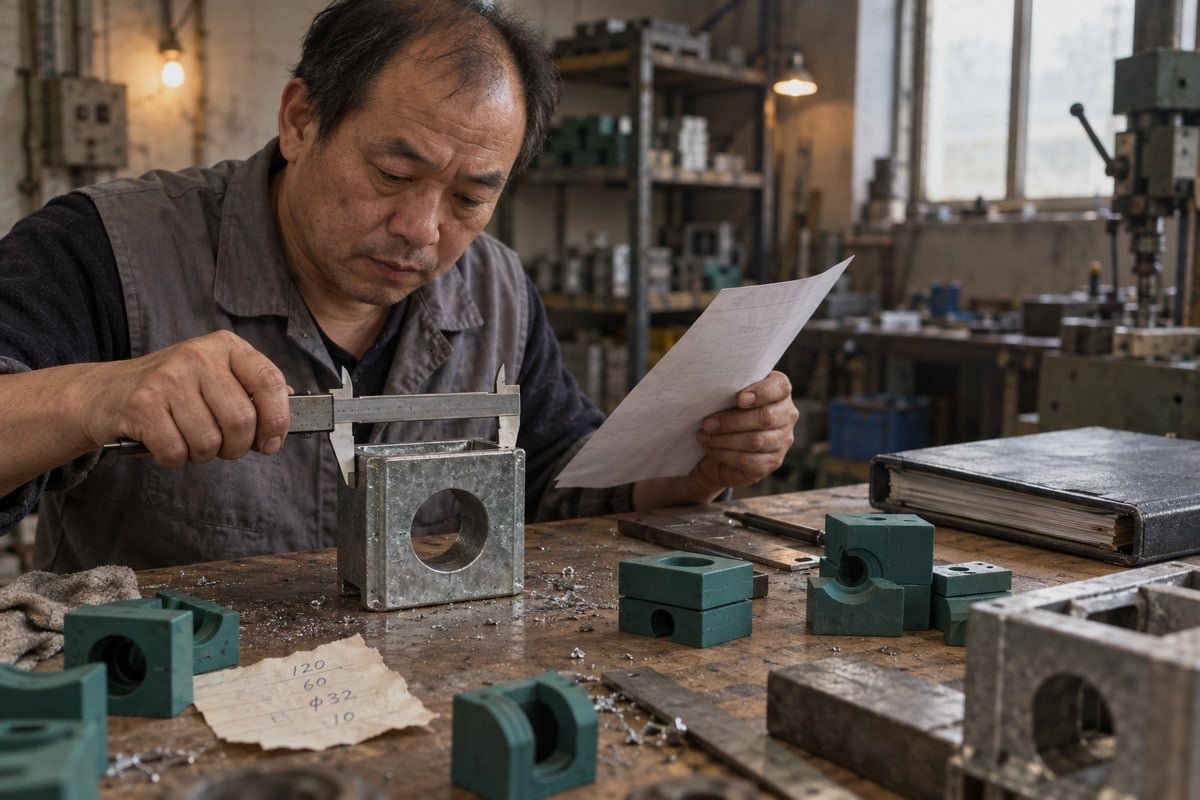
An audit request is a test in itself. The reaction tells you almost as much as the visit. A real plant asks which day, which product line, and whether you want to see the tool shop first. A trading company offers a showroom, a meeting room, or a "partner facility" that it cannot schedule freely.
Three audit formats and when to use each
| Format | Best for | Time needed | What you can verify |
|---|---|---|---|
| On-site visit | First qualification of a second source | 1–2 days plus travel | Equipment, people, batch records, storage, address match |
| Live video walkthrough | Repeat checks, budget constraints | 60–90 minutes | Machinery present and running, markings, real-time batch pull |
| Third-party audit (SGS, BV, TÜV) | Regulated projects, BESS and marine | Scheduled by agency | Independent report against your factory audit checklist |
A factory audit checklist for MCT production
Ask the supplier to walk you through these points in order. Each one links a process step to a document.
- Raw material intake: EPDM compound lot cards, halogen-free declaration, incoming inspection log.
- Mold storage and tool shop: tool register, mold condition tags, CNC and EDM machines.
- Vulcanization presses: cure temperature and time charts for the shift you are watching.
- Trimming and marking: batch code stamp matching the lot card from step one.
- Frame fabrication: welding station, weld inspection record, galvanizing supplier certificate.
- Final test: compression torque check, sample pressure test toward the 0.01–0.4 MPa rating, IP68 immersion sample if scheduled.
- Packing and export: nameplate, cross-reference label, shipping documents in the same legal name as the certificates.
- ERP or MES screen: pull your order number and confirm it shows the stage you just walked past.
Multi-site factories deserve one extra question
We run production in three provinces. That is normal for a growing plant, but it means you should ask which site makes your specific module. An honest supplier tells you. The certificate for that site should exist, and the video walkthrough should happen there, not at headquarters. If a supplier cannot say which of its own plants will build your order, it may not own either of them.
What to do with the result
Write the audit result into your supplier qualification file next to the sample validation. If the visit confirms the plant, the molds, and the records, a 40–60% lower unit cost is a rational saving, not a gamble. If it does not, the low price is paying for a layer of risk you cannot see.
Conclusion
Guessing costs projects. Ask process questions, inspect the tooling, match certificates to the plant address, and audit. Those four steps separate true MCT factories from resellers.
Footnotes
1. Provides a foundational definition and technical overview of multi cable transit systems in industrial applications. ↩︎
2. Technical resource on EPDM properties, the primary material used in high-quality cable transit sealing modules. ↩︎
3. Official source for the ISO 9001 standard, essential for verifying a manufacturer’s quality management systems. ↩︎
4. Authoritative certification body that verifies legal manufacturing entities and trade documentation during factory audits. ↩︎
5. The International Maritime Organization sets global standards for fire safety testing and certification in marine environments. ↩︎
6. Official government resource for trade regulations regarding responsible sourcing and supply chain transparency. ↩︎


 English
  Español de México
  Deutsch
  Français
  العربية
  Русский