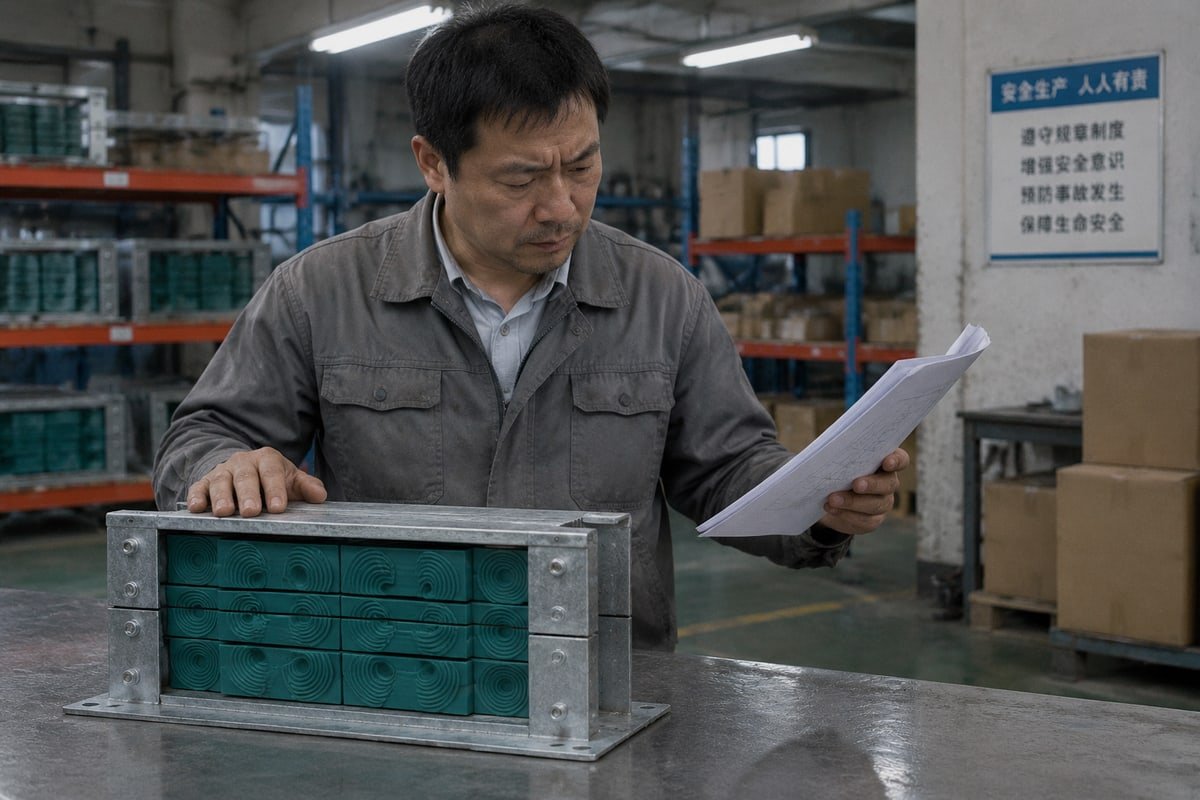
Buyers forward our engineers UL 1479/ASTM E814 1 fire test reports for MCTs from China for comparison. Many look official. Some cover the wrong assembly. That gap fails inspections. Verify first.
To verify UL 1479/ASTM E814 fire test reports for MCTs from China, confirm the issuing lab is accredited, match the report and file numbers to the UL Product iQ or Intertek listing, compare the tested assembly with your actual wall and cable conditions, and request the complete original report.
The rest of this article breaks that answer into four practical checks Intertek Directory of Listed Products 2. I will show you what a real report looks like, how to trace it to a listing, where UL 1479 and ASTM E814 differ, and how to ask a Chinese factory for originals without wasting weeks.
What details should I check to confirm a UL 1479 or ASTM E814 report is authentic and not altered?
Recently a German integrator sent our team a competitor's "UL 1479 certificate." It had no report number, no lab address, and a marketing font. We flagged it in ten minutes.
Check that the report names an ISO/IEC 17025 accredited lab with address, carries a unique report number and date, cites the exact standard edition, describes the full tested specimen, states F-Rating and T-Rating, includes hose stream results, and shows no font, layout, or metadata inconsistencies.

Authenticity has two layers. The first is whether the document came from a real lab. The second is whether anyone changed it after it left the lab. You need to check both. I break the review into three parts: content, alteration signs, and document type.
What a genuine laboratory report contains
A real report is boring and long. It reads like an engineering record, not a sales sheet. The table below shows what I look for on every page.
| Report element | What a genuine report shows | Warning sign |
|---|---|---|
| Issuing body | A named ISO/IEC 17025 accredited lab (UL Solutions, Intertek, Southwest Research Institute, Applus) with street address and contact | "Tested to UL 1479" with no lab name |
| Report number and date | Unique alphanumeric number, issue date, and "page X of Y" on every page | Number missing, or present only on the cover |
| Standard cited | ANSI/UL 1479 or ASTM E814 with the edition year | "UL 1479 equivalent" with no edition |
| Specimen description | Frame, module, sleeve, cable types, cable fill, annular space, wall or floor substrate, sealant | Only a product family name |
| Results | F-Rating and T-Rating in hours or minutes, hose stream test outcome, any L or W data | "Passed" with no numbers |
| Observations | Notes on deviations, witness names, thermocouple positions | A perfect result with zero remarks |
Signs the file was altered
Altered PDFs leave traces. I open the file properties first. The creation software and author should fit a lab, not a design agency. Then I check the fonts. A lab template uses one or two fonts. A pasted number often sits in a slightly different typeface or weight. I compare the test date against the report date. The test must come first. I also look for the lab's watermark or digital signature. Finally, I check that the report number appears identically on every page. Editors usually forget the footer.
Certificate, report, or brochure?
Many suppliers send a one-page "certificate." That is not a report. A certificate is a summary. A brochure is marketing. Only the full report shows the specimen construction, the furnace exposure, the hose stream test, and the ratings. If the file has product photos, logos, and slogans but no specimen drawing, it is a brochure. Ask for the report behind it.
How do I verify the testing lab and certificate number actually match my MCT supplier's product?
We weigh this trade-off when buyers compare suppliers: a cheaper module with a vague certificate, or one traceable to a listing. Traceability wins, because inspectors check numbers, not promises.
Search the supplier's UL File Number (usually starting with R) in the UL Product iQ database or the Intertek Directory of Listed Products, confirm the status is Active, check the System Number matches your assembly, and verify the listed company name and model match the invoice and product marking.

A report number alone proves little. The number must lead somewhere public. That is why I treat the lab check and the listing check as one process. Here is the sequence our engineers use when a buyer asks us to review a competitor document.
Six-step traceability check
- Get the identifiers. Ask the supplier for the UL File Number (firestop files often start with R) or the Intertek control number, plus the System Number.
- Search the public database. Enter the file number in the UL Product iQ 3 database. For Intertek work, use the Intertek Directory of Listed Products. Confirm the status reads "Active," not withdrawn or suspended.
- Open the system. A UL firestop System Number such as C-AJ-xxxx encodes the barrier type and penetrant type. Read the full system sheet. Compare wall or floor construction, cable types, cable fill, and annular space with your field conditions. They must be identical, not similar.
- Match the legal entity. The company name on the listing must match the invoice and the nameplate on the module. Watch for predecessor companies, sister companies, and private-label names.
- Inspect the hardware. Look for the UL Classification Mark or Enhanced UL Mark on the product or packaging. Paper without the mark is incomplete evidence.
- Call the lab if in doubt. Use contact details from the lab's own website, not from the report. A legitimate third-party certification body can confirm whether a report number exists.
Basic File holder or Multiple Listee?
The UL Product iQ cross-reference tool shows whether the Chinese factory holds the basic file or appears as a Multiple Listee under another company's file. This matters more than most buyers expect.
| Listing role | Who owns the test data | What you should confirm |
|---|---|---|
| Basic File holder | The factory itself tested the system and controls changes | The factory can explain every specimen detail |
| Multiple Listee | Another company tested it; the factory sells under agreement | The agreement is current and the product is unchanged |
| Not found | Nobody, or a different product | Treat the claim as unverified |
Test report versus listing
A test report records one event in one furnace on one day. A listing means the factory joined Follow-Up Services, so the certification body makes unannounced factory inspections, often quarterly, to check materials and construction stay the same. For through-penetration firestop systems, engineers and inspectors rely on the listing, not the report. FM Approved standards offer a parallel third-party route that some project specifications accept. Either way, the path must be public and current.
What's the difference between UL 1479 and ASTM E814 ratings, and which one do I need for my project?
One lesson took us years: buyers hear "equivalent" and stop reading. Our team explains UL 1479 and ASTM E814 share the furnace test, but UL 1479 adds optional leakage ratings.
UL 1479 and ASTM E814 use the same furnace curve, hose stream test, and F-Rating and T-Rating criteria for through-penetration firestop systems. UL 1479 adds optional L-ratings (air leakage) and W-ratings (water leakage). Choose the standard your project's code, listing path, and AHJ require.
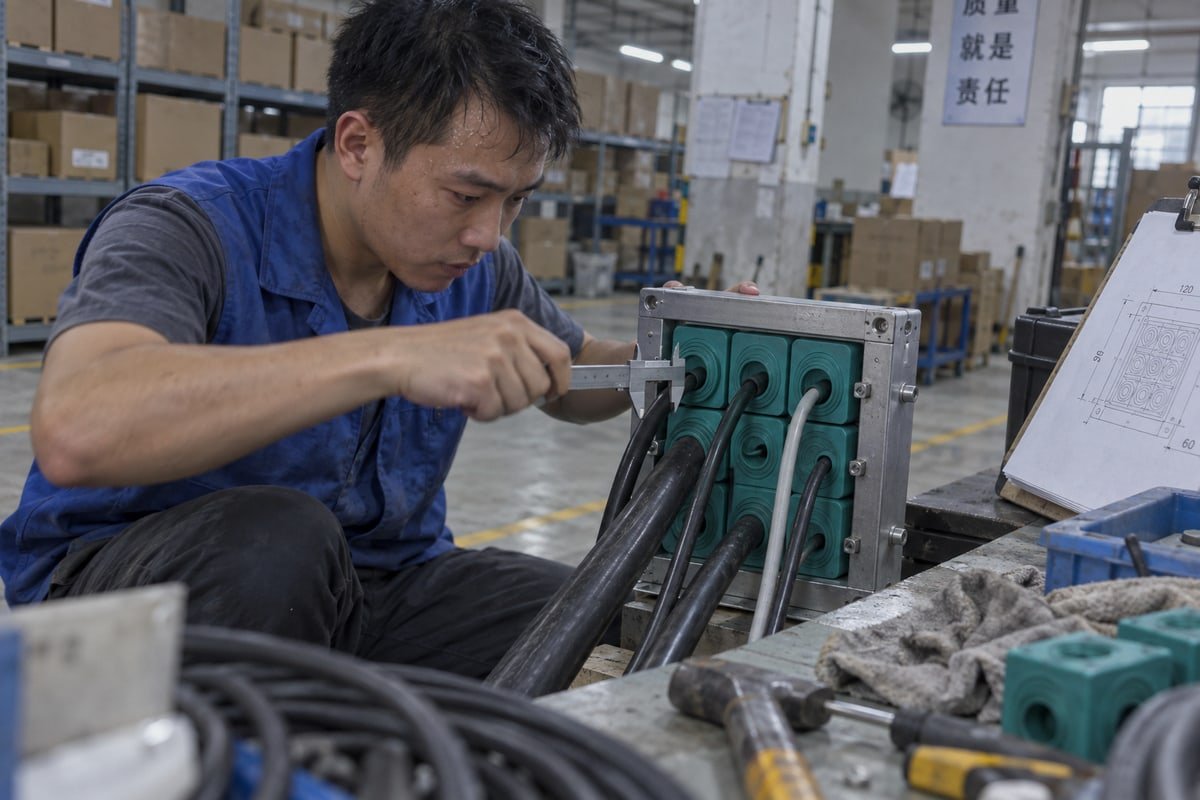
The fastest way to see the difference is side by side. The core fire test is shared. The extras and the listing ecosystem are not.
| Aspect | ASTM E814 | UL 1479 |
|---|---|---|
| Publisher | ASTM International | ANSI/UL (UL Standards & Engagement) |
| Scope | Fire tests of penetration firestop systems | Fire tests of through-penetration firestops |
| Furnace exposure | Standard time-temperature curve | Same curve |
| Hose stream test | Required after fire exposure | Required after fire exposure |
| F-Rating (flame passage) | Yes | Yes |
| T-Rating (temperature rise) | Yes | Yes |
| L-Rating (air leakage) | Not part of the method | Optional |
| W-Rating (water leakage) | Not part of the method | Optional |
| Typical use | Cited by model building codes | Basis for UL Classification and Product iQ listings |
The "they are interchangeable" objection
I hear this objection from procurement teams every month. The argument goes: the codes accept either standard, so any report works. The first half is right. Building codes name ASTM E814 or UL 1479 as the test for firestop seal integrity in rated assemblies. The second half is wrong. Acceptance depends on the exact system, not on the standard name. An ASTM E814 report for a single conduit through concrete does not cover a forty-cable MCT frame in a gypsum wall, even if the same brand name appears on both. Equivalent method does not mean transferable result.
Which rating do I need?
The answer follows the project, not the supplier.
- US or IBC-based commercial and industrial work: You need an F-Rating and a T-Rating. Many codes require the T-Rating to match the assembly rating when the penetrant is exposed. A listing is the normal submittal route.
- Smoke-control zones or pressurized rooms: Ask for an L-rating. This is UL 1479 only, and it exists only if the lab tested it.
- Below-grade or wet areas: Ask for a W-rating, again UL 1479 only.
- Marine and offshore: These projects usually specify A-0 or A-60 division ratings under the IMO FTP Code 4, which is a different test regime. Our TSR and TSC modules carry A-0/A-60 and IP68 documents, and we tell buyers plainly that these are not UL 1479 reports.
- European building projects: EN 1366-3 governs. Some Chinese factories publish both EN and UL data. Check each separately.
Intumescent sealing modules and rubber compression modules can both pass these tests. The rating belongs to the tested system, though, never to the material family.
How can I request original fire test documentation directly from a Chinese MCT manufacturer before placing an order?
On our production line, every fire-test document is filed by batch and standard. So when a buyer requests originals, we can pull the report, sample photos, and QC record together.
Email the factory's engineering or QA contact, not only sales. Ask for the complete original PDF with lab letterhead, report number, tested-assembly drawings, F-Rating and T-Rating, plus the listing reference, factory surveillance evidence, batch material data, and a physical validation sample before you place the order.

A good request is specific. Vague emails get brochures. Specific emails get reports. I recommend a written request that lists each document, explains why you need it, and sets a deadline. Below is the package I would ask for, and the same package we prepare for our own buyers.
The request package
| Document to request | Why it matters | How to judge the response |
|---|---|---|
| Full original report PDF | Shows the tested specimen, furnace exposure, hose stream test, and ratings | Must have lab letterhead, report number on every page, and specimen drawings |
| Listing reference (file number and system number) | Connects the report to a public UL Product iQ or Intertek entry | You can find it yourself in the database with Active status |
| Follow-Up Services evidence | Proves ongoing factory inspections, not a one-time test | Recent inspection record or listing under the factory's own name |
| FTIR spectrum of the current batch | Fingerprints the intumescent or EPDM compound against the original tested sample | Peaks should match the reference; large shifts mean a formulation change |
| GB 23864 test report | China's national firestop standard; a cross-check on the UL data | Big rating gaps between GB 23864 and UL 1479 results suggest "golden samples" |
| Accelerated aging or environmental exposure data | UL 1479 includes environmental exposure provisions; humid export routes stress materials | Data should show retained expansion or sealing after conditioning |
| Validation sample plus CAD/STEP files | Lets you fit-check and inspect marks before commitment | Nameplate, mark, and dimensions match the documents |
How to phrase the request
Address the email to a named QA or engineering contact. Sales teams often only hold summary files. State your project location, wall type, cable count, and required rating. Ask the factory to confirm in writing which listed system covers that exact configuration. Then ask for the documents in the table. Give a clear deadline. A serious factory replies within days. A trading company usually stalls, because it has to ask someone else.
What a transparent factory should offer
Our approach is simple. We are a factory with production in Shaanxi, Shandong, and Hunan, and we hold ISO 9001 and IATF 16949 5 systems with a BV-approved facility. Our A-0/A-60, IP68, and watertight and gas-tight sealing documents (0.01 to 0.4 MPa) are available on request, with the standard named on each file. We ship free validation samples and provide model cross-reference tables so buyers can drop our TSR and TSC modules into existing 120-frame cutouts as a second source at 40 to 60 percent lower cost. If a project needs UL 1479/ASTM E814 6 fire test reports for a specific listed system, we say so directly instead of relabeling a different test. That honesty is the minimum any buyer should demand.
When to reject a claim
Reject the supplier if the report is "confidential," if the tested assembly is never identified, if the company name does not match, or if the claimed rating is presented as universal. Firestop approvals are system-specific. A supplier who cannot describe the system cannot support your submittal.
Conclusion
Unverified reports create hidden risk. A rejected firestop submittal costs weeks. Trace lab, listing, and assembly before ordering, and demand originals—we supply ours on request.
Footnotes
1. Official ASTM International page for the E814 fire test standard for through-penetration firestops. ↩︎
2. Official Intertek directory for searching and confirming active product certifications and listing statuses. ↩︎
3. Official UL database for searching and verifying certified products, listings, and firestop system numbers. ↩︎
4. Official IMO page covering fire protection standards and the FTP Code for marine and offshore divisions. ↩︎
5. Official site for the IATF 16949 standard, the global quality management system for the automotive industry. ↩︎
6. Official UL Solutions page for fire resistance testing services including UL 1479 and ASTM E814. ↩︎


 English
  Español de México
  Deutsch
  Français
  العربية
  Русский