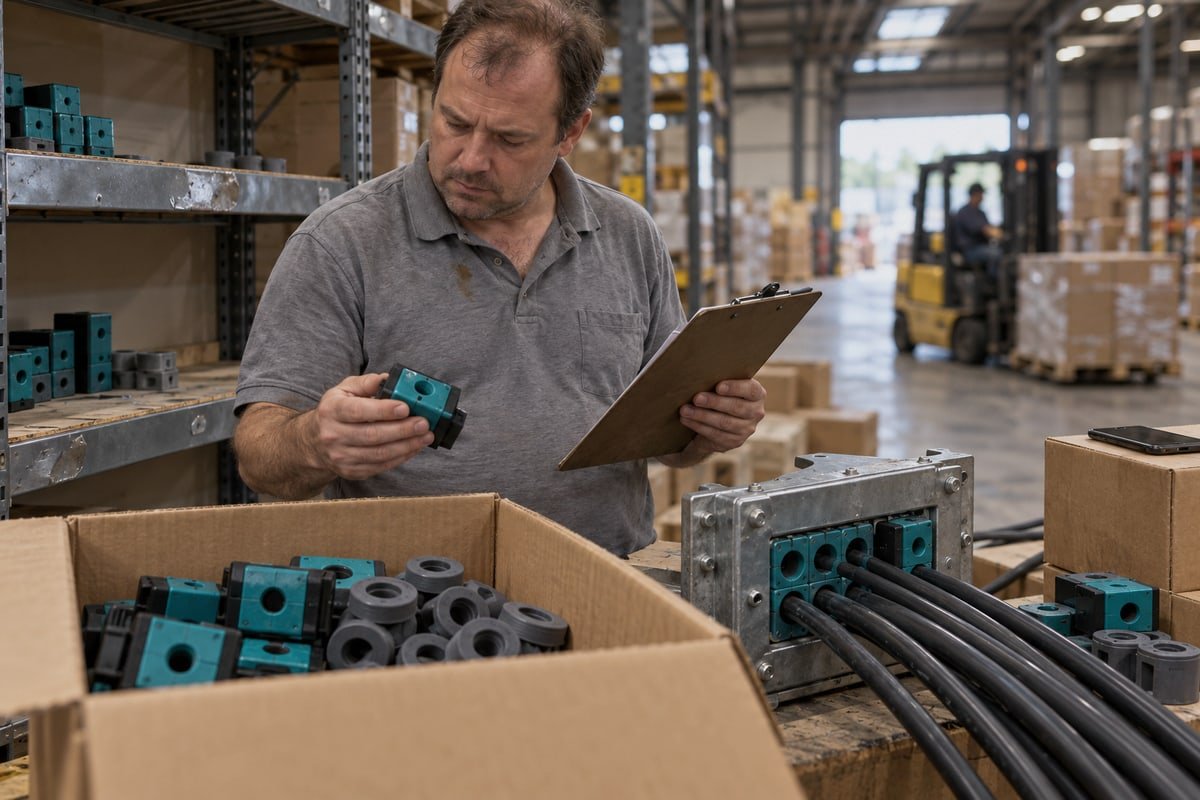
US integrators keep asking our export desk whether to stock Multi Cable Transit in the US or [ship direct from China](https://dewinmct.com/?p=1918). Guess wrong, and one missing module stalls a build.
Stock Multi Cable Transit in the US when demand is repeatable and projects need days-not-weeks delivery; ship direct from China when volume is uncertain or orders are large enough to fill LCL or FCL space. Most integrators do best with a hybrid: US safety stock plus direct bulk replenishment.
That is the short answer. The long answer depends on your volume, your cable sizes, and how much cash you want sitting in a warehouse. Below, I walk through the numbers we see on real quotations. First, the savings. Then the lead-time risks. Then how free samples take the guesswork out of the decision. Last, the spare parts question that every plant manager asks.
How much can I really save by shipping Multi Cable Transit modules direct from China instead of stocking locally?
A US sourcing manager once sent me his local distributor quote for square sealing modules. Our factory-direct price landed at less than half, before freight.
Direct factory shipping of Multi Cable Transit modules typically saves 40–60% on unit cost versus local distributor stock, but freight, import tariffs and duties, and customs handling claw back part of that. Net savings shrink but usually stay substantial on consolidated ocean shipments.
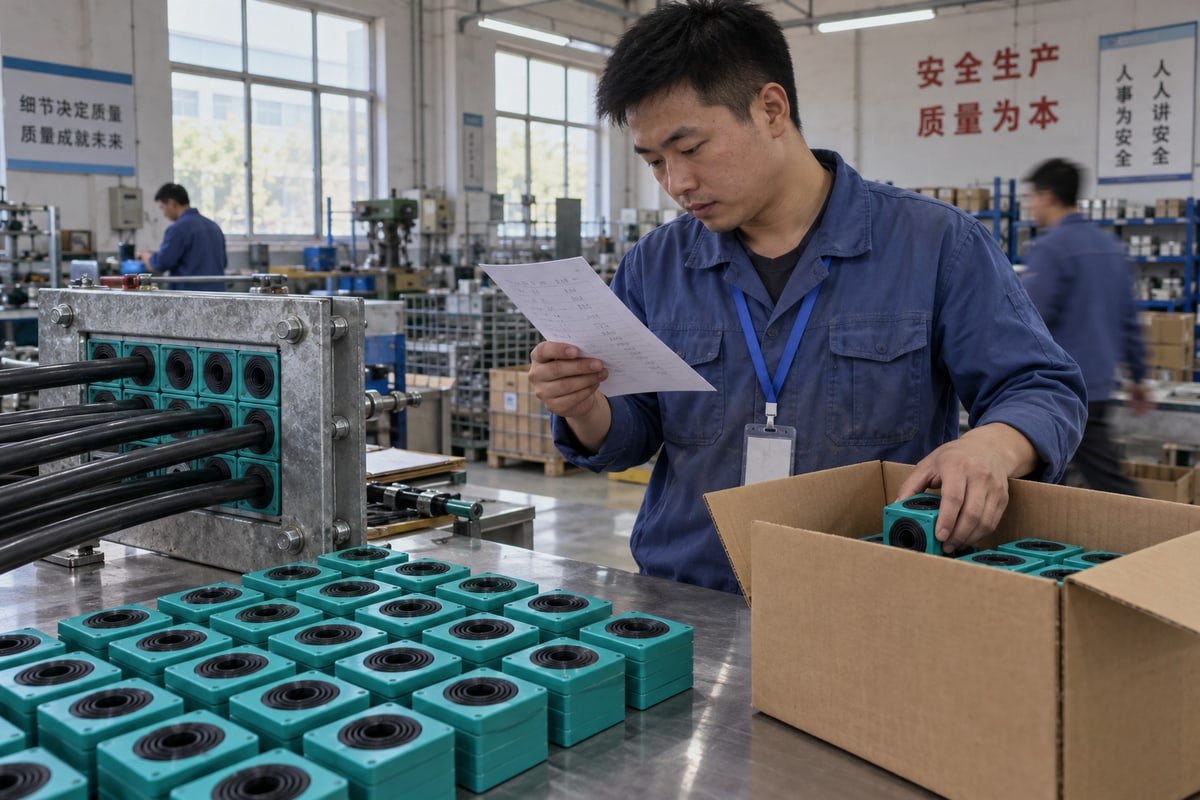
The gross saving is easy to explain. The net saving takes more work. Let me break both down.
Where the 40–60% gap comes from
We run our own molds in Shaanxi, Shandong, and Hunan. No trading company sits between the press and your purchase order. Our step-core, halogen-free EPDM modules adapt to a range of cable diameters 1 within one module size. That means you buy fewer SKUs to cover the same cable list. Fewer SKUs also means smaller minimum order quantities per line, which softens the MOQ objection that direct-from-China buying usually raises. The distributor model adds a margin on top of an already higher brand price, plus the distributor's own inventory carrying costs. Those layers are what you remove.
What claws back the savings
| Cost item | Direct from China | US distributor stock |
|---|---|---|
| Unit price | Factory price, 40–60% lower | Brand price plus distributor margin |
| Ocean freight | LCL roughly $40–$80 per CBM; FCL roughly $1,500–$5,000 per container | Built into shelf price |
| Air or express | Air around $5.30/kg; express around $7–$12/kg | Domestic parcel only |
| Import tariffs and duties | Paid by you, including Section 301 exposure | Already paid upstream |
| Customs broker and drayage | Your responsibility or your forwarder's | None |
| Inventory carrying costs | Low if you order per project | Priced into the unit |
Why sealing modules favor direct shipping
The research on direct fulfillment is clear on one point. Bulky, low-margin goods lose the direct argument fast. A cable sealing system 2 is the opposite case. Modules are dense and compact. A full project kit of TSC modules, TSR round assemblies, stay plates, and compression units fits in a few cubic meters. At LCL rates, freight per module stays small next to the unit price gap. The one line I cannot make predictable for you is the tariff line. Section 301 duties 3 and ocean rates both move. So confirm the HS classification for your specific cable sealing system before you bid a multi-year project. For long-term bids, ask us for a defined price validity period on the quotation. That gives you most of the stability that local stock offers, without paying the distributor premium.
What lead-time risks should I weigh before deciding to stock MCT inventory in the US?
Speed against cash. That is the trade-off we weigh with every US quotation, because a compression unit sitting on the water earns nothing until it clears customs.
Key lead-time risks are ocean transit of 20–30 days door-to-door to the West Coast and 25–40+ days to the East Coast, port congestion, customs holds, and factory queue time. US stock removes those risks from project schedules but adds forecast risk and inventory carrying costs.
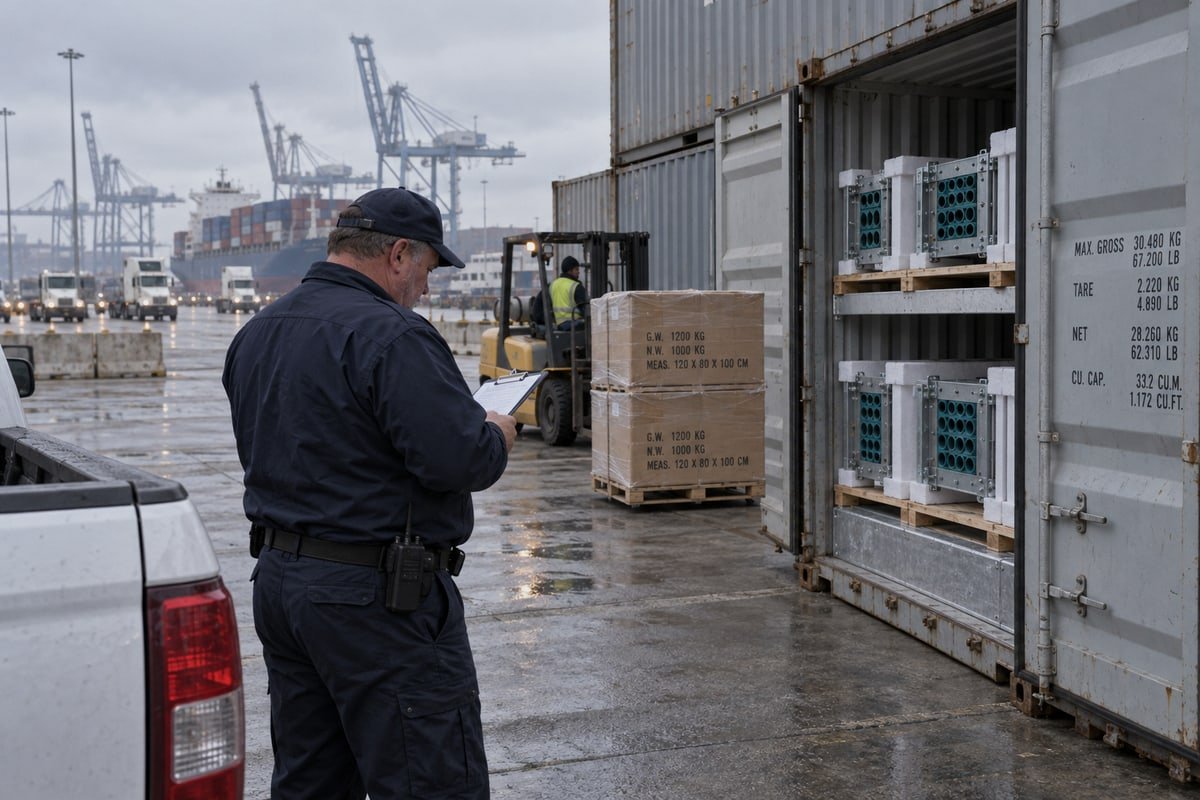
Supply chain lead times are not one number. They are a chain of steps, and each step can slip. Here is how the weeks add up on a direct shipment from our factory to a US job site.
Where the weeks go
- Factory production and QC. Standard modules ship from stock or short runs. Custom sizes from new molds take longer, and we quote that separately.
- Export documentation. We handle this in-house, so it rarely adds days. But it does need correct HS codes from your side.
- Trucking to port and consolidation. LCL cargo waits for a consolidation cut-off.
- Ocean transit. Roughly 12–20 days port-to-port to the West Coast. East Coast routes run 25–40+ days depending on canal routing.
- Customs clearance. Usually quick, but a Section 301 review or a document mismatch can hold a shipment.
- Drayage and final delivery. Port congestion decides whether this is two days or ten.
Transit modes at a glance
| Mode | Typical transit | Best use for MCT |
|---|---|---|
| Ocean to US West Coast | 12–20 days port-to-port; 20–30 days door-to-door | Bulk replenishment, full project kits |
| Ocean to US East Coast | 25–40+ days | Planned kits ordered at design freeze |
| Air freight | 3–10 days | Urgent frames or a late size addition |
| Express courier | 1–5 days | Spare sealing modules |
The risks that US stock does not remove
Stocking in the US cuts the delivery step to a few days. That matters for time-sensitive maritime and industrial installations 4, and for pre-fabrication yards that want just-in-time delivery in sequence. But local stock trades one risk for another. You now carry forecast risk. Order the wrong size mix, and you have cash tied up in modules that never leave the shelf. This is where our step-core design helps. One module size covers a band of cable diameters, so a small stock of a few sizes covers most cable lists. Fewer wrong guesses. Lower carrying cost. And if your demand is still uncertain, direct shipping per project keeps the forecast risk at zero while you validate sales.
Can I validate drop-in compatibility with free samples before committing to a stocking strategy?
Before any sample leaves our Shaanxi plant, a QC technician presses it into a reference 120-frame cutout and checks fit with a gauge.
Yes. Free validation samples let you test drop-in compatibility before choosing a stocking model. Fit the DEWIN module into your existing 120-frame, compress it, and check sealing against your spec. Cross-reference tables map existing model numbers to equivalent modules, so qualification takes weeks, not months.

The stocking decision only matters once the part is qualified. So qualify first. Our approach is built around a second-source process that your engineering team can run without flying to China.
A five-step qualification process
- Send your existing model list. We return a cross-reference table that maps each incumbent model to the matching DEWIN TSC or TSR module, frame, stay plate, or compression unit.
- Receive free validation samples with drawings. Samples ship by express, so they arrive in days. CAD and STEP files come with them, so your designer can check the frame cutout on screen first.
- Run a fit test. Load the modules into your existing 120-frame cutout with your current compression unit. The modules are dimensionally compatible with common 120-frame standards, so the fit should need no rework.
- Run a seal test against your spec. Our modules are rated for watertight and gas-tight sealing from 0.01 to 0.4 MPa and IP68 ingress protection. If your spec calls for pressure-tight cable entry at a given value, test to that value.
- Review the documents. ISO 9001 and IATF 16949 certificates, BV factory approval, and A-0/A-60 fire test reports are available on request.
What the paperwork covers, and what to check early
| Requirement area | What we provide | What you should confirm |
|---|---|---|
| Fire rating | A-0/A-60 test documents | Whether your project code demands UL certified firestops or FM listing instead |
| Water and gas sealing | IP68; 0.01–0.4 MPa test reports | Your project's design pressure |
| Material | Halogen-free step-core EPDM | Any low-smoke or specific chemistry clauses |
| Electromagnetic compatibility | Ask us if shielded cable entries need EMC-specific handling | Whether the panel spec calls for EMC performance at the penetration |
| Buy American / TAA | Not met by Chinese-origin product | Whether the contract mandates BAA or TAA compliance |
I want to be direct on that last row. If a federal or defense contract requires Buy American or TAA compliance, a Chinese-made module does not qualify, whether it sits in a US warehouse or ships direct. That project is outside this decision. For commercial BESS containers, modular data centers, switchgear, and EPC energy work, the qualification process above is what our European integrators run, and it works the same way for US buyers.
Do I need local US stock for spare sealing modules, or can fast export shipping cover my replacement needs?
One lesson stuck with me after years of shipping spare sealing parts from our lines: the module that fails is never the size on the shelf.
For most integrators, fast export shipping covers spare sealing modules. Express delivery from China runs 1–5 days and air freight 3–10 days, and modules are light. Hold a small local kit of high-turn sizes only where a stopped line costs more than the inventory.
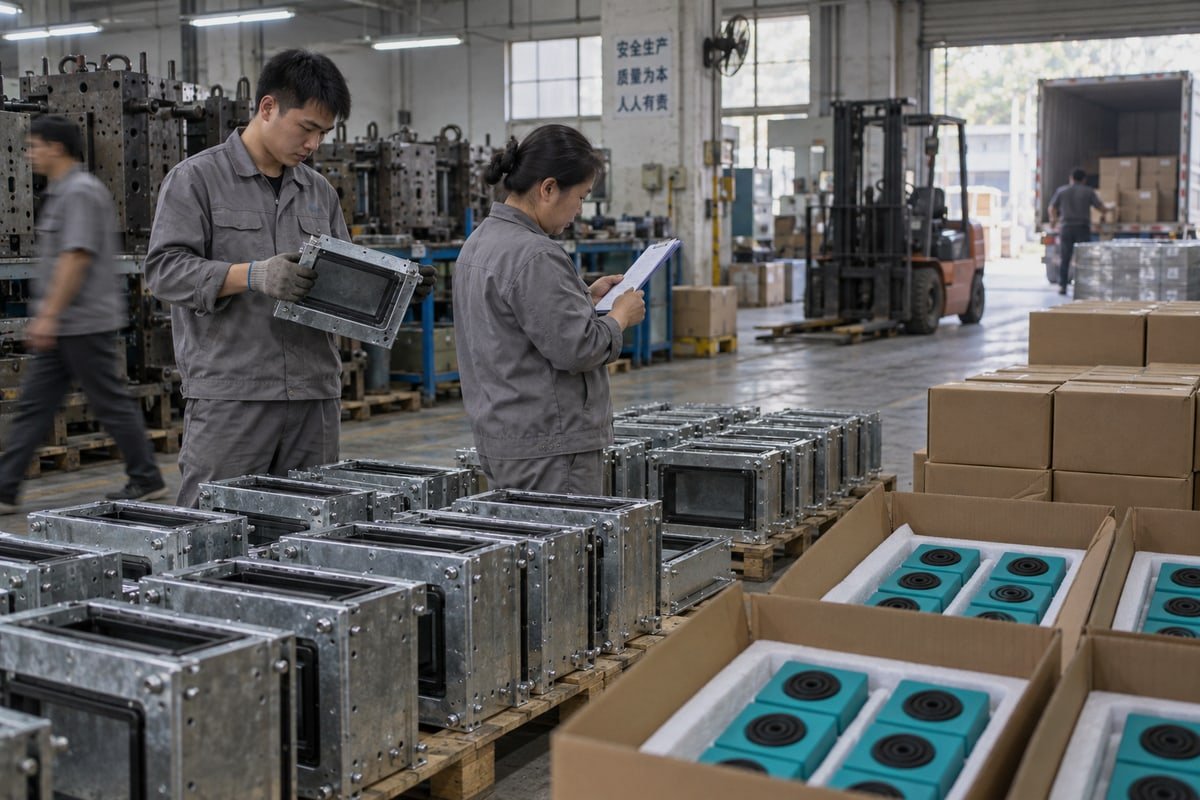
Spare parts are a different problem from project kits. The quantity is small. The urgency is high. And the size is unpredictable. That changes the math.
Match the scenario, not the rule
| Scenario | What I recommend |
|---|---|
| Planned retrofit, sizes known months ahead | Direct shipment by ocean or air with the project kit |
| Production line for BESS or data center containers, module damaged during assembly | Small local kit of the three or four high-turn sizes |
| Field failure at a single remote site | Express from factory, 1–5 days, at $7–$12/kg on a part that weighs very little |
| Many sites, many sizes, multiple contractors | A local distribution network hub in the US, replenished direct from us by ocean |
Why the SKU count decides this
The reason spares scare people is variety. A conventional cable sealing system can run to dozens of module sizes. Our step-core modular seal inserts collapse that list. One module size adapts to a band of cable diameters, so a spare kit of a handful of sizes covers most of the cable list on a typical switchgear or container build. That kit costs little to hold. Everything outside it comes by express. At the weights involved, express pricing per kilogram is almost irrelevant next to the cost of a stalled line.
The hybrid that works in practice
The pattern I see succeed is simple. Ship project kits direct by ocean to protect margin. Hold a compact local spare kit, sized from the cross-reference table, to protect the schedule. Replenish that kit with each ocean order. Consolidating freight this way also cuts the carbon footprint of the supply chain, which helps with ESG reporting 5 that more US contractors now face. For integrators who want the local hub to carry their own name, we run private-label production, so the spares on your shelf match your equipment branding. Export documentation is handled on our side, so the hub receives cleared, labeled cartons.
Conclusion
Stock in the US for speed, ship direct for cost, and use free samples to qualify first. A hybrid gives most integrators both without tying up cash.
Footnotes
1. International Electrotechnical Commission standards for cable specifications and electrical components. ↩︎
2. World Customs Organization nomenclature for the Harmonized System used in international trade. ↩︎
3. Authoritative source explaining Section 301 tariff exposure referenced in cost analysis. ↩︎
4. International Maritime Organization standards for safety and environmental performance in maritime installations. ↩︎
5. U.S. Securities and Exchange Commission information regarding ESG reporting requirements for corporations. ↩︎



 English
  Español de México
  Deutsch
  Français
  العربية
  Русский