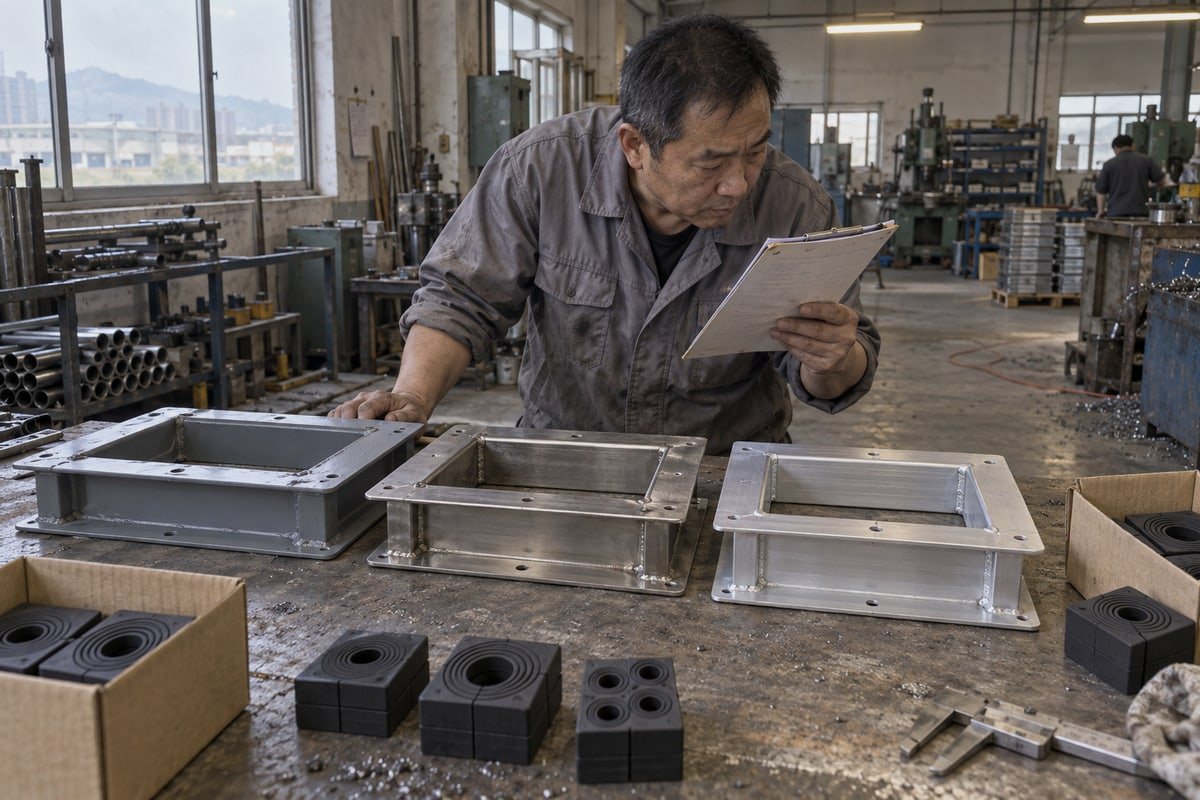
Frame materials for multi cable transit look like one small line on a spec sheet. Then a frame rusts on deck. Our factory gets that call, hence this guide.
Multi cable transit frames are available in three standard materials: primed or hot-dip galvanized carbon steel for general onshore duty, 316L stainless steel for offshore, marine, and high-humidity environments, and aluminum for weight-sensitive structures. Choose by corrosion exposure, weld compatibility with the bulkhead, and lifecycle cost.
The frame is the part that carries the load and touches the structure. The sealing modules and stay plates do the sealing. So the frame material decision is really a structural and corrosion decision. Below, I break down how frame materials for multi cable transit compare, when each one makes sense, how to verify dimensions before you switch, and what happens to fire and IP ratings when you do.
How do I choose between carbon steel, stainless steel, and aluminum MCT frames for my application?
A sourcing manager in the Netherlands once sent me a spec that listed all three frame materials as acceptable. His real question was which one would not cost him later.
Choose carbon steel for coated, onshore, budget-driven installations; choose 316L stainless steel for offshore, marine, chemical, or high-humidity sites; choose aluminum when the deck or enclosure is already aluminum or weight is critical. Match the frame to the parent structure first, then to the environment, then to budget.
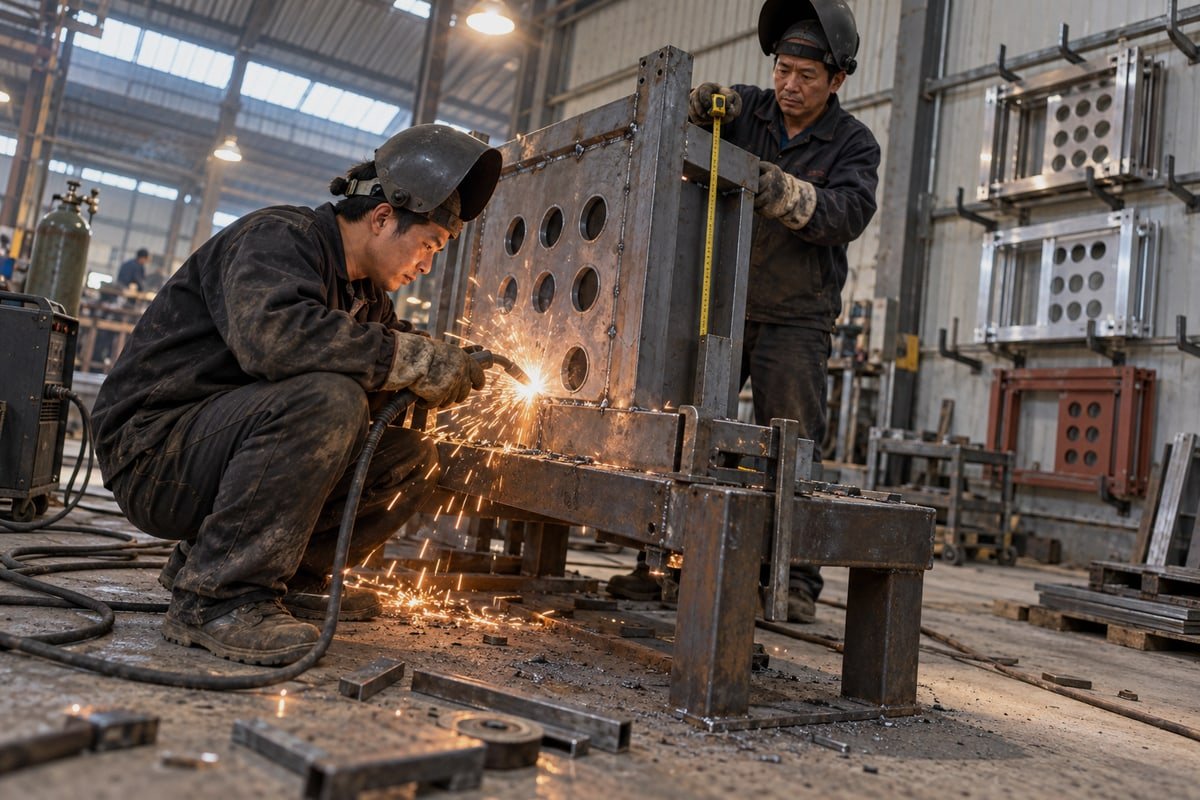
Here is the quick comparison I send to buyers before we get into drawings.
| Criterion | Carbon steel (primed or hot-dip galvanized finish) | 316L stainless steel | Aluminum |
|---|---|---|---|
| Corrosion resistance properties | Depends on the coating; needs recoating over service life | Excellent against chloride pitting and salt spray | Good in air; poor when in contact with steel |
| Peso | Heaviest | Heavy | Roughly one third of steel |
| Welds to | Steel decks, walls, and plates | Stainless structures | Aluminum decks and enclosures |
| Fire rating path | A-0 / A-60 directly | A-0 / A-60 directly | Needs added fire insulation |
| Relative cost | Lowest | Highest | Mid to high |
| Typical use | Onshore plants, BESS containers, switchgear rooms | Marine and offshore installations, chemical plants | High-speed craft, aluminum enclosures |
Start with the parent structure
The first rule is like-to-like. A steel frame welds to a steel bulkhead. An aluminum frame welds to an aluminum deck. A stainless frame goes into a stainless installation. If you break this rule, you create a galvanic pair 1 or a weld that will not pass inspection. The welding standards differ for each material, and so do the weld preparation and inspection steps. That is why our production lines in Shaanxi and Shandong keep separate weld procedures for mild steel, stainless steel, and aluminum frames.
Bolted vs welded installation is the second question. When hot work is banned, or when the wall is a composite panel or a thin container skin, a bolted or flanged frame replaces the welded one. Our BESS container customers use bolted frames far more often than welded ones. That changes the flange width and the bolt pattern, so material and mounting must be decided together.
Then answer the three common objections
I hear the same three arguments from procurement teams. Each one is half right.
- "Stainless is safest, so specify it everywhere." Stainless steel does resist corrosion best. But it is also the most expensive option, and it is heavier than aluminum. For a galvanized steel switchgear room in Germany, it adds cost with no benefit. Catalog data shows frames in all three materials rated for -55°C to +70°C and IP66 or better, so basic sealing capability is not the reason to upgrade.
- "Carbon steel is cheapest, so it is the default." It is the right default for most onshore work. But a primed frame in a coastal BESS yard will need recoating at the weld zones. Add that maintenance cost before you compare prices.
- "Aluminum is light, so use it." Weight matters on a fast ferry or a rooftop enclosure. But aluminum melts well below A-class fire test temperatures, so it needs extra insulation for a fire boundary. It also needs isolation from any steel it touches.
What our customers actually order
BESS and modular data center builders mostly order hot-dip galvanized carbon steel frames in bolted form. EPC teams on offshore and Middle East coastal projects order 316L. Aluminum orders come from customers whose enclosures are already aluminum. All three drop into standard 120-frame cutouts, and all three take the same TSC square sealing modules. That is how our customers cut frame and module cost by 40–60% as a qualified second source without changing the transit concept.
Which frame material offers the best corrosion resistance for offshore or high-humidity environments?
On our Shandong line, we keep a rack of retained frame samples in three materials. The galvanized ones show white rust first. That rack teaches more than any datasheet.
316L stainless steel offers the best corrosion resistance for offshore and high-humidity environments because its molybdenum resists chloride pitting and salt spray. Duplex stainless steel goes further where stress corrosion cracking is a risk. Aluminum resists rust but suffers galvanic attack against steel, and galvanized carbon steel needs recoating.
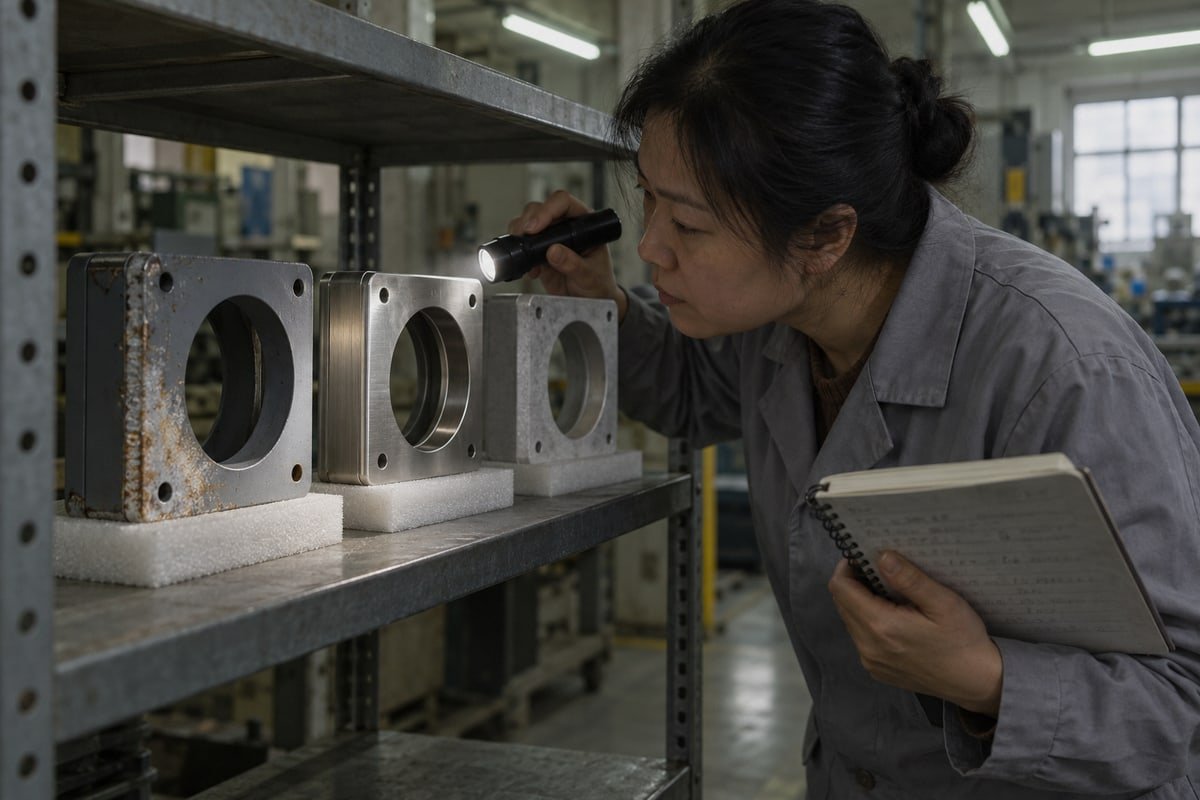
Corrosion is not one problem. Each material fails in its own way, and each has its own fix.
Failure modes by material
| Material | Main corrosion mechanism | Where it shows up first | Mitigation |
|---|---|---|---|
| Carbon steel | Red rust under damaged paint; white rust on zinc | Weld heat-affected zone, cut edges, bolt holes | Hot-dip galvanized finish, repaint welds, seal edges |
| 316L stainless steel | Pitting and crevice corrosion under heavy chlorides; stress corrosion cracking in warm chloride water | Splash zone, under gaskets and washers | Pickle and passivate after welding, avoid crevices, move to duplex where cracking risk exists |
| Aluminum | Galvanic corrosion when touching steel; pitting in seawater | Every steel contact point, fastener seats | Isolate from steel, use bimetallic transition strips, consider PVD coatings |
Weld zones are the weak point
Corrosion rarely starts on a flat face. It starts where heat changed the metal. On a carbon steel frame, the weld burns off the zinc, so the weld must be recoated. On a 316L frame, the weld can leave heat tint that lowers pitting resistance, so the frame should be passivated after welding. On aluminum, the weld itself is fine, but the steel bolts around it are not. Our QC team checks weld seams on every frame before the surface treatment, because a good coating on a bad weld hides the problem for one season only.
Galvanic pairs and hybrid frames
Offshore projects increasingly mix aluminum topside modules with steel hulls. That is where hybrid transition frames come in. A bimetallic strip is explosion-bonded from aluminum and steel. The aluminum frame welds to the aluminum side. The steel side welds to the steel bulkhead. No dissimilar metals touch in a wet zone. I raise this option whenever a buyer tells me the deck is aluminum but the bulkhead is steel.
Where the market is heading
Three trends are worth watching. Duplex stainless frames appear on specs for hot, chloride-rich process areas where standard 316L may crack. PVD coatings on aluminum frames are being tested to raise surface hardness and chemical resistance without the weight of steel. And RFID tags embedded in frame material are being used on large modular builds to track lifecycle and corrosion inspections automatically. None of these replaces the three standard materials yet. They extend them.
Our take for coastal BESS and data center sites
If the container sits within sight of the sea, I recommend 316L for the frame 2 even if the container skin is galvanized. If the site is inland with controlled humidity, hot-dip galvanized carbon steel is the sensible choice. In both cases the watertight bulkhead penetration itself comes from the EPDM modules, which are halogen-free and unaffected by salt. The frame material only decides how long the metal around them looks and performs like new.
Can I get CAD or STEP files to verify frame dimensions before switching materials?
Early in our export work, one shipment was held up because a customer's cutout drawing and our frame drawing disagreed by a few millimeters. We changed our process after that.
Yes. DewinMCT supplies native CAD and STEP files for every frame material, plus model cross-reference tables mapping your existing 120-frame part numbers to our equivalents. You can overlay the files on your cutout drawing, then request a free validation sample before changing carbon steel, stainless steel, or aluminum.
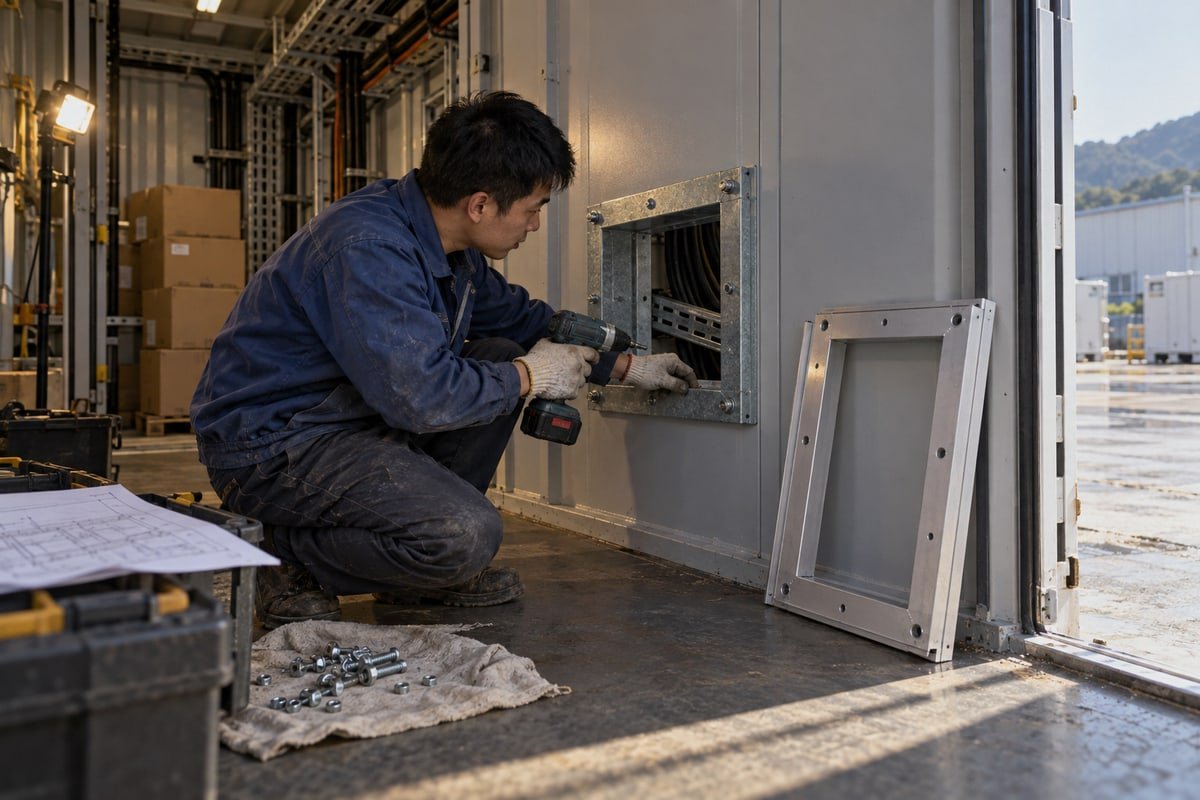
A material switch is also a dimension check, even when the transit concept stays the same. Here is the process we run with every new integrator.
The five-step verification path
- Send us your current part numbers. Our technical team returns a cross-reference table from your existing model to the matching DEWIN model in the same 120-frame size range.
- Receive the STEP and 2D files. We send both, in the material you plan to use, because wall thickness and flange detail differ between steel and aluminum frames.
- Overlay the files on your cutout drawing. Check the outer envelope, the cutout size, and the bolt pattern if the frame is bolted.
- Order a free validation sample. We ship a frame with modules, stay plates, and a compression wedge kit so your engineers can test fit in the real panel.
- Request the test documents. Fire, IP68, and pressure test reports come with the sample on request, so qualification does not stall on paperwork.
What changes when you switch material
| Feature | Carbon steel to stainless | Carbon steel to aluminum | What to check in the file |
|---|---|---|---|
| Frame outer dimensions | Usually unchanged | Usually unchanged | Outer envelope and cutout |
| Wall and flange thickness | May differ slightly | Often thicker for stiffness | Flange width and bolt hole spacing |
| Peso | Similar | Much lower | Handling and support brackets |
| Module packing space | Unchanged | Unchanged | Internal opening height and width |
| Weld or bolt detail | Different weld procedure | Different weld procedure or bolted only | Mounting method on your drawing |
The most important cell in that table is the module packing space. It stays the same across all three materials in our range. That means your TSC sealing modules, stay plates, and compression wedge kit move from one frame to another without new sizes. Only the frame changes.
Why the files are reliable
Our drawings are controlled under ISO 9001 3 and IATF 16949 document control. Every revision is traceable. When a frame is a custom size, our in-house mold and tooling shop builds it, and the STEP file reflects the tooling, not a marketing sketch. Our English-speaking technical support answers dimension questions directly from those files. That is the difference between a factory and a trading company when you evaluate frame materials for multi cable transit.
Will changing frame material affect fire rating or IP68 sealing performance on my project?
Every quarter, someone asks our technical team whether swapping a steel frame for aluminum will void an A-60 certificate. The honest answer has two parts.
Changing frame material does not change the IP68 sealing performance, because ingress protection comes from the compressed EPDM sealing modules, not the frame. Fire rating can change: steel frames carry A-0 and A-60 approvals directly, while aluminum frames need additional fire insulation because aluminum melts below A-class test temperatures.

The frame and the seal do different jobs. Once you separate them, the answer becomes clear.
What the frame does and does not seal
The seal is the rubber stack. Step-core EPDM modules are packed around each cable, separated by stay plates, and squeezed by the compression wedge kit. That compressed stack is what gives our transits IP68 ingress protection 4 and watertight and gas-tight cable seals from 0.01 up to 0.4 MPa. The frame holds the stack and transfers pressure load to the wall. Carbon steel, stainless steel, and aluminum all hold that load. So switching frame material leaves the IP68 and pressure test results unchanged, as long as the internal opening is identical. It is in our range.
Fire rating by material
Fire-rated cable seals are certified as a system: frame, modules, stay plates, and compression unit together. The frame material is part of that certificate.
| Rating | What it means | Carbon steel frame | Stainless steel frame | Aluminum frame |
|---|---|---|---|---|
| A-0 | Steel division holds flame for 60 minutes, no insulation limit | Direct | Direct | Needs added insulation |
| A-60 fire rating | Steel division plus 60 minutes of insulation performance | Direct | Direct | Needs added insulation |
| H-120 | Hydrocarbon fire, 120 minutes | Project-specific approval | Project-specific approval | Rarely specified |
Our A-0 and A-60 test documents 5 cover the steel frame systems. If a buyer moves to aluminum for a fire boundary, the project must add insulation on the aluminum side and confirm the arrangement with the classification society. I say this plainly because a BV-approved factory earns trust by stating limits, not by hiding them.
Ex zones and electromagnetic shielding
Two related questions come up on the same call. First, hazardous areas. Where ATEX and IECEx certification 6 applies to the enclosure, the frame material rarely drives the Ex approval; the gas-tight seal and the enclosure certificate do. Stainless is still preferred there for corrosion reasons. Second, electromagnetic shielding. Shielded transits use conductive modules that bond the cable screen to the frame. A painted carbon steel frame or an anodized aluminum frame needs bare contact points for that bond. Ask for the shielding version early if EMC matters on your switchgear or data center panels.
Documents to request before you sign
Ask any supplier for the fire test report, the IP68 test report, the pressure test report, and the material certificate for the frame. We provide all four on request. If a supplier can only provide one, the material switch is a risk, whatever the price.
Conclusion
No single frame material wins everywhere. Match the frame to your structure and environment, verify dimensions with our STEP files, and keep certification intact while cutting cost.
Footnotes
1. NASA resource explaining the science of galvanic corrosion between dissimilar metals. ↩︎
2. ISO is the governing body for international material standards including stainless steel grades. ↩︎
3. Official ISO page for the quality management standard mentioned in the article’s document control section. ↩︎
4. Official IEC explanation of IP ratings used to certify the transit’s sealing performance. ↩︎
5. IMO’s safety page covering fire protection standards like A-60 for marine structures. ↩︎
6. Authoritative reference for hazardous area certification standards mentioned in context. ↩︎


 English
  Español de México
  Deutsch
  Français
  العربية
  Русский