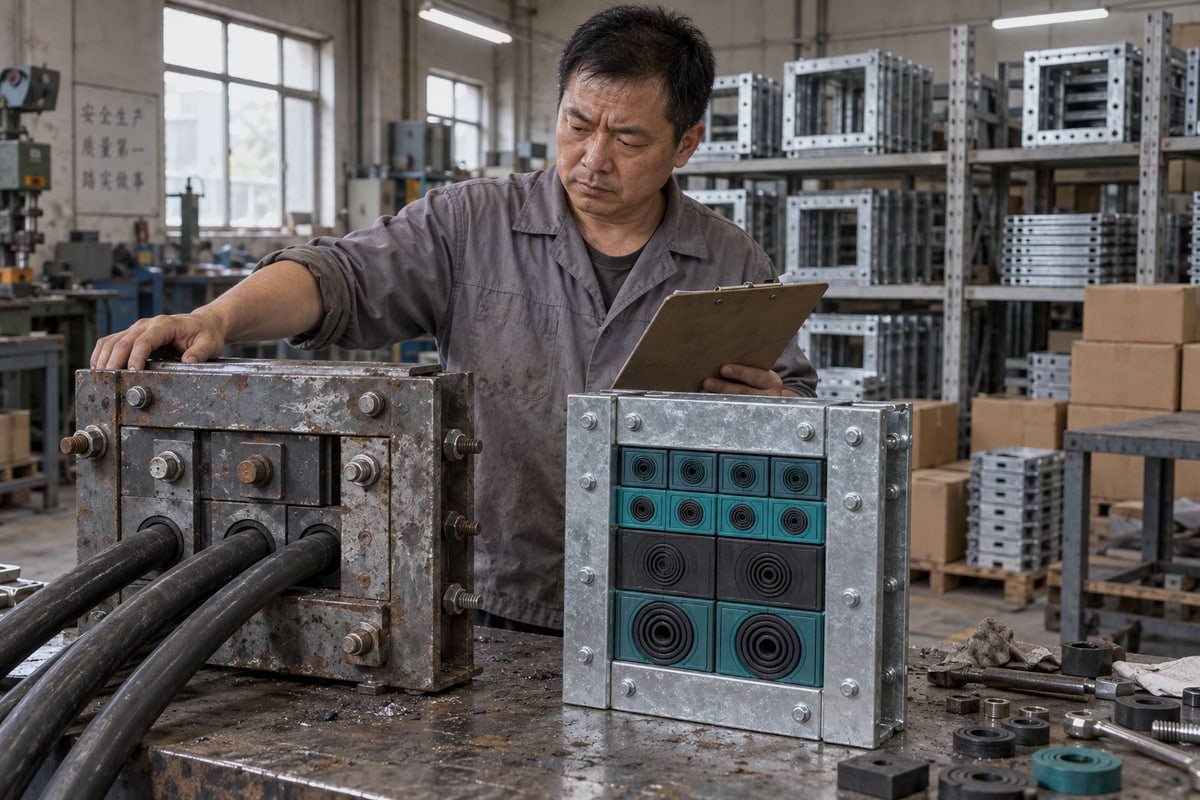
Frame standardization for multi cable transits promises lower cost, but buyers fear lock-in. Our factory has watched that fear cost teams months, so here is what actually happens.
Frame standardization for multi cable transits cuts engineering, procurement, installation, and inventory cost, and drop-in second sourcing can lower module cost by 40–60%. It limits flexibility only at the frame outline; modular sealing insert blocks, split frames, and bolt-together arrays keep cable layouts fully adjustable.
The rest of this article breaks that answer into four practical questions. I will cover the real savings, the flexibility trade-off, the certification checks, and how to validate fit before you commit. I will also raise the objections our buyers raise, and answer them with the same evidence we send them: cross-reference tables, test documents, and free samples of our modular sealing systems.
How much can I really save by standardizing my cable transit frames instead of using proprietary sizes?
A sourcing manager once sent me a spreadsheet listing several proprietary frame families and a long tail of module SKUs. Our reply fitted on one page.
Standardizing cable transit frames typically saves 40–60% on sealing module cost through drop-in second sourcing, plus lower engineering hours, fewer SKUs, shorter lead times, and reduced installation man-hours. Exact savings depend on volume, but the biggest gains appear on repeatable projects like BESS containers and modular data centers.
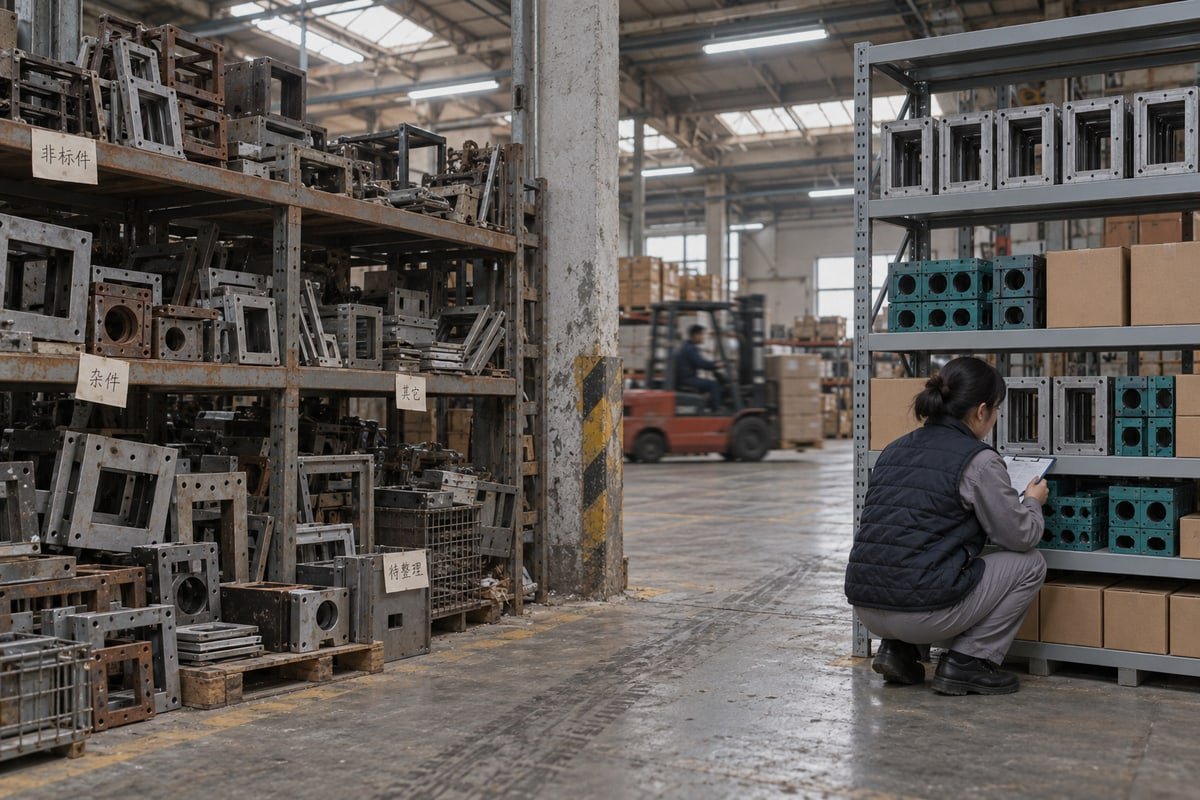
The 40–60% figure is the one people remember, but it is only one line in the budget. When I sit with a purchasing engineer, I split the savings into five buckets. Some are visible on a purchase order. Others only show up over the life of the asset.
Where the money actually goes
| Cost bucket | Proprietary frame sizes | Standardized 120-frame platform |
|---|---|---|
| Component purchase | Single-source pricing, limited leverage | Qualified second source; module cost 40–60% lower |
| Engineering hours | New layout and structural check per penetration | Known cutout, reused drawing, reused calculation |
| Lead time | Bespoke fabrication queue | Off-the-shelf frames and modules from stock |
| Installation man-hours | Different tools and steps per frame family | One assembly method: stack, stay plate, compress |
| Inventory carrying costs | Many SKUs, low turnover, high safety stock | Few SKUs, shared across sites and vessels |
Purchase price is the easiest to prove. Because our TSC and TSR modules are dimensionally compatible with common 120-frame standards, they drop into an existing cutout without steelwork changes. That is what makes the second-source price real rather than theoretical.
The hidden bucket: lifecycle maintenance costs
The bucket buyers underestimate is lifecycle maintenance costs. A standard frame means spare sealing insert blocks are the same across every container or panel you ship. Our spare module orders from integrators are small and fast for exactly this reason. Nobody has to identify a proprietary part number from a ten-year-old drawing.
One objection I hear often
"Standardization is a false economy if my openings do not match." That objection is fair for legacy bulkheads. But for new-build OEM equipment, you control the cutout from day one. On a BESS container line, the cutout is a laser-cut hole in a steel panel. Making that hole match a 120 mm standard costs nothing extra, and it unlocks every saving in the table above.
Will switching to a standard 120-frame design limit how I customize cable and pipe configurations later?
Every quotation puts the same trade-off on my desk: a fixed 120 mm frame outline against a cable list that will change before commissioning.
No. A standard 120-frame fixes only the inside width (120 mm) and depth (60 mm); height stays variable. Cable and pipe configurations live in the modules, not the frame, so step-core sealing insert blocks, spare blanks, and stay plates can be rearranged for new diameters at any time.
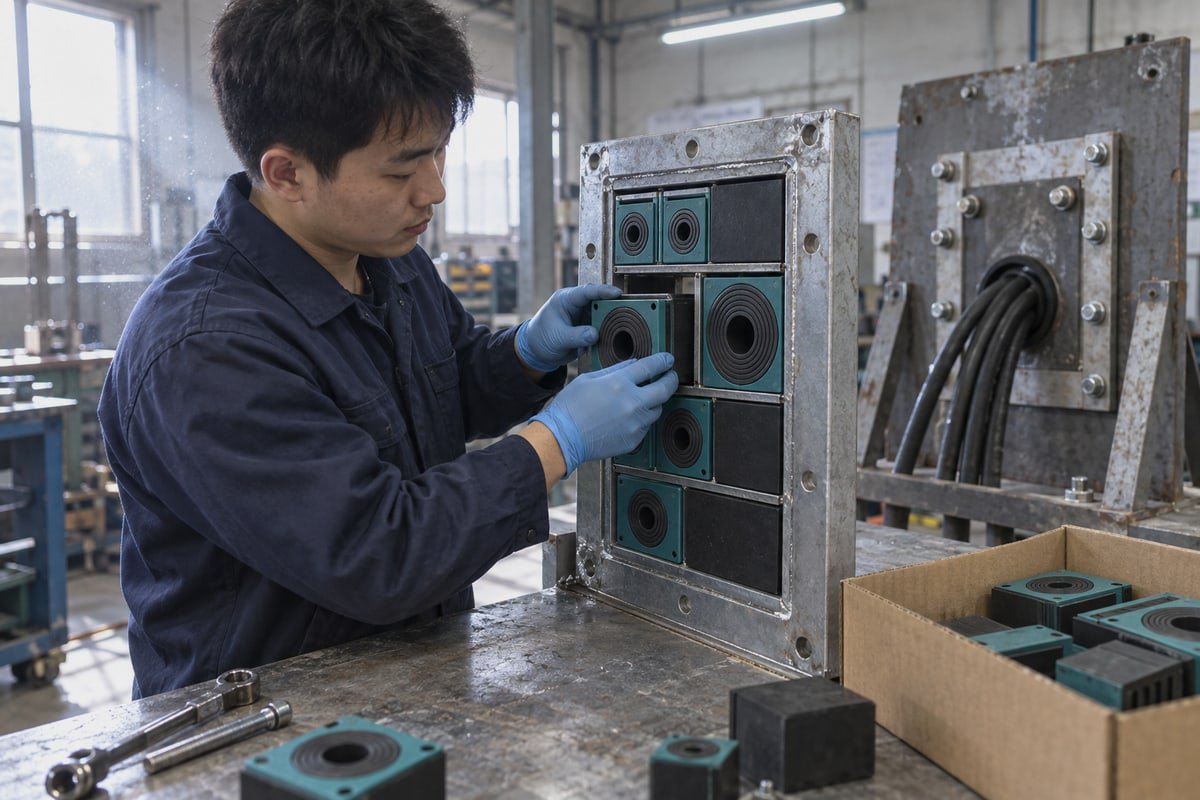
The key idea is simple. Frame standardization for multi cable transits standardizes the container, not the contents. Once you separate those two layers, the flexibility question almost answers itself.
What is fixed and what stays adjustable
| Layer | Standardized? | How you customize it |
|---|---|---|
| Frame inside width | Yes, 120 mm | Bolt frames side by side into arrays |
| Frame depth | Yes, 60 mm | Not usually needed |
| Frame height | No, variable | Choose the height that fits your cable packing space |
| Sealing insert blocks | Family is standard | Mix module sizes; step-core EPDM covers a diameter range per size |
| Cable and pipe layout | No | Rearrange layers, add spare blanks for future cables |
| Compression unit and stay plates | Standard | Loosen, reshuffle modules, re-compress |
Our modules use step-core, halogen-free EPDM. Each module has peelable layers, so one module size accepts a range of cable diameters. That is what gives a standard frame its retrofit flexibility. When a later revision swaps a 14 mm control cable for an 18 mm one, the installer peels a layer instead of ordering a new part.
High-density cable management and the real limit
Here is where I stay honest. The genuine limitation is physical fit on irregular structural bulkhead penetration. If an existing opening is oddly shaped, or if a dense mixed-service corridor needs every millimetre, a custom-contoured frame can pack tighter than a rectangular 120-frame. Standardization also shifts some complexity to the surrounding structure. You may need an extra cutout or a small steel adapter plate.
We handle that in two ways. First, standard-modular hybrids: bolt several 120-frames together into a wide or tall array, which keeps mass-produced pricing with near-bespoke geometry. Second, in-house mold making. If a project truly needs a non-standard module or a different inside height, our tool shop cuts a mold rather than forcing the design around a frame.
Connector-heavy systems
Pre-terminated cables with large connectors are the other hard case. A split frame lets you close the frame around an already-connectorized cable without re-termination. The module simply opens along its seam. This is worth confirming before you standardize, because not every frame family offers a split version.
How do I confirm a standardized MCT frame will still meet my fire, IP68, and gas-tight requirements?
Our QC team runs pressure checks on sample 120-frame assemblies. The first time I watched one hold at 0.4 MPa, I stopped worrying about standard frames and certification.
Ask for the actual test documents, not a datasheet. Confirm the fire rating (A-0/A-60), IP68 ingress protection, and watertight or gas-tight range (0.01–0.4 MPa) were tested on the exact frame, module, and compression unit combination you will install, under a recognized body such as Bureau Veritas.
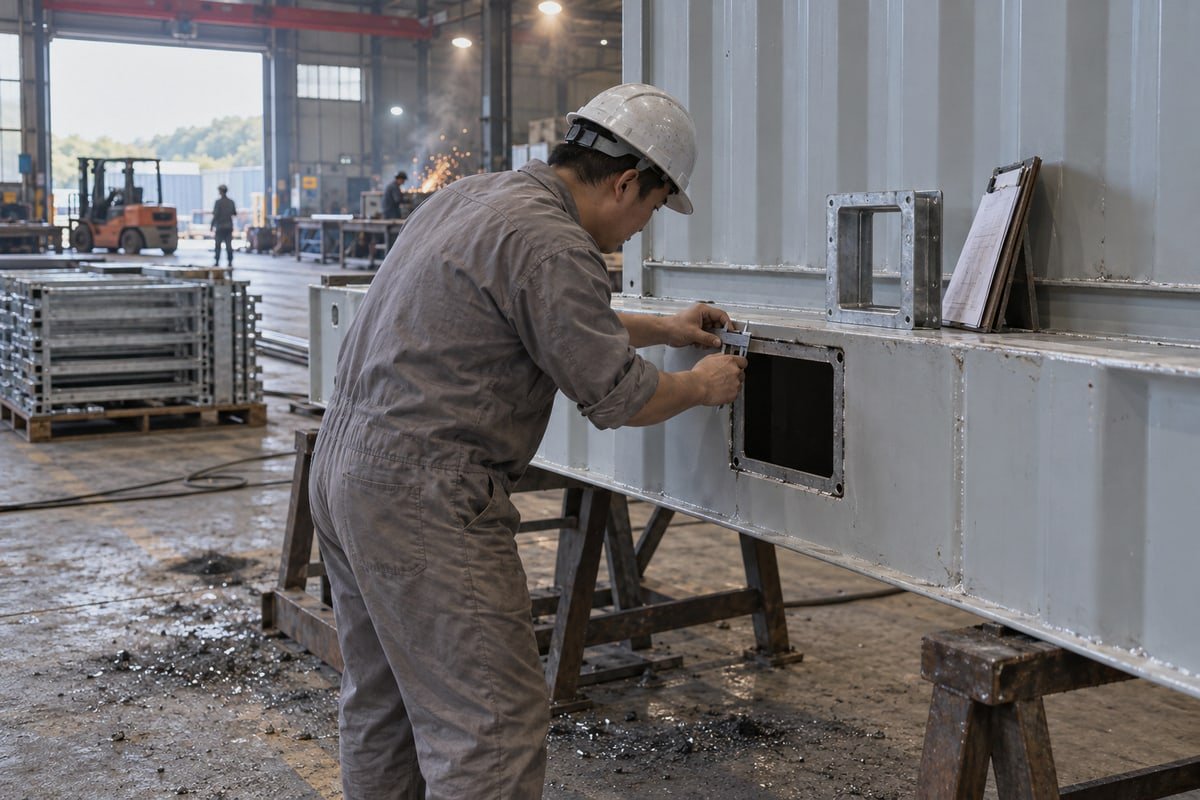
Standardization actually helps here. When a frame size is standard, the test population is large and the results are repeatable. That is why standardized frames give predictable compliance across projects in Europe, Asia-Pacific, and the Middle East. But predictable is not the same as automatic. Certification belongs to a tested system, not to a hole size.
A four-step confirmation process
- Match the system, not the frame. A seal is frame plus modules plus stay plates plus compression unit. If you second-source only the modules, the test document must show those modules in a 120-frame of the same construction as yours.
- Read the rating against your division. For passive fire protection, A-0 and A-60 refer to specific insulation and integrity times on a steel division. Confirm the report matches your wall or bulkhead type, and whether it covers marine and offshore certifications or a land-based standard.
- Check the pressure direction and range. Watertight and gas-tight results at 0.01–0.4 MPa should state the tested direction and cable fill. A frame full of blank modules behaves differently from a frame with mixed cables.
- Verify the quality system behind the report. Our documents come out of ISO 9001 1 and IATF 16949 systems in a BV-approved factory. Ask for the factory approval 2, not only the product report.
What to request, by requirement
| Requirement | Document to request | What to check on it |
|---|---|---|
| Fire rating 3 A-0/A-60 | Fire test report | Division type, module material, frame construction |
| IP68 ingress protection 4 ratings | IP test certificate | Immersion depth and duration, cable fill used |
| Watertight/gas-tight 0.01–0.4 MPa | Pressure test report | Pressure direction, hold time, module configuration |
| Material safety | Halogen-free EPDM declaration | Low smoke, no halogen for enclosed spaces |
| Manufacturing control | ISO 9001, IATF 16949 5, BV factory approval | Validity dates and scope |
I send these on request, before any order. A skeptical engineer who reads the reports is the buyer I want, because that engineer has no surprises at the factory acceptance test.
Can I validate dimensional compatibility before committing to a standardized frame across all my projects?
The lesson that shaped our sample policy came from a rejected first shipment years ago. A cutout drawing had an unstated tolerance. We now validate before anyone commits.
Yes. Request a model cross-reference table mapping your existing frame and module codes to the replacement models, download CAD/STEP files to check the cutout, and fit free validation samples in a real 120-frame on one pilot project. Only then roll the standard across your portfolio.

Frame standardization for multi cable transits only pays off if the first unit fits. So I treat validation as a gated process, not a leap of faith. The gates are cheap. Skipping them is not.
The validation sequence I recommend
- Cross-reference on paper. Send us your current frame and module part numbers. We return a table: existing model on the left, DEWIN model on the right, with inside dimensions and module heights listed side by side. Any mismatch shows up before a single sample ships.
- Check geometry in CAD. Load our STEP files into your panel or container model. Verify the cutout, the flange clearance, the compression unit travel, and the cable packing space against your worst-case cable list. Our English-speaking technical team answers dimension questions on the drawing, not with marketing text.
- Fit free validation samples. We ship sample modules at no charge. Install them in one of your existing 120-frames, with the real stay plates and compression unit. Measure compression, check module seating, and confirm the step-core layers peel to your cable diameters.
- Run one pilot unit. Build one container, panel, or skid with the standardized frame. Record installation man-hours and any rework. That data, not a datasheet, decides the rollout.
- Freeze the standard. Document the frame height range, module family, and spare kit. Now every project team orders from the same short list.
Why this matters beyond fit
A validated standard frame becomes a stable reference point in your digital twin. Every penetration has the same geometry and the same thermal behaviour, which makes predictive maintenance and thermal simulation far simpler. It also supports circular use. Standard frames and reusable modules can be salvaged from one BESS container or vessel and reinstalled on the next. And once cable lists are digital, standard frames let automated packing software optimize module layout and heat dissipation better than a hand sketch ever will.
Since 2013 we have run this sequence with integrators across three continents. The pattern is consistent. Teams that validate on one pilot roll out fast. Teams that skip the sample step are the ones who call us with a tolerance question mid-installation.
Conclusion
Frame standardization for multi cable transits cuts cost wherever projects repeat. Flexibility survives in the modules. Standardize the frame, customize the fill, and validate with real samples first.
Footnotes
1. Official landing page for the international standard for quality management systems. ↩︎
2. Official site for Bureau Veritas marine and offshore certification and factory approval services. ↩︎
3. Explanation of fire-resistance ratings used to determine the duration a material can withstand fire. ↩︎
4. Technical overview of the IP Code standard for protecting electrical enclosures against solids and liquids. ↩︎
5. Official oversight body for the global automotive quality management standard. ↩︎



 English
  Español de México
  Deutsch
  Français
  العربية
  Русский