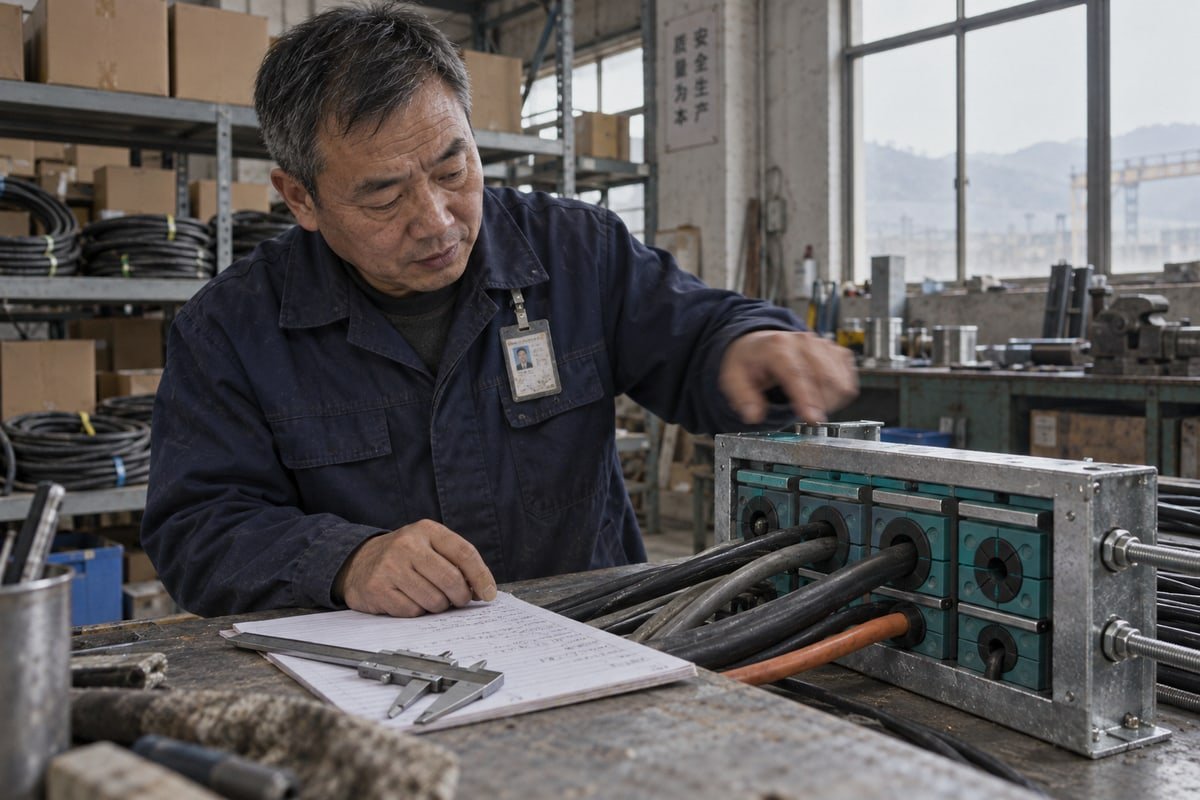
Vague briefs slow any multi cable transit supplier IATF 16949 1. Many inquiries reaching our DewinMCT engineers say only “seal 40 cables through a wall,” so quotes slip, samples misfit, and projects wait.
To describe your use case to a multi cable transit supplier, state the barrier type and location, number and outer diameter of every cable, required fire, water, gas, or EMC performance, applicable certifications, frame opening dimensions and mounting method, spare capacity, and whether the job is new-build or retrofit.
That is the short version. The rest of this article breaks each of those points down. I will show you what our engineers actually look for, why each detail changes the product selection, and how to package the information so a quote and a sample kit come back fast.
What Technical Details Should I Include When Describing My Cable Transit Requirements?
Last quarter our QC team rejected a sample kit before shipping. The buyer had listed 40 cables but no cable outer diameter, so our sealing module sizing was pure guesswork.
Include the exact cable count and outer diameter of each cable, cable types, whether connectors are pre-fitted, the opening dimensions and wall or deck thickness, required fire integrity ratings, ingress protection levels, gas and water tightness pressure, and the spare capacity you expect to add later.
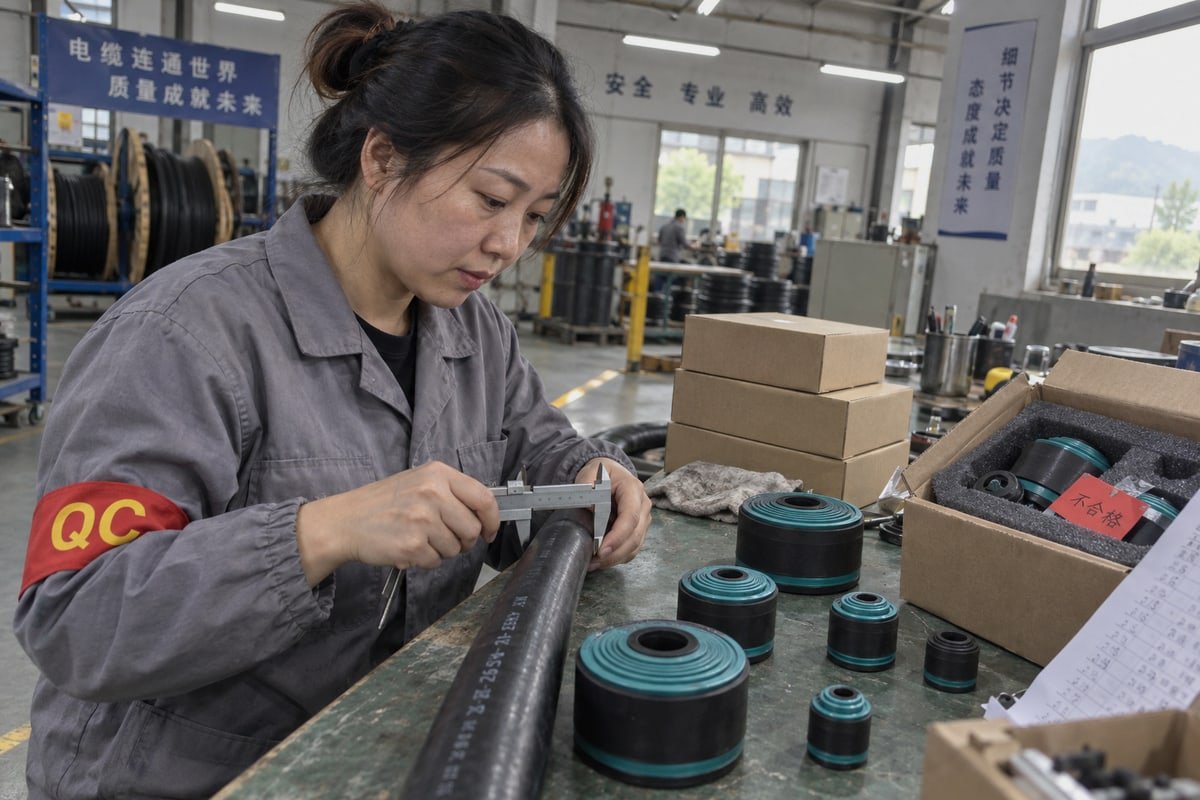
A multi cable transit is a modular sealing system. Rubber modules of fixed sizes stack inside a steel frame, and a compression unit squeezes them against each cable. That design is exactly why we need numbers, not adjectives. A module that is sized for a 12 mm cable will not seal a 20 mm cable, no matter how well it is tightened.
Start with the cable schedule
Cable schedule documentation is the single most useful thing you can send. It does not have to be pretty. A spreadsheet with one row per cable is enough. Here is what our engineers pull from it.
| Detail | Почему это важно | What to write |
|---|---|---|
| Cable count | Sets the total module area and frame size | "38 cables today, room for 8 more" |
| Cable outer diameter | Drives sealing module sizing | "12 × 14.5 mm, 10 × 22 mm, 16 × 9 mm" |
| Cable type | Power, control, data, fiber, instrumentation | "Power and instrumentation, separate frames preferred" |
| Pre-terminated connectors | Connector size may exceed cable size | "M12 connectors, 18 mm wide" |
| Pipes in the same opening | Pipes need different sealing modules | "2 × 25 mm hydraulic lines" |
| Opening size and thickness | Determines frame model and depth | "Cutout 200 × 120 mm, 6 mm steel deck" |
Why cable outer diameter drives sealing module sizing
Our TSC square modules and TSR round assemblies use a step-core, безгалогенный EPDM 2 design. Each module accepts a range of diameters. You peel layers until the core matches the cable. That range is a real convenience. It reduces the number of part numbers you carry, and it forgives small cable tolerances. But it does not remove the need for measured diameters. A supplier still has to choose which module size covers each cable. Please measure the actual jacket, not the nominal size on a datasheet. Jacket tolerances on armored cable can easily push a cable into the next module size.
Spare capacity requirements
A frame is welded or bolted once. Adding cables later without spare modules means cutting a new opening. So tell us your spare capacity requirements as a percentage or as a cable count. Many EPC teams we work with in the Middle East ask for 20 to 30 percent expansion reserve on BESS containers, because battery strings and monitoring cables get added during commissioning. Spare modules are cheap. A second penetration through a fire-rated wall is not.
Some buyers worry that this level of precision makes the system rigid. That concern is fair. The trade-off is precision versus flexibility. Our answer is to combine a precise frame size with flexible step-core modules. You get accurate frame fit, and the modules absorb cable changes within their range.
How Do I Explain My Frame Compatibility Needs to Get the Right Drop-In Solution?
A sourcing manager in Germany once emailed us a single frame photo and an incumbent part number. From that, our team built a cross-reference and shipped validation samples.
Tell the supplier the existing frame standard and inner opening size, the incumbent module part numbers, the frame mounting method (welded or bolted), the material, and whether frames must be openable for pre-terminated cables. This lets a drop-in second source cross-reference modules that fit without modification.
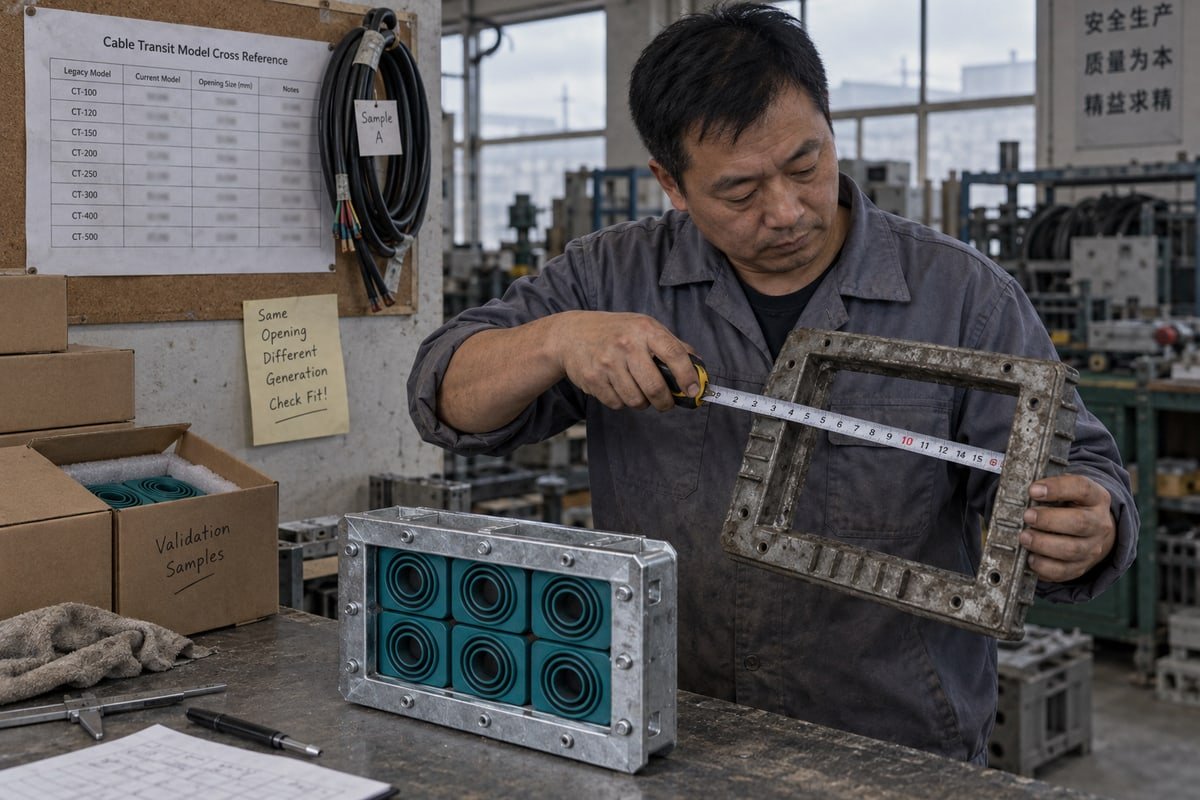
Frame compatibility is where most second-sourcing projects succeed or fail. If the modules fit the existing frame cutout, you can switch supplier for spare parts without touching the steelwork. If they do not, you are back to a new-build specification. So this part of your description deserves care.
What 120-frame compatibility means in practice
Many transit frames on the market share a common inner width of 120 mm and a set of standard module sizes that divide that width. Our TSC modules are dimensionally compatible with those common 120-frame standards. In plain terms, a module that occupies a 30 × 30 mm slot in your existing frame is replaced by a DewinMCT module that occupies the same 30 × 30 mm slot. Stay plates and compression units follow the same logic.
To confirm this, we need three things from you:
- The frame series or the manufacturer's part number stamped on the nameplate.
- The inner opening width and height, measured with a tape or caliper.
- The list of module part numbers currently installed, or a photo of the packed frame.
With that, we return a cross-reference table showing existing model to DEWIN model, and we send free validation samples so your engineers can test the fit before any purchase order.
Frame mounting methods
Frame mounting methods change the frame model and the material. Please state which situation applies.
| Mounting method | Typical structure | Frame type to request | Notes for your description |
|---|---|---|---|
| Welded | Steel bulkheads, decks, BESS container walls | Weld-in frame, galvanized or stainless | State plate thickness and whether welding is done by your yard |
| Bolted | Masonry, concrete, composite or GRP walls | Bolt-through frame with gasket | State wall thickness and anchor type |
| Openable | Cabinets, panels, pre-terminated cable runs | Split or hinged frame | State connector width and tool clearance |
Retrofit-friendly openable frames are valuable when cables already carry connectors. Nobody wants to cut and re-terminate 60 M12 sensor cables. The trade-off is that openable frames carry their own footprint and may not reach the same fire integrity ratings 3 as a welded frame. In a new-build project you can design the penetration around the transit from day one, which makes the specification simpler and the performance more predictable. In a retrofit, the existing opening dictates the frame, and we work backward from it.
Material and hardware
Material is part of compatibility too. For corrosive offshore or coastal installations, buyers usually ask for 316L stainless steel frames and hardware. For indoor switchgear rooms and container walls, hot-dip galvanized steel is the common choice. Tell us which one you expect, because it affects both price and lead time.
What Environmental and Certification Requirements Should I Communicate for My Application?
We weigh one trade-off constantly at the test bench: an A-60 fire-rated, IP68 module costs more to certify than a plain dust seal, yet under-specifying costs far more later.
Communicate the fire integrity rating (A-0, A-60, H-120, or jet fire), water pressure in bar or MPa, gas-tightness, IP rating, temperature range, corrosion or washdown exposure, EMC or earthing needs, and required third-party approvals such as BV, DNV, ABS, UL, or ATEX for hazardous areas.
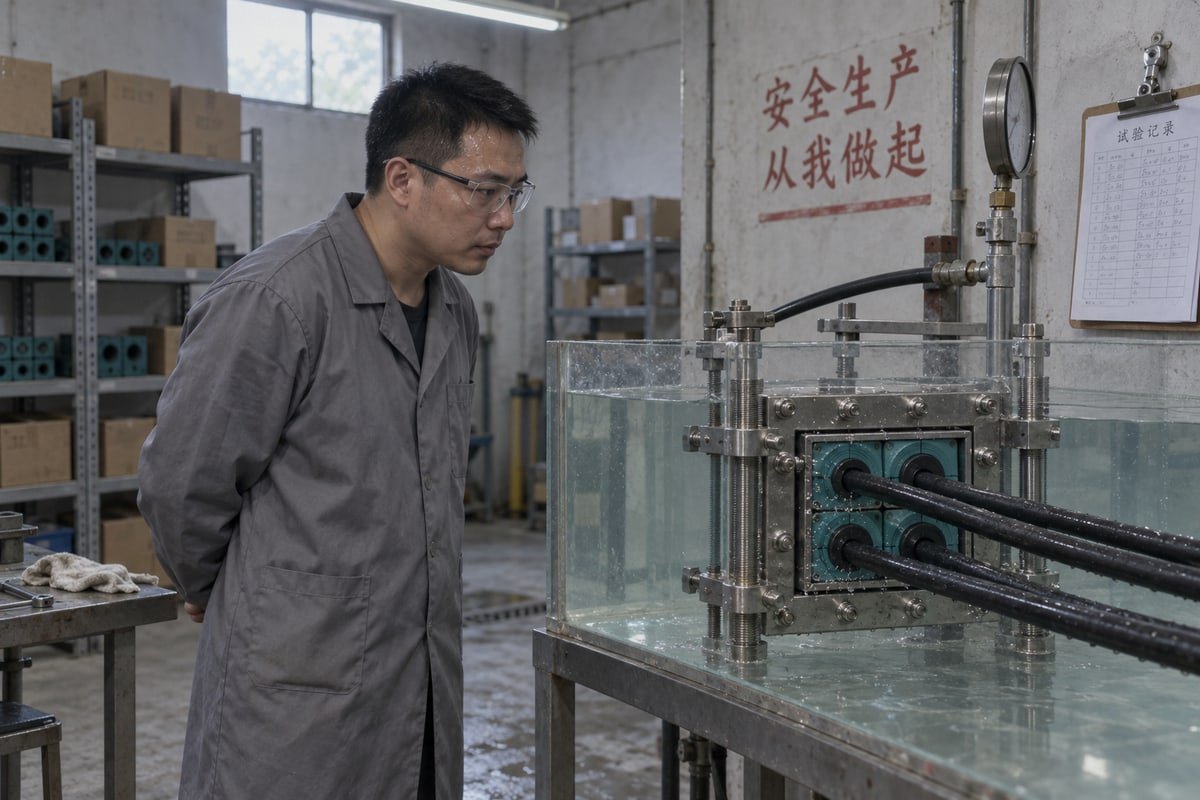
The environment decides which performance claims the transit must prove. A transit in a dry switchgear room and a transit in an offshore deck may look identical from two meters away. Their test reports are completely different. So the most helpful thing you can do is name the barrier, the threat, and the standard together.
Match the environment to the requirement
| Application | Main threats | What to state | Typical proof requested |
|---|---|---|---|
| Ship bulkhead and deck penetrations | Fire, seawater, vibration | A-0 or A-60 class, water head in bar, 316L | Class society 4 type approval, fire test report |
| Offshore process area | Hydrocarbon fire, gas, explosion | H-120 or jet fire, gas-tightness, hazardous area certifications | ATEX or IECEx context, fire and gas test data |
| BESS container wall | Fire spread, rain, dust, thermal cycling | Fire rating, IP66 to IP68, temperature range | Fire and ingress test documents |
| Modular data center or control cabinet | Dust, humidity, EMI on data lines | IP rating, electromagnetic shielding, earthing and bonding | Ingress test, EMC module option |
| Cleanroom or washdown line | Air leakage, chemical cleaning | Gas and water tightness, chemical resistance | Pressure test, material datasheet |
Fire integrity ratings
Fire integrity ratings follow the classification of the wall or deck, not the cable. If the bulkhead is A-60, the transit must be A-60. If the deck is rated H-120 against hydrocarbon fire, the transit must match it. Our modules are tested to A-0 and A-60, and the test documents are available on request. For H-120 or jet fire requirements, tell us early, because that changes the frame design and the insulation package around it.
Gas and water tightness
Water and gas performance should be given as a pressure. "Watertight" alone is not enough. A bilge penetration and a submerged cable pit see very different pressures. Our sealing modules are tested for watertight and gas-tight performance from 0.01 to 0.4 MPa, which is roughly 0.1 to 4 bar. If your application sits inside that range, we can supply the test document. If it sits above it, we would rather know now than after installation.
Ingress protection levels and EMC
For enclosures and containers, ingress protection levels are the common language. IP68 is our standard rating for the modules. Enclosure-type entry systems on the market often quote IP66 or UL Type 4X, so please state the level your enclosure standard actually needs rather than the highest one you have seen.
Electromagnetic shielding is a separate line item. If instrumentation or fiber-adjacent copper passes through the same frame as power cables, ask for EMC modules and specify the earthing and bonding path. A galvanized frame welded to a bonded structure behaves differently from a bolted frame on a composite wall.
Certifications and approvals
Finally, list every third-party approval 5 the jurisdiction requires. Marine projects usually name a class society such as BV, DNV, or ABS. North American projects often ask for UL. Hazardous area certifications such as ATEX apply when the transit sits inside a zoned area. On our side, our factory is BV-approved, and our quality systems run under ИСО 9001 6 and IATF 16949. We would rather show you a certificate than describe one.
Some buyers over-specify to be safe. That raises cost and lead time, because every extra rating is another test and sometimes another frame design. Others under-specify and discover a leak or a failed inspection later. The honest balance is to state exactly what the barrier classification and the site standard demand, and nothing more.
How Can I Provide Enough Information to Receive Accurate Samples and Quotes Quickly?
One lesson stuck with our export team: inquiries that included a marked-up drawing and a cable list cleared engineering review in days, while text-only requests bounced back with questions.
Send a cable schedule with counts and outer diameters, a dimensioned drawing or photo of the opening, the incumbent part numbers, required certifications, quantity and delivery location, and CAD or BIM needs. With that package a supplier can size modules, cross-reference models, and ship validation samples without follow-up questions.

Speed comes from completeness, not from urgency in the subject line. Our engineers cannot size a frame from "please quote ASAP." They can size it in a day from a clear package. Here is the process we recommend to purchasing engineers who want a first quote and a sample kit in the same week.
A five-step RFQ package
- Attach the cable schedule. One row per cable, with outer diameter, type, and whether it is pre-terminated. Add pipes if they share the opening.
- Attach the opening data. A dimensioned drawing is best. A photo with a tape measure across the cutout is acceptable. Include wall or deck thickness and material.
- Name the incumbent. If you are second-sourcing, give the existing frame and module part numbers. We build the cross-reference from them.
- State the ratings and approvals. Fire class, pressure, IP level, EMC, and the third-party bodies you must satisfy.
- State the commercial frame. Quantity per frame, number of frames, target delivery port, spare capacity requirements, and whether you want private-label marking.
Three example descriptions that work
These are the kinds of briefs that go straight to engineering without a return email.
| Use case | Example description |
|---|---|
| BESS container wall, new-build | "Welded galvanized frame, 200 × 120 mm cutout in 3 mm steel. 24 × 18 mm DC power cables, 12 × 9 mm CAN bus, 25 percent spare. Fire rated, IP68, halogen-free. 60 containers, delivery Rotterdam. STEP file needed." |
| Offshore deck retrofit | "Existing 120-frame, part numbers attached. Replace modules only. 316L frame stays. A-60 deck, 0.3 MPa water, gas-tight. Class approval required. Sample kit to Aberdeen." |
| Modular data center panel | "Openable frame, 40 pre-terminated Cat6A with RJ45 boots 14 mm. IP66 enclosure, EMC modules with bonding to panel earth. Cross-reference to incumbent attached." |
Mistakes that slow every quote
From our inbox, these are the most common gaps. Each one costs at least one round of questions.
- Cable counts without cable outer diameter.
- Connector sizes left out when cables are pre-terminated.
- No spare capacity stated, then a request to "add a few more" after the frame is welded.
- Environmental sealing standards described as "outdoor" with no IP or pressure figure.
- Opening dimensions given as an approximate rectangle with no thickness.
- Certification named as "marine" without the class society.
Files that make a second source easy to qualify
Ask for what you will need downstream, not just the price. We provide CAD and STEP files for frames and modules so your designers can drop them into panel layouts. We supply model cross-reference tables from the incumbent part number to the DEWIN part number. For projects tracked in BIM or a digital twin, tell us if you need unique component tags on the nameplate for lifecycle inspection tracking. And we send free validation samples so your team can test fit and compression before qualification. Because our molds are made in-house, custom module sizes for non-standard cables are a drawing away rather than a tooling project.
Заключение
Vague briefs waste weeks. A complete use-case package—cable schedule, opening drawing, ratings, approvals—lets our DewinMCT team quote, cross-reference, and ship validation samples fast.
Сноски
1. Official site for the IATF 16949 automotive quality standard mentioned in the article. ↩︎
2. Authoritative definition of EPDM rubber, the material used in the sealing modules. ↩︎
3. Authoritative explanation of fire resistance ratings for industrial and marine structures. ↩︎
4. Homepage of DNV, a leading international classification society for marine and offshore industries. ↩︎
5. Homepage of Bureau Veritas, a global leader in testing, inspection, and certification services. ↩︎
6. Official site for the ISO 9001 quality management standard mentioned in the article. ↩︎



 English
 Español de México
 Deutsch
 Français
 العربية
 Русский