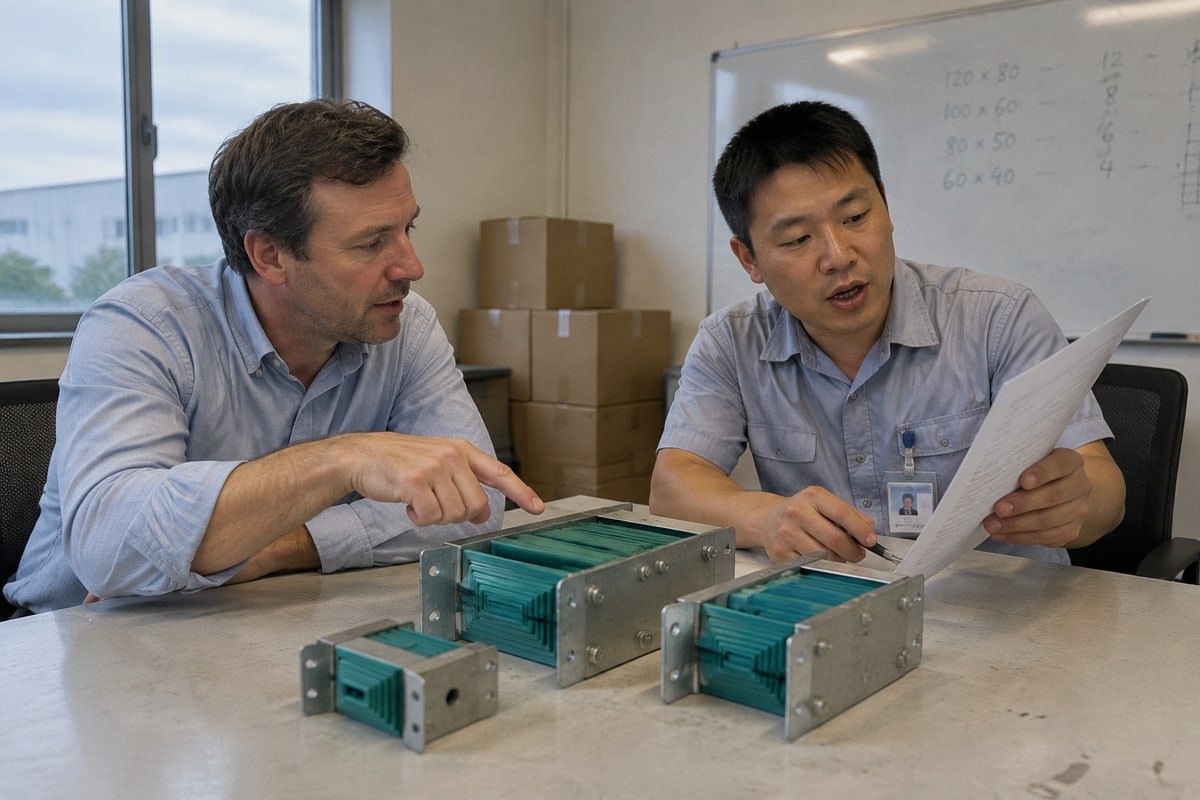
You need twelve sealing modules, but the quote demands two hundred IATF 16949 1. Our sales desk sees this weekly, and a lower MOQ for multi cable transit is usually within reach.
To negotiate a lower MOQ for multi cable transit, ask the supplier what drives the minimum and trade quantity for reduced risk: accept standard module sizes, offer a 10–25% unit premium or setup fee, request a trial order, bundle SKUs by value, and commit to a blanket purchase order.
The rest of this guide walks through each lever. I will show what drives a supplier’s minimum, what evidence earns a trial order, how [free validation samples](https://dewinmct.com/?p=617) fit in, and which supplier types actually bend.
How can I convince an MCT supplier to lower their standard minimum order quantity?
A purchasing engineer in Germany once asked us for forty TSC modules against a quote written for four hundred. We agreed within a week. Here is why that worked.
Convince an MCT supplier by removing their risk instead of asking for a favor. Identify the true MOQ driver, adopt an existing module size and material spec, offer a small-order surcharge, consolidate requirements across projects, and present a credible reorder forecast the supplier can plan production around.
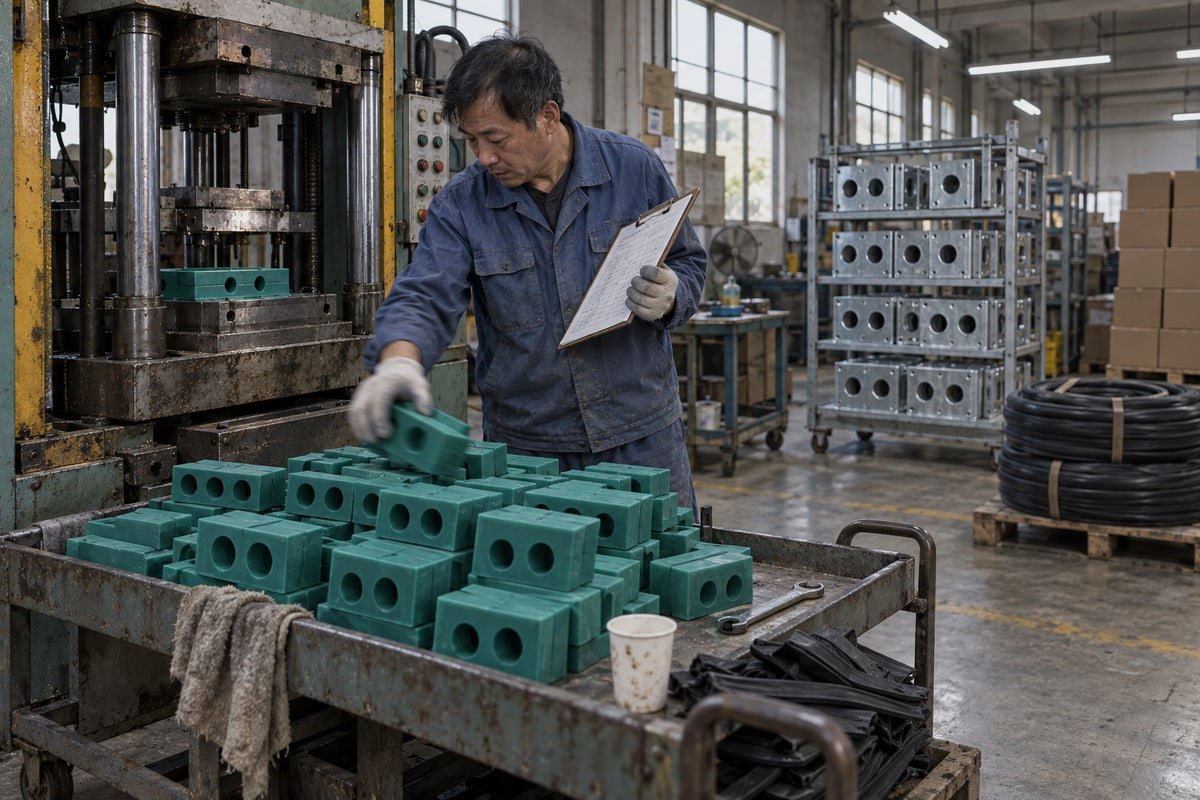
Find the real MOQ driver first
Most quoted MOQs on modular sealing systems are preferred batch sizes. They are not hard production limits. So the first question I recommend is simple: "What specifically forces this minimum?" The answer tells you which lever to pull. Our own minimums, for example, come mostly from EPDM batch weights and mold changeover time, not from a policy document.
| MOQ driver | What it usually means | Concession that unlocks a smaller order |
|---|---|---|
| Rubber compound buy-in | Halogen-free EPDM is mixed and cured in fixed batch weights | Adopt a compound and colour already in production |
| Mold changeover | Each module size ties up a press and an operator | Standardize on off-the-shelf sizes; pay a visible setup fee |
| Frame welding and galvanizing | Coating plants price by the rack, not the piece | Bundle frames, sealing modules and stayplates in one purchase order |
| Testing and documentation | Fire and IP reports cost the same for 10 or 1,000 units | Accept existing type-test documents instead of a project-specific test |
| Labour scheduling | Small runs interrupt planned batches | Allow off-peak production and a longer lead time |
| Packaging and export paperwork | Crate, pallet and customs work is fixed per shipment | Consolidate requirements across projects or departments |
Trade quantity for something the supplier values
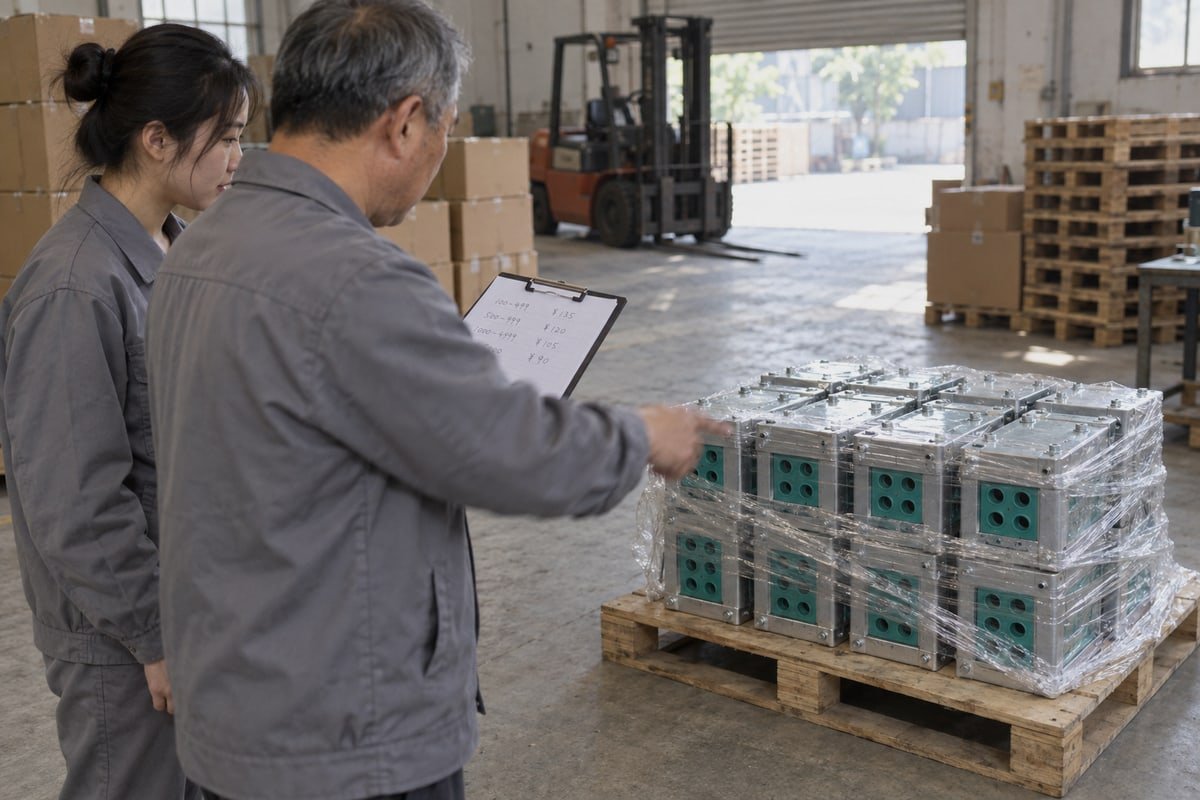
Once you know the driver, the counteroffer writes itself. Sourcing guides report that a 10–25% unit premium 2 is a common lever. They also note that aligning with an existing production run can cut the quoted MOQ by 50–70%. Ask for a tiered pricing structure across volume bands so both sides see the trade-off in numbers. Two more angles work well. First, ask whether the supplier holds overrun or remnant inventory from a previous custom run. We often do, and we sell it in small lots. Second, propose a mixed-component MOQ. If the minimum is met by the total value of a kit — frames, modules, stay plates and lubricant — the per-SKU count stops mattering.
One warning: do not open with a demand for a 90% cut. Moderate requests get answered. Extreme ones get ignored.
Relationship or leverage? Both.
Some buyers tell me they prefer to build a partnership first and talk numbers later. Others arrive with three competitive quotes. In my experience the two approaches do not conflict. A partnership framing improves the quality of the answer I give. Competitive quotes, used as facts rather than threats, improve the terms. The buyer who does both — asks about our drivers, offers a surcharge, and shows a follow-on plan — is the one whose forty-piece order gets approved.
What proof do I need to show a manufacturer to justify a smaller MCT trial order?
In our early export years we learned a lesson: buyers who sent a drawing and a forecast got smaller trial orders, while buyers who sent only price targets did not.
Show the manufacturer a specification sheet, a frame cutout drawing or BIM submittal, a twelve-month demand forecast, the project or end-customer name, evidence of an existing incumbent product, and a written reorder intent. This proof lowers engineering and QA overhead, which is what justifies a smaller MCT trial order.

Build a proof package, not a price request
A trial order is a business case. I need to show my production planner why a small run is worth the interruption. The buyer who hands me that case gets approval faster. Here is the package that works.
- A complete specification sheet. State frame size, cable count, cable diameter range, required fire rating for fire-rated cable penetrations (A-0 or A-60), ingress protection 3 (IP68), and pressure tightness. Name any marine and offshore certifications your end customer demands.
- A frame cutout drawing or BIM submittal. If you are replacing an incumbent module in an existing 120-frame cutout, send the cutout dimensions. Pre-validated BIM data or a digital submittal removes my internal engineering check, and that saved labour is your leverage.
- The incumbent model number. With our model cross-reference tables, one part number tells me exactly which TSR or TSC module drops in. No engineering hours, no ambiguity.
- A demand forecast. Twelve months, broken down by quarter, with the project type named — BESS containers, modular data centers, switchgear cabinets.
- A written reorder intent. Not a contract. A short statement of what happens after a successful trial.
Frame the order as a technical trial
Ask the supplier to classify the shipment as a prototype or technical trial rather than a commercial order. Most factories, including ours, run trial orders under a different approval path. This bypasses standard commercial MOQ policy, especially at the start of a new vendor relationship.
Give numbers, not adjectives
One sourcing guide describes a first-time buyer facing a 1,000-unit MOQ and proposing a 250-unit trial instead. The exact figures depend on the product. What matters is the shape of the request: a specific quantity, a specific reason, and a specific next step.
| Proof item | Supplier cost it removes | Why it earns a smaller MOQ |
|---|---|---|
| Spec sheet with ratings | Requirement clarification loops | Avoids a wrong module being tooled |
| Cutout drawing or BIM data | Internal engineering and QA review | Shifts verification to the buyer |
| Incumbent model number | Cross-reference research | Confirms a standard, in-production size |
| Quarterly forecast | Production planning uncertainty | Lets the planner slot future batches |
| Reorder intent letter | Fear of a one-off order | Turns a trial into a pipeline |
Can I negotiate a reduced MOQ if I request free validation samples before committing to full production?
Every free sample we ship costs us a module, a courier fee, and an engineer's afternoon. We weigh that against one question: will this buyer actually test it?
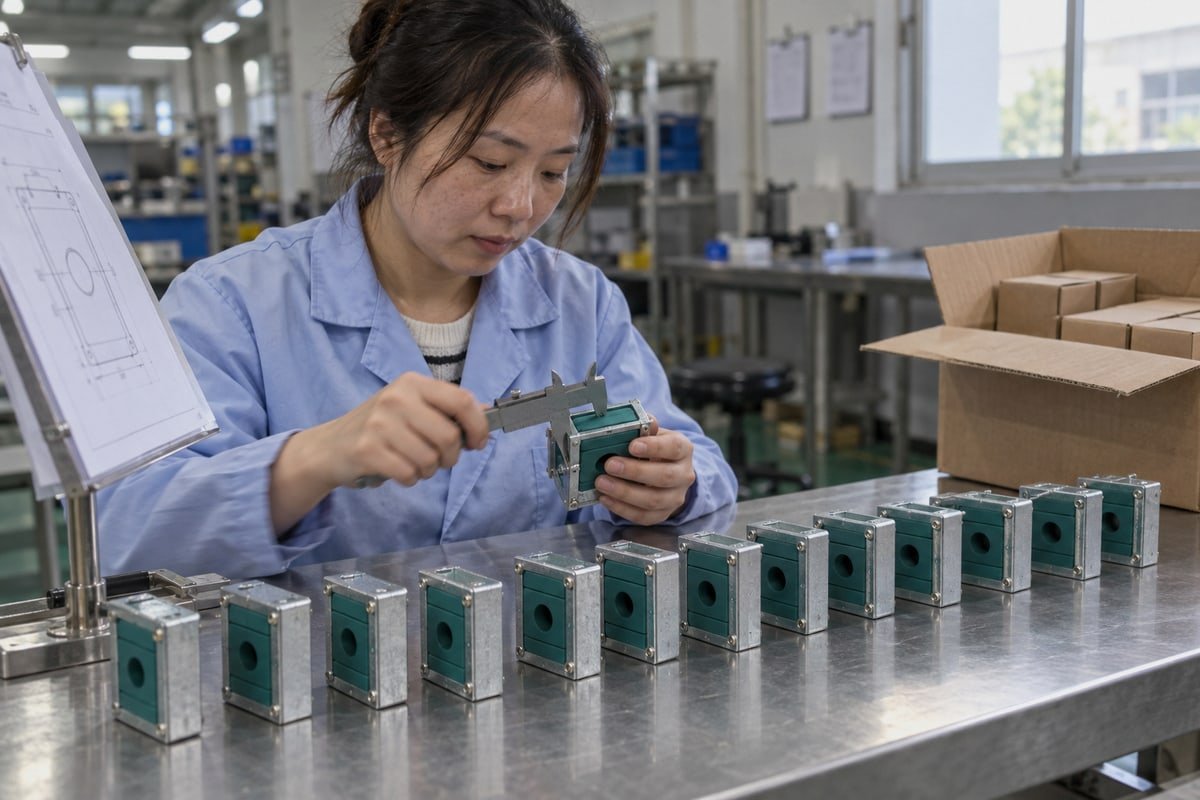
Yes. A sample order request is the first step of a phased commitment. Validate fit, compression, and sealing on free samples, share the test results with the supplier, then convert that qualification into a small pilot batch. Suppliers accept reduced MOQs more readily once the technical risk is retired.
Samples retire technical risk, not commercial risk
Buyers sometimes assume that free samples plus a strong test report should unlock any MOQ they want. I understand the logic, but it misses what samples actually do. Samples prove the module fits your cutout, grips your cable range, and seals at your pressure. They do not prove you will reorder. The MOQ conversation therefore has two halves. The sample retires the first half. Your phased plan retires the second.
That said, a buyer who has tested our samples holds a much stronger position. A documented pass on fit and sealing means my production team no longer fears a rejected batch. That is when I can approve a pilot run well below the list minimum.
A phased plan that suppliers can say yes to
| Phase | What ships | Buyer commitment | Supplier gain |
|---|---|---|---|
| 0 — Validation | Free samples: 1–2 modules per size, compression wedge kits, stay plate | Test and return a short report | Technical risk retired |
| 1 — Pilot batch | Small run at a modest unit premium | Purchase order, prepayment or setup fee | Revenue covers changeover |
| 2 — Scheduled release | Standard price via a blanket purchase order | Annual volume, staggered call-offs | Planning certainty |
| 3 — Spare parts | Replacement sealing modules on demand | Framework price list | Recurring, low-effort business |
What to test on the samples
Test the things that matter to you and to the supplier. Check the module drops into the existing 120-frame cutout without shimming. Check that our step-core EPDM adapts across your actual cable diameters within one module size. Torque the compression unit and confirm the wedge locks. If you need IP68 or a 0.01–0.4 MPa watertight and gas-tight rating, ask for the test documents rather than repeating the test yourself. Then send the supplier the results. A short pass/fail table from your lab is the most persuasive negotiation document I ever receive.
Why phasing beats a big first order
A blanket purchase order with staggered releases protects both sides. You avoid inventory carrying costs on two hundred modules you will not install for a year. We gain lead time optimization because your releases are scheduled around our planned EPDM batches 4. Lock the agreement in writing: unit count, unit price per phase, lead time, quality criteria, and the volume assumptions behind the price.
Which MCT suppliers offer flexible MOQs for private-label or custom-sized cable transit modules?
Our mold shop in Shaanxi cut a custom TSR core last spring for a buyer who needed twenty-five pieces. Owning the tooling is what made that batch size possible.
Factory-direct manufacturers with in-house mold making, such as DewinMCT, offer the most flexible MOQs for private-label or custom-sized modules, because they control tooling and scheduling. Regional distributors can break bulk on standard sizes, while global brand OEMs usually hold firm minimums on custom configurations.
Four supplier types, four different answers
The MOQ you are quoted depends less on the product and more on who controls the molds. Here is how the supplier landscape looks from where I sit.
| Supplier type | MOQ on standard sizes | MOQ on custom or private-label | Documents and support | Where it fits |
|---|---|---|---|---|
| Global brand OEM | Moderate, often via distributor | High; non-recurring engineering charged | Full certification set, slower custom response | Specified-by-name projects |
| Regional distributor or VAR | Low; will break bulk from local stock | Not offered; resells brand parts only | Brand documents, no custom drawings | Urgent spare sealing modules |
| Trading company | Variable; depends on their factory | Uncertain; they cannot control tooling | Often incomplete or second-hand | Price-only purchases |
| Factory-direct second source | Low on in-production sizes | Flexible; molds made in-house | Own test reports, CAD/STEP, cross-reference tables | Qualified second sourcing |
What to verify before you trust a flexible MOQ
A flexible minimum is only useful if the module passes your qualification. So I suggest three checks. First, ask for the quality system certificates. We run ISO 9001 5 and IATF 16949 and operate a BV-approved factory. Second, ask for the type-test documents behind the ratings: fire A-0/A-60, IP68, and watertight/gas-tight sealing at 0.01–0.4 MPa. Third, ask for a cross-reference table mapping your existing model to the second-source model. If a supplier cannot produce all three, their low MOQ is a risk, not a benefit.
Questions that expose who controls the tooling
Ask where the molds are made. Ask how long a custom module size takes from drawing to first sample. Ask whether private-label marking is moulded or printed. A factory with its own mold shop answers in days and hours. A trading company answers "let me check with the factory." That difference is exactly why we can accept small private-label runs and a reseller cannot.
Why a second source changes the MOQ math
A qualified drop-in second source does more than lower the minimum. Our modules are dimensionally compatible with common 120-frame standards and land at 40–60% lower cost than the incumbent brand. That cost gap means a small pilot order at a modest premium still saves money on day one. Lead time optimization follows, because spare sealing modules ship fast from stock rather than waiting for a distributor's next crate. For marine and offshore certifications, we provide the test documents on request, so qualification does not stall on paperwork.
Conclusion
High MOQs tie up cash and delay projects. Push back with data, trade concessions, and a phased plan, and a lower MOQ for multi cable transit becomes a negotiated outcome.
Footnotes
1. Official site for the automotive quality management standard, essential for verifying high-standard manufacturing processes in cable transit production. ↩︎
2. Defines the pricing strategy used as a negotiation lever to secure lower minimum order quantities from manufacturers. ↩︎
3. Official IEC resource explaining IP ratings, which are critical technical specifications for multi cable transit sealing modules. ↩︎
4. Technical overview of EPDM rubber, the primary material whose production batch weights often dictate supplier minimum order quantities. ↩︎
5. Official ISO landing page for the quality management standard used to verify the manufacturing reliability of MCT suppliers. ↩︎



 English
  Español de México
  Deutsch
  Français
  العربية
  Русский