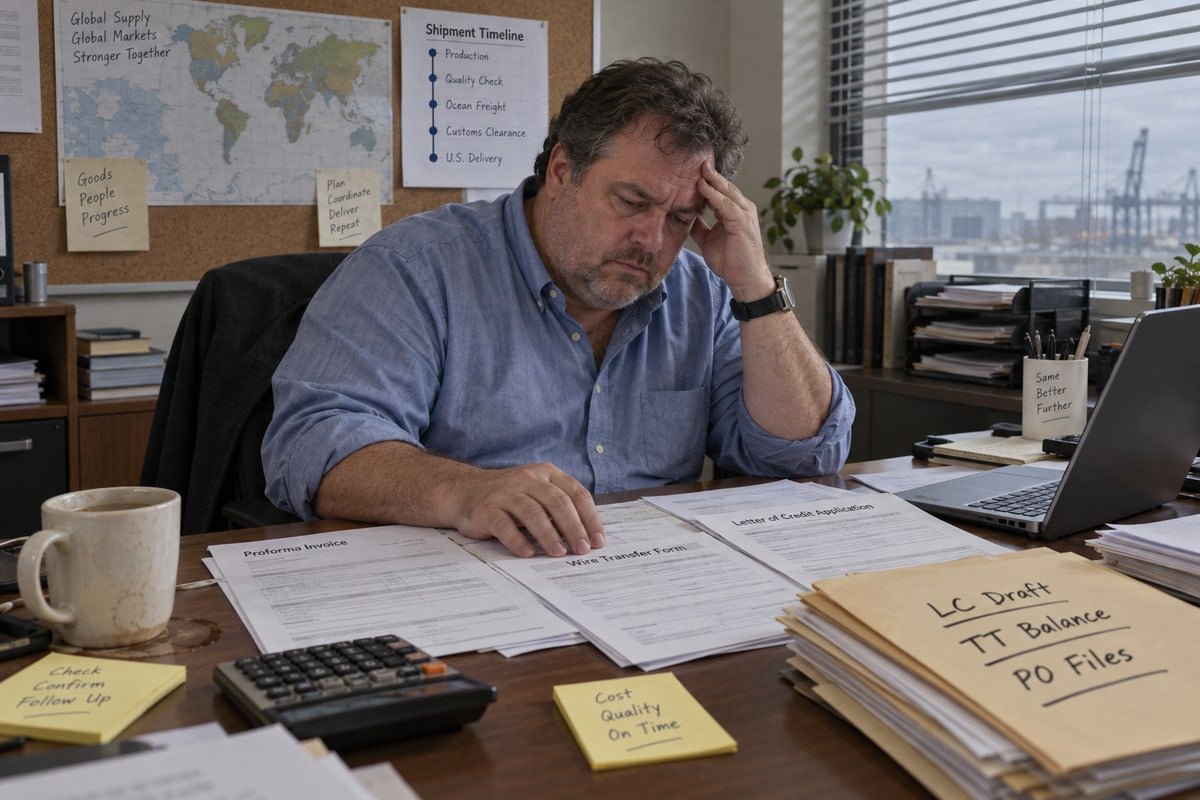
Choosing the safest payment method when sourcing multi cable transit 1 from China worried me long before I ran our own export desk. One wrong wire, and a whole project stalls.
The safest payment method for sourcing multi cable transit from China depends on order size: use Alibaba Trade Assurance or escrow for small first orders, an irrevocable sight Letter of Credit for orders above roughly $50,000, and never a 100% upfront wire transfer.
That answer is the short version. The long version is a decision framework. It depends on who you are paying, how much you are paying, and what documents trigger each payment. I will walk through all four questions below, using the same terms we offer buyers at our own factory.
Which payment method should I choose when sourcing MCT systems from a Chinese factory versus a trading company?
A German switchgear buyer once asked me why our Proforma Invoice named a factory bank account, not an agent. That question is the right place to start.
Choose Alibaba Trade Assurance or escrow for a first order from either source, then move to a 30/70 Telegraphic Transfer against bill of lading only with a verified factory; with a trading company, keep escrow or a Letter of Credit because you cannot inspect the real producer.
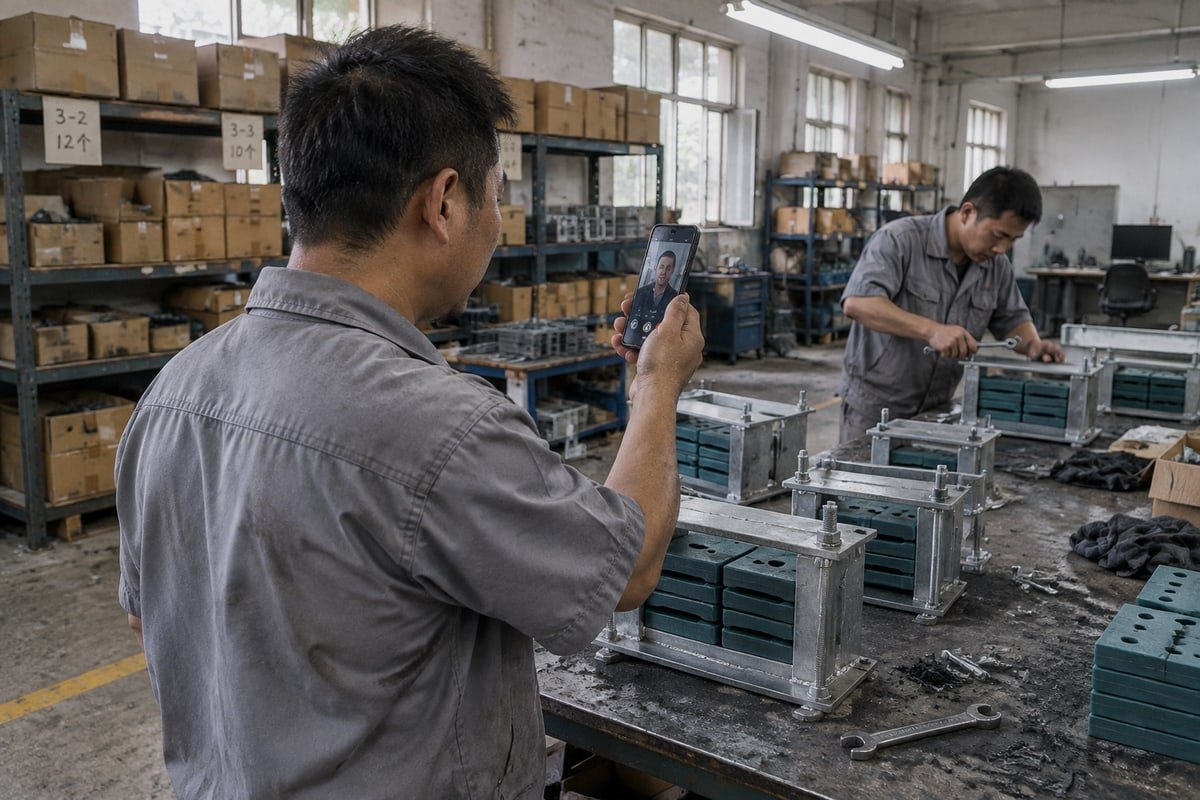
The table below ranks the common options from lowest buyer risk to highest. I use it with our own customers, so it is not theory.
| Payment method | Buyer risk | Speed | Typical cost to buyer | Best fit |
|---|---|---|---|---|
| Alibaba Trade Assurance / Escrow Payment | Low | Funds held until you confirm receipt | Free for buyers; supplier absorbs platform fees; coverage caps apply | First orders, small to medium value |
| Irrevocable sight Letter of Credit 2 | Low | Slower; bank checks documents | Several hundred to several thousand dollars in bank fees | Orders above $50,000, new supplier |
| Telegraphic Transfer, 30% deposit / 70% balance | Medium | 1–3 business days | Modest bank fee | Verified factory, balance against bill of lading copy |
| Fintech rails (Wise, Payoneer) | Medium | Fast | Better exchange rates than SWIFT | Same risk as T/T, but better beneficiary checks |
| PayPal | Low for small sums | Instant | High percentage fee | Samples and prototypes only |
| 100% upfront wire transfer | High | 1–3 business days | Modest | Never for a first order |
Why the supplier type changes the answer
A factory owns the molds, the EPDM compound, and the test rig. A trading company owns none of these. So when a trading company asks for 100% upfront, it is often because it must pay its own upstream factory first. That is not fraud. But it does mean your money leaves your control before anyone has made a single cable sealing system.
With a factory, you can tie money to things you can see. You can watch the compression unit being assembled on a video call. You can request the IP68 test log for your batch. That visibility is what lets a 30/70 Telegraphic Transfer become acceptable.
The objection I hear most: "Chinese factories refuse escrow"
Some do. They want faster cash flow and less paperwork. In my experience, a factory with real registered capital 3 can carry a 30-day receivable without stress. If a supplier will not accept escrow or a Letter of Credit on a first order, I would treat that as a data point, not a negotiation tactic. It usually means thin working capital or an intermediary in the chain.
Emerging rails: e-CNY and smart contracts
Cross-border digital yuan settlement and blockchain smart contracts tied to proof-of-delivery data are real trends. They promise near-instant, programmable release when carrier data confirms customs clearance. I would not build a first order around them yet. Bank acceptance in Europe is still uneven, and dispute rules are immature. Watch them, but pay through escrow or a bank today.
How can I verify DewinMCT’s certifications and factory credentials before I release any payment?
Last spring our QC team pulled a TSC module batch for a repeat IP68 immersion test before packing, and I sent the buyer the video before asking for the balance.
Verify DewinMCT by requesting the business license showing Shaanxi registration and RMB 50M capital, ISO 9001 and IATF 16949 certificates, the BV factory approval, A-0/A-60 and IP68 test reports, and a live video factory tour; then match the bank beneficiary name to that license.
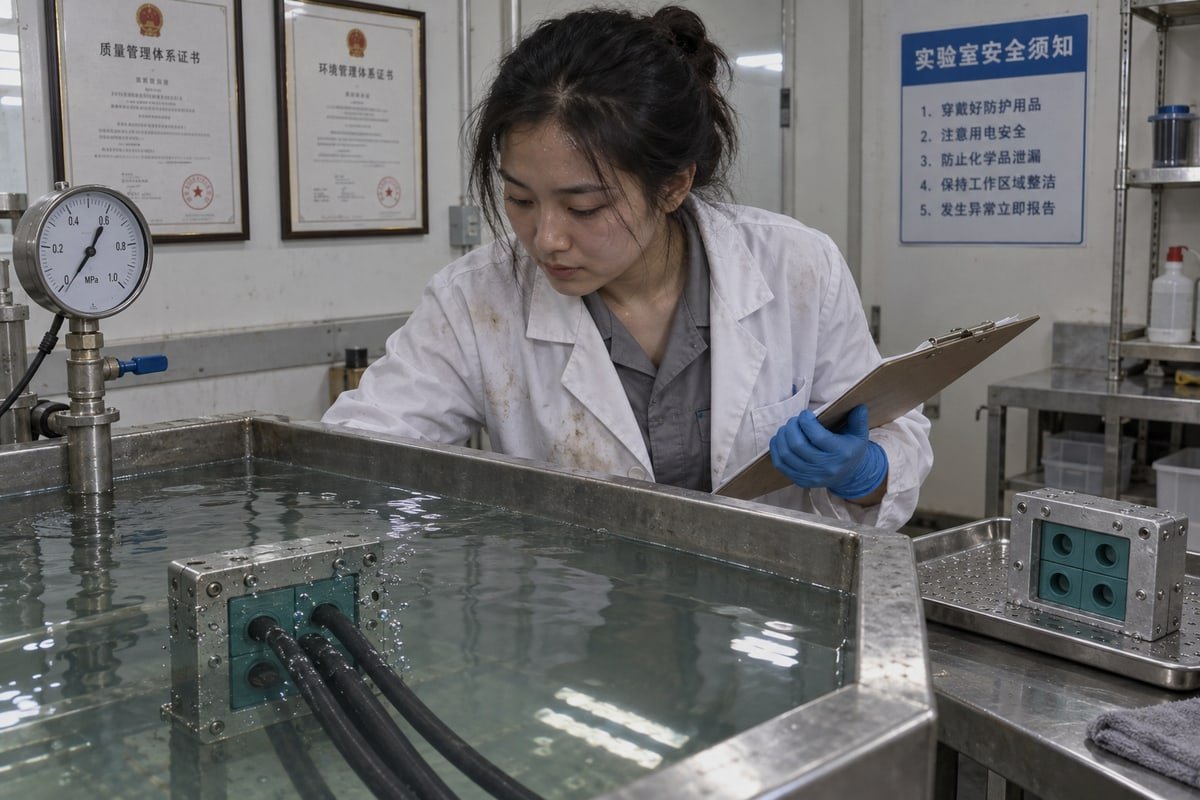
Supplier Due Diligence is not a form you fill once. It is a short sequence, and each step costs you nothing but time. Here is the order I recommend, because it moves from cheap checks to expensive ones.
- Ask for the Chinese business license. It should show the registered name, the registered capital, and the Shaanxi address. Our license shows RMB 50M registered capital and an establishment date of 2013.
- Request the management system certificates. ISO 9001 and IATF 16949 certificates carry a certificate number and an issuing body. You can check both online with the issuer.
- Ask for the BV factory approval and product test reports. For multi cable transit, the reports that matter are fire rating A-0/A-60, IP68 ingress protection 4, and watertight and gas-tight sealing from 0.01 to 0.4 MPa. We send these on request.
- Book a live video tour. Ask to see the mold shop, the rubber press line, and the test rig in one unbroken call. A trading company cannot do this on its own premises.
- Order free validation samples. A TSR or TSC module in your hands proves the step-core EPDM and the 120-frame fit before any deposit.
What each credential actually proves
| Credential | What to request | What it proves for your payment decision |
|---|---|---|
| Business license | Scanned copy plus registry number | The legal entity you will pay exists and is a producer, not an agent |
| ISO 9001 / IATF 16949 | Certificate numbers and expiry dates | A documented QC system controls each batch of Firestop Penetration Seals |
| BV factory approval | Approval letter | A third party has walked the production floor |
| A-0/A-60, IP68, 0.01–0.4 MPa reports | Test reports with lab identity | The cable sealing system performs as the spec sheet claims |
| Patent list | Grant numbers | Design ownership; we hold 38+ granted patents |
| Cross-reference table | Existing model to DEWIN model | Drop-in compatibility as a Roxtec Alternative is documented, not promised |
The beneficiary name check that stops most fraud
Man-in-the-middle email scams are the most common way buyers lose money. A hacked mailbox sends a "new bank details" message a day before the balance is due. The defense is simple. The beneficiary name on the bank account must match the business license exactly. No personal names. No offshore entities. If the account name changes at any point, call the factory on a number you sourced independently and confirm by voice. Our finance team will always confirm a bank change by phone before any invoice is honored.
What payment terms and milestones should I negotiate to protect myself during sample validation and quality inspection?
Every deposit request I write balances two things: our mold shop needs cash to start custom sizes, yet the buyer has not seen a single sealed cable.
Negotiate free validation samples first, then a deposit of 30% or less against the Proforma Invoice, a hold point after a third-party Pre-shipment Inspection by SGS or Intertek confirms fire rating and watertightness, and release the 70% balance only against the bill of lading copy.

Milestones only protect you if each one has a document attached. A milestone with no document is just a date. Below is the structure I offer purchasing engineers on a first bulk order of TSR or TSC modules.
| Stage | Payment | Trigger document | Who produces it |
|---|---|---|---|
| Sample validation | 0% (free validation samples) or PayPal for freight | Sample approval email with your fit test | Buyer |
| Order confirmation | 30% deposit, or less | Signed Proforma Invoice with model cross-references | Factory |
| Production complete | 0% | Internal QC report with batch numbers | Factory |
| Pre-shipment Inspection | 0% | SGS or Intertek report covering dimensions, EPDM hardness, A-0/A-60 and IP68 documentation | Third party |
| Shipment | 70% balance | Bill of lading copy plus packing list | Freight forwarder |
| Receipt | Escrow release, if used | Your goods-in check | Buyer |
Why samples come before any deposit
For a drop-in second source, the sample stage is where most risk disappears. Your engineer can drop our module into an existing 120-frame cutout and measure the fit. If it does not fit, no money has moved. For sample freight, PayPal is fine. Its buyer protection covers small sums, and the fee is irrelevant at that scale. It becomes expensive at bulk volume, so keep it for prototypes.
Certification-linked release for safety-critical seals
Firestop Penetration Seals protect a BESS container or a switchroom. So I recommend that the inspector checks the test documentation, not only the dimensions. Write into the inspection scope that the A-0/A-60 fire report and the IP68 report must be on file for the exact module series shipped. If the inspector cannot find them, the 70% does not release. That is a certification-linked escrow milestone, and it is fair to both sides.
The supplier-side objection, and how we resolve it
Factories dislike heavy documentary terms because production ties up cash. I understand that. Our answer is to make the deposit cover raw material only, and to keep our own lead time short so the wait for the balance is measured in weeks, not months. Trade credit insurance is another route. It guarantees payment to the supplier so the buyer can hold capital until inspection. It works best once you have at least one completed order behind you.
How do I structure my contract and INCOTERMS to reduce payment risk on my first bulk MCT order?
The hardest lesson from our early exports was simple: a vague contract turns a small dimensional dispute into a payment fight. Now every clause names a document.
Use FOB or CIF Incoterms so the bill of lading triggers payment, name the exact TSR/TSC models, 120-frame cross-reference numbers, and test standards in the contract, tie the balance to inspection documents, and for orders above $50,000 pay through an irrevocable sight Letter of Credit.
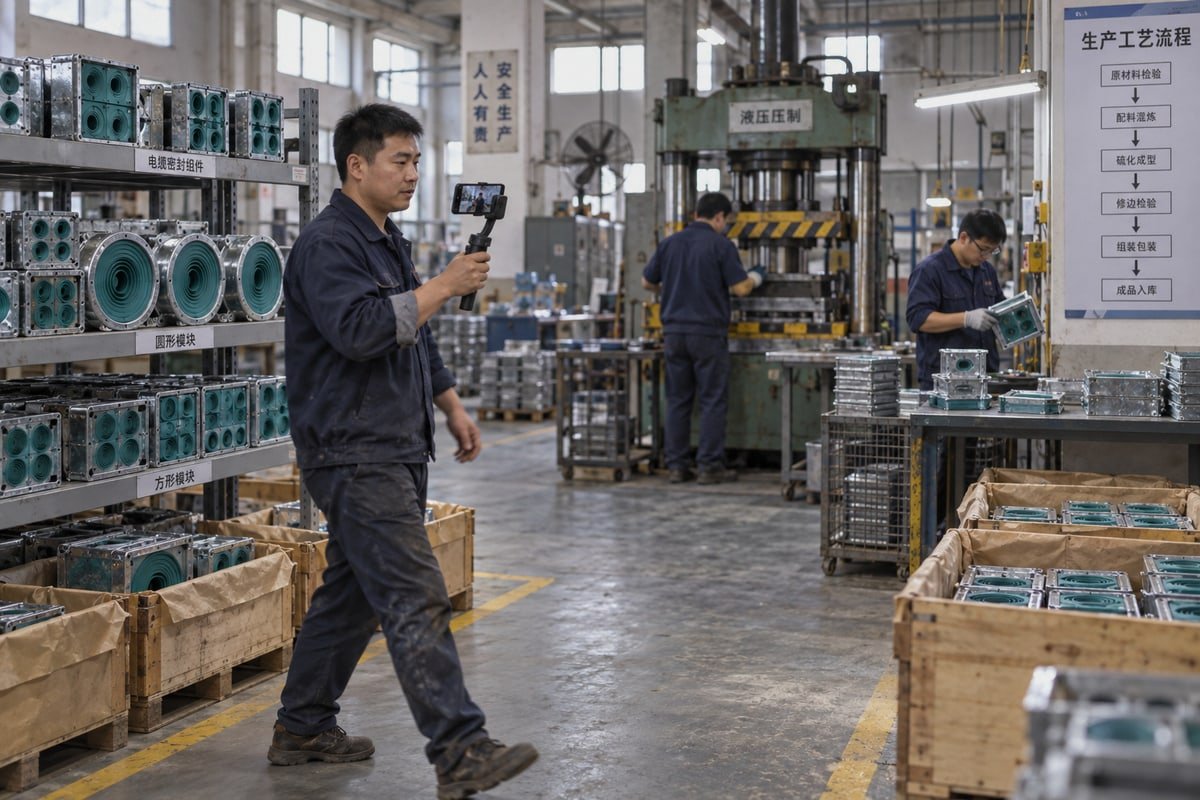
Incoterms decide when risk passes to you. They also decide which document proves shipment. That second point is what links them to payment safety.
Incoterms and the document that triggers payment
| Incoterm | Where risk passes | Payment trigger document | Payment risk note |
|---|---|---|---|
| EXW | Factory gate in Shaanxi, Shandong, or Hunan | Forwarder cargo receipt | Weak trigger; your forwarder controls the document |
| FOB | Loaded on vessel at Chinese port | Ocean bill of lading | Best fit for a Letter of Credit or 70% balance |
| CIF | Loaded on vessel; seller insures to your port | Bill of lading plus insurance certificate | Good for buyers without a China forwarder |
| DDP | Your warehouse | Proof of delivery | Convenient, but the balance is often demanded before you see goods |
For a first bulk order, I suggest FOB. The bill of lading is issued by an independent carrier. It is the cleanest trigger for a bank under a Letter of Credit. It also works for a 70% Telegraphic Transfer balance against a bill of lading copy.
Clauses that turn a spec sheet into a payment condition
Write these into the sales contract, not into an email thread.
- Exact model numbers with the cross-reference to the existing 120-frame system you are replacing.
- Material clause: step-core, halogen-free EPDM 5, with the hardness range from the datasheet.
- Performance clause: A-0/A-60 fire rating, IP68, watertight and gas-tight from 0.01 to 0.4 MPa, with test reports listed as contract attachments.
- Inspection clause: third-party Pre-shipment Inspection at buyer's cost, with the report as a payment document.
- Documents clause: commercial invoice, packing list, bill of lading, certificate of origin, and test reports, all named.
- Dispute clause: photos, inspection report, and the CAD/STEP drawing set are the accepted evidence for non-conformity.
Is a Letter of Credit worth the bank fee?
The objection is real. Bank and compliance fees can run from several hundred to several thousand dollars, and the paperwork must match exactly. On a $10,000 order, that is too much. On a $60,000 container of MCT frames and modules, it is a small price for a bank standing between you and the supplier. The discipline also helps us. A clean documents list means no argument about which report was promised. For anything between those sizes, a verified factory and a 30/70 Telegraphic Transfer with the balance against the bill of lading copy is the practical middle ground.
Conclusion
Payment risk does not vanish with a low price. Match method to order size, verify the factory, tie money to documents, and sourcing multi cable transit from China becomes predictable.
Footnotes
1. Official ISO standard page for fire resistance tests relevant to cable transit systems. ↩︎
2. Authoritative government resource explaining international payment methods including letters of credit. ↩︎
3. The World Bank provides authoritative data and definitions for international business and trade finance. ↩︎
4. Detailed technical explanation of the IP Code standard for measuring protection against water and dust. ↩︎
5. Comprehensive overview of EPDM rubber properties, including its chemical resistance and use in industrial seals. ↩︎



 English
  Español de México
  Deutsch
  Français
  العربية
  Русский