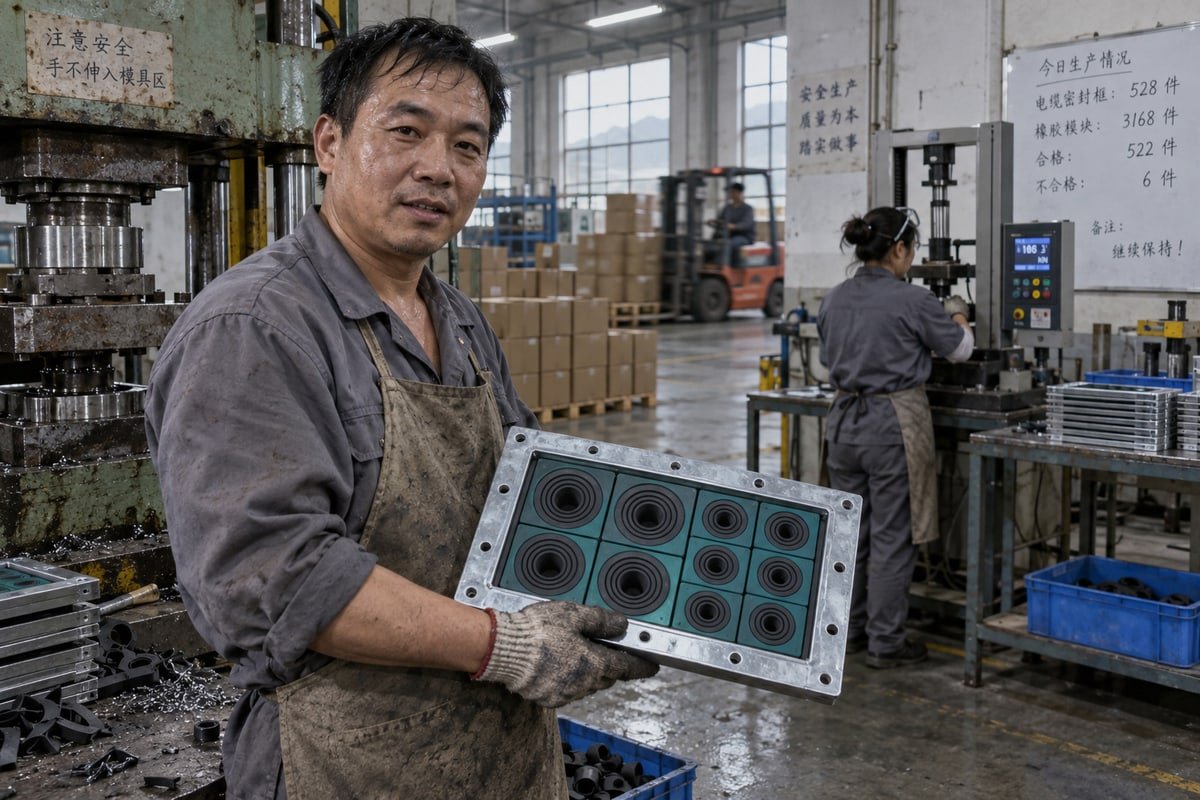
Picking a Chinese factory vs trading company for multi cable transits 1 seems easy, until quotes, MOQs and claims diverge wildly. Our Shaanxi production line has watched both models burn buyers.
A Chinese MCT factory usually offers lower direct manufacturer pricing, higher MOQs, and deeper technical after-sales, while a trading company offers smaller MOQs, faster communication, and mixed sourcing. For repeat, custom, or certified multi cable transits, verified factories win; for small mixed orders, trading companies can win on landed cost.
That answer hides a lot of detail. Below, I break the decision into four questions. First, how to tell who actually makes your modules. Second, why the price and MOQ gap exists. Third, what after-sales looks like from each side. Fourth, whether a factory can carry certification and quality control without a middleman. I will use our own numbers where I have them and market figures where I do not.
How can I tell if my MCT supplier is a real factory and not a relabeled trading company?
Last spring an auditor from a European integrator spent two days on our Shaanxi floor watching EPDM step-core modules come out of the press. Labels never convinced him. Evidence did.
Verify a real MCT factory by checking the business license scope for manufacturing, matching the registered factory address to production-line photos and video, requesting mold-shop and press evidence, reviewing quality management system certificates in the factory's own name, and arranging a third-party inspection or live video audit before quoting.
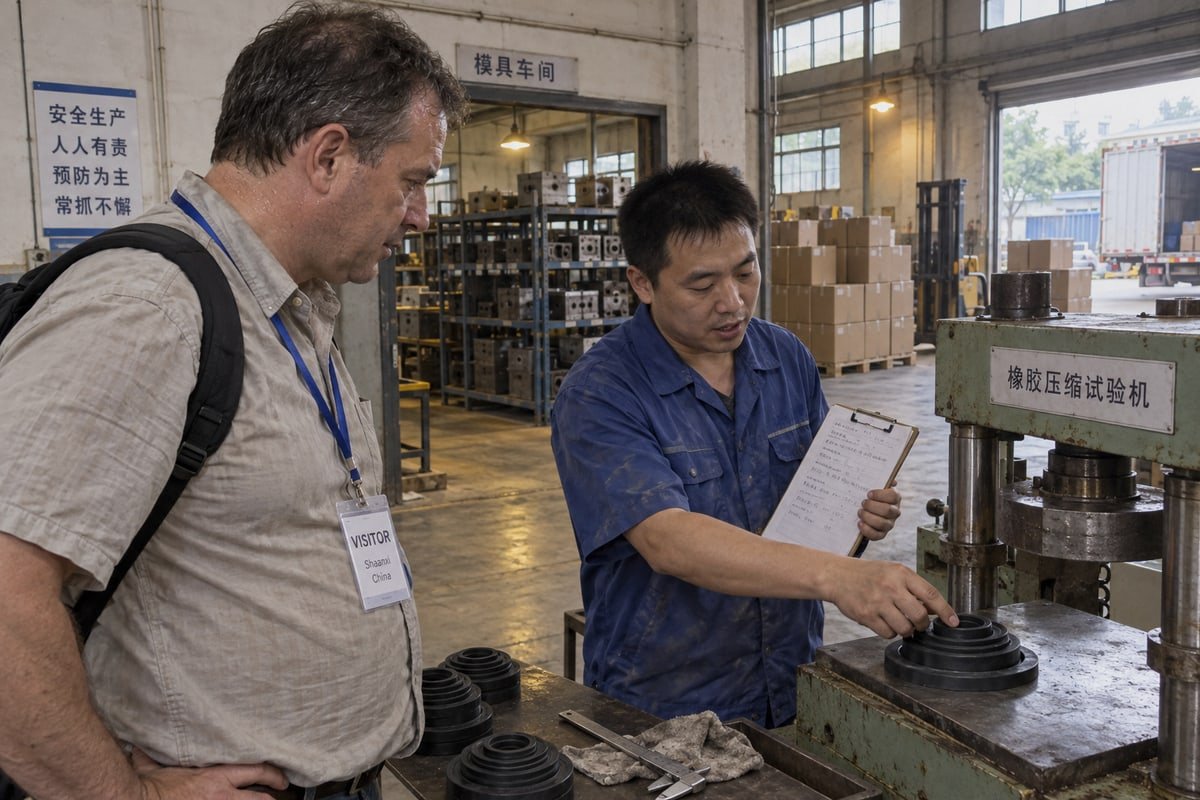
Most buyers start on a B2B platform. There, the business-type field reads "Manufacturer/Factory & Trading Company" for a large share of Chinese cable and wiring suppliers. That label is legal and common. It is also close to useless on its own. It tells you the company is allowed to trade. It does not tell you who owns the presses, the molds, or the rubber compound recipe. So the real question in the Chinese factory vs trading company debate is not the label. The question is who controls production of your specific sealing module.
Why platform badges are not proof
Audited-supplier badges and paid membership tiers show that a company passed a document review. They rarely confirm that the audited address 2 actually molds multi cable transits. A trader can pass an audit with a rented office and a small warehouse. I have seen our own product photos reused on listings by companies we have never met.
Seven checks that separate a factory from a middleman
| Check | What a real factory shows | What a relabeled trader shows |
|---|---|---|
| Business license scope | "Manufacturing" or "production" listed, with meaningful registered capital | "Trade" or "import/export" only |
| Address | A plant with a molding hall; in our case Shaanxi HQ plus Shandong and Hunan sites | An office in a port city |
| Molds | In-house mold shop and drawings for custom sizes | "We will ask the factory" |
| Patents | Granted patents in the company's own name | None, or vague claims |
| Certificates | ISO 9001 and IATF 16949 issued to the same legal entity | Certificates in another company's name |
| Sample origin | Free validation samples from the same line that will run your order | A branded sample from a third party |
| Live audit | A video walk from mixing, to press, to compression test, to packing | Delays, excuses, or a showroom only |
What a hybrid supplier looks like
Many Chinese suppliers are hybrids. They own a plant and also resell adjacent items such as cable glands or ladders. That is not a red flag by itself. The right move is to ask which SKUs are self-made. For us, the TSR round sealing assemblies, TSC square modules, frames, compression units, and stay plates all come off our own lines. If a supplier cannot answer that question SKU by SKU, treat it as a trading company for that item. Supply chain risk management starts with this one question, and a third-party inspection at the plant confirms the answer.
Why does buying direct from a Chinese MCT factory lower my price and MOQ compared to a trading company?
Every quarter we weigh the same trade-off on our EPDM purchasing: buy a larger raw-material lot at a locked price, or stay flexible. That decision shapes every quote we send.
Buying direct from a Chinese MCT factory removes the trading margin, typically 10–20% on volume orders, and lets you negotiate MOQ against actual mold and material costs instead of a reseller's stock policy. Trading companies can still beat factories on small mixed orders by aggregating demand or shipping from stock.

The pro-factory argument sounds simple. Cut the middleman and the price drops. Published sourcing guides put that gap at about 10–20% for large MCT orders, and that matches what we see when a buyer compares our ex-works quote with a reseller's quote for the same module. But that is not the number that matters most to a European OEM. The bigger saving comes from second sourcing. When an integrator qualifies our 120-frame-compatible modules as a drop-in replacement for an incumbent brand, the cost reduction is in the 40–60% range. That gap comes from direct manufacturer pricing plus the removal of brand premium, not from squeezing a trader.
Compare price on the same basis
A factory quote and a trader quote are rarely built the same way. Before you decide, line them up.
| Cost line | Typical factory quote | Typical trading company quote |
|---|---|---|
| Base price | EXW, tied to material and press time | FOB or CIF, margin already built in |
| Sample fee | Often free for validation samples on standard sizes | Often charged, then credited later |
| Tooling | Quoted separately for custom apertures; owned by the buyer or the plant | Passed through, sometimes marked up |
| Packing | Standard cartons; branded packing adds cost | Consolidated with other items |
| Freight | Buyer arranges or factory quotes to port | Consolidation across suppliers, sometimes DDP |
| Price locking | Possible on EPDM and 316L for long projects | Rare, since the trader does not buy raw material |
Once every line is filled in, the cheapest unit price is sometimes not the lowest landed cost. That is the honest pro-trading-company point, and it is valid for small, mixed shipments where international shipping logistics dominate.
Why MOQ is a cost, not a policy
Our MOQ on a standard TSC module is driven by three things. Press setup time per size. Rubber waste on short runs. The number of module variants we must keep in stock. Add a custom mold, a special sealing insert, a stainless plate, or private-label packaging, and the MOQ rises because the tooling has to be amortized. A trader avoids this by pooling several buyers or selling from shelf stock, which is why its MOQ looks smaller. The trade-off is that the trader cannot offer customized OEM solutions at all.
A practical bulk procurement strategy
For repeat volume, the strongest approach is a blanket order with call-offs. We can lock EPDM and 316L pricing for the contract period, and the buyer gets stable unit cost across a multi-year BESS or data center program. For a first trial, ask the factory whether a sample lot below MOQ is possible against a forecast. Many plants, including ours, will say yes to a serious integrator.
What after-sales support and technical documentation should I expect from a factory versus a trading company?
A sourcing engineer in Germany once emailed us a photo of a module that would not compress, asking for a drawing, not an apology. That request set my after-sales standard.
Expect a factory to supply test reports, CAD/STEP files, cross-reference tables, installation torque guidance, and root-cause answers on rubber or frame defects, while a trading company typically provides faster English coordination, consolidated documentation, and single-contact claim handling across products. Ask both for written product warranty terms before ordering.
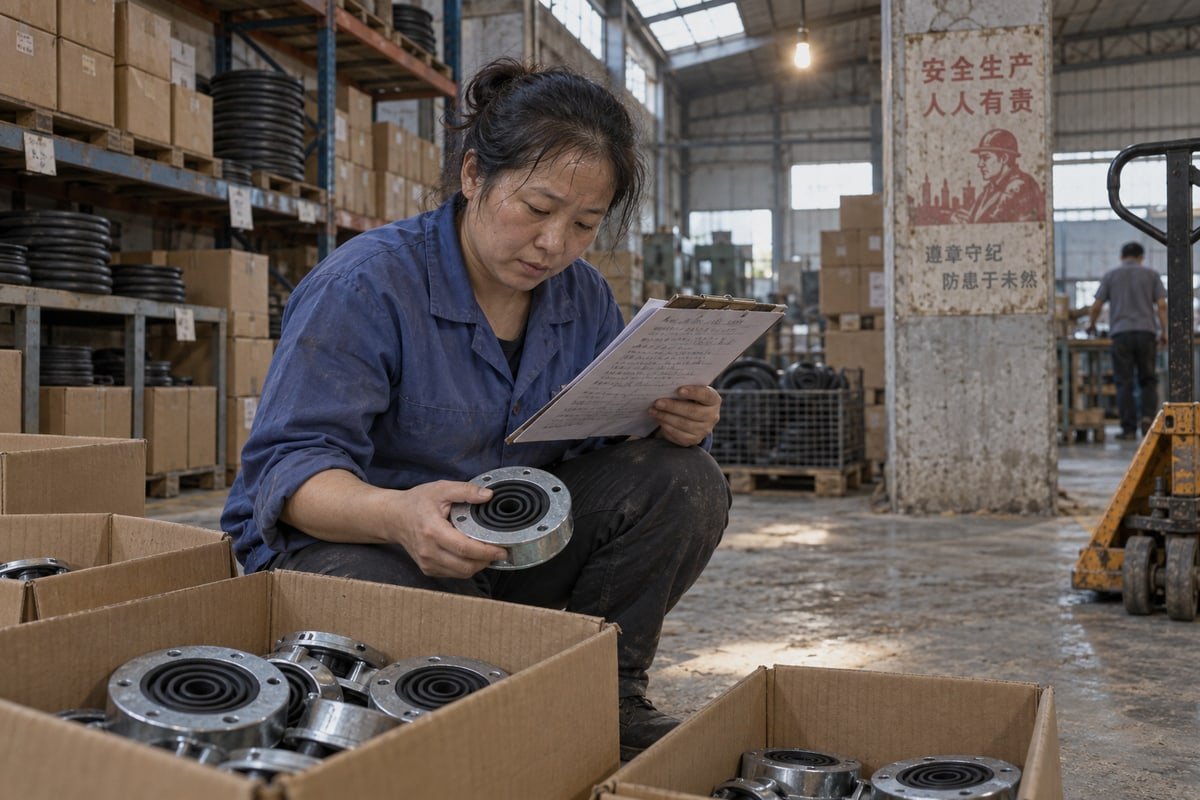
After-sales for cable transits is rarely about a broken product. It is usually about fit. The wrong module size for a cable diameter. A frame cutout that does not match. A missing stay plate in a kit. Compression bolts torqued wrong on site. Each of these needs someone who knows the design. That is where the factory has the edge. When the question is why a step-core module did not seal at 0.4 MPa, the answer sits with the people who mixed the compound and cut the core. A trader has to forward the question and wait.
Documentation you should receive up front
| Document | From a factory | From a trading company |
|---|---|---|
| Test reports (fire, IP68, pressure) | Issued for the factory's own modules, on request | Often available, but check the issuing entity |
| CAD/STEP files and frame drawings | Direct from the engineering team | Forwarded, sometimes outdated |
| Cross-reference table (existing model → replacement model) | Built by the factory for drop-in qualification | Rare |
| Installation and torque guidance | Written by the plant, in English | Generic sheets |
| Product warranty terms | Defined by the plant that bears the cost | May be shorter or unclear |
| BIM or digital twin data | Offered by some tier-1 manufacturers | Rarely offered |
I will be direct about the last row. Some tier-1 MCT brands offer BIM integration for transit layouts. We supply CAD/STEP and cross-reference tables, which is what most integrators need to validate a second source, but buyers who need full BIM objects should ask for them explicitly.
How a claim should actually run
- The buyer sends photos, batch number, and the frame or cable data.
- The supplier confirms receipt within one working day.
- Engineering checks the batch record and gives a root cause, not a guess.
- Replacement sealing modules or spare parts ship, with express freight where the site is waiting.
- A corrective action note closes the loop for the next order.
A trading company can run steps one, two, and four very well. Its English-speaking account managers are often faster than a plant's export desk. But step three is where a pure middleman struggles. The counterpoint many buyers raise is fair: a disciplined trader can outperform a sloppy factory. I agree. Technical support services depend on discipline, not business type. The best answer for many integrators is a factory with its own export team, so you get root-cause engineering and responsive communication from one contact.
Can a Chinese MCT factory still guarantee certification, lead times, and quality control without a trading company as middleman?
The hardest lesson from twelve years of exporting modular sealing systems: a certificate is only as good as the batch behind it. We tie every certificate to a traceable lot.
Yes. A verified Chinese MCT factory can guarantee certification, lead times, and quality control directly when it runs certified quality management systems such as ISO 9001 and IATF 16949, holds third-party approvals like BV, publishes fire, IP68, and pressure test reports, and accepts third-party inspection before shipment.
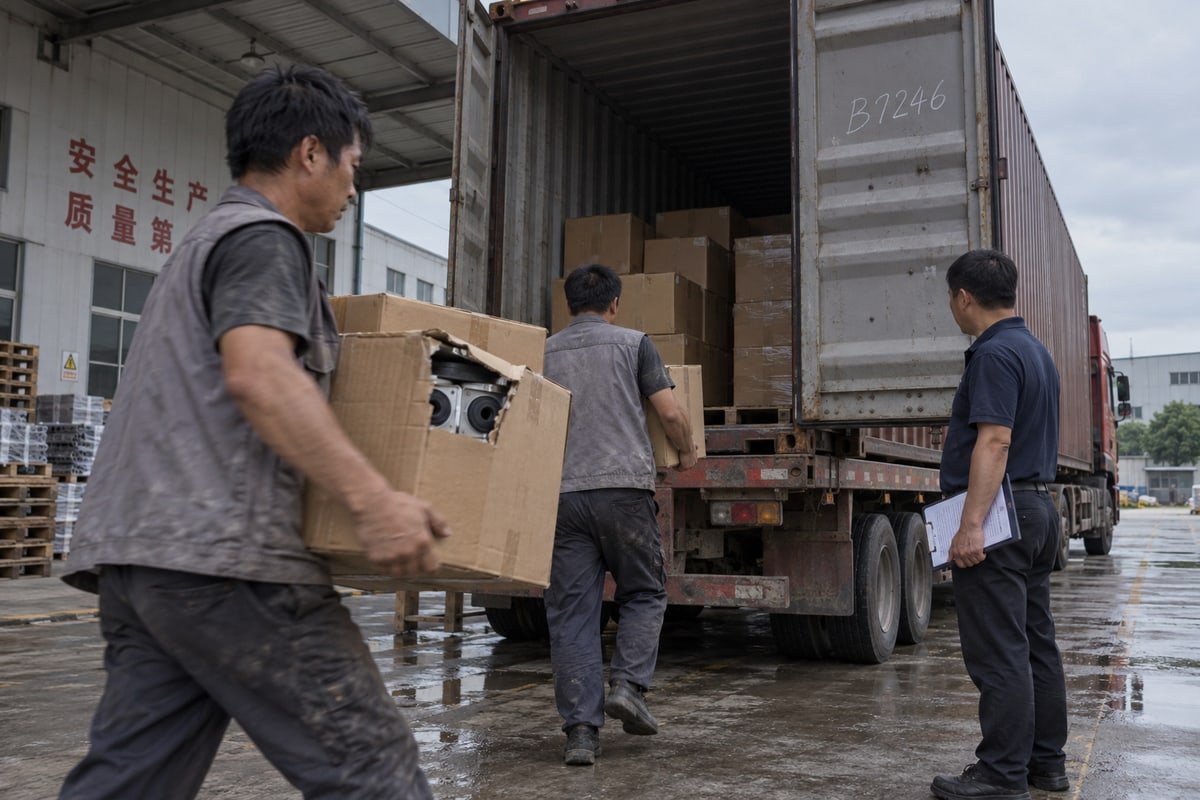
Some buyers assume a trading company adds a layer of oversight. In practice, a trader inspects what it is shipped. It does not control the compound, the press cycle, or the frame welds. The oversight you want sits inside the plant, and it should be visible on paper and in person.
Certification: ask for the report, not the logo
For firestop cable penetration and marine or offshore work, the required approvals differ by project. This is what an engineering-minded buyer should request, and what we can show for our own modules.
| Requirement | What to ask for | Our status |
|---|---|---|
| Fire rating | A-0 / A-60 class report; H120 where hydrocarbon fire is specified | A-0 and A-60 test documents on request |
| Ingress protection | IP68 test report for the assembled transit | IP68 documented |
| Watertight and gas-tight sealing | Pressure test data with range | Tested 0.01–0.4 MPa |
| Marine grade certifications | Classification society factory approval | BV-approved factory |
| Hazardous area | ATEX / IECEx where the enclosure demands it | Ask for project-specific reports |
| Material | Halogen-free EPDM, 316L stainless frames where specified | Halogen-free step-core EPDM standard |
The key check is the issuing entity. A trader may show a report issued to another factory. A factory shows a report issued to itself, and it should be willing to tie that report to your batch.
Lead times without a middleman
Lead time reliability comes from capacity, not from a coordinator in Shenzhen. We run production in Shaanxi, Shandong, and Hunan, which gives us a second site if one line is loaded. Ask any factory two numbers: sample lead time and mass-production lead time. Then ask what happens if raw material is late. A plant that buys EPDM and 316L on locked contracts can answer that. The newer trend of factory-owned export divisions offering DDP delivery and regional buffer stock closes the last gap, and it removes most of the reason a European buyer once needed a trader for international shipping logistics. Export documentation, in our case, is handled in house.
Quality control you can verify
Inspection is where a skeptical buyer should spend time. Insist on a third-party inspection at the plant before shipment, at your cost or shared. Review the incoming material records for rubber hardness and stainless grade. Check that the dimensional inspection covers frame cutouts against the 120-frame standard, since that is what makes a module a true drop-in. Increasingly, factories serving offshore and nuclear projects also pass ESG audits, which adds supply chain transparency on top of product testing. None of this needs a middleman. It needs a factory willing to open its doors.
Conclusion
The wrong supplier type costs you samples, delays, and unpaid claims. Verify factory status, compare landed cost, and demand test reports before price. Then choose the partner, not the label.
Footnotes
1. Official ISO standards overview relevant to the manufacturing and technical specifications of cable transit systems. ↩︎
2. US government guidance on performing due diligence to verify international supplier addresses and manufacturing capabilities. ↩︎
3. Official IEC guide to ingress protection ratings used to certify the sealing performance of cable transits. ↩︎


 English
  Español de México
  Deutsch
  Français
  العربية
  Русский