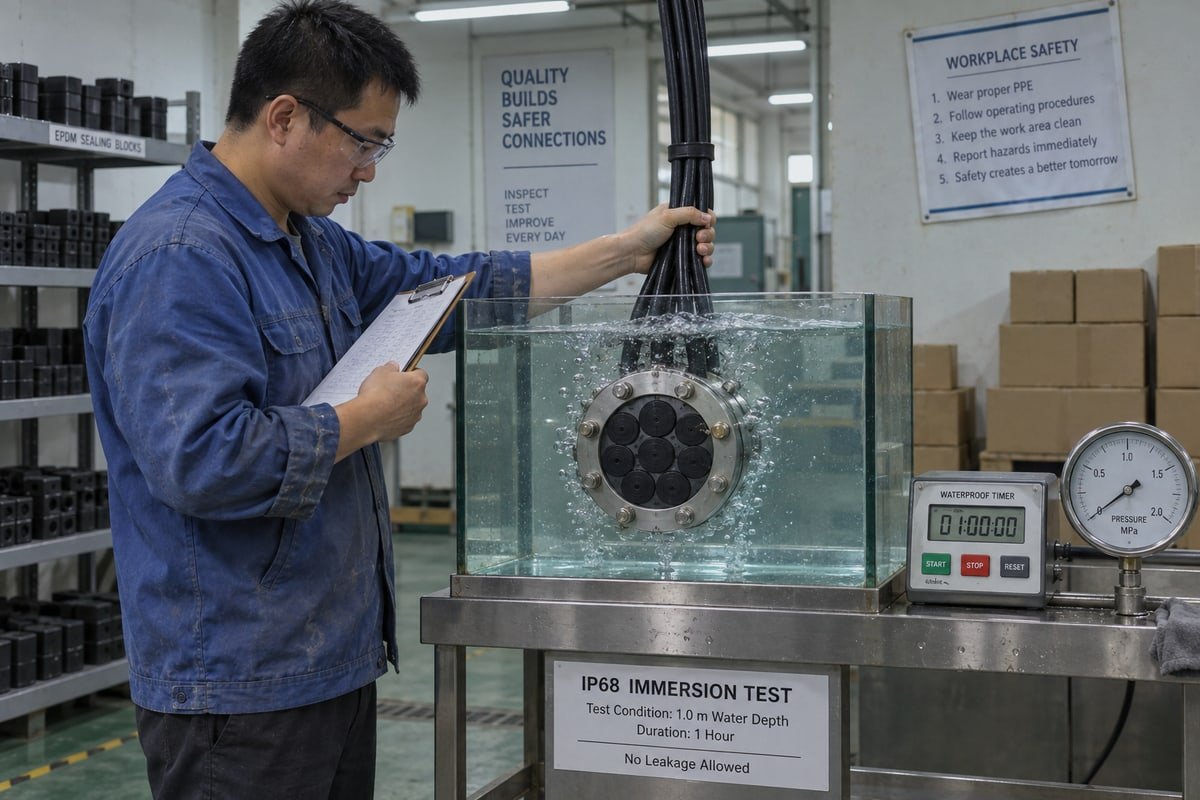
A buyer told me his multi cable transit systems 1 failed IP68, and nobody owned the bill. Weak quality responsibility 2 and compensation terms caused that. Our factory drafts them differently.
Quality responsibility and compensation terms for multi cable transit systems should assign the supplier ownership of design, materials, certification, and defects, define acceptance tests such as IP68 and A-60, set a 12-month defect liability period from final acceptance, and specify repair, replacement, or refund remedies with realistic liability caps.
Sourcing a cable transit is not a commodity purchase. It is a risk-allocation exercise. Below, I walk through the four questions our sourcing partners ask most, and I show the exact clause logic we accept in our own supply agreements.
What Warranty and Liability Clauses Should I Include When Sourcing MCT Sealing Systems?
A European BESS integrator sent us their draft contract last spring. It said only that the supplier warrants quality. We rewrote it together into six specific clauses before our TSC modules shipped.
Include a materials and workmanship warranty of at least 12 months from final acceptance, a separate performance warranty covering IP68 and fire rating, defined repair, replacement, and refund remedies, a fault-domain liability split between product and installation defects, pass-through subcontractor warranties, and a right-to-audit clause.

The word "quality" on its own is the most expensive word in a sourcing contract. It means nothing until you attach a test, a date, and a remedy to it. So I break warranty language into pieces that can each be measured.
Separate the product warranty from the performance warranty
Most supplier sales terms offer a limited product warranty. It covers defects in the module itself. It usually excludes site conditions, transport damage, and installer error. It also caps damages at invoice value and excludes consequential loss. That is the supplier-favorable view, and I understand why vendors write it that way.
Buyers, especially EPC teams on offshore or energy projects, want the opposite. They want the supplier to accept final and total responsibility for design suitability, installation guidance, compliance, and warranty service.
The workable middle ground is a fault-domain split. The supplier owns product defects and certification validity. The contractor owns installation compliance, such as correct compression torque and packing sequence. But the supplier carries the burden of proof. If we want to deny a claim, we must show misuse, unauthorized changes, or third-party damage with evidence. That single sentence changes the whole balance of a contract.
A responsibility matrix you can paste into an RFQ
| Obligation | Supplier | Contractor / Installer | Buyer / Owner |
|---|---|---|---|
| Module design and step-core EPDM material | Owns | — | Reviews |
| Type approval certificates and firestop certification 3 | Owns validity | — | Verifies |
| Sizing and cable-diameter configuration | Advises, documents | Confirms site cables | Approves |
| Transport packaging and damage | Owns to delivery terms | Inspects on receipt | — |
| Installation compliance (compression, packing) | Provides instructions | Owns | Witnesses |
| 12-month defect liability period | Owns product defects | Owns workmanship | Triggers claims |
| Spare sealing modules for up to 10 years | Owns availability | — | Forecasts |
Clauses I insist we accept ourselves
First, the defect liability period should start at final acceptance or commissioning, not at shipment. Modules often sit in a container yard for months. Second, require pass-through warranties. If we buy frames from a lower-tier steel shop, our warranty to you still covers them. Third, ask for proof of product liability insurance. Fourth, keep a right-to-audit clause for the production site. Our Shaanxi, Shandong, and Hunan plants run ISO 9001 and IATF 16949 systems, and a real factory should have no problem opening its doors.
How Do I Verify My Supplier's Certifications Before Assigning Quality Responsibility?
Every batch of EPDM leaving our Shaanxi plant carries a lot number tied to its material test report. That habit began in 2013, because a certificate alone proves nothing.
Verify certifications by requesting the actual type approval certificates and test reports, checking certificate numbers on the issuing body's register, matching the certified product model to the quoted module, confirming ISO 9001 or IATF 16949 scope covers the factory site, and reserving a right to audit or third-party inspection.

You cannot assign quality responsibility to a supplier whose paperwork you have not tested. I have seen trading companies forward a manufacturer's certificate as if it were their own. So I recommend a five-step verification process before any contract is signed.
A five-step verification process
- Request the original documents, not a brochure. Ask for the type approval certificates, the fire test report 4, and the ingress protection report. Ask for material test reports for the EPDM compound and the galvanized or stainless frame steel.
- Check the certificate number at the source. Classification societies such as DNV, ABS, Lloyd's Register 5, and Bureau Veritas keep searchable registers. A valid number should resolve to the same company name that appears on your quotation.
- Match the model to the certificate. Firestop certification is granted to a specific configuration, such as an A-60 bulkhead penetration with a defined frame, module set, and packing depth. If you are buying a TSR round assembly, an A-60 certificate for a square TSC frame does not cover it. H-120 hydrocarbon ratings are even narrower in scope.
- Confirm the quality system covers the site that will build your order. An ISO 9001 certificate issued to a head office may not include a second production plant. Our BV-approved factory status and IATF 16949 registration are tied to named locations, and yours should be too.
- Reserve inspection rights. Add a clause for third-party inspection at pre-shipment and a right to audit during production.
What each document does and does not prove
| Document | What it proves | What it does not prove |
|---|---|---|
| Type approval certificate | The design meets marine and offshore standards for that model | That your specific batch was made correctly |
| Fire test report (A-0, A-60, H-120) | The tested configuration held for the rated duration | Compliance if the installer changes packing depth |
| IP68 and pressure test report (0.01–0.4 MPa) | Watertight and gastight integrity of the tested unit | Long-term ESCR behavior in high-UV or chemical exposure |
| Material test reports | Batch compound properties and traceability | Frame weld quality on site |
| ISO 9001 / IATF 16949 certificate | A controlled production system exists | That any single product is defect-free |
Resolving the certification debate
Suppliers often say approvals are a product-level matter. Buyers often expect the vendor to warrant that the installed system meets the project's fire and safety rules. Both positions are half right. In our agreements, we warrant that our certificates are valid, current, and match the delivered models, and we supply installation drawings and CAD or STEP files so the contractor can build the certified configuration. The contractor then warrants installation compliance. That split keeps every promise inside the domain of the party who can control it.
What Compensation Terms Should I Negotiate If Modules Fail IP68 or Fire Rating Tests?
Uncapped liability sounds protective, but it kills realistic pricing. Between a buyer wanting unlimited damages and our need to quote 40–60% below incumbents, we weigh caps against remedy speed.
Negotiate tiered compensation: free replacement of failed modules within an agreed lead time, supplier-paid re-testing and site labor for product-caused failures, refund of the purchase price if repair is impossible, liquidated damages for delays caused by non-compliant deliveries, and a liability cap above invoice value for critical assets.
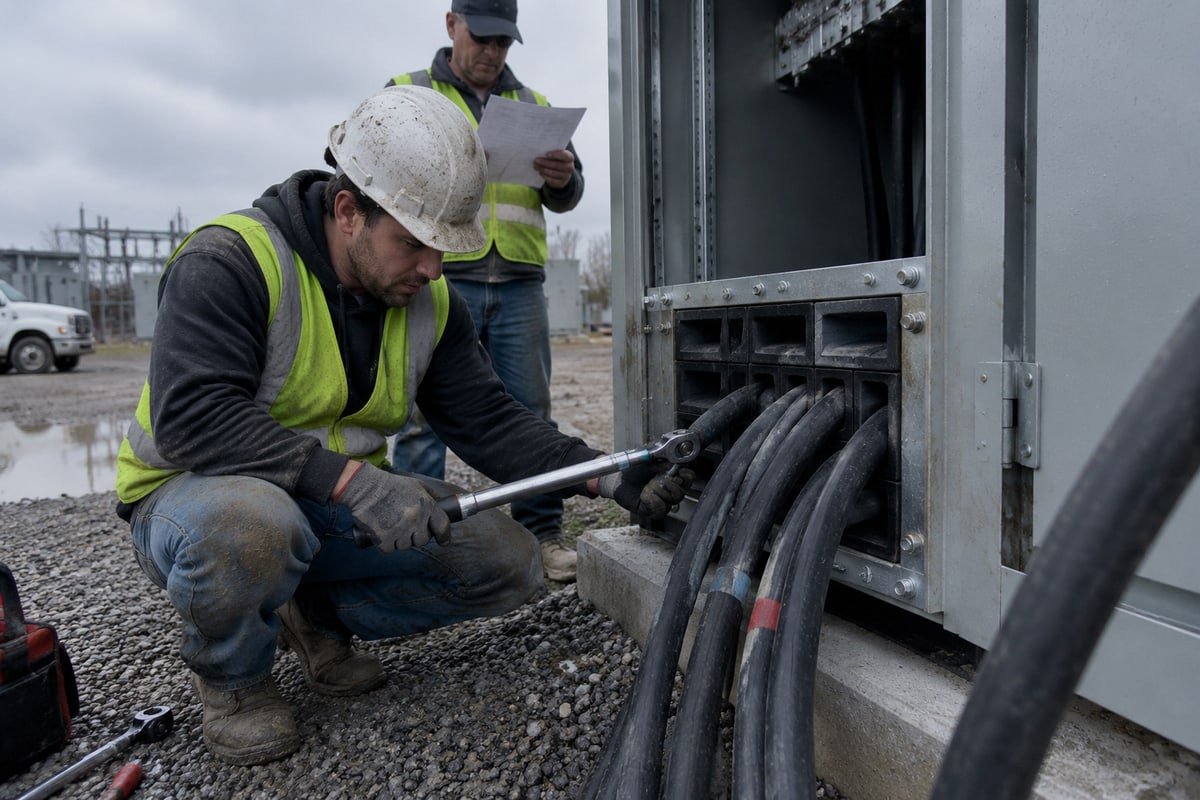
A failed test is where vague contracts turn into lawsuits. So I prefer to write the remedy table before anyone argues about fault. Here is the structure we accept, and why each layer matters.
Match the remedy to the failure type
| Failure scenario | Primary remedy | Secondary remedy | Who pays |
|---|---|---|---|
| Module fails factory IP68 or 0.01–0.4 MPa pressure test | Replace before shipment | Third-party re-test at supplier cost | Supplier |
| Module fails site watertight test, product defect proven | Free replacement, agreed lead time | Supplier-paid site labor and re-test | Supplier |
| Module fails site test, installation error proven | Contractor reworks | Supplier technical support on request | Contractor |
| Fire rating certificate does not match delivered configuration | Replace with certified configuration | Refund if no certified option exists | Supplier |
| Repair or replacement impossible within defect liability period | Refund of purchase price for the item | Credit against next order | Supplier |
| Delivery of non-compliant parts delays project inspection | Liquidated damages per agreed schedule | Expedited replacement shipment | Supplier |
The liability cap trade-off
Standard supplier terms cap liability at the purchase price and exclude indirect, consequential, and incidental damages. For a low-value module protecting a low-value asset, that cap is fair. But when a cable transit seals a battery container or a switchgear room, downtime dwarfs the module cost. In those cases I suggest a cap set as a multiple of contract value, combined with a clear exclusion of pure consequential loss. The buyer gets meaningful remedies. The supplier can still insure the risk under its product liability insurance and quote a sensible price.
Liquidated damages and TCO clauses
Liquidated damages work best when they are tied to a defined event. "Delivery of parts that fail pre-shipment inspection and push the site inspection date" is measurable. "Any delay" is not. Some buyers now go further with total cost of ownership language. If a system fails specified ease-of-access or modularity benchmarks, the supplier offsets future maintenance cost. I accept these when the benchmark is measurable, such as the ability to add a cable without removing the whole module stack.
Two newer clauses worth adding
Re-entry liability defines who owns integrity after a third party adds or removes cables. Our position is simple: we stay liable if the re-entry follows our documented procedure and uses our spare sealing modules. Environmental stress cracking resistance guarantees matter for offshore and high-UV sites. Ask for the compound data behind the claim rather than a marketing line.
How Can Free Validation Samples Help Me Reduce Risk Before Signing a Supply Agreement?
Our earliest export orders taught me something: a spec sheet never settles a compatibility argument, but a physical module in the buyer's own 120-frame cutout does.
Free validation samples let you test dimensional fit in existing 120-frame cutouts, run your own compression, watertight, and gas-tight checks, compare EPDM hardness and step-core adaptability, and document baseline performance before signing, so acceptance criteria and defect definitions in the supply agreement rest on measured evidence.

Samples are not a courtesy. They are the cheapest form of risk transfer available to a sourcing team. When you qualify a second source, the sample stage is where contract language stops being theory. Here is how I ask our partners to use them.
A validation protocol that feeds the contract
- Cross-reference first. Use the model cross-reference table to map your incumbent module to the equivalent TSC or TSR part. Record both part numbers in the sample request.
- Fit check in your own frame. Drop the sample into an existing 120-frame cutout. Measure width, height, and stack depth. Note any interference with stay plates or the compression unit.
- Compression and adaptability. Strip the step-core layers to your actual cable diameters. Confirm the halogen-free EPDM seals across the range that one module size claims to cover.
- Pressure and ingress. If you have a test rig, run your own watertight and gastight integrity check. Compare the result with the supplier's report at the same pressure step.
- Document and freeze. Write down the measured values. Those numbers become the acceptance criteria and the defect definition in the supply agreement.
Why this reduces contract disputes
Most warranty fights come from undefined words. "Fit for purpose" means one thing to a designer and another to a site engineer. A sample turns that phrase into a set of dimensions and a passed test. If a production batch later fails, both sides compare it to the frozen sample record. Fault becomes visible instead of debatable.
Samples also expose paperwork gaps early. When we send samples, we send the matching test documents, CAD or STEP files, and the certificate list at the same time. If a supplier cannot do that at the sample stage, they will not do it under warranty pressure either.
A negotiation checklist to close the loop
- Performance guarantee tied to the sample's measured values
- Defect remedies in the order repair, replacement, refund
- Spare sealing modules available for up to 10 years after final acceptance
- Pass-through warranties from any subcontracted frame or hardware supplier
- Compliance certificates listed by number and model in an annex
- Liability carve-outs for critical-asset applications
- Digital handover accuracy if 3D BIM models drive facility maintenance
Conclusion
Unclear terms turn a small sealing failure into a costly dispute. Assign responsibility by fault domain, verify certificates, tier the remedies, and validate with samples first.
Footnotes
1. DNV provides certification and standards for cable transit systems used in maritime and energy sectors. ↩︎
2. Official ISO page for quality management standards which define organizational quality responsibility. ↩︎
3. UL Solutions provides testing and certification for firestop systems and fire-resistant materials. ↩︎
4. Intertek is a leading global provider of fire testing and certification reports for industrial products. ↩︎
5. Official site for Lloyd’s Register, a global authority for technical standards and certification. ↩︎



 English
  Español de México
  Deutsch
  Français
  العربية
  Русский