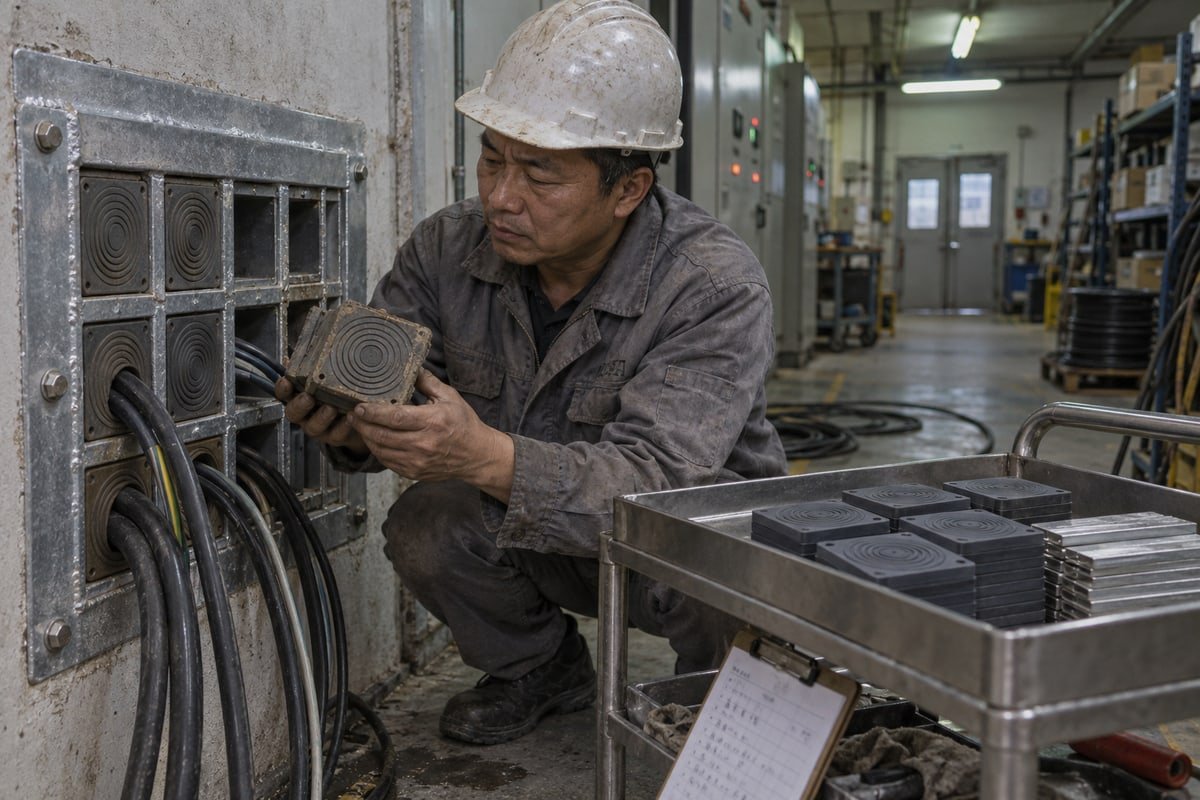
Long-term spare parts supply for multi cable transits fails quietly classification society 1. At our factory, we keep receiving inquiries about [decade-old frames whose original sealing modules nobody stocks anymore](https://dewinmct.com/?p=420).
To ensure long-term spare parts supply for multi cable transits, standardize on modular multi-diameter sealing modules, keep a controlled bill of materials, stock strategic and long-lead spares, sign OEM-backed supply agreements, and qualify a dimensionally compatible second source before obsolescence forces the decision.
That answer has four parts. Below, I walk through each one from the view of a purchasing engineer who has to keep a BESS container, a modular data center, or an offshore switchroom sealed for twenty years or more.
How can I secure a reliable long-term supply of spare sealing modules for my MCT systems?
During a batch inspection last spring, our QC team pulled a step-core EPDM module and cut it open to check core layering. That test explains why standardization matters.
Secure long-term supply of spare sealing modules by standardizing on multi-diameter step-core modules, classifying spares into strategic and recommended lists, holding critical and long-lead items on site, signing multi-year supply agreements, and qualifying a dimensionally compatible second source with validated samples.
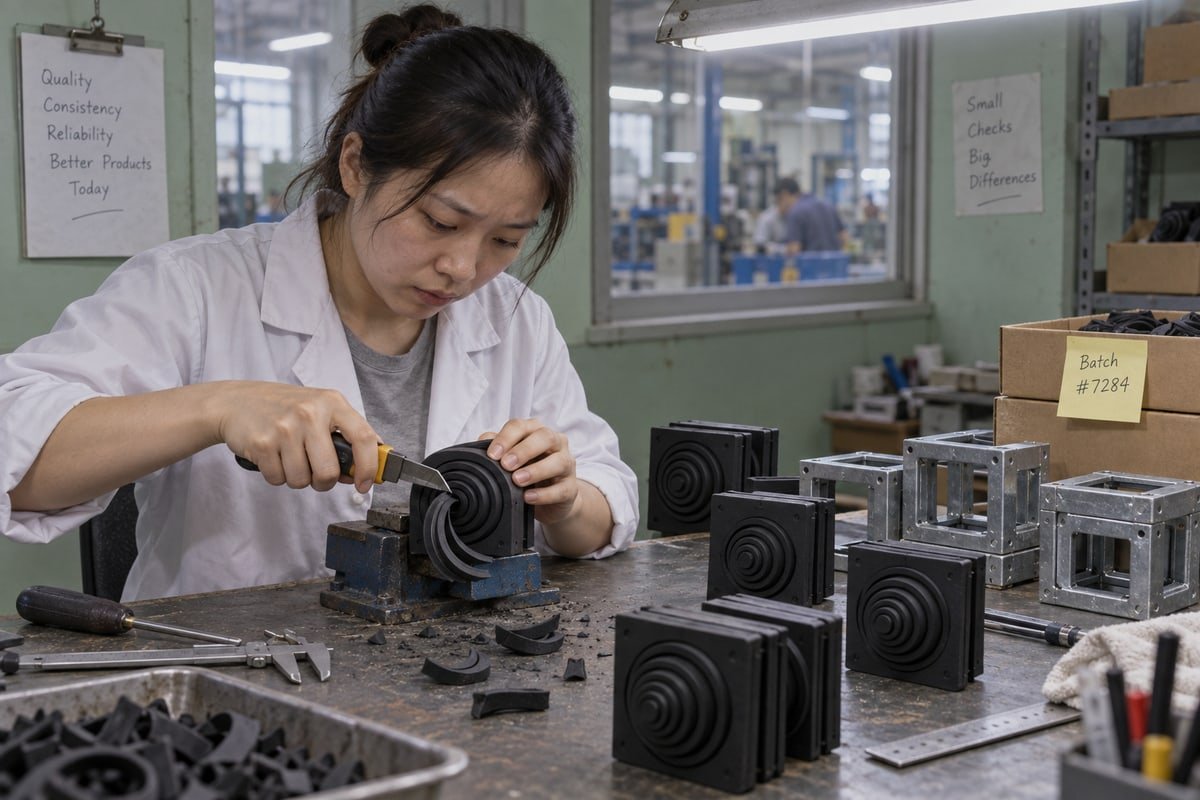
The layered core we cut open that day is the whole point. One step-core module covers a range of cable diameters. You peel layers to fit the cable. So one module size replaces several fixed-bore parts. Fewer unique SKUs means a smaller spare parts inventory, and a smaller inventory is easier to keep alive for two decades.
Start with the design, not the warehouse
Long-term spare parts supply for multi cable transits is easiest when the frame is sized with room to grow. Industry guidance recommends at least 30% spare capacity in the transit design. Some projects go to 100% spare capacity, because adding a frame to an operating plant later costs far more than adding a few blank modules on day one. In our own project quotes for BESS container builders, we always list blank modules and spare stayplates as a separate line, so the buyer can see the cost of future capacity before the frame is welded.
Classify spares before you stock them
Not every part deserves shelf space. We suggest splitting the list the way many offshore operators do: strategic spares versus recommended spares, then applying an ABC or VED criticality check.
| Category | Typical MCT items | Stocking policy |
|---|---|---|
| Strategic (vital, long-lead) | Custom frame sizes, non-standard module widths, compression wedge kits for rare frame heights | Hold on site or under contract; consider a Last Time Buy if the OEM signals end-of-life |
| Recommended (essential, standard) | Standard TSC square modules, TSR round seals, standard stayplates | Hold a minimum buffer; replenish through a framework agreement |
| Consumable (desirable) | Lubricant, blank half-modules, spare bolts and washers | Buy on demand from the fastest qualified source |
Inventory versus on-demand: the real objection
Buyers often push back on holding stock. Capital is tied up and rubber ages. That objection is valid for standard parts, so we resolve it this way: stock only strategic and long-lead items, and cover the rest with a supply agreement that fixes lead times. For the rubber you do store, keep it in a climate-controlled room away from UV and ozone. Before installing an aged module, a simple hardness check or a non-destructive compression test confirms the elastomer has not hardened. Our halogen-free EPDM 2 is chosen partly because it tolerates long storage better than many alternatives, but no rubber is immune to bad storage conditions.
Finally, qualify a second source while the first is still healthy. We provide free validation samples for exactly this reason. A second source you test under no pressure is worth far more than one you scramble for after an end-of-life notice.
What should I look for in a supplier's spare parts inventory and lead-time commitments?
A German switchgear buyer once asked me for our lead time in writing, then asked what happens when we miss it. That second question is the right one.
Look for a supplier that publishes stock levels per module size, commits to lead times contractually with penalties or escalation, issues change and end-of-life notices, supports Last Time Buy orders, offers regional stock or consignment, and integrates with your CMMS or ERP for replenishment.

Lead time is a number. A lead-time commitment is a process. When I evaluate our own performance for European integrators, I look at what sits behind the number: raw EPDM stock, mold availability, and how many production sites can run the same part. That is what your supplier audit should probe too.
A six-point supplier checklist
| What to check | Why it matters | Evidence to request |
|---|---|---|
| Stock transparency | You cannot plan against a black box | Stock report by module size, updated monthly |
| Contractual lead time | Verbal promises vanish under demand spikes | Framework agreement with defined standard and expedited lead times |
| Change notification | Silent material or dimension changes break system compatibility | Written PCN/EOL policy with notice period |
| Last Time Buy support | Protects legacy frames when a size is discontinued | LTB clause and minimum notice before discontinuation |
| Regional or consignment stock | Cuts shipping time for remote and offshore sites | Location of stock and replenishment trigger |
| Digital integration | Manual reordering is where stock-outs start | Part master data that loads into your CMMS or ERP |
Obsolescence management is a supplier duty too
Most readers underestimate how fast parts become obsolete. A frame installed today will outlive several generations of module catalogs. Good obsolescence management therefore needs two things from the supplier: an early warning when a size or compound is scheduled to change, and a documented substitute that has been tested in the same frame. Long-term service contracts in the rail sector show the model well. Some run past 2045 and bundle spare parts, technical support, and obsolescence monitoring into one agreement. You may not need a contract that long for a data center, but the principle holds: you are buying availability, not boxes of rubber.
Single source or several?
Multi-vendor sourcing protects against a single point of failure, but it multiplies qualification work. The practical middle path is one primary source plus one pre-qualified second source for strategic parts. Some operators go further and set up shared spare part pools across a fleet of similar assets, so rare and costly frame sizes are stocked once and drawn by whoever needs them. We support this by holding our own buffer of common TSC and TSR sizes across production in Shaanxi, Shandong, and Hunan, which lets us quote spare sealing modules faster than custom frames. Ask any supplier to show you the same kind of buffer, and ask where it physically sits.
Can I get dimensionally compatible spare parts that drop into my existing 120-frame cutouts?
Every time we release a new TSC module size, we weigh tighter tolerances against mold cost. Drop-in fit always wins, because a spare needing frame rework is no spare.
Yes. Dimensionally compatible sealing modules, stayplates, and compression wedge kits exist for common 120-frame standards. A qualified second source provides model cross-reference tables, CAD/STEP files, and free validation samples so you can verify fit, compression, and sealing performance in your existing cutouts before switching.
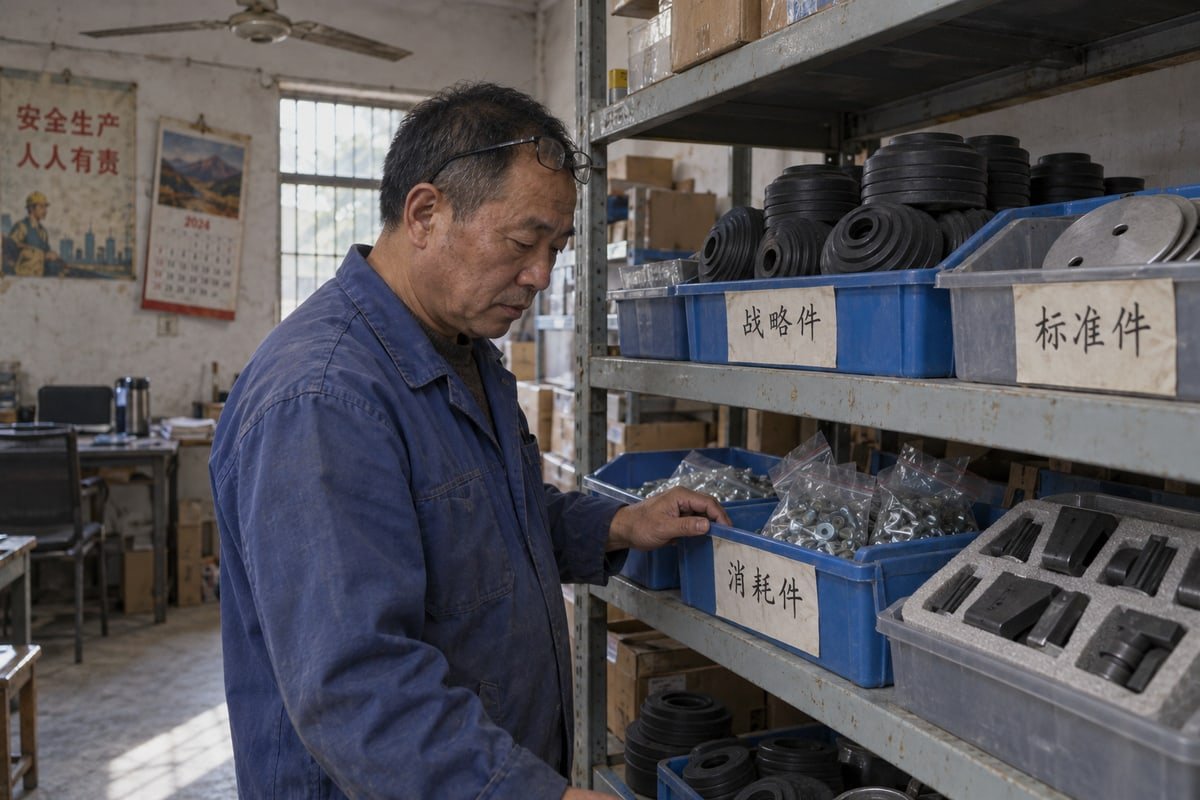
The 120-frame format is a de facto standard across marine, offshore, and industrial cable penetration seals. The internal opening height is fixed, and modules stack in rows separated by stayplates, with a compression unit at the top. Because those dimensions are shared, a second-source module can drop into the same cutout if its width, height, and compression behaviour match. Our TSC square modules and TSR round seals were dimensioned for exactly that. They sit in existing 120-frame cutouts without cutting, welding, or re-drilling.
How we prove system compatibility
We do not ask buyers to trust a datasheet. We give them a way to check.
| Component | What we match | How you verify it |
|---|---|---|
| Square sealing modules (TSC) | Width, height, step-core diameter range | Cross-reference table from your existing model to the DEWIN model; free validation sample |
| Round seals (TSR) | Outer diameter, sleeve fit, cable range | STEP file overlaid on your sleeve drawing |
| Stayplates | Thickness, length, slot fit | Sample fitted between existing module rows |
| Compression wedge kits | Expansion range, bolt torque | Compression test in your own frame with our test report for reference |
The OEM-only objection, resolved
Skeptical engineers raise a fair point: original parts carry the OEM's certification, so why risk a third party? The risk is real when an aftermarket part has no traceability and no test evidence. It disappears when the second source is a certified factory with its own fire A-0/A-60 approvals, IP68 rating, and watertight and gas-tight test data from 0.01 to 0.4 MPa, plus material traceability back to the EPDM batch. That is the standard we hold ourselves to, and it is what lets our modules cut component cost by 40–60% without giving up compliance. Prioritize OEM parts for any component where you lack test evidence, and pre-approve a documented second source for everything else.
Retrofit sealing solutions for odd sizes
Not every legacy frame is standard. When a cutout is non-standard, in-house mold making lets us produce a matching module or stayplate rather than forcing a frame replacement. For truly discontinued frames, some operators now use 3D metal printing for one-off frame parts, though the seal itself still needs a qualified elastomer module. Either way, the goal is the same: keep the existing penetration certified and sealed without hot work.
How do I verify a manufacturer's capacity and certifications to guarantee uninterrupted spare parts availability?
We learned early that a certificate PDF proves little. Buyers who audited our Shaanxi plant in person asked sharper questions, and those relationships lasted longest.
Verify a manufacturer by checking ISO 9001 and IATF 16949 certificates against the issuing registrar, confirming classification-society factory approval such as BV, requesting fire A-0/A-60, IP68 and pressure test reports, reviewing multi-site production capacity and registered capital, and running a paid or free sample validation.

Uninterrupted long-term spare parts supply for multi cable transits rests on two questions. Can this factory still make the part in fifteen years? And will the part still pass the standards my asset integrity management program requires? Certificates answer the second question partly. Capacity answers the first. You need to verify both.
Verify the paperwork at its source
Every certificate has an issuing body and a registration number. Check ISO 9001 3 and IATF 16949 certificates directly with the registrar. For marine and offshore standards 4, confirm the factory approval with the classification society itself; in our case that is Bureau Veritas. Then request the underlying test documents, not the summary sheet.
| Document | What it proves | Red flag if missing |
|---|---|---|
| ISO 9001 certificate | Controlled quality management system | Supplier cannot name the registrar |
| IATF 16949 5 certificate | Automotive-grade process control, including traceability and change management | Certificate applies to a different legal entity |
| Classification-society factory approval | The plant, not just a sample, was assessed | Only a product test report exists, with no factory scope |
| Fire A-0 / A-60 test report | Firestop performance of the sealed assembly | Report covers a different frame or module configuration |
| IP68 and pressure test (0.01–0.4 MPa) | Watertight and gas-tight sealing | Test done on a single module, not a stacked assembly |
| Material traceability record | EPDM batch can be traced to each module | No batch marking on the module itself |
Verify capacity in three steps
- Ask for the legal registration. A real factory has registered capital, land, and equipment on record. Ours is RMB 50 million, with headquarters in Shaanxi and production in Shandong and Hunan. A trading company will show you a warehouse instead.
- Ask how many sites can produce the same module. Multi-site production is the single strongest insurance against a fire, a lockdown, or a regional logistics failure.
- Ask about design ownership. Granted patents and in-house molds mean the supplier controls the part's future. We hold 38 or more granted patents and cut our own molds, so a discontinued size can be reintroduced without a third-party tooling shop.
Tie it back to your maintenance program
Firestop system maintenance and cable transit inspection usually run on the same schedule. Use each inspection to update your BOM, record batch numbers, and confirm that the replenishment source still holds valid certificates. Some operators now link this to a BIM-based digital twin of the penetration schedule, so future cable additions automatically generate the module sizes they will need. That is where verification stops being a one-time audit and becomes part of asset integrity management.
Conclusion
Spare parts gaps stall plants quietly. Design for standardization, stock strategic spares, manage obsolescence, and qualify a certified drop-in second source early, before the original supplier stops answering.
Footnotes
1. International organization establishing technical requirements for the classification of ships and offshore structures. ↩︎
2. Technical overview of EPDM rubber properties, including its resistance to environmental factors and aging. ↩︎
3. Official international standard for quality management systems used to verify manufacturer reliability and process consistency. ↩︎
4. Leading classification society providing technical standards and certification for marine and offshore equipment safety. ↩︎
5. Global technical specification for quality management in the automotive industry, ensuring high-level manufacturing traceability. ↩︎

 English
  Español de México
  Deutsch
  Français
  العربية
  Русский