
Every quarter our export desk in Shaanxi books large vs local freight forwarders 1 for multi cable transit imports from China. Pick wrong and a BESS project slips weeks.
Large freight forwarders handle multi cable transit imports from China better when volumes are high, lanes are standard, and rate leverage matters. Local forwarders win on responsiveness, HS code accuracy, and lane-specific fixes. For OEM integrators in the 5–50 container range, a hybrid model performs best.
That answer needs proof. Below I break the large vs local freight forwarders question into four parts IATF 16949 2. Cost. Customs paperwork. Lead-time reliability. Samples and drawings. Each part uses what we see on real MCT shipments to Europe, Asia-Pacific, and the Middle East.
How do I compare total landed costs between large and local freight forwarders for MCT shipments?
A Dutch switchgear buyer once sent me two quotes for the same TSC module pallets. The large forwarder's ocean rate was lower. His landed cost was not.
Compare total landed costs by adding six lines: ocean or air freight, origin charges at Qingdao or Shanghai, insurance, destination terminal fees, customs brokerage, and inland delivery. Large forwarders usually win the freight line; local forwarders often win on destination charges, fewer surcharges, and transparent quoting.

The table below is the one I use when a buyer asks me to sanity-check two forwarder quotes. It is not exotic. It just forces every line into the open.
| Cost line | Large forwarder tendency | Local forwarder tendency | Why it matters for MCT cargo |
|---|---|---|---|
| Base ocean freight (FCL/LCL) | Lower, backed by carrier contracts | Higher on the sheet, but sometimes matched via NVOCC services | Galvanized frames and EPDM modules are heavy, so weight-based LCL pricing bites |
| Origin charges at Qingdao or Shanghai | Standardized, rarely negotiable | Often bundled or reduced through local relationships | Bulky pallets of frames waste cube; local loaders pack tighter |
| Cargo insurance | Fixed percentage, easy to add | Flexible, sometimes better for high unit-value modules | Our TSR and TSC modules are dense but not fragile; insure for value, not volume |
| Destination terminal and handling fees | Frequently appear late as "surcharges" | More often quoted up front | This is where the cheap quote usually loses |
| Customs brokerage | Centralized desk, flat fee | In-house or partner broker, lane-priced | Multi-component kits need careful HS code classification |
| Inland delivery | Strong for door-to-door across many countries | Strong on a few known lanes | An EPC site in the Middle East is not the same as a data-center hub in Frankfurt |
Start with the Incoterms 2020 term, not the rate
Under Incoterms 2020 3, most of our buyers take FOB. That means our factory delivers the goods on board at the Chinese port, and the buyer's forwarder takes over ocean freight and insurance. Under CIF, we would arrange the main leg. CIF feels simpler, but it hands routing control to the supplier's forwarder, not yours. DDP door-to-door is popular with smaller importers who want one party to manage freight, customs, and taxes. For MCT orders, I recommend FOB for anyone shipping more than a few pallets a year. You keep control of the leg where most cost and delay hides.
Freight rate volatility changes who wins
When rates spike, large forwarders can lean on block space agreements and long-term carrier contracts. Their base rate stays lower. When rates fall, that advantage shrinks. Local forwarders often re-quote faster because they buy space on the spot market or through NVOCC partners. So the "winner" on freight rate volatility flips with the season. A fair comparison uses the same week, the same Incoterm, and the same container type.
Do not let the freight line hide the product saving
Our modular cable seals typically land at 40–60% lower unit cost than the incumbent brand's equivalent module. A few hundred dollars of hidden destination charges will not erase that. But a forwarder who books LCL by weight, or who cannot explain a surcharge, will chip away at it. Ask for the full six-line breakdown before you sign.
Which freight forwarder type better handles customs documentation for fire-rated and IP68-certified cable transit systems?
Last spring our QC team stapled A-60 fire test reports and IP68 certificates to a packing list. The forwarder's broker never opened them. The shipment still cleared, slowly.
Local forwarders with in-house customs clearance expertise usually handle documentation for fire-rated and IP68-certified cable transit systems better. They classify multi-component MCT kits under the correct HS code, attach test certificates and certificates of origin properly, and answer broker queries faster than a large forwarder's centralized desk.
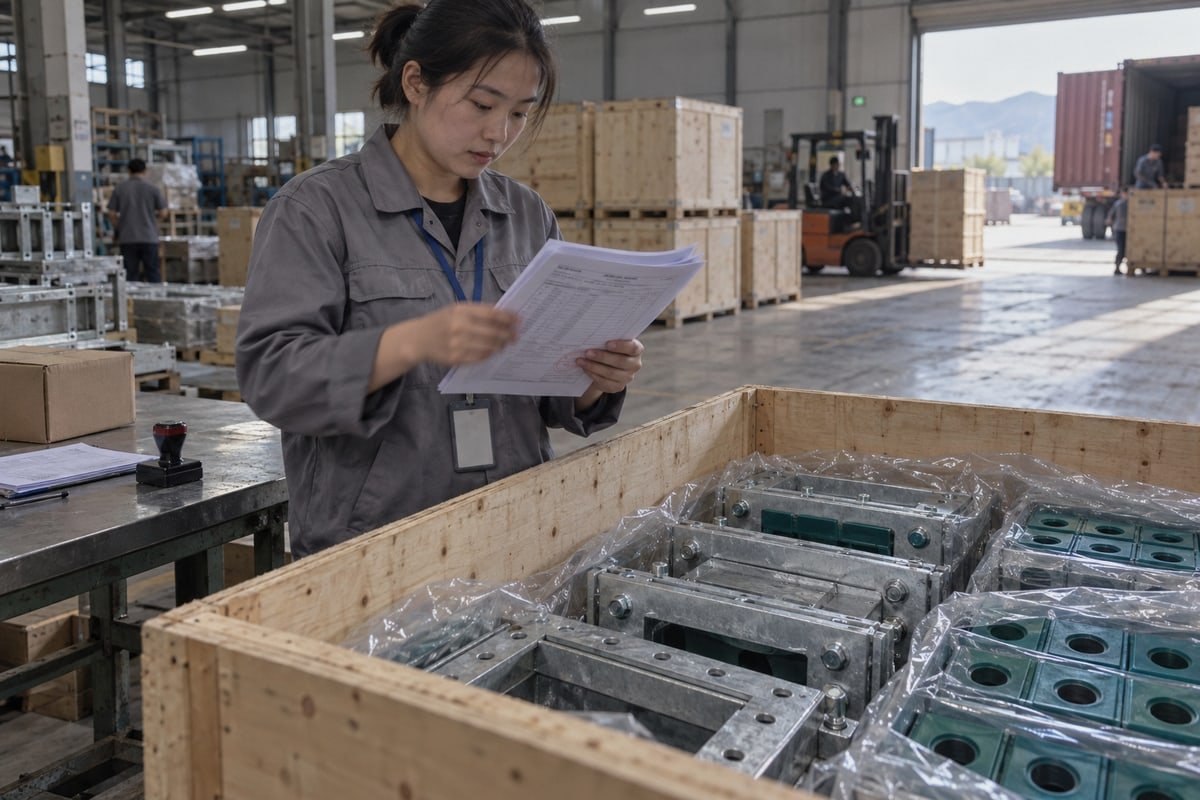
Customs paperwork for MCT systems is not hard. It is fiddly. One order can contain galvanized steel frames, EPDM sealing modules, stay plates, compression units, and spare parts. Each piece can attract a different tariff line. Here is who normally prepares what, and where each forwarder type tends to stumble.
| Document | Prepared by | Large forwarder weak spot | Local forwarder weak spot |
|---|---|---|---|
| Commercial invoice | Our factory | Rarely checks that line items match HS lines | Sometimes accepts our draft without pushing back |
| Packing list with weights and dimensions | Our factory | Uses it only for freight, not for customs | Same, but easier to correct same-day |
| Bill of lading or air waybill | Forwarder | Accurate, automated, standardized | Manual errors possible on first shipments |
| Certificate of origin | Our factory via chamber | Slow to flag missing originals | Usually flags early because they know the lane |
| Customs declaration | Forwarder's broker | Centralized desk, slower queries | Direct broker contact, faster fixes |
| Test documents (A-0/A-60, IP68, pressure 0.01–0.4 MPa) | Our factory, on request | Often ignored unless customs asks | Usually asked for up front on regulated lanes |
HS code classification for multi-component kits
This is the single biggest source of customs friction I see. A complete cable transit frame with modules can be declared as one assembled system or as separate materials. The wrong choice can mean a different duty rate 4, or a query that holds the container. A local forwarder who ships industrial hardware from Shandong or Shanghai every week tends to have a working answer. A large forwarder's broker often defaults to a generic line. Neither is automatically right. The difference is how fast they respond when the customs officer asks a question. I have watched a query sit in a large forwarder's ticket queue for days. A local broker usually calls the same afternoon.
Certificates are for your engineers, and sometimes for customs
Our A-0 and A-60 fire ratings, IP68 ingress protection, and watertight sealing at 0.01–0.4 MPa are tested at our BV-approved factory under ISO 9001 5 and IATF 16949 systems. These documents matter most to your engineering review. But on some lanes, especially where the goods are declared as passive fire protection products for the marine and offshore industry, the broker may need them to justify the classification. Tell your forwarder up front that the goods are certified. Send the PDFs with the booking, not after the query.
Supply chain transparency is now part of the file
Newer Western mandates ask importers to verify labor and ESG practices 6 at the source. Smaller local forwarders that visit factories can help confirm we are a real production site in Shaanxi, not a trading office. Large forwarders rarely offer that. It is a small point today. It will be a bigger one in two years.
Can a local freight forwarder in China match a large carrier's lead-time reliability for MCT drop-in replacement orders?
One peak season taught us this: a booking without guaranteed space rolled twice at Shanghai, and a drop-in replacement order arrived after the customer's line had stopped.
Yes, a local forwarder in China can match a large carrier's lead-time reliability on established lanes, but only with confirmed space allocation and NVOCC partners. Large forwarders hold block space agreements during peak season; local forwarders compensate with faster loading, port-specific delay forecasting, and quicker rebooking when a vessel rolls.
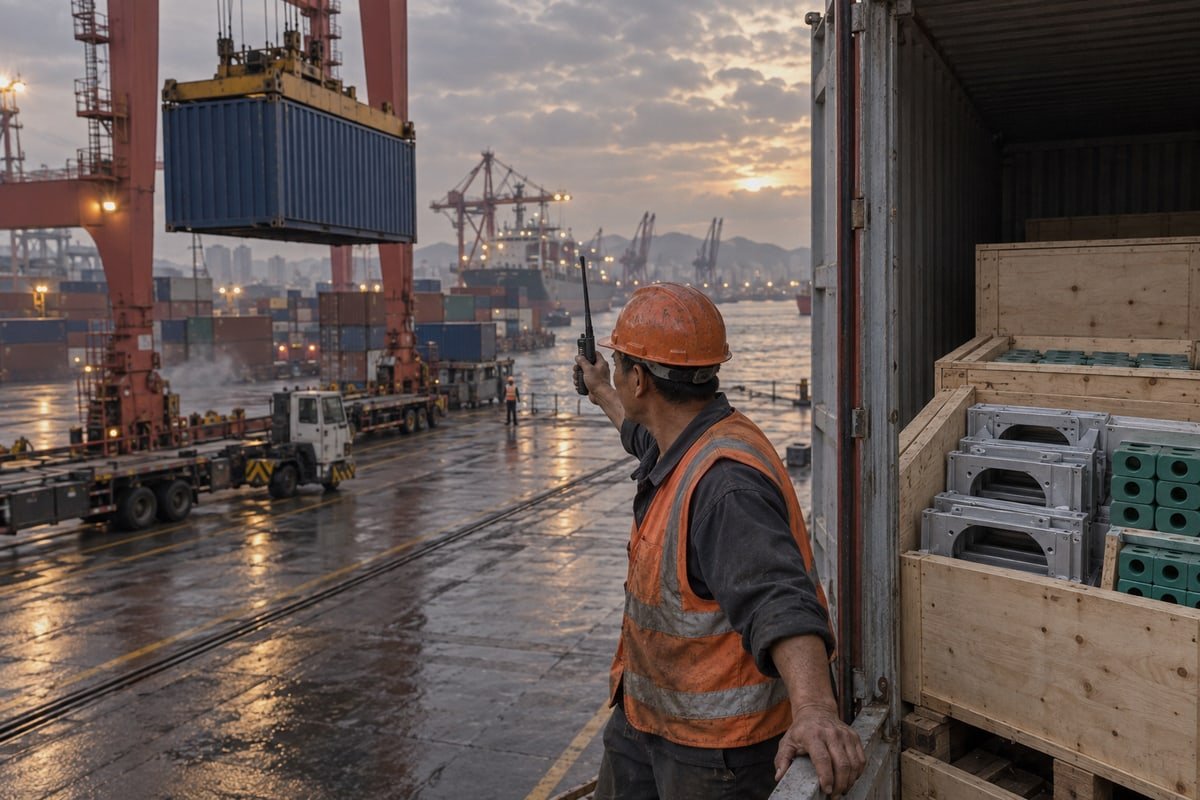
Drop-in replacement orders are different from stocking orders. The buyer already has a frame cutout waiting. They have qualified our TSC or TSR module against the incumbent model through our cross-reference table. Now they need the modules on a date, not "eventually." So lead-time reliability is the whole game.
| Mode | Typical transit from China | Best fit for MCT orders | Reliability driver |
|---|---|---|---|
| FCL sea freight | Roughly 15–45 days by route | Standard frame and module orders, 5–50 containers a year | Confirmed space, sailing frequency |
| LCL sea freight | Roughly 20–50 days by route | Small module replenishment, spare sealing parts | Consolidation schedule, deconsolidation speed |
| Air freight | Days, at a much higher cost | Urgent samples, very small kits | Courier capacity, customs pre-clearance |
Where each forwarder type wins on time
Here is the honest split, based on what we see across the large vs local freight forwarders we book from Shaanxi, Shandong, and Hunan:
- Peak season space. Large forwarders hold block space agreements. When vessels are overbooked, their containers load first. This is real and it is hard for a local forwarder to copy.
- Factory pickup and loading. Local forwarders often know our logistics staff by name. A truck that arrives Tuesday instead of Thursday saves two days before the container ever reaches the port.
- Rebooking after a roll. When a sailing is cancelled, the local team usually has a rebooking within hours. The large forwarder's SOP may require a new ticket and a new quote.
- Port-specific forecasting. Some advanced local forwarders now run hyper-local predictive models on Qingdao or Shanghai congestion. That gives tighter lead-time estimates than the generalized dashboards of a global giant.
- China + 1 routing. Local forwarders are more agile at routing through Southeast Asian transshipment ports when tariffs on Chinese industrial goods shift. That protects cost, but it can add days. Ask which one you are optimizing.
Supply chain visibility and digital logistics platforms
Large forwarders still lead on digital logistics platforms. Their portals give you milestone tracking, e-documents, and one login for every lane. This is genuine supply chain visibility, and a purchasing engineer in Munich values it. Smaller forwarders may rely on WhatsApp and email. Some now offer decent portals, so ask for a demo before you assume.
Transit time optimization starts inside the factory
We can only help the forwarder if we ship on time. For spare sealing modules, we hold molded EPDM stock in standard sizes and can pack fast. For custom sizes made with our in-house molds, we tell the buyer the production date first, then the forwarder books the sailing to match. That sequence, production date first, booking second, removes most of the transit time optimization guesswork.
What should I ask my freight forwarder about handling free validation samples and CAD/STEP files during shipping?
Here is a trade-off I weigh weekly: send a free TSR validation sample by courier for speed, or add it to the customer's next FCL box for zero freight cost.
Ask your forwarder five things: whether samples ship by air courier or ride in the next FCL, how sample invoices are declared for customs, whether CAD/STEP files can travel as pre-shared digital documents on their portal, who handles specialized cargo handling for EPDM modules, and how mid-transit changes are priced.
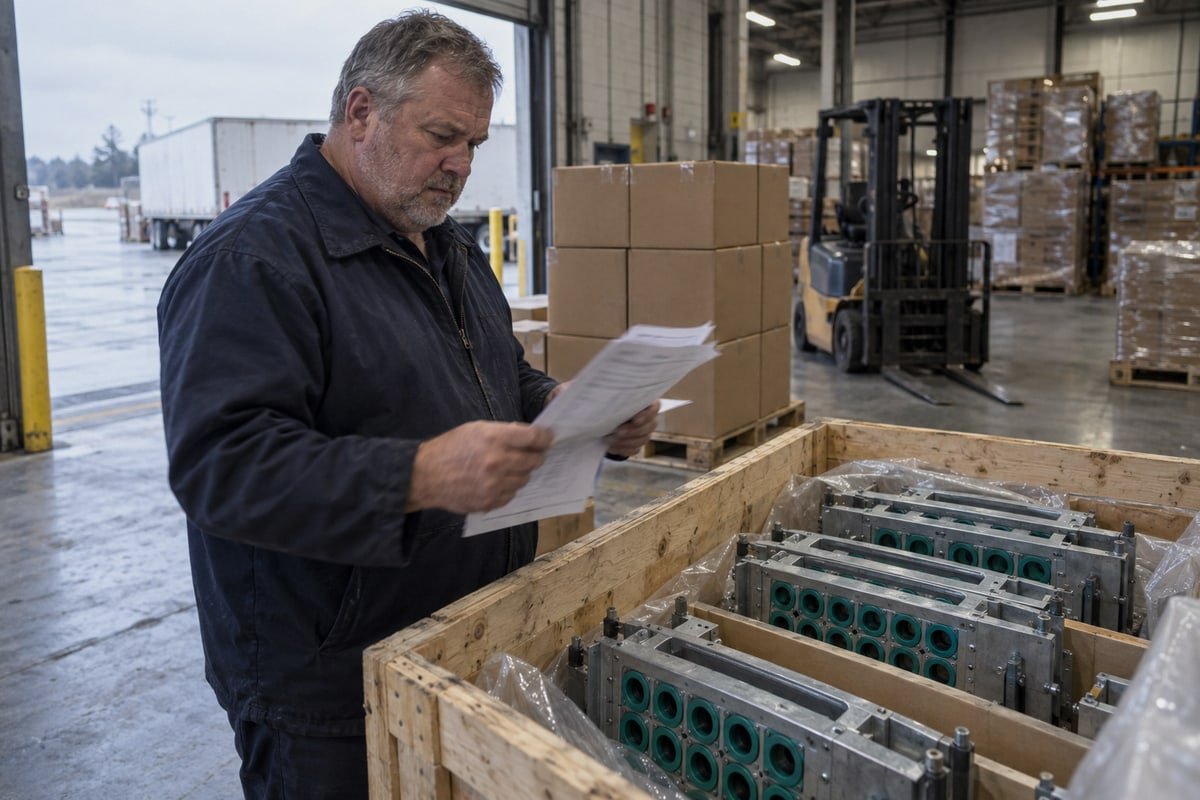
Validation samples and CAD/STEP files are how a purchasing engineer qualifies us as a second source. The sample proves the module fits the existing 120-frame cutout. The STEP file lets their designer check it in the assembly before the sample even lands. Neither is a normal cargo item, so your forwarder needs clear instructions. Below is the checklist I send with every first-time buyer.
| Question to ask | What a good answer sounds like | Why it matters |
|---|---|---|
| Do free samples go by air courier or in the next sea container? | "We can do either; courier for speed, FCL if you can wait" | Air is much more expensive but takes days; sea adds weeks |
| How do you declare a zero-value sample invoice? | "We declare a nominal value with 'sample, no commercial value' and the correct HS line" | Wrong declarations trigger queries or duties on free goods |
| Can I upload CAD/STEP files and test reports to your booking? | "Yes, our portal stores documents against the shipment" | Keeps drawings, certificates, and packing data in one place |
| Who inspects packing for compression damage? | "We photograph the pallet at loading and check block stacking" | EPDM modules must not be crushed under frames for 30 days at sea |
| What does a mid-transit change cost? | "Rerouting or address change is a flat fee, quoted in writing" | Project sites change; you need a known price, not a surprise |
The technical cargo audit is a real service now
Some boutique local forwarders now offer a "technical cargo" audit. In plain terms, they check that heavy galvanized frames are not stacked on top of rubber modules, that stay plates are strapped, and that compression units are boxed separately. Our own packing team does this already, but a second set of eyes at the port is welcome. Large forwarders rarely offer this for a single-pallet sample. It is a genuine point in the local column for specialized cargo handling.
CAD/STEP files do not ship, but they still need a home
A STEP file is data, not cargo. So why ask the forwarder? Because a good forwarder's portal becomes the shared folder for the project. Our engineers send the STEP file, the cross-reference table from the incumbent model to the DEWIN model, and the test documents with the booking. The buyer's designer, their broker, and their receiving warehouse all pull from one place. That avoids the email chain where the IP68 certificate is in one thread and the packing list in another.
Match the sample route to the qualification timeline
If the buyer's engineering review is scheduled next week, courier the sample. If they are qualifying us for next quarter's frame orders, put the sample in the current FCL and save the air cost. Either way, tell the forwarder the purpose. "Validation sample for supplier qualification" on the invoice makes the broker's job easier and the customs officer's question shorter.
Conclusion
Wrong forwarder, stalled project. That is the risk. Match forwarder size to your lane and volume, verify customs skill, and we will ship your drop-in MCT modules ready to clear.
Footnotes
1. Wikipedia provides a comprehensive definition of the role and responsibilities of freight forwarders in international trade. ↩︎
2. Official site for the automotive quality management standard, ensuring high-level manufacturing consistency for technical components. ↩︎
3. The ICC is the official body that defines Incoterms rules for international commercial transactions. ↩︎
4. The WTO provides the fundamental framework for international trade tariffs and customs duty regulations. ↩︎
5. ISO is the global authority for quality management standards used in manufacturing and factory audits. ↩︎
6. The World Bank offers comprehensive frameworks for Environmental, Social, and Governance standards in global supply chains. ↩︎



 English
  Español de México
  Deutsch
  Français
  العربية
  Русский