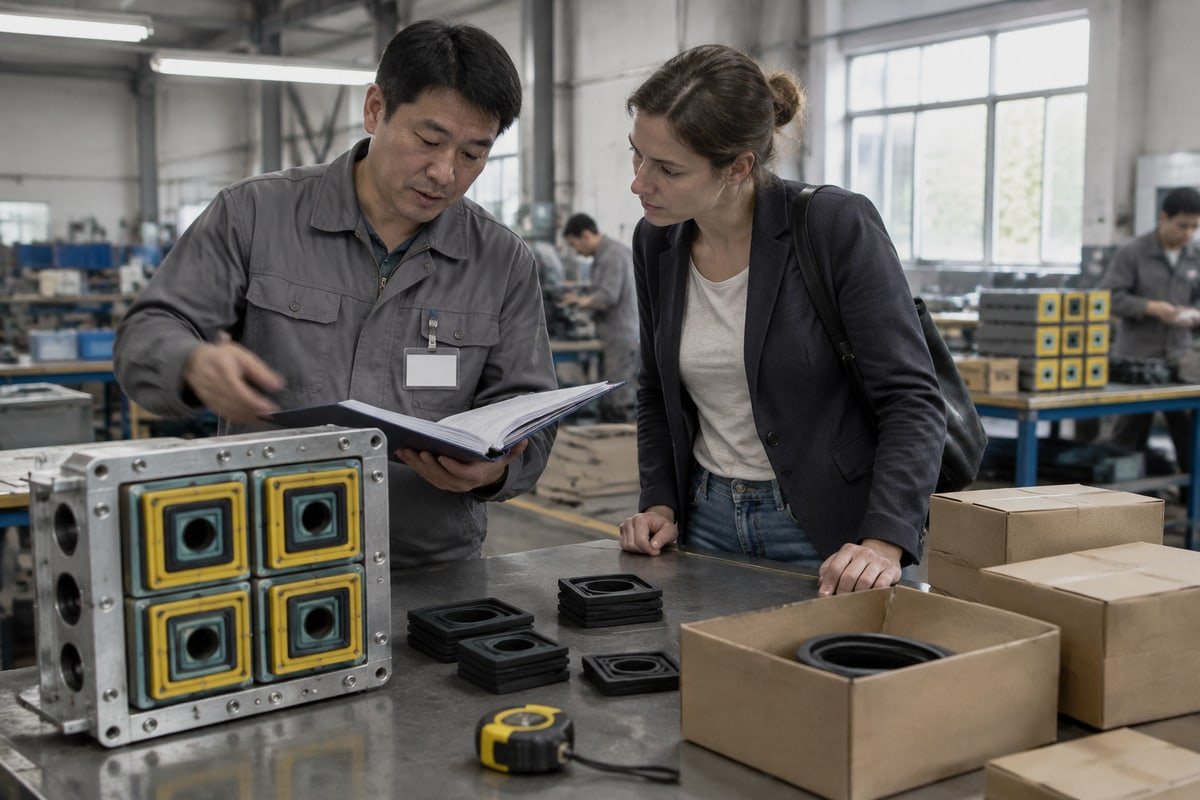
Finding reliable suppliers for Multi Cable Transit (MCT) systems is hard when one brand sets the price. Costs climb, lead times slip. Our factory was built to change that.
Reliable suppliers for Multi Cable Transit (MCT) systems are found through global OEMs such as Roxtec and MCT Brattberg, authorized distributors, and certified factory-direct manufacturers like DewinMCT. Verify type approval certificates, fire and IP test reports, dimensional compatibility with 120-frame standards, and in-house production before ordering.
This guide walks through the four questions I hear most from purchasing engineers. Each section gives you a concrete document, test, or sample to request. Use them in order, and supplier qualification gets much simpler.
How can I verify a supplier's MCT certifications and test documentation before placing an order?
Last quarter our QC team pulled a batch of TSC sealing modules for a witnessed pressure test. The buyer wanted the report, not the brochure. That request was fair.
Verify MCT certifications by requesting the actual type approval certificates, fire test reports for A-0/A-60, and IP68 or pressure test documents, then checking certificate numbers with the issuing body such as BV, DNV, ABS, or Lloyd's Register. Confirm the factory itself, not only the brand, holds ISO 9001.
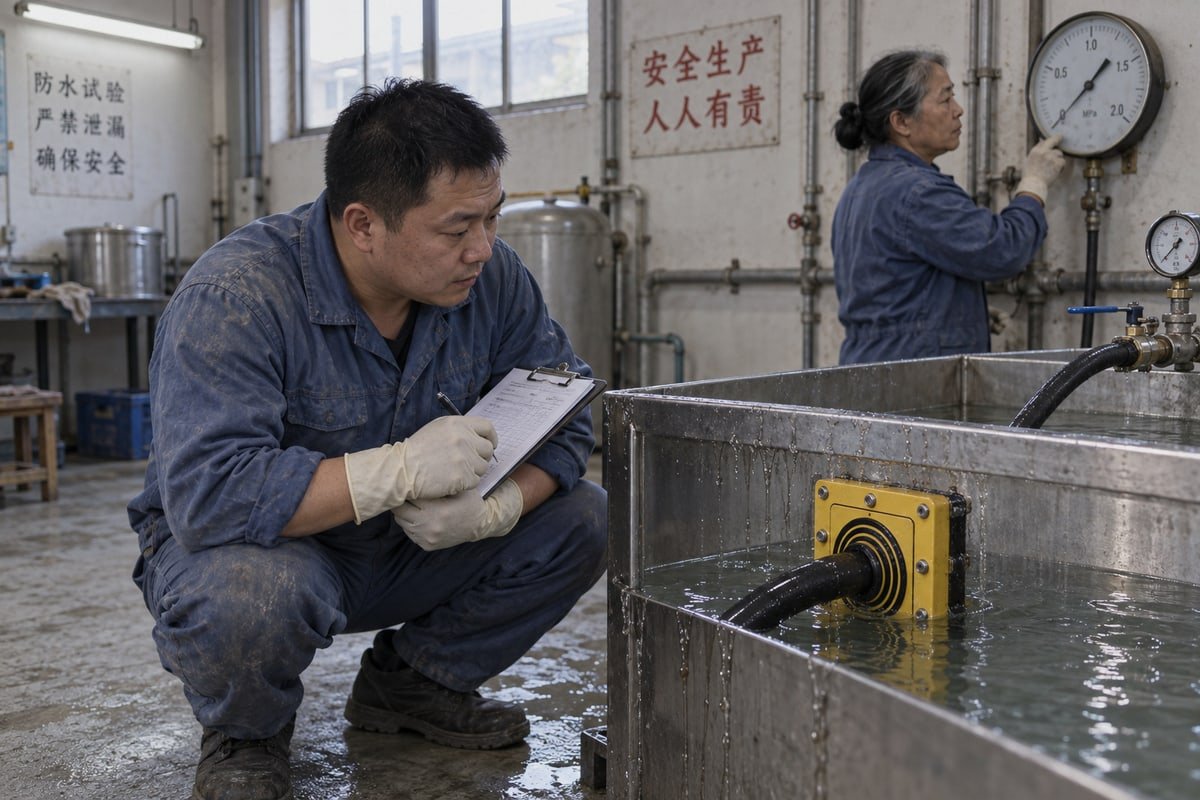
Certification is where most MCT sourcing mistakes start. A supplier page may say "fire rated" or "marine approved." Those two phrases mean almost nothing until you see paper. Firestop cable seals sit in bulkheads, decks, and container walls where failure is not an option. So I treat vague claims as a red flag, and I tell our own sales team to expect the same scrutiny from you.
The documents you should ask for
Here is the list I would send to any supplier, including us. The right column shows what we provide at DewinMCT so you have a benchmark.
| Document to request | What it proves | What DewinMCT provides on request |
|---|---|---|
| Type approval 1 certificates | A recognized body reviewed the design and factory | BV-approved factory status and related certificates |
| Fire test report | The transit holds an A-0 or A-60 fire rating under a standard fire curve | A-0/A-60 test documents |
| Ingress protection report | Water and dust ingress performance | IP68 test documents |
| Pressure test report | Watertight and gas-tight pipe seals hold at rated pressure | 0.01–0.4 MPa watertight/gas-tight test records |
| Quality system certificates | Process control at the plant, not just the brand | ISO 9001 2 and IATF 16949 |
| Material data sheet | Halogen-free, low-smoke EPDM composition | Step-core, halogen-free EPDM data sheet |
How to check the paper is real
First, ask for the certificate number and the name of the issuing body. Then go to that body's public register and search the number. BV, DNV, ABS, and Lloyd's Register 3 all publish searchable lists. Second, compare the company name on the certificate with the name on your quotation. Traders often send a factory's certificate under their own letterhead. That is a mismatch you should catch early. Third, check the scope. An A-60 fire rating on a steel bulkhead frame does not automatically cover a plastic frame or a different module size. Offshore engineering standards are strict on scope for exactly this reason.
Why the quality system matters as much as the product certificate
A type approval tells you the design passed once. An ISO 9001 or IATF 16949 4 system tells you the plant repeats that result on every batch. IATF 16949 is an automotive-grade standard, and we adopted it because it forces traceability down to the rubber compound lot. For a BESS container builder or a modular data center integrator, that lot traceability is what makes a field recall manageable.
Can I find a factory-direct MCT supplier that offers drop-in compatibility with my existing 120-frame system?
A sourcing engineer from a German switchgear builder once sent me a single frame drawing and asked one question: will your modules fit? That question shaped our cross-reference tables.
Yes. Factory-direct MCT suppliers such as DewinMCT build sealing modules and compression units dimensionally compatible with common 120-frame standards, so they drop into existing frame cutouts. Ask for a model cross-reference table, free validation samples, and STEP files to confirm fit before qualifying the second source.
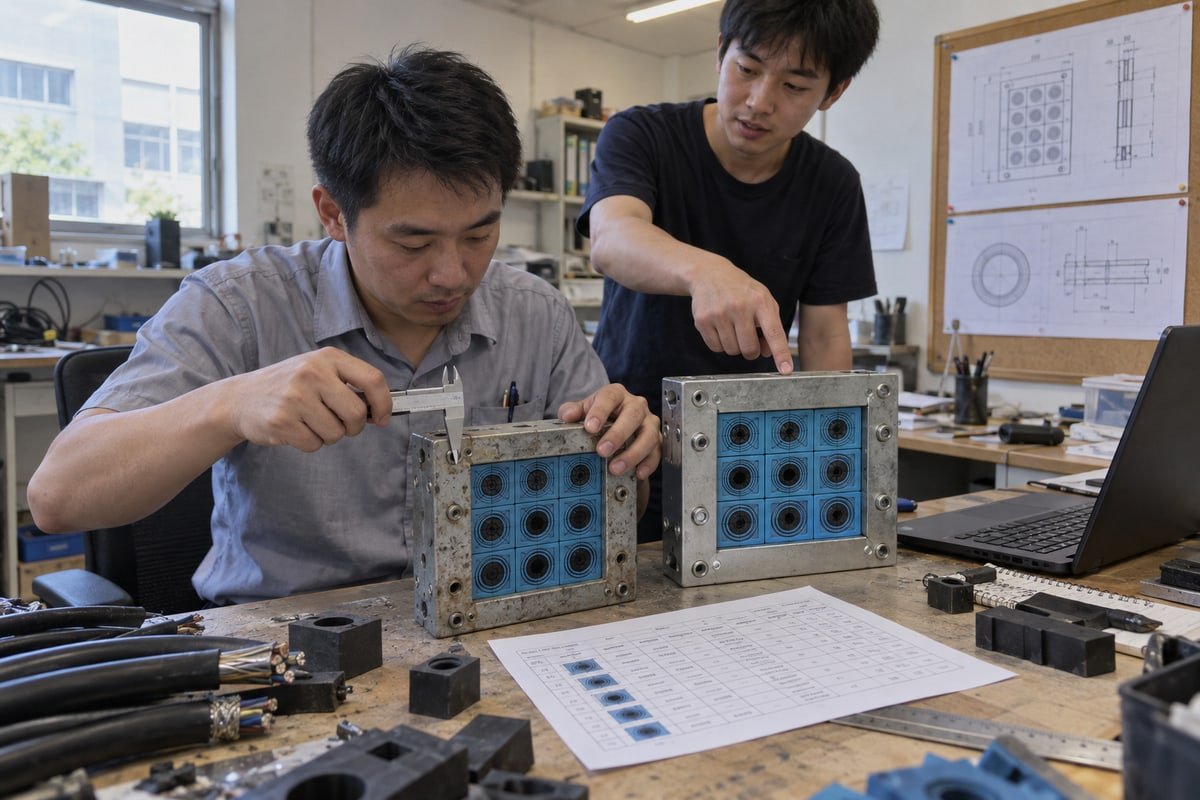
The MCT market is concentrated at the top and fragmented below. One market report estimates that the top five players, including Roxtec, Trelleborg, MCT Brattberg, Hilti, and Beele Engineering, held about 48.3% of global revenue in 2025. Roxtec describes itself as a global leader in multi-cable and pipe transits. Below that tier you find icotek with split systems rated to IP66, Hawke, HTS MCT, and regional specialists such as CAPE Industries. Different market reports rank these names differently, so I treat those lists as directional, not definitive.
Where the four supplier types fit
| Supplier type | Examples | Best for | Trade-off to weigh |
|---|---|---|---|
| Global OEM | Roxtec, MCT Brattberg, Hilti, Trelleborg, Beele | First-time specification, approval lists | Highest price, single-source risk |
| Authorized distributor | DNOW (MacLean), Anixter, BayAT (icotek) | Local stock, bundled procurement | Margin stacking, limited engineering depth |
| Niche regional specialist | CAPE Industries and similar | Custom panel layouts, quick retrofits | Narrow certification scope |
| Factory-direct second source | DewinMCT | Drop-in replacement at 40–60% lower cost | Requires your own qualification step |
The objection I hear most, and how I answer it
The common objection goes like this: the safest path is to buy only from the established global OEM, because their certification and support network is proven. I understand that view. For a brand-new design on an offshore platform 5, that path makes sense. But once your cable transit frames are already installed, the frame is not the problem. The consumables are. Sealing modules and inserts, compression wedge units, and stay plates are what you reorder for years. That is where single sourcing hurts your budget and your lead time.
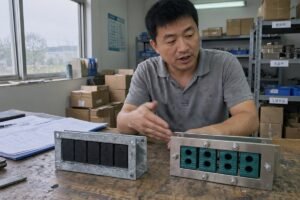
Our answer was to make modular sealing systems that match the common 120-frame standard dimensionally. Our TSC square modules and TSR round assemblies use step-core, halogen-free EPDM. One module size adapts to a range of cable diameters, which is the same modular logic that lets you add cables later without replacing the frame. We publish a cross-reference table that maps existing module models to DEWIN models, and we send free validation samples so your engineers can prove fit before purchasing commits.
What makes a source "factory-direct"
Ask three questions. Where are the presses? Who owns the molds? Who signs the export documents? We answer with our headquarters in Shaanxi, additional production in Shandong and Hunan, and in-house mold shops. A trading company cannot answer those questions with a site address you can audit.
What should I request to validate dimensional compatibility and sealing performance before switching suppliers?
Every time we tune the step-core profile of an EPDM module, we weigh diameter range against compression force. Too wide a range, and the seal gets soft. Test this yourself.
Request 2D drawings with tolerances, STEP files, a filled cross-reference table, free validation samples, and the sealing test reports covering IP68, watertight and gas-tight pressure from 0.01 to 0.4 MPa, and A-60 fire rating. Then fit the samples in your own frame and run an incoming inspection.

Switching suppliers is an engineering task, not a purchasing task. I recommend a five-step process. Each step produces a record you can file with your approved vendor list.
The five-step validation process
- Collect the drawings. Ask for 2D drawings with tolerances for the module, the compression unit, and the stay plate. Ask for STEP files too. Top-tier suppliers now offer 3D CAD libraries, and you should expect the same from a second source. We supply both formats in English.
- Map the models. Send your current bill of materials. The supplier should return a cross-reference table with an existing model in one column and their equivalent in the next. If a row is blank, ask why.
- Fit the samples. Install the free validation samples in a spare frame from your own stock. Check the fit of the module stack, the travel of the compression wedge units, and the seat of the stay plates. Do this on your bench, not in the field.
- Review the sealing evidence. Read the IP68 report, the pressure test record, and the fire test report. Match the test frame type and module sizes to what you actually use.
- Run incoming inspection. Define a sample plan for the first production lot. Measure module height, width, and core diameter. Log the results next to the supplier's own certificate of conformance.
What to measure and what to accept
| Checkpoint | How to check | Why it matters |
|---|---|---|
| Module outer dimensions | Caliper against drawing tolerance | Controls stack height in the frame |
| Step-core diameter range | Peel layers to the marked cable size | Confirms one module covers your cable list |
| Compression wedge travel | Torque bolts to spec, check gap closure | Drives the seal pressure on every module |
| Watertight and gas-tight hold | Pressure report at 0.01–0.4 MPa | Required for watertight bulkhead penetrations |
| Material composition | Halogen-free, low-smoke EPDM data sheet | Required for enclosed spaces and marine cable management |
| Fire performance | A-0/A-60 test report matching frame type | Required by class and building codes |
Where the risk hides
The failure I see most is a good module in a badly compressed frame. So I ask buyers to request installation instructions and, where possible, on-site or video installation training. Sealing performance is a system result. The module, the wedge, the stay plate, and the torque all contribute. Reusable modules also lower total cost of ownership, because you can open the transit for a cable change and reseal without scrapping the stack. That is a real number in decommissioning budgets, not just a brochure line.
How do I evaluate a manufacturer's capability for custom sizes, private labeling, and reliable lead times?
Early on, we outsourced a mold and lost three weeks waiting on a revision. That lesson pushed us to bring mold making in-house at our Shaanxi plant.
Evaluate a manufacturer by checking for in-house mold making, multiple production sites, a documented quality system such as ISO 9001 and IATF 16949, and granted patents. Then request a private-label sample, a written lead-time commitment for spare sealing modules, and proof of export documentation handling.
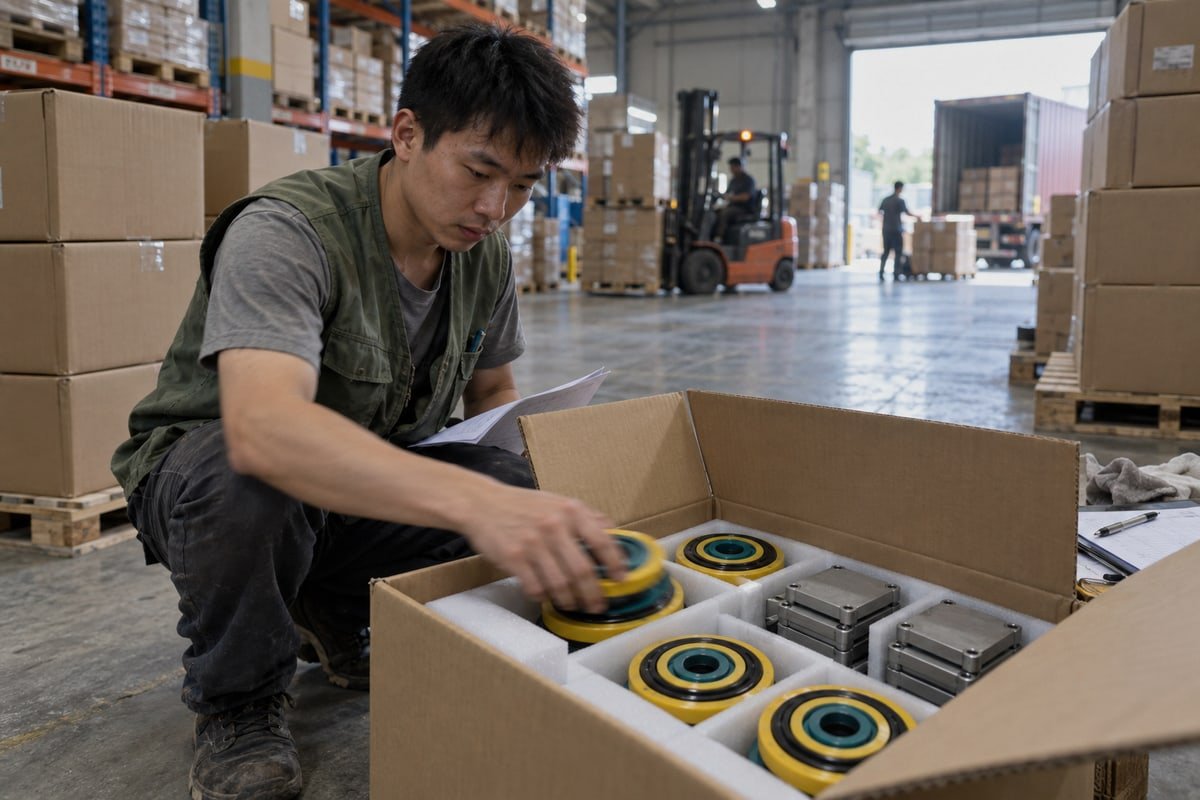
Capability is easy to claim and hard to fake under audit. Below is the evidence I would ask for, along with what each item tells you about the plant behind the quote.
Capability signals and how to verify them
| Capability | Evidence to request | What it tells you |
|---|---|---|
| Custom sizes | Photos or video of the mold shop, a sample custom module | Whether new sizes take weeks or months |
| Private labeling | A branded sample with your logo and nameplate | Whether marking, packaging, and documents can carry your brand |
| Production depth | Site addresses, registered capital, patent list | Whether capacity survives a surge in orders |
| Lead-time reliability | Written lead-time terms for standard and spare parts | Whether reorders arrive when you planned |
| Export handling | Sample commercial invoice, packing list, certificate of origin | Whether your logistics team inherits problems |
| Engineering support | Response time on a technical email in English | Whether you get answers or delays |
Why these signals matter to an integrator
For a BESS container builder or a switchgear line, the schedule is fixed by the project, not by the supplier. So I care about lead-time stability more than the shortest promised date. We run three production sites, in Shaanxi, Shandong, and Hunan, so a local disruption at one plant does not stop shipments. Regional or multi-site manufacturing also lowers the logistics risk that global disruptions have shown in recent years. Our RMB 50M registered capital and 38+ granted patents are not marketing points. They are what an auditor checks when your procurement team asks whether a second source is a real factory.
Custom work without losing certification
Custom sizes raise a fair concern. If the module changes, does the approval still apply? The honest answer is that scope matters. Standard TSC and TSR sizes fall under our documented test scope. For a new custom geometry, we tell buyers up front which tests carry over and which need a project-specific report. That applies to special cases too, such as explosion-proof cable transits for hazardous areas, where the housing and the seal must both meet the relevant standard. Emerging "smart transit" options with RFID tags or embedded seal sensors follow the same rule. A new feature needs its own evidence before it enters your bill of materials.
Private label done properly
Private labeling should cover more than a sticker. The nameplate, the module marking, the carton, and the export documents should all align with your brand or project code. Ask for one full pre-production kit and check every touchpoint before the first order.
Conclusion
Single-sourced MCT parts cost more and arrive later each year. Reliable suppliers prove certificates, fit your 120-frame, and ship on time. Request the documents, test the samples, then decide.
Footnotes
1. Leading classification society that issues type approval certificates for marine and industrial components. ↩︎
2. International organization for standardization providing the global benchmark for quality management systems. ↩︎
3. Authoritative classification society providing technical standards and certification for the maritime and offshore industries. ↩︎
4. Official body for the automotive quality management standard ensuring high levels of supply chain traceability. ↩︎
5. American Bureau of Shipping provides classification and technical advisory for offshore energy and marine assets. ↩︎


 English
 Español de México
 Deutsch
 Français
 العربية
 Русский