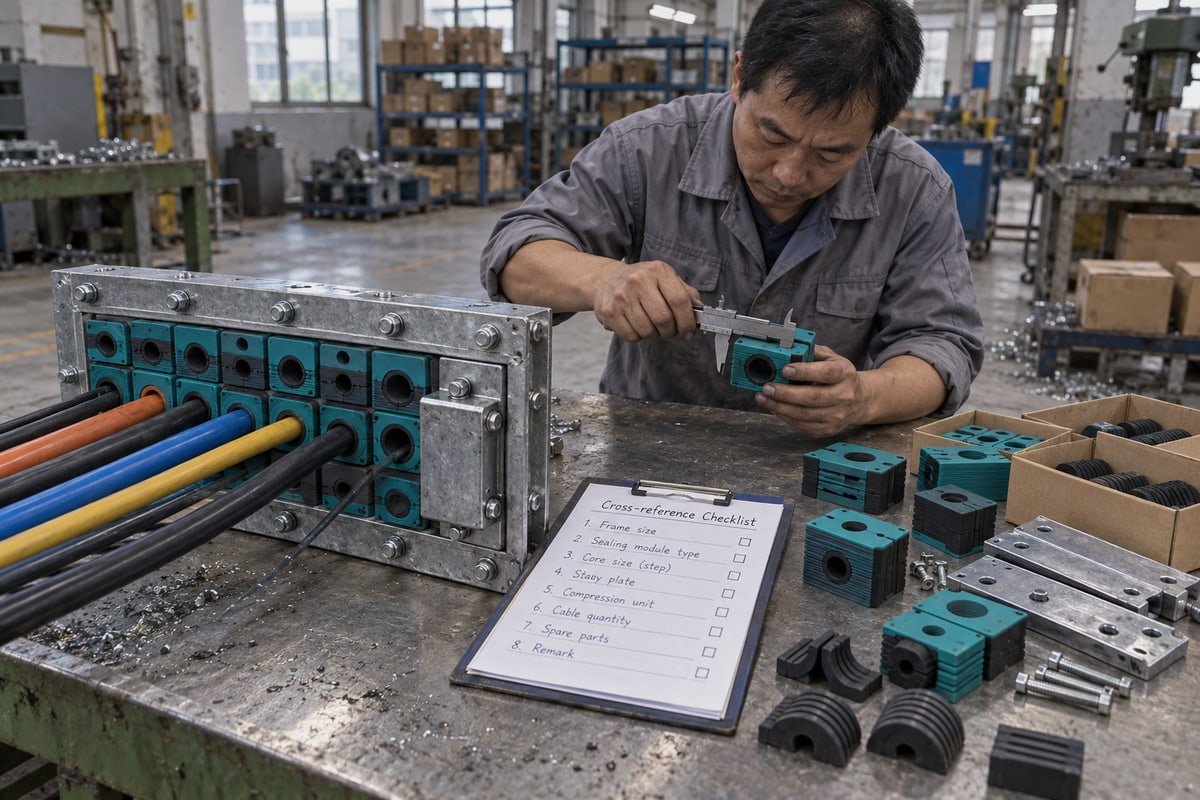
Choosing between complete sets and individual multi cable transit components trips up buyers IATF 16949 1. One missing stay plate leaves a bulkhead unsealed. Our factory built a simple framework to prevent that.
Choose complete sets when the opening is standard, the cable list is fixed, and speed matters. Choose individual multi cable transit components when cable diameters vary, the frame is nonstandard, or you plan future pulls. Verify certification and 120-frame compatibility either way.
That is the short rule. The rest of this article explains why it works. I will walk through the decision factors, the certification question when you mix brands, the real cost picture on large projects, and how to tell a frame replacement from a simple insert swap. I will also share what we see on our own production lines in Shaanxi, Shandong, and Hunan.
What factors should I weigh when deciding between a complete MCT kit and individual sealing modules?
Every quotation we prepare weighs two things: how many decisions the buyer wants solved before shipping, and how much the cable list will move before installation.
Weigh five factors: cable list stability, opening geometry, schedule pressure, spare capacity planning, and who installs. A complete MCT kit wins on speed and fewer errors. Individual sealing modules win when cable diameters vary, the frame is custom, or future reconfiguration is likely.
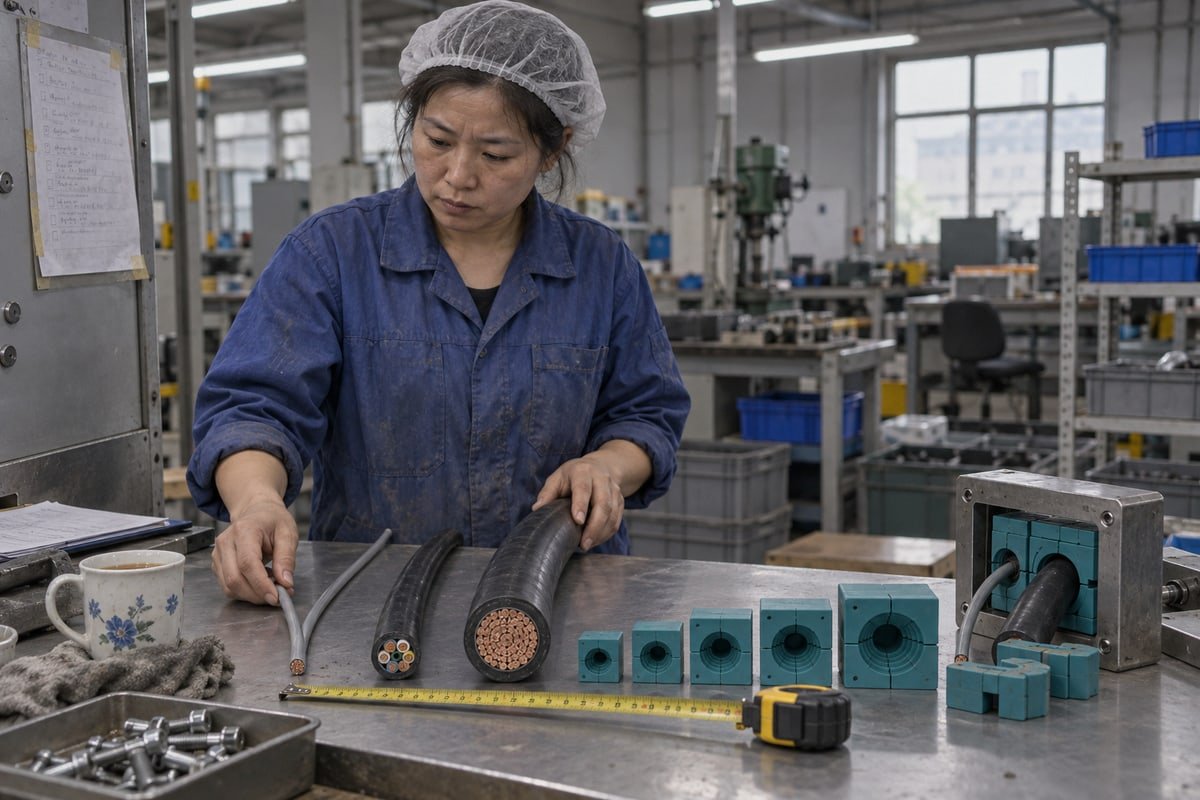
A multi cable transit system is not one part. It is a frame, a stack of modular sealing blocks, stay plates between the rows, and a compression wedge unit that squeezes everything into a sealed barrier. Some systems add lubricant and end packers. A complete set bundles these for one defined opening and cable range. Component buying means you pick each piece yourself.
Here is how the two approaches compare on the factors that matter most.
| Factor | Complete MCT kit | Individual sealing modules |
|---|---|---|
| Cable list stability | Best when the list is frozen | Best when the list is still changing |
| Opening geometry | Standard cutouts only | Any cutout, including custom frames |
| Schedule pressure | Fewer line items, faster ordering | More engineering time up front |
| Spare capacity planning | Spare space is preset by the kit | You design spare blocks in yourself |
| Installation crew | Good for non-specialists | Needs someone who reads the layout |
| Risk of missing parts | Low | Higher unless the BOM is checked |
Cable diameter range is the first filter
Module sizes in most systems follow standard classes such as 15, 20, 30, 40, 60, 90, and 120 mm. Insert blocks across the market cover roughly 4 to 100 mm of cable. Our TSC square modules use a step-core EPDM design. One module size accepts a range of diameters, so a kit covers more cables than you might expect. But if your BESS container carries both 8 mm signal cables and 90 mm DC busbars in one opening, a generic kit will leave gaps or force fillers. Components fit better there.
Installation efficiency versus control
A kit answers most questions before the crate opens. That is why EPC crews like it. Components give the engineer control over every row. Our view is simple. If you will open the transit again within two years, buy components and plan the spare rows now. If you will not, the kit saves you time.
The overstandardization trap
Some buyers standardize on one kit size across a whole plant. That helps training and spares. It also forces extra filler blocks where a smaller custom mix would do. Balance both. Standardize on one modular platform, not on one fixed kit.
Can I mix individual components from another brand with my existing 120-frame system without voiding certification?
A sourcing manager in Germany once sent us a photo of his installed 120-frame and asked one question: will your modules fit without a new certificate?
Yes, if the second-source modules are dimensionally compatible with the 120-frame standard and carry their own test documents for fire, watertight, and gas-tight performance. Certification attaches to the tested assembly, so request cross-reference tables, validation samples, and approval reports before mixing.
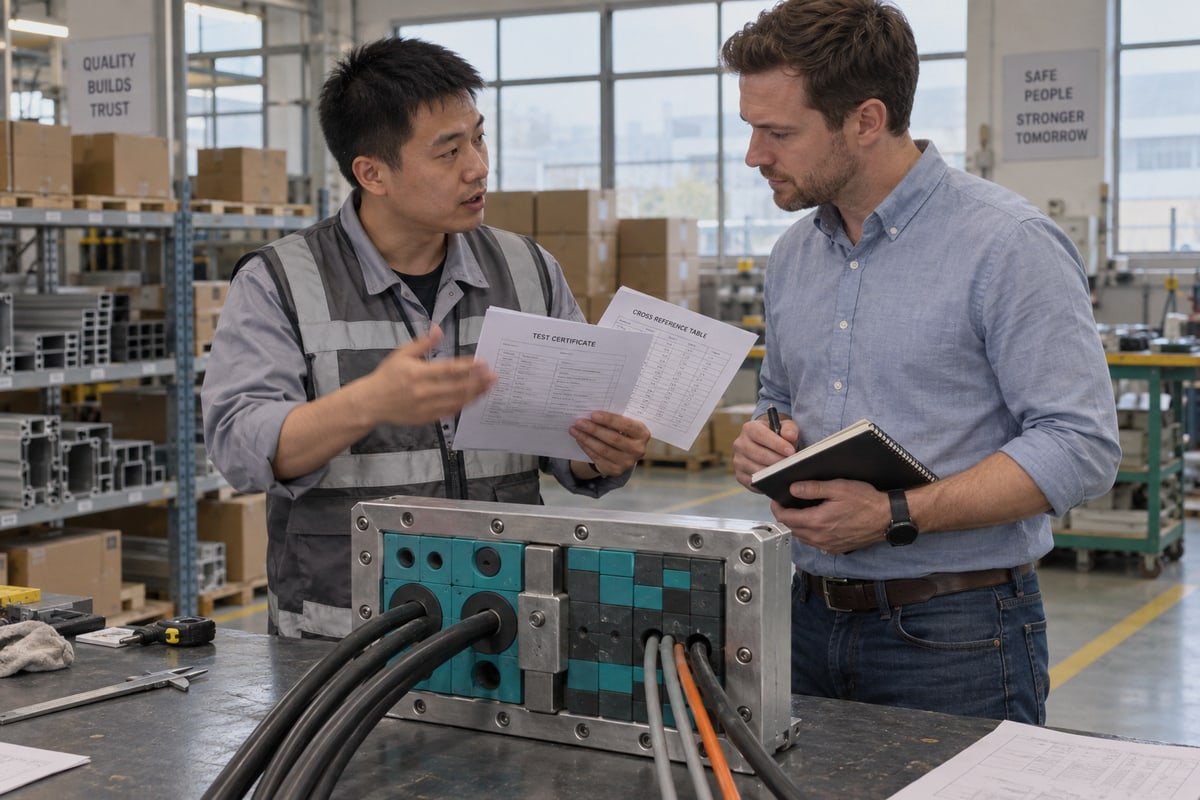
This question deserves a precise answer, because a vague one can cost you a survey. Certificates for cable transits are issued for a tested assembly. That means a specific frame profile, a specific module compound, stay plates, and a compression method tested together. The original brand's certificate covers the original brand's assembly. It does not extend to a mixed assembly by itself.
So what makes mixing safe? Two things. First, dimensional compatibility. The 120-frame standard defines the internal depth and the module footprint. If a second-source module matches those dimensions, it drops into the existing cutout and compresses correctly. Second, independent test evidence for the second-source parts. Our modules are tested for A-0 and A-60 fire rating 2, IP68 ingress protection 3, and watertight and gas-tight sealing from 0.01 to 0.4 MPa. Our factory runs ISO 9001 4 and IATF 16949 systems and holds BV approval. We provide those documents on request, and the surveyor or classification body then reviews the combination.
A compatibility checklist before you mix brands
| Check | What to request | Why it matters |
|---|---|---|
| Frame fit | Cross-reference table (existing model to DEWIN model) | Confirms module depth and width match the 120-frame cutout |
| Compression | Torque or wedge travel data | Different compounds need consistent compression to seal |
| Fire performance | A-0 / A-60 test report | Fire rating depends on the module compound, not the frame alone |
| Watertight cable penetration | IP68 and pressure test data | Marine and outdoor BESS openings need proof at rated pressure |
| Gas-tight seals | Leak test documentation | Substations and control rooms often require gas tightness |
| Material | Halogen-free EPDM declaration | Smoke toxicity rules in enclosed spaces |
| Physical proof | Free validation sample | Your own fitters confirm fit in the real frame |
Special-property modules in one frame
One benefit of component buying is mixing functions in a single frame. You can place standard modules beside blocks designed for electromagnetic shielding or EMP protection. That is not possible with a fixed kit. But every special block still needs its own test evidence.
What we tell skeptical engineers
Do not take our word for it. Ask for the STEP files, put the sample in your frame, and send the test reports to your surveyor. That is how second sourcing should work.
Will buying individual replacement modules instead of a full set actually save me money on a large-scale project?
Our Shandong plant packs spare sealing modules in cartons of matched sizes. When a BESS builder ordered by component, the pallet count dropped and so did the invoice.
Usually yes. On large projects, buying individual replacement modules in bulk removes the kit packaging premium and the unused filler blocks fixed kits carry. Savings grow when you pair component ordering with a drop-in second source priced 40–60% below the original brand.
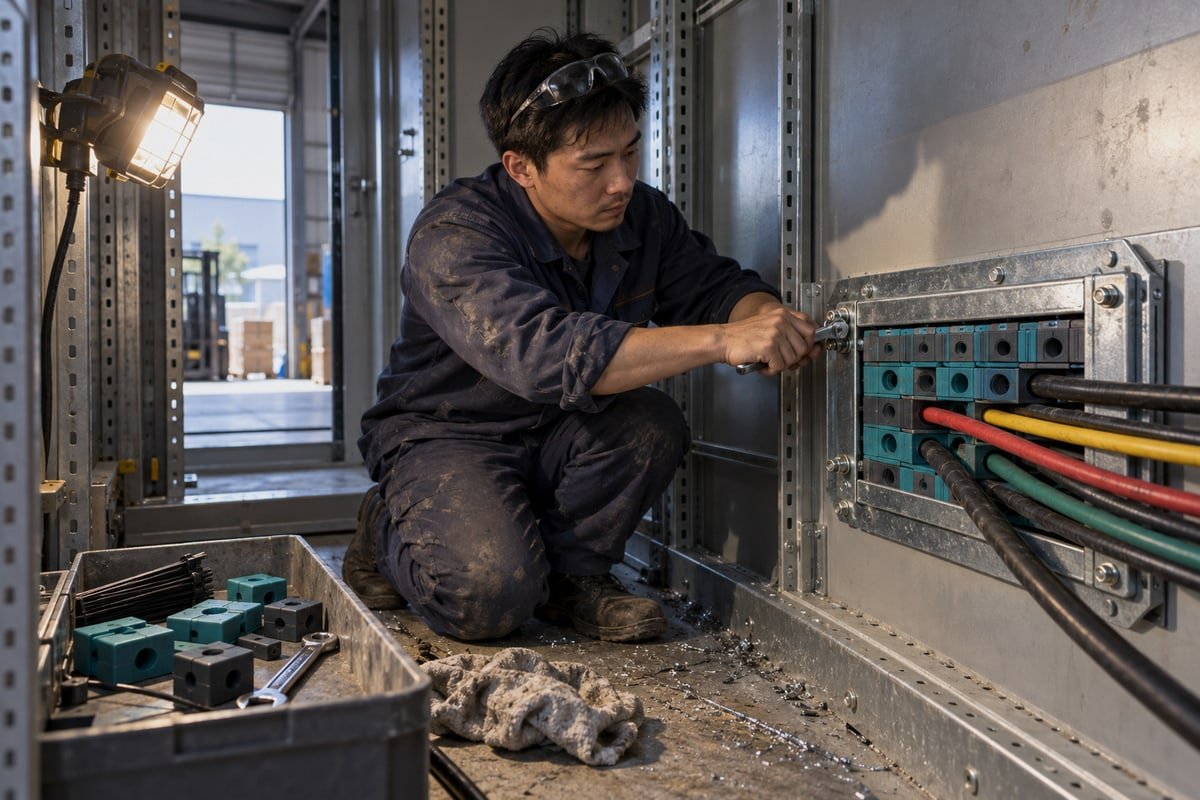
The honest answer has two parts. Component buying saves material cost. It can add engineering cost. Whether you come out ahead depends on the project size and how well your BOM is prepared.
Where the savings come from
A real project bill of materials for a transit lists separate lines: sealing modules, stay plates, compression wedges, lubricant, and optional frames. When you buy by line, you buy the exact count. A fixed kit ships the module mix the kit designer chose. On a project with dozens of identical openings, the unused fillers in each kit add up. That is over-provisioning. It costs money and it ends up as discarded surplus, which some of our European customers now track as part of sustainability reporting.
The second lever is the supplier. A qualified second source with dimensionally compatible modules, sold at 40 to 60 percent below the original brand, changes the arithmetic more than the kit-versus-component choice does. Combine the two and the effect compounds.
Where the costs hide
| Cost driver | Complete set | Individual components |
|---|---|---|
| Unit price of parts | Kit premium included | Bulk pricing per module size |
| Unused filler blocks | Common | Only what you specify |
| Engineering time | Low | Higher, one layout per opening type |
| Risk of missing lubricant or wedges | Low | Needs a BOM check |
| Inventory management | One SKU per opening | Several SKUs, but shared across openings |
| Rework from wrong sizing | Low | Moderate if diameters were guessed |
A practical threshold
From what we see in export orders, component buying pays off once the project has many openings that share the same module sizes. One or two openings rarely justify the engineering time. Fifty openings across a modular data center or a switchgear line almost always do. Bulk cartons of one size are cheaper to make, cheaper to pack, and cheaper to ship than mixed kits.
Do not forget the accessories
The cheapest module order fails if the compression wedge unit or stay plates are missing at the site. Our sales engineers add these lines by default. Ask any supplier to do the same.
How do I know if my project needs a complete transit frame assembly or just spare sealing inserts for maintenance?
One lesson from a decade of exports: ordering a full frame for a seal swap wastes money, and ordering only inserts for a corroded frame wastes time.
Inspect the frame first. If the welded frame is sound, undamaged, and correctly sized, order spare sealing inserts, stay plates, and a compression wedge unit. If the frame is corroded, deformed, wrongly sized, or the opening is new, specify a complete transit frame assembly.

The frame and the inserts age differently. The galvanized or stainless frame is welded into the wall or bulkhead. It usually outlives several generations of rubber. The EPDM modules 5 face compression, heat, and sometimes fuel or salt. They are the wearing part. So the decision starts with the frame, not with the cables.
A five-step field check
- Open the transit and remove the compression wedge unit. Look at the frame corners and weld seams. Surface rust is fine. Pitting, cracks, or distortion are not.
- Measure the internal opening. Compare it with the 120-frame standard or your original drawing. A frame that was cut wrong years ago cannot be fixed with inserts.
- Check the stay plates. Bent or corroded plates lose the row alignment and reduce compression. Replace them with the modules.
- Count the cables and measure each diameter. Match them to the cable diameter range of the replacement modules. Our step-core modules cover a range per size, which simplifies this step.
- Decide on future capacity. If new cables are planned, add spare or core modules now rather than reopening the transit later.
Brownfield upgrades favor inserts
In a brownfield BESS or substation upgrade, the frame stays. The plant cannot lose its watertight cable penetration for a wall repair. Swapping degraded modules row by row keeps the rest of the transit sealed. This is the maintenance-first strategy, and it only works if the replacement modules match the frame dimensions and carry equivalent fire and gas-tight ratings. Our in-house mold shop also makes custom sizes when an old frame is nonstandard.
New openings favor complete assemblies
A new cutout in a container wall or a new switchgear penetration needs the whole set. Frame, modules, stay plates, compression unit, and lubricant ship together. For OEM integrators building repeat units, we supply this as a private-label assembly with CAD and STEP files, so the same drawing works in every container.
Conclusion
Wrong choices between sets and components cost schedule and budget. Match the decision to cable stability, frame condition, and lead time. Ask us for cross-reference tables and samples.
Footnotes
1. Global quality management standard specifically for the automotive industry supply chain. ↩︎
2. Marine safety standard for fire-resistant bulkheads and decks regulated by the IMO. ↩︎
3. International standard defining the levels of sealing effectiveness against solids and water. ↩︎
4. Official international standard for quality management systems in manufacturing and production. ↩︎
5. Technical overview of the synthetic rubber compound used for durable sealing components. ↩︎


 English
 Español de México
 Deutsch
 Français
 العربية
 Русский