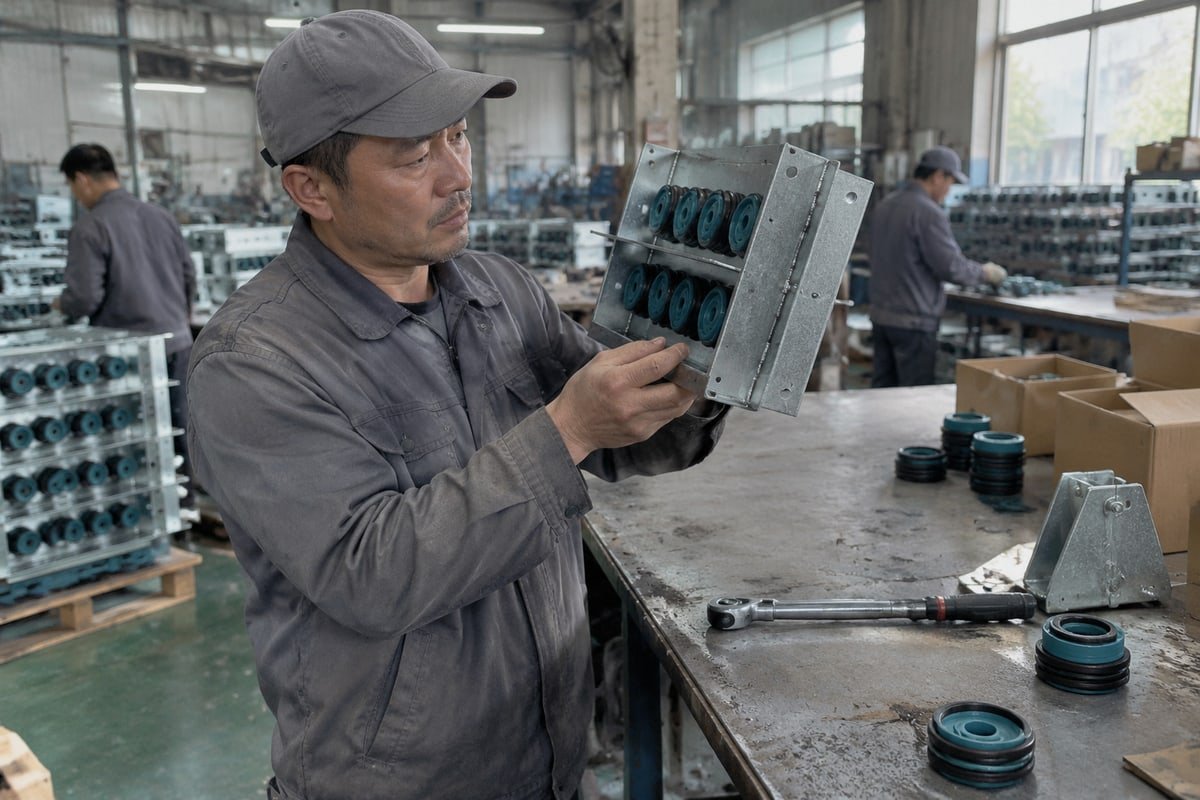
Multi cable transit system accessories decide whether a penetration seals or leaks IP68 rating 1. On our production line, we have seen good frames fail pressure tests because one stay plate was missing.
A multi cable transit system needs a frame, elastomer sealing modules, a compression unit, stay plates, and end packings as core parts, plus installation tools, assembly lubricant, and blanking plugs. Together they seal cables against water, gas, and fire, resist pull-out, and allow later re-entry.
Below, I break the system into core parts, selection rules, sealing mechanics, and spare-part sourcing IATF 16949 2. Each section answers one question a purchasing engineer asks us before placing an order.
What core components make up a complete MCT system, and how do they work together?
Our QC team once rejected a frame batch because weld distortion narrowed the inner opening by under a millimeter. That tolerance matters, since every other part depends on it.
An MCT system combines a frame fixed to the structure, elastomer sealing modules sized to each cable, stay plates between module rows, a compression unit that tightens the stack, and an end packing that closes the top gap. The frame holds, the modules seal, the compression locks the stack.
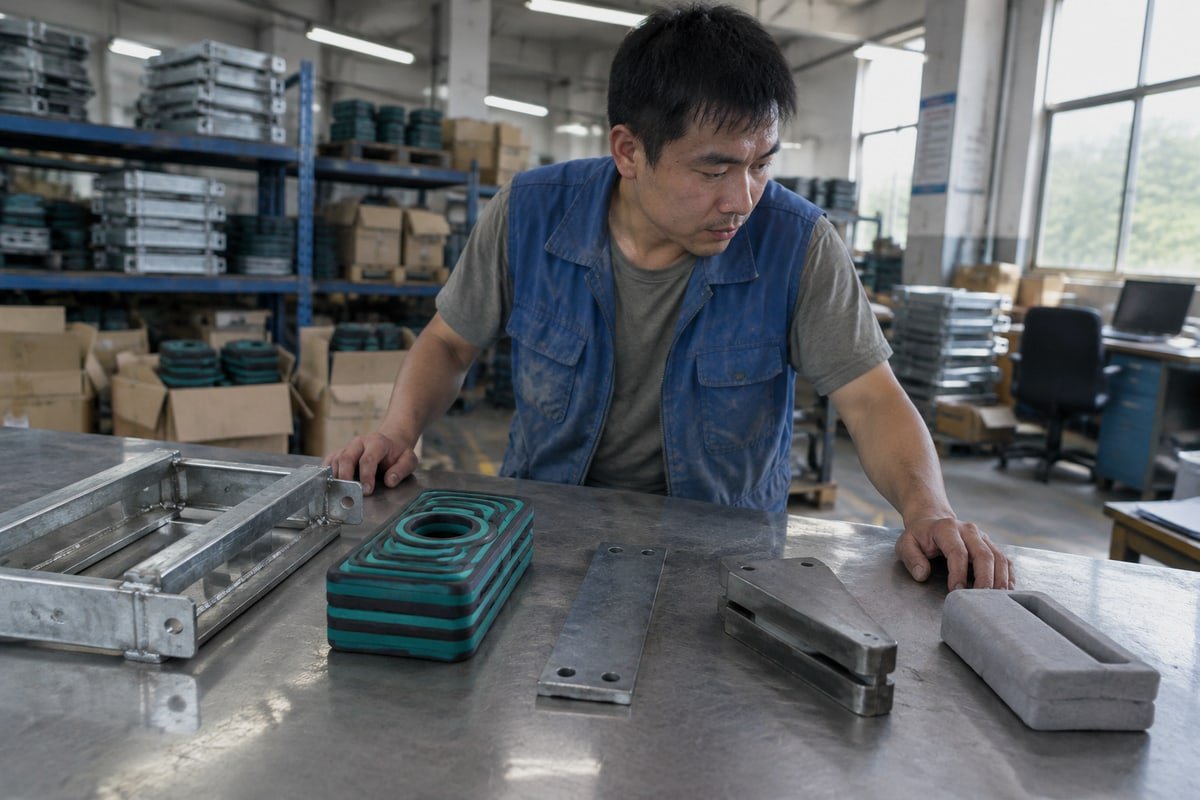
I like to describe the system as a stack. Each layer has one job. If one layer is wrong, the layers above and below cannot compensate.
The five parts that every complete transit contains
| Component | What it does | Failure if missing or wrong |
|---|---|---|
| Frame | Welded, cast, or bolted to the wall, bulkhead, deck, or cabinet. Holds all other parts and transfers load to the structure. | Distorted opening, uneven compression, leak paths at the frame wall |
| Sealing modules | Elastomer blocks sized to each cable or pipe. Fill the voids and create the environmental seal. | Gaps around cables, water and gas ingress |
| Stay plates | Thin metal dividers between every row of modules. Anchor the rows and prevent push-out under pressure. | Row shift under vibration, blocks ejected in a pressure event |
| Compression unit | Wedge or plate that tightens the stack vertically and horizontally. | Loss of grip, no certified seal |
| End packing | Final filler installed above the compression unit to bridge the gap to the frame header. | Open channel at the top of the frame |
Why the parts only work as a set
The frame gives a fixed reference. Our TSC square sealing modules are cut so that a full row fills the 120-frame opening width exactly. Stay plates sit on top of each row. They keep the row flat and spread the compression load evenly. The compression unit then pushes down on the whole stack. The step-core, halogen-free EPDM 3 in our modules deforms under that load and grips each cable. The end packing closes whatever space remains.
Minimum kit or full kit?
Buyers sometimes challenge us on this. One supplier's catalog says the transit is frame plus rubber blocks plus compression unit. Another states that at minimum each transit includes a frame, modular elastomer blocks, stay plates, and a mechanical compression unit. So which is right?
My answer is direct. The three-part description works for a small frame with one or two rows. Once you stack three or more rows of sealing modules, stay plates stop being optional. Without them, the middle rows float, and compression becomes uneven. We ship stay plates in every multi-row frame kit for that reason. Treating them as an "extra" is how projects end up with a leaking penetration and no clear cause.
How do I choose the right frame and stay plate for my cable transit application?
Every frame quote we prepare involves one trade-off: a thicker stay plate adds anchoring strength but steals a few millimeters of packing space from the module stack.
Choose the frame by mounting method, opening size, and material, then match stay plates to the frame width and module row count. For a cable transit application, confirm 120-frame dimensional compatibility, count cables with spare capacity, and check whether pressure or pull-out loads require thicker anchoring plates.
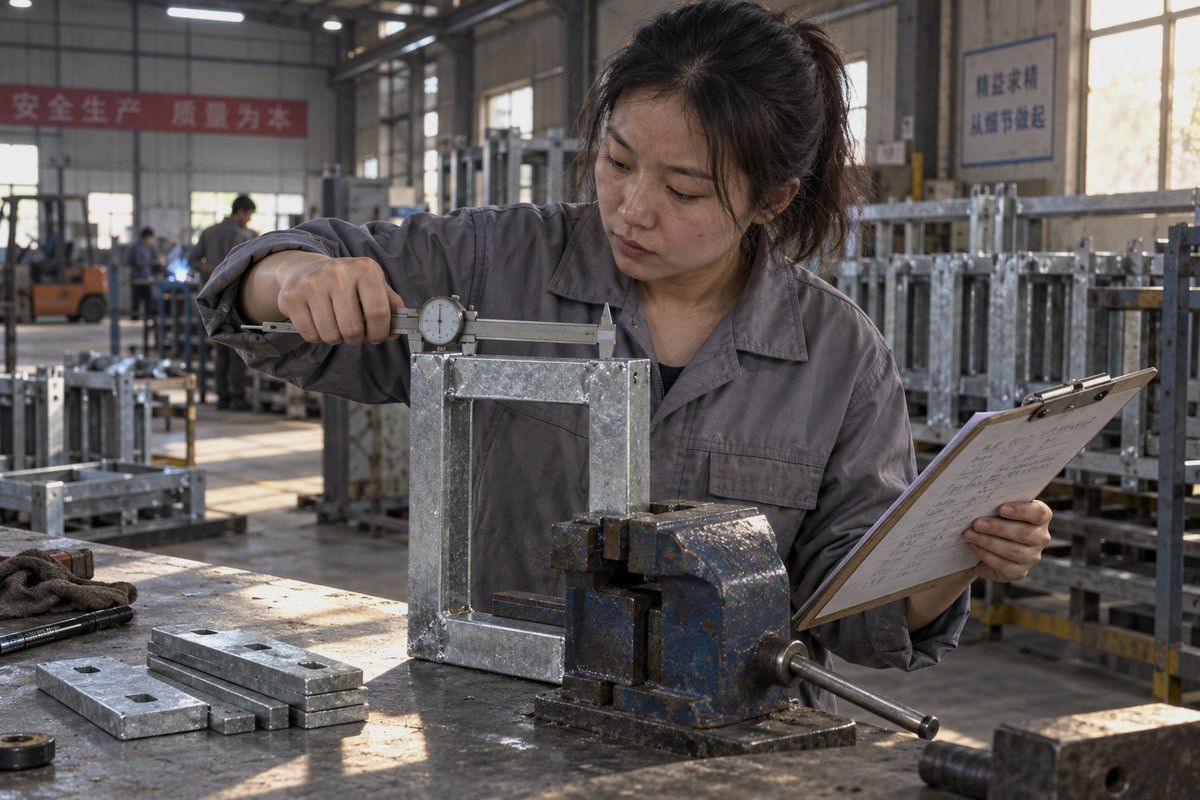
Frame selection sounds simple. It is where most specification errors start. I walk buyers through the same sequence every time.
A six-step frame selection process
- Fix the mounting method first. A welded frame suits steel bulkheads and BESS container walls. A bolted frame suits concrete, thin panels, and retrofit work where welding is not allowed. Cast frames appear in some marine deck penetrations.
- Count cables and add spare rows. We recommend buyers reserve unused space and close it with blanking plugs or filler plates. This keeps the seal intact today and allows re-entry tomorrow.
- Confirm the frame standard. Our cable management frames follow common 120-frame dimensions. That means our sealing modules drop into an existing cutout as a qualified second source. We provide a cross-reference table from the existing model to the DEWIN model so the check takes minutes, not weeks.
- Set the environmental rating. IP68 for water and dust, A-0 or A-60 for fire, and 0.01 to 0.4 MPa for gas-tight or watertight pressure. Each rating changes the frame material and the module compound.
- Check load direction. Pressure from one side, blast, or cable pull-out all push on the stay plates. Higher loads call for thicker plates and more compression reserve.
- Request CAD or STEP files. Our engineers send drawings so the buyer's design team can check the cutout before any steel is cut.
Frame mounting options compared
| Mounting type | Best structure | Typical application | Note on stay plates |
|---|---|---|---|
| Welded | Steel bulkhead, container wall | Marine, offshore, BESS containers | Standard plates, one per row |
| Bolted | Concrete, thin panel, cabinet | Modular data centers, switchgear, retrofit | Check gasket between frame and wall |
| Cast | Deck, hull penetration | Shipbuilding, marine grade seals 4 | Often heavier plates for pressure loads |
The stay plate trade-off in practice
Stay plates are thin metal dividers. They provide mechanical anchoring and stop the blocks from being pushed out during a high-pressure event. A thicker plate resists more load. But it also reduces the room left for sealing modules in the same frame height. For a switchgear panel with low pressure exposure, we specify the standard plate and maximize cable count. For an offshore bulkhead exposed to pressure, we accept fewer cables per frame and use the heavier plate. When a buyer sends us the pressure requirement and the cable list, we can size both in one pass. That is why the selection checklist matters more than any single multi cable transit system accessory on its own.
What role do compression units and sealing modules play in maintaining IP68 protection?
A sourcing engineer in Germany once asked us why his IP68 penetration leaked after two years. The answer was in the compression wedge, not the modules.
Sealing modules fill the space around each cable, while the compression unit applies uniform vertical and horizontal pressure so the elastomer grips every cable and frame wall. This combined action, aided by assembly lubricant, delivers the IP68 rating and watertight, gas-tight sealing from 0.01 to 0.4 MPa.
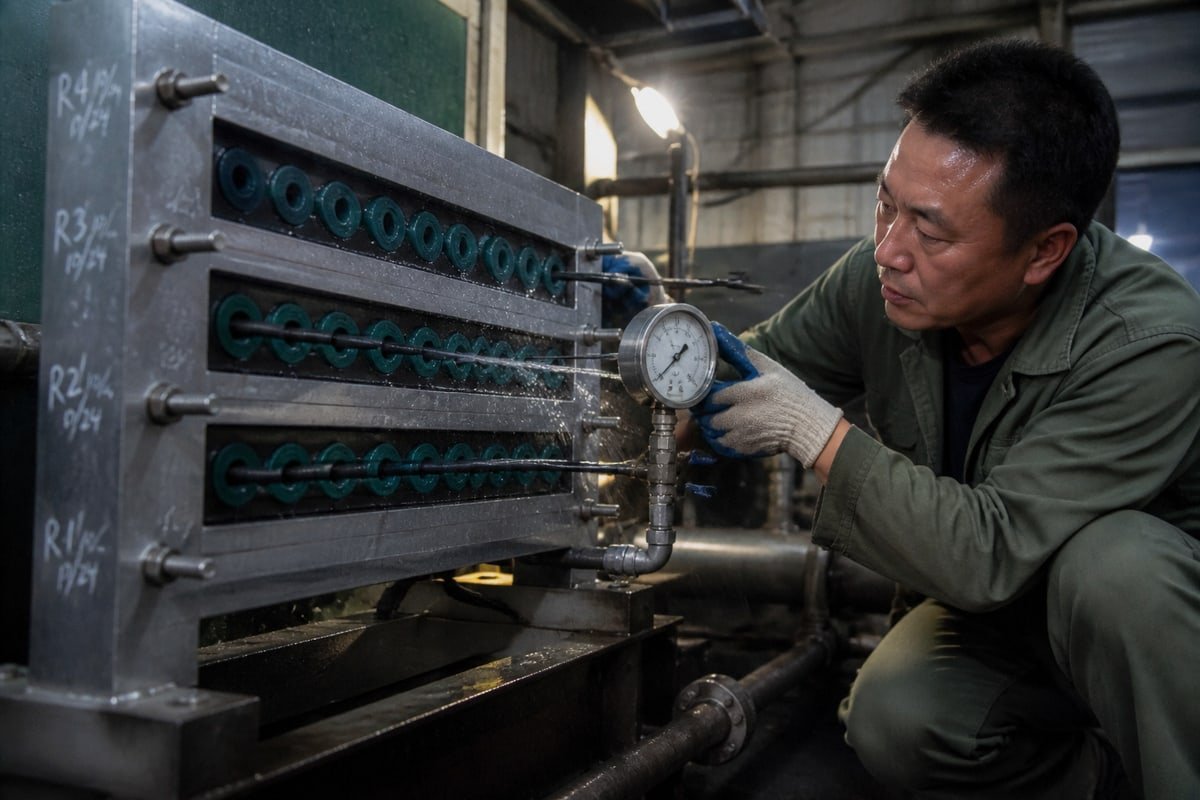
Sealing is a mechanical event, not a material property. Rubber alone does not seal. Rubber under controlled pressure seals. I want to explain what happens inside the frame when the bolts are tightened.
How the compression wedge creates the seal
The compression wedge is a mechanical tensioning device. As the bolts turn, the wedge expands and pushes the module stack downward and outward at the same time. This is why we call it uniform vertical and horizontal pressure. The elastomer moves into every gap: between module halves, against the cable jacket, against the stay plates, and against the frame wall. A certified gas-tight and watertight seal only exists once that pressure reaches the design value. Under-tightening leaves micro-channels. Over-tightening deforms the cable jacket and shortens module life. Our compression units are tested with our own modules so the torque window is known.
Why the module design matters
Our TSR round assemblies and TSC square sealing modules use a step-core design. Each module contains removable inner layers. The installer peels layers until the core matches the cable diameter within the module's range. One module size covers a range of cables. That cuts the number of part numbers a buyer must stock. The compound is halogen-free EPDM. It resists ozone, UV, and seawater, which is why it serves in marine grade seals and outdoor BESS enclosures alike.
The role of assembly lubricant
Buyers sometimes ask if lubricant is a nice-to-have. It is not. The specialized tallow-based compound does two things. It reduces friction so tightly toleranced modules slide into the frame without tearing. It also fills microscopic surface irregularities on the rubber, which improves sealing performance. Dry installation often causes the leaks we later diagnose.
Application-specific sealing add-ons
| Requirement | Accessory or module type | What it adds |
|---|---|---|
| Fire rating A-0 / A-60 | Firestop technology modules and insulation | Holds integrity and insulation under fire test conditions |
| EMC protection | Modules with grounding strips or conductive copper tape | 360-degree shielding and electrical bonding for shield continuity |
| Hydrogen service | Hydrogen-specific barrier gaskets | Contains ultra-small hydrogen molecules that standard seals can pass |
| Sustainability targets | Bio-based elastomer modules | Same fire rating with a lower carbon footprint |
| Unused positions | Blanking plugs and filler plates | Closes spare openings so IP68 is maintained |
A simple watertight cable entry needs the basic stack. EMC protection, Ex-rated, or high-pressure work needs more parts and tighter installation control. We supply test documents for IP68, fire rating, and pressure sealing on request, because I would not expect a European sourcing engineer to accept the rating on a datasheet alone.
Can I source spare parts and accessories that are compatible with my existing MCT frame?
Twelve years of making spare sealing parts taught us one lesson: buyers rarely lose sleep over the frame. They lose sleep over a discontinued module size.
Yes. Spare sealing modules, stay plates, compression units, end packings, and blanking plugs can be sourced from a qualified second supplier if they match the 120-frame dimensional standard. Verify compatibility with a model cross-reference table, a free validation sample, and test documents before switching.
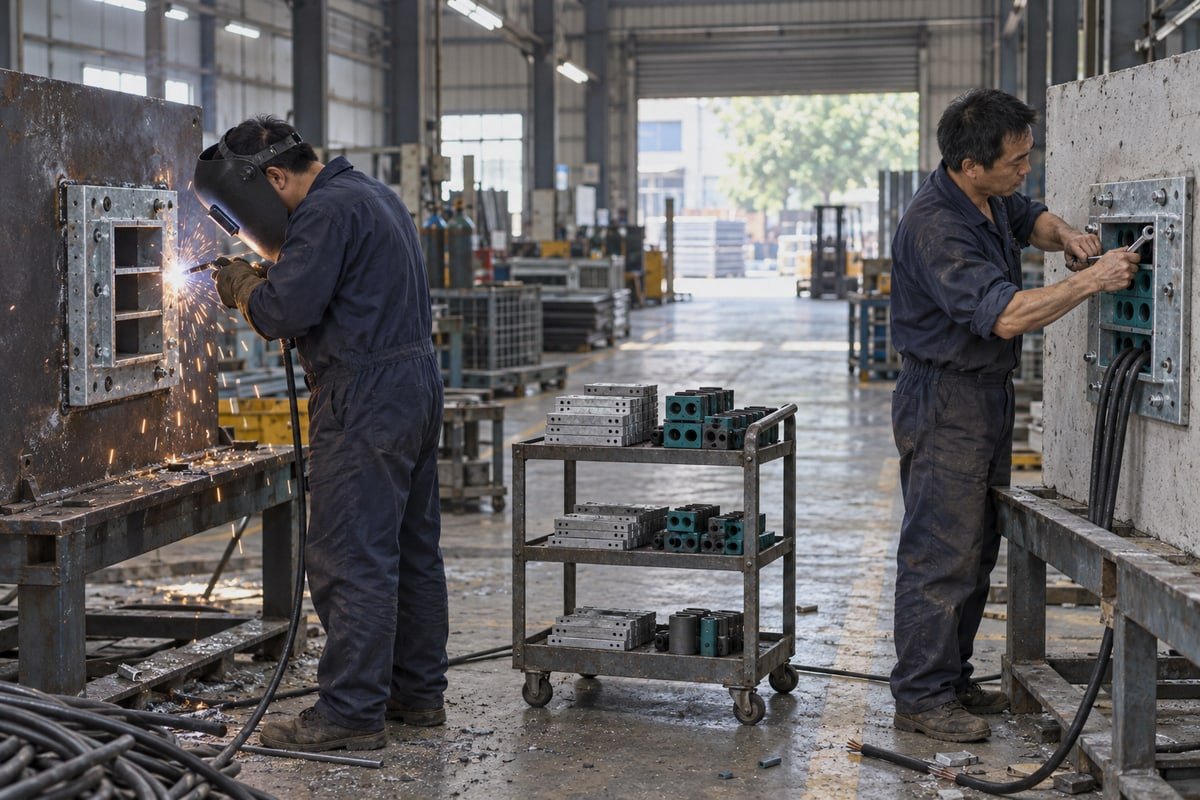
The frame is installed once. The accessories are replaced many times over the life of a container, a ship, or a data hall. That changes how a sourcing manager should think about supply.
The lock-in objection, and how we answer it
Some brand-specific accessories do improve fit, because the supplier tests every part as a system. The downside is sourcing complexity and long-term dependence on one price list. I hear this objection often, and I do not dismiss it. Our position is that the risk is real when the second source has not been validated. The risk disappears when it has been. Our modules are dimensionally compatible with common 120-frame standards. We publish cross-reference tables from the existing model to the DEWIN model. We send free validation samples so the buyer's own team can fit a row into a live frame and run the pressure check. The result is a qualified second source at 40 to 60 percent lower cost, with ISO 9001 5 and IATF 16949 systems and a BV-approved factory behind it.
A four-step qualification path
- Send us the existing module and frame model numbers. We return the cross-reference and CAD or STEP files.
- Receive validation samples and fit them into a spare row or a test frame.
- Review IP68, fire, and pressure test documents against your project specification.
- Place a small first order for spare sealing modules, then scale.
Installation tools that keep re-entry safe
Re-entry is the main reason modular transits exist. Operators add cables during commissioning and again during upgrades. The right installation tools make that possible without rebuilding the penetration.
| Tool | Purpose |
|---|---|
| Packing tool | Holds cables and modules in place during partial installation or re-entry |
| Quick-release or ring spanner | Installs or loosens compression hardware during assembly and maintenance |
| Cable separator | Keeps cables apart so modules insert without interference |
| Spacer tool | Simplifies insertion of the last, tightest row |
| Block selector | Matches module size to cable or pipe diameter |
| Tweezers | Places the final module in a row when fingers cannot reach |
What is coming next in accessories
The accessory ecosystem is growing because installation efficiency has become a competitive differentiator. IoT-enabled seal sensors with wireless pressure and temperature probes are appearing for real-time integrity monitoring. RFID and NFC tags embedded in frames let maintenance teams pull as-built diagrams from a phone. We watch these trends closely. Our in-house mold making already lets us produce custom module sizes and private-label parts, and we handle export documentation so a spare module order reaches a site in Europe or the Middle East without paperwork delays.
Conclusion
Accessories are not afterthoughts. One wrong plate or module size compromises sealing. Specify the kit, verify compatibility with samples and test documents, and your multi cable transit system stays reliable.
Footnotes
1. International standard defining protection levels against water and dust ingress for cable penetration systems. ↩︎
2. Global quality management standard for the automotive industry, ensuring high reliability in MCT component manufacturing. ↩︎
3. Technical information on the durable elastomer material used for high-performance sealing modules in transit systems. ↩︎
4. Regulatory authority for maritime safety standards governing fire protection and sealing requirements in marine environments. ↩︎
5. Official international standard for quality management systems used to certify the manufacturer’s production processes. ↩︎



 English
 Español de México
 Deutsch
 Français
 العربية
 Русский